Your dog just attacked another dog. You're probably shaking right now, wondering if animal control will take your pet away forever. I get it—this is every dog owner's nightmare scenario.
Here's what you need to know upfront: Putting down your dog isn't the default response to a dog-on-dog attack. Actually, most dogs involved in these incidents keep their lives. But—and this is important—specific situations can push authorities toward that extreme decision.
Your location matters. The attack's severity matters. Whether this happened before matters. How you handle the next few weeks? That matters most of all.
Let me walk you through what really happens after your dog attacks another dog, what authorities look for, and how you can protect your pet.
Factors That Determine if Your Dog Will Be Euthanized
Nobody uses a simple checklist here. Animal control officers evaluate each case individually, balancing public safety against your dog's rehabilitation potential.
How badly was the other dog hurt? This question drives almost everything else. Did your dog leave a scratch? Puncture wounds requiring stitches? Did the victim need emergency surgery for torn muscles or internal injuries?
A Level 1 bite (teeth touched skin but didn't break it) barely registers on their radar. Level 4 bites—those deep punctures where your dog bit down and shook—raise serious red flags. Level 5 and 6 bites, where tissue gets shredded or the victim dog dies, often lead straight to euthanasia recommendations.
Officers look at whether your dog released when commanded or had to be physically pulled off. They ask if your dog circled back for another attack after being separated. These behavioral details reveal whether you're dealing with poor impulse control or true predatory aggression.
Author: Daniel Whitmor;
Source: jamboloudobermans.com
Has your dog bitten before? This history changes everything under dog aggression attack euthanasia law. First-time offenders usually get warnings, mandatory training, or restricted ownership conditions. Second bites? You're looking at dangerous dog designation in most places. Third incidents rarely end well.
But here's the catch: Previous complaints count too. If neighbors reported your dog lunging, snarling, or escaping to chase other animals—even without actual bites—those reports establish a pattern. The dog attack bite history euthanasia decision weighs documented incidents heavily, even ones you might not know were reported.
Clean records help tremendously. If your ten-year-old dog never caused problems before, authorities view this as an anomaly worth investigating rather than a pattern requiring permanent solutions.
What triggered the attack? Context shifts blame. Was your dog eating when the other dog approached? Did the victim enter your fenced yard uninvoked? Had the other dog snapped at yours first?
Provocation doesn't excuse the attack, but it reframes it. Authorities recognize defensive aggression as fundamentally different from unprovoked predatory behavior. A dog protecting puppies, defending territory, or responding to pain acts from different motivations than one that broke loose specifically to attack.
Meanwhile, attacks on leashed dogs walking peacefully down sidewalks get zero sympathy. Your loose dog running across the street to attack someone else's controlled pet screams "dangerous animal" to hearing panels.
Where did this happen? Property lines matter more than you'd think. Dogs attacking intruders on their own property face fewer consequences than dogs attacking in neutral or public spaces. Some jurisdictions explicitly protect property owners' rights to have territorial dogs.
Dog parks create gray areas. These spaces involve assumed risk—owners bring dogs knowing scuffles happen. Attacks here receive more scrutiny about proportionality than location.
What do local laws say? This variance frustrates everyone. California applies strict liability standards where owner responsibility exists regardless of fault or prevention efforts. Meanwhile, states like Pennsylvania follow modified one-bite rules giving first-time offenders more leeway.
Breed-specific legislation in certain cities imposes harsher automatic penalties on pit bulls, Rottweilers, or other restricted breeds involved in attacks, regardless of individual circumstances. Check your municipal code—it trumps general state law.
The Dangerous Dog Declaration Process After an Attack
The wheels start turning the moment someone reports the attack. What happens next follows a predictable pattern, though timelines vary.
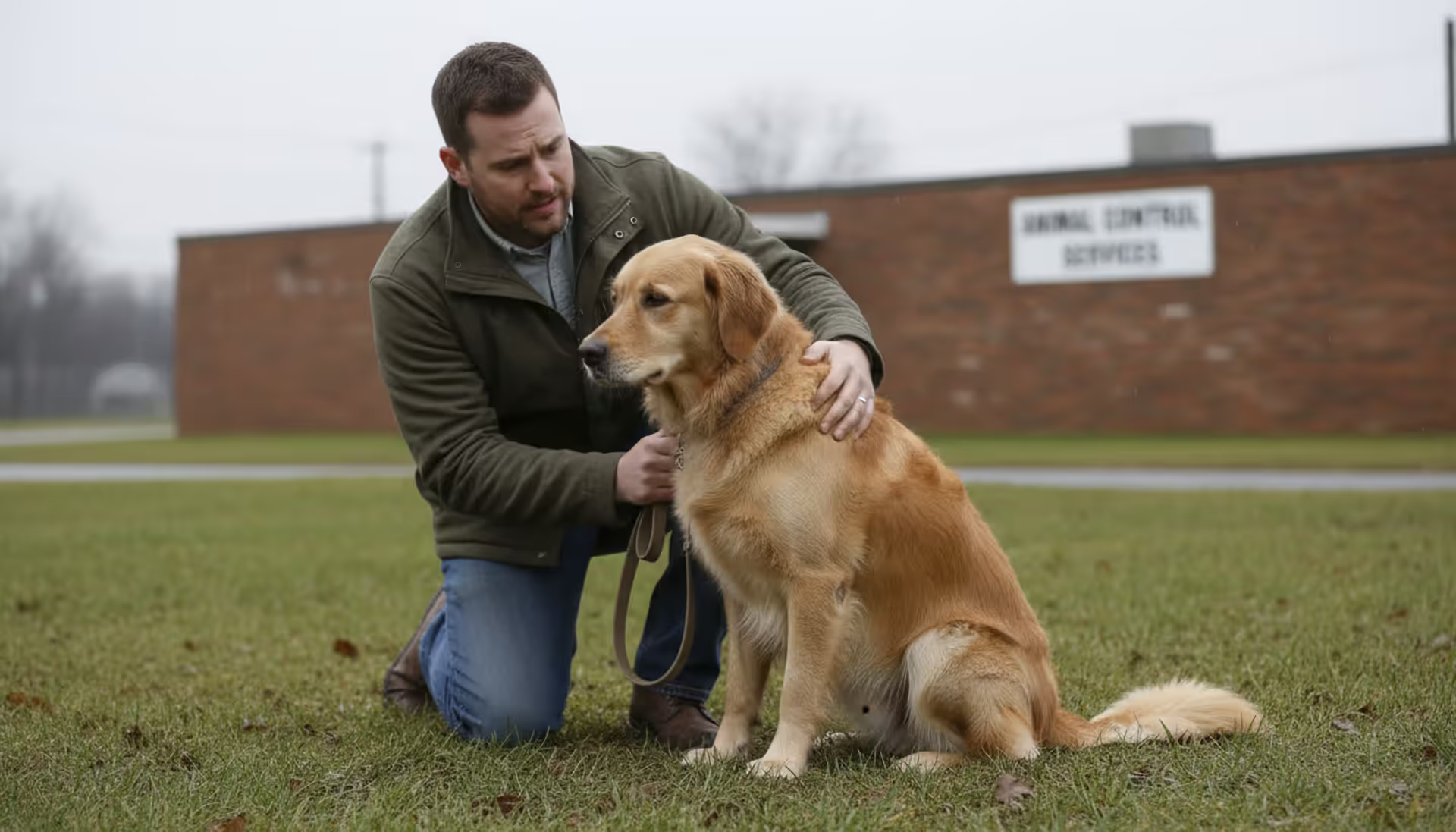
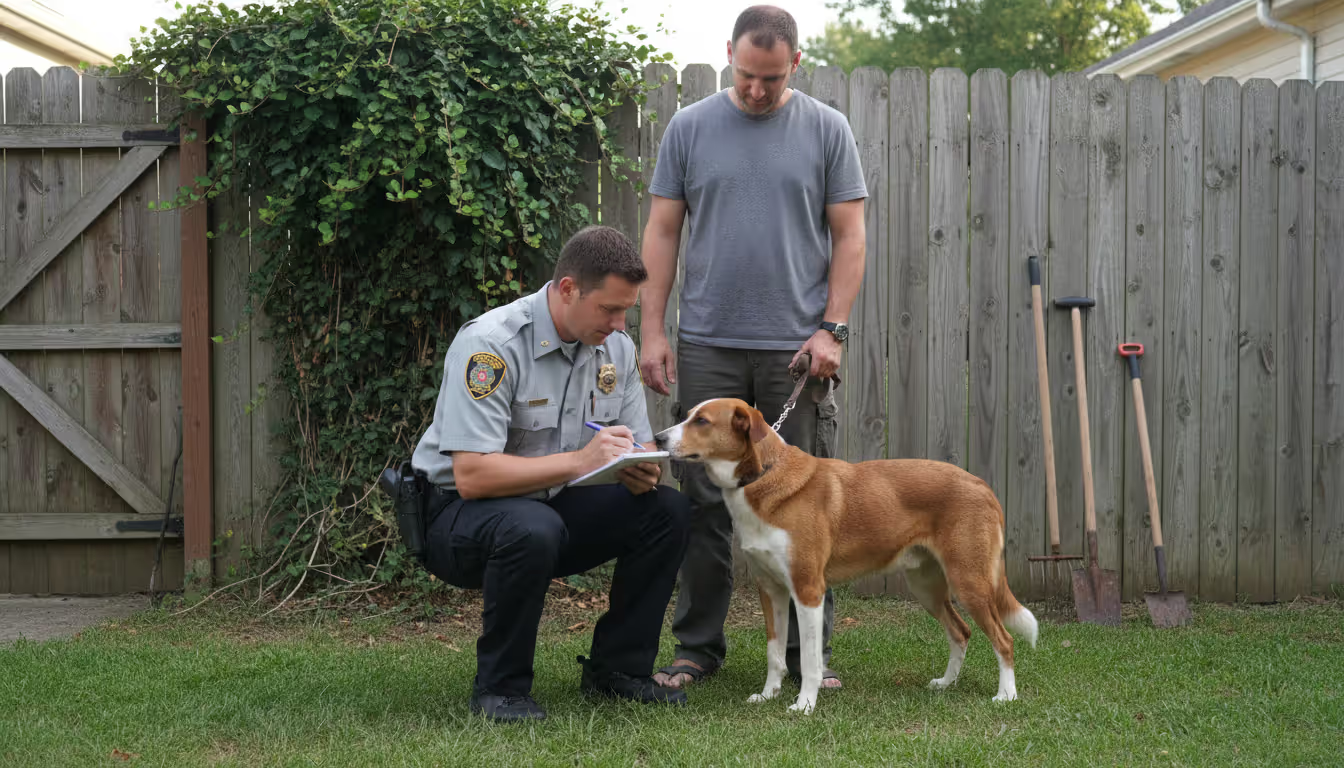
Day 1-3: Initial Contact and Investigation Animal control doesn't wait around. An officer contacts you within 24-72 hours, often showing up at your door unannounced. They want to see your dog's temperament, housing situation, and how you respond to authority.
Big mistake: Getting defensive or argumentative. Officers note your attitude in their reports. Another mistake: Volunteering information they didn't ask for. "He's bitten before but just small nips" just torpedoed your case.
They'll photograph your property, verify your dog's rabies vaccination (expired vaccines create separate legal problems), check licensing compliance, and ask about the attack. Everything you say gets documented word-for-word.
Day 3-10: Evidence Gathering The officer collects veterinary records from both dogs, photographs of injuries, witness statements, and any prior complaints about your dog. They might interview your neighbors about whether they've seen aggressive behavior.
During this phase, you'll probably receive either an impoundment order (they take your dog to animal control) or a home quarantine order (your dog stays home but can't leave your property). Quarantine periods typically run 10 days for bite incidents to monitor for rabies.
Day 10-20: Classification Decision Animal control reviews everything and decides whether to pursue dangerous dog designation. The dangerous dog act provisions explained in your state statutes define exactly what qualifies. Most states require unprovoked attacks causing serious injury, behavior showing propensity to attack without warning, or multiple bite incidents.
You'll receive written notice if they're moving forward with designation. This letter includes the specific statute violated, the proposed restrictions or penalties, and—crucially—your right to contest it through a hearing.
Types of Classification Many places use tiered systems:
"Nuisance dog" for minor incidents
"Potentially dangerous dog" for attacks with injuries
"Dangerous dog" for severe attacks or repeat offenses
"Vicious dog" reserved for life-threatening attacks or killings
Each level carries escalating requirements. Understanding your designation helps you gauge what you're fighting.
Timeline to Declaration Most jurisdictions finalize decisions within 15-30 days unless you request a hearing. Requesting that hearing stops the process until after your case is heard. Never let this timeline pass by default—you waive your rights to contest.
What Happens During a Dangerous Dog Hearing
Think of this as court-lite. You're not facing criminal prosecution, but the stakes feel just as high because your dog's life hangs in the balance.
Who Shows Up The dangerous dog hearing legal process puts you across from a hearing officer—sometimes a city attorney, sometimes a dedicated administrative judge, occasionally a three-person panel appointed by the city council. This person decides your dog's fate.
The investigating animal control officer attends to present their case. They bring files, photos, witness information. The victim dog's owner usually shows up to describe injuries and advocate for restrictions. If you've hired a lawyer, they're here too (highly recommended, by the way).
You can bring witnesses supporting your version of events—neighbors who saw what happened, trainers who've worked with your dog, or experts like veterinary behaviorists. Some owners bring family members, but hearing officers care more about eyewitnesses and expert opinions than character references from people who weren't there.
How Evidence Gets Presented Animal control goes first. The officer summarizes the investigation, walks through photographs of injuries, reads witness statements, and explains why they believe your dog meets dangerous dog criteria. They're building a case that your dog poses ongoing public safety risks.
You or your lawyer can cross-examine them. Good questions challenge their investigation: "Did you verify the other dog was on a leash?" "How did you confirm my dog started the fight?" "What evidence shows this was unprovoked?"
Then you present your defense. This is where preparation matters. Effective defenses include:
Video footage showing the other dog entered your property first
Veterinary records proving your dog was injured before fighting back
Expert testimony that the attack resulted from fear, not aggression
Training certificates showing you've proactively addressed behavior
Proof the victim dog has a bite history suggesting it started the fight
Your Legal Protections Administrative hearings provide fewer protections than criminal trials, but you still have rights. You can see the evidence against you beforehand. You can present your own evidence and witnesses. You can question anyone testifying against you. You can have an attorney represent you (at your expense).
What you can't do: Demand a jury trial. These administrative proceedings involve hearing officers making decisions based on preponderance of evidence (more likely than not), not beyond reasonable doubt.
Author: Daniel Whitmor;
Source: jamboloudobermans.com
Possible Outcomes Hearing officers have broad discretion with dog attack on another dog legal consequences ranging from dismissal to euthanasia:
Case dismissed: Insufficient evidence or justified defensive behavior
Dangerous dog designation: Adds permanent muzzling in public, special enclosures, warning signs, public space prohibitions
Euthanasia order: Reserved for severe attacks, repeat offenders, or owners who previously violated dangerous dog restrictions
Hearing officers consider whether you can safely manage your dog going forward. Bringing proof you've already installed six-foot fencing, hired a certified behaviorist, and enrolled in aggression training shows good faith and rehabilitation potential.
I look at whether we're dealing with learnable triggers or indiscriminate aggression. A dog that attacked because another dog invaded its space while it was eating? We can manage that with environmental controls. But a dog that tracked down another dog across a park and attacked without warning for no identifiable reason? That's predatory aggression, and it's nearly impossible to train out. The problem is, most hearing officers lack behavioral expertise to distinguish between these scenarios—which is exactly why bringing in a qualified expert can literally save your dog's life
— Dr. Sarah Chen
After the Decision Written rulings typically arrive within 7-14 business days. If you lose, you usually have 10-30 days to appeal to civil court. Miss that deadline and the decision becomes final.
Legal Consequences When Your Dog Kills or Injures Another Dog
The dangerous dog hearing addresses public safety. Simultaneously, you're facing financial and legal liability for the damage your dog caused.
Owner Liability and Financial Responsibility
Other dogs count as property under law. When your dog damages someone's property, you pay for it. Pretty simple, right?
Except veterinary emergencies get expensive fast. Emergency room visits run $800-2,000 before any treatment starts. Orthopedic surgery for broken bones? $3,000-7,000. ICU hospitalization for life-threatening injuries? $5,000-15,000. These bills add up quickly, and dog killing another dog owner liability puts them on you.
How Liability Works Most states apply strict liability to dog attacks, meaning fault doesn't matter. Your dog caused damage, you pay. Doesn't matter if your dog never bit before. Doesn't matter if your fence collapsed in a storm. Doesn't matter if you couldn't have predicted this.
A handful of states use negligence standards instead, requiring the victim to prove you failed to exercise reasonable care. These cases examine whether you knew about aggressive tendencies and failed to take appropriate precautions.
What You'll Pay For: - Emergency veterinary treatment and diagnostics - Surgery, anesthesia, hospitalization - Medications and follow-up appointments - Rehabilitation or physical therapy - The dog's fair market value if it died (purebreds with papers, show dogs, or working dogs can be valued at thousands)
What you won't pay for in most states: Emotional distress damages. Courts rarely award these for pet injuries, though some states are starting to recognize loss of companionship claims.
Insurance Coverage—Maybe Your homeowner's or renter's insurance might cover this. Emphasis on might. Standard policies often include $100,000-300,000 in personal liability coverage that can extend to dog bites.
But read your policy carefully. Many exclude: - Specific breeds (pit bulls, Rottweilers, German Shepherds commonly excluded) - Dog-on-dog incidents (some only cover attacks on humans) - Dogs with prior bite history - Incidents occurring off your property
Even if covered, filing a claim often results in your policy getting non-renewed at the next term. Your premiums will jump, and finding new coverage becomes difficult once you've got a claim history.
One more thing: You must report the incident to your insurer immediately—typically within 24-72 hours. Delayed reporting can void coverage entirely.
Author: Daniel Whitmor;
Source: jamboloudobermans.com
Criminal vs. Civil Consequences
You'll almost certainly face civil liability. Criminal charges? Less common but possible.
Civil Cases happen when the victim's owner sues you for damages. They file in small claims court (if damages are under your state's limit, usually $5,000-10,000) or regular civil court. They need to prove your dog caused the injuries and quantify their financial losses.
Many cases settle before trial. Offering to pay veterinary bills promptly can prevent escalation and might even influence the dangerous dog proceedings by showing responsibility and remorse.
Criminal Charges for dog-on-dog attacks typically require additional elements beyond the attack itself. Prosecutors file charges when:
You violated dangerous dog restrictions (your previously designated dangerous dog escaped)
You intentionally sicced your dog on another animal
Criminal negligence (you knew your dog was aggressive and deliberately allowed situations where attacks could occur)
These misdemeanor charges carry fines ($500-2,000 typically), probation, and occasionally short jail sentences for repeat offenses. They create a criminal record and can be used as evidence in civil cases.
Alternatives to Euthanasia for Aggressive Dogs
Even after serious attacks, dog aggression euthanasia alternatives legal paths exist. Not every aggressive dog needs to die—many can be safely managed with proper protocols.
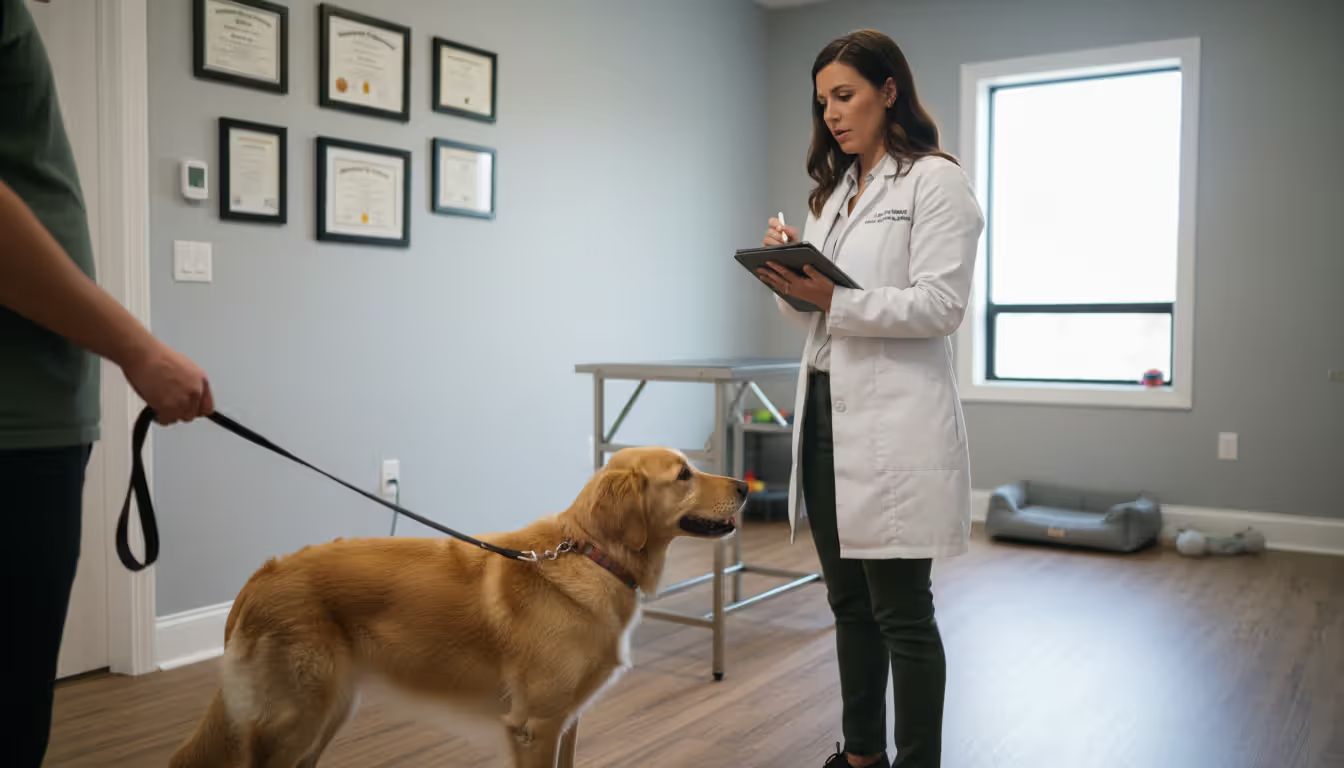
Professional Behavioral Assessment provides the foundation for alternative approaches. Board-certified veterinary behaviorists (not regular trainers) evaluate your dog's aggression type, triggers, body language before and during attacks, and response to interruption.
They distinguish between: - Fear-based aggression (dog felt trapped or threatened) - Territorial aggression (protecting resources or property) - Redirected aggression (dog was aroused by something else, redirected onto available target) - Predatory aggression (hunting drive toward smaller animals) - Pain-induced aggression (medical issues causing irritability)
Some types respond well to behavior modification. Others don't. Predatory aggression particularly resists training because it's hardwired instinct, not learned behavior.
Assessment reports carry weight with hearing officers. A professional opinion that your dog's aggression is manageable strengthens arguments against euthanasia. These evaluations cost $400-800 but can save your dog.
Structured Behavior Modification Programs address manageable aggression through systematic desensitization, counter-conditioning, and teaching alternative behaviors. These aren't basic obedience classes—they're specialized aggression protocols delivered by certified professional dog trainers with specific experience in aggressive dogs.
Programs typically run 3-6 months with weekly sessions, homework between sessions, and periodic progress reports sent to animal control. Costs range from $2,000-5,000 for comprehensive programs.
Hearing officers often mandate these programs as conditions for avoiding euthanasia. You'll need to show documented progress and sustained improvement.
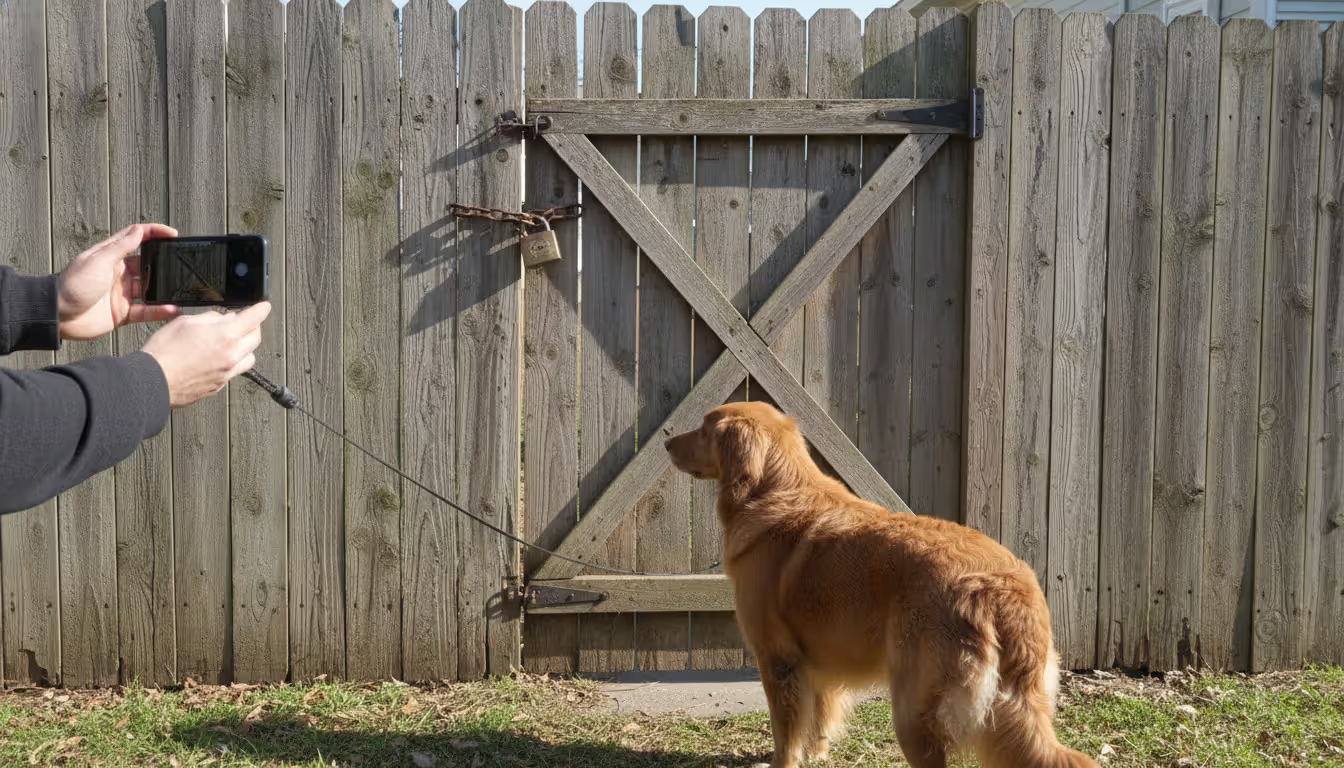
Secure enclosures: Six-foot fencing with locked gates, no gaps at ground level, concrete or dig-proof barriers preventing escape
Permanent muzzling: Basket muzzles (not restrictive muzzles) worn anytime the dog leaves your property
Leash requirements: Six-foot maximum leash, no retractable leashes, always under handler control
Public space prohibitions: Banned from dog parks, hiking trails, or other areas where off-leash dogs congregate
These requirements become permanent conditions attached to your dog's license. Violations trigger immediate euthanasia orders.
Liability Insurance gets mandated for dangerous dog designations. You'll need specialty policies providing $100,000-500,000 coverage specifically for dog liability. Premiums run $600-2,000 annually depending on breed, bite history, and coverage amount.
Standard homeowner's insurance doesn't count—you need dedicated canine liability coverage. Finding insurers willing to cover designated dangerous dogs takes effort, and options are limited.
Rehoming Reality Check Most jurisdictions prohibit transferring dangerous dogs without animal control approval. The receiving owner must meet all dangerous dog requirements, and many cities require euthanasia rather than allowing transfers.
Some breed-specific rescues accept dangerous dog cases, but they're exceptionally selective. Sanctuaries providing lifetime care exist but have long waitlists and charge placement fees of $5,000-15,000.
Moving doesn't erase the designation. Interstate data sharing means your dog's dangerous dog status follows you.
How to Defend Against a Dangerous Dog Designation
Defending dangerous dog designation effectively requires immediate action and often professional help. Here's what actually works.
Get a Lawyer Attorneys specializing in animal law know the specific statutes, understand what evidence hearing officers find persuasive, and can navigate procedural requirements you didn't know existed. They cost $2,000-5,000 for dangerous dog hearings, but that investment might save your dog's life.
Without a lawyer, you're arguing against a trained animal control officer who testifies at these hearings regularly. They know what works. Do you?
Document Everything Immediately Take photos of the attack location within 24 hours. Capture your yard layout, fencing condition, any damage to your dog suggesting it was injured during the fight. Photograph the other dog if possible—injuries can worsen over days, and you want accurate documentation of initial severity.
Get written statements from witnesses while memories remain fresh. Contact information alone isn't enough—people move, phone numbers change, and witnesses become unavailable. Get detailed written accounts signed and dated.
Collect your dog's complete veterinary records showing health history, vaccination compliance, and any notations about temperament during examinations. "Friendly and cooperative during exam" entries help demonstrate typical behavior.
Author: Daniel Whitmor;
Source: jamboloudobermans.com
Build Your Witness List Credible witnesses matter more than character references. Prioritize:
Eyewitnesses who saw the entire incident (what happened before the attack)
Your veterinarian (can testify about your dog's typical temperament and health status)
Professional dog trainers you've worked with (establishes responsible ownership)
Neighbors who regularly see your dog (counters claims of ongoing aggression)
Skip the family members testifying that your dog is sweet. Hearing officers expect you to bring those witnesses and give their testimony minimal weight.
Prove Provocation This defense requires concrete evidence. Security camera footage provides the strongest proof—video showing the other dog entering your property, approaching your dog aggressively, or initiating contact wins cases.
Without video, you need: - Witness testimony that the other dog acted aggressively first - Injury patterns on both dogs suggesting a mutual fight versus one-sided attack - Location evidence (attack occurred on your property where your dog had territorial rights) - History of the victim dog showing aggressive behavior
Provocation doesn't mean your dog gets off free, but it prevents dangerous dog designation in many jurisdictions or at least reduces the severity of restrictions.
Show Responsible Ownership Demonstrate you're taking this seriously through immediate corrective action:
Hire a certified veterinary behaviorist before the hearing
Install improved fencing or containment systems
Purchase liability insurance proactively
Complete training programs addressing the issues
Implement management protocols (muzzle training, separate walking routes)
These steps show the hearing officer you're committed to preventing future incidents. "I'll do whatever it takes" means nothing. "I've already spent $3,000 on a six-foot privacy fence, enrolled in a 12-week aggression program, and purchased $300,000 liability coverage" demonstrates commitment.
Challenge Investigation Weaknesses Attack the methodology if the investigation was sloppy:
Did they verify witness statements or just accept one side's story?
Did they examine both dogs for injuries?
Did they consider your dog's medical condition (pain, illness)?
Were photos taken immediately or days later after injuries worsened?
Did they investigate the other dog's bite history?
Procedural defects can invalidate findings. If you didn't receive proper written notice, weren't informed of hearing rights, or weren't given adequate time to prepare, those violations might require dismissal.
Appeal If Necessary Unfavorable decisions aren't necessarily final. Most jurisdictions allow appeals to district or superior court within 10-30 days. Appeals review whether:
The decision had substantial evidence supporting it
Proper procedures were followed
The hearing officer applied the law correctly
Appeals don't retry the facts—they examine whether the process was legally sound. New evidence usually can't be introduced. Act fast because appeal deadlines are strict and absolute.
Rights of the Victim Dog's Owner
If your dog was the victim, you have legal options for getting compensated and ensuring the aggressive dog faces appropriate consequences. Understanding dog attack victim rights against dangerous dog helps you advocate effectively.
Report Immediately File reports with both animal control and police (even if they say it's a "civil matter"). Official reports create documentation and trigger investigations. Without reports, nothing happens.
Provide detailed accounts: exact date, time, location, names of witnesses, description of the attacking dog and owner, and specific injuries your dog sustained. The more detailed your initial report, the stronger your case.
Document Injuries Thoroughly Photograph injuries immediately after the attack, during treatment, throughout healing, and after permanent scarring. Take photos from multiple angles showing severity.
Keep every receipt: emergency visit, diagnostic tests, surgery, medications, follow-up appointments, rehabilitation. Save all veterinary records with detailed treatment notes. If your dog dies, get a necropsy report establishing cause of death.
This documentation supports both dangerous dog proceedings and your civil claim for damages.
Participate in the Hearing You'll receive notice of dangerous dog hearings and have the right to attend and testify. Describe the attack, your dog's injuries, financial impact, and ongoing effects (behavioral changes, ongoing treatment needs).
Your testimony influences hearing officers. They're not just evaluating public safety—they're balancing your rights as a victim against the owner's rights to keep their dog. Make your losses clear and specific.
Demand Compensation Start by contacting the attacking dog's owner directly. Many will pay veterinary bills to avoid lawsuits and potentially improve their position in dangerous dog proceedings.
If direct negotiation fails, file a small claims lawsuit (for amounts under your state's jurisdictional limit) or a regular civil lawsuit. You're seeking:
All veterinary expenses (emergency, surgery, hospitalization, medication, follow-up)
Your dog's fair market value if it died
Possibly replacement cost for service dogs or documented working dogs
Small claims court provides a faster, cheaper option than regular civil court. You represent yourself, filing fees run $30-100, and cases typically resolve within 2-3 months.
Fair Market Value Challenges Mixed-breed pets without documentation have minimal recoverable value ($50-200 in many jurisdictions) even though emotional value is immeasurable. Courts treat pets as property, not family members.
Purebred dogs with AKC registration, show titles, or breeding rights have documented value ($1,000-5,000+). Service dogs or working dogs (police K9s, herding dogs with earnings history) can be valued at $10,000-50,000 based on training costs and economic value.
Keep adoption records, purchase receipts, and any documentation establishing your dog's value.
Seek Injunctive Relief If the attacking dog's owner isn't complying with dangerous dog restrictions, you can petition the court for enforcement. If you live nearby and fear another attack, you can seek orders requiring stricter confinement or removal of the dog.
These civil remedies supplement criminal enforcement and give you direct legal action when authorities aren't moving fast enough.
State-by-State Dangerous Dog Law Comparison
State
What Triggers Euthanasia Orders
Who Pays for Damages
Where You Appeal
Owner Requirements
California
Severe bodily harm or death; multiple unprovoked attacks
Owner pays all damages regardless of fault
Superior court (20-day deadline)
Must carry insurance; build approved enclosures
Texas
Unprovoked attacks causing serious bodily injury
Owner liable only if negligent (unless dog previously designated dangerous)
Severe injury to person or animal; second attack of any severity
Owner strictly liable for all damages in most cases
Circuit court (30 days to file)
Pay $500 annual fee; post warning signs; muzzle in public
New York
Serious physical injury without justification
Owner strictly liable for medical costs
Court appeal allowed within 30 days
Confine dog; maintain muzzle when off property; carry insurance
Ohio
Serious harm without provocation; repeat bite incidents
Strict liability applies to designated dangerous dogs
Common pleas court (10-day deadline)
Obtain liability policy; microchip dog; confine in approved enclosure
Illinois
Severe injury or death occurring without justification
Owner strictly liable for all damages
Circuit court (30-day appeal window)
Build secure enclosure; purchase insurance; spay or neuter dog
Pennsylvania
Severe injury or death; history of multiple attacks
Modified one-bite rule (first attack may not create liability)
Court of common pleas (30 days maximum)
Confine dog securely; obtain liability coverage; register with authorities
Michigan
Serious injury unprovoked by victim; prior attack history
Strict liability for all bite-related damages
District court (10 days to appeal)
Build secure enclosure; purchase insurance; permanently identify dog
Georgia
Serious injury occurring without provocation from victim
Strict liability for dogs classified as dangerous
Superior court (20-day filing deadline)
Register dog annually; confine properly; display warning signs
Washington
Severe injury or killing another animal; pattern of aggressive behavior
Owner strictly liable under dangerous dog laws
Superior court (20 days to file appeal)
Post surety bond or insurance; build approved enclosure; display warnings
Frequently Asked Questions
Can my dog be put down for biting another dog once?
Single-bite incidents rarely result in euthanasia unless the attack caused catastrophic injuries or the victim dog died. First offenses usually trigger fines ($50-500), mandatory training requirements, or potentially dangerous dog classification with restrictions rather than death sentences. That said, exceptionally violent first-time attacks—where your dog inflicted life-threatening injuries, attacked a service animal, or showed predatory aggression—can lead to euthanasia even without prior history. Location matters too: unprovoked attacks in public parks face harsher consequences than defensive bites on your own property. If your dog has documented complaints (even without prior bites), hearing officers may treat this as a pattern rather than an isolated incident.
What states have the strictest dangerous dog laws?
Ohio enforces some of the toughest provisions, requiring mandatory liability insurance, microchipping, and criminal penalties for owners whose dangerous dogs escape or attack. California's strict liability standard means owners pay damages regardless of whether they could have prevented the attack. Florida mandates $500 annual registration fees specifically for dangerous dogs plus extensive confinement requirements. That said, local enforcement matters more than state statutes—some cities barely enforce their laws while others pursue cases aggressively. Breed-specific legislation in Denver, Miami-Dade County, and certain jurisdictions in Missouri create additional restrictions on specific breeds beyond general dangerous dog laws. Check both your state statutes and municipal code to understand what actually applies where you live.
How long does a dangerous dog hearing take?
The hearing itself usually lasts 30 minutes to two hours depending on how much evidence both sides present and whether you bring witnesses or experts. Simple cases with no contested facts might wrap up in 20 minutes. Complex cases involving conflicting witness accounts, expert testimony from veterinary behaviorists, and video evidence can stretch past three hours. The bigger timeline issue: You'll wait two to six weeks from the incident to actually get your hearing date. Notification arrives 10-30 days before the scheduled hearing. After the hearing concludes, written decisions typically arrive within one to two weeks. If you appeal, add another two to four months before your appeal gets heard. Dogs impounded during this process stay in animal control kennels the entire time, racking up boarding fees ($20-40 daily) you'll eventually pay.
Will my homeowner's insurance cover a dog attack lawsuit?
Maybe. Your policy's liability coverage section might extend to dog-related incidents, but exclusions commonly apply. Check your declarations page for breed exclusions—many insurers exclude pit bulls, Rottweilers, German Shepherds, Dobermans, and similar breeds entirely. Some policies cover attacks on humans but specifically exclude dog-on-dog incidents (reading them as property damage disputes rather than liability claims). Others exclude any dog with prior bite history regardless of severity. If your policy does cover the incident, your insurer typically provides legal defense and pays settlements up to your coverage limits ($100,000-300,000 commonly). But here's the catch: Filing this claim almost guarantees your policy gets non-renewed at the next term, your premiums skyrocket, and you'll struggle finding new coverage with a claim history. Some owners choose to pay smaller settlements out-of-pocket to avoid insurance involvement.
Can I rehome my dog after it's been declared dangerous?
Probably not legally. Most jurisdictions either prohibit transferring ownership of designated dangerous dogs or make it extremely difficult. You typically need written approval from animal control before rehoming, and the new owner must meet all dangerous dog requirements—secure enclosure, liability insurance, registration, and ongoing restrictions. Many cities require euthanasia if the current owner can no longer keep the dog, specifically to prevent dangerous dogs from being passed to unsuspecting new owners who don't understand the risks. Breed-specific rescues occasionally accept dangerous dog cases, but they're highly selective and have limited capacity. Moving to another state doesn't solve the problem—dangerous dog designations transfer across state lines through information-sharing systems. Falsely rehoming your dangerous dog without disclosure creates both criminal liability for you and massive liability exposure if the dog attacks again.
What evidence do I need to defend my dog at a hearing?
The strongest evidence proves your version of what happened: Security camera footage showing the entire incident is gold—it demonstrates whether the other dog entered your property, who initiated contact, and whether your dog acted defensively. Without video, gather written statements from eyewitnesses who saw the attack from start to finish (not just people who heard commotion and ran over). Collect your dog's complete veterinary records showing a history of friendly behavior during exams and no prior aggression complaints. Photographs of injuries on both dogs can support claims that a mutual fight occurred rather than a one-sided attack. Expert assessments from board-certified veterinary behaviorists carry significant weight—they can testify about whether your dog's aggression is manageable or represents an ongoing public safety threat. Finally, proof of immediate corrective action matters: receipts for improved fencing, training program enrollment, liability insurance purchase, and behavioral consultant hiring demonstrate you're taking responsibility and implementing solutions rather than making empty promises.
Your dog attacking another dog creates a crisis with serious legal consequences, but euthanasia isn't inevitable. Outcomes depend on injury severity, your dog's history, local statutes, and—critically—how you respond in the crucial weeks following the incident.
The dangerous dog hearing determines your dog's fate. Preparation makes the difference between losing your pet and finding a manageable path forward. Start by documenting everything about the incident while details remain fresh. Comply completely with animal control requirements—every instruction, every deadline, every request. Consider hiring an attorney who specializes in animal law and a veterinary behaviorist to assess your dog professionally.
These investments demonstrate responsible ownership and build the strongest possible defense.
Remember the victim dog's owner has legitimate claims to compensation. Approaching them with genuine accountability rather than defensiveness can prevent escalation. Offering to cover veterinary expenses promptly sometimes influences how aggressively they participate in dangerous dog proceedings.
Act immediately. The first 72 hours matter tremendously. Evidence disappears, witnesses forget details, and opportunities to strengthen your position evaporate. Gather documentation, contact professionals, and prepare systematically for hearings.
Many dogs survive these crises and continue living under appropriate management and restrictions. With proper preparation, understanding of legal processes, and professional guidance, you maximize the chances your dog remains one of them.
When your dog bites someone inside your home or on your property, you face potential legal liability, insurance complications, and serious consequences. Understanding homeowner liability laws, insurance coverage, and your responsibilities can mean the difference between a manageable situation and financial devastation
Police K9 attacks can cause severe injuries and lasting trauma. Understand when you can sue for excessive force, how government liability works, what compensation you may recover, and the critical steps to protect your rights after a police dog bite incident
A severe dog attack requires immediate medical attention and legal action. Learn critical steps to take after being mauled by a dog, including emergency care priorities, reporting procedures, documentation methods, victim legal rights, and available compensation for injuries and trauma
Persistent barking from a neighbor's dog can disrupt sleep and strain community relationships. This comprehensive guide explains how to file a dog noise complaint, including understanding local ordinances, documenting violations, navigating the enforcement process, and pursuing legal remedies when initial complaints fail
The content on this website is provided for general informational and educational purposes only. It is intended to explain concepts related to animal law, pet ownership rights, service animals, dog bite liability, and animal welfare legislation in the United States.
All information on this website, including articles, guides, and examples, is presented for general educational purposes. Legal outcomes may vary depending on jurisdiction, state laws, and individual circumstances.
This website does not provide legal advice, and the information presented should not be used as a substitute for consultation with qualified attorneys or animal law professionals.
The website and its authors are not responsible for any errors or omissions, or for any outcomes resulting from decisions made based on the information provided on this website.