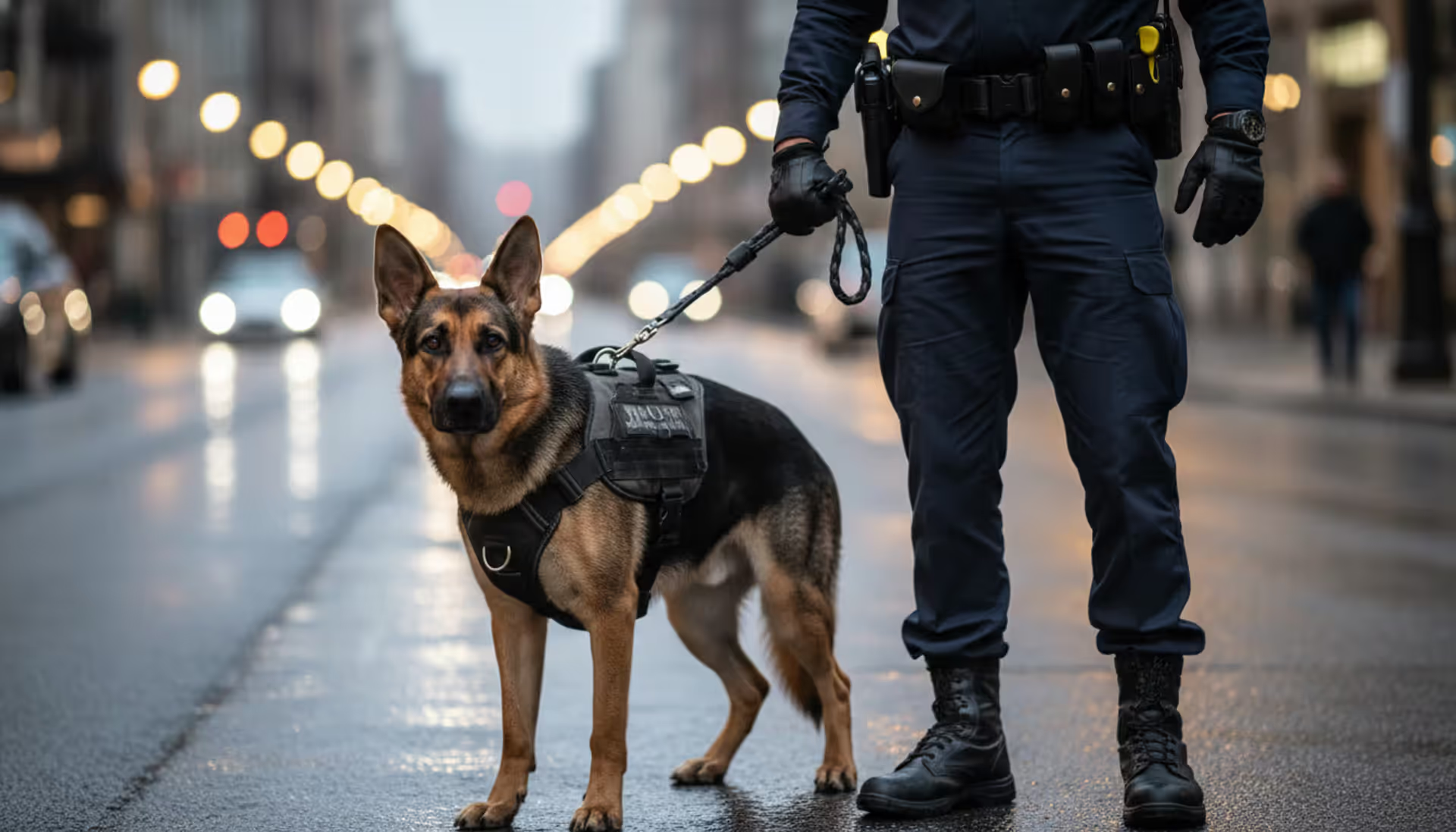
Police K9 units serve an important law enforcement function, but their use of force can cross constitutional boundaries. When a trained police dog latches onto your arm, leg, or torso, the injuries often extend far beyond what officers claim was "necessary." Victims face torn muscles, severed nerves, permanent scarring, and psychological trauma that can last years.
Understanding your rights after a K9 attack requires navigating complex legal terrain involving government immunity, Fourth Amendment protections, and the narrow circumstances where you can hold law enforcement accountable. The difference between a justified deployment and excessive force often determines whether you have a viable claim worth tens of thousands of dollars or face a legal dead end.
When Police Dogs Are Authorized to Use Force
Law enforcement agencies deploy K9 units for suspect apprehension, narcotics detection, and crowd control. The legal framework governing these deployments stems from Fourth Amendment protections against unreasonable seizures. When a police dog bites someone, courts treat it as a seizure requiring constitutional justification.
Officers may lawfully deploy K9s when pursuing suspects who pose an immediate threat to public safety or officer safety. A fleeing robbery suspect who ignored commands and appears armed presents a scenario where K9 deployment typically passes constitutional scrutiny. The force must be proportional to the threat level and the severity of the suspected crime.
Reasonable force standards require officers to issue clear warnings before releasing a dog. "K9 will bite" or similar announcements give suspects the opportunity to surrender. Departments with proper protocols mandate multiple warnings unless circumstances make warnings impossible or dangerous.
The Fourth Amendment analysis balances government interests against individual liberty. Courts examine whether the person posed an active threat, whether they were actively resisting or attempting to evade arrest, and the severity of the crime at issue. A shoplifting suspect who stopped running and raised their hands presents a vastly different constitutional equation than an armed carjacker firing at police.
Author: Samantha Loring;
Source: jamboloudobermans.com
Excessive force occurs when officers deploy K9s against individuals who have already surrendered, pose no threat, or committed only minor offenses. Releasing a dog on someone sitting on the ground with hands visible violates clearly established constitutional rights. Similarly, allowing a dog to continue biting after a suspect has been subdued transforms lawful force into an unconstitutional attack.
Many federal circuit courts have ruled that prolonged bite-and-hold tactics constitute excessive force when less violent alternatives exist. If officers had time to assess the situation and the person showed no resistance, deploying a dog trained to bite and hold until commanded to release may violate the Fourth Amendment.
Can You Sue If a Police Dog Bites You
Filing a lawsuit against law enforcement for a K9 bite faces significant hurdles, but viable claims exist when officers violate clearly established constitutional rights. The legal pathway typically involves Section 1983 civil rights claims in federal court, though state tort claims may also apply depending on jurisdiction.
Qualified immunity presents the primary obstacle. This legal doctrine shields government officials from liability unless they violated rights that were "clearly established" at the time of the incident. Courts grant officers substantial leeway to make split-second decisions in dangerous situations. Your lawsuit must demonstrate not only that the force was excessive, but that a reasonable officer in the same circumstances would have known the conduct violated constitutional standards.
Exceptions to qualified immunity emerge when officer conduct was plainly incompetent or knowingly violated the law. Releasing a dog on a compliant suspect who posed no threat and committed a minor offense often clears this bar. Video evidence showing you had surrendered before the bite strengthens your position considerably.
Justified versus unjustified bites hinge on specific facts. A bite during active pursuit of a violent felony suspect generally receives judicial deference. A bite that occurs after you stopped fleeing, announced surrender, or were misidentified as a suspect creates liability exposure for the department.
Understanding Police Dog Handler Liability
Individual K9 handlers face personal liability when their actions demonstrate deliberate indifference or gross negligence. If a handler knew their dog had a history of excessive aggression and deployed it anyway, qualified immunity may not apply. Handlers who fail to call off a dog after a suspect surrenders may be personally liable for injuries that occur during the prolonged attack.
Training records become crucial evidence. Handlers must demonstrate they followed department protocols for K9 deployment. Deviations from established procedures—skipping required warnings, deploying in situations where policy forbids it, or failing to control the dog—create individual liability.
The handler's state of mind matters. Did they intentionally use the dog to punish rather than apprehend? Did they make a reasonable mistake under pressure, or did they disregard obvious signs that force was unnecessary? These questions determine whether you can pierce qualified immunity.
Government Liability for K9 Units
Municipal liability under Monell doctrine requires proving the constitutional violation resulted from official policy, custom, or deliberate indifference by policymakers. A single excessive force incident rarely triggers government liability. You must show a pattern of similar violations or that department leadership knew about constitutional problems and failed to address them.
Inadequate training creates municipal liability when the deficiency amounts to deliberate indifference. If a department deploys K9 units without proper training on constitutional limits, and this deficiency obviously would lead to violations, the municipality faces exposure. Discovery often reveals departments that skip annual recertification, ignore handler complaints about aggressive dogs, or fail to discipline officers for prior excessive force incidents.
Some states have waived sovereign immunity for certain torts, allowing direct claims against government entities for negligence. California, for example, permits claims under the California Tort Claims Act, though strict procedural requirements apply. These state-law claims may provide an alternative pathway when federal civil rights claims face qualified immunity barriers.
How to File a Police Dog Bite Lawsuit
The lawsuit process begins immediately after the bite, even if you don't file formal papers for months. Your actions in the first hours and days shape the strength of your eventual claim.
Immediate documentation: Photograph your injuries from multiple angles before any treatment. Capture the bite wounds, surrounding bruising, and torn clothing. Take photos daily as injuries evolve—bruising often worsens over 48-72 hours, and these images demonstrate injury severity. If the incident occurred in a public area, photograph the scene showing lighting conditions, visibility, and any obstacles that affected the situation.
Medical treatment: Seek immediate emergency care, even for seemingly minor bites. Police dog bites carry high infection risk due to bacteria in the dog's mouth and the crushing nature of the wounds. Emergency room records document injury severity and create a contemporaneous medical record that defendants cannot dispute. Tell medical providers exactly how the injury occurred and describe all symptoms, including psychological distress.
Police reports: Request copies of all incident reports, including the K9 handler's narrative, supervisor reviews, and any internal affairs investigations. File a Freedom of Information Act (FOIA) request or state equivalent for body camera footage, dash camera recordings, and radio communications. These materials often contradict official narratives and reveal constitutional violations.
Witness information: Collect contact information for anyone who saw the incident. Bystander testimony often proves critical when police accounts differ from reality. Independent witnesses have no incentive to favor either side, giving their testimony substantial credibility.
Author: Samantha Loring;
Source: jamboloudobermans.com
Notice requirements: Most jurisdictions require filing a formal claim with the government entity before filing a lawsuit. These administrative claims have strict deadlines—often 90 days to six months from the incident. Missing this deadline typically bars your lawsuit entirely. The claim must describe the incident, injuries, and damages with reasonable specificity.
Statute of limitations: Federal civil rights claims under Section 1983 borrow the statute of limitations from the state's personal injury law, typically two to three years. Some states have shorter deadlines for claims against government entities. California requires filing an administrative claim within six months, for example. These deadlines are absolute—courts rarely grant exceptions.
Attorney consultation: Police misconduct cases require specialized expertise. Look for attorneys with specific experience in excessive force claims and a track record of challenging qualified immunity. Most work on contingency, taking a percentage of any recovery rather than charging hourly fees.
Discovery and investigation: Your attorney will issue subpoenas for the dog's training records, bite history, department policies, and handler personnel files. Prior complaints against the same handler or dog strengthen your case by establishing a pattern. Expert witnesses—often former K9 trainers or use-of-force specialists—review the evidence and provide opinions on whether the deployment violated professional standards.
Settlement negotiations: Most cases settle before trial. Government entities face significant exposure when video evidence clearly shows excessive force. Settlement discussions often intensify after discovery reveals problematic training records or prior incidents.
Trial: If settlement fails, expect a jury trial in federal or state court. Police misconduct trials are challenging—juries often defer to officer judgment. Strong video evidence and expert testimony become essential to overcome pro-law enforcement bias.
What Compensation Can Police Dog Bite Victims Claim
Economic damages cover quantifiable financial losses. Medical expenses include emergency treatment, surgery, physical therapy, psychological counseling, and future medical care. Police dog bites often require multiple surgeries to repair nerve damage, remove scar tissue, or address infections. Preserve all medical bills, insurance explanations of benefits, and receipts for out-of-pocket expenses.
Lost wages compensate for time missed from work during recovery. Document your regular earnings and request a letter from your employer confirming missed shifts. If injuries prevent returning to your previous occupation, vocational experts calculate lost earning capacity—the difference between what you would have earned and what you can earn with your limitations.
Non-economic damages address pain, suffering, emotional distress, and loss of enjoyment of life. Severe scarring, particularly on visible areas like the face or arms, increases these damages substantially. Psychological trauma—including PTSD, anxiety around dogs, and sleep disturbances—adds to non-economic losses. Courts recognize that being attacked by a trained police dog creates lasting psychological harm beyond the physical wounds.
Permanent disability or disfigurement dramatically increases compensation. Nerve damage that causes permanent loss of hand function, for example, affects every aspect of daily life. Scarring that requires multiple reconstructive surgeries and still leaves visible disfigurement justifies substantial damages.
Punitive damages may apply in cases involving malicious or reckless conduct. If the handler deliberately used the dog to punish you or showed reckless disregard for your safety, punitive damages punish the wrongdoer and deter similar future conduct. These damages are rare in police misconduct cases but possible in egregious situations.
Injury Severity
Typical Medical Treatment
Settlement Range
Recovery Timeframe
Minor puncture wounds
Emergency cleaning, antibiotics, basic wound care
$5,000 - $25,000
2-6 weeks
Deep lacerations requiring stitches
Emergency surgery, wound closure, possible skin grafts
Settlement amounts vary widely based on jurisdiction, injury severity, and strength of liability evidence. Cases with clear video evidence of excessive force settle for substantially more than cases relying solely on conflicting witness testimony. Jurisdictions with plaintiff-friendly juries command higher settlements because defendants face greater trial risk.
Proving Excessive Force in K9 Bite Cases
The legal standard for excessive force comes from Graham v. Connor, which requires evaluating the totality of circumstances from the perspective of a reasonable officer on the scene. Courts reject 20/20 hindsight, but they also refuse to defer blindly to officer claims that force was necessary.
Three factors dominate the analysis: the severity of the crime, whether the suspect posed an immediate threat, and whether they were actively resisting or attempting to evade arrest. A person suspected of a violent felony who is actively fleeing presents a stronger case for K9 deployment than a misdemeanor suspect who stopped running.
Author: Samantha Loring;
Source: jamboloudobermans.com
Video evidence transforms these cases. Body camera and bystander footage showing you had stopped fleeing and raised your hands before the bite directly contradicts officer claims that force was necessary. Audio recordings capturing your verbal surrender followed by a handler releasing the dog anyway demonstrate constitutional violations clearly.
Witness testimony from independent observers carries substantial weight. People with no connection to either party who describe you as compliant when the dog attacked undermine the defense narrative. Collect witness statements quickly—memories fade and people become harder to locate as time passes.
K9 training records reveal whether the dog and handler met professional standards. Dogs with histories of biting after suspects surrendered demonstrate a pattern of excessive force. Handlers who failed annual recertification or received prior complaints about improper deployments show a propensity for constitutional violations.
Expert witnesses—typically former K9 trainers or use-of-force specialists—review the evidence and provide opinions on whether the deployment met professional standards. These experts explain to juries what reasonable officers would have done in the same situation and identify specific policy violations.
Medical evidence showing injury severity supports excessive force claims. The crushing power of a police dog bite, the depth of wounds, and the permanence of scarring demonstrate that this use of force was far from minimal. Severe injuries from a dog allowed to bite and hold for an extended period after you surrendered show the force was unreasonable.
The warning issue matters substantially. Departments with clear policies requiring multiple warnings before deployment create liability when handlers skip this step. If you never heard a warning before the attack, this procedural violation supports your excessive force claim.
Common Mistakes That Weaken Your Police Dog Bite Claim
Failing to document injuries immediately ranks among the most damaging errors. Bite wounds change appearance rapidly as swelling develops and bruising spreads. Without photos from the day of the incident, defendants claim your injuries were less severe than you allege. Take comprehensive photos before medical treatment alters the wounds.
Delaying medical treatment gives defendants ammunition to argue your injuries weren't serious. Insurance companies and government attorneys routinely claim that gaps in treatment indicate exaggerated complaints. Seek emergency care immediately, then follow all recommended follow-up treatment. Missing appointments or stopping physical therapy early undermines your credibility.
Giving recorded statements to investigators without an attorney present creates devastating impeachment material. Police investigators are skilled at asking questions that seem innocuous but create inconsistencies with later testimony. Politely decline to provide detailed statements until you've consulted counsel. You have no legal obligation to help the department investigate its own misconduct.
Author: Samantha Loring;
Source: jamboloudobermans.com
Posting on social media about the incident or your injuries allows defendants to mine your accounts for contradictory information. A post showing you engaged in physical activity may contradict claims of disabling injuries. Set all accounts to private and avoid discussing the case online entirely.
Accepting quick settlement offers without understanding full damages leaves substantial money on the table. Government entities sometimes offer immediate payment of medical bills in exchange for a release of all claims. These early offers rarely account for future medical needs, lost earning capacity, or the full value of non-economic damages. Consult an attorney before accepting any settlement.
Missing administrative claim deadlines destroys otherwise valid cases. These deadlines are strictly enforced—courts almost never grant extensions. Calendar the deadline immediately and file well before it expires. Many attorneys refuse cases where the administrative deadline has passed because the claim is legally barred.
Failing to preserve evidence allows critical information to disappear. Body camera footage may be deleted after retention periods expire. Witnesses move or forget details. Request all recordings and reports immediately through formal FOIA requests. Follow up persistently—agencies sometimes ignore initial requests hoping you'll give up.
The use of police dogs trained in the bite-and-hold method against suspects who pose no immediate threat and are not actively resisting arrest violates the Fourth Amendment's prohibition against excessive force. Courts must carefully scrutinize these deployments to ensure they serve legitimate law enforcement purposes rather than functioning as extrajudicial punishment
— Professor David Harris
Frequently Asked Questions About Police Dog Bite Cases
What should I do immediately after a police dog bites me?
Seek emergency medical treatment first—police dog bites carry high infection risk and often cause deeper tissue damage than initially apparent. Photograph your injuries from multiple angles before treatment if possible, and continue documenting as bruising and swelling develop over the next 72 hours. Request copies of all police reports and incident documentation. Collect contact information for any witnesses who saw the attack. Avoid giving detailed recorded statements to investigators without consulting an attorney. File a formal administrative claim with the government entity within the required timeframe, which varies by jurisdiction but may be as short as 90 days.
How long do I have to file a lawsuit against the police for a K9 bite?
Federal civil rights claims under Section 1983 typically follow your state's personal injury statute of limitations, usually two to three years. However, most jurisdictions require filing an administrative claim with the government entity much sooner—often within six months or even 90 days. This administrative claim is a prerequisite to filing a lawsuit. Missing the administrative deadline typically bars your case entirely, even if the general statute of limitations hasn't expired. Consult an attorney immediately to determine the specific deadlines in your jurisdiction, as they vary significantly by state and locality.
Can I sue the police department or just the handler?
You can potentially sue both the individual handler and the municipal government, but the legal theories differ. Individual officers face liability under Section 1983 when they violate clearly established constitutional rights, though qualified immunity often protects them unless their conduct was plainly unlawful. Municipal liability requires proving the constitutional violation resulted from official policy, custom, or deliberate indifference by policymakers—typically by showing inadequate training, a pattern of similar violations, or failure to discipline officers for prior misconduct. Many successful cases target both the individual officer and the municipality, as each presents different advantages and challenges.
What if the police say the dog bite was justified?
Police claims that force was justified don't end your case—courts independently evaluate whether the force was reasonable under the Fourth Amendment. The legal standard examines the totality of circumstances from the perspective of a reasonable officer, considering the severity of the suspected crime, whether you posed an immediate threat, and whether you were actively resisting or fleeing. Video evidence, witness testimony, and expert opinions often contradict official police narratives. Even if you were initially fleeing, force becomes unjustified once you surrender or are subdued. An attorney can evaluate whether the specific facts support an excessive force claim regardless of what police reports claim.
Do police dog bite cases ever go to trial?
Most cases settle before trial, but some proceed to jury verdicts when parties cannot agree on settlement terms. Trials are more common in cases with strong video evidence clearly showing excessive force, as plaintiffs have less incentive to accept low settlement offers when they have compelling proof. Government entities sometimes refuse reasonable settlements and force trials when they believe qualified immunity will result in dismissal or when they want to avoid setting precedent with a large settlement. Trials in police misconduct cases are challenging due to jury deference to law enforcement, making strong evidence and experienced counsel essential.
Does insurance cover police dog bite injuries?
Your health insurance should cover medical treatment for injuries, though you may face copays and deductibles. If you ultimately recover compensation through a settlement or verdict, your health insurer may have a right to reimbursement for amounts they paid—called subrogation. Homeowners or renters insurance typically doesn't apply to police dog bites since they're not covered incidents. The government entity may have liability insurance that covers settlements and judgments, though many self-insure or have high deductibles. Insurance coverage doesn't affect your right to file a claim, but it may influence settlement negotiations and the collectability of any judgment.
Police dog bites represent a unique intersection of personal injury and civil rights law. The physical wounds often heal within months, but psychological trauma and permanent scarring can affect victims for years. Understanding that you have legal options provides some measure of control in a situation where you may have felt powerless.
Not every police dog bite creates a viable lawsuit—the law grants officers substantial discretion to use force in dangerous situations. But when that force crosses constitutional boundaries, when officers deploy K9s against people who have surrendered or pose no threat, the law provides remedies. Compensation cannot undo the attack, but it can cover medical expenses, replace lost income, and hold law enforcement accountable for constitutional violations.
The strength of your case depends heavily on documentation, timing, and legal representation. Preserve evidence immediately, meet all administrative deadlines, and consult attorneys with specific experience in police misconduct cases. These cases require navigating complex legal doctrines like qualified immunity and Monell liability that don't arise in standard personal injury claims.
Remember that qualified immunity is not absolute. Courts increasingly recognize that certain police conduct so obviously violates constitutional rights that no reasonable officer could believe it was lawful. Video evidence showing you complying with commands before a dog attack, medical records documenting severe injuries, and expert testimony explaining professional standards can overcome qualified immunity defenses.
The decision to pursue a claim is personal and depends on many factors including injury severity, strength of evidence, and your willingness to engage in what may be a lengthy legal process. Consultation with experienced counsel provides clarity about your specific situation and the realistic value of your potential claim. Many attorneys offer free initial consultations and work on contingency, removing financial barriers to pursuing justice.
When your dog bites someone inside your home or on your property, you face potential legal liability, insurance complications, and serious consequences. Understanding homeowner liability laws, insurance coverage, and your responsibilities can mean the difference between a manageable situation and financial devastation
When your dog attacks another dog, euthanasia is not automatic. The outcome depends on injury severity, bite history, state laws, and circumstances. Understanding the dangerous dog declaration process, your rights during hearings, and legal consequences helps you navigate this crisis effectively
A severe dog attack requires immediate medical attention and legal action. Learn critical steps to take after being mauled by a dog, including emergency care priorities, reporting procedures, documentation methods, victim legal rights, and available compensation for injuries and trauma
Persistent barking from a neighbor's dog can disrupt sleep and strain community relationships. This comprehensive guide explains how to file a dog noise complaint, including understanding local ordinances, documenting violations, navigating the enforcement process, and pursuing legal remedies when initial complaints fail
The content on this website is provided for general informational and educational purposes only. It is intended to explain concepts related to animal law, pet ownership rights, service animals, dog bite liability, and animal welfare legislation in the United States.
All information on this website, including articles, guides, and examples, is presented for general educational purposes. Legal outcomes may vary depending on jurisdiction, state laws, and individual circumstances.
This website does not provide legal advice, and the information presented should not be used as a substitute for consultation with qualified attorneys or animal law professionals.
The website and its authors are not responsible for any errors or omissions, or for any outcomes resulting from decisions made based on the information provided on this website.