Your dog just bit someone in your living room. Maybe it was the UPS driver, maybe your sister-in-law, maybe the plumber fixing your sink. Whoever it was, you're now facing a situation that could cost you tens of thousands of dollars, your homeowner's insurance, and possibly your dog.
These incidents happen faster than you'd think. Your normally friendly Labrador gets startled when a guest reaches down too quickly. Your rescue dog with a sketchy past reacts when a child runs screaming through the house. Your terrier, who's been on edge all day, finally snaps when the repair guy gets too close to her favorite spot on the couch.
The next few hours and days will determine whether this becomes a manageable insurance claim or a financial nightmare that follows you for years.
Legal Liability When Your Dog Bites Someone on Your Property
Where you live changes everything about your legal exposure. Some states will hold you responsible even if your golden retriever has never growled at anyone in eight years. Others require proof that you knew your dog might bite.
Strict liability states—and there are more than 30 of them—don't care about your dog's history. California, Illinois, Michigan, and New Jersey are just a few examples. In these places, your dog bites someone on your property, you pay. Period. Doesn't matter if Fluffy was the neighborhood favorite who let kids climb all over her at the park.
Then you've got one-bite rule states like Texas, Virginia, and Maryland. These jurisdictions require the victim to prove you had reason to know your dog posed a danger. But here's the catch: "one bite" is misleading. Judges look at everything. Did your dog snap at the mailman last month? Did she snarl when strangers approached? Have neighbors complained about aggressive behavior? Any of these can establish that you should have known.
The legal concept of "duty of care" matters just as much as which state you're in. You can't just say "well, it's my house" and wash your hands of responsibility. Courts expect you to take reasonable steps to protect people who have a legitimate reason to be on your property.
I've seen homeowners lose everything because they assumed their friendly family dog couldn't possibly hurt anyone. The law doesn't care about your perception of your dog. What matters is whether you took appropriate precautions based on what a reasonable person would have known about the risk
— Jennifer Martinez
Different states create different outcomes for identical situations. A bite case in New York requires proving the owner knew about dangerous tendencies, but only for non-bite injuries like when a dog knocks someone down. California holds owners strictly liable whether the dog bit, scratched, or body-slammed someone.
Your potential liability increases if you broke local laws when the bite happened. Leash law violations, failure to comply with dangerous dog registration requirements, or ignoring quarantine orders all make your legal position worse. Even inside your own home, if you knew guests were arriving and left an aggressive dog loose, you've probably failed your duty of care.
Does Homeowner Insurance Cover Dog Bites at Home
Here's the good news: most homeowner policies cover dog bites through their liability section. You're typically looking at $100,000 to $300,000 in coverage per incident. Whether your dog bites someone in your kitchen or on your front steps usually doesn't matter—the coverage applies the same way.
Your policy breaks down into two relevant parts. The liability coverage handles legal defense, settlements, and court judgments. The medical payments section—usually a much smaller amount between $1,000 and $5,000—pays immediate medical expenses regardless of who was at fault. This smaller coverage can resolve minor bite incidents before they turn into lawsuits.
Now for the bad news: insurance companies have gotten much pickier about dogs over the past decade.
Walk into any insurance office with a pit bull, Rottweiler, German Shepherd, Doberman, Akita, or wolf hybrid, and you'll likely hear "we can't cover that breed" before you finish signing your name. Some insurers won't write policies at all. Others charge double or triple premiums. A few will cover the dog but exclude any liability related to it—which defeats the entire purpose.
Your policy probably excludes several scenarios that might surprise you:
Dogs with bite histories rarely get coverage, even if the previous bite was minor. Insurers view one bite as proof of future risk.
Household members who get bitten can't make claims against your policy. Your daughter, your mother-in-law staying with you for three months, your college kid home for summer—none of them can file a claim if your dog bites them.
Running a home business complicates coverage. If your dog bites a client who came to your home office, your insurer might deny the claim because it wasn't purely personal activity.
When someone files a claim, your insurance company assigns an investigator who'll interview everyone involved, review medical records, inspect your property, and check your dog's veterinary history. For legitimate claims with clear liability, insurers often settle quickly. Fighting in court costs them money too. Average payouts for moderate injuries run between $30,000 and $50,000, though this varies wildly.
What counts as "moderate" versus "severe"? Bite injuries requiring a few stitches and antibiotics might settle for $10,000 to $20,000. But facial bites on children, nerve damage requiring surgery, psychological trauma needing therapy, or permanent scarring can push settlements past $100,000 easily.
After your insurance company writes that settlement check, expect consequences. They'll probably drop your policy at renewal—not mid-term, since that's usually illegal except for non-payment or fraud, but they'll send you a non-renewal notice 30 to 60 days before your policy expires. Good luck finding affordable replacement coverage with a dog bite claim on your record. You'll end up in high-risk state insurance pools paying two or three times what you used to pay, or with specialty carriers who charge premium rates.
Some companies won't drop you but will exclude your specific dog from future coverage. Others demand you remove the dog from your home as a condition of keeping your policy. This forces heartbreaking decisions between your insurance and your pet.
Umbrella policies add another million dollars or more in liability coverage beyond your standard homeowner limits. They'll cover dog bites, but only if your underlying homeowner policy covers the incident first. And umbrella carriers impose breed restrictions too—sometimes stricter ones than your primary insurer.
Who Is Liable When Different Visitors Are Bitten
The law treats different types of visitors differently. A dinner guest gets more protection than a burglar. A delivery driver occupies a different legal category than your brother-in-law.
Visitor Type
Your Legal Exposure
Insurance Likely to Pay?
Your Defense Options
Invited Guest
Very High—you owe them maximum protection and clear warnings about hazards
Yes—this is standard coverage territory
Limited—you'd need to prove serious provocation or that they entered restricted areas after warnings
Delivery Driver
Very High—they're on your property for mutual benefit, which creates strong duty of care
Usually Yes—covered as business invitees unless your policy has business exclusions
Moderate—you might argue they ignored posted warnings or didn't follow delivery instructions
Trespasser
Low to Moderate—depends heavily on state law and whether they were a child
Maybe—insurers sometimes pay but might challenge coverage
Strong—generally you only can't intentionally harm trespassers or set traps
Family Member
Minimal Legal Exposure but Maximum Personal Cost
Rarely—household exclusions typically eliminate coverage
Not Applicable—family rarely sues, and if they do, you're paying out of pocket
Invited Guests and Social Visitors
When you invite someone over—birthday party, game night, afternoon coffee—you're creating the highest duty of care the law recognizes. These people trust you. They're entering your space at your invitation. Courts hold you to a high standard for their safety.
The law doesn't care if your guest voluntarily approached your dog. It doesn't care if they said "oh, I love dogs!" and reached out to pet her. You still need to warn them about specific risks. "Be careful, she's nervous around strangers" might work. Just saying "we have a dog" probably won't.
Friends who get bitten create the worst situations. Initially, they'll probably downplay it. "Oh, it's fine, just a scratch." Then the emergency room bill arrives for $3,000. Then their doctor recommends a plastic surgeon for the scar. Then they miss a week of work. Suddenly that friendship gets very complicated when their attorney sends you a demand letter for $50,000.
Delivery Drivers and Service Workers
Amazon drivers, postal carriers, HVAC repair technicians, meter readers—these workers enter your property dozens of times weekly across the neighborhood. They can't reasonably investigate every property for hidden dangers. The law gives them strong protection.
These workers qualify as "invitees" in legal terminology, meaning they're on your property for purposes that benefit both of you. You get your package or your working furnace; they get paid for providing the service. This mutual benefit creates maximum duty of care on your part.
Delivery drivers have started refusing to complete deliveries when they encounter loose dogs. Their companies encourage this. They photograph the dog, mark the address as requiring special handling, and leave. If they come back the next day and your dog bites them because you didn't secure the animal, you have almost no defense. They documented the hazard, you ignored it.
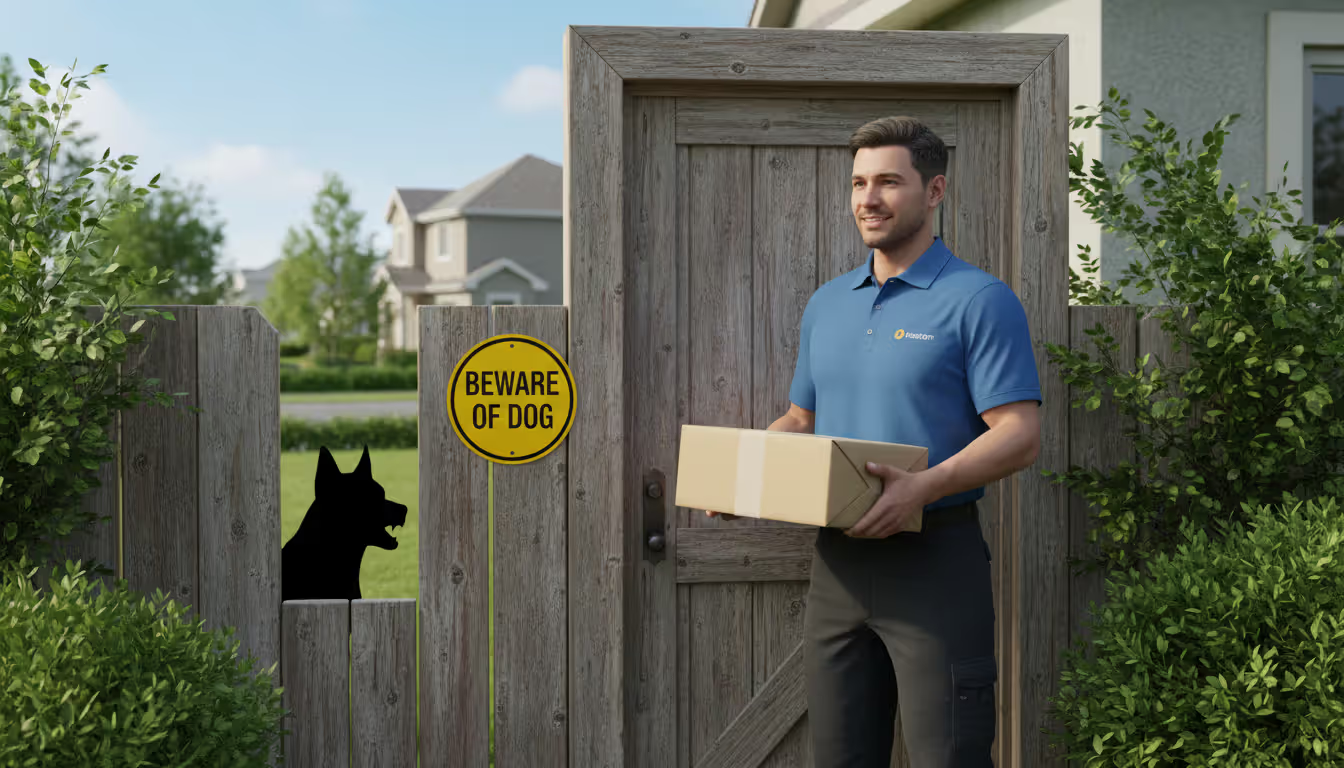
Even "Beware of Dog" signs help less than you'd think for delivery workers. Some courts actually view these signs as evidence you knew your dog was dangerous but didn't take adequate precautions beyond posting a warning. The sign might protect you from a social guest who ignored it, but probably won't help when a delivery driver gets bitten.
Author: Marcus Redfield;
Source: jamboloudobermans.com
Trespassers and Uninvited Persons
Someone cuts through your yard without permission and your dog bites them. Are you liable?
Usually not, but it depends. Some strict liability states hold you responsible regardless. Most states give you substantial protection—you can't set traps or sic your dog on trespassers intentionally, but you're generally not liable for normal hazards like having a protective dog.
Children complicate trespassing cases enormously. The "attractive nuisance" doctrine says if you have something that attracts kids—a pool, a trampoline, a tree house—you need to take extra precautions even for trespassing children. A dog doesn't qualify as an attractive nuisance, but if kids regularly play in your yard and you know it, letting an aggressive dog roam free could create liability.
Your neighbor who regularly cuts across your lawn to reach the sidewalk isn't really a trespasser if you've allowed it for months. But if you get into a property dispute and that neighbor enters your yard after you've told them to stop, they've become a trespasser. Document these interactions in case you need to establish their legal status later.
Immediate Steps to Take After a Dog Bite Incident at Home
The victim is bleeding. Your dog is agitated. You've got maybe 60 seconds to make decisions that will affect the next two years of your life.
Make sure the injured person gets medical help immediately. Serious bleeding, deep punctures, facial injuries, or bites to children require 911. Moderate wounds need urgent care at minimum. Don't try to talk them out of seeking treatment to "keep this simple." That looks terrible later, and infection risk from dog bites is real—even small punctures can cause serious infections within 24 hours.
Get your dog away from everyone and secured somewhere safe. Bedroom, crate, basement, outdoor kennel—anywhere that completely separates the dog from people. Don't stand there comforting your dog in front of the injured person. This is not the time to explain that "she's usually so sweet" or "I don't know what happened." Just secure the animal.
Start documenting while details are fresh. Use your phone to photograph the injury before cleaning (if the victim consents), the location where it happened, and anything relevant to how the bite occurred. Was a door left open? A gate unlatched? A toy on the floor that might explain what triggered the dog? Photograph your dog too, showing their normal size and appearance.
Write down everything that happened while you remember it clearly: who was in the room, what your dog was doing beforehand, whether you gave any warnings, how the victim approached or interacted with the dog, where exactly the bite occurred. In three months when you're answering interrogatories from opposing counsel, you won't remember these details.
Exchange information like after a car accident. Get the victim's full name, address, phone number, and insurance information if they have it. Give them your homeowner insurance details. Don't hide this information hoping they won't file a claim—that never works and makes you look worse.
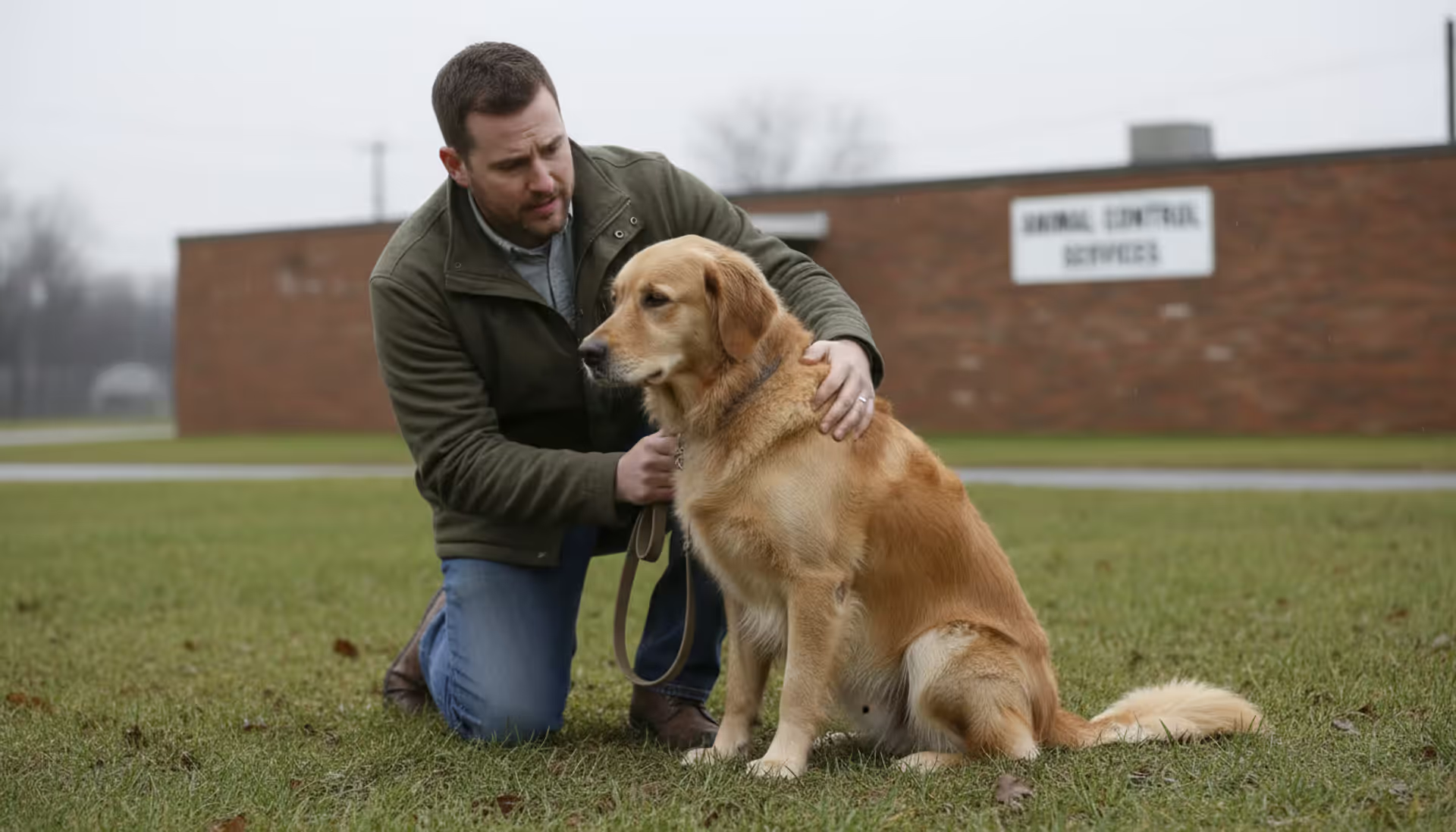
Call your local animal control office within whatever timeframe your area requires. Most jurisdictions mandate reporting within 24 to 48 hours for any bite that breaks skin. If you don't report and the victim does, you're starting from a defensive position where their version becomes the official record.
Contact your homeowner insurance company that same day if possible, definitely within 48 hours. Your policy requires prompt notice of potential claims. Call the claims line, explain what happened factually without speculating about fault, and follow their instructions exactly. They'll assign someone to investigate and tell you what to do next.
Don't have long conversations with the victim about whose fault it was. Express concern for their wellbeing, offer to help with immediate needs, but stop short of saying "this is completely my fault" or "my dog has always been aggressive and I should have locked her up." Sympathy is fine. Admissions of liability that could waive insurance coverage are not.
If other people saw what happened, get their names and contact information immediately. Independent witnesses matter enormously, especially if the victim's story starts changing. Someone who saw the whole thing and can say "the victim was backing the dog into a corner" or "the homeowner never warned anyone about the dog" could determine the entire outcome.
Consider hiring your own attorney separate from your insurance company's lawyer, particularly if: the injuries look severe enough to exceed your policy limits, your insurer is asking questions about coverage, the victim has already retained counsel, or you're facing potential criminal charges. Your insurance company's attorney represents the company's interests, which sometimes align with yours and sometimes don't.
Author: Marcus Redfield;
Source: jamboloudobermans.com
Legal Outcomes and Penalties for Dog Bite Incidents
Civil lawsuits are coming if the injuries were significant. Count on it.
Victims sue for economic damages—medical bills, lost wages, future treatment costs—plus non-economic damages like pain and suffering, emotional distress, and disfigurement. The economic damages are straightforward math. Non-economic damages are wildly unpredictable, depending on jury sympathy, the victim's age and occupation, and how good their attorney is.
Minor bite cases requiring stitches and antibiotics might settle for $10,000 to $30,000. Bites requiring surgery, especially on hands or faces, typically run $50,000 to $150,000. Severe attacks causing permanent disfigurement, nerve damage, or psychological trauma requiring ongoing therapy can blow past $500,000.
If the judgment exceeds your insurance coverage, everything you own becomes vulnerable. Your savings account, your retirement fund, your house equity—all fair game for collection. This is why attorneys preach about umbrella policies. That extra million in coverage costs maybe $200 to $400 annually and could save your financial life.
Criminal charges don't happen in every case, but they're possible. Most common are misdemeanor charges for violating local ordinances—failing to restrain a dangerous dog, ignoring leash laws, or not complying with special permit requirements. You're looking at fines from $500 to $1,000 and potential jail time of 30 to 90 days, though judges rarely impose jail for first offenses.
Felony charges apply when attacks cause severe injury or death, particularly if prosecutors can prove you knew your dog was dangerous or intentionally used the dog as a weapon. A felony conviction could mean one to five years in prison plus permanent loss of gun rights and difficulty finding employment.
Animal control operates independently from civil courts and criminal prosecutors. Their investigation runs on a parallel track and can produce its own consequences.
Expect a mandatory quarantine first—typically 10 days for rabies observation. If your dog's vaccinations are current, quarantine might happen at your home. If not, your dog goes to a shelter, and you're paying boarding fees.
For serious bites or repeat incidents, animal control may slap your dog with a "dangerous dog" designation. This isn't just a label. It comes with requirements: special permits that cost $100 to $500 annually, liability insurance of $100,000 to $500,000 specifically for the dog, posted warning signs on your property, secure confinement meeting specific construction standards (think reinforced fencing with locks), and muzzling requirements whenever the dog leaves your property.
Violate dangerous dog restrictions and you're facing criminal charges, immediate seizure of your dog, and fines up to $5,000.
Behavioral evaluations by certified animal behaviorists might be ordered. The evaluator assesses whether training and management can make the dog safe or whether the aggression is too ingrained. Their report heavily influences whether animal control seeks euthanasia.
Euthanasia orders represent the worst outcome. Reserved for cases involving life-threatening attacks, multiple bite histories, or professional assessments concluding the dog can't be safely managed, these orders can be appealed through administrative hearings and court proceedings. But appeals cost thousands in legal fees with no guarantee of success.
Even without official euthanasia orders, practical pressure to rehome or surrender your dog can become overwhelming. Insurance companies refuse coverage with the dog in the house. Landlords issue move-out-or-lose-the-dog ultimatums. Family members won't visit anymore. You're essentially forced to choose between your dog and your housing, insurance, and relationships.
Author: Marcus Redfield;
Source: jamboloudobermans.com
How to Protect Yourself From Dog Bite Liability
Start with brutal honesty about your dog's temperament. Every dog has limits, but some dogs show you exactly where those limits are if you're paying attention.
Does your dog growl when people approach her food bowl? That's resource guarding, and it can escalate to biting. Does she stiffen, stare, or raise her hackles when strangers enter? That's warning behavior. Has she ever snapped, even without making contact? That's a practice bite—next time she might not pull back.
Stop making excuses. "He's never actually bitten anyone" doesn't mean he won't. "She's just protecting her family" doesn't make the delivery driver any less injured. "He was provoked" usually means "someone walked near him."
Physical management when visitors arrive isn't optional if your dog has shown any concerning behavior:
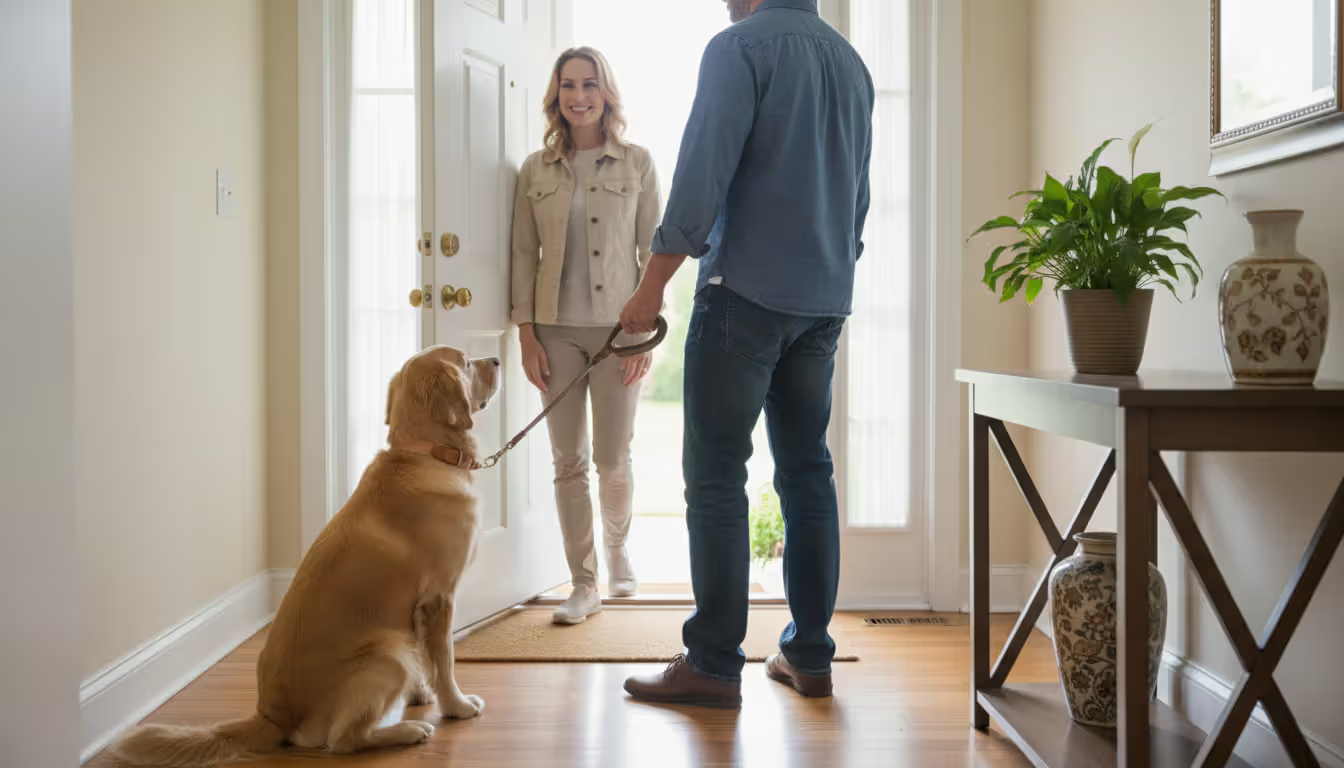
Put your dog in a bedroom with the door closed before guests arrive, not after they're already inside and the dog is worked up. Add a crate inside that room for extra security if your dog might scratch through a hollow-core door.
Baby gates create zones your dog can't access. Install them before parties or service visits. Yes, your dog might bark from behind the gate. Barking doesn't send anyone to the hospital.
Keep your dog leashed even inside your home during gatherings. You maintain control while still allowing the dog to be present. A six-foot leash gives you the ability to interrupt and redirect before situations escalate.
Outdoor kennels work for some situations—repair visits, large parties, times when you're too distracted to actively manage your dog. Make sure the kennel meets local requirements and protects your dog from weather extremes.
Warning signs notify people, but don't fool yourself into thinking they're legal shields. A sign that says "Dog on Property—Deliveries at Gate Only" gives clear instructions that might help your case if someone ignores them. Generic "Beware of Dog" signs mostly just prove you knew your dog posed a risk.
Talk to people directly. Tell the HVAC technician you'll put the dog away before he enters. Instruct delivery drivers to leave packages outside the fence. Warn dinner guests that your dog needs to stay in the bedroom because she's nervous around new people. Specific verbal communication beats any sign.
Review your homeowner insurance annually, not when you're filing a claim. Confirm your liability coverage amount—aim for $300,000 minimum, $500,000 is better. Check whether your dog's breed appears on any exclusion lists. If you're getting vague answers from your agent, that probably means you're not covered.
Disclose your dog's breed honestly when applying for insurance. Lying about it or saying your pit bull mix is "just a mix" will void coverage when you need it most. Better to pay higher premiums or find a specialty insurer than to have a claim denied because you weren't truthful.
Umbrella policies deliver tremendous value for dog owners. An extra million in liability coverage runs $200 to $400 per year typically. If you own any breed with a reputation for bites, this is money well spent.
Professional training isn't just for aggressive dogs. Any dog benefits from learning impulse control, recall commands, and proper socialization. If your dog has shown any concerning behavior, hire a certified professional dog trainer (CPDT) or veterinary behaviorist immediately. Don't wait for a bite.
Document your training efforts thoroughly. Keep certificates of completion, trainer evaluation reports, and notes from training sessions. If you ever face a lawsuit, proving you took responsible steps to address behavioral issues strengthens your defense considerably.
Socialization during puppyhood—especially before 16 weeks—dramatically reduces fear-based aggression later. Expose puppies to diverse people, places, sounds, and experiences. Dogs comfortable with variety are less likely to react defensively.
Keep veterinary records current, particularly rabies vaccination. Some aggressive behavior stems from pain or medical issues. Regular veterinary care shows responsible ownership and rules out medical causes for behavioral changes.
Spaying or neutering reduces hormone-driven aggression and looks better to courts and animal control officers evaluating your case. Intact dogs face greater scrutiny when bite incidents occur.
Author: Marcus Redfield;
Source: jamboloudobermans.com
Create protocols for predictable scenarios. Before deliveries, dog goes in the bedroom. Before children's parties, dog goes to a friend's house or boarding facility—children running and screaming can trigger even gentle dogs. Before repair visits, dog gets secured in a separate area with water and something to keep her occupied.
Frequently Asked Questions About Dog Bites in Your Home
Am I liable if my dog bites a family member in my home?
Legally liable? Yes, under dog bite statutes you could be. Practically liable? That's complicated because homeowner policies exclude household members from coverage. Your daughter living with you can't file a claim against your insurance if your dog bites her, though she could theoretically sue you personally. Most families don't go that route for obvious reasons. What usually happens: the injured family member uses their own health insurance for treatment while you cover deductibles and copays informally. Some families have gotten creative by having the bitten person claim against their health insurance while you reimburse them under the table, but this creates documentation issues if they need to prove how the injury occurred.
Can my homeowner insurance drop me after a dog bite claim?
Not immediately during your current policy period unless you've committed fraud or stopped paying premiums. But they'll almost certainly non-renew when your policy comes up for renewal, sending you a notice 30 to 60 days beforehand. This is legal in every state. After a dog bite claim, finding replacement coverage becomes difficult and expensive. You'll probably land in a high-risk state pool paying two to three times your previous premium, or with a specialty carrier that charges premium rates. Some insurers will offer renewal but exclude your specific dog from any future coverage, meaning if that dog bites again, you're completely unprotected. Others will renew only if you agree to remove the dog from your home—a heartbreaking ultimatum.
What if the person bitten was provoking my dog?
Provocation can reduce or eliminate your liability, but the legal bar is surprisingly high. Courts recognize provocation when someone hit, kicked, pulled the dog's tail, or tormented the animal in ways that would make a reasonable dog react defensively. Simply petting, talking loudly, waving arms, or walking into the dog's space almost never qualifies legally. Children under about seven can't legally provoke a dog regardless of what they did—the law assumes they're too young to understand consequences. You need strong proof of provocation: video footage or multiple independent witnesses ideally. Even with proof, some strict liability states hold you responsible anyway. And claiming provocation when a child was involved typically backfires with juries even if it's legally valid.
Do I need a lawyer if my dog bites someone at home?
For minor bites where the person gets basic medical care and your insurance company immediately accepts the claim, you probably don't need your own attorney—the insurer provides legal defense as part of your coverage. But hire independent counsel if: injuries appear severe enough that damages might exceed your policy limits (facial bites, nerve damage, attacks on children), your insurance company is questioning whether to provide coverage, the victim has already hired an attorney, criminal charges have been filed, or animal control is seeking a dangerous dog designation or euthanasia order. The attorney your insurance provides represents their interests, which usually but not always align with yours. When your personal assets are at risk because damages exceed your coverage, you need someone representing only you.
How much can I be sued for a dog bite on my property?
The sky is literally the limit in most states. No caps apply. Victims can pursue every dollar of medical expenses (including future treatment), lost income (past and future), plus pain and suffering, emotional trauma, and disfigurement damages. Small bites settle for $10,000 to $30,000 typically. Moderate injuries requiring surgical repair run $50,000 to $150,000. Severe attacks causing permanent scarring, especially facial disfigurement, or nerve damage can push settlements past $500,000. If a jury awards more than your insurance coverage provides, your personal assets—bank accounts, investment portfolios, home equity, future wages—can be seized to satisfy the judgment. This reality is why dog owners need substantial liability coverage, ideally supplemented with umbrella policies.
Will my dog be taken away after biting someone?
Not automatically, but it's possible depending on several factors. Animal control will definitely impose a quarantine period—10 days typically—to monitor for rabies symptoms. If your dog's vaccinations are current, quarantine might happen at your home under your supervision. Otherwise, your dog goes to a shelter and you pay daily boarding fees. For serious injuries, multiple bite incidents, or cases where your dog has a history, animal control may declare your dog "dangerous," which requires special permits, insurance, secure confinement, and muzzling in public. Euthanasia orders are reserved for the worst cases: life-threatening attacks, multiple victims, or professional behavioral evaluations concluding the dog presents unmanageable risk. You can appeal through administrative hearings and potentially court proceedings, but appeals cost thousands with no guaranteed outcome.
A dog bite in your home triggers a cascade of legal, financial, and personal consequences that can last for years. The specific outcomes depend on your state's liability framework, who got bitten, your insurance coverage details, and the circumstances surrounding the incident.
Financial exposure from homeowner liability dog bite on property cases can reach hundreds of thousands of dollars. Insurance cancellation often follows. Legal proceedings drag on. Your dog faces quarantine, potentially dangerous dog designation, possibly euthanasia.
Understanding your responsibilities before anything happens—knowing which duty of care you owe to different types of visitors, reading your insurance policy's fine print and breed restrictions, honestly assessing your dog's behavior patterns—gives you the opportunity to implement preventive measures that protect visitors while preserving your financial security.
The best protection combines adequate liability coverage (including umbrella policies), realistic evaluation of your dog's temperament and triggers, physical management when visitors arrive, and professional behavioral training for dogs showing concerning signs. Nothing guarantees you'll never face a bite incident, but responsible ownership practices dramatically reduce the likelihood while strengthening your legal and insurance position if the worst occurs.
If your dog does bite someone in your home, immediate action matters enormously: ensure the victim gets appropriate medical care, document everything thoroughly, make required reports to authorities, and notify your insurance carrier within their required timeframe. The decisions you make in the first 24 to 48 hours following an incident will shape legal outcomes, insurance claims success, and your dog's future. Consulting both your insurance company and a qualified attorney protects your interests while navigating the complicated aftermath of a dog bite on your property.
Police K9 attacks can cause severe injuries and lasting trauma. Understand when you can sue for excessive force, how government liability works, what compensation you may recover, and the critical steps to protect your rights after a police dog bite incident
When your dog attacks another dog, euthanasia is not automatic. The outcome depends on injury severity, bite history, state laws, and circumstances. Understanding the dangerous dog declaration process, your rights during hearings, and legal consequences helps you navigate this crisis effectively
A severe dog attack requires immediate medical attention and legal action. Learn critical steps to take after being mauled by a dog, including emergency care priorities, reporting procedures, documentation methods, victim legal rights, and available compensation for injuries and trauma
Persistent barking from a neighbor's dog can disrupt sleep and strain community relationships. This comprehensive guide explains how to file a dog noise complaint, including understanding local ordinances, documenting violations, navigating the enforcement process, and pursuing legal remedies when initial complaints fail
The content on this website is provided for general informational and educational purposes only. It is intended to explain concepts related to animal law, pet ownership rights, service animals, dog bite liability, and animal welfare legislation in the United States.
All information on this website, including articles, guides, and examples, is presented for general educational purposes. Legal outcomes may vary depending on jurisdiction, state laws, and individual circumstances.
This website does not provide legal advice, and the information presented should not be used as a substitute for consultation with qualified attorneys or animal law professionals.
The website and its authors are not responsible for any errors or omissions, or for any outcomes resulting from decisions made based on the information provided on this website.