Nobody plans to give up their dog. But here you are—maybe your landlord just banned pets, your kid developed severe allergies, or you're facing medical bills that make dog food feel like a luxury. Whatever brought you here, you need facts, not judgment.
This guide covers where to take your dog without emptying your wallet, what actually happens after you leave them there, and the legal stuff nobody talks about until it's too late.
Free Dog Surrender Options in the United States
You've got several options, but they work completely differently from each other.
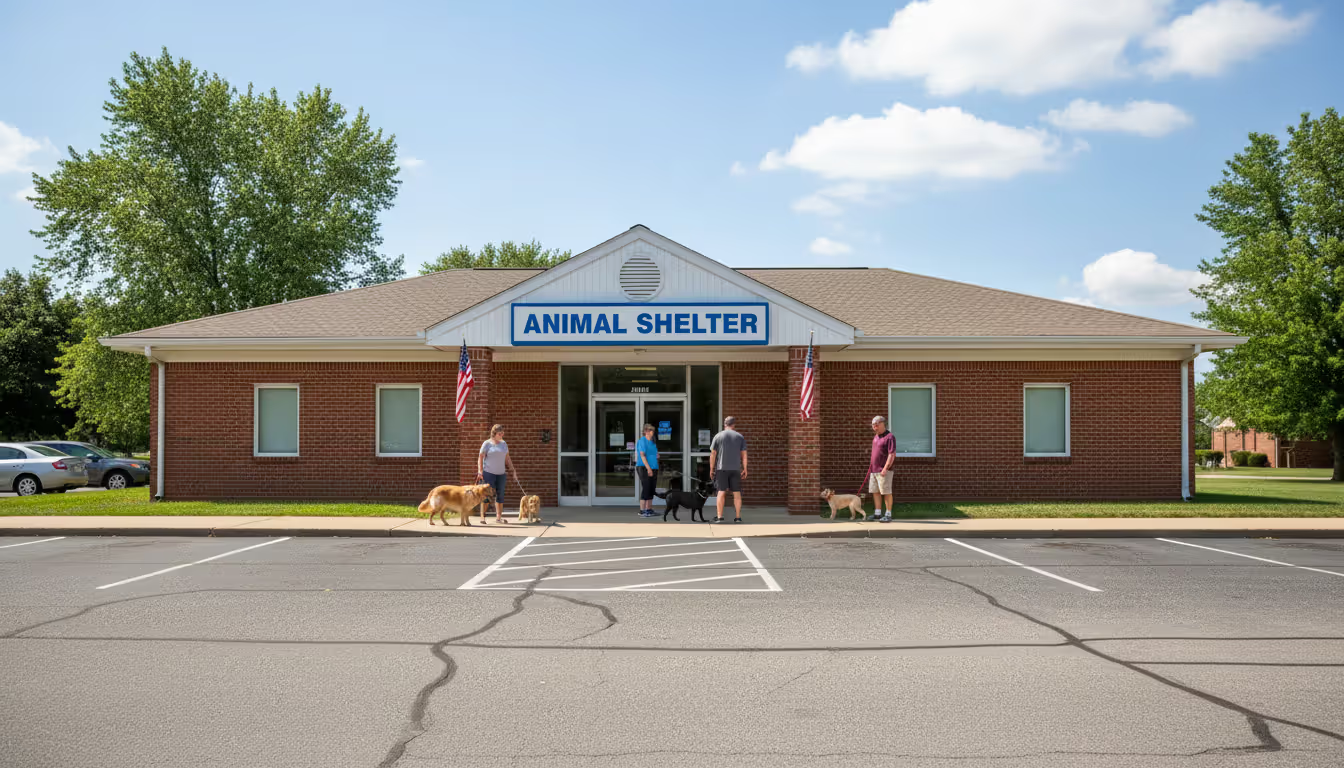
Municipal animal shelters run on your tax dollars. The facility serving your county or city can't legally turn away animals from residents (with rare exceptions during natural disasters). Call them "animal control," "city pound," or "county shelter"—same basic setup.
Here's what matters: they won't charge you. Your taxes already paid for the service. You'll probably need proof you live in their jurisdiction (utility bill, driver's license), and you might wait a few days for an appointment if they're slammed. In Los Angeles County, for example, wait times hit two weeks during summer kitten season. Philadelphia's ACCT typically takes dogs same-day.
Humane societies confuse people because the name doesn't mean much anymore. The national organization (HSUS) doesn't run shelters at all—they do lobbying and disaster response. Your local humane society might be a massive operation like San Francisco SPCA with a $50 million budget, or three volunteers working from their garages.
Some charge surrender fees. Others don't. San Diego Humane Society stopped charging fees in 2020 and saw surrenders drop by 30%—turns out people were abandoning dogs in parking lots to avoid the $50 charge. Milwaukee Area Domestic Animal Control Commission still charges $20-$100 on a sliding scale.
Breed-specific rescues operate entirely differently. They're foster-network based (no physical shelter), volunteer-run, and pickier about what they take. Northern California Labrador Retriever Rescue might have a two-month waitlist. Texas Cattle Dog Rescue will drive three hours to pick up an Australian Cattle Dog mix but won't take your German Shepherd.
The upside? These groups know their breeds inside and out. They'll work with behavioral issues other shelters would euthanize for. No fees, but prepare for a lengthy application and possible home visit before they'll accept your dog.
Faith-based organizations pop up in unexpected places. St. Francis Society in Florida runs on Catholic donations. Chai Lifeline in New York serves the Jewish community. They rarely advertise but they're there, usually willing to help without charging. Ask at local churches, synagogues, or mosques—somebody will know somebody.
Rural animal control in places like Montana or West Virginia often means one officer covering three counties and a concrete-block building with 12 kennels. They take everything, charge nothing, but euthanize faster than urban shelters because there's no adoption market for farm mutts in towns of 800 people.
Pro tip: the closest shelter isn't necessarily your best bet. One 20 minutes away that can take your dog tomorrow beats one five minutes away with a three-week wait.
Author: Samantha Loring;
Source: jamboloudobermans.com
How Does the Pet Surrender Process Work
The pet relinquishment process follows a pattern, though details shift between organizations.
What to Bring When Surrendering Your Dog
Rabies certificate matters most—it's legally required in 48 states and shelters won't intake without it. Can't find yours? Call your vet for a copy. They keep records for years.
After that: any medical records you've got. Doesn't need to be complete. Even a crumpled receipt from three years ago showing heartworm prevention helps. If your dog takes medications—Prozac for anxiety, insulin for diabetes, Apoquel for allergies—bring the bottles with dosage instructions.
Write down behavioral quirks. Not an essay, just bullet points: - Scared of men in baseball caps - Food-aggressive with other dogs, fine with people - Jumped the fence twice when she saw squirrels - Great with kids under 10, never around teenagers so unknown
This stuff matters more than you'd think. Austin Pets Alive reported that detailed behavioral notes increased adoption rates by 40% because they could match dogs appropriately instead of guessing.
If you've got AKC papers, bring them—purebreds move faster. Microchip number helps if it's registered to you (proves ownership if anyone questions it). That fancy collar and favorite squeaky toy? Some shelters let you leave them, others don't for disease-control reasons. Ask.
Intake Interview and Paperwork Requirements
You'll sit down with an intake counselor who'll ask questions. Why are you surrendering? How long have you had the dog? Where'd you get them? Has the dog ever bitten anyone?
They're not trying to make you feel guilty (usually). They're gathering information to keep the dog alive. A shelter worker in Denver told me they once had someone surrender a "friendly Lab mix" that put a volunteer in the ER four hours later. Turns out the dog had bitten three people, but the owner was too embarrassed to mention it.
The animal shelter intake legal process requires paperwork. You'll sign forms transferring legal ownership. Read the fine print: most give you 24-48 hours to change your mind, after which you have zero rights to the dog. Some places let you request updates ("let me know if she gets adopted!"), but understaffed shelters can't usually follow through.
Expect questions about: - Bite history (be honest—they'll find out) - Aggression toward people, dogs, or cats - House-training status - Medical conditions and current medications - Reason for surrender (moving, behavior, cost, time, etc.)
One shelter director in Chicago mentioned that about 60% of people say they're moving when it's actually behavioral issues. The dishonesty backfires—staff can't prepare for reactivity they don't know about.
Timeline From Drop-Off to Adoption Availability
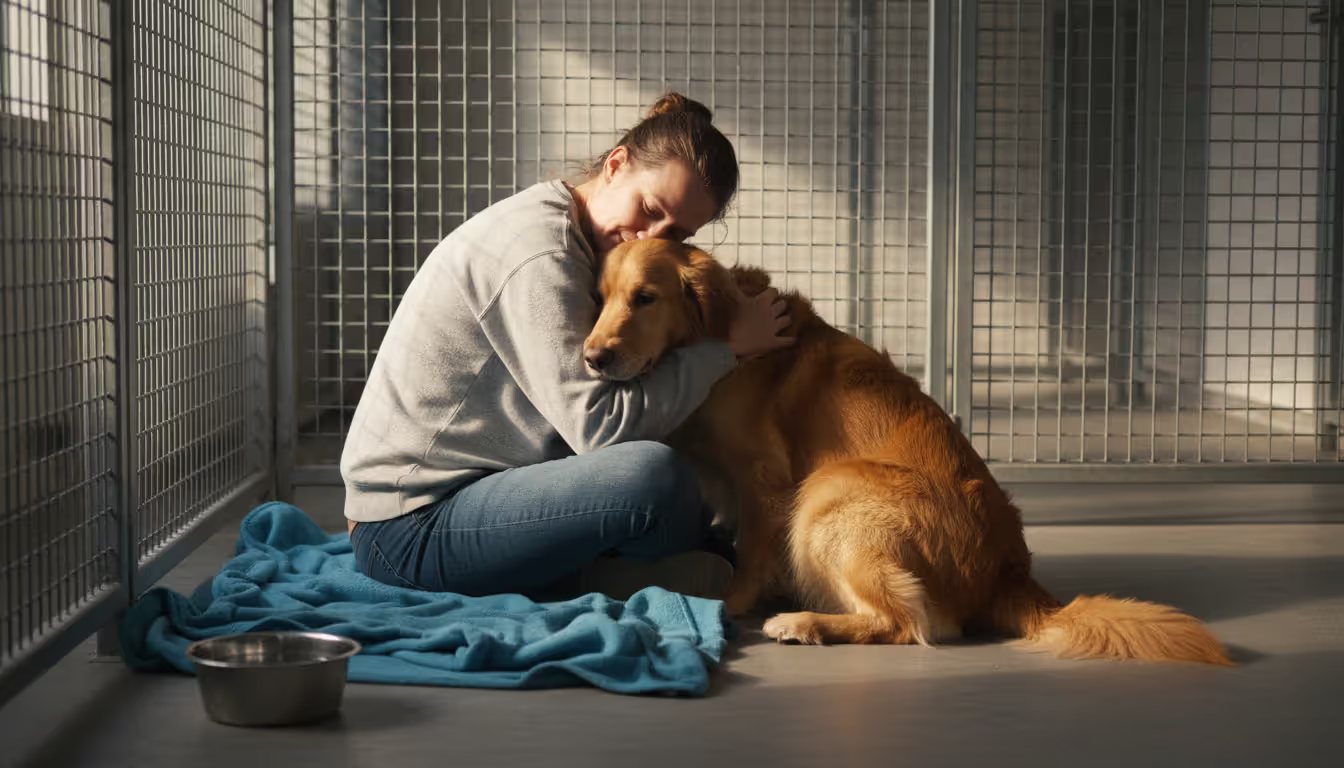
Your dog doesn't hit the adoption floor immediately. First comes a holding period—usually 24 to 72 hours—where they decompress in a quiet kennel. Shelter stress can make even chill dogs act weird initially, so staff wait for baseline behavior to emerge.
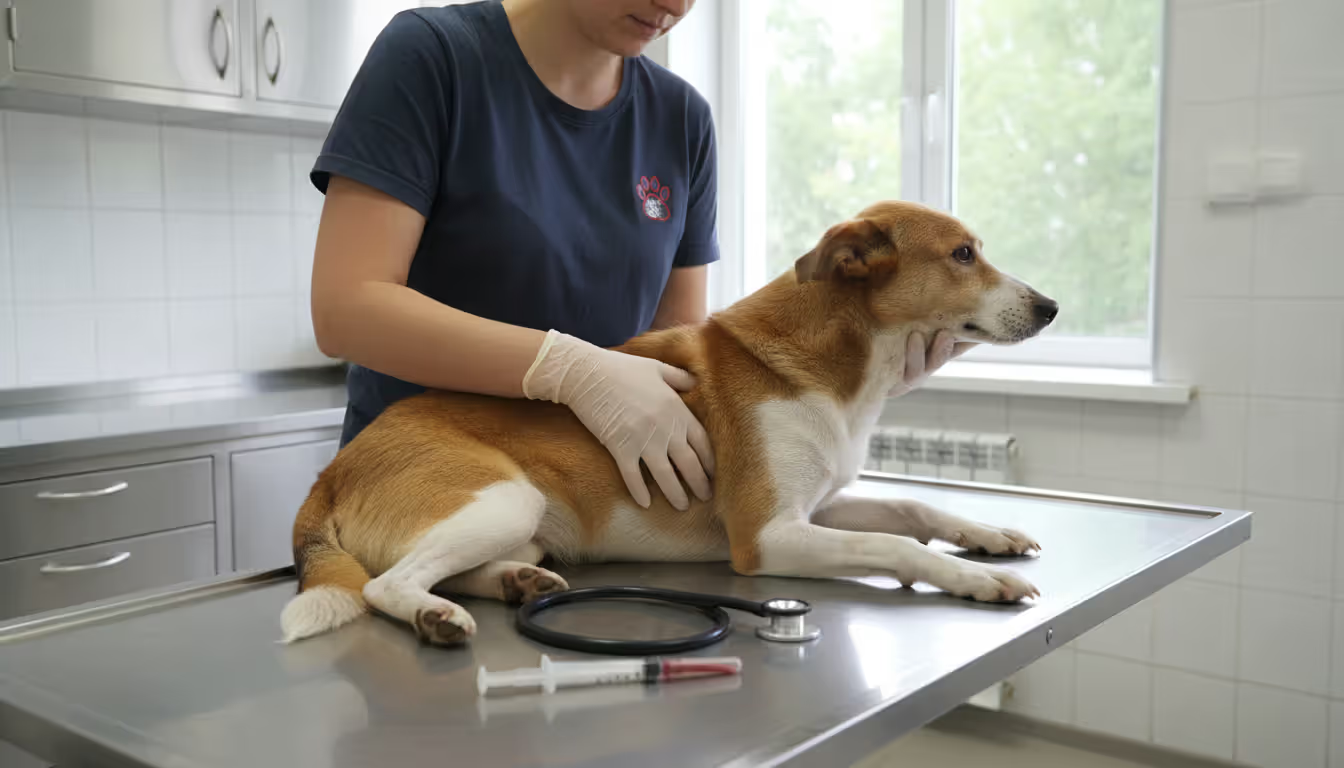
Next up: medical evaluation. Vets check for heartworm (takes 10 minutes with a blood test), intestinal parasites, dental disease, skin conditions, obvious injuries. Dogs get vaccinated unless you brought current records. Not spayed or neutered? That surgery happens before adoption, adding 5-7 days to the timeline.
Behavioral assessment comes next. Some places use formal tests like SAFER (Safety Assessment for Evaluating Rehoming), others just observe how dogs react to handling, food bowls, toys, and other dogs. This determines whether your dog goes straight to adoption, needs foster placement for training, or gets flagged as unadoptable.
Best-case scenario: healthy, friendly, young dog gets adopted in 7-14 days. Worst case: old dog with medical issues and behavioral quirks waits months. National average hovers around 23 days according to 2024 Shelter Animals Count data.
Author: Samantha Loring;
Source: jamboloudobermans.com
What Happens to Your Dog After Surrender
Let's talk about what actually happens to dogs after surrender—the good, the bad, and the realistic.
Behavioral assessment determines everything. A dog who passes gets listed for adoption. One who fails specific tests might still qualify for experienced-owner-only placement. Some failures mean immediate euthanasia, particularly for unpredictable aggression toward humans.
What does "failure" mean? In most shelters: lunging and making contact during food bowl test, biting when being moved off furniture, redirecting aggression onto handlers, or showing predatory behavior toward small animals when kids are the adopter demographic.
Medical evaluation uncovers problems you might not have known existed. Heartworm runs rampant in southeastern states—60% of surrendered dogs in Alabama test positive. Treatment costs $500-1,000, which some shelters cover and others don't. Shelters in wealthy areas (Boulder, Colorado; Marin County, California) treat everything manageable. Underfunded facilities in poor counties euthanize heartworm-positive dogs routinely.
Dental disease affects 80% of dogs over age three. Most shelters handle basic cleaning but won't do expensive extractions unless absolutely necessary.
Adoption placement works differently than you'd expect. Young dogs under two years old get adopted fast—sometimes same day. Small dogs (under 25 pounds) disappear quickly. Large black dogs sit for months. Pit bull types face the longest stays, averaging 54 days compared to 18 days for Golden Retriever mixes.
Shelters market dogs on Petfinder, social media, and adoption websites. Good photos and honest descriptions help. "Needs to be only dog, great for active owner, knows basic commands" attracts serious adopters. Vague stuff like "sweet boy looking for forever home" gets ignored.
Foster care saves dogs who'd deteriorate in kennels. Puppies under eight weeks, nursing mothers, dogs recovering from surgery, and anxious dogs who shut down in shelters all benefit from temporary homes. Foster volunteers provide housing while shelters handle vetting and adoption logistics. Some programs (Austin Pets Alive, Best Friends) place 70% of dogs in foster rather than kennels.
Euthanasia decisions happen for three reasons: aggression that poses safety risks, medical conditions causing suffering without treatment options, or space constraints in open admission facilities.
That last one hurts to read. But open admission shelters—the ones that can't turn you away—sometimes run out of room. When a kennel built for 50 dogs holds 90, and 15 more came in this week, something's gotta give. They euthanize based on length of stay, adoptability, and behavior. Young adoptable dogs get more time. Old dogs with health issues and fear-based aggression get less.
Euthanasia rates vary wildly: Best Friends in Utah maintains 98% live release. Rural shelters in parts of Texas, Alabama, and North Carolina still euthanize 40-60% of intakes. Check the open admission shelter dog surrender policy before choosing where to take your dog.
Transfer to rescue partners offers a lifeline. Breed-specific rescues pull their breeds from shelters. Sanctuary organizations take dogs deemed unadoptable. Some shelters have formal partnerships—Seattle Humane transfers to 30+ rescue groups regularly.
Dog Surrender Policies at Different Shelter Types
Here's how different shelter models actually function:
Shelter Type
Surrender Fees
Intake Requirements
Euthanasia Policy
Wait Times
Where You'll Find Them
Open Admission
Free (tax-funded)
Must accept residents' animals
Euthanize when space runs out
Same day to 1 week
Every county has one
Limited Admission
$0-$150, sometimes waived
Selective intake, waitlists
Only for aggression/medical
2-8 weeks typical
Cities and suburbs mainly
Breed-Specific Rescues
Free but picky
Verify breed, often want purebreds
Almost never
1-12 weeks
Scattered, cover regions
Open admission shelters function as the safety net. They're legally required to take animals from their jurisdiction (city, county, or region). This means they get everything: aggressive dogs, sick dogs, old dogs, the friendly Lab puppy and the feral terrier mix who bites.
The trade-off? When they're full, they euthanize. Not because they're cruel—because 80 kennels can't hold 120 dogs. Staff make gut-wrenching decisions about who's most adoptable. Euthanasia happens for space, not just behavior or health.
Most municipal shelters operate this way: LA County Animal Care & Control, Miami-Dade Animal Services, Philadelphia ACCT, Houston BARC.
Limited admission shelters (the "no-kill" label is controversial and often misleading) control their numbers. When they hit capacity, they stop accepting animals. Wait lists stretch for weeks or months. They can refuse dogs with medical issues, behavioral problems, or "wrong" breeds.
The upside: live release rates hit 90-99%. Dogs get more individual attention, longer adoption windows, more medical treatment. The downside: they shift the burden to open admission facilities. Where do you think rejected dogs end up?
Examples: North Shore Animal League (New York), Seattle Humane, San Francisco SPCA (though they're quasi-open admission now).
Breed-specific rescues obsess over their chosen breeds. Adopt-A-Golden Atlanta knows Goldens. Big Fluffy Dog Rescue specializes in Great Pyrenees and similar livestock guardian breeds. They understand breed-specific behavior, health issues, and training needs.
They operate on foster networks—no physical shelter, just volunteers with spare bedrooms. This means limited capacity (maybe 20-30 dogs in care at once) and wait lists. But they'll work with behavioral issues other organizations would euthanize for, and they match dogs carefully to appropriate homes.
Some shelters now use "managed admission"—open admission philosophy with appointments instead of walk-ins. Prevents overcrowding while maintaining accessibility. Kansas City Pet Project pioneered this model and maintained 90%+ live release while serving their entire metro area.
Author: Samantha Loring;
Source: jamboloudobermans.com
Legal Obligations and Liability When Surrendering a Dog
The dog surrender legal obligations of owner aren't always obvious, but they're real.
Disclosure Requirements for Medical and Behavioral Issues
Most states don't have specific laws forcing you to disclose bite history or medical conditions when surrendering. But civil liability creates the same obligation legally.
Here's the scenario: you surrender a dog you know bit someone. You don't mention it. Shelter puts the dog up for adoption. Dog bites a volunteer. That volunteer's lawyer subpoenas your intake paperwork, calls your vet, talks to your neighbors, and finds out you knew. Now you're facing a negligent misrepresentation lawsuit.
Courts in California, New York, Florida, and Texas have all held former owners partially liable for injuries caused by dogs they surrendered when they failed to disclose known dangerous behavior.
Surrendering dog with medical issues follows the same principle. A dog with controlled epilepsy that you medicate daily? Totally fine if you disclose it. Adopters can decide whether they want to manage the condition. Undisclosed seizures that start three days after adoption? That's on you if the shelter can prove you knew.
Write specific incidents down: "Bit delivery driver on left forearm February 12, 2025, broke skin, person got stitches at urgent care." Don't use vague language like "can be mouthy" or "doesn't like strangers." That protects nobody.
Author: Samantha Loring;
Source: jamboloudobermans.com
Owner Liability After Surrender
Dog surrender owner liability after you sign relinquishment papers generally ends. The shelter becomes the legal owner and assumes responsibility for the dog's care and behavior.
But exceptions exist:
Fraudulent misrepresentation: If you lied about the dog's history and someone gets hurt, you retain partial liability. A New York court in 2019 held a former owner 40% responsible (shelter got 60%) when a dog with undisclosed bite history attacked a child three weeks after adoption.
Ownership disputes: If you don't legally own the dog (it's a stray you found, belongs to your ex who doesn't know you surrendered it, or is your adult child's dog), you could face theft charges. Shelters require ID matching vet records for this reason.
Quarantine requirements: If your dog bit someone in the past 10 days, rabies quarantine laws (which exist in all 50 states) require observation before the dog can be transferred. Some shelters will quarantine for you; others refuse intake until the period expires.
Difference Between Surrender and Owner-Requested Euthanasia
Dog surrender vs owner requested euthanasia represents fundamentally different choices.
Surrender gives your dog a shot at another life. Even dogs with challenges find homes—senior dog sanctuaries, people who want a mellow companion, experienced owners seeking project dogs. You give up control but provide opportunity.
Owner-requested euthanasia (some vets call it "convenience euthanasia" behind closed doors) means you've decided the dog should die rather than be rehomed. Some veterinarians straight-up refuse for healthy dogs. Others comply but charge $200-400 versus their normal $50-150 rate, specifically to discourage it.
Shelters sometimes offer this service. You'll need documentation: for medical euthanasia, vet records showing terminal illness or intractable pain. For behavioral euthanasia, proof of bite incidents, previous training attempts, or behavioral assessments showing danger.
Cost runs $50-200 at shelters versus $100-500 at private vets (more for large dogs because they need more drugs).
When is euthanasia appropriate? Genuinely dangerous dogs with bite histories who've failed professional training. Dogs with painful terminal cancer when you can't afford palliative care. Dogs with severe, untreatable aggression toward humans.
When is it inappropriate? Healthy dogs you don't want anymore. Dogs with manageable medical conditions. Dogs with fear-based behavioral issues that training could address.
Author: Samantha Loring;
Source: jamboloudobermans.com
Special Circumstances: Surrendering Dogs with Medical or Behavioral Issues
Dogs with complications need extra consideration.
Medical issues span a huge range. Hypothyroidism costs $15/month in pills—totally adoptable. Hip dysplasia needing $6,000 surgery? That's tougher. Diabetes requiring twice-daily insulin? Some adopters specifically seek diabetic dogs; others won't consider it.
Provide detailed information: - Diagnosis and when it was made - Current medications with dosages - Frequency of vet visits needed - Cost estimates for ongoing care - Quality of life with treatment
A Denver shelter volunteer told me they once got a "healthy" dog who turned out to have kidney failure requiring $300/month in prescription food and daily sub-q fluids. Dog was euthanized within 48 hours because the shelter couldn't afford treatment and couldn't adopt out a dog requiring that level of care. Honesty upfront might have led to a different outcome—specialty rescue placement, foster-to-adopt arrangement, or owner deciding to keep the dog and seek financial assistance.
Behavioral issues require specificity. "Aggressive" means nothing. These descriptions help:
Bad: "Doesn't like other dogs" Better: "Lunges and barks at dogs on leash, fine at dog park off-leash with proper introductions"
Bad: "Food aggressive" Better: "Growls if approached within 3 feet while eating, has never snapped or bitten, fine if fed separately"
Bad: "Reactive" Better: "Barks and lunges at skateboarders and joggers, ignores people walking normally, never made contact"
Shelters can work with fear-based reactivity, leash frustration, and mild resource guarding. They usually can't (or won't) work with unpredictable human-directed aggression, high prey drive with bite history toward small animals, or severe separation anxiety involving destruction and escape attempts.
Alternatives to surrender might solve your problem:
Rehoming networks (like Rehome by Adopt-a-Pet or GetYourPet) let you screen adopters yourself, check references, visit homes, and choose who gets your dog. You maintain control and can reject anyone who seems sketchy.
Temporary foster through friends or local rescues bridges short-term crises. Hospitalized for surgery? Three-week foster. Apartment bans dogs effective in 60 days? Use that time to find a new place or new home for the dog.
Behavioral consultation with certified trainers (CPDT-KA credential) or veterinary behaviorists (DACVB credential) might fix issues you thought were unfixable. Lots of "aggression" is actually fear or anxiety, both highly treatable. Expect $500-2,000 for serious behavior modification, but it beats surrendering a dog you love.
Financial assistance programs exist: - The Pet Fund (helps with vet bills for non-wellness care) - Brown Dog Foundation (cancer treatment grants) - RedRover Relief (emergency vet care grants) - Local programs through humane societies and rescue groups
Food banks increasingly stock pet food. Duluth, Minnesota's St. Louis County Rescue Squad distributed 50,000 pounds of dog food in 2024. Ask at human food banks—about 30% now carry pet supplies.
The most important thing owners can do when surrendering is tell the complete truth about their dog's history and behavior. We can work with almost any issue if we know about it upfront, but discovering a bite history after placing a dog in a home with children creates dangerous situations and erodes public trust in shelter adoptions
— Jennifer Martinez
Frequently Asked Questions About Dog Surrender
Can I get my dog back after surrendering?
You've got a narrow window—24 to 72 hours in most places—where you can reverse the surrender. You'll pay fees ($50-150 typically) covering intake processing, vaccinations, and administrative costs. Miss that deadline and legally the shelter owns your dog. Period.
After the window closes, some shelters might let you adopt your own dog back, but you'll go through their normal adoption process. That means application, home check, adoption fee ($100-400), and no guarantee they'll approve you. If someone else adopted your dog already? You're out of luck permanently.
Will I be charged a fee to surrender my dog?
Depends entirely on where you go. Municipal animal control facilities (government-run, tax-funded) typically don't charge residents. You already paid via property taxes. Private shelters and humane societies vary wildly. San Diego Humane Society: free. Seattle Humane: sliding scale up to $150 but waived if you ask. Palm Beach County Animal Care: free for residents, $50 for non-residents.
Limited admission shelters charge more often than open admission. They're trying to offset care costs and discourage impulsive surrenders. Always call ahead—policies change based on capacity and budget situations.
Do I need to provide my dog's medical records?
Not legally required, but it helps your dog tremendously. Current vaccination records save the shelter from duplicating shots (stressful for dogs, wasteful of resources). Health history showing chronic conditions prevents dangerous situations—imagine a diabetic dog going into crisis because nobody knew to give insulin.
If you've got no records, shelters will vaccinate and test for everything anyway. But knowing your dog's surgical history, medication allergies, and existing diagnoses improves outcomes. Minimum viable option: give them your vet's phone number so shelter staff can request records themselves.
How long do shelters keep dogs before euthanasia?
This varies so dramatically that national averages mean nothing. Open admission municipal shelters in high-intake areas (Los Angeles, Houston, Miami) might euthanize for space within 3-7 days when overcrowded. Same shelters might keep adoptable dogs for months during slow periods.
Limited admission shelters keep dogs indefinitely if they've got space and the dog's not dangerous. Best Friends Animal Sanctuary in Utah has dogs who've been there for years.
State laws mandate minimum holds for strays (typically 3-10 days so owners can reclaim lost pets) but rarely regulate owner surrenders. Tennessee requires 72-hour minimum for all dogs. Most states have no laws governing this.
Ask directly: "What's your euthanasia policy for owner surrenders?" and "What's your current live release rate?" Numbers don't lie.
What's the difference between surrendering and abandoning a dog?
Surrendering = legal transfer of ownership through proper intake procedures with paperwork, ID verification, and assumption of responsibility by the receiving organization.
Abandoning = dumping a dog somewhere (tied outside a closed shelter, left in a park, locked in a vacated apartment) without transferring care to anyone.
Abandonment is animal cruelty in all 50 states. Criminal charges, fines up to $5,000, potential jail time (usually misdemeanor, occasionally felony for extreme cases). More importantly, abandoned dogs suffer. They starve, get hit by cars, fight other animals, or die from exposure before anyone finds them.
Even if a shelter has a three-week wait for surrender appointments, abandoning is never okay. Call rescue groups, post on rehoming networks, ask your vet for resources—there's always a legal option.
Can shelters refuse to take my dog?
Yes, with one major exception. Limited admission shelters can refuse any animal, any time, for any reason. Full capacity, wrong breed, behavioral issues, medical conditions requiring expensive treatment, or just because they feel like it. They're private organizations with no legal obligation to accept surrenders.
Open admission municipal shelters serving your jurisdiction generally cannot refuse animals from residents. They exist specifically to provide this public safety service. But even they might require appointments rather than walk-ins, and some refuse intake during emergencies (hurricanes, wildfires) when they're evacuating their existing animals.
Breed-specific rescues obviously refuse dogs that aren't their target breed. They might make exceptions for mixes, but a poodle rescue isn't taking your Rottweiler.
If one place refuses, try others. Every organization operates differently based on their capacity, mission, and resources
Giving up your dog ranks among the worst experiences pet ownership throws at people. You're not a terrible person for being here. Financial devastation, housing discrimination against pet owners, family health emergencies, and unforeseen behavioral issues force thousands into this position annually.
Start by exhausting every alternative. Temporary foster buys time. Financial assistance programs exist specifically to prevent economic surrenders. Behavioral training fixes many issues people assume are unfixable. Rehoming networks let you control who gets your dog instead of leaving it to chance.
When surrender becomes unavoidable, research facilities thoroughly. Open admission shelters guarantee acceptance but face higher euthanasia rates. Limited admission organizations might provide better individual outcomes but come with wait lists and selective acceptance. Breed rescues offer specialized knowledge but limited capacity.
Gather complete documentation before intake day. Medical records, behavioral history, and ownership paperwork streamline the process and improve your dog's placement prospects. Most critically: disclose everything honestly. Undisclosed bite histories endanger people and create legal liability. Hidden medical conditions prevent appropriate treatment.
Understand what happens after you leave. Your dog will undergo medical and behavioral evaluation, experience significant stress from the shelter environment, and face an uncertain timeline to adoption. Young, friendly, small dogs get adopted quickly. Large, old, or behaviorally complex dogs wait months. Some won't make it out at all due to medical issues, behavioral challenges, or space limitations.
The pet relinquishment process exists to help animals in crisis while protecting communities. Following proper procedures, providing complete information, and choosing appropriate facilities gives your dog the best possible shot at a second chapter—even when continuing to care for them yourself is no longer possible.
Surrendering an aggressive dog involves complex legal obligations and limited placement options. Between specialized rescues, sanctuary programs, and rehabilitation facilities, responsible pathways exist for owners committed to transparency and proper screening
Horse soring involves deliberately inflicting pain on horses' legs to create an exaggerated gait for show competitions. This federal crime, primarily affecting Tennessee Walking Horses in big lick classes, uses chemical burns, pressure shoeing, and painful chains to force unnatural movement
A rehoming fee protects your dog from exploitation while finding a responsible new home. Discover typical fee ranges, legal considerations, required documentation, and why charging nothing puts your pet at serious risk. Includes contract templates and expert guidance
No kill cat shelters operate under specific guidelines affecting intake, euthanasia, and your rights as an adopter. Learn the 90% save rate standard, how these shelters differ from open admission facilities, when they can legally refuse cats, and what your adoption contract really means
The content on this website is provided for general informational and educational purposes only. It is intended to explain concepts related to animal law, pet ownership rights, service animals, dog bite liability, and animal welfare legislation in the United States.
All information on this website, including articles, guides, and examples, is presented for general educational purposes. Legal outcomes may vary depending on jurisdiction, state laws, and individual circumstances.
This website does not provide legal advice, and the information presented should not be used as a substitute for consultation with qualified attorneys or animal law professionals.
The website and its authors are not responsible for any errors or omissions, or for any outcomes resulting from decisions made based on the information provided on this website.