You're standing at the entrance of an animal shelter with your cat carrier, or maybe you've just filled out an adoption application online. Either way, you need to know something important: not all shelters play by the same rules. The one you're dealing with might turn away your cat, keep her for months in a kennel, or have strict policies about returns that'll catch you off guard. That "no kill" sign out front? It means specific things legally—and some of them might surprise you.
What Is a No Kill Shelter Policy?
Here's what trips people up: "no kill" doesn't mean what you think it means. These shelters do euthanize animals. They just don't do it often.
The industry standard sits at 90%. If a shelter saves 90 out of every 100 cats that come through its doors, it earns the no kill label. That remaining 10%? It covers cats suffering from untreatable conditions. Think terminal lymphoma that's metastasized throughout the body. A kitten born with severe neurological defects who can't walk, eat, or function normally. The four-year-old found after a car accident with injuries so catastrophic that surgery won't help.
This benchmark came out of heated debates in the 1990s. Shelters were euthanizing millions of healthy animals annually, calling it "necessary" population control. Then facilities in San Francisco and Ithaca proved otherwise. They implemented volunteer-run foster programs, held weekend adoption events at pet stores, offered subsidized spay/neuter clinics. Their euthanasia numbers plummeted. The 90% figure emerged as ambitious yet achievable—high enough to prevent needless killing, realistic enough to account for genuinely hopeless cases.
But here's the catch: "no kill" has no legal definition at the federal level. Nevada might define it differently than Vermont. A city council in Austin, Texas, could write it into their animal services contract one way, while Portland, Maine, takes a completely different approach. Some municipalities require monthly reporting to verify save rates. Others just take the shelter's word for it.
This patchwork creates real problems. A shelter in one county might call itself no kill while maintaining an 85% save rate. Drive fifteen miles across the county line, and a shelter won't use the term unless they're hitting 93%. You can't assume the label means identical practices everywhere.
No Kill vs Open Admission Shelters: Key Differences
Open admission shelters don't get to pick. Animal control brings in the aggressive tom cat who bit three people. Someone drops off a litter of seven kittens with severe upper respiratory infections. A family surrenders their fourteen-year-old cat with diabetes and kidney failure. The shelter takes them all because municipal code requires it.
No kill shelters can say no. They're usually private nonprofits operating on donations and grants, not tax dollars. That financial independence gives them operational flexibility. When they're full, they're full. Call back in three weeks. That cat needs $2,000 in dental surgery? Try the ASPCA. Your cat bit your toddler? Here's the number for animal control.
Policy Area
No Kill Shelter
Open Admission Shelter
Intake policy
Selective admission—waitlists stretch for weeks; can turn away animals based on medical costs, behavior, or space
Legally required to accept every animal from their jurisdiction; refusal violates municipal contracts
Euthanasia criteria
Only for irremediable suffering or documented danger; save rates typically 90-98%
May euthanize for space, length of stay, treatable illness, or behavior issues; save rates vary from 40-90%
Wait times
Owner surrenders often scheduled 2-6 weeks out; emergency intake limited
Immediate intake mandated by law; may euthanize same day if overcrowded
Feral cat acceptance
Usually redirect to TNR programs; won't cage feral cats
Generally accept but often euthanize as "unadoptable wildlife"
Legal obligations
Contract-bound to adopters and donors; governed by nonprofit bylaws
Statutory duty under animal control ordinances; subject to public records laws and oversight
Let's put numbers to this. Los Angeles County's open admission shelters took in roughly 23,000 cats in 2024. About 11,000 were euthanized—that's a 52% save rate. Best Friends Animal Society's sanctuary in Utah, operating on no kill principles, admitted 2,800 cats the same year and euthanized 180. That's a 94% save rate.
But here's what the statistics hide: Best Friends turned away thousands of cats they couldn't accommodate. Those cats didn't disappear. Many ended up at overwhelmed municipal shelters like LA County's. Some got abandoned in parks when owners couldn't find placement. A few were euthanized by veterinarians when families couldn't afford care and shelters wouldn't help.
Critics of the no kill model call this "geographic euthanasia"—shuffling the problem to someone else's jurisdiction. No kill advocates counter that proving high save rates are possible creates pressure for all shelters to improve. Both sides have valid points. The answer probably lies somewhere in the middle.
Author: Marcus Redfield;
Source: jamboloudobermans.com
How No Kill Shelters Handle Cat Intake and Admissions
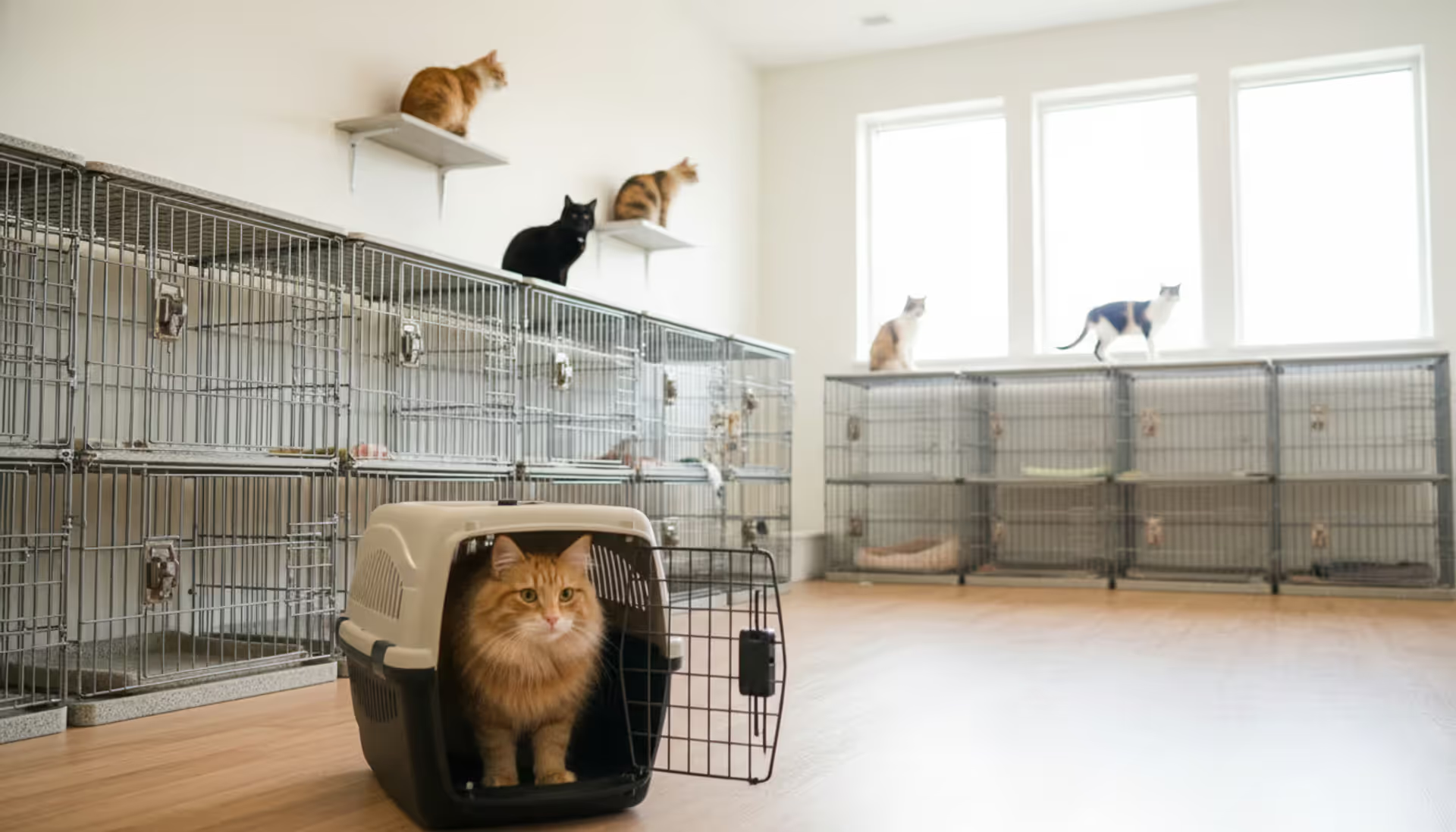
Most no kill facilities require appointments for surrenders. You won't just show up with your cat and hand her over. You'll schedule a slot—sometimes three weeks out, sometimes two months, depending on capacity. While you wait, you're still responsible for that cat's care, feeding, and veterinary needs.
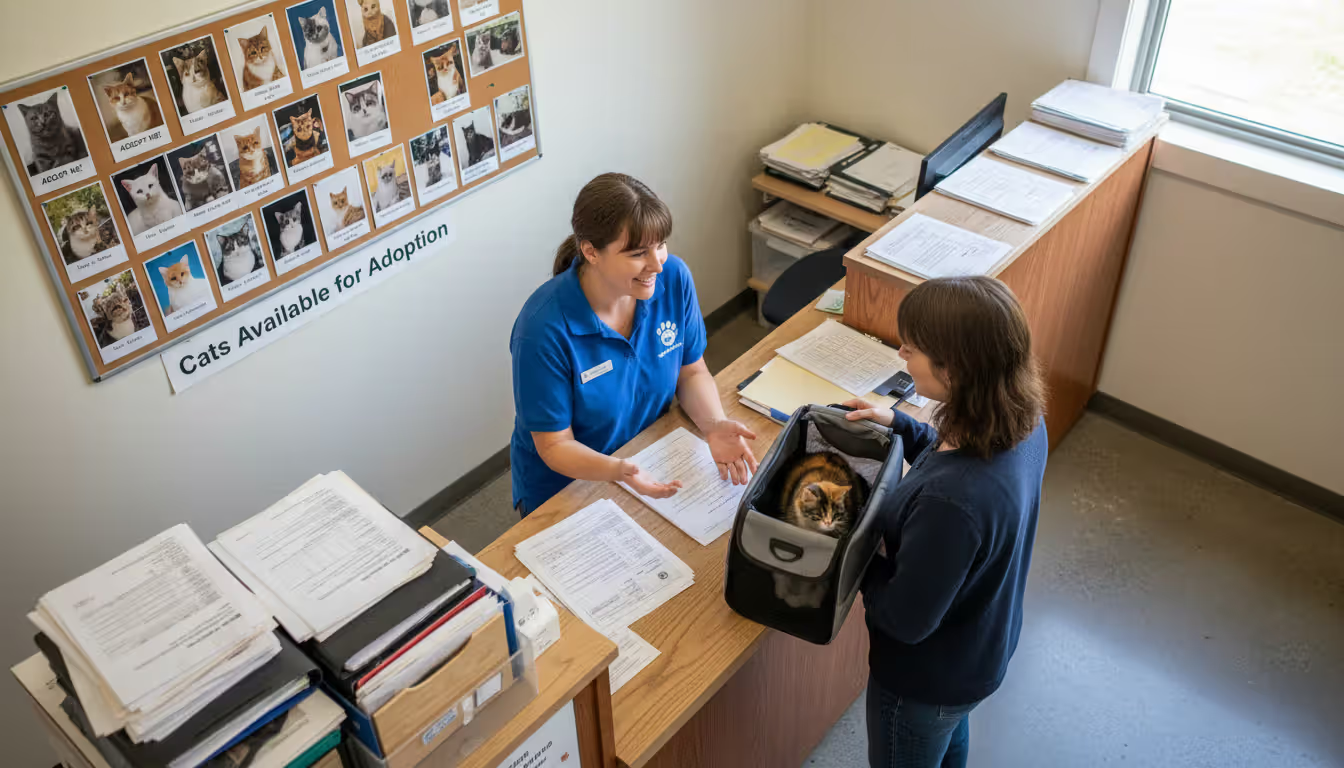
During your intake appointment, expect a questionnaire. How old is she? Any medical issues? Does she get along with other cats? Ever bitten or scratched anyone? Why are you surrendering her? Some shelters charge surrender fees ranging from $35 to $200. Yes, it's legal. Yes, they can refuse to waive it even if you're struggling financially.
The screening process isn't subtle. A healthy two-year-old tabby who uses the litter box and likes people? Approved immediately. A ten-year-old Persian with chronic kidney disease requiring prescription food and daily medication? Waitlisted indefinitely or declined. Shelters protect their save rates by controlling intake difficulty.
Intake Rules for Owned Cats
Bring documentation. Veterinary records with your name on them. Photos showing you with the cat over time. If she's microchipped, registration listing you as owner. Shelters in areas with pet theft problems have tightened these requirements after people stole purebred cats and tried surrendering them.
You'll likely sign forms releasing ownership and acknowledging that the shelter can make all medical decisions going forward. Read these carefully. Some include clauses stating that if the cat proves unadoptable due to undisclosed behavior issues, the shelter may euthanize her. You won't get a call asking permission.
Geographic restrictions apply at most places. A Seattle shelter won't take your cat if you live in Tacoma. Their donors fund Seattle animal welfare. Their marketing targets Seattle residents for adoptions. They're not being arbitrary—they're staying within their mission and service area.
Feral and Community Cat Policies
Truly feral cats—the ones who've never been socialized and would rather chew through the carrier than let you touch them—don't do well in shelters. They panic in cages. They stop eating from stress. They're basically unadoptable to typical families.
Smart no kill shelters don't pretend otherwise. They'll direct you to TNR programs instead. Trap-Neuter-Return means catching the cat, getting her sterilized and vaccinated, then releasing her back where she was found. It prevents reproduction without the trauma of caging.
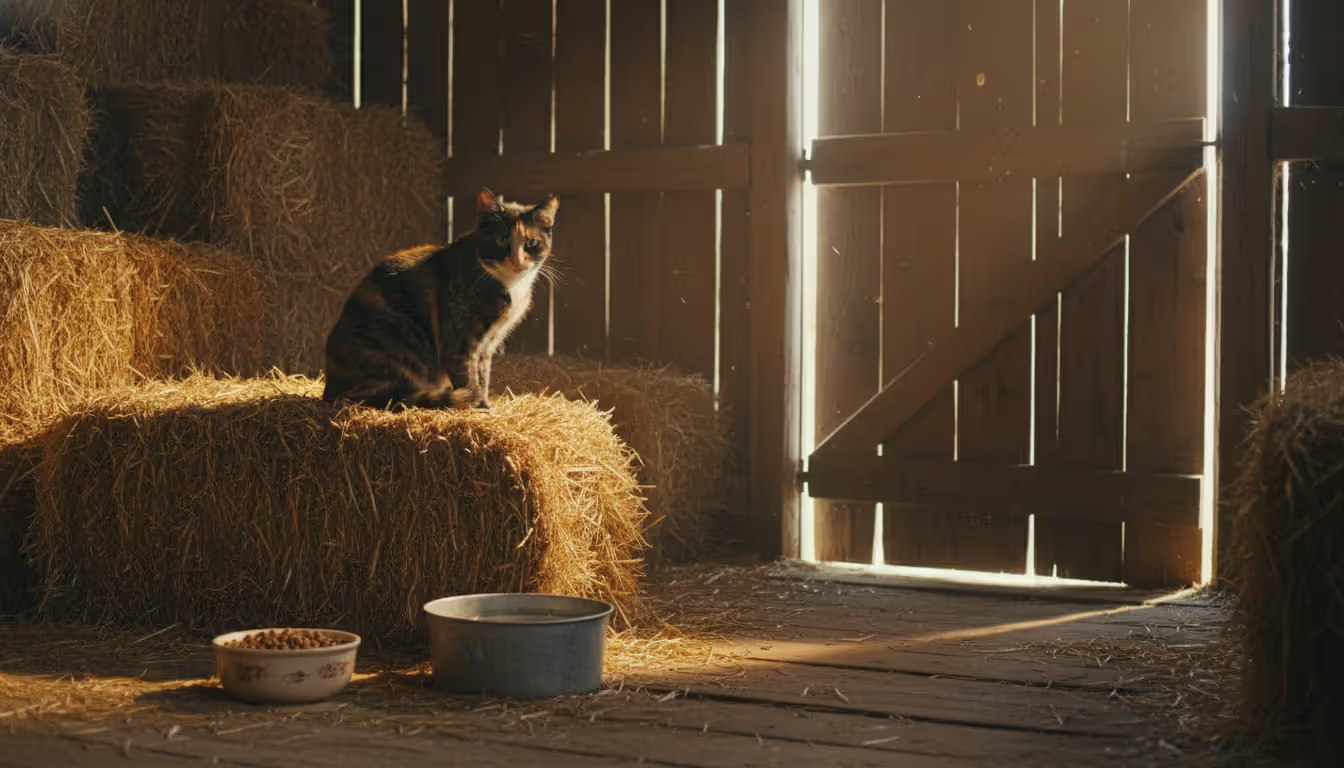
Some facilities run barn cat programs as a middle ground. Got a semi-feral cat who tolerates people but won't be a lap cat? Pair her with a farmer who needs a mouser. The cat gets food and shelter in exchange for rodent control. It works surprisingly well for cats who'd otherwise spend years in a cage waiting for an adopter who'll never come.
The legal landscape here gets weird. California treats feral cats as a public nuisance requiring management. Texas considers them abandoned property. Florida's laws vary by county—some recognize managed colonies as legal, others authorize immediate trapping and removal. No kill shelters navigate this mess by partnering with animal control on official TNR programs, operating under memoranda of understanding that keep them compliant with local ordinances.
Author: Marcus Redfield;
Source: jamboloudobermans.com
When No Kill Shelters Can Legally Euthanize Cats
That 90% standard leaves room for 10% of cats to be euthanized. Who fits in that 10%?
Cats with feline infectious peritonitis (FIP) used to be automatic euthanasia candidates—the disease was 100% fatal until a treatment emerged in 2024, and it costs $7,000-$12,000. Most shelters still euthanize FIP cats because they can't afford treatment. Is that "untreatable"? Technically no. Financially? For a shelter operating on a $400,000 annual budget, yes.
Advanced cancer that's metastasized and causing pain. Severe trauma from attacks or accidents where the cat won't recover quality of life even with surgery. Neurological conditions causing seizures that don't respond to medication. These fit clearly within acceptable euthanasia criteria.
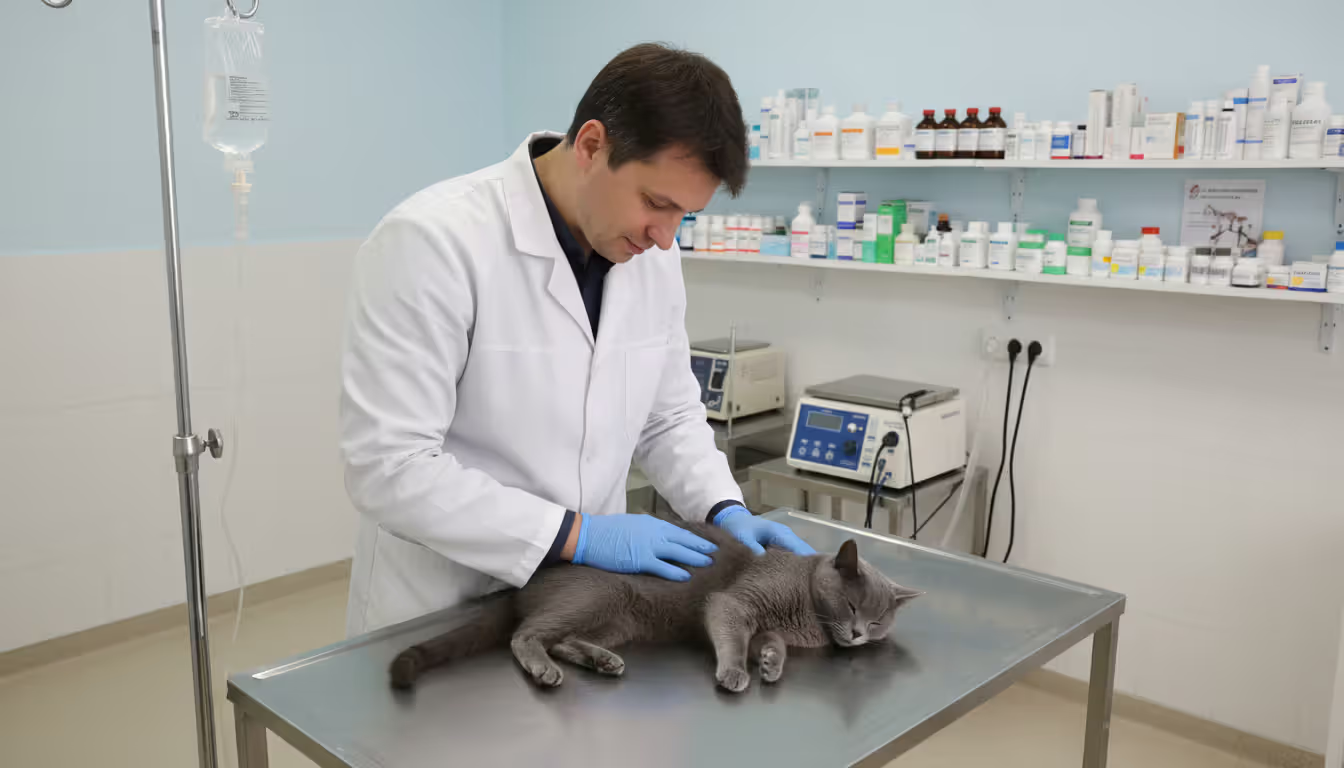
Behavioral euthanasia is trickier. A cat who's attacked multiple people without provocation, causing injuries requiring medical treatment? That might qualify. But most no kill shelters will try behavioral medication first. Gabapentin for anxiety. Fluoxetine for aggression. Consultation with a veterinary behaviorist. Transfer to a sanctuary specializing in difficult animals. Euthanasia is genuinely the last resort.
State laws vary dramatically. California's Hayden Law, passed in 1998, mandates minimum holding periods and requires shelters to offer animals for adoption unless they're irremediably suffering—defined as a condition causing severe, unrelievable pain with no reasonable hope of recovery. Delaware became the first state to legally define "no kill" in 2010 legislation, codifying the 90% benchmark into law for any shelter with a state contract. Other states leave these decisions entirely to individual shelter policies.
Here's the uncomfortable truth: overcrowding can't legally justify euthanasia at a genuine no kill facility. When they're full, they stop intake. This creates its own welfare problems. Cats sitting in cages for eight months develop stress cystitis, over-groom until they're bald, or become aggressive from confinement. Some veterinarians argue that euthanizing a healthy cat is more humane than warehousing her in a kennel for a year while her mental health deteriorates.
The pressure to maintain save rate statistics can create perverse incentives. Keep the suffering cat alive another week so she doesn't count against this quarter's numbers. That's rare, but it happens. Most shelters make genuine best-interest decisions, but the metrics do influence judgment calls.
Author: Marcus Redfield;
Source: jamboloudobermans.com
Your Legal Rights When Returning a Cat to the Shelter
Your adoption contract governs everything. That document you signed—maybe barely skimmed—before taking home your new cat? It's a legally binding agreement specifying your obligations and the shelter's.
Nearly all no kill shelters include return clauses requiring you to bring the cat back to them if things don't work out. You can't surrender her to animal control. You can't rehome her on Craigslist. You definitely can't abandon her. The contract gives the shelter first rights to reclaim that animal. Courts have enforced these clauses when shelters sued adopters who violated them.
Return timeframes vary wildly. Best Friends Animal Society accepts returns indefinitely—if you adopted a cat twelve years ago and your circumstances changed, bring her back. Smaller shelters might limit returns to 30 days, after which you're on your own. Others fall somewhere in between: one year, 90 days, six months. Read your specific contract.
Most places offer trial periods. Seven to fourteen days is typical. Return the cat within that window for any reason and get a full refund. After the trial period ends, policies shift. You might return the cat but forfeit the adoption fee. You might get partial refund minus medical expenses the shelter incurred. Some offer credit toward adopting a different animal instead of cash back.
What if the shelter lied about the cat's health or behavior? If they knowingly misrepresented that she's FIV-negative when she tested positive, or claimed she's friendly when she has a documented bite history, you might have grounds for fraud or breach of contract. Document everything. Get veterinary records showing the condition existed before adoption. Consult an attorney specializing in contract law if the damages are significant.
Here's the thing about returning dogs versus cats: state liability laws treat them differently. Many states impose strict liability for dog bites, making shelters more cautious about accepting returned dogs with bite histories. Cats face fewer statutory restrictions, so shelters typically accept cat returns more readily even if behavioral issues exist.
Sometimes shelters refuse returns. Maybe they claim you violated contract terms by declawing the cat. Maybe they're genuinely full with no space. Maybe they closed their cat program entirely. You're stuck, right? Not necessarily. If the contract explicitly promises lifetime return rights and they're refusing, that's likely breach of contract. You'd need legal counsel, and frankly, the cost of pursuing it might exceed any remedy you'd win. More practically, try negotiating: Can they help you find a foster? Will they take her in three months when space opens? Can they refer you to a partner organization?
Author: Marcus Redfield;
Source: jamboloudobermans.com
The No Kill Movement: Legal History and Current Challenges
San Francisco proved it could be done. When Richard Avanzino took over San Francisco SPCA in 1976, the city was euthanizing 23,000 dogs and cats annually. By 1994, they'd achieved no kill status for dogs through aggressive spay/neuter programs, volunteer foster networks, and adoption marketing campaigns. Cats took longer, but San Francisco eventually got there too.
Nathan Winograd, a former criminal prosecutor who worked under Avanzino, wrote the playbook. His "No Kill Equation" outlined eleven specific programs: foster care networks, TNR for feral cats, comprehensive adoption programs, medical care, volunteers, public relations, pet retention programs, and more. He packaged it in his 2007 book "Redemption" and started consulting nationwide. Shelters in Reno, Austin, Jacksonville, and Charlottesville adopted the model. Save rates climbed.
This grassroots success translated into legislation. Delaware's 2010 statute requiring state-contracted shelters to maintain 90% save rates and publicly report statistics broke new ground. The law defined "no kill" legally for the first time and tied public funding to performance. Other states followed with varying approaches—some setting aspirational goals, others mandating specific practices like pre-euthanasia veterinary evaluations.
Courts have weighed in too, usually when shelters claiming no kill status refused owner-surrendered animals. A 2016 case in Virginia ruled that a shelter holding a municipal animal control contract couldn't turn away residents' animals regardless of their no kill policy. The court found that refusing intake violated the shelter's legal obligations under the county contract. Similar rulings in New Mexico and Tennessee reinforced that "no kill" doesn't override statutory animal control duties.
Then came the welfare concerns. A Nevada shelter made headlines in 2019 when animal welfare investigators found 400 cats crammed into a facility designed for 150. Disease tore through the population. Cats lived in carriers stacked three high. The shelter maintained an impressive 96% save rate by refusing euthanasia even when humane. A coalition sued, arguing that warehousing sick cats in overcrowded conditions violated anti-cruelty statutes. The resulting consent decree imposed space-per-animal ratios and mandatory veterinary care standards.
Current legal challenges facing the movement:
Defining "treatable" in an era of expensive veterinary advances. A cat with diabetes is treatable with $200/month in insulin and special food. A cat with kidney disease is treatable with $3,000 in subcutaneous fluids equipment and prescription diets. A cat with cancer might respond to $8,000 in chemotherapy. Should shelters be required to provide these treatments to maintain no kill status? Most state laws don't specify, leaving shelters to make resource allocation decisions that affect their save rates and their budgets.
Distinguishing rescue from hoarding. Some facilities claim no kill status while keeping 300 cats in a house with inadequate ventilation, staffing, and veterinary care. States like Colorado and Ohio have passed laws requiring shelters to meet minimum standards for cage sizes, staff-to-animal ratios, and veterinary protocols. These improve welfare but increase costs, forcing some small no kill operations to close.
Mandating transparency. Advocates push for public reporting requirements so communities can verify save rates. Several states now require shelters receiving public funds to publish detailed intake and outcome statistics. Delaware, Virginia, and California have the strongest transparency laws. Others have none, allowing shelters to claim no kill status without proving it.
Managing feral cat populations within the law. Legal battles over TNR continue. Jacksonville, Florida, embraced TNR as official policy, reducing feral populations by 66% over a decade. Albuquerque, New Mexico, banned it after residents sued, claiming colonies violated nuisance ordinances and endangered wildlife. No kill shelters caught in these disputes face impossible choices about feral intake.
We proved that you don't have to kill your way out of overpopulation. That was the easy part. Now we're wrestling with harder questions: How do you maintain quality of life when you're committed to saving every savable animal? How do you balance transparency with donor privacy? How do you stay idealistic when you're facing a contagious ringworm outbreak in a room of 60 cats and your vet is saying some need to be euthanized to protect the others? The principles are simple. The reality is messy
— Julie Castle
FAQ About No Kill Cat Shelters
Can a no kill shelter ever refuse to take my cat?
Absolutely, and they do it routinely. Unless they hold a municipal animal control contract requiring open admission to residents, private no kill shelters can legally refuse any cat for any reason. Too many cats currently in care. Your cat needs expensive medical treatment they can't afford. She has behavioral issues requiring specialized handling. You live outside their service area. They might offer to waitlist you or refer you elsewhere, but they're not legally obligated to accept her. This shocks people who assume "shelter" means "must take my animal," but it's not true for private nonprofits.
What happens if a no kill shelter is full?
They stop admitting animals, sometimes for weeks or months. Full shelters maintain waitlists that can stretch 30-60 names deep. While you wait, they might offer support resources: referrals to low-cost vet clinics, temporary foster assistance, or guidance on rehoming privately. What they won't do is euthanize current residents to make room for your cat. That's the core difference from traditional shelters, which manage capacity through euthanasia. No kill facilities manage it through restricted intake, even when that means turning away animals.
Are no kill shelters required to accept feral cats?
No, and most won't. Feral cats—truly unsocialized animals who've never had positive human contact—suffer tremendously in cage environments and rarely become adoptable as indoor pets. No kill shelters typically redirect feral cat caregivers to TNR programs that sterilize and vaccinate community cats before returning them outdoors. Some run working cat programs placing semi-feral cats as mousers on farms or in warehouses, but that's a specialized service, not a legal obligation. Unless a municipal contract specifically requires feral cat intake (rare), shelters can decline these cases.
Can I get my adoption fee back if I return a cat?
Depends entirely on timing and your contract terms. During trial periods—usually 7 to 14 days—most shelters refund adoption fees in full. After that window closes, policies diverge sharply. Some shelters keep all fees as non-refundable donations. Others refund the adoption fee minus medical expenses they incurred (vaccines, spay/neuter, testing). A few offer credit toward a different animal instead of cash. The worst-case scenario is buried in the fine print of your adoption contract, so read it before signing. If the shelter misrepresented the cat's health or behavior, you might have legal grounds for a full refund regardless of policy, but you'd need to prove they knowingly lied.
Is euthanasia for behavioral issues legal at no kill shelters?
Yes, but only for genuinely dangerous animals, and it's rare. A cat with a documented history of unprovoked attacks causing serious injuries that required medical treatment might fall within the 10% exception to the 90% save rate. But shelters exhaust alternatives first: behavioral medications like fluoxetine or gabapentin, consultation with veterinary behaviorists, placement in sanctuaries equipped for challenging animals, transfer to rescue groups specializing in difficult cases. Euthanizing for minor issues—litter box problems, scratching, fear-based swatting—would violate no kill principles and potentially expose the shelter to criticism from donors and advocacy groups. The threshold is high: documented danger, failed interventions, no safe placement options.
How do I verify a shelter's no kill status?
Ask for their save rate data directly—legitimate no kill facilities publish this information. Many include detailed statistics in annual reports available on their websites: total intake, adoptions, transfers, returns to owners, and euthanasia numbers broken down by reason. In states with transparency laws (California, Delaware, Virginia, Texas), you can access official reports filed with regulatory agencies. Best Friends Animal Society maintains a searchable database of no kill communities and shelters at bestfriends.org. Be skeptical of facilities claiming no kill status without publishing numbers. Genuine no kill shelters embrace transparency because their statistics prove their model works.
No kill cat shelters changed the conversation about shelter euthanasia from "necessary evil" to "preventable tragedy." They demonstrated that communities can save 90-98% of cats through foster networks, aggressive marketing, and community partnerships instead of defaulting to euthanasia as population control.
But understanding what "no kill" actually means legally protects you from surprises. These shelters can refuse your cat. They can keep her for months while she waits for adoption. They do euthanize animals, just not many. Your adoption contract governs your rights to return her, get refunds, and receive accurate information about her health and behavior.
Before you adopt, read contracts thoroughly. Ask specific questions: What's your return policy? How long is the trial period? What happens if I discover medical issues you didn't disclose? Before you surrender, explore alternatives. Many shelters offer resources to help you keep your cat—financial assistance for vet care, behavioral consultation, temporary foster during housing crises.
The movement faces ongoing challenges. How do you balance save rate metrics with quality-of-life concerns when a cat's been caged for eighteen months? How do you maintain no kill principles when your facility is 40% over capacity and ringworm just broke out? How do you serve your community when saying "we're full" means some cats won't find placement anywhere?
These questions don't have easy answers. The best no kill shelters acknowledge the tensions between idealism and reality. They publish transparent statistics. They maintain humane space-per-animal ratios even when it means turning away more cats. They make difficult euthanasia decisions based on genuine welfare assessments, not statistics.
When you're choosing where to adopt or surrender a cat, look past the label. A well-run no kill shelter with strong veterinary care, enrichment programs, reasonable adoption processes, and published save rate data serves animals better than one claiming no kill status while warehousing cats in overcrowded conditions with minimal care. The statistics matter, but the actual welfare of cats in their care matters more.
Surrendering an aggressive dog involves complex legal obligations and limited placement options. Between specialized rescues, sanctuary programs, and rehabilitation facilities, responsible pathways exist for owners committed to transparency and proper screening
Surrendering a dog is never easy. Financial hardship, housing changes, or behavioral challenges can force impossible choices. Learn where to surrender your dog for free, understand the complete process from intake to adoption, and discover your legal obligations and what really happens after relinquishment
Horse soring involves deliberately inflicting pain on horses' legs to create an exaggerated gait for show competitions. This federal crime, primarily affecting Tennessee Walking Horses in big lick classes, uses chemical burns, pressure shoeing, and painful chains to force unnatural movement
A rehoming fee protects your dog from exploitation while finding a responsible new home. Discover typical fee ranges, legal considerations, required documentation, and why charging nothing puts your pet at serious risk. Includes contract templates and expert guidance
The content on this website is provided for general informational and educational purposes only. It is intended to explain concepts related to animal law, pet ownership rights, service animals, dog bite liability, and animal welfare legislation in the United States.
All information on this website, including articles, guides, and examples, is presented for general educational purposes. Legal outcomes may vary depending on jurisdiction, state laws, and individual circumstances.
This website does not provide legal advice, and the information presented should not be used as a substitute for consultation with qualified attorneys or animal law professionals.
The website and its authors are not responsible for any errors or omissions, or for any outcomes resulting from decisions made based on the information provided on this website.