Your dog just died. You're grieving, but decomposition doesn't wait for grief. Within hours, you'll need to make decisions about your dog's body—and not every option that seems obvious is actually legal where you live.
I've watched too many dog owners panic-bury their pets in the backyard at 2 AM, only to get a $300 fine when a neighbor reports them. Or choose the cheapest cremation without realizing they'd never see their dog's ashes again. This guide walks through what's actually allowed in the U.S., what different options cost, and how to avoid the mistakes people make when they're too upset to think clearly.
Immediate Steps After Your Dog Dies at Home
Decomposition starts faster than most people expect. In a 75°F room, bacterial growth accelerates within two to three hours. You don't have days to decide—you have hours.
Your vet needs to know first, even if your dog died at home without medical supervision. Call the main line during business hours or the emergency number after hours. Most practices will confirm the death over the phone based on your description, then offer to store the body in their morgue refrigerator. They'll typically hold remains for two or three days without charging you, which buys time to research your options instead of making rushed decisions.
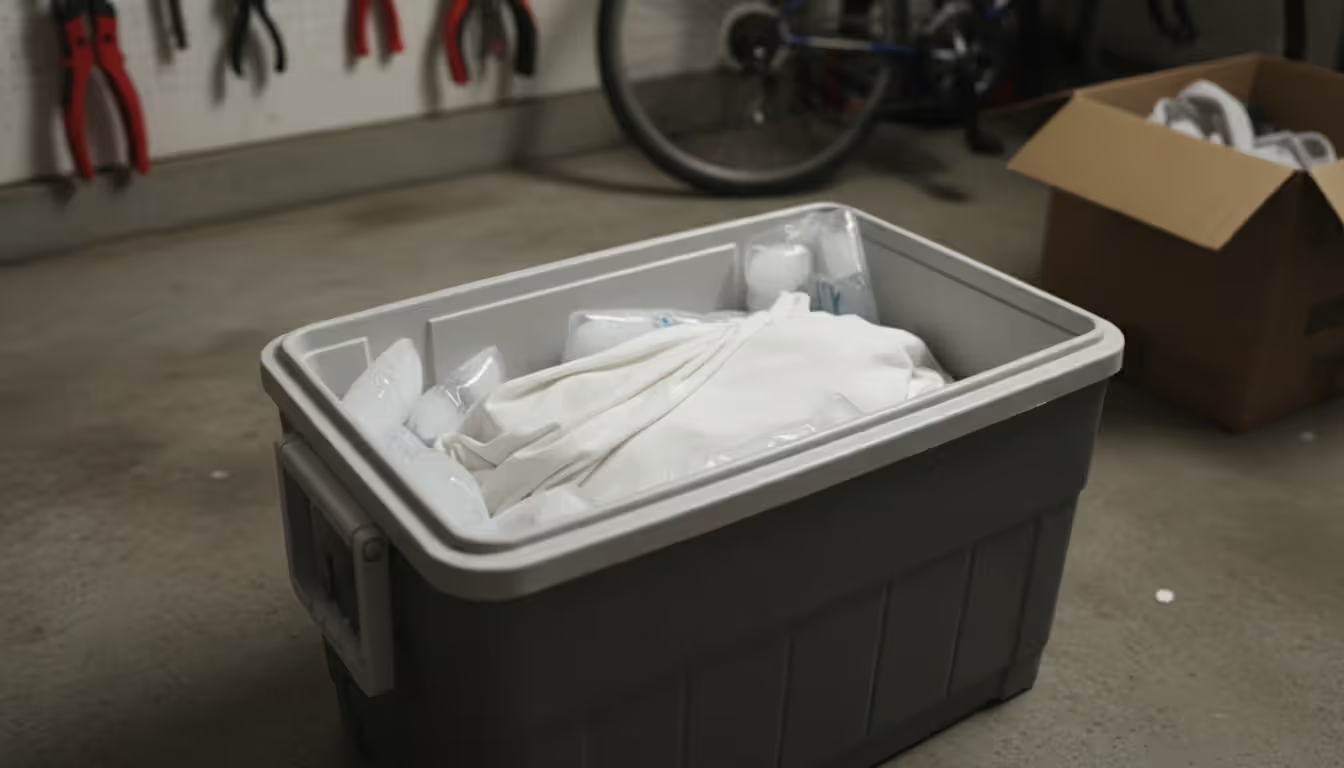
Keeping your dog cool slows decomposition. Below 40°F stops bacterial growth almost entirely. Got a detached garage in January? That works. Mid-July in Phoenix? You'll need active cooling. Wrap the body in a cotton sheet or tarp—something that contains fluids without creating an airtight seal—and move it to your coldest room. I've known people who cleared out a spare fridge or large cooler specifically for this, packing ice packs around the wrapped body. Just never use a freezer that stores food; health codes treat this as contamination, and frankly, you don't want that association in your head later.
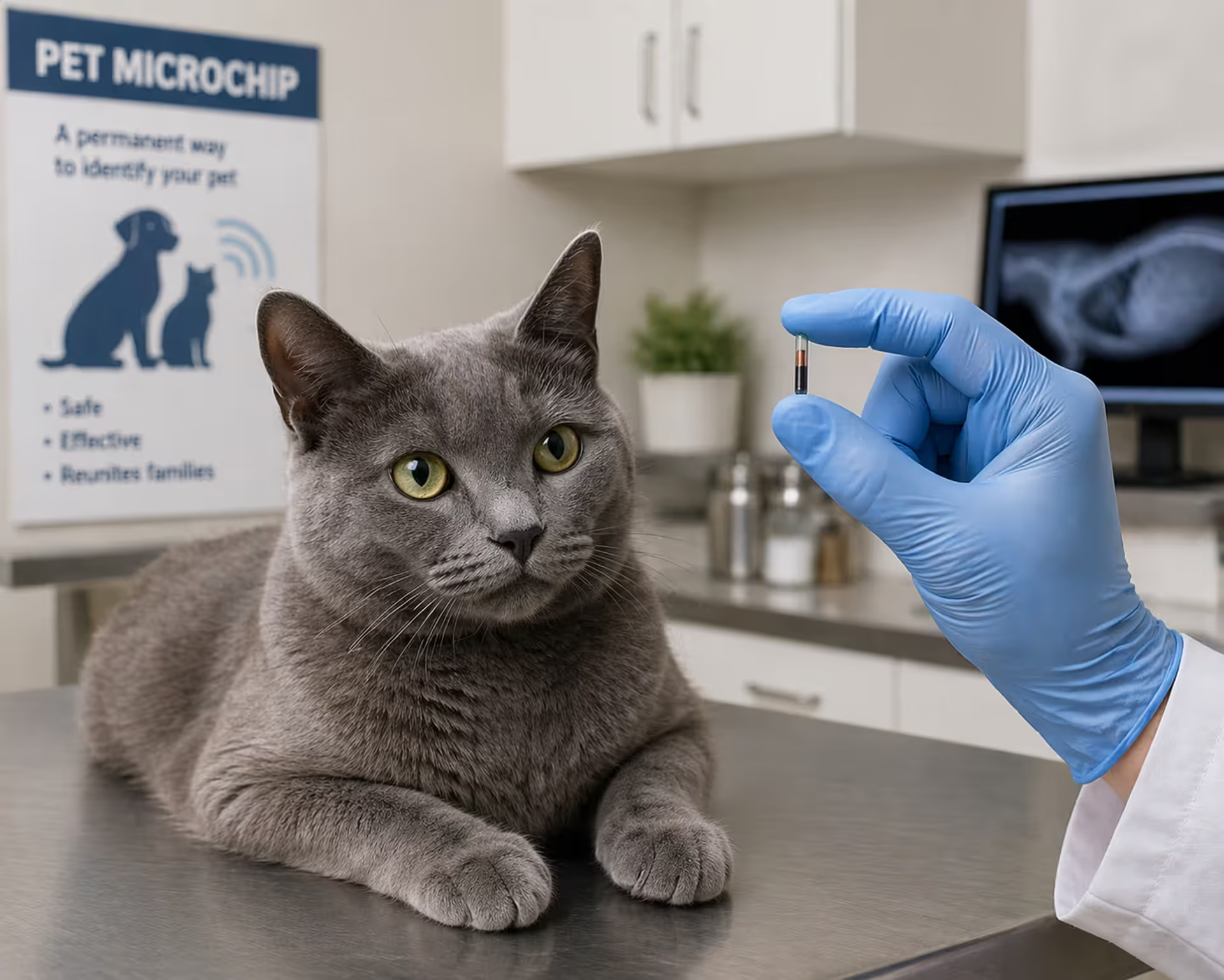
Take photos if you can stomach it, note the time of death, and gather any recent vet records. Some states issue burial permits for pets (Virginia, Maryland, and a few others), so you might need proof of death. If your dog had a microchip, update the registry status to "deceased"—it prevents confusion if someone finds an old collar or tag.
Check your homeowner's policy fine print. One client of mine discovered her plan included a $200 pet death reimbursement she'd been paying into for five years. Rare, but worth ten minutes on the phone with your insurance agent.
Author: Marcus Redfield;
Source: jamboloudobermans.com
Legal Dog Burial and Cremation Options Explained
Four primary paths exist: flame cremation (alone or with other pets), home burial, cemetery interment, or water-based aquamation. Each has different legal constraints depending on your county.
Private vs Communal Cremation
When your dog is cremated individually, you're paying for solo use of the chamber. The ashes you receive contain only your dog's remains—bone fragments pulverized into powder. Expect to pay $150-$400 for dogs under 50 pounds. Large breeds run $300-$700. You'll wait three to ten days for pickup or delivery.
Group cremation processes multiple animals simultaneously, usually 10-30 per cycle depending on the retort size. The facility doesn't separate ashes afterward. Instead, they scatter the combined remains in an on-site memorial garden or dispose of them per county solid waste rules. This costs $50-$150 flat rate regardless of your dog's size, and you walk away with nothing physical.
A handful of crematories offer "semi-private" service where metal partitions separate your dog from others in the same chamber. You get ashes back, but there's potential for minimal mixing (less than 5% by weight according to industry estimates). Costs fall between communal and fully private rates.
Want to watch the cremation happen? "Witnessed cremation" lets you observe your dog entering the chamber. Not everyone's emotional state can handle this, but some people need that closure. Expect an extra $100-$200 fee.
The International Association of Pet Cemeteries and Crematories certifies facilities, though it's voluntary. Ask if your crematory has IAOPCC membership. Tour the facility if possible—any service that refuses to show you the equipment is hiding something.
Author: Marcus Redfield;
Source: jamboloudobermans.com
Home Burial Regulations
Burying your dog in your yard seems straightforward until you call your county health department and discover it's prohibited in your zip code. Roughly half of states allow residential pet burial, but cities and counties override state permissiveness constantly.
Rules that pop up everywhere:
Stay 50-300 feet from wells, creeks, springs, or lakes (exact distances vary)
Dig 3-5 feet deep minimum to prevent coyotes from excavating the grave
Maintain 5-10 foot setbacks from property boundaries
Avoid flood plains and high water table zones entirely
Check maximum animals per property (some counties cap it at two or three pets total)
Your HOA might ban pet burial even where the county allows it. I've seen association boards threaten $500 daily fines over unauthorized graves. Renters almost never get permission—landlords assume liability if remains contaminate groundwater, so they default to "no."
One detail nobody mentions: if you sell your house later, do you have to tell buyers about pet graves? Most states don't require disclosure, but imagine the conversation if they're digging a pool and hit your dog's remains. Ethical murkiness aside, mark the location on your property survey.
Pet Cemetery Services
Licensed pet cemeteries charge $400-$2,000 for a burial plot, headstone, and "perpetual care." That last phrase needs scrutiny. In California and New York, strong consumer protection laws force cemeteries to maintain trust funds that cover grounds maintenance even if the business folds. In states with looser regulation, "perpetual" might mean "until we decide to sell the land for development."
Read every word of the contract. Some cemeteries define perpetual care as "mowing the lawn twice monthly April through October" without including headstone cleaning, flower placement, or winter maintenance. Others charge annual fees after year five. Ask what happens if the cemetery closes. Can you relocate remains? Who pays for it?
The upside: pet cemeteries offer community. Memorial gardens, grief support groups, annual remembrance ceremonies. For some people, that's worth the premium over backyard burial.
Alkaline hydrolysis uses heated water (300°F) and potassium hydroxide to dissolve soft tissue over 6-10 hours. What remains is bone fragments, identical to flame cremation residue, which gets processed into ash.
Energy use drops 90% compared to fire. No smokestacks, no fossil fuel combustion. The liquid byproduct—essentially sterile amino acids and sugars—goes down the drain into municipal wastewater systems, which sounds disturbing until you realize it's chemically similar to what funeral homes dispose of during human embalming.
Availability is the catch. Maybe 180 facilities nationwide offer aquamation as of 2026, clustered in California, Oregon, Washington, Colorado, and Illinois. If you live in rural Alabama, you're not finding this option locally.
Costs mirror private flame cremation: $150-$500 depending on dog size. The ashes you receive are legally identical to fire cremation ashes, with the same ownership rights.
Burying Your Dog in Your Backyard: State-by-State Legality
No federal agency regulates pet burial. The EPA doesn't touch it. The USDA doesn't care. This falls to states, who immediately delegate it to counties, who sometimes pass it down to city councils. The result? A legal patchwork that changes every few miles.
Generally permissive states (usually legal with restrictions): Alabama, Arkansas, Arizona, Delaware, Florida, Georgia, Idaho, Indiana, Kansas, Kentucky, Louisiana, Mississippi, Missouri, Montana, Nebraska, Nevada, New Mexico, North Carolina, North Dakota, Ohio, Oklahoma, South Carolina, South Dakota, Tennessee, Texas, Utah, West Virginia, Wisconsin, Wyoming.
Varies by county (check locally): California, Colorado, Illinois, Iowa, Maine, Michigan, Minnesota, New Hampshire, New York, Oregon, Pennsylvania, Virginia, Washington.
Heavily restricted or prohibited: Connecticut, Hawaii, Maryland, Massachusetts, New Jersey, Rhode Island, Vermont.
Reality check: enforcement is spotty. Rural counties rarely prosecute backyard burial violations unless someone complains or groundwater gets contaminated. Urban and suburban areas enforce aggressively. Health departments issue $100-$500 fines regularly, sometimes with mandatory exhumation and proper disposal at your expense.
Before you dig:
Call county health department, ask specifically for pet burial regs (not general animal codes)
Pull your property deed and scan for burial restrictions
Read your HOA covenant cover-to-cover if applicable
Check FEMA flood maps (free at msc.fema.gov) to verify you're not in a flood zone
Dial 811 for free utility marking—you don't want to hit a gas line
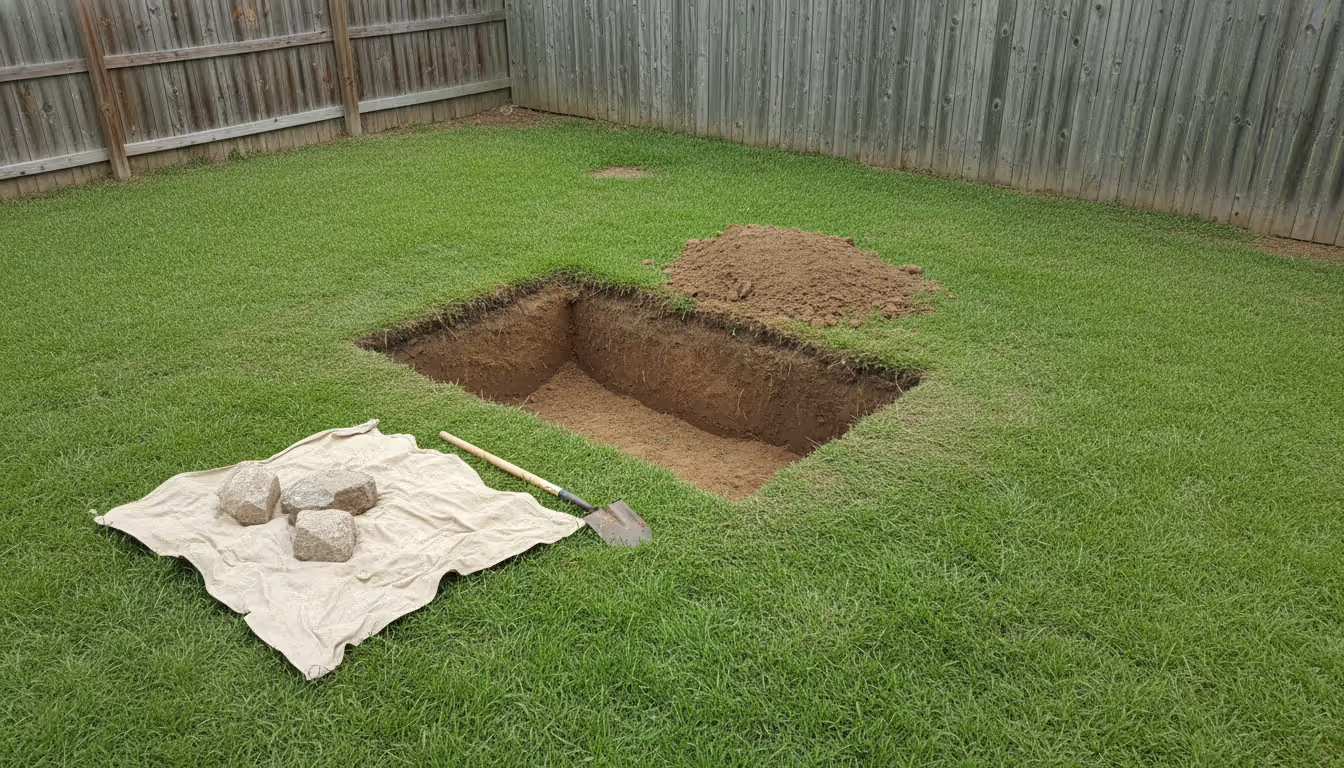
If you're clear to proceed: dig four feet down minimum, deeper if you've got large breed. Wrap the body in cotton, wool, or bamboo fabric—nothing synthetic. Plastic prevents decomposition and creates a groundwater hazard. Remove collars, especially ones with metal tags; they'll leach zinc and other metals into soil for decades. Stack heavy rocks on top to discourage scavengers. Mark the spot on your property map so you don't accidentally build a deck over it in five years.
Author: Marcus Redfield;
Source: jamboloudobermans.com
Dog Cremation: Legal Process, Costs, and Ash Ownership
About 60% of dog owners choose cremation, according to surveys from pet funeral industry associations. The legal process is simpler than burial because you're not dealing with zoning, water table issues, or property restrictions.
How it actually works:
Step 1: Pick your provider. You can book directly with a pet crematory (Google "[your city] pet cremation") or let your vet coordinate it. Vets usually add a $50-$100 coordination fee but handle the logistics. Mobile cremation services come to your house, load the body into a specialized van, and transport it to the facility. That convenience costs an extra $75-$150.
Step 2: Choose your service level. Private means solo cremation, ashes returned. Communal means group processing, no ashes. Semi-private sits in between with partitions. Only private guarantees you get exclusively your dog's remains.
Step 3: Sign the authorization form. This is a binding contract. You'll list your dog's name, weight, breed, your contact info, and whether you want ashes back. Read the fine print carefully—some contracts include forced arbitration clauses that block your ability to sue if something goes wrong (like getting the wrong dog's ashes, which happens more than facilities admit). If you see arbitration language, you can try negotiating it out or walk away.
Step 4: Pay upfront and get tracking. Most crematories require full payment before processing. They'll give you a receipt with a tracking number or ID tag that supposedly stays with your dog throughout the process. Keep that receipt.
Step 5: Collect ashes. Three to seven business days is standard. The crematory calls when ashes are ready. You can pick them up, or they'll ship via USPS or UPS (usually free within state, $15-$30 out of state). Ashes arrive in a basic plastic box or tin. Decorative urns cost extra.
Your legal rights to the ashes: You own them completely. Full stop. No state requires a permit to possess pet ashes. You can keep them on your mantle forever, scatter them in your garden, bury them in a cemetery plot, split them among family members who each want a portion, or press them into memorial jewelry. Transportation across state lines requires zero paperwork—just pack them in your car and drive.
Scattering on your own land is unregulated. Public land gets complicated: national parks ban ash scattering outright, national forests typically allow it away from trails and water sources (but check specific forest regulations), and state parks vary wildly. Private property requires owner permission, period.
Author: Marcus Redfield;
Source: jamboloudobermans.com
California, Oregon, and Washington passed laws requiring crematories to return at least 95% of cremated remains to prevent mixing. If you get ashes that seem way too light or too heavy for your dog's size, demand an explanation. A 50-pound dog yields roughly 100-150 cubic inches of ash (about 4-6 pounds by weight). A 100-pound dog produces 200-250 cubic inches. If your 60-pound golden retriever's "ashes" fill a tiny box the size of a deck of cards, something's wrong.
City and Municipal Dead Animal Pickup Services
Most cities run dead animal removal, but what they'll actually do varies dramatically by municipality.
What they definitely cover: Dead animals on public property. Dog hit by a car on Main Street? City animal control or sanitation retrieves it at no charge, scans for a microchip, tries to contact the owner, then cremates or renders the body if unclaimed. This is a public health service, not a pet memorial service.
What they probably won't cover: Pickup from your private residence. Some cities offer this for a fee ($50-$150 typical range), while others simply don't provide the service at all regardless of price. You'll need to call your specific city's animal control department to find out.
How to actually request service: Most cities maintain online request forms (search "[city name] dead animal pickup"). Alternatively, call the non-emergency police number or animal control directly. Provide the exact address or intersection, estimated animal size, and your callback number. Response time ranges from two hours to two business days depending on call volume and city staffing levels.
What happens to bodies they collect: Communal cremation or rendering (processing into industrial products like fertilizer). You will never see ashes. The goal is public health and sanitation, not returning remains to owners.
Weekend and holiday gaps: Many municipal animal services don't operate Saturdays, Sundays, or holidays. If your dog dies Friday at 6 PM, you might wait until Monday morning for city pickup. Your options: store the body yourself (see earlier cooling tips) or pay a private service. Veterinary emergency hospitals accept deceased pets for refrigerated storage, usually $25-$50 per night.
Critical detail: if your dog died from suspected rabies, distemper, or another reportable disease, you must inform the pickup service. They'll likely redirect you to a veterinary disposal service that follows biohazard protocols. Standard city pickup isn't equipped for infectious remains.
What I tell people who've just lost a dog: don't make permanent decisions while you're in shock. I've watched clients bury their dogs illegally because they needed to do something that night, then face county fines two weeks later when a neighbor reported it. Or choose communal cremation to save money, then call me crying a month later asking if there's any way to get ashes they didn't realize they wanted. Give yourself twelve hours to research your legal options. Your dog deserves a proper goodbye, and you deserve not to regret your choices later
— Dr. Patricia Hendricks
Frequently Asked Questions About Dead Dog Disposal
Is it legal to bury my dog in my backyard?
Maybe—it depends on your county health department regulations, city zoning codes, HOA rules if applicable, and whether you rent or own. About half of U.S. states permit residential pet burial with restrictions (minimum depth, distance from water sources, setbacks from property lines). The other half either ban it outright or leave the decision to local government. Even where allowed, you'll need to meet requirements like digging 3-5 feet deep and staying 50-300 feet from wells or streams. Call your county health department and ask specifically about pet burial before you start digging.
How much does dog cremation cost?
Group cremation (no ashes back) runs $50-$150 flat rate. Individual cremation ranges from $150-$400 for dogs under 50 pounds, scaling up to $300-$700 for large breeds over 80 pounds. Add-ons increase the bill: decorative urns ($40-$200), paw print impressions ($30-$75), fur clippings ($15-$30), witnessed cremation ($100-$200), home pickup instead of vet drop-off ($75-$150). If you're getting quotes and one provider is dramatically cheaper than others, ask whether it's truly private cremation or semi-private with partitions.
Can I keep my dog's ashes after cremation?
Absolutely, if you pay for private cremation. You own the ashes outright with zero restrictions. Federal and state law doesn't regulate possession, storage, or transport of pet cremains. Keep them in an urn on your shelf, scatter them anywhere you legally have access (your property, willing friend's property, sometimes public land with restrictions), bury them in a cemetery plot, split them among family members, or incorporate them into memorial items like glass art or jewelry. The only way you don't get ashes back is if you choose communal cremation, which costs less specifically because ashes aren't separated and returned.
What do I do if my dog dies on the weekend?
Call your regular vet's main number—most have after-hours voicemail with emergency instructions and a service. Veterinary emergency clinics (search "[city] emergency vet" for 24/7 facilities) will accept deceased pets for temporary refrigerated storage even if you weren't their client. Storage fees run $25-$50 per day. This buys you time to research cremation options instead of rushing into decisions Saturday night. If you can't reach a vet, keep your dog's body as cool as possible at home: shaded garage under 40°F, air-conditioned room with the thermostat dropped, or wrapped in a tarp with ice packs in a large cooler. Most municipal animal control doesn't operate weekends, so city pickup isn't an option until Monday.
Does the city pick up dead pets for free?
Only from public streets, sidewalks, and parks—and only because it's a public health issue, not a pet service. If you find a dead dog on the road that isn't yours, call your city's non-emergency line or animal control for free removal. Pickup from your private residence is rarely free; cities either don't offer it or charge $50-$150. The city won't return ashes regardless of what you pay—they process all collected animals through communal cremation or rendering. If you want your dog's remains back, you need a private cremation service, not municipal pickup.
Is aquamation legal in all states?
Aquamation (alkaline hydrolysis) is legal for pets in most states, but a few haven't explicitly addressed it in statute, creating legal gray zones where individual facilities make judgment calls about whether existing cremation laws cover the process. As of 2026, availability is the bigger problem than legality—only about 180 facilities nationwide offer aquamation, concentrated in California, Oregon, Washington, Colorado, Illinois, Minnesota, and Florida. If you live in Wyoming or Mississippi, you'll struggle to find a provider even though it's technically legal. Call pet crematories in your area and ask directly; if they offer it, it's legal in your location.
Nobody's ready for the practical decisions that follow a dog's death, but decomposition forces your hand. Understanding what's legally permitted—and what'll get you fined or worse—helps you make choices that honor your dog without creating future problems.
Start with your vet. They'll store the body temporarily and guide you through local regulations specific to your county. If you're considering home burial, call your health department before you dig. Compare cremation providers, read contracts fully before signing, and don't hesitate to ask questions about the process.
There isn't a universally "correct" way to handle this. The right choice is whatever combination of legal compliance, budget reality, and emotional need works for your specific situation. You gave your dog a good life. Taking time to handle their final arrangements thoughtfully is one last meaningful act of care you can provide.
Dog theft carries serious criminal penalties ranging from misdemeanors to felonies depending on the dog's value and state laws. Understand the charges, sentencing, and legal steps to report theft, use microchip evidence, file civil lawsuits, and recover your stolen dog through law enforcement and community efforts
Microchipping your cat isn't just about finding them if they wander—it's increasingly a legal requirement in parts of the US. Understand state laws, registration requirements, and how microchips function as ownership proof in disputes. Learn the legal process, common mistakes, and differences between cat and dog requirements
When your dog breaks a leg and money is tight, multiple solutions exist. From nonprofit grants and veterinary teaching hospitals to payment plans and crowdfunding, this guide covers actionable options to get your dog treatment without thousands upfront, including what to do if you can't pay the vet bill
Starting a cat sanctuary requires navigating nonprofit law, zoning regulations, licensing requirements, and operational constraints. This guide covers the legal and practical steps to establish a compliant, sustainable sanctuary in the United States, from 501(c)(3) filing to capacity planning
The content on this website is provided for general informational and educational purposes only. It is intended to explain concepts related to animal law, pet ownership rights, service animals, dog bite liability, and animal welfare legislation in the United States.
All information on this website, including articles, guides, and examples, is presented for general educational purposes. Legal outcomes may vary depending on jurisdiction, state laws, and individual circumstances.
This website does not provide legal advice, and the information presented should not be used as a substitute for consultation with qualified attorneys or animal law professionals.
The website and its authors are not responsible for any errors or omissions, or for any outcomes resulting from decisions made based on the information provided on this website.