Sad mixed-breed dog lying on a soft bed in a veterinary clinic with a splint and white bandage on its front leg while a young woman gently pets its head
Your dog's limping badly. Maybe you heard the snap when she jumped off the couch wrong, or maybe he got hit by a car. Either way, you know it's broken—and you're sitting there with $87 in your checking account wondering what the hell you're supposed to do now.
Here's what nobody tells you until you're in this nightmare: vets expect payment differently than human hospitals. No insurance networks. No "bill me later" systems like medical care. Just you, a four-figure estimate, and a dog who needs help today.
But you're not stuck. I'm going to show you exactly how people with zero money get their dogs treated—real options that work right now, not theoretical advice about saving for emergencies.
Understanding Dog Broken Leg Treatment and Costs
Let's get the scary part out of the way first. What are you actually facing here?
Fractures come in basically two flavors. Simple breaks stay inside the skin—the bone snaps but everything else stays together. Compound fractures mean bone punched through skin or shattered into pieces. Where the break happened matters too. A cracked toe costs way less than a shattered femur.
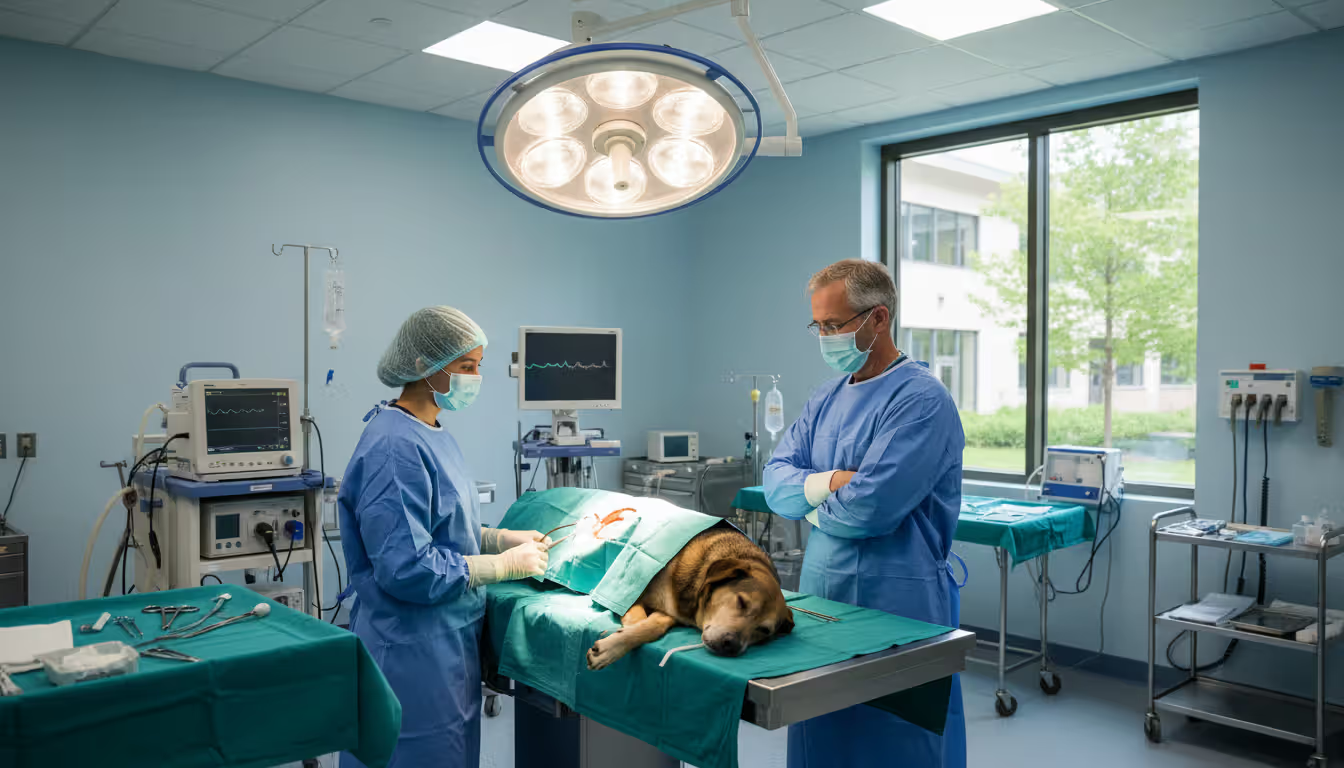
Surgery means your dog goes under anesthesia while a surgeon puts the bone back together with metal hardware. We're talking plates screwed into bone, pins holding fragments together, or external fixators that look like something from a sci-fi movie sticking out of your dog's leg.
For a basic leg fracture? You're looking at $1,500 to $4,000 at most regular vet offices. That femur I mentioned? Could hit $5,000. Need a board-certified orthopedic surgeon because the break's really complicated? Try $7,000. And if you're walking into an emergency clinic at 11 PM on Saturday? Add another 20-30% on top of whatever the base price is.
Splints and casts work for certain breaks—usually the simpler ones in smaller dogs or young puppies who heal fast anyway. This route costs $300 to $800 when you factor in the X-rays before and after, the splint itself, and all the follow-up visits to change it. But here's the catch: your vet decides if this works, not you. Some breaks absolutely need surgery or they'll heal crooked and cause lifelong pain.
Even if you're not treating anything yet, just getting the diagnosis costs money. X-rays, the exam, some pain meds to get through the night—that's $200 to $500 before anyone fixes anything.
Time matters. Fractures need stabilizing within 24 to 48 hours for the best shot at normal healing. Wait too long and bones start fusing wrong, open wounds get infected, or muscles and tendons contract in ways that make surgery harder later.
Author: Lauren Beckett;
Source: jamboloudobermans.com
Free and Low-Cost Vet Care Options for Dog Emergencies
Alright, now the useful stuff. Where do you actually find affordable care?
Nonprofit Organizations That Help With Dog Medical Bills
A bunch of charities exist specifically to fund vet bills for broke pet owners. Each one's got different rules, different application forms, different timelines.
The Pet Fund handles stuff that's serious but not immediately life-threatening. They won't pay for vaccines, but a broken leg? That qualifies. You'll need to fill out their application, get your vet to send an estimate, and prove you genuinely can't afford it. They typically give $100 to $500, which won't cover everything but takes a real chunk off what you owe.
RedRover Relief moves faster—they review applications in one or two business days. Grants go up to $200. They focus on true emergencies, and they'll consider fractures depending on how bad it is and what else they're funding that week.
Brown Dog Foundation specializes in exactly what you need: orthopedic problems. Their grants reach $2,000, which might actually cover your whole surgery. The downside? Everybody knows about them. They get flooded with applications, so approval's competitive.
Shakespeare Animal Fund only helps people in certain parts of California, Oregon, and Washington. If you live there though, check them out—they give substantial help when they've got funding available.
Don't forget local options. Your county's humane society probably has discretionary emergency funds. Same with your local SPCA chapter. I know someone whose dog got hit by a car, and when she called the county shelter crying, they paid the entire $2,400 surgery. She didn't even know to ask—she was just calling around begging for help. Point is: make the call. The worst they say is no.
Veterinary Schools and Teaching Hospitals
If you've got a veterinary college within driving distance, you just found your best option.
Teaching hospitals charge 30% to 50% less than private vets. Sometimes more. The trade-off: veterinary students do the work while professors supervise. Appointments take longer. You're a teaching case, so expect extra poking, prodding, and questions.
There's maybe 30 accredited vet schools in the US. Big ones include UC Davis in California, Cornell in New York, University of Pennsylvania, Colorado State, Texas A&M. Most take emergency cases. Most offer payment plans.
Here's what you do: call their emergency line. Explain the situation—broken leg, no money. Ask about appointment availability and payment options upfront. Teaching hospitals employ financial counselors whose entire job is solving this exact problem you're having.
Real example: family drove three hours to get their dog's tibia fixed at a teaching hospital. Local quote was $4,200. Teaching hospital charged $1,800. They paid $400 that day, financed the rest at $50 a month for three years through the hospital directly. No credit check. No interest.
Author: Lauren Beckett;
Source: jamboloudobermans.com
Local Animal Welfare Programs and Clinics
Those low-cost spay/neuter clinics you see advertised? Call them even if they don't do orthopedic surgery. Staff at these places know every resource in your area. They'll point you toward programs you'd never find online.
Some cities run subsidized vet clinics for low-income residents. You'll need proof—food stamps, Medicaid card, housing assistance paperwork. These clinics usually don't handle complex fractures themselves, but they partner with private vets who'll discount emergency work for their referrals.
Churches sometimes help. I'm serious. Some congregations maintain emergency funds for community members' pets. Worth asking around.
Payment Plans and Financing for Dog Surgery
Most vet offices will negotiate payment if you ask before they treat your dog. That timing's critical. Once they've already done the surgery, you've got zero leverage.
Don't talk to the receptionist. Ask for the office manager or billing person. Be direct: "My dog broke his leg. I can put down $300 today. What can we work out for the rest?"
Lots of practices do in-house payment plans. Usually they want 30% to 50% upfront, then monthly installments over three to six months. Some charge interest. Some don't. Policies are all over the map, which is why it pays to call multiple clinics if you've got time.
Third-party financing companies are your other main option:
CareCredit gets accepted at probably 90% of vet offices. They run promotional deals—pay off the balance in 6, 12, or 24 months and you pay zero interest. Miss that deadline by one day? Boom, they hit you with 26.99% interest calculated retroactively on the original amount. It's a trap if you're not careful, but genuinely helpful if you can pay it off in time. You need decent credit—scores around 600 usually get approved for something.
Scratchpay approves people with worse credit. They go up to $10,000. Interest ranges from 0% to 35.99% depending on how risky they think you are.
VetBilling and Waggle work similarly. Waggle partners directly with vet offices, so approval happens right there while you're standing at the counter.
Smart move: apply for this stuff before emergencies happen. Get approved when you're calm and can read the terms carefully. Then you've got the credit line sitting there if you need it.
One thing people miss: you don't have to use your regular vet. If the clinic you've gone to for years won't budge on payment, try somewhere else. Emergency clinics almost always demand upfront payment, but regular private practices—especially the small independent ones—often work with people.
Crowdfunding Your Dog's Vet Bills
Asking strangers on the internet for money feels weird. But it works. People fund pet medical bills online constantly.
GoFundMe dominates this space. They take 2.9% plus 30 cents per donation for processing, but no platform fee. Money hits your bank account in two to five business days usually.
PetFunder and Waggle focus specifically on pet medical stuff. Waggle's interesting because your vet creates the campaign, which makes it look more legit. They charge around 10% total fees—higher than GoFundMe—but claim better success rates because of that built-in credibility.
What makes campaigns succeed?
Specific numbers with itemized costs. Don't write "need surgery money." Write "Diagnostics and X-rays: $350, Surgical procedure: $2,800, Post-op hospitalization: $600, Pain medications and antibiotics: $150, Total: $3,900." People trust transparency.
Good photos matter enormously. Show your dog before the injury—playing, being cute, doing whatever makes people smile. Then maybe one photo showing the problem (not too graphic) and current condition. Video works even better. Emotional connection drives donations, but you're not making a horror movie here.
Update the campaign constantly. Post daily during the crisis, then every couple days during recovery. "Max had surgery this morning—vet says it went perfectly and he's resting now." Donors want to see their money made a difference.
Tell your story straight. What happened to your dog? Why can't you afford the bill? What does this dog mean to you? Skip the dramatic language. Honesty beats flowery writing every time.
Share strategically. Facebook, Instagram, Twitter, NextDoor, every community group you belong to. Ask friends to share. Some people even contact local TV stations—those "community needs help" segments love animal stories. One family raised $3,400 in 48 hours after their local news ran a two-minute piece.
Is crowdfunding legal? Totally. Unlike human medical fundraising (which can mess with insurance claims or public benefits), pet medical crowdfunding has zero legal issues. The money counts as gifts, not income. Not taxable.
Manage expectations though. Average pet medical campaign raises $400 to $800. Those viral $20,000 campaigns? Outliers. Still, even partial funding helps.
Author: Lauren Beckett;
Source: jamboloudobermans.com
Can a Vet Keep Your Dog for Non-Payment
This fear keeps people up at night—can the vet literally keep your dog hostage if you can't pay?
State laws vary, but most allow "veterinary liens." Legally, the vet can refuse to release your dog until the bill's paid. Practically though, most avoid this because housing and feeding your dog costs them money they'll never recover.
Here's how it usually plays out:
The vet gives you a written estimate before starting treatment. When you approve it, you're legally agreeing to pay regardless of outcome. At discharge, if you can't pay, the practice might:
Require a signed payment agreement before they hand over your dog
Keep your dog until you arrange financing or partial payment
Release your dog but send the debt to collections immediately
Corporate veterinary chains (think VCA or Banfield) follow rigid policies—payment before release, period. Small independent practices show more flexibility because the vet making decisions is also the owner who'd rather get paid eventually than deal with legal hassles.
Your rights:
You can't abandon your pet to dodge the bill. That's illegal animal abandonment in most states. The practice will pursue collections, trash your credit, and potentially sue you.
But vets have ethical obligations too. The AVMA says financial considerations shouldn't prevent emergency stabilization. Most vets will at least give pain medication and basic stabilization even if you can't afford the full treatment.
Avoiding this mess:
Talk honestly before treatment starts. "I've got $500 total. What can we actually do with that?" Many vets will adjust the treatment plan—maybe a splint instead of surgery, or a less expensive surgical technique.
If they won't work with you, ask about transferring your dog to another facility. You're entitled to seek second opinions or transfer care, though you'll still owe for whatever they already did.
A vet told me: "I'd rather set up $50 monthly payments than keep somebody's dog. We're not a boarding kennel. Most owners genuinely want to pay—they just need time."
When Surgery Isn't an Option: Dog Broken Leg Healing Alternatives
Veterinary practices want to help your pet—we didn't go into this profession to turn animals away. When owners communicate honestly about money problems before we start treatment, we can usually find some kind of solution together. Maybe we modify the treatment plan, maybe we arrange payments, maybe we connect you with assistance programs. The absolute worst thing owners can do is avoid having the conversation and let their pet sit there in pain
— Dr. Jennifer Martinez
Not every fracture requires surgery. Sometimes conservative management actually makes medical sense. But—and this matters—you still need a vet making these calls. You can't just hope a broken bone heals at home.
Conservative treatment works for certain breaks:
Puppies under six months heal ridiculously fast. Their bones fuse in weeks. Simple stable fractures in small dogs sometimes heal with just splinting and rest. Hairline cracks or certain toe fractures don't need surgery.
Greenstick fractures—where the bone bends and cracks but doesn't fully break—often respond to casts. Some pelvic fractures heal with cage rest alone.
What conservative management actually involves:
Splinting or casting: The vet immobilizes the leg in a rigid splint or fiberglass cast. You're paying $300 to $800 including the initial X-rays and follow-up films at two weeks, four weeks, and six weeks. The splint needs changing every week or two as swelling goes down.
Crate rest: Your dog stays locked in a small crate 24/7 except for brief leashed bathroom breaks. Zero running. Zero jumping. Zero stairs. For six to eight weeks straight. This is way harder than it sounds—healthy dogs don't understand why they're imprisoned and will throw fits trying to play.
Pain medication: NSAIDs like carprofen, or gabapentin for nerve pain. Costs $30 to $80 monthly depending on your dog's weight.
Physical therapy: Once the bone starts knitting together, controlled exercise and range-of-motion work prevent muscle wasting and stiff joints.
What actually happens:
Conservative healing works great for stable aligned fractures. Unstable or displaced fractures need surgical pins or they heal crooked. When bones fuse wrong (malunion) or don't fuse at all (nonunion), you've got permanent lameness and chronic pain.
Real story: someone chose splinting for their 12-pound terrier's fractured radius. Total cost over eight weeks: $650. The bone healed slightly crooked but the dog walked normally without pain. Good enough outcome when the alternative was $3,000 surgery they absolutely couldn't afford.
Another owner delayed treatment on a 70-pound dog's femur fracture, hoping nature would handle it. Three weeks later—no healing, infection developed, and the dog needed leg amputation. The lesson: even choosing the cheap route requires vet supervision.
Author: Lauren Beckett;
Source: jamboloudobermans.com
Pain medication if nothing else:
Can't afford anything at all? At minimum, get pain meds. Broken bones hurt like hell. Letting your dog suffer isn't just cruel—it's illegal animal cruelty in most states. Most vets will prescribe pain medication even if you decline treatment. A week's supply costs $20 to $40.
Breaking Down Your Options: Cost and Financial Assistance Comparison
What You're Looking At
What It Costs
How You Can Pay
How Fast You Can Start
Regular emergency vet surgery
$3,000 to $7,000
Third-party financing (CareCredit, Scratchpay), sometimes limited payment arrangements
Zero-interest promotions or monthly payments with interest charges
Fifteen minutes to one hour for online approval
Online fundraising
Anywhere from nothing to several thousand (typically $400 to $800)
Community donations through crowdfunding platform
Two days to two weeks to collect funds
Frequently Asked Questions
How much does it cost to fix a dog's broken leg?
Anywhere from $300 for basic splinting up to $7,000 for complex surgical repairs needing board-certified specialists. Most surgical repairs at regular vet offices fall between $2,000 and $4,000. What drives the price? Where the bone broke, how bad the fracture is, your dog's size, where you live, and whether you're using an emergency clinic (pricier) or regular practice. University teaching hospitals typically charge 30% to 50% less than private vets.
What happens if I can't afford my dog's emergency surgery?
Several paths forward: apply for nonprofit grants through organizations like RedRover Relief, Brown Dog Foundation, or The Pet Fund; get treatment at a university veterinary hospital where costs run lower; negotiate a payment arrangement with your vet before treatment starts; apply for medical credit cards like CareCredit or Scratchpay; start a crowdfunding campaign; or explore whether splinting and conservative management might work instead of surgery. Most vets will collaborate with you if you're upfront about finances before they begin treatment.
Will vets treat my dog if I have no money upfront?
Depends entirely on the clinic. Emergency animal hospitals almost always demand payment or approved financing before treatment. Private veterinary practices often show flexibility, particularly with established clients. Some accept deposits (frequently 50% of estimated costs) plus payment plans for the balance. University teaching hospitals usually offer internal payment arrangements. Legally, vets must provide emergency stabilization and pain management regardless of payment ability, but they're not required to provide complete treatment without payment arrangements in place.
Can a broken leg heal on its own in dogs?
Some fractures can heal without surgery, but never without veterinary involvement. Stable simple fractures in young or small dogs might heal using splints, casts, and strict crate rest under veterinary supervision. Unstable or displaced fractures require surgical hardware to heal correctly. Without proper treatment, fractures might heal crooked (causing permanent limping), fail to heal at all, or develop infections. Even if you choose the splinting route, you need X-rays, proper immobilization, and veterinary monitoring throughout—not just crossing your fingers and hoping the leg fixes itself at home.
What organizations help pay for dog surgery?
National organizations include RedRover Relief (up to $200 grants), The Pet Fund ($100 to $500 for non-routine care), Brown Dog Foundation (up to $2,000 specifically for orthopedic conditions), and Shakespeare Animal Fund (serves specific West Coast regions). Check local resources too: your county humane society, SPCA chapters, breed-specific rescue groups, and community animal welfare programs. University veterinary hospitals provide reduced-cost care, and some cities operate subsidized clinics for low-income residents. Search "[your state] pet financial assistance" to find regional programs.
How quickly does a dog with a broken leg need treatment?
Fractures need veterinary attention within 24 to 48 hours for best results. Immediate priorities include pain control and preventing additional injury. Open fractures where bone broke through skin need emergency treatment within hours because of infection risk. While some stable fractures can wait a day or two while you arrange financing, delays increase complications: bones start healing in wrong positions, swelling gets worse, pain intensifies, and infection becomes more likely. At absolute minimum, get your dog examined and on pain medication within 24 hours, even if comprehensive treatment waits while you sort out payment.
You've got a dog in pain and a bank account that won't cover the fix. That's terrifying. But you've also got options—real ones that people use every single day to get their dogs treated.
Start with phone calls today. Contact veterinary practices and teaching hospitals within driving distance. Say exactly what's happening: "My dog broke his leg, I can afford this much, what can you do?" Don't dance around it. Direct honesty gets results.
While you're making calls, fill out applications for nonprofits. Even partial grants reduce what you owe. Set up that crowdfunding page now—campaigns need time to spread, and your dog needs help soon.
Taking some action beats taking no action. Can't afford the ideal surgical repair? Pain management and basic stabilization prevent suffering and keep options open for later. Splinting costs way less than surgery and might be sufficient depending on what broke and how.
The veterinary community gets it—loving your pet and affording $5,000 surprise bills are two completely different things. Most professionals entered this field because they care about animals and will work with you toward solutions.
What you do next: grab your phone and start calling. Your dog's recovery starts with whatever action you take right now.
Losing a dog is heartbreaking. Once the initial grief subsides, you face an urgent practical question: what are you legally allowed to do with your dog's body? This guide covers every legal option available to pet owners in the United States, from backyard burial to municipal pickup
Dog theft carries serious criminal penalties ranging from misdemeanors to felonies depending on the dog's value and state laws. Understand the charges, sentencing, and legal steps to report theft, use microchip evidence, file civil lawsuits, and recover your stolen dog through law enforcement and community efforts
Microchipping your cat isn't just about finding them if they wander—it's increasingly a legal requirement in parts of the US. Understand state laws, registration requirements, and how microchips function as ownership proof in disputes. Learn the legal process, common mistakes, and differences between cat and dog requirements
Starting a cat sanctuary requires navigating nonprofit law, zoning regulations, licensing requirements, and operational constraints. This guide covers the legal and practical steps to establish a compliant, sustainable sanctuary in the United States, from 501(c)(3) filing to capacity planning
The content on this website is provided for general informational and educational purposes only. It is intended to explain concepts related to animal law, pet ownership rights, service animals, dog bite liability, and animal welfare legislation in the United States.
All information on this website, including articles, guides, and examples, is presented for general educational purposes. Legal outcomes may vary depending on jurisdiction, state laws, and individual circumstances.
This website does not provide legal advice, and the information presented should not be used as a substitute for consultation with qualified attorneys or animal law professionals.
The website and its authors are not responsible for any errors or omissions, or for any outcomes resulting from decisions made based on the information provided on this website.