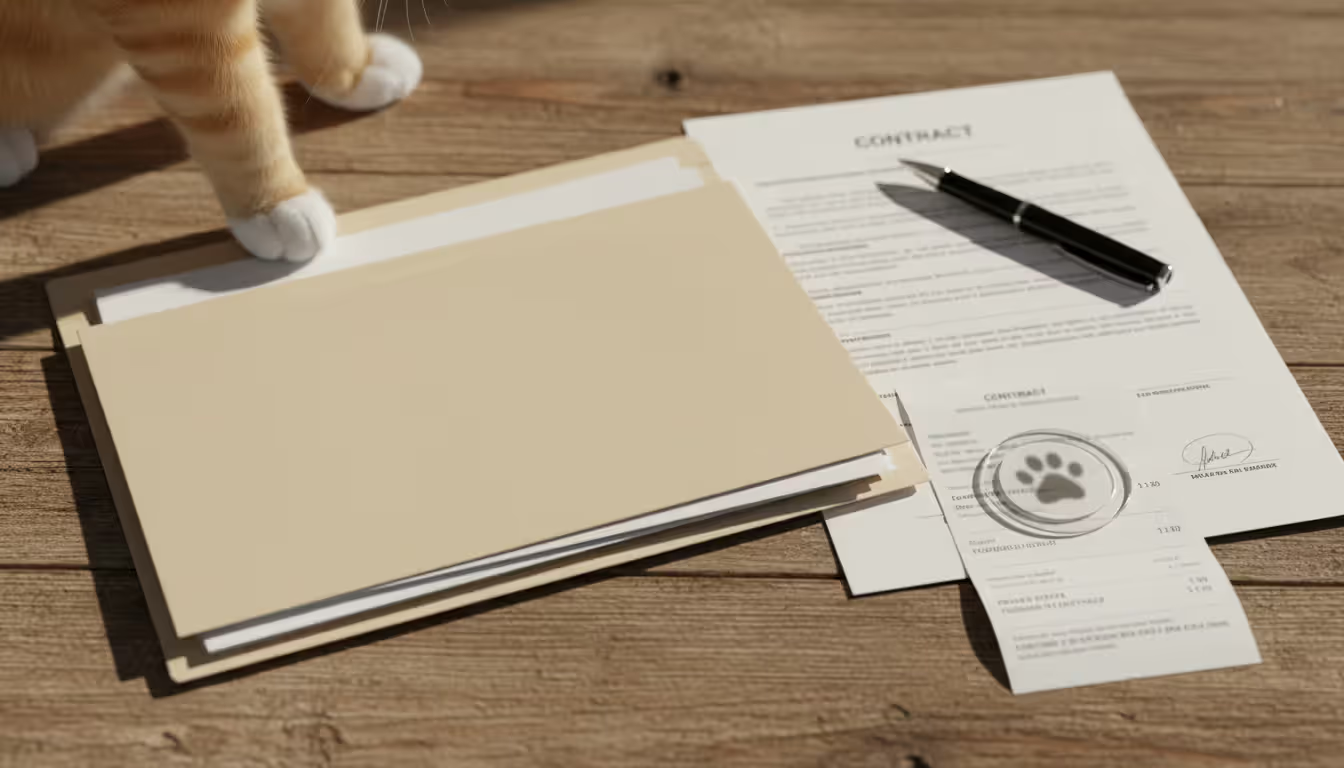
Here's something most cat owners don't realize until it's too late: that microchip implanted in your pet? It won't help anyone find you unless you've actually registered it. And in a growing number of states, you don't get to choose whether to microchip anymore—it's the law.
This guide walks you through everything from state-by-state legal mandates to what happens when two people fight over who actually owns a microchipped pet. If you've been putting off this decision, or if you got your cat chipped years ago but can't remember if you registered it, you'll want to keep reading.
What Is Pet Microchipping and How Does It Work
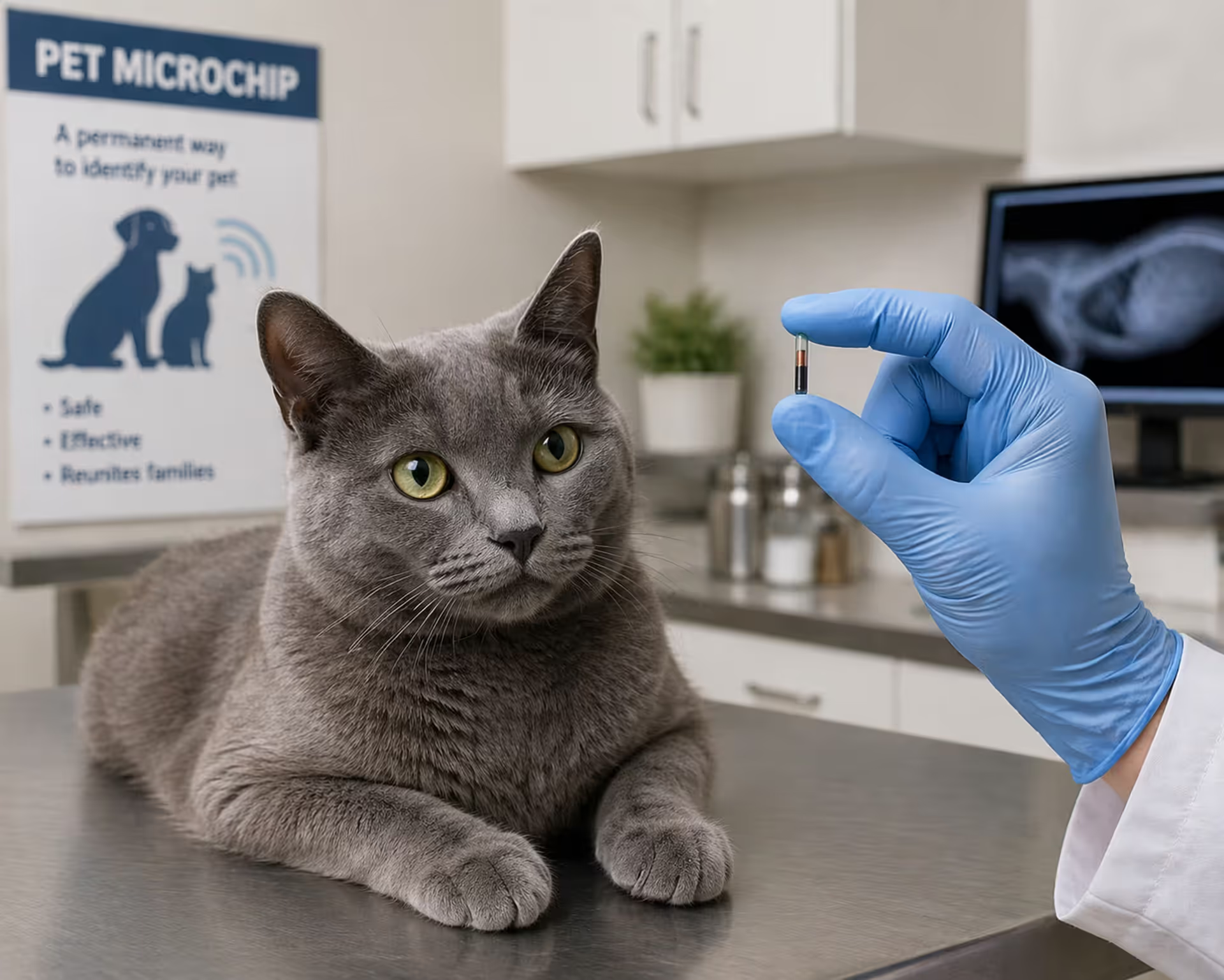
Think of a microchip as a permanent ID bracelet for your cat—except it's invisible, about the size of a single grain of uncooked rice, and goes under their skin. Vets typically inject it between the shoulder blades using a needle that's slightly larger than what's used for vaccinations.
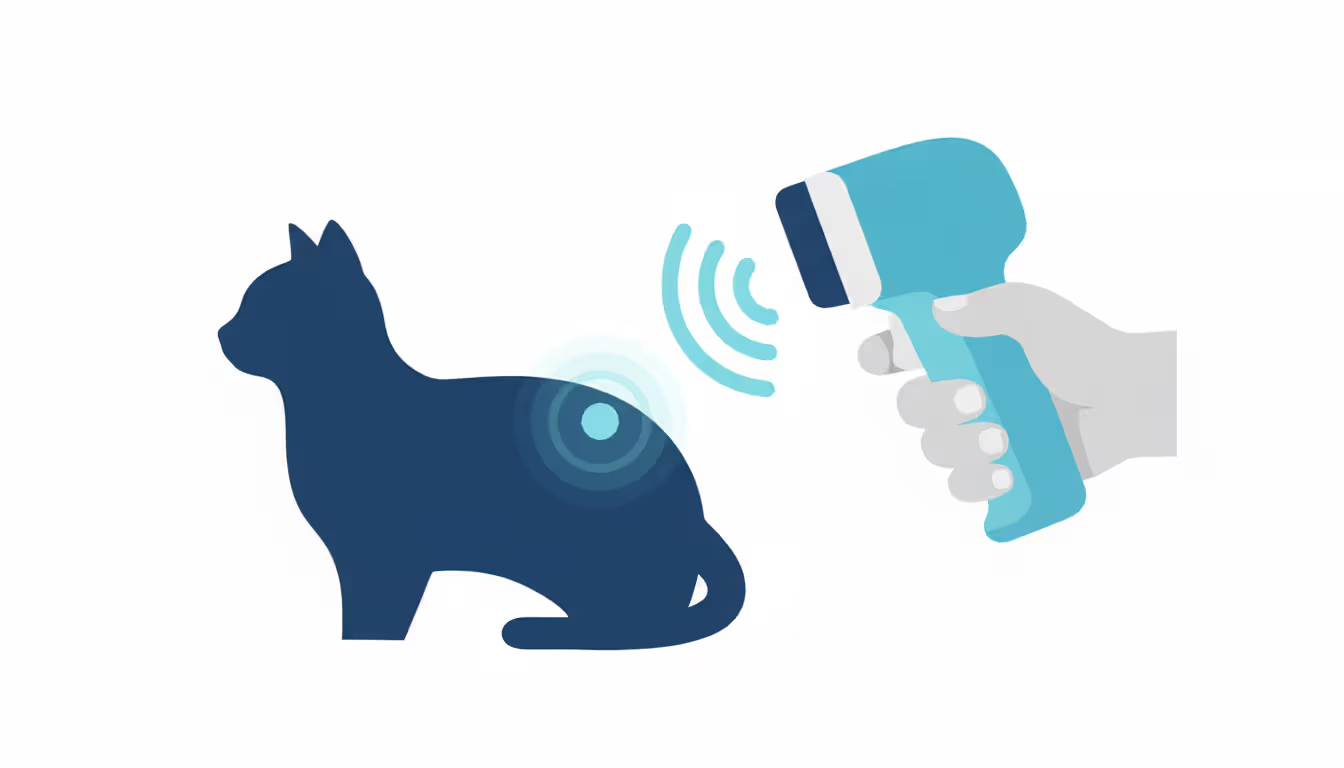
Here's what actually happens when someone finds your lost cat. Animal control or the vet clinic waves a handheld scanner over your cat's back. The scanner emits radio waves that wake up the dormant chip (there's no battery—it only responds when activated by the scanner). The chip sends back a 15-digit number, kind of like a barcode. That's it. That's all the chip does.
Now here's the part that trips people up: your phone number isn't stored on that chip. Neither is your address. The chip itself holds nothing but that unique number. To turn that number into useful information, whoever scanned your cat has to look it up in a registry database—and that only works if you actually registered the chip and kept your details current.
The RFID technology behind microchips draws power directly from the scanner's radio waves, which explains why these chips function for 25+ years without ever needing a battery change or replacement. You implant it once, and it works for your cat's entire life.
Can you use a microchip to track down your missing cat? No—and this misconception causes real problems. GPS tracking requires active transmission and battery power. Microchips have neither. They're identification tags, not tracking devices. If your cat's hiding under someone's porch three blocks away, the microchip won't tell you where they are. But when a neighbor finally catches your cat and takes them to a shelter, that chip will prove they're yours.
Author: Daniel Whitmor;
Source: jamboloudobermans.com
Microchipping Laws by State: Where Is It Legally Required
The legal requirement question has no simple answer because pet microchipping laws operate at three levels: federal (currently none), state, and municipal. You might live in a state with zero requirements but a city that mandates chips for all dogs over six months old.
At the state level, mandatory cat microchipping remains rare for privately owned pets. California blazed the trail by requiring all shelter and rescue organizations to implant microchips before adoption—but this law doesn't touch cats you buy from a breeder or get from a friend. New York, Delaware, and Rhode Island followed with similar shelter-focused mandates.
Delaware stands out as one of the few states requiring microchips for dogs across the board—all dogs older than four months must be both licensed and chipped, even if you bought them from a private party. Other states talk about it, propose bills, but haven't passed them yet.
The real complexity lives at the city and county level. Las Vegas requires microchips for all dogs. Several parishes in Louisiana have breed-specific microchip requirements (typically targeting pit bulls and rottweilers, which raises its own legal questions). Parts of Florida mandate chips for dogs in certain zip codes but not others.
State
Cats Required
Dogs Required
Effective Date
Exceptions
California
Shelter/rescue adoptions only
Shelter/rescue adoptions only
2019
Doesn't apply to private sales or transfers
Delaware
Not required
All dogs 4+ months old
2020
Service animals sometimes exempted
New York
Shelter/rescue adoptions only
Shelter/rescue adoptions only
2021
Licensed breeders can transfer pre-adoption
Rhode Island
Shelter/rescue adoptions only
Shelter/rescue adoptions only
2022
Foster arrangements may have different rules
Nevada (Clark County)
Not required
Required in Las Vegas city limits
2023
Working livestock guardian dogs exempted
Want to know if your location requires microchips? Don't just check state law. Call your local animal control office and ask specifically about both state and municipal requirements. I've talked to cat owners who got cited for violating a city ordinance they had no idea existed because they only researched state law.
Cat Microchip Registration: The Legal Process Explained
Getting the chip implanted takes maybe ten seconds. But registration? That's where pet owners drop the ball, and it's the only part that actually matters legally.
Your vet or the shelter hands you a form after implantation. This form includes your chip's unique 15-digit ID number and instructions for registering with a specific database company. You've got two basic paths from here.
Path one: register with the manufacturer's proprietary database. If your cat got a HomeAgain chip, you register with HomeAgain. Got a 24PetWatch chip? Register there. Most manufacturers include registration in the chip's purchase price or charge $15-45 for lifetime registration.
Path two: register with a universal database like Found Animals Registry or use the AAHA Universal Pet Microchip Lookup system. These databases don't manufacture chips—they just aggregate information from multiple sources so anyone scanning your pet can find you regardless of which specific database they search first.
Smart pet owners do both. Register with the manufacturer (often free) and also put your information into a universal lookup tool. Redundancy costs maybe $20 extra but doubles your chances of being contacted.
The actual registration takes less time than ordering takeout online. You'll enter:
That 15-digit chip number
Your current name, address, phone, email
Alternate contact information (your parents, a neighbor, your vet)
Your cat's description—name, breed, color, any distinctive markings
Whether your cat has medical conditions scanners should know about
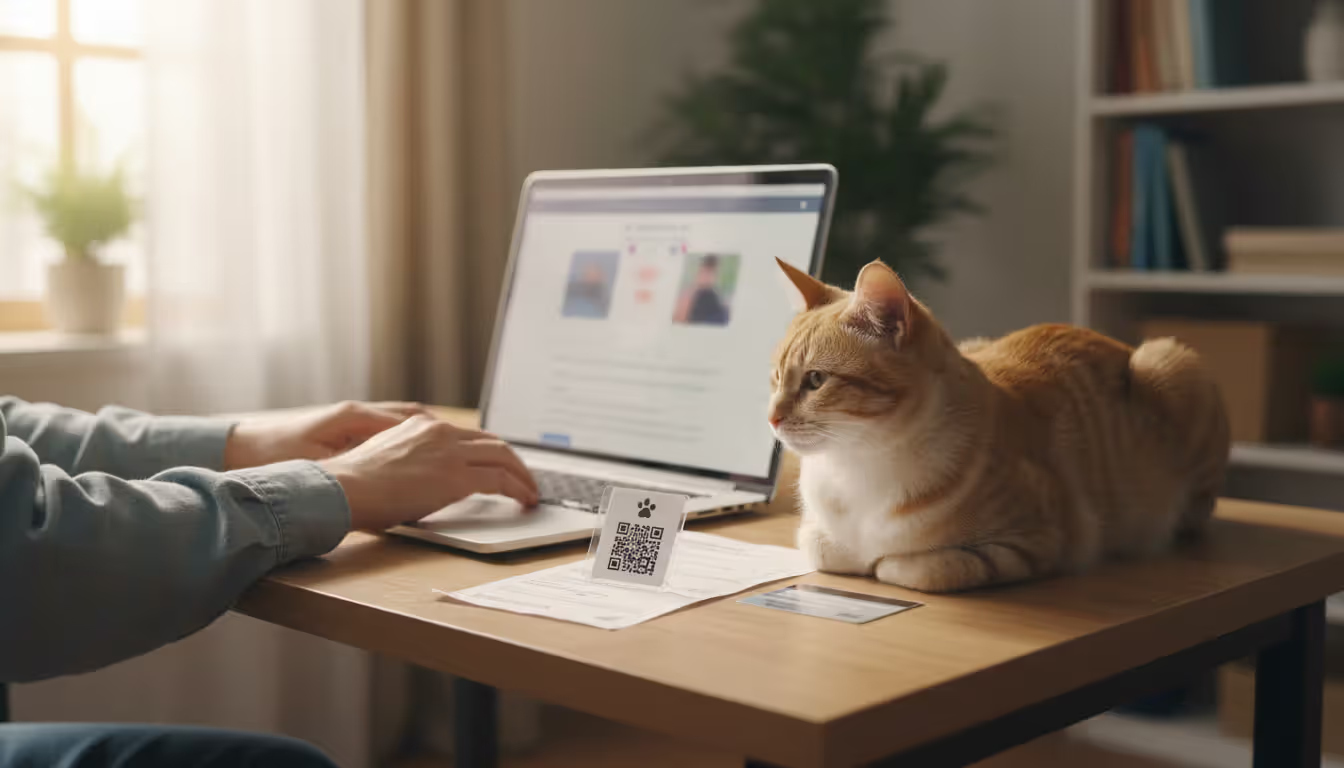
Most databases activate your record within 24 hours. You'll get a confirmation email—save this. Print it. You may need to prove registration later.
What about dogs? The exact same process applies. The only difference: some jurisdictions verify microchip registration when you license your dog, creating automatic compliance checking that doesn't happen with cats.
Bought or adopted a cat that already has a microchip? You must transfer ownership in the database. The process varies by company, but expect to:
Contact the registry using the chip number
Provide proof you now own the cat (adoption contract, bill of sale, transfer agreement)
Pay a transfer fee ($10-25 typically)
Wait for the previous owner's information to be replaced with yours
Here's a mistake I see constantly: people adopt a cat, receive paperwork showing the chip number, and assume the shelter handled registration transfer. Sometimes they did. Often they didn't. Always verify. Log into the registry yourself using that chip number and confirm your name appears as the primary contact. If it doesn't, initiate the transfer immediately.
Life changes demand registration updates. Changed your phone number? Update the registry. Moved to a new apartment? Update within the week, not "when you get around to it." Your ex took the cat in the breakup? Transfer registration or you'll get calls when that cat goes missing five years from now.
Author: Daniel Whitmor;
Source: jamboloudobermans.com
Does a Microchip Prove Legal Ownership of Your Pet
Let's address the ownership question head-on: courts don't treat microchip registration as absolute proof you own your pet. They treat it as persuasive evidence—strong evidence, but not ironclad.
Why the distinction? Because chips can be registered by people who don't actually own the animal. Maybe you're pet-sitting for six months and register the chip "just to be safe." Maybe an ex-partner registered the chip but you're the one who bought the cat. Maybe someone found a stray, kept it for two years without looking for the owner, then registered the chip in their name.
Judges examine the complete ownership picture, not just who appears in a database. The timing of registration carries significant weight. Did you register the chip the same week you adopted your cat, or did you wait until an ownership dispute erupted three years later? Courts view immediate registration as far more credible.
Documentation supporting the chip registration matters enormously. Who signed the adoption contract? Whose name appears on veterinary invoices? Who bought the cat food and paid for dental surgery? Who holds the city pet license? Microchip registration plus this supporting paper trail creates a nearly bulletproof ownership claim.
What Happens in Ownership Disputes
Chip ownership disputes erupt in predictable scenarios: breakups where both people claim they own the shared pet, situations where someone "borrows" a pet temporarily and refuses to return it, and heartbreaking cases where someone finds a lost pet, keeps it for months or years, then the original owner surfaces.
I'll give you a real example. In 2024, a Minnesota woman sued her ex-boyfriend for return of "their" dog. The ex had registered the chip in his name. But the woman produced the adoption contract (in her name), two years of vet bills (all paid by her), and testimony from the veterinarian confirming she'd always brought the dog in alone and identified herself as the owner. The judge awarded her the dog in about fifteen minutes, noting that microchip registration made without actual ownership intent doesn't create ownership rights.
Compare that to a 2025 Texas case where a man claimed his ex-girlfriend stole "his" cat. He had the chip registered in his name. She had nothing—no adoption papers, no vet records in her name, just testimony that she'd fed the cat daily. He won. The microchip registration, combined with his purchase receipt from a breeder, overwhelmed her evidence of providing care.
What do these cases teach us? Microchip registration predicts the outcome when other evidence is weak or balanced. When you've got adoption papers, vet records, and witness testimony all pointing the same direction, the chip registration just reinforces what's already clear. When you lack other documentation, the chip registration becomes the deciding factor.
Supporting Documentation You Need
Build an ownership file for your cat right now, today, before any dispute arises. Include:
Original adoption contract or purchase receipt showing you as buyer
Every vet record, especially those showing you as the "responsible party" who authorized treatment and paid bills
Pet license from your city or county animal control
Dated photos of you with your cat, particularly from when you first got them
Receipts for major purchases (cat tree, carrier, prescription food)
Statements from people who can verify you've owned and cared for this cat—neighbors, your regular vet, pet sitters
I review ownership disputes regularly, and microchip registration matters, but it's rarely the deciding factor. Courts want to see who's invested in this animal's wellbeing over time. Bring me a microchip registration from last week and nothing else, I'm skeptical. Show me three years of vet visits, a licensing history, and chip registration that's been active since day one—now you've got a compelling case
— Dr. Jennifer Martinez
Store all this documentation together. Scan it. Keep digital copies in cloud storage. When your cat is microchipped, add that registration confirmation to the file. This packet proves ownership far more effectively than any single piece of evidence.
Dog vs Cat Microchipping: Legal Differences and Requirements
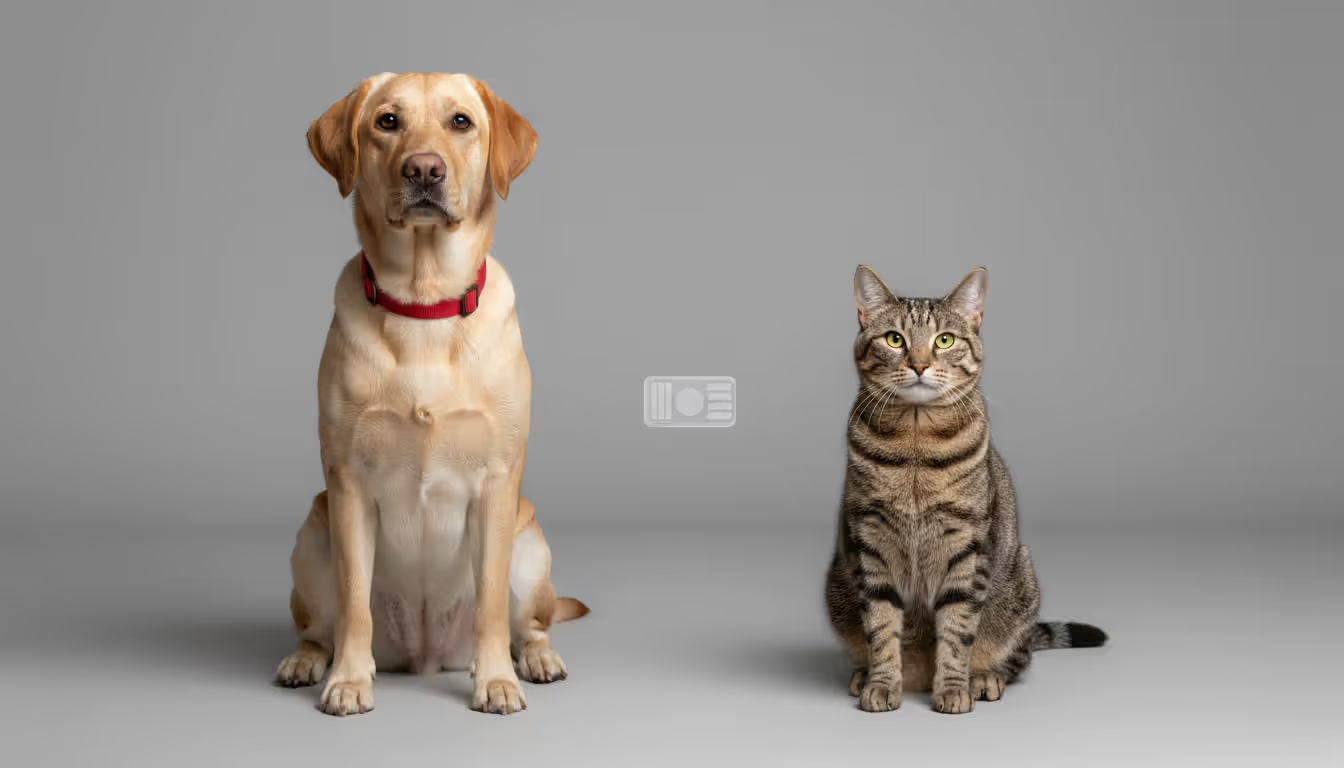
The technology doesn't care whether it's implanted in a cat or a dog—same chip, same process. But the legal frameworks surrounding dogs versus cats? Completely different in most jurisdictions.
Dog owners face stricter requirements almost everywhere. Many cities require dog licenses but not cat licenses, and increasingly, licensing departments verify microchip implantation as part of the licensing process. You apply for a dog license, animal control asks for the chip number, you provide it or you don't get the license. This built-in enforcement mechanism doesn't exist for cats in most places.
Enforcement patterns differ dramatically too. Animal control actively patrols for loose dogs, scans every dog they pick up, and uses chip information both for reunification and for identifying unlicensed animals. Stray cats, on the other hand, may not even get impounded unless they're injured or creating a nuisance. Many jurisdictions recognize "community cats" as a reality and don't treat unowned outdoor cats the same as unowned outdoor dogs.
Legal liability creates another major distinction. In most states, dog owners face strict liability for bites—your dog bites someone, you're liable, period, even if the dog never showed aggression before. Microchip registration becomes critical here because it identifies you as the legally responsible party. Cat owners can face liability too, but courts typically apply a negligence standard (you're only liable if you knew the cat was dangerous and failed to prevent the injury), and the stakes are usually lower.
The tracking question comes up constantly with dogs. Can you legally track a dog with a microchip? No, for the same reason you can't track cats—microchips don't transmit location data. However, GPS collars designed specifically for tracking are far more common for dogs than cats, and they're legal to use on your own pet. Using a GPS tracker on someone else's pet without permission crosses into stalking or surveillance law violations in many states.
Breed-specific legislation adds another layer for dogs. Cities with pit bull restrictions, for example, often require special permits, liability insurance, and mandatory microchipping as conditions of ownership. These breed-targeted laws rarely if ever extend to cats, even though some cat breeds can be equally aggressive or exotic.
Registration requirements for dogs sometimes include details that cat registration doesn't capture. Some jurisdictions require you to register whether your dog has completed obedience training, whether it's been declared dangerous, or whether it's been involved in previous bite incidents. This information becomes part of the microchip record in some databases, creating a more comprehensive legal profile than exists for cats.
Bottom line: if you own both dogs and cats, expect to navigate different legal requirements for each, even though the physical microchips are identical.
Author: Daniel Whitmor;
Source: jamboloudobermans.com
Common Microchipping Mistakes That Affect Legal Protection
I've seen people microchip their pets and completely undermine the legal protection by making preventable mistakes. Here are the ones that cause the most problems.
Never completing registration in the first place. This is shockingly common. The vet implants the chip, hands you a registration card, you stick it in a drawer intending to "do it later," and you forget about it for five years. Meanwhile your cat escapes, someone finds them, scans the chip, calls the registry, and gets "no owner information on file." The chip exists but it's connected to nothing—like having a phone with no service plan.
Registering exclusively with an obscure database nobody searches. Some chip manufacturers use proprietary databases that aren't included in universal lookup systems. A shelter in your state scans your lost cat, searches the three databases they normally check, finds nothing, and assumes the chip was never registered. Your information exists, but in a database they didn't search. Before registering, ask your local animal control which databases they routinely check, then make sure you're in at least one of them.
Treating registration as a one-time event instead of an ongoing responsibility. You register your cat's chip in 2020 using your apartment address and a phone number. By 2025, you've moved twice, changed phone carriers, and switched to a new email address. Your cat bolts during a thunderstorm, gets picked up five miles away, and the shelter calls the disconnected number from 2020. They can't reach you, so after the hold period, they adopt your cat out to someone else. Update your registration every single time your contact information changes—set a calendar reminder if you need to.
Assuming the shelter or rescue handled registration. Some do. Some don't. Some register the chip under their organization's name temporarily and expect you to transfer it. Some register it under your name as part of the adoption process. Some implant the chip but hand you the paperwork and wish you luck. Never assume. Always verify by logging into the registry yourself.
Skipping the ownership transfer when you acquire a previously chipped pet. You adopt an adult cat from a private party or a friend who's moving overseas. The cat already has a microchip—great! Except the chip is still registered to the previous owner. If your cat gets lost, the registry contacts them, not you. And if an ownership dispute arises later, guess whose name appears as the legal owner in the database? Get written transfer documentation from the previous owner, contact the registry, pay the transfer fee (usually $10-20), and follow up to confirm the transfer completed.
Choosing the cheapest option without researching reliability. Free registration sounds great until the company goes bankrupt and their database disappears. Or their customer service never answers. Or shelters in your region don't search their database. A reputable registry charges $15-45 for lifetime registration and will still be around in ten years. That's worth paying for.
Forgetting to keep proof of registration. You register the chip, close the browser window, delete the confirmation email, and move on with your life. Two years later, someone questions whether your cat is really yours, and you have no documentation showing you registered the chip. Save every confirmation email. Print a copy for your pet file. Screenshot your registry account dashboard. Documentation proves registration happened and when it happened.
Author: Daniel Whitmor;
Source: jamboloudobermans.com
FAQ About Pet Microchipping Laws and Registration
Is microchipping legally required for cats in my state?
For most states, microchipping remains optional for cats you acquire through private sales, breeders, or as strays you've taken in. The exceptions apply primarily to shelter and rescue adoptions. California, New York, Delaware, and Rhode Island all require animal shelters and rescue groups to microchip cats before finalizing adoptions, but these laws stop there—they don't require private owners to chip cats they already own or acquire outside the shelter system. That said, your city or county might impose requirements beyond state law. Philadelphia, for example, has discussed municipal microchip requirements that would exceed Pennsylvania's state regulations. Call your local animal control office and ask about both state and local ordinances. Even where not legally required, vets and animal behaviorists universally recommend chipping indoor-outdoor cats and any cat who's ever shown an inclination to bolt out doors.
How much does cat microchipping and registration cost?
Implantation at a private vet clinic runs $25-75, depending on your location and whether you combine it with other services like an annual exam. Shelters and animal welfare organizations often host low-cost microchipping events where you'll pay $10-20 for the same service. Registration costs vary wildly. Some chip manufacturers throw in free lifetime registration when you buy their chip. Others charge $15-20 annually or $40-80 for lifetime registration. Found Animals Registry offers free registration and has for years. Transfer fees when you adopt a previously chipped pet typically cost $10-25. If you register with multiple databases for redundancy (which I recommend), budget an extra $20-40 total. All-in, expect to spend $50-100 for implantation plus lifetime registration if you're doing it right.
Can I track my pet's location with a microchip?
No—microchips and GPS trackers are fundamentally different technologies solving different problems. A microchip identifies your pet when someone scans them, but it cannot tell you where your pet is right now. The chip has zero transmission capability and no power source. It only activates for a split second when a scanner passes directly over it, returning just an ID number. If you want real-time location tracking, you need a GPS collar device like a Whistle or Fi collar. These require batteries (recharged weekly or monthly), cost $100-200 for the device plus $10-20 monthly for cellular service, and work completely independently from microchips. Some pet owners use both—GPS collar for active tracking if their pet escapes, and microchip as permanent identification in case the collar falls off or the battery dies.
What happens if two people claim ownership of a microchipped pet?
The registry lists someone as the primary contact, and that person has a presumptive ownership claim—but it's not final or absolute. Either party can challenge ownership in civil court (small claims for cases under $5,000-10,000 depending on state, regular civil court for more valuable animals like purebred show cats). The judge looks at multiple factors: Who has the original adoption contract or purchase receipt? Who paid for veterinary care historically? Who licensed the pet with animal control? How long has each person had physical possession? Did ownership transfer intentionally or did someone refuse to return the pet? Microchip registration counts as strong evidence, especially if registered immediately upon acquisition, but it's not automatically decisive. In one Illinois case, a woman's microchip registration got overruled because her ex-boyfriend produced adoption paperwork, two years of vet bills, and testimony from the veterinarian—all proving he was the actual owner even though she'd registered the chip without his permission. Keep your adoption papers, vet records, and receipts together with your chip registration to build an airtight ownership claim.
Do I need to re-register my pet's microchip if I move states?
The chip registration itself works nationwide—you don't re-register just because you crossed state lines. But you absolutely must update your contact information in the existing registry. Log into your account on the registry website or call their customer service line. Update your address, phone number, and any other details that changed. Most registries process updates for free or charge a nominal fee ($5-10). Do this within days of moving, not months. Also research whether your new state or city has microchipping requirements you didn't face before. If you moved from a state with no requirements to Delaware, where all dogs must be chipped, you've got a new legal obligation. Similarly, if your new city requires licensing and your old one didn't, get compliant quickly to avoid citations.
How do I prove I registered my pet's microchip legally?
Your registry should have sent a confirmation email immediately after registration—find it and save it permanently. Most registries also let you log into an online account where you can view your registration details and generate a printable confirmation document. Some provide wallet cards with your pet's chip number and registration confirmation code. If you've lost everything, contact the registry's customer service department with your chip number (it's also on your vet records from the implantation visit). They can verify registration status and email you new confirmation. Some registries allow you to add your chip number to the AAHA Universal Pet Microchip Lookup system, which provides independent verification that your chip is registered and searchable. Keep registration confirmation in the same file with your cat's adoption papers and vet records—this complete documentation package proves both ownership and proper registration.
Microchipping your cat offers powerful practical and legal advantages, from dramatically improving your odds of recovery if they're lost to providing evidence of ownership if that's ever questioned. And in growing parts of the country, you don't get to treat it as optional anymore—shelters and rescues must chip animals before adoption, and some jurisdictions extend requirements to all pets regardless of source.
But the chip itself is only half the equation. Registration transforms a meaningless ID number into a functional tool for reunification and legal protection. The pet owners who benefit from microchipping are the ones who register immediately, update their information religiously, keep documentation, and build complete ownership files that extend beyond just the chip.
Take thirty minutes this week to verify your cat's chip is registered and your information is current. If you haven't chipped your cat yet, schedule it—most vet clinics can do it during a regular appointment. And once it's done, keep those confirmation emails, print that registration certificate, and maintain the documentation that proves you did everything right.
Technology won't save you if you don't use it properly. A registered microchip backed by solid documentation creates powerful legal protection. An unregistered chip, or one connected to a disconnected phone number from your last apartment, might as well not exist.
Losing a dog is heartbreaking. Once the initial grief subsides, you face an urgent practical question: what are you legally allowed to do with your dog's body? This guide covers every legal option available to pet owners in the United States, from backyard burial to municipal pickup
Dog theft carries serious criminal penalties ranging from misdemeanors to felonies depending on the dog's value and state laws. Understand the charges, sentencing, and legal steps to report theft, use microchip evidence, file civil lawsuits, and recover your stolen dog through law enforcement and community efforts
When your dog breaks a leg and money is tight, multiple solutions exist. From nonprofit grants and veterinary teaching hospitals to payment plans and crowdfunding, this guide covers actionable options to get your dog treatment without thousands upfront, including what to do if you can't pay the vet bill
Starting a cat sanctuary requires navigating nonprofit law, zoning regulations, licensing requirements, and operational constraints. This guide covers the legal and practical steps to establish a compliant, sustainable sanctuary in the United States, from 501(c)(3) filing to capacity planning
The content on this website is provided for general informational and educational purposes only. It is intended to explain concepts related to animal law, pet ownership rights, service animals, dog bite liability, and animal welfare legislation in the United States.
All information on this website, including articles, guides, and examples, is presented for general educational purposes. Legal outcomes may vary depending on jurisdiction, state laws, and individual circumstances.
This website does not provide legal advice, and the information presented should not be used as a substitute for consultation with qualified attorneys or animal law professionals.
The website and its authors are not responsible for any errors or omissions, or for any outcomes resulting from decisions made based on the information provided on this website.