Steal someone's dog in America and you're looking at criminal charges—potentially serious ones. We're talking anything from a simple misdemeanor with a few hundred bucks in fines all the way up to felony convictions carrying multi-year prison sentences. It all depends on where you are, what the dog's worth, and what you planned to do with it.
Here's what actually happens when prosecutors charge dog theft: They treat your neighbor's golden retriever the same way they'd treat a stolen laptop under property laws. That means restitution payments, possible jail time, and yeah, a criminal record that sticks around. The whole "it's just a dog" defense? Doesn't fly anymore.
Courts now recognize something pet owners have always known—losing a dog isn't like losing your wallet. But legally speaking, the penalties still hinge on dollars and cents. A $200 shelter mutt stolen from someone's backyard triggers different charges than a $5,000 trained German Shepherd taken from a breeder's kennel. And if you hurt the animal or planned to sell puppies for profit? You've just bumped yourself into felony territory in most states.
What catches people off guard: You can face these same charges for keeping a "found" dog when you know someone's desperately searching for it. Those lost dog flyers plastered around your neighborhood? Ignoring them while refusing to check for a microchip can land you in court.
Is Stealing a Dog Considered a Felony or Misdemeanor?
Whether dog theft counts as a felony comes down to two main factors: how much the dog's worth and what you did (or planned to do) with it.
Most state laws classify pets as personal property—the same category as your TV or bicycle. So prosecutors pull out their standard theft statutes and start calculating value. In California, that $950 threshold matters. Steal a dog worth $900? You're facing misdemeanor petty theft. But if that dog's market value hits $951, prosecutors can file felony grand theft charges. Suddenly you're looking at county jail versus state prison time.
Texas draws its line at $2,500. Florida? Just $750 will do it. These thresholds create wild disparities. An identical act—say, stealing a purebred Labrador retriever—might be a misdemeanor in Austin but a felony in Miami.
Now, how do courts figure out what Fido's actually worth? They consider:
Breed and pedigree documentation (a papered Akita from champion bloodlines versus a Craigslist puppy)
Age and health status
Special training (service dogs certified for medical alert work can be valued at $30,000+)
Show titles or breeding rights
Purchase price and comparable market sales
Here's where it gets complicated. Some circumstances automatically escalate charges regardless of the dog's price tag. Steal someone's service animal in Virginia? That's a felony even if you grabbed a rescue dog the owner trained themselves. Planning to breed that stolen female and sell the puppies? Many prosecutors consider that theft with commercial intent—hello, felony enhancement.
Did you harm the dog after stealing it? Stack on animal cruelty charges. Left it tied up without food for three days? Neglect charges. Sold it on Facebook Marketplace claiming it was yours? Add fraud to the list.
A few states have stopped pretending dogs equal toasters. New York passed Buster's Law back in 2014, creating a specific crime for companion animal theft. The statute carries up to two years behind bars, separate from regular property theft rules. Virginia's code explicitly addresses stealing pets as its own offense, acknowledging that your childhood lab mix means more than its $150 adoption fee suggests.
Why does the felony-versus-misdemeanor split matter so much? Consequences stretch way beyond jail time:
Misdemeanors max out at one year in county jail; felonies mean state prison sentences (sometimes five, ten, even twenty years in some jurisdictions)
Felony convictions strip voting rights in certain states
You'll lose gun ownership rights with a felony
Professional licenses become harder to get or keep
Immigration status gets jeopardized for non-citizens
Background checks flag you for employment, housing, loans
One criminal defense attorney recently noted something interesting: "Ten years ago, prosecutors would offer plea deals on dog theft cases like they were traffic tickets. Now? They're pushing for felony convictions, especially when social media posts prove you knew the dog belonged to someone else. Courts finally understand that stealing someone's dog causes damage that stealing their bicycle never would."
Dog Theft Criminal Charges and Sentencing by State
Dog theft laws look different depending on which state you're in. Every state criminalizes taking someone's pet, sure—but the specific charges, prison time, and fine amounts vary wildly.
Check out how ten different states handle the same crime:
State
Classification
Maximum Jail Time
Maximum Fine
Felony Threshold
California
Petty/Grand Theft
3 years
$10,000
Dog worth $950+
Texas
Misdemeanor/Felony Theft
10 years
$10,000
Value exceeds $2,500
Florida
Petit/Grand Theft
5 years
$5,000
$750 and above
New York
Larceny/Companion Animal Theft
4 years
$5,000
$1,000 value
Illinois
Misdemeanor/Felony Theft
5 years
$25,000
Over $500
Pennsylvania
Theft by Unlawful Taking
7 years
$15,000
Exceeds $2,000
Virginia
Larceny/Grand Larceny
20 years
No statutory max
$1,000 or more
Washington
Theft in Various Degrees
10 years
$20,000
Above $750
Arizona
Theft Class 1-6 Felony
2 years
$150,000
Value over $1,000
Georgia
Misdemeanor/Felony Theft
10 years
$100,000
$1,500+ value
Notice Virginia's potential 20-year maximum? That's an outlier, but it's real. Georgia's $100,000 fine ceiling rarely gets imposed at that level, but judges have the authority.
Beyond prison and fines, courts routinely order restitution—you're paying back the victim for:
Every vet bill racked up while the dog was missing
Reward money they paid out to get their pet back
Hiring a pet detective (yes, that's a thing)
Sometimes the dog's full replacement value if it's never recovered
Steal a $15,000 trained protection dog and lose it? You might owe $15,000 even from behind bars. For purebred show dogs with extensive pedigrees, restitution awards have hit $40,000+.
Sentencing often includes probation terms specifically crafted for pet theft:
You can't own any animals during probation (typically 2-5 years)
Mandatory community service at animal shelters—often 100+ hours
Psych evaluations to assess whether you're likely to harm animals again
GPS monitoring in serious cases
Social media restrictions (can't post about pets or contact victims)
Got caught stealing a dog before? Second offense changes everything. Colorado automatically upgrades to felony charges for a second dog theft within five years, regardless of the animal's value. Michigan doubles your maximum sentence if you've got prior theft convictions.
According to Sarah Mitchell, a criminal defense attorney who specializes in animal law: "Five years ago, I could get dog theft cases pled down to disturbing the peace with a small fine. Not anymore. Prosecutors treat these cases seriously now, especially when there's clear evidence the defendant knew the dog was owned—text messages, social media posts showing the stolen dog, neighbors' testimony. One client faced felony charges over a $600 mixed breed because he'd posted photos with the dog on Instagram while the owner was flooding Facebook with 'stolen dog' alerts. The judge wasn't sympathetic."
How to Report a Stolen Dog to Police
Time matters more than you'd think. The first 48 hours after your dog gets stolen determine whether you'll ever see them again. Thieves work fast—selling dogs online, moving them to different cities, even transporting them across state lines within days.
Call your local police department immediately. Use their non-emergency line unless you witnessed the theft happening or have the thief cornered (then call 911). Here's what NOT to say: "My dog is lost" or "I can't find my dog." That's vague. Instead, be direct: "Someone stole my dog from my backyard" or "My dog was taken from outside the store where I tied him up."
Author: Samantha Loring;
Source: jamboloudobermans.com
Word choice matters because it determines how police categorize your report. "Lost dog" gets filed as a low-priority animal control issue. "Stolen dog" becomes a property theft crime that actually gets investigated.
When you file the report, bring everything:
Ownership proof—Adoption paperwork, purchase receipts, your name on vet records, current license registration. Anything proving the dog legally belongs to you. This stops thieves from claiming they found the dog or bought it legitimately.
Physical details—Breed, coloring, exact markings, size, weight, age. Get specific. Don't just say "brown dog"—say "chocolate Labrador with white chest patch shaped like a heart, scar above right eye, forty-five pounds, three years old." Mention quirks too: a crooked tail, one floppy ear, weird howl instead of normal bark.
Microchip number—Critical. Bring your microchip registration confirmation showing your name and contact info. This becomes your strongest evidence.
Photos and videos—Recent pictures from multiple angles. Close-ups of any distinctive features. Videos showing you interacting with the dog prove ownership and help with identification.
Theft circumstances—Exactly when and where it happened. "Yesterday afternoon" doesn't cut it. Say "October 15th between 2:30 and 3:00 PM from my fenced backyard at 123 Main Street." Include any witnesses who saw something.
Suspect information—If you know or suspect who took your dog, say so. Names, physical descriptions, addresses, vehicle info. Had disputes with neighbors? Previous threats? Suspicious people hanging around? Tell the officer everything.
Get a written copy of the police report with the case number before you leave. You'll need it for insurance claims, civil lawsuits, and when contacting other agencies.
Don't stop with police. Hit all these the same day:
Animal control and every shelter within fifty miles
Veterinary clinics nearby (thieves sometimes need medical care for the dog)
Your microchip company (mark the chip "stolen" immediately)
Neighborhood groups on Nextdoor, Facebook, community apps
National databases like PetFBI, Finding Rover, Petco Love Lost
Using Microchip Evidence in Dog Theft Cases
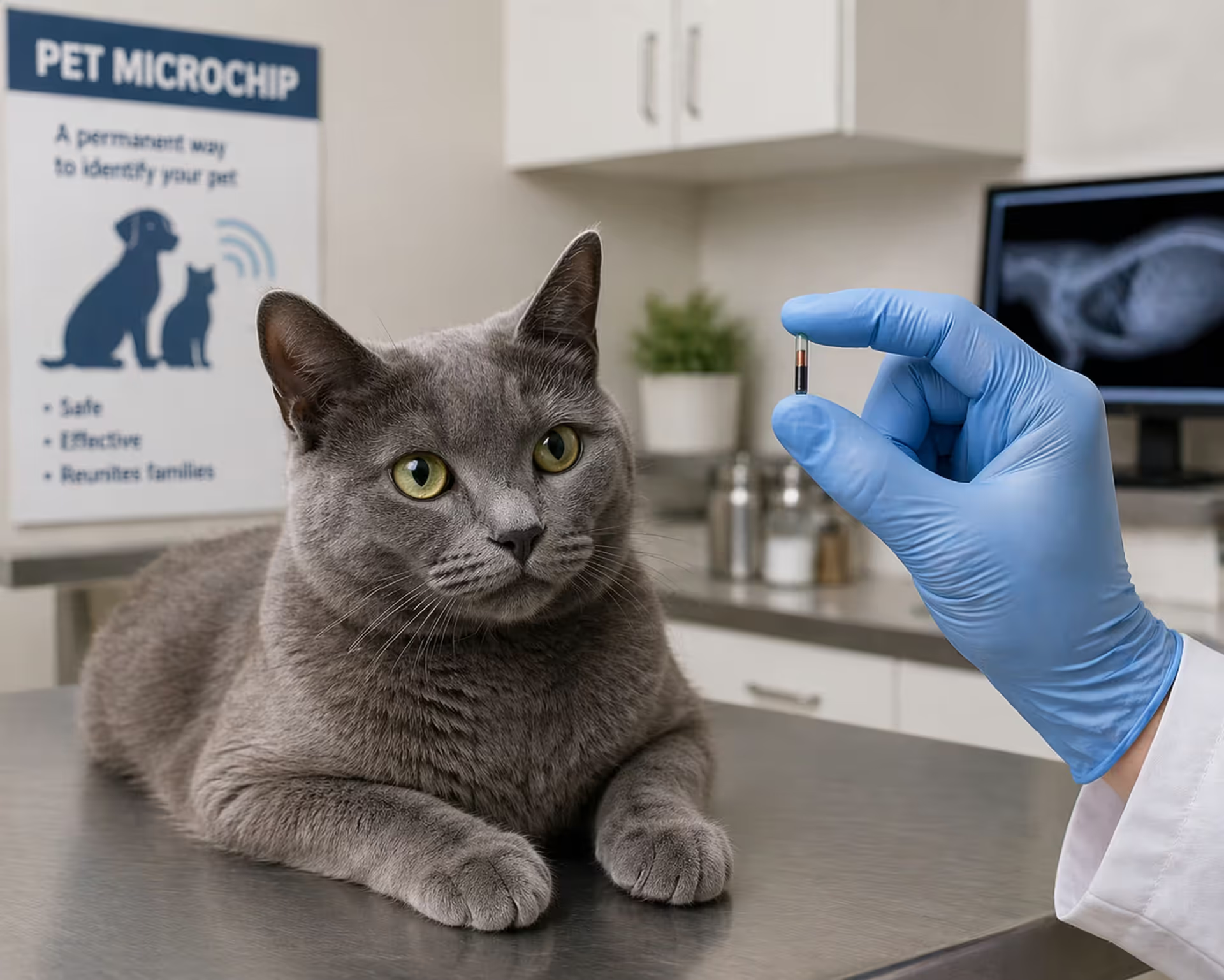
Microchips provide the closest thing to bulletproof ownership evidence you'll find. That rice-sized chip implanted between your dog's shoulder blades? It's permanently linked to you in a national database.
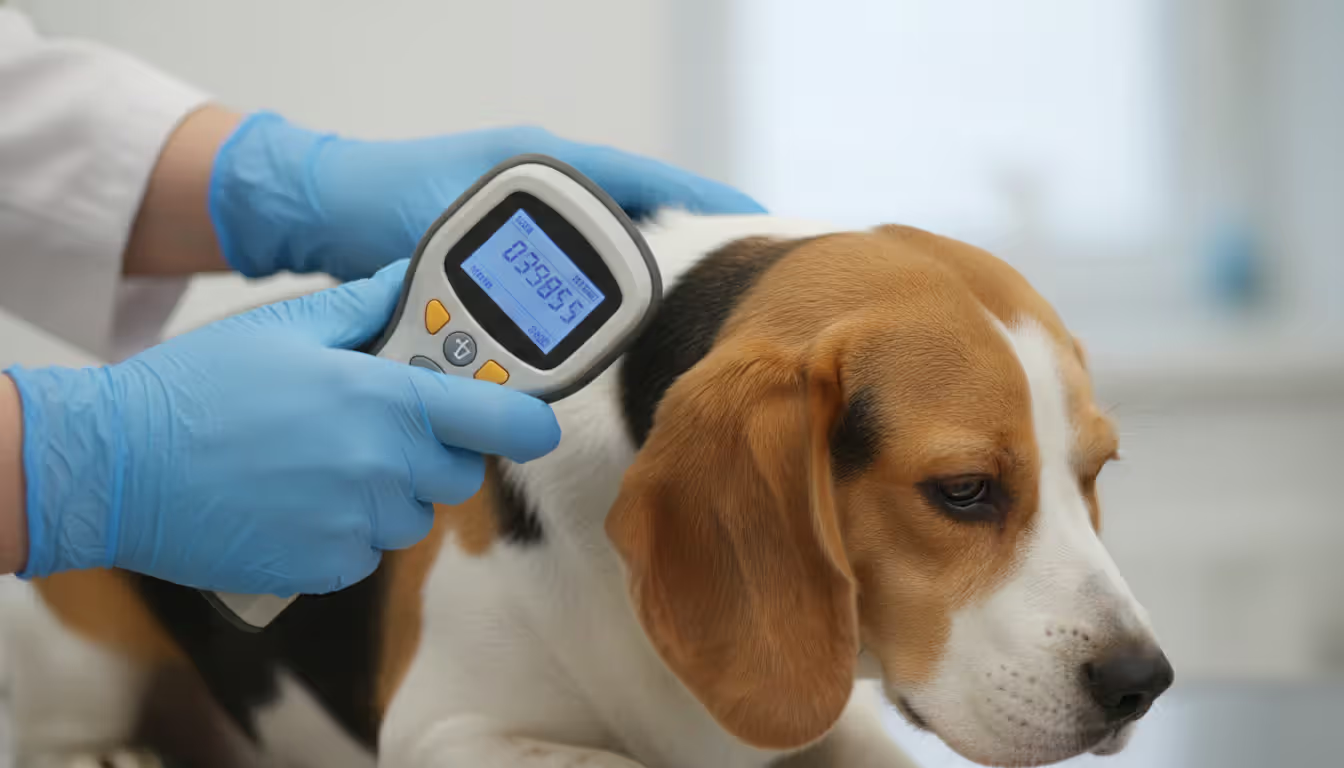
Here's how it works in theft cases: Someone brings your stolen dog to a vet or shelter. Staff scan for a chip—standard procedure for any animal that comes through. The scanner reads your chip number, they search the database, and boom—your name and phone number pop up as the registered owner. Doesn't matter what story the thief tells. The chip doesn't lie.
Author: Samantha Loring;
Source: jamboloudobermans.com
The moment you realize your dog's been stolen, contact the microchip company:
Confirm your contact information is current
Mark the chip status as "STOLEN" in their system
Add backup contact numbers (friends, family who can respond immediately)
Request notification alerts if anyone scans the chip
That stolen flag is huge. When vets or shelters scan the chip and pull up the database record, they see "STOLEN DOG" in red text. They'll call you directly instead of trusting whoever brought the dog in.
In criminal prosecutions, microchip records work as documentary evidence. Prosecutors submit your registration records showing continuous ownership from the day you got the dog through the theft date. Defense attorneys struggle to overcome this. Hard to claim you "found" a dog when database records prove someone else has owned it for three years straight.
One case in Oregon: A woman stole her neighbor's French Bulldog worth $3,500, then sold it to a couple two towns over. Two months later, the buyers took the dog to a vet for vaccines. Chip scan revealed the stolen status, vet called the original owner, police arrested both the thief and (briefly) the buyers until they proved they'd purchased the dog without knowledge it was stolen. The thief got charged with felony theft. She was convicted largely on microchip evidence.
The limitation: Chips aren't GPS trackers. They only work when someone scans them. If a thief keeps your dog locked in their basement and never seeks vet care, the chip won't help. But most thieves eventually need veterinary services, try to rehome the dog, or surrender it to a shelter—creating that scanning opportunity.
What Happens After You File a Police Report
What actually happens next depends heavily on your police department's resources and priorities. Big-city departments with dedicated animal crimes units might assign a detective who'll interview witnesses, pull surveillance footage from nearby businesses, check pawn shops and online sales platforms. Smaller departments? You might get a report number and not much else unless you hand them the suspect on a platter.
If police locate your dog, they'll verify ownership before releasing the animal to you. They'll scan for a microchip first—easiest proof. If someone contests ownership (claiming they bought or found the dog), officers may impound the animal at animal control pending court determination. They won't make judgment calls about "who the dog likes better" in the field.
Criminal charges follow when police identify a suspect and prosecutors decide there's enough evidence. You'll likely give additional statements, possibly testify if the case goes to trial. Reality check: most dog theft cases settle through plea agreements. Defendants accept reduced charges (felony knocked down to misdemeanor, for instance) in exchange for guilty pleas. Saves everyone a trial.
Here's the frustrating truth: not every police department takes pet theft seriously. Some officers still view it as "just a dog" and suggest you "work it out" with the thief. If you run into this attitude, escalate to a supervisor. Emphasize that you're reporting a theft crime, not a lost pet situation. Point out aggravating factors if they exist—high-value dog, service animal, suspect's criminal history.
One woman in Tennessee filed a dog theft report and got told by the desk officer to "check the shelters yourself." She called back, asked for the watch commander, explained she was reporting a felony theft of a $4,000 trained mobility assistance dog stolen from her yard by a suspect captured on security camera. Different response—detective assigned within an hour, arrest made within three days.
Legal Steps to Recover Your Stolen Dog
Don't wait around hoping police will solve everything. You've got legal options beyond criminal prosecution that you can pursue simultaneously.
Replevin lawsuit—This civil court action specifically demands return of wrongfully taken property. You file asking a judge to order the defendant to give back your dog. The burden of proof is lower than criminal cases (preponderance of evidence instead of beyond reasonable doubt), making them easier to win. Courts can issue emergency temporary orders forcing the defendant to return your dog immediately, even before trial. This works especially well when you know exactly who has your dog.
Emergency protective orders—If you know who stole your dog and you're worried they'll hurt, sell, or relocate the animal, request a protective order. Some jurisdictions now include pets in domestic violence restraining orders. The order can prohibit the defendant from harming, selling, or moving your dog pending the case outcome.
Hire a pet detective—Yeah, they're real. Professional pet recovery specialists use investigative techniques, monitor online sales platforms, coordinate with shelter networks, and dedicate time police can't. Expect to pay $500-$2,000, but they often succeed where overwhelmed police departments fail. One pet detective in California has a 70% recovery rate for stolen dogs by systematically checking every online marketplace and shelter within a 200-mile radius daily.
Monitor online sales yourself—Thieves frequently try selling stolen dogs on Craigslist, Facebook Marketplace, OfferUp, specialized pet sites. Search these platforms multiple times daily using your dog's breed, color, age range. Set up alerts for new listings matching your dog's description. Found a listing that looks like your dog? Don't confront the seller. Screenshot everything, note the location, contact police with the evidence. Let them handle the confrontation.
Community engagement—Distribute flyers with clear photos, your contact info, and "STOLEN" in large letters (not "lost"). Offer a reward but don't specify the amount (prevents scammers demanding exact amounts you mentioned). Post everywhere: telephone poles, community boards, local businesses, veterinary clinics. Hit social media hard: Facebook groups, Nextdoor, Instagram, TikTok.
Local media coverage—TV news stations and newspapers often run pet theft stories, especially for unusual breeds or sympathetic circumstances (kid's therapy dog, veteran's PTSD service animal). Media attention generates tips from the public and sometimes pressures thieves to abandon the dog where it'll be found.
Legal representation—For high-value dogs (monetary or sentimental), hire an attorney. They'll file civil suits, negotiate with the thief's lawyer if they hire one, handle complex custody disputes. Costs range from $2,000-$5,000 through trial, but that's worth it for a $10,000 show dog or irreplaceable service animal.
Document absolutely everything: save text messages, screenshot social media posts, record witness statements, keep receipts for all expenses. This evidence supports both criminal cases and civil lawsuits.
Common mistake that backfires: confronting suspected thieves directly. This can escalate to violence, allows them to hide or relocate your dog quickly, and creates legal problems if the confrontation gets physical. One guy in Nevada tracked down the person he believed stole his pit bull, went to their house, ended up in a fistfight, and got arrested for assault. The other party claimed they'd bought the dog legitimately. Cops couldn't sort it out, neither guy got the dog (animal control impounded it), and the original owner faced criminal charges of his own.
Work through proper channels. It's slower and more frustrating, but it's safer and actually works.
From a legal standpoint, dog theft is prosecuted like any other property crime—but the real impact goes far beyond financial loss. Courts are increasingly recognizing that taking a pet means disrupting a bond that can’t be measured in dollars alone.
— Emily Carter
Civil Lawsuits and Damages for Dog Theft
You can sue a dog thief in civil court even if criminal prosecution fails or produces weak results. Civil lawsuits offer multiple categories of damages beyond just getting your dog back.
Compensatory damages—This covers your dog's fair market value if you can't recover the animal, or if you do but the dog came back injured or died. For papered purebreds, that's often the purchase price or current market value for the breed, age, and pedigree. A champion bloodline show dog? Could be $10,000+. Mixed breeds get valued lower, typically based on adoption fees from local shelters ($150-$400). Training changes everything though. Service dogs with professional training certifications can be valued at $20,000-$50,000 given the training investment.
Economic damages—All your out-of-pocket expenses: vet bills for injuries the dog sustained during theft or while held by the thief, reward money you paid to people who helped recover your dog, costs of hiring pet detectives, GPS trackers you bought for future security, new fencing or cameras, even lost wages if you missed work searching for your dog. One couple in Florida documented $8,000 in economic damages from a dog theft—$3,000 in rewards, $2,500 in vet care for injuries, $1,500 in lost wages, $1,000 for a lawyer consultation.
Emotional distress damages—Controversial territory. Traditionally, courts said no way—property is property, you don't get emotional damages for a stolen toaster, your dog's no different. But that's shifting. Some states now recognize pets occupy a unique space between property and family. Tennessee courts have awarded emotional distress damages in pet cases. Illinois too. Texas courts permit it when defendants' conduct was particularly egregious. You'll need to prove severe impact—therapy records, medical treatment for depression or anxiety triggered by the loss, expert testimony. Awards typically hit $1,000-$10,000, occasionally higher in extreme cases.
Punitive damages—These punish especially awful conduct. Did the thief steal your dog to breed puppies for profit? Sell your dog despite knowing it was stolen? Harm the animal deliberately? Courts may award punitive damages exceeding actual damages to deter similar behavior by others. Amounts vary widely based on the defendant's conduct and financial situation.
Attorney fees and costs—Sometimes recoverable depending on state law. If the defendant's conduct was particularly wrongful or malicious, courts may order them to pay your legal bills on top of damages.
Statute of limitations for civil dog theft suits runs 2-6 years in most states, calculated from when you discovered (or reasonably should have discovered) the theft. Different from criminal prosecution deadlines. In California, you've got three years for a conversion claim. Wait three years and one day? You're barred from filing.
Small claims court offers a streamlined option for smaller-value cases. Most states cap small claims at $5,000-$10,000. You can represent yourself without a lawyer, avoid attorney fees, get a court date within weeks instead of months. Downside: you can't recover more than the jurisdictional limit, and you can't seek criminal penalties.
Smart move before filing: send a demand letter to the defendant. Clearly state you want your dog back plus compensation for specific expenses (itemized). Give them 10-14 days to respond. Many cases settle here—nobody wants the hassle and expense of court. If they ignore your demand, that letter becomes evidence showing you tried resolving things reasonably before suing.
Strategy warning: winning a judgment doesn't guarantee you'll collect a dime. If the defendant has no assets, no job, no income, you might get a court order but never see money. Running a basic asset check before investing in litigation makes sense. Don't spend $5,000 suing someone who's broke unless getting your dog back matters more than recovering money.
Author: Samantha Loring;
Source: jamboloudobermans.com
How Cat Theft and Other Pet Theft Are Prosecuted
Cat theft gets prosecuted under the same legal framework as dog theft—at least on paper. Stealing someone's cat triggers identical property theft statutes, with penalties based on the animal's value and any aggravating circumstances.
Reality looks different. Police and prosecutors often deprioritize cat theft cases compared to dog theft, and several practical factors explain why. Outdoor cats create ownership ambiguity—lots of people let their cats roam the neighborhood freely, making it genuinely hard to prove theft versus "the cat just showed up and stayed." Cats don't have the same licensing and registration requirements dogs face in most cities, creating documentation gaps. Microchipping rates for cats lag behind dogs significantly, eliminating that strongest form of ownership proof.
Despite these challenges, cat theft prosecutions succeed when owners provide solid evidence. Indoor cats clearly confined to someone's property, purebred cats with pedigree papers and registration, cases with video footage or witness testimony—these get charged and convicted at rates comparable to dog theft.
A woman in New Jersey had her two Bengal cats (worth $3,000 each) stolen from her enclosed patio. She had purchase receipts, pedigree documentation, microchip records, and security footage showing the defendant reaching over the fence and grabbing both cats. Prosecutor filed felony theft charges without hesitation. Defendant pled guilty and paid $6,000 restitution plus court costs.
Exotic pet theft introduces additional complexity. Stolen parrots, reptiles, small mammals fall under general theft statutes, but valuation gets technical. Rare species command serious prices—a hyacinth macaw can be worth $15,000, easily hitting felony thresholds. Some states impose enhanced penalties for stealing endangered or protected species, stacking wildlife crime charges onto theft counts.
Livestock theft—horses, cattle, goats—gets treated extremely seriously in agricultural states. Texas, Montana, Wyoming, Oklahoma maintain specialized livestock investigation units funded separately from general law enforcement. Stealing a horse triggers third-degree felony charges in Texas regardless of value, reflecting the historical severity of cattle rustling. Montana imposes mandatory minimum sentences for livestock theft.
Enforcement varies dramatically by jurisdiction. Urban areas with well-funded animal control departments investigate pet theft more thoroughly than rural counties running on shoestring budgets. Small-town sheriff's departments dealing with serious crimes often lack resources to track down stolen hamsters, even when the law technically criminalizes it.
Improve prosecution chances for any pet by:
Keeping detailed ownership records (receipts, adoption papers, registration)
Microchipping and registering all pets, not just dogs
Installing security cameras covering where you keep animals
Filing immediate police reports emphasizing theft, not loss
Providing investigators with suspect information and hard evidence (not just "I think my neighbor took my cat")
The legal framework exists to prosecute all pet theft equally. Practical enforcement reflects budget realities and cultural attitudes about different animal types. Your champion show rabbit might be worth $800, but good luck getting a detective assigned to investigate its theft unless you hand police a suspect, video evidence, and registered ownership proof.
FAQ: Dog Theft Laws and Penalties
Can you go to jail for keeping a dog you found?
Yeah, potentially—depending on what you do after finding the dog. Just finding a loose dog wandering your neighborhood doesn't make you a criminal. Keeping it without trying to locate the owner can get you charged with theft by conversion, though. Most states require you to report found dogs to animal control or police within 48-72 hours. If you keep a found dog, make zero effort to find who owns it, ignore "lost dog" flyers that clearly describe the animal, or refuse to return the dog when the owner tracks you down, prosecutors can charge you. The key question: Did you intend to permanently deprive the rightful owner of their property? Making reasonable efforts proves good faith—checking for a microchip at any vet (free), posting "found dog" notices, contacting local shelters. Failing to do these basic steps, especially after seeing lost dog alerts, suggests criminal intent. Convictions usually result in misdemeanor charges, fines around $500-$1,000, potentially 30-90 days in jail for first-time offenses. A guy in Illinois kept a found chocolate Lab for six months, saw multiple "lost dog" posts in community Facebook groups clearly describing that exact dog, ignored them all. The owner eventually tracked him down through neighbors who'd seen the dog. He got charged with theft, convicted, fined $750, and sentenced to 60 days (suspended, probation instead). The microchip proved continuous ownership.
What should I do immediately after discovering my dog was stolen?
First hour actions matter most: Call police non-emergency line to file a theft report—stress the dog was stolen, not lost. Contact your microchip company immediately to flag the chip as stolen in their database. Take photos of the theft location and gather any evidence (broken fence, security footage, whatever exists). Text or email witnesses asking them to write down what they saw while it's fresh. Post on every local social media group with clear photos and "STOLEN" in caps, not "lost." Call nearby vet clinics and shelters—give them your dog's description, microchip number, report the theft. Within the first 24 hours: Print flyers and blanket the theft area with them. File reports with animal control and local rescue organizations. Scan Craigslist, Facebook Marketplace, OfferUp, other sales platforms for listings matching your dog. Review your home security footage and request footage from neighboring properties and businesses (they might have caught something). Those first 48 hours determine everything. Thieves work fast to relocate or sell stolen dogs. Every hour you wait, the trail gets colder. One owner waited three days to report their stolen French Bulldog because they hoped it would "turn up"—by then, the thief had sold it to someone 200 miles away through Facebook. Took four months and a lawsuit to get the dog back.
Do all states classify dog theft the same way?
Nope, not even close. Every state criminalizes stealing dogs, but the specifics differ wildly. Some states like New York and Virginia created specific companion animal theft statutes separate from regular property theft, acknowledging that pets aren't quite the same as stolen laptops. Other states just apply standard theft laws based purely on monetary value. The felony threshold ranges from $500 (Illinois) to $2,500 (Texas)—so stealing a $1,000 dog means felony charges in Illinois but misdemeanor charges in Texas. Maximum sentences vary from one year to 20 years for felony dog theft. Some states impose mandatory minimums for pet theft; others allow probation for first offenses. Enhanced penalties for stealing service animals exist in maybe half the states, not all. Same goes for special protections for dogs stolen from shelters or rescues. This patchwork creates weird situations. If you steal a dog in Virginia and drive it to North Carolina, you've potentially triggered federal interstate transportation of stolen property charges, adding a whole new layer of criminal exposure. Plus, some states allow emotional distress damages in civil suits; others strictly prohibit them. California lets you sue for economic damages only; Tennessee courts have awarded emotional distress damages in the thousands. There's no uniformity. Check your specific state's laws because neighboring states might handle identical conduct completely differently.
Can I sue for emotional distress if my dog is stolen?
Depends entirely on your state. Traditionally, courts said absolutely not—you can't get emotional distress damages for stolen or damaged property, period. Your dog's legally classified as property, so tough luck, you get market value only. But that's changing in some places. Tennessee courts have awarded emotional distress damages when defendants acted maliciously or with reckless indifference. Illinois allows such damages when conduct was willful and wanton. Texas courts permit emotional distress claims when someone intentionally inflicted emotional harm through pet theft. To win, you'll typically need to prove: the defendant's conduct was intentional or recklessly indifferent to your rights, you suffered severe emotional distress (more than just being upset or sad), and you sought actual treatment—therapy sessions, medication for anxiety or depression triggered by the loss. Awards generally run $1,000-$10,000, though exceptional cases have gone higher. A Tennessee woman received $4,000 in emotional distress damages after her ex-boyfriend stole and killed her dog out of spite—she proved she'd entered therapy and was prescribed anti-anxiety medication directly because of the incident. Many states still reject these claims entirely, limiting you to economic damages (vet bills, the dog's market value, search expenses). Consult a local attorney about whether your state permits emotional distress damages and whether your specific situation meets the requirements. Don't assume you can get them—odds are better than they used to be, but it's still state-specific.
How does microchip registration help in theft cases?
Microchips create tamper-proof ownership evidence that's basically unbeatable in court. When your dog's microchipped and registered in your name, that rice-sized chip under the skin serves as a permanent identifier linking the animal to you. Someone brings your stolen dog to a vet, shelter, or animal control? Routine scanning reveals your ownership immediately. Most facilities contact registered owners directly when scanning any animal, bypassing whoever brought the dog in. In criminal prosecutions, that microchip record works as documentary evidence showing continuous ownership from the day you got the dog through the theft date. Prosecutors submit your registration records to prove the dog's yours. Defense attorneys can't really overcome this—hard to claim you "found" or "legitimately purchased" a dog when microchip records prove someone else owned it continuously for years. Courts admit these records as business records (exception to hearsay rules), making them powerful trial evidence. Civil lawsuits benefit too—when multiple people claim the same dog, microchip registration usually ends the dispute immediately. The key: keep your contact info current with the microchip company, and immediately flag the chip as "stolen" when theft occurs. That triggers alerts when the chip gets scanned anywhere, dramatically boosting recovery odds. Limitation worth noting: microchips aren't GPS trackers. They only reveal ownership when scanned. If a thief keeps your dog locked up and never seeks vet care, the chip won't help until someone scans it. But most thieves eventually need veterinary services, try to rehome the dog, or surrender it somewhere—creating that scanning opportunity. Success story from Colorado: A stolen border collie got sold three times over eight months, ending up 400 miles from where it was taken. New owner took it to a vet for vaccinations, chip scan revealed the stolen status, original owner got called, dog returned. Thief got tracked down through the chain of sales and faced felony charges.
What's the statute of limitations for reporting dog theft?
Criminal prosecution deadlines vary by state and whether charges are misdemeanor or felony. Misdemeanor dog theft usually has a 1-3 year statute of limitations from the theft date. Felony dog theft prosecutions generally must be filed within 3-6 years, though some states allow longer for serious felonies. Important: these deadlines apply to when prosecutors must file charges, not when you must report the crime. You should report dog theft to police immediately—the same day if possible. Delays kill investigations. Evidence disappears, witnesses forget details, stolen dogs get relocated or sold. After a few weeks, practical recovery chances plummet even though you're still within the statute of limitations. You can technically report theft years later if it's within the deadline, but nobody's finding your dog at that point. Civil lawsuits face different deadlines—usually 2-6 years depending on whether you're claiming conversion, replevin, or another theory. These run from when you discovered or reasonably should have discovered the theft, not necessarily from the theft date itself. If you learned in 2024 that your neighbor stole your dog back in 2021, the clock might start in 2024 when you discovered it. But if you suspected it in 2021 and did nothing until 2024, courts might say you waited too long. Some states pause ("toll") statutes of limitations while defendants are out of state or actively hiding their conduct. For maximum protection, report dog theft to police within 24 hours and talk to an attorney within weeks to preserve all your legal options. One case example: An Ohio woman discovered her ex-husband had taken her dog during their divorce proceedings in 2018. She didn't file theft charges until 2021 because she was focused on the divorce. By then, the 2-year misdemeanor statute of limitations had expired. She could still file civil suit (3-year limit in Ohio), but criminal prosecution was off the table.
Stealing someone's dog carries real consequences now—criminal charges that range from misdemeanors to serious felonies, civil lawsuits seeking thousands in damages, and in many cases, actual prison time. The days of brushing off pet theft as "not a real crime" have ended in most jurisdictions. Courts and prosecutors increasingly recognize that taking someone's dog inflicts harm that goes way beyond the animal's market value.
Your best protection: microchip your dog and keep registration current, take regular photos showing you with the dog, secure your property with fencing and cameras, maintain detailed ownership documentation. If theft happens, act within hours—file police reports, flag the microchip, distribute flyers, monitor online sales platforms. Speed matters more than almost anything else.
Understanding your specific state's laws, what evidence you'll need, and what remedies exist empowers you to respond effectively if this happens to you. No legal penalty fully compensates for losing a beloved pet. But combining criminal prosecution, civil lawsuits, and persistent recovery efforts offers real paths to justice and, with some luck, getting your dog back home where they belong.
Losing a dog is heartbreaking. Once the initial grief subsides, you face an urgent practical question: what are you legally allowed to do with your dog's body? This guide covers every legal option available to pet owners in the United States, from backyard burial to municipal pickup
Microchipping your cat isn't just about finding them if they wander—it's increasingly a legal requirement in parts of the US. Understand state laws, registration requirements, and how microchips function as ownership proof in disputes. Learn the legal process, common mistakes, and differences between cat and dog requirements
When your dog breaks a leg and money is tight, multiple solutions exist. From nonprofit grants and veterinary teaching hospitals to payment plans and crowdfunding, this guide covers actionable options to get your dog treatment without thousands upfront, including what to do if you can't pay the vet bill
Starting a cat sanctuary requires navigating nonprofit law, zoning regulations, licensing requirements, and operational constraints. This guide covers the legal and practical steps to establish a compliant, sustainable sanctuary in the United States, from 501(c)(3) filing to capacity planning
The content on this website is provided for general informational and educational purposes only. It is intended to explain concepts related to animal law, pet ownership rights, service animals, dog bite liability, and animal welfare legislation in the United States.
All information on this website, including articles, guides, and examples, is presented for general educational purposes. Legal outcomes may vary depending on jurisdiction, state laws, and individual circumstances.
This website does not provide legal advice, and the information presented should not be used as a substitute for consultation with qualified attorneys or animal law professionals.
The website and its authors are not responsible for any errors or omissions, or for any outcomes resulting from decisions made based on the information provided on this website.