Loving cats won't get you far when you're staring at a 47-page zoning ordinance at 11 PM. Most people who dream about starting a sanctuary picture cuddling FIV-positive seniors and posting heartwarming Instagram stories. Nobody fantasizes about arguing with planning commissioners or comparing liability insurance policies.
But here's reality: you'll spend maybe 30% of your time with cats. The rest goes to paperwork, compliance calls, permit applications, and reading regulations written by people who've never cleaned a litter box. This guide walks through the bureaucratic maze—nonprofit formation, zoning compliance, licensing requirements, and the legal distinctions that determine whether you survive year two.
Understanding Cat Sanctuaries vs. Rescues
People use these terms interchangeably. Big mistake.
A sanctuary provides permanent housing. That 19-year-old hyperthyroid cat with three teeth? She's yours until she passes. The feral tom who hisses at everyone? He's staying too. Same with the FIV-positive tripod and the blind senior with seizures. You're not rehabilitating them for adoption. They're living out their lives on your property—could be months, could be a decade.
Rescues operate like emergency rooms with discharge plans. Cats arrive, get vetted, move to foster homes, then get adopted out. The goal is placement. A successful rescue has cats flowing through constantly—intake, medical care, socialization, adoption, repeat. They're measured by placement rates and adoption numbers.
This distinction rewrites every other decision you'll make.
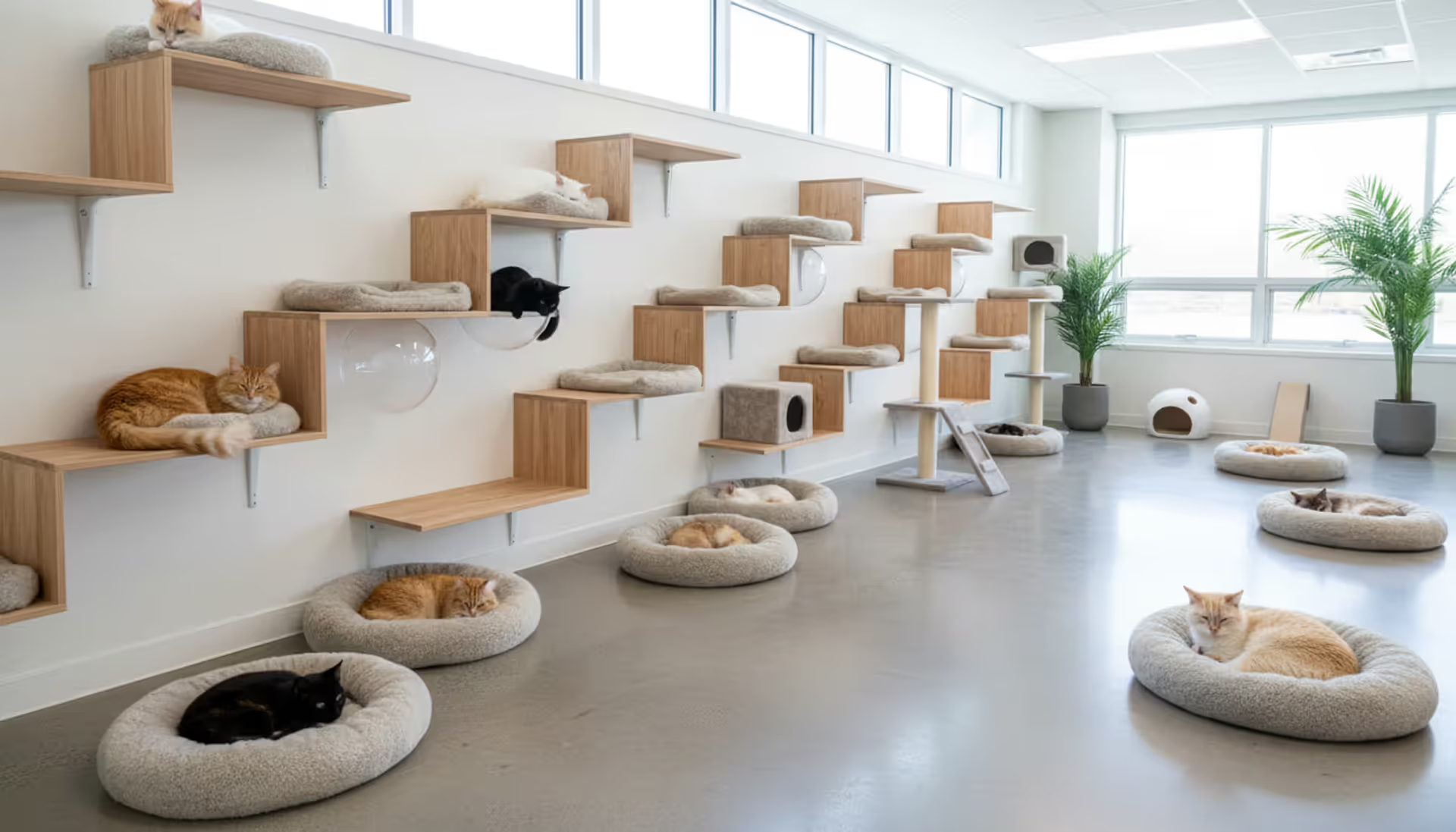
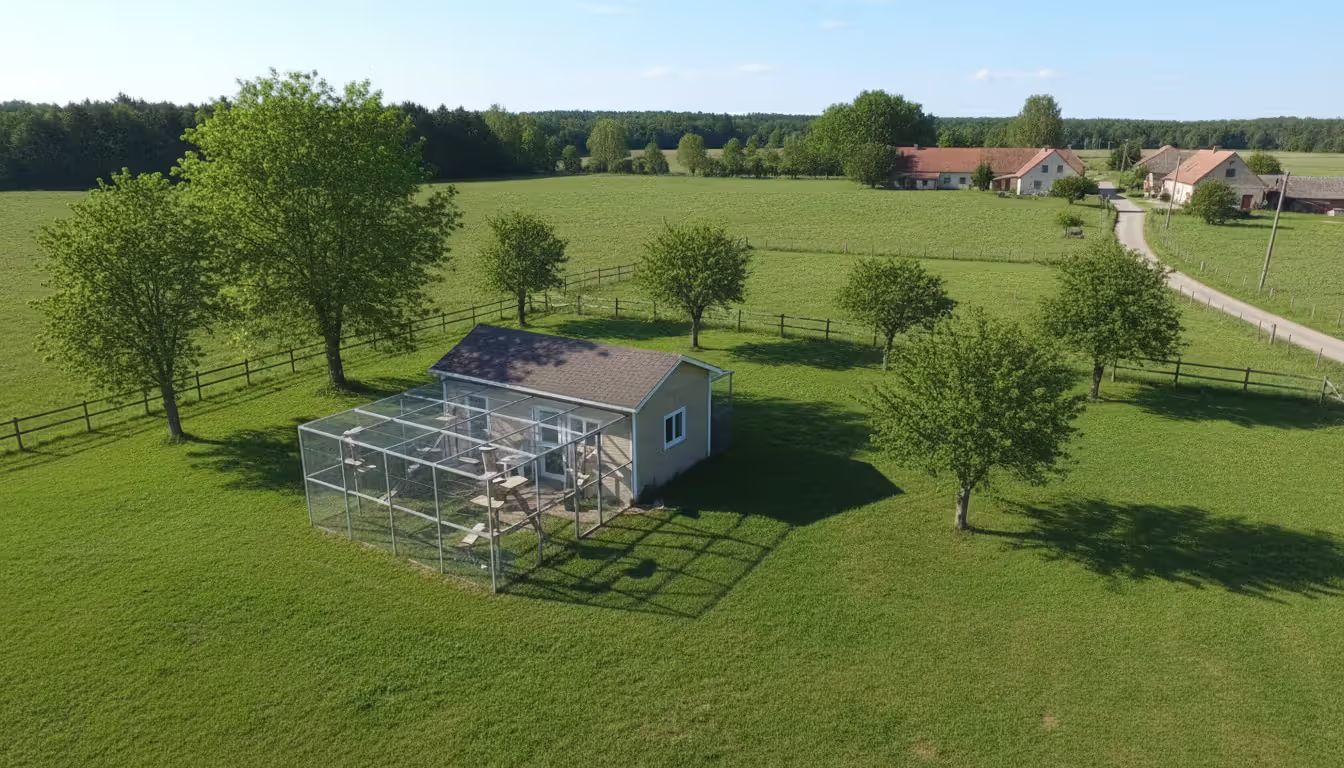
Property needs look completely different. Sanctuaries require permanent infrastructure—insulated buildings, climate control systems, medical isolation rooms, outdoor enclosures that'll last 20 years. You can't house 80 permanent residents in a foster network. Rescues stay nimble, coordinating volunteers with spare bedrooms, operating without centralized facilities, keeping overhead minimal.
Author: Marcus Redfield;
Source: jamboloudobermans.com
Insurance companies price these models differently. When I called for sanctuary quotes last year, three companies wouldn't even bid—too much permanent animal population, too much visitor liability. The two who responded quoted 40% higher than comparable rescue coverage. Lower turnover means higher concentrations, which means bigger potential claims.
Cat Sanctuary vs. Cat Rescue: Key Operational and Legal Differences
Feature
Cat Sanctuary
Cat Rescue
Core mission
Permanent housing for cats unable to be adopted
Temporary shelter followed by placement in homes
Adoption activities
Rarely or never; residents remain indefinitely
Primary focus with regular adoption events
How long cats stay
Years to their entire remaining lifespan
Usually days to several months
Best legal structure
501(c)(3) status nearly mandatory for survival
501(c)(3) strongly preferred; some operate as LLCs
Capacity planning
Dictated by permanent building infrastructure
Expandable through volunteer foster networks
Zoning challenges
Typically requires agricultural zoning or conditional permits
May operate under home occupation permits
Zoning officials definitely care. Walk into a planning meeting calling yourself a sanctuary, and they're immediately asking about building permits, animal capacity caps, buffer distances from neighboring properties. Call yourself a rescue, and the conversation shifts to foster coordination and weekend adoption traffic.
Fundraising dynamics shift too. Donors love happy endings. "We found homes for 247 cats last year" sells itself. "We're keeping 65 unadoptable cats comfortable until they die" requires more explanation. Both missions matter, but sanctuary fundraising takes more storytelling finesse.
Choosing Your Legal Structure and Nonprofit Status
Walk into any decade-old sanctuary, and you'll find a 501(c)(3) nonprofit behind it. That's not accidental.
Could you operate as an LLC or sole proprietor? Technically yes. Should you? Only if you enjoy paying income tax on donations and getting automatic rejections from every major foundation in the country.
Here's what 501(c)(3) status delivers: federal tax exemption, donor tax deductions, access to grant funding, discounted postal rates, instant credibility. Here's what happens without it: you lose most of that, plus you're personally liable for debts, and "donations" become taxable income.
You'll begin at the state level. File incorporation articles with your Secretary of State—fees range from $40 in Arkansas to $250 in Massachusetts. These articles need specific charitable purpose language and asset distribution clauses explaining what happens if you dissolve. (Answer: assets go to another 501(c)(3), never to founders personally.) Most states provide nonprofit-specific forms with this language built in.
Recruit at least three board members. Skip the all-family board—the IRS flags that immediately. One sanctuary in Orange County got delayed eight months because their board was three siblings. The IRS wanted proof of independent governance and outside oversight.
Draft bylaws even when your state doesn't mandate filing them. The IRS asks for them on Form 1023. Bylaws govern meeting frequency, officer roles, conflict-of-interest procedures, voting thresholds, and amendment processes. You'll find templates online, but $400-600 for attorney customization prevents problems later.
Get your EIN (Employer Identification Number) from the IRS website. Takes ten minutes, costs nothing.
Author: Marcus Redfield;
Source: jamboloudobermans.com
Steps to File for 501(c)(3) Registration
This is where many founders stall for months.
Step 1: Operate before applying. The IRS wants evidence of actual charitable activity, not theoretical plans. Gather intake records, veterinary invoices, volunteer sign-in sheets, facility photos, expense receipts—document 3-6 months of real work.
Step 2: Choose your form carefully. Form 1023-EZ costs $275 and works for organizations expecting under $50,000 annual revenue. Sounds perfect until you realize veterinary emergencies blow through budgets fast. One URI outbreak across 30 cats can generate $6,000 in bills. A couple decent fundraisers and some monthly donors push you past $50k quickly. Most sanctuaries file Form 1023—the comprehensive version at $600.
Step 3: Build honest financial projections for three years out. The IRS rejects fantasy budgets instantly. Planning to feed 120 cats on $18,000 annually? That's $150/month, or $1.25 per cat daily. They'll reject it. Show realistic costs based on your stated population and programs.
Step 4: Submit and wait patiently. Form 1023 processing averaged five months in 2025. Complex applications can stretch past a year. The IRS frequently requests additional information—you've got 30 days to respond or they close your file.
Step 5: Approval backdates to your incorporation date. Donors can deduct contributions made during the review period.
The biggest mistake I see is people collecting 50 cats first, then learning they're not zoned for it and can't get 501(c)(3) approved because their whole operation violates local code. Legal foundation first, animals second. No exceptions
— Jennifer Hartwell
Don't ignore state-level exemptions. Most states grant sales tax exemption to 501(c)(3) organizations—file separately for this. That exemption saves serious money on construction materials, medical equipment, and supplies. Property tax exemption varies wildly by state. Some automatically exempt charitable properties. Others require annual reapplication with proof your property serves charitable purposes exclusively.
Zoning Laws and Property Requirements
Zoning violations shut down more sanctuaries than funding shortfalls.
Residential zoning won't work for real sanctuary operations. Most residential codes cap animals at 3-5 pets. You might operate quietly for a while, but you're one complaint away from forced closure. Code enforcement has shuttered sanctuaries housing 60+ cats on residentially-zoned land. The operators always protest—"we've operated five years without problems!" Doesn't matter. Violations don't become legal through longevity.
Agricultural zoning provides breathing room. Rural counties often allow kennels and animal facilities on ag-zoned land. But—and pay attention here—"animal facility" definitions vary by jurisdiction. Some counties treat cats differently from livestock. You might need special permits even on agricultural property.
Commercial zoning occasionally works, particularly C-2 or C-3 districts permitting animal care businesses. Trade-offs include higher property taxes, stricter building code compliance, and ADA requirements if volunteers or visitors access the property.
Conditional use permits (CUPs) become your wildcard. You're petitioning the planning commission to allow uses not normally permitted in that zone. They'll schedule public hearings—expect neighbors to attend and voice concerns. You'll present detailed operations plans: maximum capacity, noise mitigation strategies, waste management procedures, traffic flow, hours of operation.
A sanctuary outside Fort Collins got their CUP with conditions: 80-cat maximum, no outdoor structures within 250 feet of property lines, annual inspections by animal control, no public events past 6 PM. They've operated under these terms for seven years successfully. Meanwhile, another sanctuary in the same county got denied after neighbors documented odor problems (the applicant already housed 40 cats before applying).
Setback requirements determine construction proximity to property boundaries. Outdoor enclosures or catios might require 75-150 foot setbacks. On a one-acre parcel, setbacks can consume 60% of usable space.
Author: Marcus Redfield;
Source: jamboloudobermans.com
Before purchasing property or signing leases:
Contact the planning department directly
Describe your actual plans honestly (real cat numbers)
Clarify capacity restrictions and appeals processes
Learn setback and buffer zone rules
Inquire about parking mandates (sometimes one space per 400 square feet)
Check signage restrictions
Some counties lack sanctuary-specific regulations entirely. Everything relies on planner discretion case-by-case. Others maintain detailed ordinances. Dane County, Wisconsin caps cat facilities at 50 animals without conditional permits. Maricopa County, Arizona runs completely different rules. National standards don't exist.
Licensing and Accreditation Process
State licensing creates a compliance nightmare with zero standardization.
Federal agencies don't license cat sanctuaries unless you're breeding or exhibiting animals commercially (which sanctuaries typically avoid). States control licensing, and every state approaches it differently.
California mandates permits for facilities housing 10+ unowned animals. You'll submit facility blueprints, veterinary care protocols, waste disposal plans. Annual inspections verify compliance. Fees run $175-$450 based on capacity.
Texas requires registration for animal facilities with 11+ animals. Inspections emphasize sanitation, ventilation systems, veterinary care documentation.
Florida's shelter licensing encompasses rescues and sanctuaries—specific cage size requirements, temperature controls, detailed record-keeping all mandated by statute.
Then you've got states with essentially nothing. No licensing framework for nonprofit sanctuaries exists, only commercial kennel regulations that may not even apply.
Begin by checking your state's department of agriculture website. If that's a dead end, contact your health department or state-level animal control. Call when online information seems incomplete—regulations often hide in administrative codes that aren't searchable easily.
USDA licensing under the Animal Welfare Act only applies when you're exhibiting animals publicly for payment. Admission fees or soliciting donations during tours can trigger USDA jurisdiction. Private sanctuaries avoid this entirely, though some comply voluntarily to demonstrate elevated standards.
Voluntary accreditation through Global Federation of Animal Sanctuaries (GFAS) or American Sanctuary Association (ASA) isn't legally mandated but carries significant weight with serious donors.
Written policies addressing animal care, veterinary protocols, intake criteria, euthanasia guidelines, staff training procedures
On-site facility inspection by evaluators
Financial stability documentation and budgets
Appropriate liability insurance coverage
The full process takes 6-12 months. Costs range $400-$2,000 depending on sanctuary size. Accreditation remains valid five years before renewal.
Don't rush accreditation prematurely. If you're barely managing 18 cats, focus on legal compliance and animal welfare fundamentals. As you scale operations and pursue major grants, accreditation becomes valuable leverage. A sanctuary outside Pittsburgh applied after just 16 months and got rejected for insufficient operating history. They reapplied 15 months later and passed easily.
Author: Marcus Redfield;
Source: jamboloudobermans.com
Operating Capacity and Legal Limits
How many cats can you legally house? Multiple authorities impose different limits.
Zoning-based caps flow from conditional use permits. Your CUP might restrict you to 60 cats even though you've got physical space for 150. Exceed that number and you're risking permit revocation and forced closure. Some sanctuaries successfully petition for increases after demonstrating responsible management. Others face denial.
State regulations sometimes mandate minimum square footage per cat. California's shelter standards require 24 square feet per cat in group housing, plus separate isolation areas. With 1,800 square feet of cat housing space, you're legally capped at 75 cats—regardless of how many you could physically squeeze in.
Building codes create indirect caps. Adding structures to house more cats requires construction permits. If your zoning permits one primary building plus two accessory structures, constructing a fourth cat building violates code regardless of how many cats occupy it.
Legal capacity and functional capacity rarely match. A sanctuary licensed for 90 cats might run smoothly with 55 but become chaotic at 80. Veterinary costs scale with population. One respiratory outbreak in an overcrowded facility can sicken 35 cats, generating $18,000 in emergency veterinary expenses.
Expansion options when approaching limits:
Petition zoning amendments (requires public hearings, neighbor support)
Purchase adjacent parcels if zoning permits expansion
Establish transfer agreements with other sanctuaries
Tighten intake criteria and slow admissions
A sanctuary near Ann Arbor started with a 45-cat CUP. After four years of exemplary operation and strong neighbor relationships, they requested an increase to 70. The planning commission approved unanimously. Meanwhile, a sanctuary in Eugene got denied expansion after multiple noise complaints and a failed health inspection.
Begin with liability waivers. Before anyone steps onto your property, they sign a waiver acknowledging risks: scratches, bites, allergic reactions, slips, falls, exposure to zoonotic diseases. Waivers don't eliminate lawsuits—you can still get sued—but they establish informed consent and may reduce damage awards. Avoid free internet templates. Invest $250-$450 having a local attorney draft a waiver complying with your state's liability laws.
Background checks have become standard practice, particularly for volunteers with unsupervised access. Some insurance policies mandate them. You're not running FBI-level investigations—a basic criminal background search identifies people with animal cruelty convictions or violent crime histories.
Working with minors adds complications. Volunteers under 18 require parental consent forms. Many states mandate background checks for adults supervising minors in organizational settings. Some sanctuaries establish minimum ages at 16 or 18 to sidestep compliance complications.
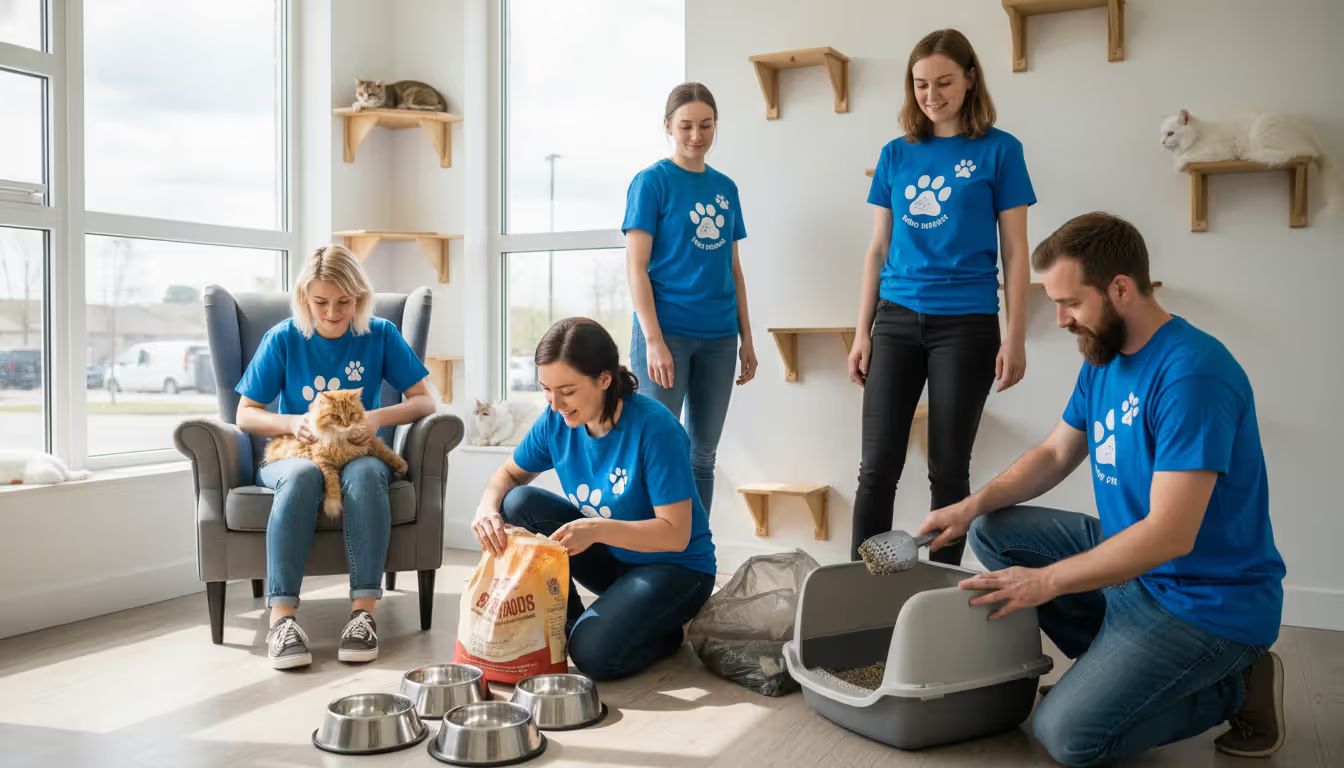
Workers' compensation covers employees injured during work—it's mandatory in most states once you hire staff. Volunteers aren't employees, so workers' comp doesn't apply. You need separate volunteer accident insurance, typically costing $175-$900 annually based on volunteer numbers. This covers medical expenses when volunteers sustain injuries during sanctuary activities.
The IRS scrutinizes volunteer versus employee classification carefully. Genuine volunteers donate time freely, set their own schedules within reason, and receive no compensation beyond nominal items like t-shirts or appreciation dinners. If you're dictating work schedules, requiring specific hours, and providing regular "stipends" or "reimbursements" exceeding documented expenses, those are employees. Getting caught triggers back taxes, penalties, potential lawsuits, and payroll tax obligations retroactively.
Paid staff require proper classification as employees (never contractors), payroll tax withholding, and wage/hour law compliance. A sanctuary director working 35 hours weekly is an employee, period. Employees must receive at least minimum wage, overtime for hours exceeding 40 weekly, and workers' comp coverage.
Document volunteer hours for your Form 990 (annual nonprofit tax return). Accurate tracking demonstrates community support and quantifies in-kind contributions for grant applications.
Frequently Asked Questions
Do I need 501(c)(3) status to start a cat sanctuary?
Legally speaking, no—you could operate as a for-profit business or unincorporated nonprofit. Practically speaking, yes, unless you're comfortable with grant rejections and donors questioning why their contributions aren't tax-deductible. Without 501(c)(3) status, you'll pay income tax on fundraising revenue too. Most sanctuaries can't survive without tax-exempt status, donor deductibility, and grant eligibility. You can begin operations while your application processes, but make approval a first-year priority.
How do sanctuaries and rescues differ legally and operationally?
Sanctuaries house cats permanently—elderly, feral, chronically ill, or behaviorally troubled animals unlikely to get adopted. Rescues provide temporary care leading to permanent home placements. This fundamental difference affects everything: preferred legal structures, zoning requirements, insurance costs, operational models, revenue sources. Sanctuaries require permanent facilities and stable long-term funding streams. Rescues can leverage foster networks and generate revenue through adoption fees. Some organizations blur these lines, running adoption programs while maintaining permanent sanctuary populations.
How many cats can I legally house in a sanctuary?
No universal answer exists. Your capacity limit comes from multiple sources: local zoning ordinances (conditional use permits often impose caps), state facility regulations (minimum space-per-animal requirements), and physical property limitations. Residential zoning might restrict you to 3-5 cats total. Agricultural zoning with special permits could permit 50-200+ depending on jurisdiction. Your local planning department and your state's animal facility licensing agency for location-specific restrictions are your best resources.
What licenses are required to operate a cat sanctuary?
This varies dramatically across states. Some states mandate animal shelter licenses for organizations housing 10+ unowned animals, with annual inspections and licensing fees. Other states lack sanctuary-specific licensing entirely—only commercial kennel regulations that may not apply to nonprofits. Look into your state's department of agriculture and local animal control for applicable requirements. You'll also need general business licenses, nonprofit registration with your state charity office, and potentially conditional use permits based on your property's zoning designation.
Can I run a cat sanctuary from my home?
Scale and local zoning determine feasibility. Residential zoning typically prohibits animal facilities beyond standard household pets. Some jurisdictions permit small home-based operations (8-12 cats) under home occupation permits, but sanctuaries housing 40, 60, or 100+ cats generally require agricultural or commercial zoning. Even if you begin small at home, growth eventually forces relocation or zoning changes. Neighbor complaints can trigger enforcement regardless of how long you've operated without issues.
How long does it take to get sanctuary accreditation?
Voluntary accreditation through organizations like GFAS requires at least two years of documented operating history before applying. The application and review process—including facility inspections and comprehensive policy reviews—adds another 6-12 months. Total timeline from opening doors to earning accreditation: roughly 2.5-3 years minimum. Accreditation isn't legally required but significantly boosts credibility with major donors and national foundations. Prioritize legal compliance and animal welfare fundamentals first, then pursue accreditation as your organization stabilizes and matures.
Starting a cat sanctuary demands far more legal preparation than most animal lovers anticipate. Success requires understanding operational distinctions between sanctuaries and rescues, establishing appropriate nonprofit structure, navigating complex local zoning regulations, obtaining necessary state licenses, respecting capacity limitations, and managing volunteers legally.
Begin with location-specific research—regulations vary wildly between states and even counties. Consult an attorney experienced in nonprofit formation before filing incorporation papers. Talk to zoning counsel before purchasing property or signing lease agreements. Establish these legal foundations before accepting your first cat.
Build your legal infrastructure systematically: incorporation, 501(c)(3) approval, zoning compliance verification, required license applications. Then bring in animals. The cats you'll ultimately serve deserve a stable, compliant sanctuary that won't face shutdown due to preventable legal violations. Invest the time in proper setup now, and you'll create a lasting refuge for cats with nowhere else to turn.
Losing a dog is heartbreaking. Once the initial grief subsides, you face an urgent practical question: what are you legally allowed to do with your dog's body? This guide covers every legal option available to pet owners in the United States, from backyard burial to municipal pickup
Dog theft carries serious criminal penalties ranging from misdemeanors to felonies depending on the dog's value and state laws. Understand the charges, sentencing, and legal steps to report theft, use microchip evidence, file civil lawsuits, and recover your stolen dog through law enforcement and community efforts
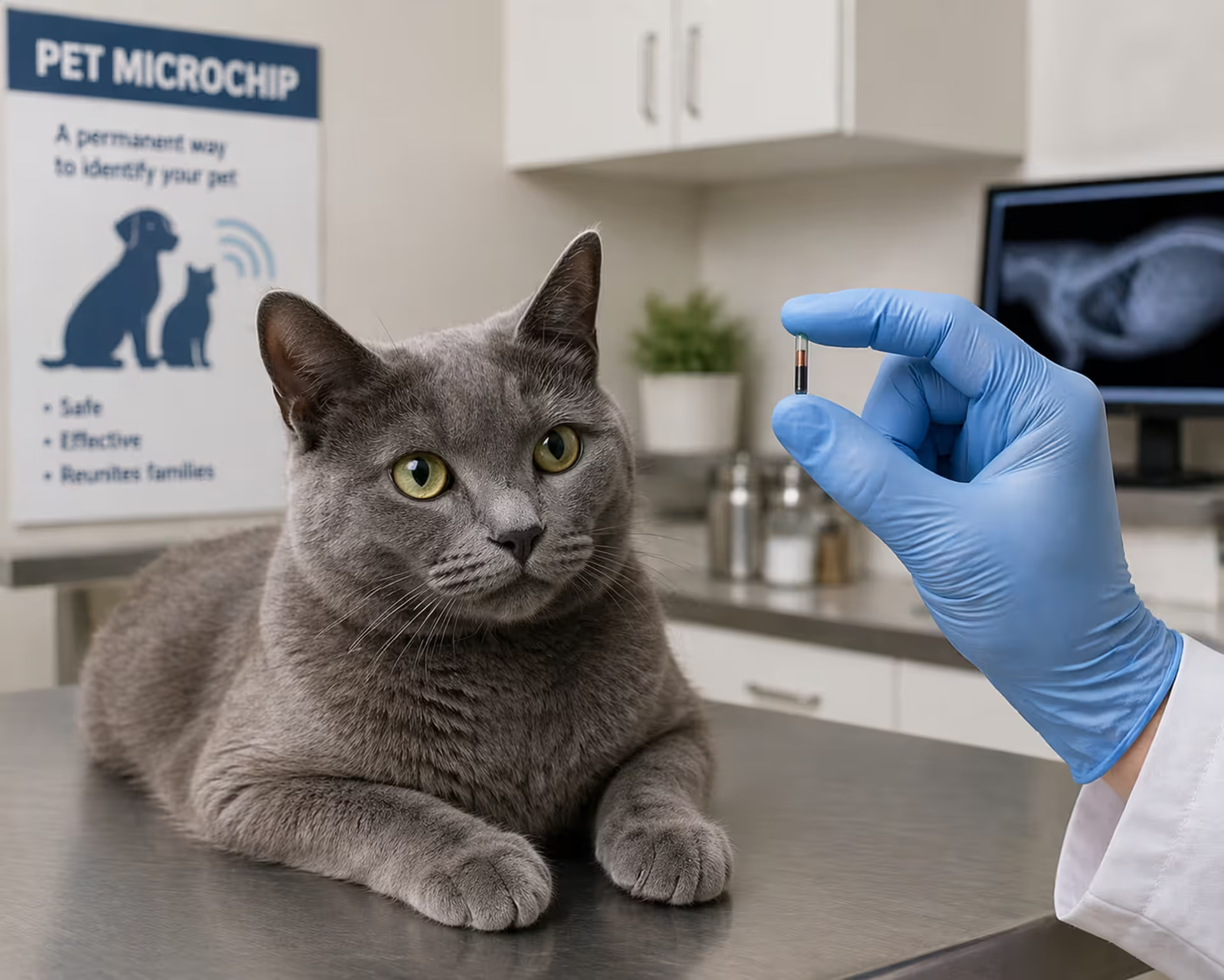
Microchipping your cat isn't just about finding them if they wander—it's increasingly a legal requirement in parts of the US. Understand state laws, registration requirements, and how microchips function as ownership proof in disputes. Learn the legal process, common mistakes, and differences between cat and dog requirements
When your dog breaks a leg and money is tight, multiple solutions exist. From nonprofit grants and veterinary teaching hospitals to payment plans and crowdfunding, this guide covers actionable options to get your dog treatment without thousands upfront, including what to do if you can't pay the vet bill
The content on this website is provided for general informational and educational purposes only. It is intended to explain concepts related to animal law, pet ownership rights, service animals, dog bite liability, and animal welfare legislation in the United States.
All information on this website, including articles, guides, and examples, is presented for general educational purposes. Legal outcomes may vary depending on jurisdiction, state laws, and individual circumstances.
This website does not provide legal advice, and the information presented should not be used as a substitute for consultation with qualified attorneys or animal law professionals.
The website and its authors are not responsible for any errors or omissions, or for any outcomes resulting from decisions made based on the information provided on this website.