Discovering a dead cat on the road creates an uncomfortable situation that most drivers would prefer to avoid. Yet this scenario happens thousands of times daily across the United States, leaving motorists uncertain about their legal obligations and the proper course of action. The answer depends on whether you struck the animal yourself, who owns the road where you found it, and the specific laws in your state.
Most people assume someone else will handle it—the city, the county, or perhaps the property owner. That assumption sometimes proves correct, but not always. Understanding the chain of responsibility helps you take appropriate action quickly, whether that means making a phone call, documping the remains yourself in certain situations, or simply documenting what you've seen.
Who Is Responsible for Removing a Dead Cat from the Road
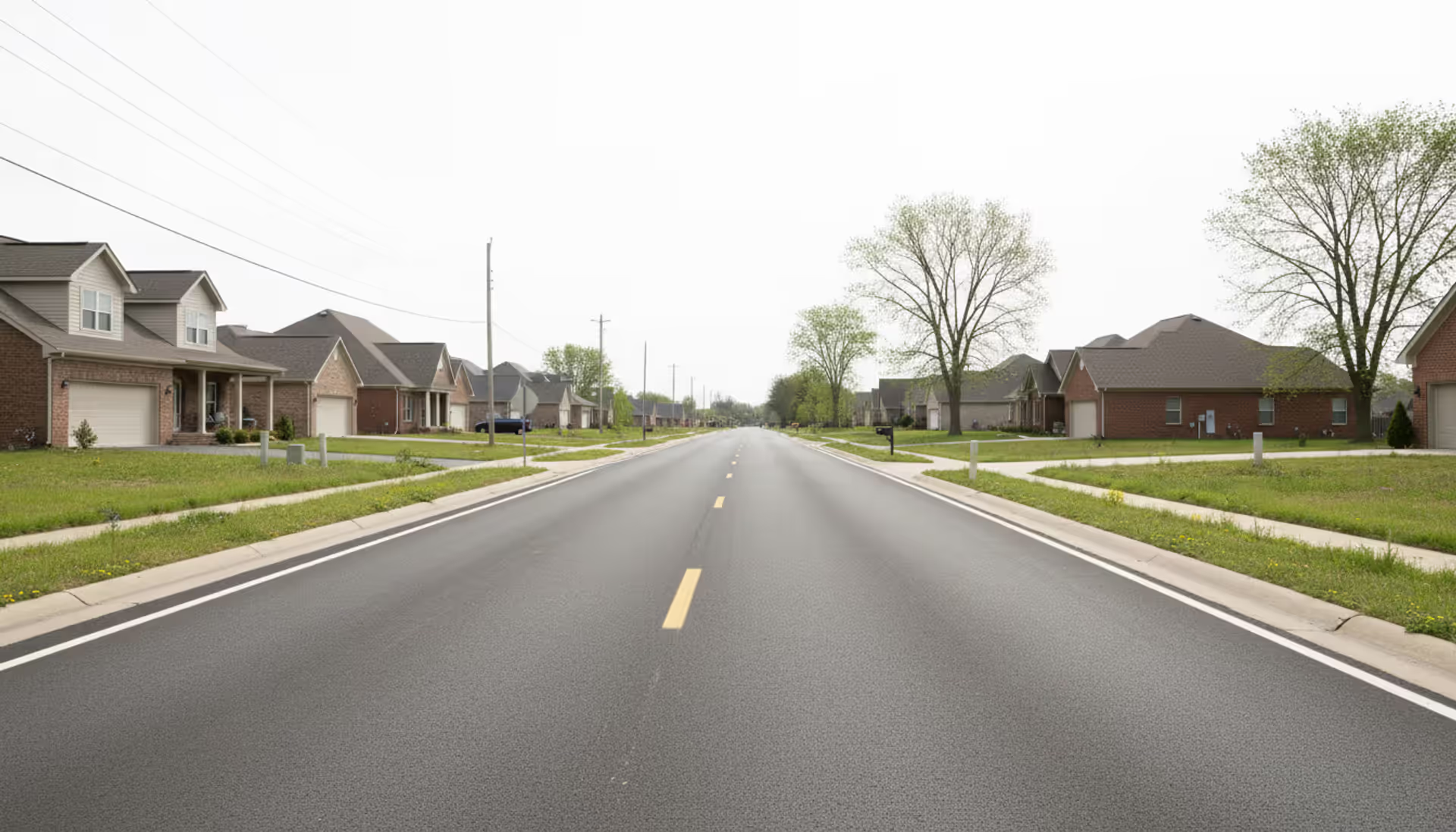
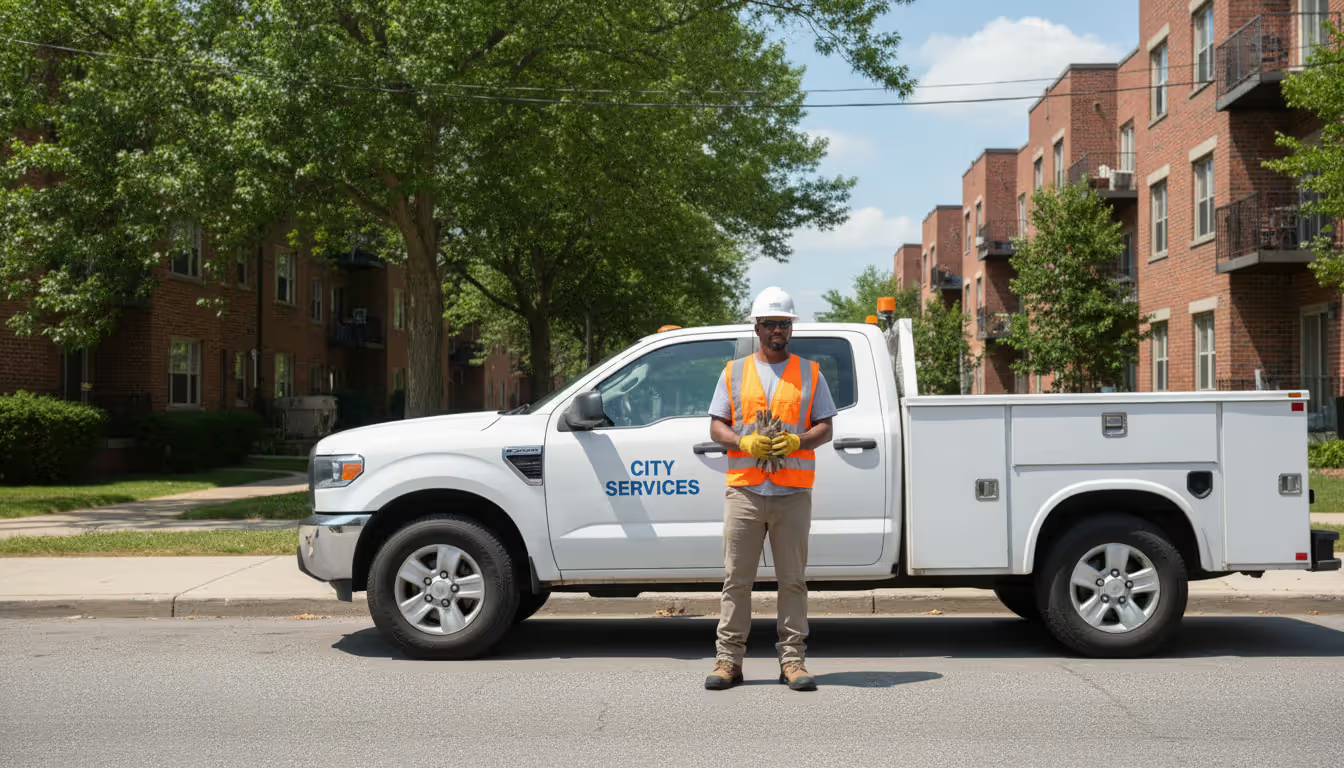
Responsibility for dead animal removal splits along jurisdictional lines that aren't always obvious to residents. State highways typically fall under the Department of Transportation's purview, while county roads belong to county maintenance departments, and city streets become the municipality's problem. The dead cat road who is responsible question hinges entirely on which government entity maintains that particular stretch of pavement.
State DOTs generally handle removal on interstates and numbered state routes. Response times vary wildly—some states dispatch crews within hours, while others take several days depending on staffing levels and competing priorities. County roads present a middle ground where smaller maintenance budgets often mean slower response times than state highways but faster service than rural township roads.
Municipal streets within city limits usually fall to either the public works department or animal control. Larger cities maintain dedicated roadkill removal teams that respond to reports within 24 hours. Smaller towns might assign the task to whatever crew happens to be available, leading to delays of three to five days.
Author: Daniel Whitmor;
Source: jamboloudobermans.com
Private property creates a different scenario entirely. If a cat dies in your driveway or on the shoulder adjacent to your property line, removal typically becomes your responsibility. Some homeowners mistakenly believe the city will handle any dead animal visible from the road, but municipal services rarely extend to private land. The dead animal road legal responsibility shifts to property owners once the carcass rests beyond the public right-of-way.
Unincorporated areas present the trickiest situations. Rural roads maintained by townships or special road districts may lack any formal dead animal removal protocol. Residents sometimes wait weeks for action, eventually disposing of remains themselves or hiring private services.
How to Report a Dead Cat on the Road to Local Authorities
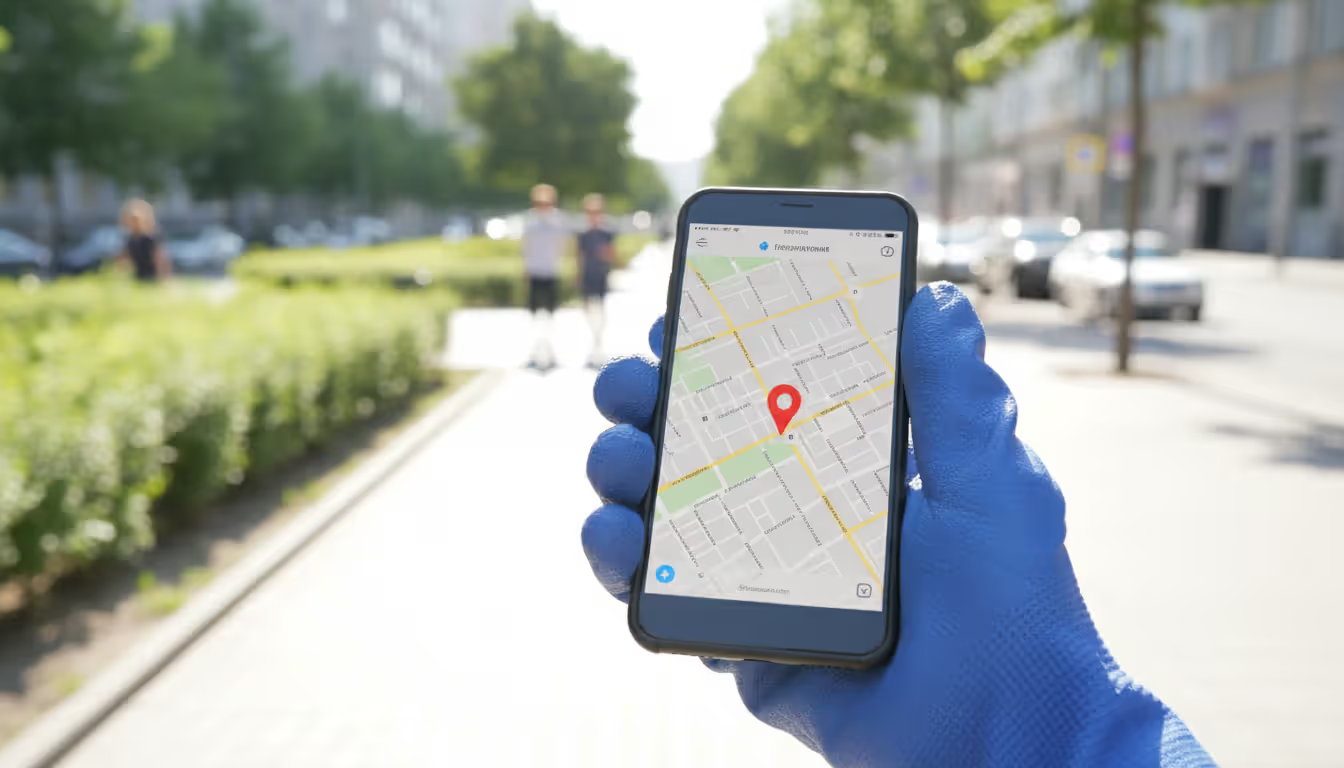
Reporting starts with identifying the correct agency. For state highways, search "[your state] DOT dead animal removal" to find the appropriate reporting hotline. Many states now offer online forms that accept location details, photos, and descriptions. The California DOT, for example, operates a mobile app where users can drop a pin at the exact location and upload an image.
City streets require contacting either animal control or the non-emergency police line. Animal control handles the actual removal in most jurisdictions, but police dispatch often serves as the initial point of contact, especially outside normal business hours. Calling 311 (where available) routes you to the appropriate department without tying up emergency lines.
When reporting dead cat road authority contacts, provide specific information: exact address or nearest cross streets, lane position (center, right shoulder, bike lane), approximate size, and any visible collar or tags. Describing the animal as "small gray cat with red collar near the storm drain at Oak and Maple" generates faster response than "dead cat somewhere on Oak Street."
County roads typically require contacting the county public works department directly. These offices maintain regular business hours, so evening or weekend discoveries may not receive attention until the following workday. Some counties use the same 311 system as their municipalities, while others require direct phone calls to specific departments.
Photographic evidence helps, particularly if you notice identifying features like collar tags or distinctive markings. These details matter when the animal potentially belongs to a local resident who filed a missing pet report. Animal control officers cross-reference found deceased animals against lost pet databases, and clear photos facilitate matches.
Follow-up becomes necessary if removal doesn't occur within reasonable timeframes. State highways should see response within 48 hours in most states. City streets typically receive service within 24 hours. Exceeding these windows warrants a second call referencing your initial report number.
What Happens If You Hit a Cat with Your Car
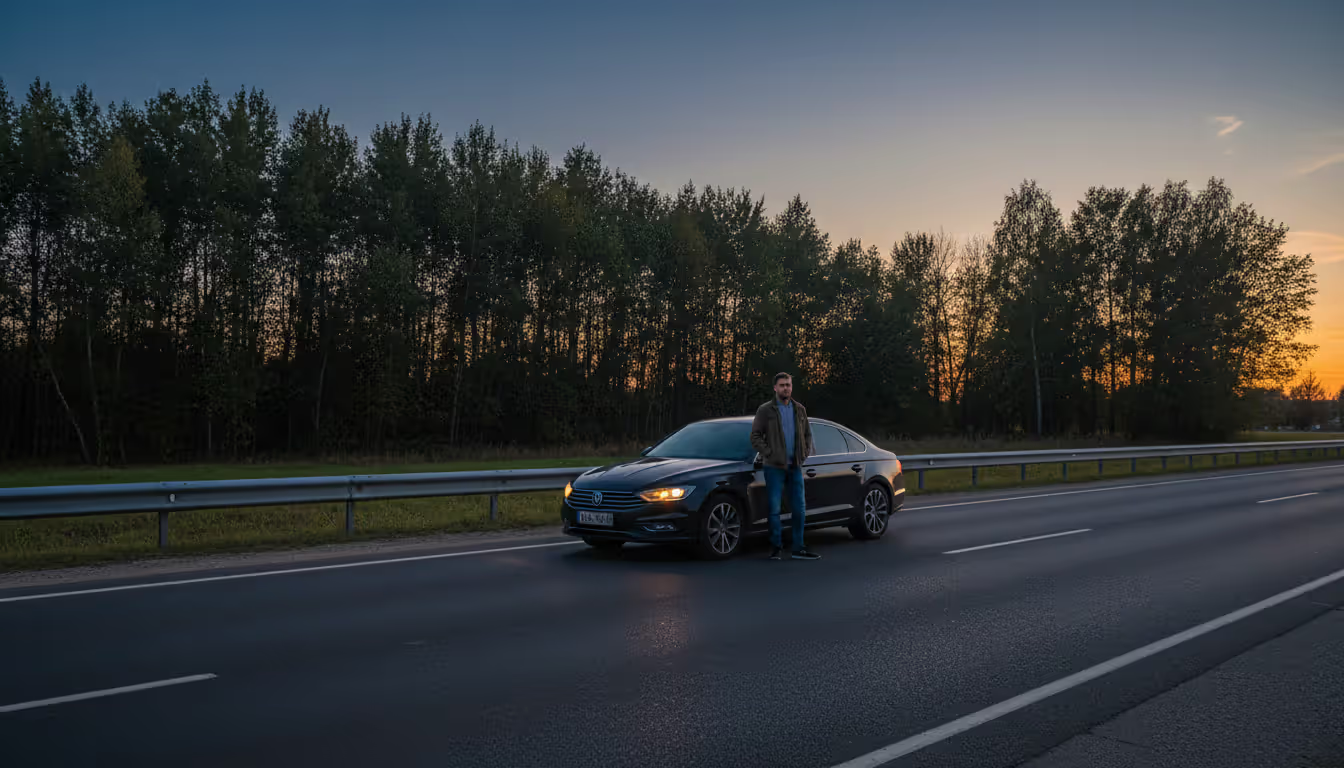
The immediate aftermath of striking a cat generates confusion and guilt. Your first obligation involves safety—your own and other drivers'. If stopping creates a hazard, continue to a safe location before assessing the situation. Never slam on brakes or swerve dramatically, as these reactions cause accidents far more serious than the initial animal strike.
Once safely stopped, check whether the cat remains alive. Injured cats often flee into roadside brush despite severe trauma, driven by fear and adrenaline. Approach cautiously if the animal appears conscious—frightened, injured cats bite and scratch defensively. Wrapping the cat in a blanket or jacket allows safer transport to an emergency veterinary clinic if you choose to render aid.
Author: Daniel Whitmor;
Source: jamboloudobermans.com
Dead cats present different considerations. Moving the body from active traffic lanes prevents additional vehicles from striking it and protects other motorists from swerving. Use gloves, a plastic bag, or a towel to avoid direct contact. Place the remains on the shoulder or median if you can do so safely.
Legal Requirements After Hitting a Cat
State laws vary dramatically regarding obligations after striking pets. Unlike hitting deer or livestock, which trigger mandatory reporting in many states, cats occupy a gray area in most traffic codes. The hitting cat with car law differs substantially from requirements for larger animals.
Approximately 15 states require drivers to report collisions with pets to local authorities. These states typically classify cats as personal property, making the incident similar to hitting a mailbox or fence. Failing to report constitutes leaving the scene of a property damage accident in these jurisdictions.
The remaining states impose no legal duty to report cat strikes, though doing so remains advisable. Even where not legally required, reporting creates a record that protects you if the owner later files a civil claim. Documentation establishes that you didn't flee the scene and took reasonable steps to notify authorities.
Hit and run animal law rarely applies to cats in practice. Most states reserve hit-and-run charges for incidents involving injury to humans or substantial property damage. A cat technically qualifies as property, but prosecutors almost never pursue charges for animal strikes alone. The exception involves intentional acts—deliberately swerving to hit an animal can trigger animal cruelty charges in addition to any traffic violations.
Liability and Insurance Considerations
The liability for hitting cat with car question produces answers that frustrate many drivers. In most states, free-roaming cats are considered the owner's responsibility. Leash laws and containment ordinances make owners liable when their pets enter roadways, not drivers who strike them.
This means you typically bear no financial responsibility for veterinary bills or the cat's value if you hit someone's pet. The owner's failure to control their animal breaks the chain of causation. Some states explicitly codify this principle in statutes stating that owners of animals running at large assume all risks.
Exceptions exist when driver negligence contributes to the collision. Speeding through a residential area, driving while distracted, or violating other traffic laws can shift partial or complete liability to the driver. If you struck a cat while exceeding the speed limit by 20 mph, the owner might successfully argue that lawful driving would have allowed you to avoid their pet.
Your auto insurance generally won't cover damage from animal strikes under liability coverage. Comprehensive coverage handles animal collisions, but cats rarely cause vehicle damage requiring claims. A cracked bumper or broken fog light from a cat strike typically costs less than most comprehensive deductibles.
The cat hit by car owner liability flips when the animal causes an accident. If you swerve to avoid a cat and strike another vehicle or fixed object, the cat's owner may bear liability for your damages. Proving this requires establishing that the owner negligently allowed their pet to roam, which varies in difficulty by jurisdiction. States with strict leash laws make this easier than states treating cats as inherently free-roaming animals.
Dead Animal Road Removal Services and Response Times
Municipal dead animal road removal service operates on priority systems that rank requests by location and safety concerns. A cat in the center lane of a busy arterial receives faster response than one on a quiet residential street's shoulder. Highway removal typically occurs within 4-12 hours during weekday daylight hours, while residential areas might wait 24-72 hours.
Staffing constraints limit response speed in most jurisdictions. Cities rarely maintain dedicated roadkill crews, instead assigning removal to public works employees who juggle multiple responsibilities. A water main break or downed tree takes precedence over deceased animals, pushing removal timelines back.
Some municipalities contract with private companies for animal removal services. These arrangements often specify response time requirements—for example, 24 hours for arterial roads, 48 hours for residential streets. Contractors patrol assigned routes daily, collecting reported animals and any discovered during their rounds.
Author: Daniel Whitmor;
Source: jamboloudobermans.com
Private removal services offer alternatives when municipal response proves too slow. Wildlife removal companies and specialized hauling services will collect deceased animals for fees ranging from $75 to $200 depending on location and access difficulty. Rural property owners with frequent roadkill problems sometimes establish ongoing relationships with these providers.
DIY removal remains legal in most jurisdictions if you own the property where the animal lies or if local ordinances permit it. Use thick gloves, double-bag the remains, and dispose of them according to local regulations. Some areas allow burial on private property at least three feet deep and 50 feet from water sources. Others require disposal with regular trash in sealed containers. Composting works for those with proper setups, though most residential compost bins can't handle animal remains.
Persistence becomes necessary when initial reports generate no action. Document your report with confirmation numbers and dates. Follow up every 48-72 hours, escalating to supervisors if necessary. Social media posts tagging local government accounts sometimes accelerate response, though this approach can seem heavy-handed for routine requests.
Laws About Hitting Cats and Other Animals on the Road
State laws distinguish between companion animals (pets), livestock, and wildlife when addressing roadway collisions. Hitting cat with car law generally falls under property damage statutes rather than specific animal strike provisions. This legal framework treats cats as personal property similar to bicycles or lawn furniture.
Wildlife strikes carry different rules. Deer, elk, and other game animals belong to the state rather than individuals, eliminating property damage liability. Most states require reporting collisions with large wildlife for statistical tracking and road safety analysis, but impose no penalties for the strike itself.
Livestock collisions trigger the most serious legal consequences. Hitting cattle, horses, or other farm animals on roadways creates substantial liability questions. Open range states presume livestock have right-of-way, making drivers liable for collisions. Closed range states require owners to fence animals, shifting liability to them when livestock escape onto roads.
The following table illustrates how requirements vary by state for common scenarios:
State
Must Stop After Hitting Cat
Must Report Cat Strike
Penalty for Leaving Scene
California
No
No (recommended)
N/A
Florida
No
No
N/A
Illinois
No
Yes (if owner identified)
Misdemeanor
New York
No
Yes (in some counties)
Varies by county
Texas
No
No
N/A
Virginia
No
Yes (if damage exceeds $1,000)
Class 1 misdemeanor
Washington
No
No (recommended)
N/A
Wisconsin
No
Yes
Forfeiture up to $500
These requirements change periodically as legislatures update traffic codes. Some states considered cat-specific reporting requirements in 2025 but most proposals stalled in committee. The trend moves toward mandatory reporting for all pet strikes, though implementation remains inconsistent.
Hit and run animal law becomes relevant when drivers intentionally strike animals or flee after causing injury to someone's pet in states requiring reports. Intentional acts can trigger animal cruelty charges carrying misdemeanor or felony penalties depending on circumstances and state law. Simply hitting a cat accidentally, even if you don't stop, rarely results in criminal charges.
Owner liability for accidents caused by their cats exists in theory but proves difficult to enforce. If a cat darts into traffic causing a multi-car pileup, the owner might face civil liability for damages. Establishing that the owner negligently allowed the cat to roam requires proving they knew or should have known their pet frequently entered roadways. Cats' independent nature and many communities' acceptance of outdoor cats complicate these claims.
When a Dead Cat Might Belong to Someone
Approximately 60% of deceased cats found on roads belong to households within a quarter-mile radius, according to animal control data. Checking for identification helps reunite grieving owners with their pets and provides closure. Collars with tags offer the most straightforward identification, displaying owner contact information directly.
Microchips require scanning equipment that most individuals don't possess. Veterinary clinics and animal shelters scan deceased animals free of charge if you transport the remains to their facility. Call ahead to confirm they offer this service and ask about their hours for accepting deceased animals. Some clinics maintain drop-off coolers for after-hours situations.
Posting in local lost pet groups on social media often generates quick responses. Include the location found, general description (color, size, approximate age), and any distinguishing features. Avoid posting graphic photos in initial announcements—instead, describe identifying marks that true owners can confirm privately. This prevents opportunistic false claims and spares community members from disturbing images.
Author: Daniel Whitmor;
Source: jamboloudobermans.com
NextDoor, Facebook neighborhood groups, and specialized lost pet platforms like PawBoost reach local audiences effectively. Time-sensitive posts work best—owners actively searching for missing cats check these platforms multiple times daily. Including phrases like "found deceased cat near [location]" in your post helps owners find it through keyword searches.
Veterinary clinics near the discovery location sometimes recognize regular patients from descriptions. Calling nearby clinics with details occasionally leads to identification, particularly in smaller communities where veterinarians know their clients' pets. Describe any unusual features—clipped ear (indicating a TNR cat), declawed front paws, unusual coat patterns, or distinctive collar styles.
Animal control accepts deceased animals for scanning and owner notification as part of their standard services. They maintain lost pet reports and cross-reference found animals against active cases. Dropping the cat at animal control costs you nothing and ensures proper handling if identification succeeds. If no owner comes forward within the holding period (typically 72 hours for deceased animals), the facility disposes of remains according to local protocols.
Finding a deceased pet and taking time to report it shows tremendous compassion. Many owners search for months wondering what happened to their cat. Even sad news brings relief compared to endless uncertainty. We encourage anyone who finds a deceased animal wearing a collar or appearing well-cared-for to contact us immediately
— Maria Sanchez
Some individuals go beyond legal requirements by arranging temporary preservation while searching for owners. Placing remains in a sealed bag in a cool location (never a home freezer used for food) allows several days of searching before decomposition becomes problematic. This extra effort sometimes makes the difference between a grieving owner receiving closure and never knowing their pet's fate.
Photography helps in identification efforts but requires sensitivity. Close-ups of unique features (unusual markings, collar details, specific injuries) prove more useful than full-body images. These photos allow owners to confirm identity without viewing graphic content. Store identifying photos separately from any shared publicly.
Frequently Asked Questions
Do I have to stop if I hit a cat with my car?
No legal requirement to stop exists in most states when you hit a cat, unlike collisions involving people or property damage exceeding state thresholds. Eight states require stopping or reporting when you strike any domestic animal, but enforcement remains rare. Stopping is recommended for ethical reasons and to check if the animal needs emergency care, but you won't face legal consequences for continuing in most jurisdictions. If you do stop, prioritize your safety and never block traffic lanes.
How long does it take for the city to remove a dead cat from the road?
Municipal removal timeframes range from 4 hours to 5 days depending on location, day of week, and competing priorities. State highways typically see fastest response (4-24 hours), while residential streets may wait 48-72 hours. Weekends and holidays extend these windows. If removal hasn't occurred within 72 hours, call again with your original report number. Some cities offer expedited service for animals creating traffic hazards or located near schools and parks.
Can I be sued for hitting someone's cat?
Yes, but successful lawsuits remain uncommon. Cat owners must prove you drove negligently—speeding, distracted driving, or violating traffic laws. Simply hitting a cat that darted into the road doesn't establish liability in most states. Laws generally favor drivers when animals enter roadways unexpectedly. Even if an owner sues, your damages rarely exceed a few hundred dollars representing the cat's fair market value. Emotional distress claims for pet deaths face high legal barriers in most jurisdictions.
Is hitting a cat considered a hit and run?
Not in most states. Hit and run laws typically apply to collisions causing human injury or property damage above statutory thresholds ($1,000-$2,500 depending on state). Cats technically qualify as property, but prosecutors rarely pursue hit and run charges for animal strikes alone. Wisconsin, Illinois, and a handful of other states require reporting pet strikes, making failure to report a minor violation rather than hit and run. Intentionally striking an animal and fleeing could trigger animal cruelty charges separate from traffic violations.
What should I do if I find a dead cat wearing a collar?
Check the collar for identification tags with owner contact information. If tags are present, call the number to notify them directly—this difficult conversation provides immediate closure. Without tags, transport the cat to a nearby veterinary clinic or animal shelter for microchip scanning (call ahead to confirm they offer this service). Photograph the collar and any distinguishing features, then post in local lost pet groups with the location found. Contact animal control to report the finding and provide the location. They'll cross-reference against missing pet reports and handle notification if they identify the owner.
Who pays for dead animal removal from roads?
Taxpayers fund removal from public roads through municipal, county, or state budgets. No individual billing occurs for this service—it's covered by general tax revenue allocated to public works or highway maintenance departments. Private property owners pay for removal from their land either through DIY disposal or by hiring private wildlife removal companies ($75-$200 typically). Homeowners insurance doesn't cover dead animal removal costs. If you choose to hire private removal for an animal on public property due to slow municipal response, you bear that cost personally with no reimbursement mechanism.
Finding or striking a dead cat on the road creates obligations that vary by location and circumstance. Most situations require nothing more than a phone call to local authorities reporting the location, though some states mandate reporting when you're the driver who caused the collision. Responsibility for removal falls to whichever government entity maintains that particular road—state DOT for highways, counties for rural routes, municipalities for city streets.
Taking a few extra steps beyond minimum legal requirements—checking for identification, posting in lost pet groups, transporting remains for microchip scanning—helps grieving owners find answers about missing pets. These small acts of compassion cost little time but provide immeasurable relief to families searching for lost companions.
Understanding your state's specific requirements prevents legal complications while ensuring deceased animals receive proper handling. Whether you're the driver who struck the cat or simply discovered it during your commute, knowing which agency to contact and what information to provide speeds removal and potentially reunites owners with their pets, even in death.
The commercial dog breeding industry produces millions of puppies annually in conditions most pet owners never see. Understanding the welfare problems, health consequences, and ethical issues behind puppy production helps consumers make informed decisions that reduce animal suffering and save lives
The dog meat trade involves breeding, transporting, and slaughtering millions of dogs annually for human consumption, primarily in Asia. Despite growing bans worldwide, enforcement challenges persist. Learn about US laws, international legal status, cruelty concerns, and advocacy efforts
Dog abuse encompasses deliberate physical harm, severe neglect, and psychological torment under federal and state laws. Learn to recognize physical and behavioral signs, document evidence properly, and report through correct legal channels. Penalties range from misdemeanors to felonies with up to 10 years imprisonment
Some dog breeds suffer from genetic conditions so severe that experts question whether continuing their bloodlines constitutes cruelty. Understanding unethical breeding practices means examining breathing problems, shortened lifespans, and the legal frameworks designed to protect animals from profit-driven operations
The content on this website is provided for general informational and educational purposes only. It is intended to explain concepts related to animal law, pet ownership rights, service animals, dog bite liability, and animal welfare legislation in the United States.
All information on this website, including articles, guides, and examples, is presented for general educational purposes. Legal outcomes may vary depending on jurisdiction, state laws, and individual circumstances.
This website does not provide legal advice, and the information presented should not be used as a substitute for consultation with qualified attorneys or animal law professionals.
The website and its authors are not responsible for any errors or omissions, or for any outcomes resulting from decisions made based on the information provided on this website.