The conversation around dog breeding has shifted dramatically in recent years. What was once accepted as normal—breeding dogs for increasingly exaggerated features—now faces scrutiny from veterinarians, animal welfare advocates, and lawmakers. Some breeds suffer from genetic conditions so severe that many experts question whether continuing their bloodlines constitutes animal cruelty.
Understanding which breeding practices cross ethical lines requires looking beyond cute photos and breed popularity. It means examining the daily struggles of dogs who can't breathe properly, the shortened lifespans caused by preventable conditions, and the legal frameworks designed to protect animals from profit-driven breeding operations.
Why Some Dog Breeds Are Considered Unethical
The term "unethical dog breeds" doesn't condemn the animals themselves—it challenges the human decisions that created and perpetuate their suffering. Selective breeding has produced dogs with features that actively harm their quality of life, all in pursuit of specific aesthetic standards.
Brachycephalic breeds—those with flat, pushed-in faces—often struggle with brachycephalic obstructive airway syndrome (BOAS). Their compressed airways make breathing difficult during exercise, heat, or even rest. Many require surgery just to breathe normally. Bulldogs, for instance, frequently need cesarean sections because puppies' heads are too large to pass through the birth canal naturally—a clear sign that breeding has pushed physical traits beyond functional limits.
Dogs bred for extreme body proportions face mobility issues throughout their lives. Dachshunds with exaggerated long backs experience intervertebral disc disease at alarming rates. German Shepherds with sloped backs suffer hip dysplasia and degenerative myelopathy more frequently than their straighter-backed ancestors. Giant breeds like Great Danes rarely live past eight years, their oversized hearts and bones unable to sustain their massive frames.
Dog breeding ethics laws have emerged partly because these problems aren't accidental—they're predictable outcomes of prioritizing appearance over welfare. When breed standards reward features that cause suffering, and when breeders continue producing dogs without health testing or genetic screening, the practice crosses into irresponsible dog breeding cruelty law territory.
The financial incentive compounds the problem. A purebred puppy with "desirable" features can sell for thousands of dollars, encouraging breeders to maximize production without regard for parent health, genetic diversity, or puppy welfare. This profit motive drives both large-scale commercial operations and small backyard breeders who lack veterinary knowledge or ethical standards.
Dog Breeds Most Affected by Unethical Breeding Practices
Brachycephalic Breeds and Respiratory Issues
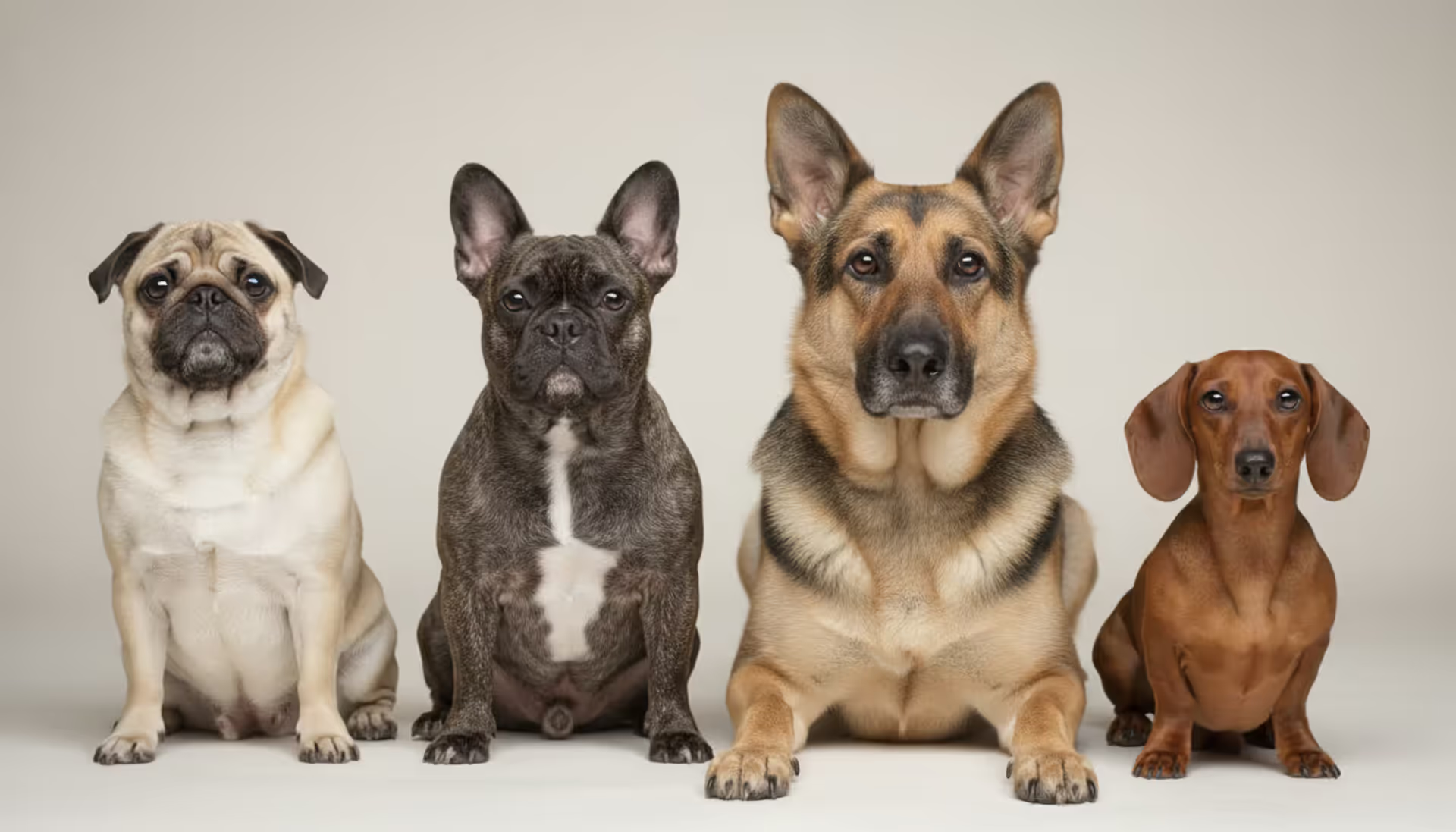
Pugs, French Bulldogs, English Bulldogs, and Pekingese top the list of breeds whose physical structure causes daily suffering. Their shortened skulls compress soft tissue into smaller spaces, creating breathing obstructions that worsen with age.
French Bulldogs have become one of America's most popular breeds despite—or perhaps because of—their extreme features. Many cannot mate naturally or give birth without surgical intervention. Their nostrils are often pinched, their soft palates too long, and their tracheas narrowed. On hot days, a simple walk can trigger respiratory distress requiring emergency veterinary care.
Author: Samantha Loring;
Source: jamboloudobermans.com
English Bulldogs face even worse odds. Studies show that over 80% experience breathing difficulties, and their average lifespan hovers around six to eight years—roughly half that of similarly sized breeds. Skin fold dermatitis, cherry eye, and joint problems add to their burden. The breed's health crisis has become so severe that several European countries have considered breeding restrictions.
Boston Terriers and Cavalier King Charles Spaniels share similar respiratory challenges, though the Cavalier faces an additional nightmare: syringomyelia, a condition where the skull is too small for the brain, causing fluid-filled cavities in the spinal cord and chronic pain.
Dogs Bred for Extreme Physical Features
Selective breeding for exaggerated traits extends beyond flat faces. Dachshunds bred for increasingly long backs and short legs face a one-in-four chance of developing debilitating spinal problems during their lifetime. Owners often face difficult choices between expensive surgery or euthanasia when their dog becomes paralyzed.
Shar-Peis with excessive skin folds require regular cleaning to prevent infections, and many develop entropion—a painful condition where eyelids roll inward, causing eyelashes to scratch the cornea. Some need surgical correction as puppies.
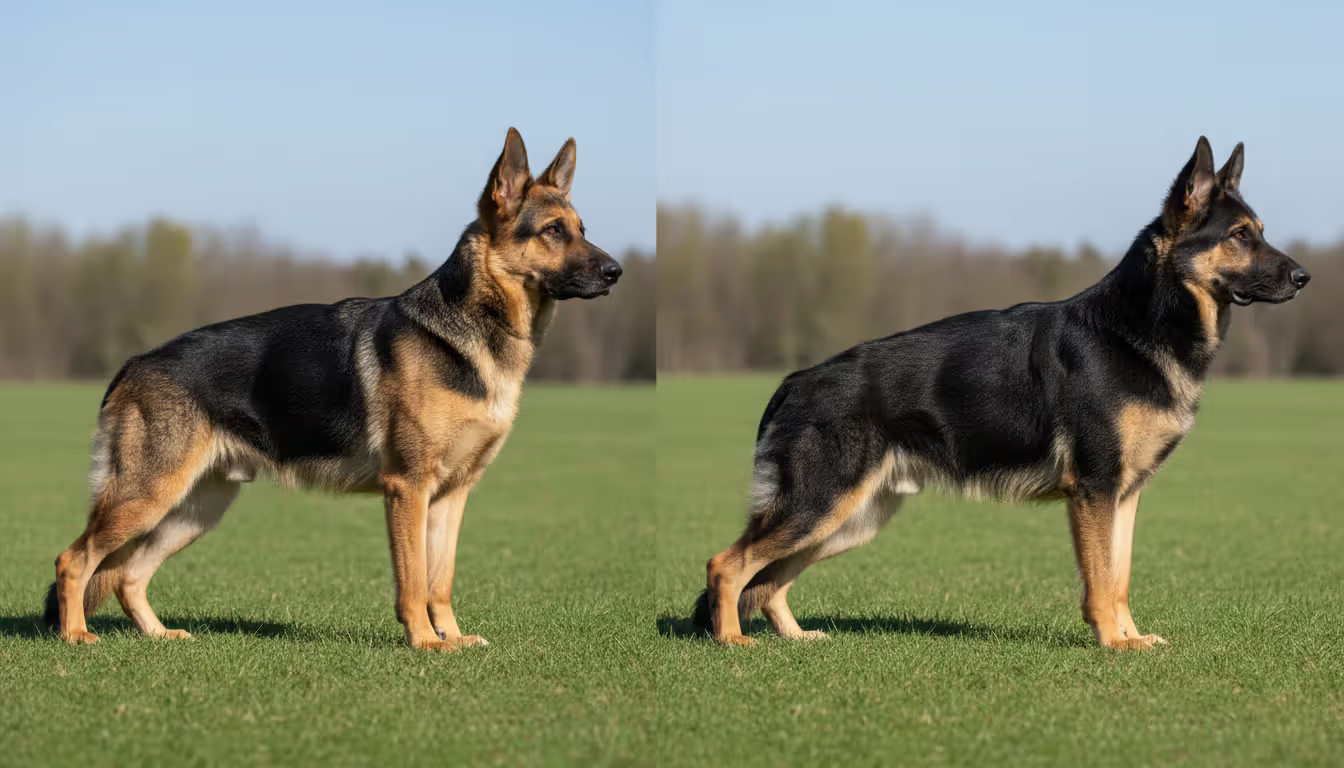
German Shepherds bred for show often display dramatically sloped backs and hocks that nearly touch the ground—a far cry from the working dogs the breed once was. This conformation contributes to hip dysplasia rates exceeding 20% in some lines, causing arthritis and mobility loss in middle age.
Teacup breeds—miniaturized versions of already-small dogs—experience a constellation of problems. Yorkshire Terriers, Chihuahuas, and Pomeranians bred to weigh under three pounds often have fragile bones prone to fractures, dental crowding causing early tooth loss, hypoglycemia requiring frequent feeding, and liver shunts that can prove fatal. Breeders create these "micro" dogs by breeding runts to runts, amplifying genetic weaknesses with each generation.
Author: Samantha Loring;
Source: jamboloudobermans.com
Designer Dogs and Health Testing Gaps
The designer dog breeding welfare law discussion has intensified as mixed breeds like Labradoodles, Goldendoodles, and Pomskies command premium prices without corresponding health guarantees. While hybrid vigor can benefit some mixed breeds, irresponsible breeding practices negate any potential advantages.
Many designer dog breeders skip health testing entirely, assuming that mixing breeds automatically produces healthier puppies. In reality, a Goldendoodle can inherit hip dysplasia from the Golden Retriever parent, sebaceous adenitis from the Poodle parent, or both. Without pre-breeding health screening, buyers receive puppies with the same genetic problems as purebreds—but without breed club oversight or established health protocols.
The lack of standardization creates additional problems. First-generation crosses (F1) differ dramatically from multi-generation crosses in coat type, size, and temperament. Buyers expecting a hypoallergenic dog may end up with one that sheds heavily. Those wanting a small dog may get one that grows to 70 pounds.
Health testing dog breeding laws in some states now require documentation regardless of whether a dog is purebred or mixed. However, enforcement remains inconsistent, and many designer dog breeders operate below regulatory thresholds by producing fewer litters annually than commercial operations.
Federal and State Laws Regulating Dog Breeding
USDA Requirements for Commercial Breeders
The Animal Welfare Act (AWA), enforced by the USDA's Animal and Plant Health Inspection Service (APHIS), sets minimum standards for commercial dog breeders. Dog breeding laws USDA regulations apply to operations that sell wholesale—meaning breeders who sell to pet stores, brokers, or research facilities, or those who maintain more than four breeding females and sell puppies sight-unseen.
Commercial breeder legal requirements under the AWA include:
Adequate housing with proper ventilation, temperature control, and sanitation
Sufficient space for dogs to move freely and stand, sit, and lie comfortably
Daily feeding and continuous access to potable water
Veterinary care for sick or injured animals
Exercise for dogs housed individually
Author: Samantha Loring;
Source: jamboloudobermans.com
USDA inspectors conduct unannounced facility visits, though inspection frequency varies based on facility size and compliance history. Violations can result in warnings, fines up to $10,000 per violation, or license suspension.
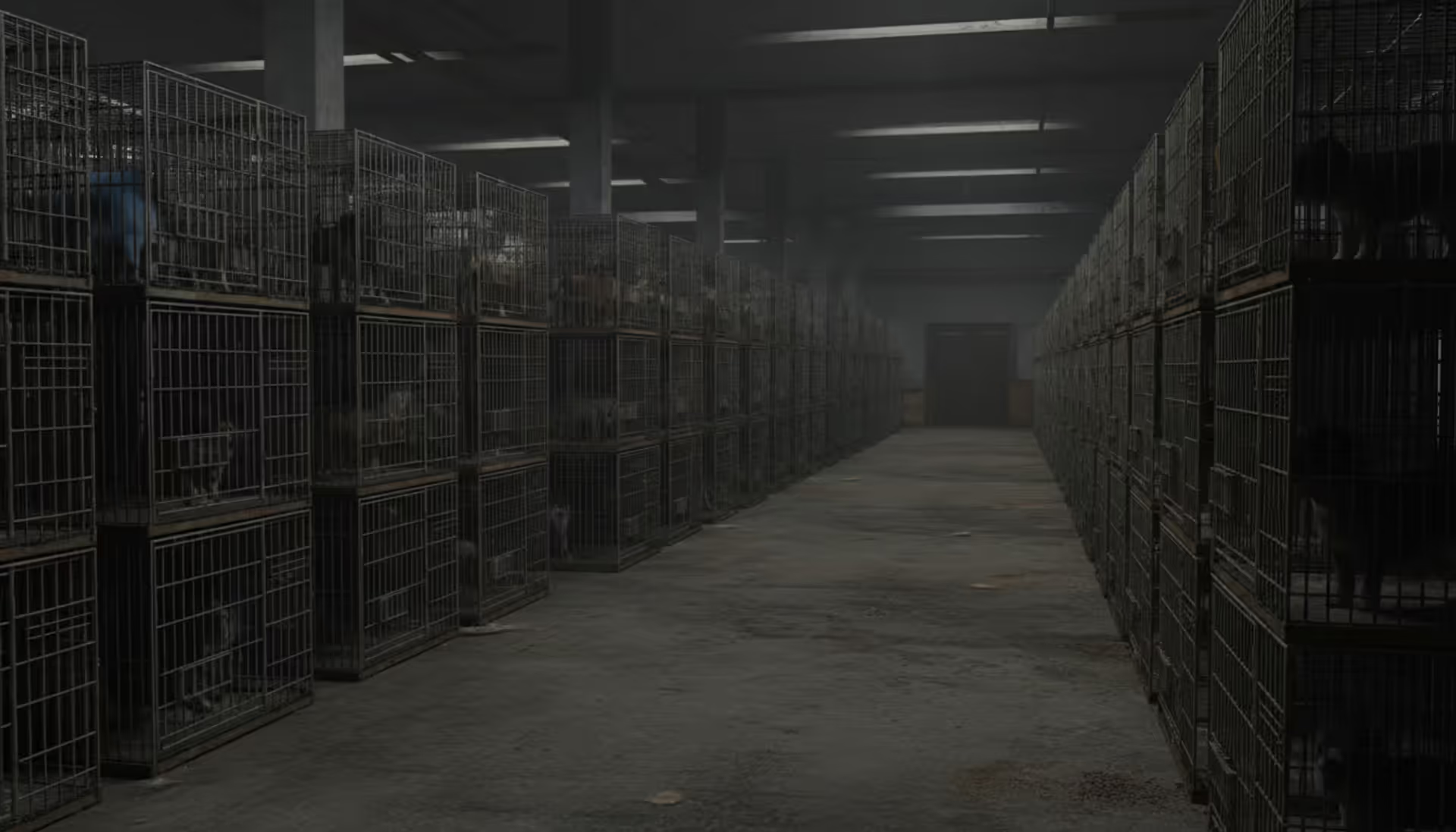
The AWA's limitations have drawn criticism from animal welfare advocates. The regulations set only minimum standards—cages can be just six inches larger than the dog in each dimension. Dogs can spend their entire lives in wire-floored enclosures without ever touching grass or receiving human socialization. The law doesn't address breeding frequency, age restrictions, or genetic health testing.
Furthermore, the AWA's scope excludes many breeders. Those who sell directly to the public and allow buyers to observe animals before purchase—even if they operate large-scale breeding facilities—fall outside USDA jurisdiction. This loophole enables "puppy mills" to continue operating by selling online with a single in-person viewing or through retail websites.
State-Level Puppy Mill Bans and Pet Store Restrictions
Frustrated by federal limitations, states have enacted their own puppy mill legislation animal cruelty laws. As of 2026, over 400 localities across the United States have passed pet store puppy mill ban laws restricting or prohibiting pet stores from selling dogs from commercial breeders.
California led the charge in 2019, becoming the first state to ban pet stores from selling dogs, cats, or rabbits unless they came from shelters or rescue organizations. Maryland, Maine, Washington, Oregon, Illinois, New York, and several other states have since followed with similar legislation.
These laws target the retail pipeline that sustains large-scale commercial breeding operations. By cutting off the pet store market, legislators aim to reduce demand for mass-produced puppies and redirect consumers toward adoption or reputable breeders who sell directly to buyers after thorough screening.
State breeder licensing requirements vary widely. Some states require any person breeding dogs to obtain a license, while others set thresholds based on the number of intact females or annual litters. Pennsylvania, one of the states with the strictest regulations following its "puppy mill capital" reputation, requires licenses for anyone breeding or selling even a single dog.
Inspection protocols differ dramatically. States with robust programs conduct annual inspections with veterinary oversight, while others rely on complaint-driven enforcement with limited resources. This patchwork approach means a breeder operating illegally in one state might meet minimum requirements by relocating across state lines.
Legal Penalties for Backyard Breeders
Backyard breeder legal penalties have increased as states recognize that small-scale operations can cause significant animal suffering. The term "backyard breeder" typically refers to individuals who breed dogs without proper knowledge, facilities, or health testing—often motivated by profit or a misguided desire to let their pet "have just one litter."
Criminal penalties for irresponsible dog breeding cruelty law violations range from misdemeanors to felonies depending on severity and state jurisdiction. Neglect cases involving inadequate food, water, shelter, or veterinary care can result in animal cruelty charges carrying jail time and permanent bans on animal ownership.
Civil penalties include fines, facility closure orders, and mandatory surrender of animals. Some states impose per-dog, per-day fines that accumulate rapidly in large operations. A breeder housing 50 dogs in violation of state law might face fines of $100-$500 per dog daily until compliance is achieved.
Enforcement challenges persist. Many backyard breeders operate under the radar, advertising through social media and word-of-mouth. Animal control agencies often lack resources to investigate every complaint, prioritizing cases involving immediate danger or large numbers of animals.
How to Identify Responsible vs. Irresponsible Breeders
Author: Samantha Loring;
Source: jamboloudobermans.com
Distinguishing ethical breeders from those prioritizing profit requires asking specific questions and observing red flags. Responsible breeders view themselves as stewards of their breed, committed to improving health and temperament across generations.
Health testing dog breeding laws in progressive states mandate screening for breed-specific genetic conditions before breeding. Ethical breeders exceed minimum requirements, testing for hip dysplasia, elbow dysplasia, eye diseases, cardiac conditions, and genetic disorders common to their breed. They provide documentation from organizations like the Orthopedic Foundation for Animals (OFA) or through DNA testing services.
Dog breeding age laws regulations in some jurisdictions prohibit breeding females before their second heat cycle or after a certain age. Responsible breeders typically wait until dogs are at least two years old—after health certifications can be completed—and retire breeding dogs by age seven or eight. They limit breeding frequency, allowing females to recover fully between litters rather than breeding during every heat cycle.
Transparency distinguishes reputable breeders from questionable ones. Good breeders:
Welcome facility visits and encourage meeting parent dogs
Provide detailed health histories and genetic test results
Ask extensive questions about your lifestyle, experience, and expectations
Require spay/neuter contracts for pet-quality puppies
Offer lifetime support and take dogs back if circumstances change
Belong to breed clubs and participate in health research
Compete in conformation, obedience, or working events that demonstrate their dogs' quality
Red flags indicating irresponsible breeding include:
Multiple breeds available simultaneously
Puppies always available without waiting lists
Unwillingness to show where dogs are housed
No health testing documentation or vague answers about testing
Pressure to buy immediately or "reserve" without meeting parents
Meetings in parking lots or public places rather than home facilities
Selling puppies younger than eight weeks
No questions asked about buyer qualifications
Prices significantly below or above typical breed ranges
Commercial breeder legal requirements establish minimum standards, but ethical breeding exceeds legal minimums. A breeder operating legally under USDA regulations might still run a puppy mill if dogs live in minimal conditions without socialization, enrichment, or individualized care.
What Buyers Can Do to Stop Unethical Breeding
The greatness of a nation and its moral progress can be judged by the way its animals are treated
— Mahatma Gandhi
Consumer choices drive breeding practices. Every puppy purchased from an irresponsible breeder funds continued production and perpetuates suffering.
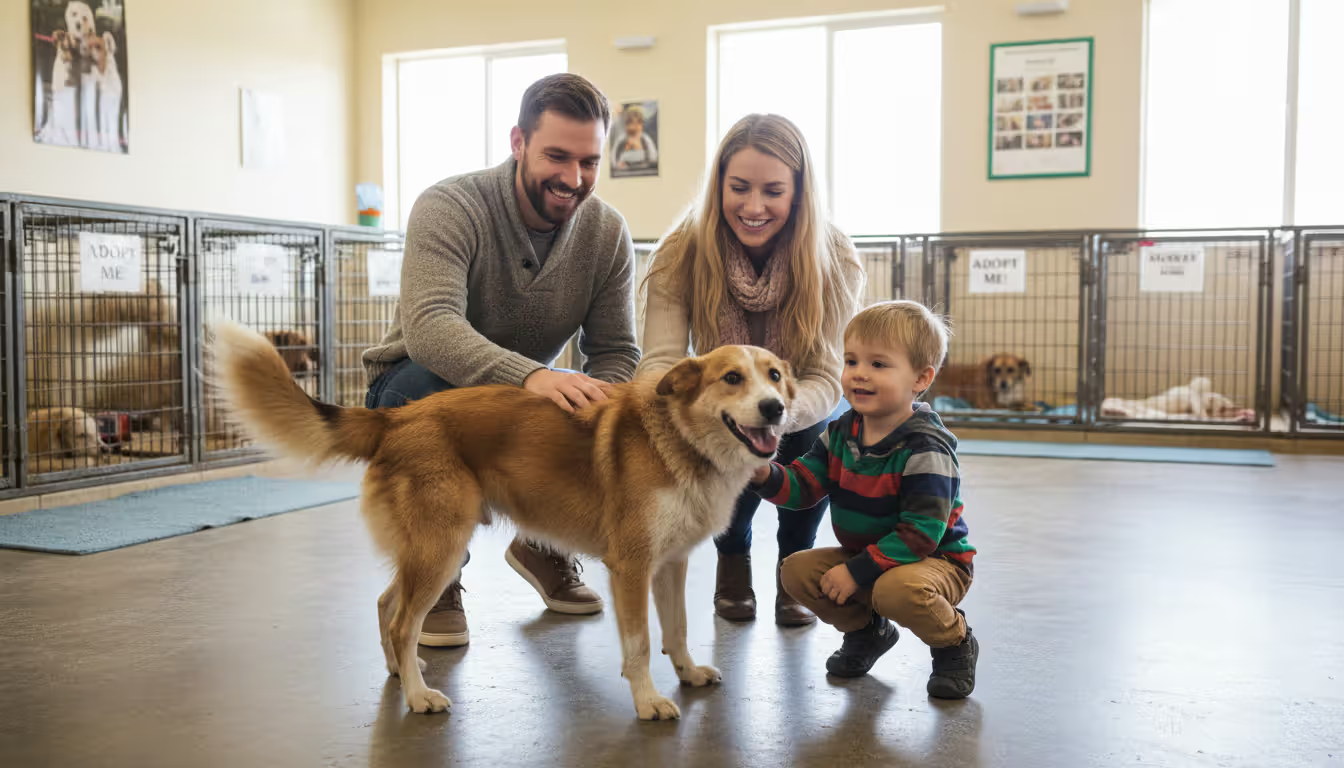
Adoption offers a powerful alternative. Shelters and breed-specific rescues house millions of dogs annually, including purebreds and designer mixes. Approximately 25% of shelter dogs are purebred, surrendered due to owner circumstances rather than behavioral issues. Rescue organizations often foster dogs in homes, providing detailed information about temperament and compatibility that puppy buyers rarely receive.
When purchasing from breeders, buyers should:
Request and verify health clearances for both parents through independent databases like OFA
Ask about the breeder's refund or return policy if genetic health problems emerge
Insist on meeting at least the mother dog and seeing where puppies are raised
Review contracts carefully, noting health guarantees and spay/neuter requirements
Check breeder references from previous buyers and veterinarians
Walk away from any situation that feels rushed or pressured
Reporting violations helps enforcement agencies identify problematic operations. Most states have animal cruelty hotlines or online reporting systems. Documenting concerns with photos, dates, and specific observations strengthens reports. While individual complaints may not trigger immediate action, patterns of reports across multiple sources often prompt investigations.
Supporting legislation amplifies individual impact. Contacting state representatives about puppy mill legislation animal cruelty bills, attending public hearings, and voting for candidates who prioritize animal welfare creates political pressure for stronger regulations and enforcement funding.
Educating others prevents impulse purchases. Sharing information about breed-specific health problems, the realities of puppy mills, and how to identify responsible breeders helps friends and family make informed decisions. Social media can spread awareness, though it also enables unethical breeders to reach buyers—a double-edged sword requiring critical evaluation of online sources.
State-by-State Puppy Mill and Pet Store Legislation Comparison
State
Pet Store Ban Status
Breeder Licensing Required
Inspection Frequency
Maximum Penalty
California
Banned (rescue/shelter only)
Yes, for any sales
Annual, unannounced
$500 per violation + closure
Pennsylvania
No statewide ban
Yes, 1+ breeding dog
Annual with vet review
$1,000 per dog + criminal charges
New York
Banned (rescue/shelter only)
Yes, 5+ breeding dogs
Annual
$1,000 per violation
Maryland
Banned (rescue/shelter only)
Yes, 2+ litters annually
Biannual
$2,500 per violation
Washington
Banned (rescue/shelter only)
Yes, 3+ litters annually
Annual
$1,000 per violation
Illinois
Banned (rescue/shelter only)
Yes, varies by locality
Annual
$2,500 per violation
Oregon
Banned (rescue/shelter only)
Yes, 4+ intact females
Annual
$500 per violation
Maine
Banned (rescue/shelter only)
Yes, 5+ breeding dogs
Annual
$1,000 per violation + closure
Virginia
No statewide ban
Yes, 30+ dogs or 50+ sales
Annual
$2,500 per violation
Missouri
No statewide ban
Yes, 10+ breeding females
Biannual
$500-$3,000 per violation
This comparison reflects 2026 regulations, though local ordinances within states may impose stricter requirements. Enforcement effectiveness varies significantly based on agency resources and political priorities.
Frequently Asked Questions
What dog breeds should not be bred anymore?
No breed should be completely eliminated, but breeding practices for several breeds require dramatic reform. English Bulldogs, Pugs, French Bulldogs, and other extreme brachycephalic breeds should only be bred by those committed to selecting for longer muzzles and open nostrils. Breeding standards need revision to prioritize health over appearance. Some veterinary organizations advocate for breeding bans until breed standards change to eliminate features that cause suffering. Teacup varieties of any breed represent unethical breeding focused on novelty rather than welfare.
Are puppy mills illegal in the United States?
Puppy mills exist in a legal gray area. Large commercial operations must comply with USDA Animal Welfare Act standards, which set minimum care requirements but allow conditions many consider inhumane. States have varying definitions and regulations—what constitutes a puppy mill in one jurisdiction might be legal in another. Pet store bans in several states have reduced market access for large-scale commercial breeders, but mills continue operating by selling directly online. Enforcement gaps and minimal penalties often make violations a cost of doing business rather than a deterrent.
What are the USDA requirements for dog breeders?
USDA regulations apply to commercial breeders who sell wholesale or maintain more than four breeding females while selling sight-unseen. Requirements include adequate housing space (cage six inches larger than the dog in all dimensions), daily feeding, continuous water access, temperature control between 50-86°F, veterinary care for illness or injury, and exercise for individually housed dogs. Facilities must allow inspection access and maintain records of animal acquisition, disposition, and veterinary care. Breeders selling directly to buyers who can observe animals before purchase are exempt from USDA licensing regardless of operation size.
How can I tell if a breeder is running a puppy mill?
Warning signs include multiple breeds available simultaneously, constant puppy availability, reluctance to show breeding facilities, meeting in public locations rather than home visits, no health testing documentation, selling puppies younger than eight weeks, and minimal questions about buyer qualifications. Puppy mills prioritize volume over quality, often housing dogs in inadequate conditions with minimal socialization. Legitimate breeders have waiting lists, extensively screen buyers, provide comprehensive health records, welcome facility tours, and maintain ongoing relationships with puppy buyers. Check for USDA violations through the APHIS inspection database if the breeder has a license number.
What states have banned pet stores from selling puppies?
As of 2026, California, Maryland, Maine, Washington, Oregon, Illinois, New York, and Connecticut have statewide bans preventing pet stores from selling dogs sourced from breeders, requiring stores to work exclusively with shelters and rescue organizations. Over 400 cities and counties in additional states have local ordinances with similar restrictions. These laws aim to eliminate the retail market supporting large-scale commercial breeding operations. Some states allow pet stores to host adoption events or maintain space for rescue organizations while prohibiting direct sales of commercially bred puppies.
What health tests should ethical breeders perform?
Required tests vary by breed based on common genetic conditions. Hip and elbow dysplasia screening through OFA or PennHIP applies to most medium and large breeds. Eye examinations by board-certified veterinary ophthalmologists (CERF/OFA) detect inherited vision problems. Cardiac evaluations identify heart conditions in breeds prone to congenital defects. DNA testing screens for breed-specific genetic diseases—over 200 conditions can now be identified through genetic panels. Responsible breeders test both parents before breeding and provide documentation from recognized registries. Results should be publicly available through databases like OFA, not just breeder-provided paperwork that could be falsified.
The ethics of dog breeding ultimately rest on a simple principle: dogs should be bred to live healthy, functional lives, not to satisfy human aesthetic preferences at the expense of animal welfare. Breeds suffering from predictable, severe health problems due to exaggerated physical features represent failures of human stewardship.
Progress requires multiple approaches working simultaneously. Stronger regulations and consistent enforcement hold irresponsible breeders accountable. Revised breed standards that prioritize health over appearance guide ethical breeding decisions. Consumer education and demand for health-tested, responsibly bred puppies—or adoption of shelter dogs—removes financial incentives for puppy mills and backyard breeders.
The dogs themselves cannot advocate for change. They depend entirely on human choices—from breed club officials who set standards, to legislators who craft protective laws, to buyers who decide where to find their next companion. Each decision either perpetuates suffering or moves toward a future where all dogs can breathe easily, move comfortably, and live full lifespans unburdened by genetic problems humans created and can choose to eliminate.
The commercial dog breeding industry produces millions of puppies annually in conditions most pet owners never see. Understanding the welfare problems, health consequences, and ethical issues behind puppy production helps consumers make informed decisions that reduce animal suffering and save lives
The dog meat trade involves breeding, transporting, and slaughtering millions of dogs annually for human consumption, primarily in Asia. Despite growing bans worldwide, enforcement challenges persist. Learn about US laws, international legal status, cruelty concerns, and advocacy efforts
Dog abuse encompasses deliberate physical harm, severe neglect, and psychological torment under federal and state laws. Learn to recognize physical and behavioral signs, document evidence properly, and report through correct legal channels. Penalties range from misdemeanors to felonies with up to 10 years imprisonment
TNR programs sterilize and return community cats to reduce populations humanely. Learn how trap-neuter-return works, legal frameworks in US cities, effectiveness data vs traditional euthanasia, caretaker rights, and step-by-step guidance for starting programs with municipal funding
The content on this website is provided for general informational and educational purposes only. It is intended to explain concepts related to animal law, pet ownership rights, service animals, dog bite liability, and animal welfare legislation in the United States.
All information on this website, including articles, guides, and examples, is presented for general educational purposes. Legal outcomes may vary depending on jurisdiction, state laws, and individual circumstances.
This website does not provide legal advice, and the information presented should not be used as a substitute for consultation with qualified attorneys or animal law professionals.
The website and its authors are not responsible for any errors or omissions, or for any outcomes resulting from decisions made based on the information provided on this website.