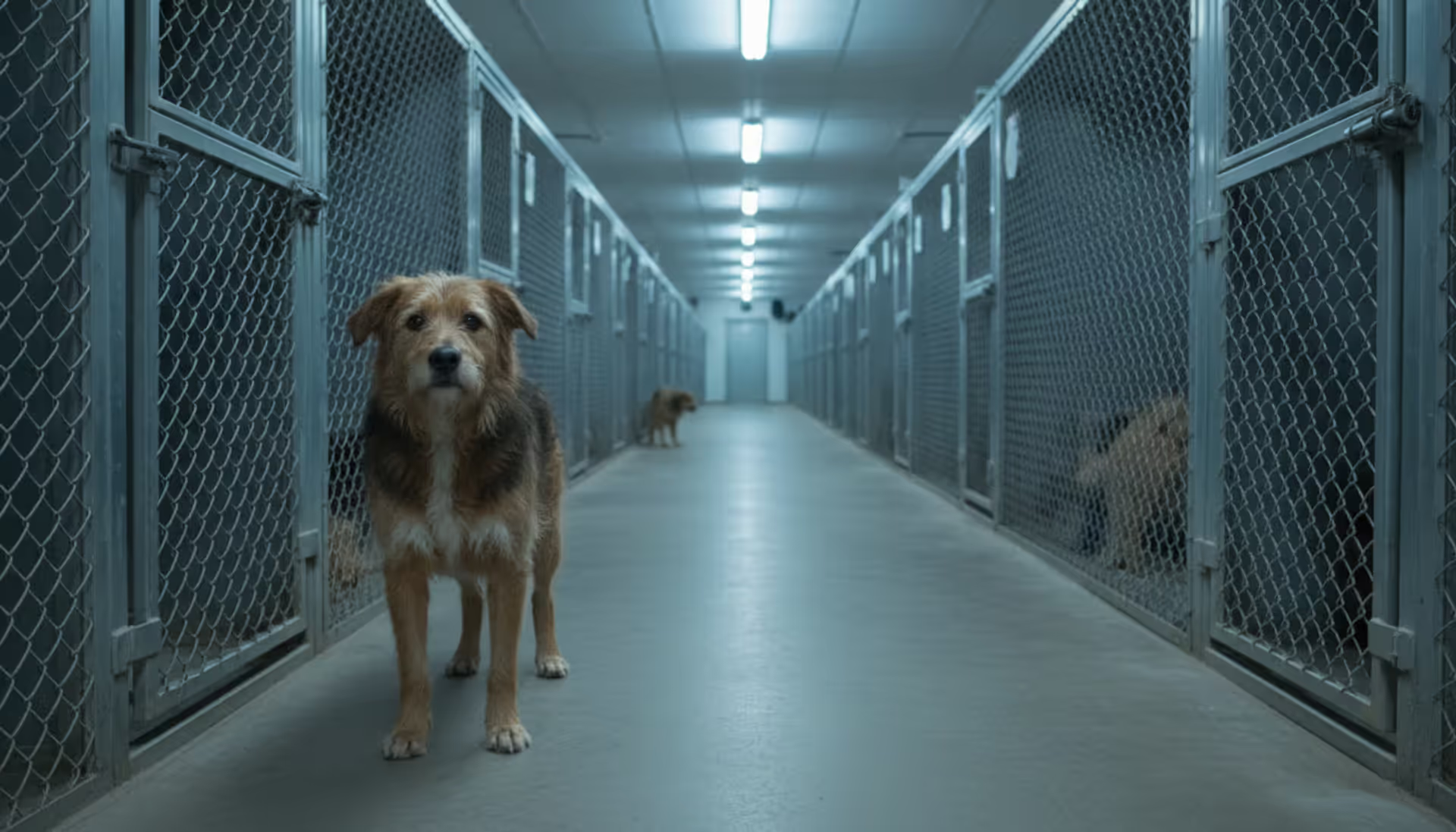
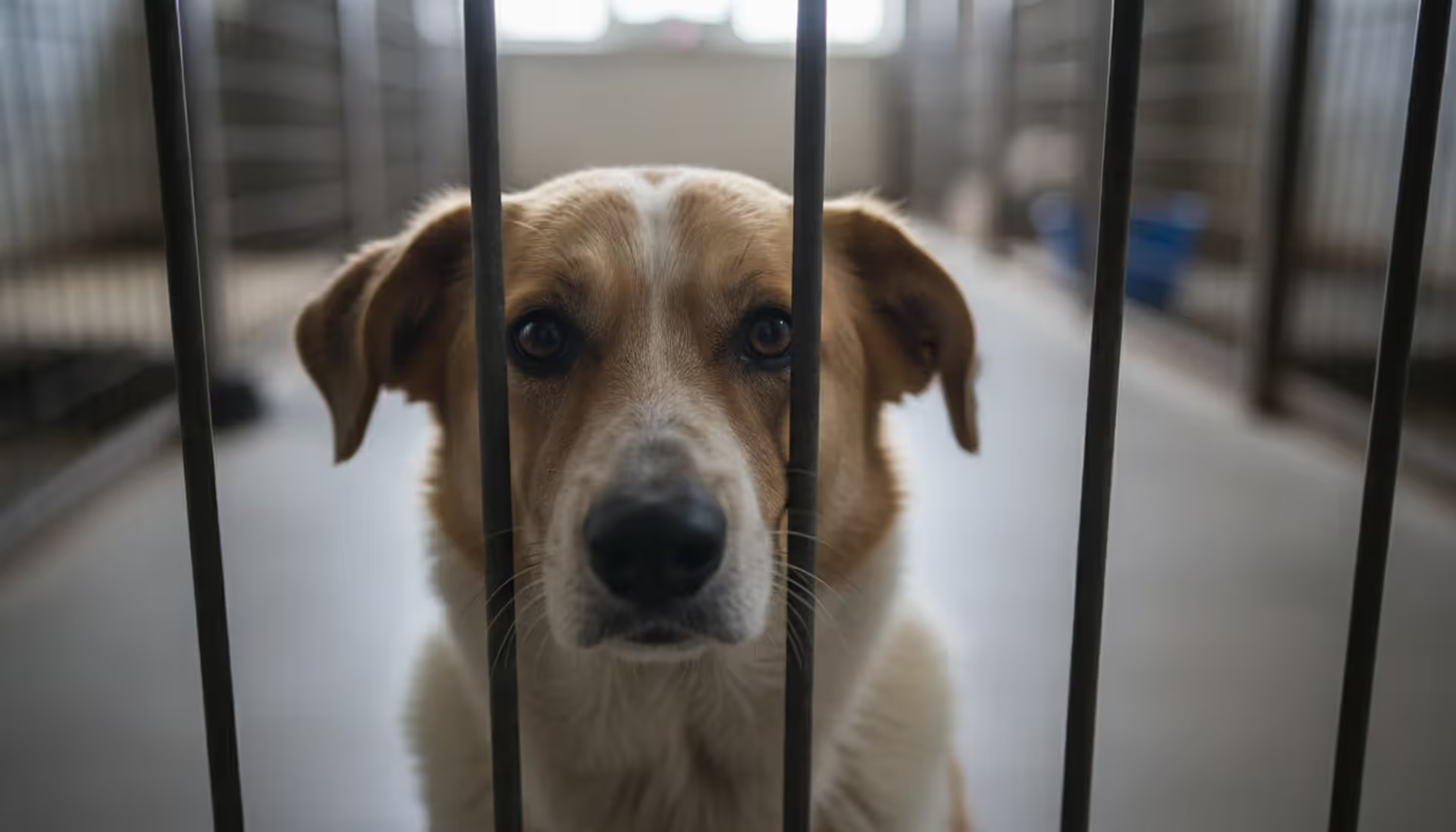
When we think of dogs, most of us picture loyal companions—family members who greet us at the door or curl up beside us on the couch. Yet across several countries, dogs face a starkly different reality. The commercial dog meat industry encompasses everything from breeding facilities to transport networks to slaughterhouses, all focused on selling dog meat for food.
Roughly 30 million dogs die each year within this industry. Some were born on farms for this specific purpose. Others? They were pets—stolen from yards, grabbed off streets, or purchased from people who had no idea what would happen next. Crammed into wire cages on trucks, many don't survive the journey to market. Those who do often face slaughter methods that would be illegal for livestock in most developed nations.
This isn't just an animal welfare issue. It's a complex web involving cultural traditions, changing laws, public health risks, and a growing international movement pushing for change.
Understanding the Global Dog Meat Trade
Walk into certain markets across Asia, and you might encounter scenes that seem impossible in 2026. Yet the scale of this industry remains staggering—with the vast majority of those 30 million deaths concentrated in East and Southeast Asia.
How the Dog Meat Trade Operates
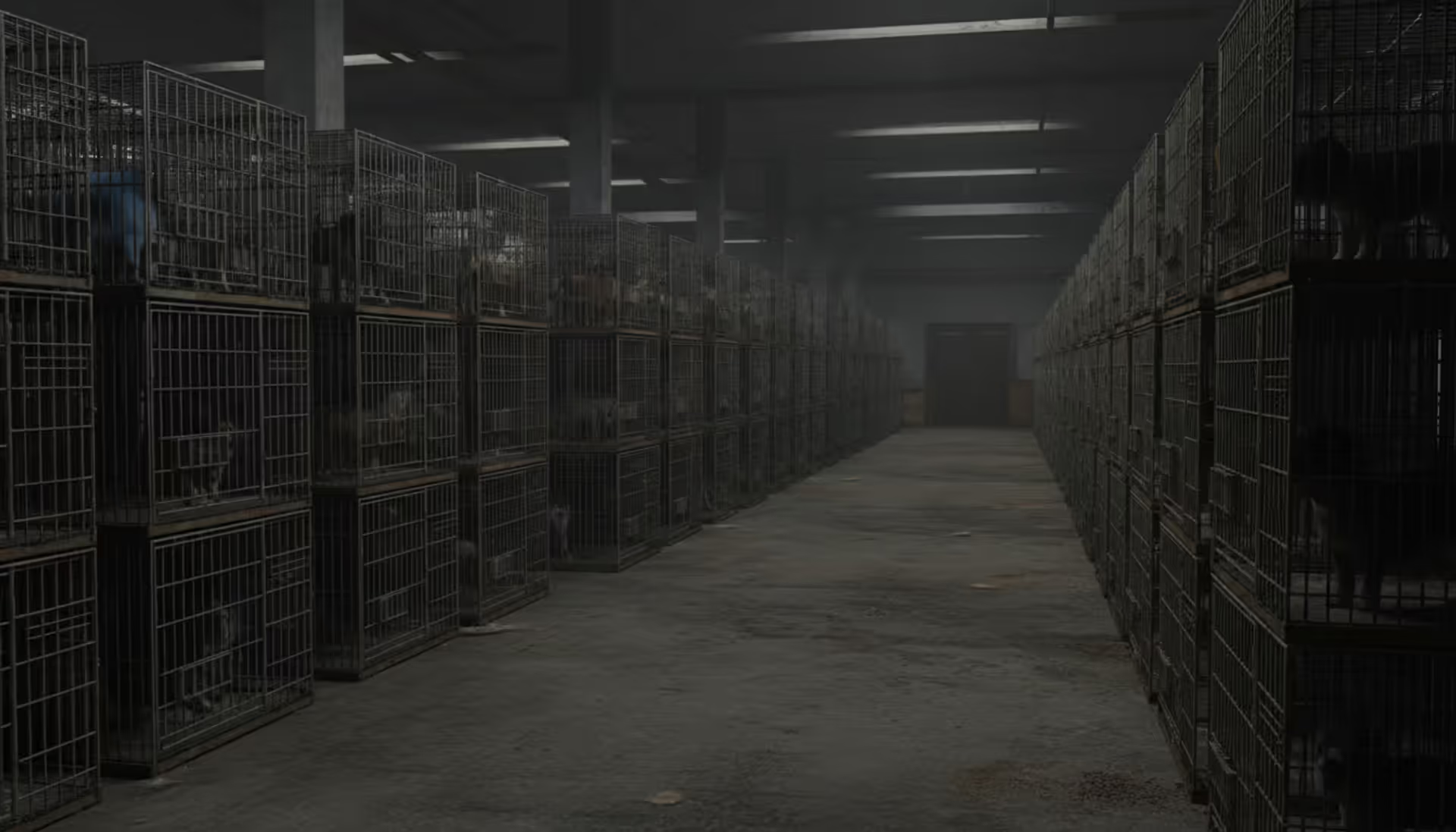
Picture a breeding facility holding 200 dogs in stacked wire cages, each barely larger than the animal inside. That's standard for many operations. There's no breed standardization here—you'll find everything from large mixed-breed dogs to smaller varieties, chosen solely for how quickly they grow, not for health or temperament.
These aren't regulated farms with veterinary oversight. Food arrives sporadically. Clean water? Often scarce. Medical care exists only if it protects the financial investment, not the animal's wellbeing.
But breeding represents just one supply channel. Theft feeds this industry too—and we're talking organized networks, not isolated incidents. In Vietnam and China, gangs specifically target neighborhoods for pet dogs and round up strays. They work fast, loading dozens of animals into trucks before anyone notices.
The transport phase kills many dogs before they ever reach a slaughterhouse. Imagine a ten-hour journey in summer heat, no water, pressed so tightly against cage wires that they cut into skin. Dogs arrive dehydrated, injured, sometimes dead. Then comes slaughter—and in many locations, there's no stunning first. Dogs are killed within sight and sound of other terrified animals, using methods like beating or electrocution that cause prolonged suffering.
Markets selling this meat operate openly in some cities, underground in others. Restaurant menus might list it explicitly or use coded terms like "special meat" or "fragrant meat," depending on local laws and shifting public opinion.
Countries Where Dog Meat Consumption Remains Common
China's market dwarfs all others, though consumption has plummeted among anyone under 40. Many young Chinese citizens view dogs the same way Americans do—as pets, not protein. Still, demand persists in certain regions and among older generations, supporting thousands of farms and vendors.
South Korea maintained one of Asia's most visible dog meat industries until very recently—we'll get to their 2024 ban shortly. Before that law passed, you could find dedicated restaurants in Seoul and other cities, though younger Koreans had largely abandoned the practice.
Vietnam's northern provinces, particularly around Hanoi, keep active markets running. Indonesia's trade concentrates in North Sulawesi and a few other specific regions rather than nationwide. Parts of India and Nigeria also have localized consumption, though it's nowhere near the scale seen in East Asia.
Here's what's changed: Taiwan banned it in 2017. The Philippines strengthened their 1998 ban with better enforcement in 2022. Thailand made it illegal in 2014. Hong Kong followed suit. These weren't Western countries imposing values—these were Asian nations deciding their cultural relationship with dogs had evolved.
The dog meat trade represents one of the most severe animal welfare crises globally. Dogs endure conditions that would be illegal for livestock in most developed countries—crammed in cages barely larger than their bodies, transported for days without water, and slaughtered without stunning. The psychological suffering is immense, as dogs are highly social, intelligent animals who witness the fear and death of others around them
— Wendy Higgins
Dog Meat Trade Legal Status in the United States
If you're reading this in the US, you might assume dog meat consumption was always illegal here. Surprisingly, federal protection only arrived in 2018.
The 2018 Federal Ban on Dog and Cat Meat
December 2018 brought the Dog and Cat Meat Trade Prohibition Act into force. Congress closed a legal loophole most Americans didn't know existed. Before this legislation, federal law didn't explicitly prevent someone from slaughtering, selling, or eating dogs or cats—only six states had their own prohibitions.
The new federal statute covers the entire supply chain. You can't legally slaughter a dog for food. Can't transport dog meat. Can't buy it, sell it, possess it for consumption, or donate it. Each violation carries up to $5,000 in fines.
Was this solving a widespread problem? No—dog meat consumption in America was virtually nonexistent. But the law accomplished two things: it unified protection across all states and territories, and it positioned America to advocate internationally from a place of legal consistency. Hard to pressure other countries when your own laws have gaps.
The statute includes one narrow exception for Native American religious ceremonies, though legal experts aren't aware of any tribal practices that actually involve dog or cat consumption. The provision exists more as a sovereignty acknowledgment than a practical exemption.
State-Level Dog Meat Ban Laws
Six states beat the federal government to this issue. California led in 1998, making violation a misdemeanor. Georgia, Hawaii, Michigan, New York, and Virginia followed over the next decade.
Virginia's 2001 law sparked from concerns—largely unfounded, as it turned out—that immigrant communities might continue cultural practices from countries where dog meat remained legal. Actual prosecutions? Essentially zero. The law stood more as a statement about American values regarding companion animals.
These state laws remain active even after the federal ban passed. In some cases, they carry stiffer penalties or broader language than the 2018 federal statute. California's law, for instance, includes specific provisions the federal version doesn't mirror exactly.
The state-by-state progression showed growing consensus nationwide. Dogs and cats occupy protected status here—they're companions, not commodities. That cultural agreement eventually crystallized into federal law.
International Laws and Bans on Dog Meat Trade
Here's where things get complicated. Legal status varies wildly depending on where you are, reflecting dramatically different cultural attitudes and enforcement capabilities.
Country/Region
Current Legal Status
What Changed Recently
How Well It's Enforced
China
Still legal, but major cities increasingly ban it
Shenzhen and Zhuhai declared dogs companion animals (2020-2025), prohibiting their sale for meat
Varies widely—strong in progressive cities, minimal in rural areas
South Korea
Banned under 2024 law; industry has until 2027 to phase out
Landmark legislation passed early 2024 after years of domestic pressure
Strong, with government compensation for farmers transitioning out
Vietnam
Legal nationwide; Hanoi attempted local ban in 2021
Capital city's ban rarely enforced; exists mostly on paper
Weak—markets continue operating openly
Thailand
Illegal since 2014
Penalties strengthened in 2023 after enforcement gaps
Moderate; some illegal trade continues near borders
Indonesia
Legal at national level; some regions implementing bans
North Sulawesi provinces debating restrictions amid tourism pressure
Weak where still legal
Taiwan
Banned in 2017 for consumption and trade
Enforcement improved with higher fines added in 2020
Strong—cultural shift has largely ended demand
Philippines
Illegal since 1998
2022 measures strengthened enforcement after continued violations in northern provinces
Moderate; improving with recent focus
United States
Banned federally in 2018
No changes since passage
Strong—though practice was already virtually nonexistent
Notice the pattern? Movement goes one direction—toward prohibition, not regulation. Nobody's legalizing what was banned or loosening restrictions.
South Korea's 2024 decision sent shockwaves because they'd been one of the last developed economies with a significant, legal dog meat industry. President Yoon Suk Yeol and the National Assembly didn't just ban it—they allocated funds to help farmers transition to other livestock or leave agriculture entirely. That economic support matters for enforcement.
China presents a different model. The central government avoids a nationwide ban, likely to sidestep cultural backlash in rural areas where consumption remains more common. Instead, they're allowing cities to decide independently. Shenzhen, a tech hub with 12 million people, reclassified dogs as companions in 2020. Can't sell companion animals for food. Other major cities followed. This city-by-city approach gradually shrinks the legal market without triggering the resistance an immediate national ban might provoke.
Cross-border trade complicates enforcement everywhere. Dogs transported from countries with weak laws into markets in neighboring nations create jurisdiction headaches that no single country can solve alone.
Animal Cruelty and Ethical Concerns in Dog Meat Farms
Even where dog meat remains legal, the conditions these animals endure would shock most people. We're not talking about humane farming practices—we're talking about systematic suffering that continues because many countries lack basic animal welfare laws.
Documented Cases of Legal Cruelty on Dog Meat Farms
Here's the thing about legality and morality: they don't always align. When Humane Society International investigators visit dog meat farms, they document conditions that remain technically legal simply because no law exists to prohibit them.
Mother dogs go through back-to-back breeding cycles with no recovery time. Puppies get separated early to restart the cycle faster. Injured dogs receive treatment only if the injury threatens profit—a broken leg might heal crooked, causing permanent pain, but that doesn't affect meat yield.
Veterinary care? Virtually nonexistent. Diseases spread through facilities housing hundreds of dogs in close quarters. Investigators have found dogs with untreated infections, severe dental disease, tumors, and injuries from fights or cage wires—all ignored because treatment costs money and slaughter happens regardless.
Transport might be worse than the farms. Trucks carrying 300 dogs in stacked wire cages travel for days without stops. No food. No water. Summer heat or winter cold, doesn't matter—the cargo has one destination. Mortality rates on these journeys can hit 30%. That's nearly one in three dogs dead before arrival.
Then there's slaughter. In countries with livestock welfare laws, animals must be stunned unconscious before death—it's considered basic humanity. Dog slaughterhouses often have no stunning equipment whatsoever. Methods include beating, hanging, or electrocution, all while the dog remains fully conscious. Some regions still perpetuate the myth that adrenaline and fear improve meat flavor, leading to deliberately traumatic killing methods. (There's zero scientific evidence for this claim, by the way. It's pure superstition causing immense suffering.)
Health and Safety Risks
Public health officials have raised red flags that extend beyond animal welfare concerns. Unlike regulated meat industries with inspections and traceability, dog meat operates in shadows—even where it's legal.
Rabies represents the most serious human health risk. Dogs in the meat trade typically never receive vaccinations. Several documented rabies cases in Vietnam and China traced back to people who consumed dog meat or worked in slaughter facilities. Rabies is nearly 100% fatal once symptoms appear. That's not a minor risk.
Food safety oversight simply doesn't exist for dog meat. Nobody's checking if these dogs received medications that leave harmful residues. Nobody's monitoring how they're fed or what contaminants might be in their feed. Slaughter happens in facilities without health inspections, refrigeration is often inadequate, and there's zero traceability if someone gets sick.
Then consider zoonotic disease risks more broadly. Public health authorities learned from COVID-19 that cramming stressed animals in unsanitary, crowded conditions creates ideal environments for pathogens to jump species or mutate. Dog meat farms check every box for pandemic risk factors: high animal density, multiple species sometimes mixed together, poor sanitation, no health monitoring, and close human contact during slaughter.
Dog Meat Ban Enforcement Challenges Worldwide
Passing a law is one thing. Enforcing it? That's where things get messy. Even countries with clear bans struggle to eliminate the trade completely.
Why Enforcement Remains Difficult
Author: Lauren Beckett;
Source: jamboloudobermans.com
Cultural entrenchment creates the biggest obstacle. In regions where eating dog meat goes back generations, authorities face real resistance when trying to shut down markets. Older residents see it as cultural heritage under attack. They're not necessarily wrong to feel that way—it's just that culture evolves, and younger generations increasingly reject the practice.
Economics matter too. That vendor who's sold dog meat for 30 years? That's his livelihood. The farmer with 100 dogs and no other skills? Telling them to stop without offering alternatives creates humanitarian problems alongside enforcement ones. South Korea recognized this—their ban included compensation packages and retraining programs. That's why their enforcement will likely succeed where others have failed.
Many countries simply lack resources for enforcement. Animal welfare violations rank low when police departments struggle with violent crime, corruption, or underfunding. Rural areas often have no animal control infrastructure at all. Who investigates violations? Who has training to gather evidence? In many regions, the answer is nobody.
Corruption undermines enforcement in countries where it's endemic. Dog meat traders aren't major criminal enterprises, but they have enough money to bribe local officials for advance warning about inspections or to ignore violations entirely. When fines run a few hundred dollars, bribes become a business expense.
Penalties and Prosecution Gaps
Taiwan's approach shows what serious enforcement looks like: fines up to $8,000 USD plus potential jail time. That gets people's attention. Vietnam's Hanoi ban? Minimal fines, rarely imposed. Guess which city still has active dog meat restaurants?
Legal loopholes create enforcement headaches. Some laws ban selling dog meat but not eating it—so how do you prove someone sold versus gifted? Others prohibit commercial operations but allow personal slaughter for own consumption. That "personal use" exemption lets traders continue under flimsy pretenses.
Evidence collection isn't straightforward. This industry runs on cash, keeps no records, and operates informally. How do you prove that meat came from dogs? DNA testing exists but requires lab access many jurisdictions don't have. Without physical evidence—live dogs in transport, slaughter facilities in operation—prosecution becomes nearly impossible.
Most countries lack dedicated animal cruelty investigation units. General law enforcement receives minimal training on animal welfare statutes. Officers might witness violations without recognizing them as illegal. Or they recognize the violation but don't know how to document evidence for prosecution. The knowledge gap undermines even well-written laws.
Awareness Campaigns and Advocacy Efforts
International pressure and domestic advocacy have driven remarkable changes over the past decade. Laws don't change in a vacuum—they respond to organized movements that shift public opinion and political will.
Major International Campaigns Against the Dog Meat Trade
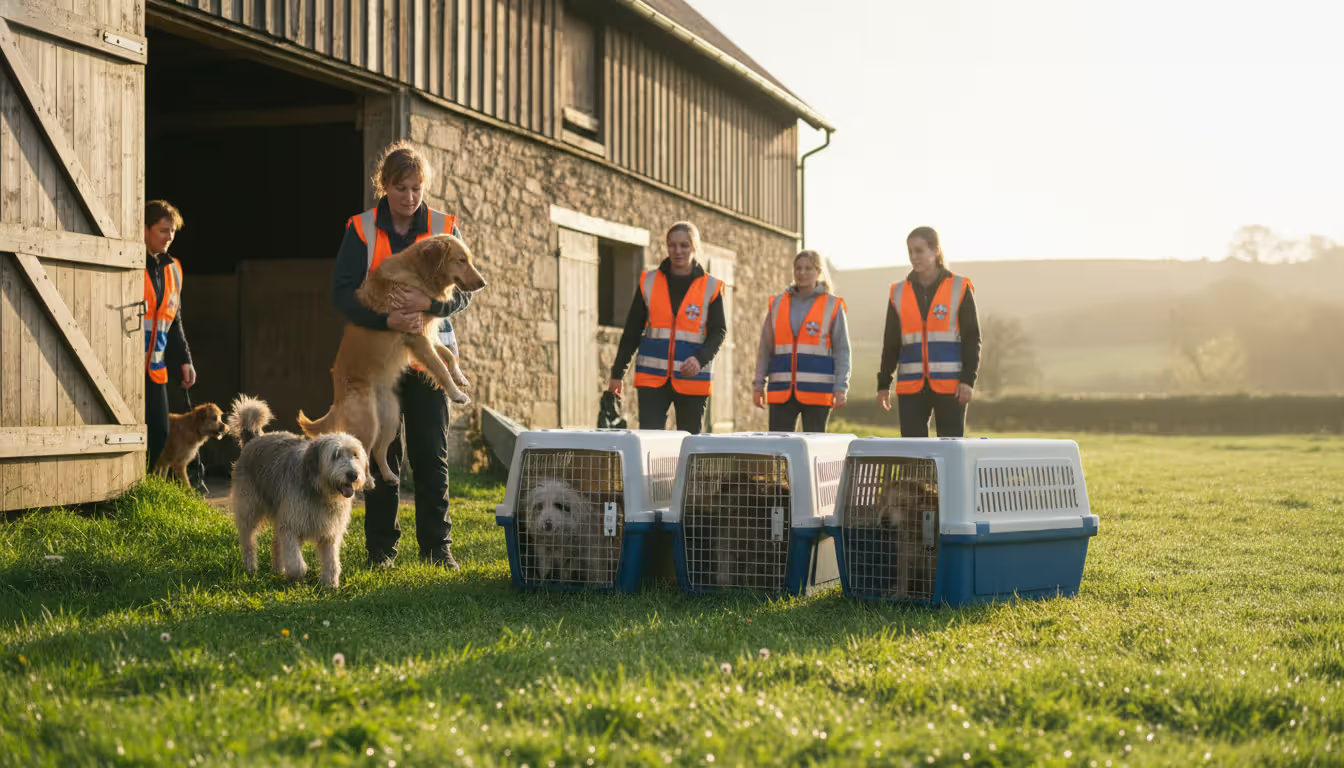
Humane Society International takes a direct approach: they negotiate with farm owners to shut down operations, then rescue every dog on-site. They've closed dozens of farms across South Korea, China, and Vietnam, relocating thousands of dogs to sanctuaries or adoption programs. But they don't stop at rescue—HSI documents conditions, shares footage with media, and lobbies governments for stronger laws. Their work in South Korea directly contributed to the 2024 ban by providing legislators with undeniable evidence of suffering and demonstrating that public opinion had shifted.
Author: Lauren Beckett;
Source: jamboloudobermans.com
China's Yulin Dog Meat Festival became a global flashpoint starting in 2014. Every June, activists protest both on-site and through social media campaigns that reach millions. Has Yulin ended? No. But attendance has crashed, vendors have decreased, and activists successfully negotiate to rescue hundreds of dogs each year. More importantly, Yulin became a symbol that kept international attention focused on the broader trade, creating pressure that contributed to city-level bans across China.
Soi Dog Foundation operates primarily in Southeast Asia, particularly Thailand and Vietnam. They combine rescue with rabies vaccination programs—a smart strategic move. By addressing public health alongside animal welfare, they build broader coalitions including health officials, not just animal lovers. Their work demonstrates that ending dog meat trade supports human safety, which resonates with governments focused on public health infrastructure.
These international campaigns increasingly amplify local voices rather than leading from the front. Nobody wants to be told what their culture should be, especially by Western organizations. Domestic animal welfare groups in South Korea, China, Taiwan, and Vietnam have grown dramatically. Younger generations within these countries drive opposition to dog meat consumption—they're rejecting it themselves, not having it imposed from outside. That's what makes change sustainable.
How US Organizations Are Contributing
American animal welfare groups bring resources and expertise that local advocates often lack. The ASPCA partners with Asian organizations on investigation techniques and legal advocacy, sharing lessons from decades of US animal cruelty prosecutions. How do you gather evidence that stands up in court? How do you build public pressure for stronger laws? US groups offer workshops and funding to build capacity in countries where animal welfare movements are newer.
Educational campaigns target American travelers too. Visiting dog meat markets as a tourist—even without participating—can inadvertently support the trade financially and normalize it culturally. Organizations encourage travelers to avoid these areas and report them to tourism boards instead.
Congressional advocacy keeps diplomatic pressure alive. US animal protection groups lobby for the State Department to raise dog meat trade issues in bilateral discussions. While respecting national sovereignty (nobody's threatening trade sanctions over this), American officials have privately and publicly addressed the issue, particularly regarding public health implications. That diplomatic attention matters, especially in countries concerned about international reputation.
US organizations excel at generating media attention and viral social media campaigns. A well-produced video or coordinated hashtag campaign reaches global audiences, amplifying local advocates who face greater personal risks speaking out in their home countries. That attention creates political pressure governments can't ignore.
Author: Lauren Beckett;
Source: jamboloudobermans.com
Frequently Asked Questions About the Dog Meat Trade
Is eating dog meat legal in the United States?
Not anymore. Congress passed federal legislation in 2018 that prohibits slaughtering, transporting, possessing, purchasing, selling, or donating dogs and cats for human food anywhere in the United States. Before that, only six states had their own bans, leaving a surprising legal gap at the federal level. Violations now carry fines up to $5,000 per offense. The law includes an extremely narrow exception for Native American religious ceremonies, though no documented tribal practices actually involve consuming dog or cat meat—that provision exists more to acknowledge sovereignty than address any real practice. Bottom line: it's illegal nationwide, period.
Which countries still allow the dog meat trade?
As of 2026, it remains legal in China (though major cities are increasingly banning it locally), Vietnam, Indonesia, and parts of India and Nigeria. South Korea just passed a comprehensive ban in 2024 that's being phased in through 2027, with the government providing transition support for farmers. Taiwan banned it back in 2017, Thailand in 2014, and the Philippines strengthened their 1998 ban with better enforcement recently. Even where it stays legal, consumption keeps dropping—especially among younger people who view dogs as companions, not food. The demographic trend points one direction: toward elimination.
What is the Dog and Cat Meat Prohibition Act?
That's the 2018 federal law that made consuming or trading dog and cat meat illegal throughout the United States. It amended the Animal Welfare Act by adding criminal penalties—up to $5,000 fines for each violation—and created uniform protection across all 50 states plus US territories. Before this passed, federal law had a weird gap where it wasn't explicitly illegal at the national level, even though the practice was virtually nonexistent in America. The Act positioned the US to advocate internationally from a place of legal consistency, making it harder for other countries to dismiss American concerns as hypocritical.
Are there health risks associated with consuming dog meat?
Significant ones, yes. Rabies tops the list—dogs in the meat trade almost never receive vaccinations, and several documented rabies cases in Vietnam and China traced back to dog meat consumption or slaughter work. Rabies is nearly 100% fatal once symptoms develop. Beyond that, dog meat operates without food safety oversight. Nobody inspects these animals for diseases, monitors what they're fed, checks for medication residues, or ensures sanitary slaughter conditions. You're also looking at broader zoonotic disease risks from the cramped, unsanitary conditions on farms—exactly the type of environment public health officials now recognize as pandemic risk factors after COVID-19.
How is the dog meat trade connected to animal cruelty?
The cruelty happens at every stage. Breeding farms keep dogs in cramped wire cages with minimal food, water, or medical care—injured dogs just suffer since treatment costs money. Many dogs in the trade aren't even farmed; they're stolen pets or grabbed strays. Transport involves cramming hundreds of dogs into wire cages on trucks for journeys lasting days with no food or water—about 30% die before arrival. Slaughter methods often skip stunning entirely, using beating, hanging, or electrocution while dogs remain fully conscious. Some places still believe (wrongly) that adrenaline improves flavor, leading to deliberately terrifying deaths. Dogs are highly intelligent, social animals who understand what's happening around them—they watch and hear other dogs dying. The psychological trauma compounds the physical suffering.
What can I do to help end the dog meat trade?
Support organizations working directly on this: Humane Society International, Soi Dog Foundation, and local groups in affected countries. If you travel to areas where dog meat trade exists, don't visit markets or festivals—even as an observer, you're contributing economically and normalizing it culturally. Sign petitions and contact your elected officials to keep diplomatic pressure on countries where the trade continues. Share educational content on social media, but focus on credible sources from established animal welfare organizations rather than sensationalized content. If legislative opportunities arise—either strengthening enforcement of existing bans or closing loopholes—contact representatives to voice support. Real change comes from sustained pressure, both international and domestic, combined with economic support for people transitioning out of the industry.
Will the dog meat trade exist in 2030? Probably, but in dramatically reduced form compared to even five years ago. The trajectory couldn't be clearer—legal bans expanding, cultural attitudes shifting fast (especially among younger generations), and enforcement mechanisms slowly improving.
South Korea's 2024 prohibition stands as proof that countries with significant dog meat industries can successfully exit when political will, public support, and economic transition assistance align. That ban didn't happen overnight. It came from years of domestic advocacy by Korean animal welfare groups, changing attitudes among Korean citizens (particularly those under 40), and eventually, politicians recognizing that continuing the trade damaged the country's international image more than ending it would upset traditionalists.
Challenges absolutely remain. Enforcement gaps let illegal trade continue even in countries with bans on the books. Cultural and economic factors complicate change where the practice stays legal. The millions of dogs still suffering annually represent an ongoing crisis that demands sustained attention and resources.
Progress depends on supporting domestic movements in affected countries, not imposing external values. When Western organizations try to lead from the front, it triggers nationalist backlash and accusations of cultural imperialism. But when young Chinese, Korean, or Vietnamese citizens reject dog meat themselves? That's unstoppable demographic change.
Public health arguments often resonate where cultural ones don't. Governments focused on economic development, pandemic prevention, and international reputation respond to evidence that the dog meat trade poses rabies risks, lacks food safety infrastructure, and damages tourism. Those pragmatic concerns create pathways to restriction even in communities resistant to animal welfare appeals.
The United States' federal ban and ongoing international advocacy contribute to global norm-shifting. As more countries prohibit the practice and consumption declines where it remains legal, economic viability erodes. Markets shrink, younger generations opt out, and the trade faces a future where social acceptance, legal permission, and profit potential all trend toward zero.
Complete elimination? That might take another decade. But the direction of travel isn't in question anymore.
The commercial dog breeding industry produces millions of puppies annually in conditions most pet owners never see. Understanding the welfare problems, health consequences, and ethical issues behind puppy production helps consumers make informed decisions that reduce animal suffering and save lives
Dog abuse encompasses deliberate physical harm, severe neglect, and psychological torment under federal and state laws. Learn to recognize physical and behavioral signs, document evidence properly, and report through correct legal channels. Penalties range from misdemeanors to felonies with up to 10 years imprisonment
Some dog breeds suffer from genetic conditions so severe that experts question whether continuing their bloodlines constitutes cruelty. Understanding unethical breeding practices means examining breathing problems, shortened lifespans, and the legal frameworks designed to protect animals from profit-driven operations
TNR programs sterilize and return community cats to reduce populations humanely. Learn how trap-neuter-return works, legal frameworks in US cities, effectiveness data vs traditional euthanasia, caretaker rights, and step-by-step guidance for starting programs with municipal funding
The content on this website is provided for general informational and educational purposes only. It is intended to explain concepts related to animal law, pet ownership rights, service animals, dog bite liability, and animal welfare legislation in the United States.
All information on this website, including articles, guides, and examples, is presented for general educational purposes. Legal outcomes may vary depending on jurisdiction, state laws, and individual circumstances.
This website does not provide legal advice, and the information presented should not be used as a substitute for consultation with qualified attorneys or animal law professionals.
The website and its authors are not responsible for any errors or omissions, or for any outcomes resulting from decisions made based on the information provided on this website.