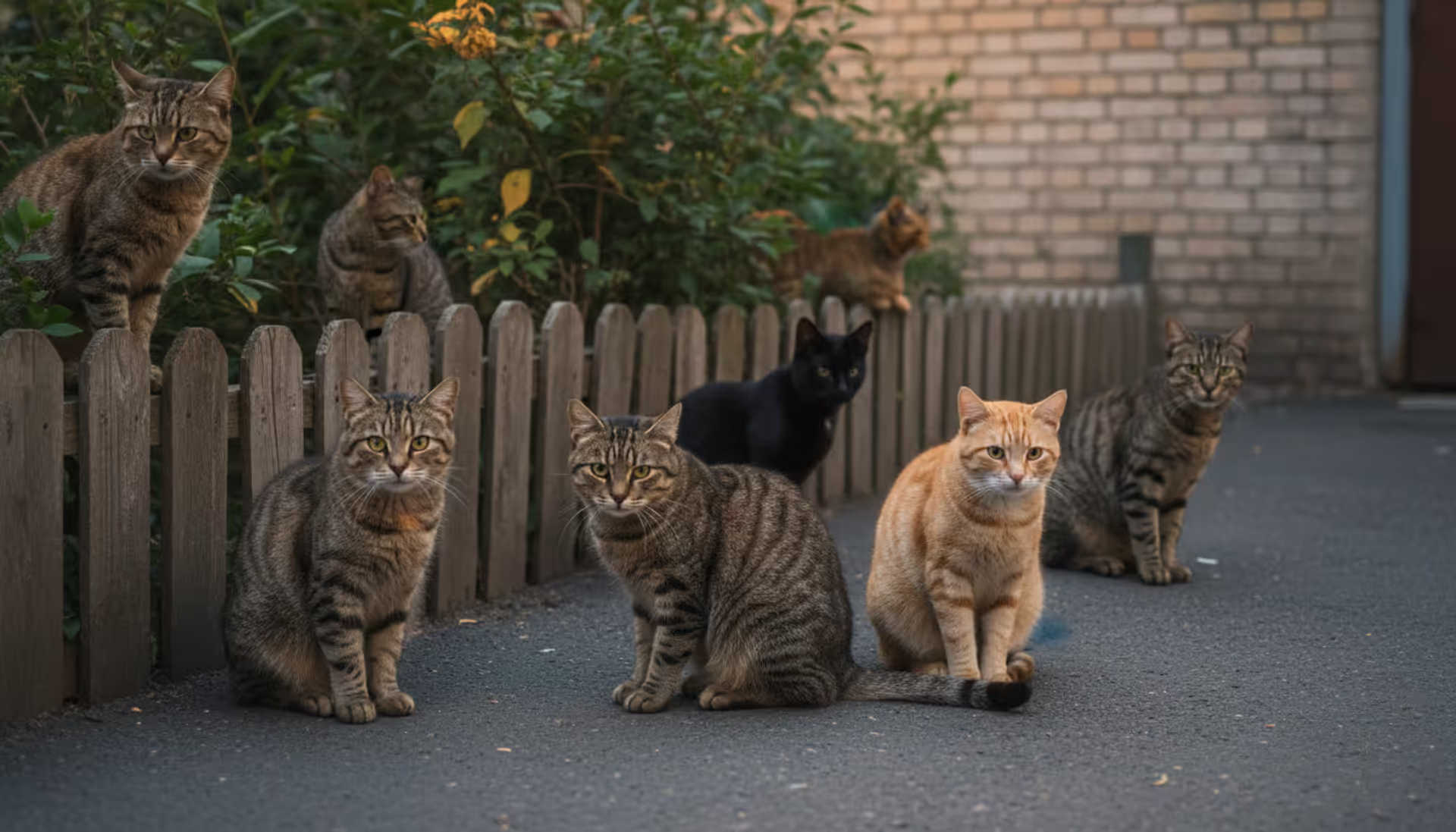
Here's what nobody tells you about community cats: killing them doesn't work. American cities have been trying trap-and-euthanize for fifty years, spending millions, and the parking lot behind the grocery store still has the same number of cats. Sometimes more.
TNR changes the math. Trap-neuter-return means those cats get fixed, vaccinated, and put back where you found them. No more kittens. Populations shrink over time instead of regenerating every spring. Los Angeles has citywide TNR ordinances now. So does Jacksonville. But plenty of municipalities still argue about whether caretakers feeding colony cats are breaking the law.
If you're the person leaving food bowls behind the warehouse, or the city councilmember fielding complaints about yowling cats, you'll need to understand how these programs actually function—and what happens when local law conflicts with best practices.
What Is TNR and How Does It Work?
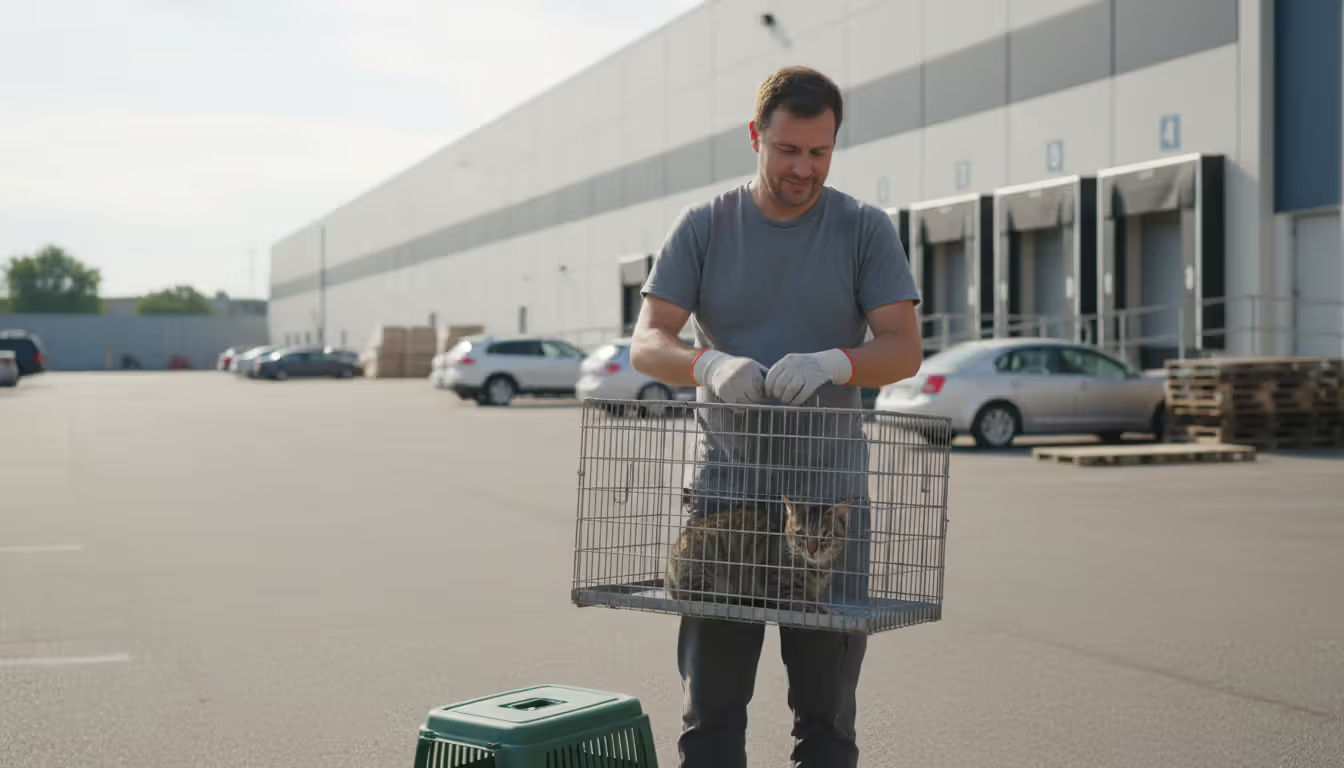
You trap the cat. Humanely, using box traps baited with sardines or mackerel. Could be a volunteer who feeds the colony, could be an animal control officer responding to complaints. The cat goes to a vet clinic—sometimes a regular practice, often a high-volume spay-neuter operation set up specifically for TNR.
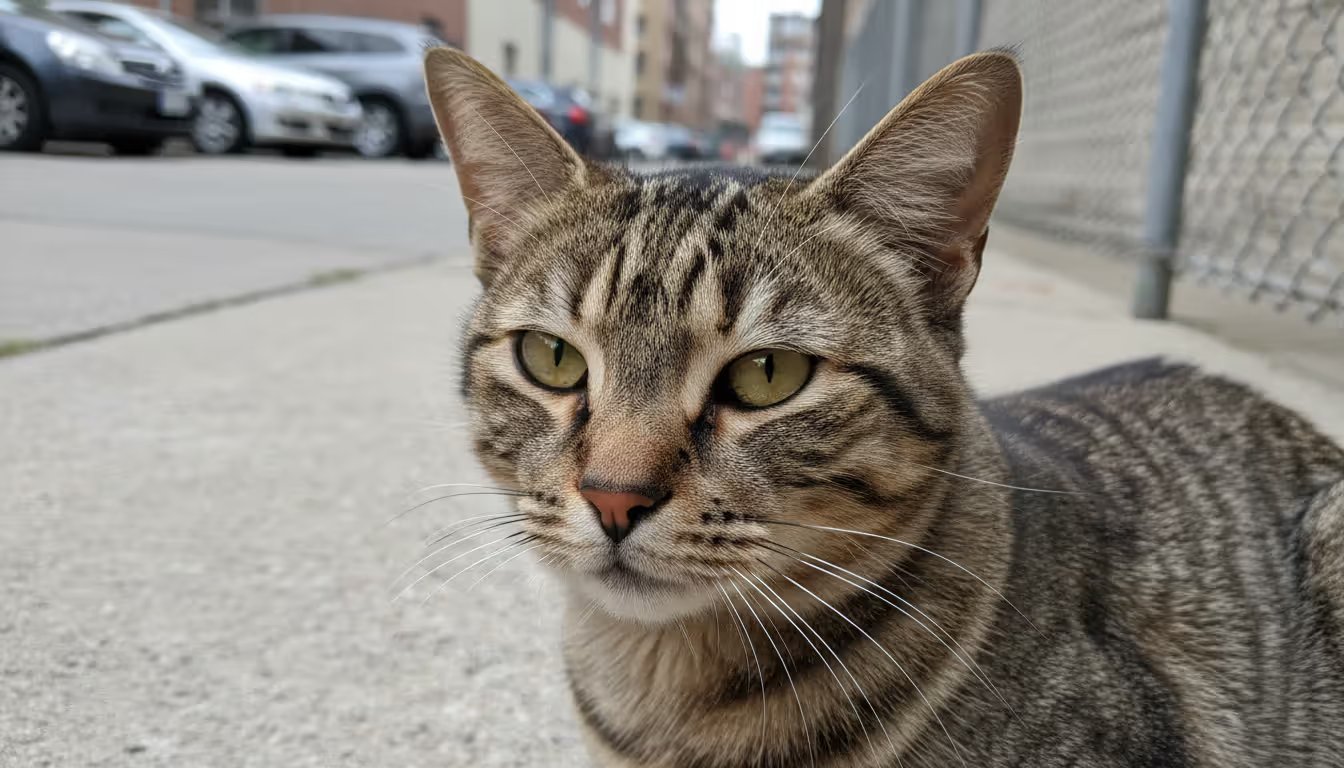
Surgery happens. Sterilization, rabies vaccine, maybe testing for feline leukemia. Here's the part that confuses people: while the cat's still under anesthesia, the vet cuts off about a centimeter from the tip of the left ear. Sounds harsh. It's not—the cat feels nothing, and that flat-topped ear becomes a permanent ID card.
Why? Because when someone traps that same cat six months later, they see the clipped ear from across the parking lot and pop open the trap door immediately. No second surgery. No unnecessary stress. Everyone in TNR uses left ear tips (occasionally right, but left is standard). You can spot them from your car.
The cat goes back. Same location, usually within 24-48 hours. Returns to the same dumpster area or warehouse loading dock or apartment complex where it's lived for years. Caretakers keep providing food and water, keep an eye on the colony's health.
What changes? No reproduction. That female who'd have three litters a year producing twelve kittens who'd mature and breed—she's done. The tomcat who fought and sprayed and yowled all night? Calmer now, quieter, stays closer to home.
Legal status gets complicated. Some cities wrote ordinances explicitly authorizing TNR, defining caretaker roles and colony registration systems. Others operate in legal gray zones—programs exist, nobody's stopping them, but there's no official framework. A few places still classify feeding outdoor cats as "maintaining a nuisance," which makes the entire TNR process technically illegal.
Most programs include extras beyond sterilization. Parasite treatment. Medical care for infected wounds or treatable conditions. And this matters: friendly cats don't go back. Neither do young kittens. Those get funneled into adoption programs. TNR targets genuinely feral animals who can't transition to indoor life.
Author: Daniel Whitmor;
Source: jamboloudobermans.com
Why Communities Use TNR Programs
Florida researchers tracked colonies for six years. Consistent TNR dropped populations 32%. Comparison neighborhoods doing traditional removal? No sustained decrease. New cats moved right in.
The effectiveness debate centers on coverage. Critics point to programs hitting only 40-50% sterilization, where breeding continues at reduced rates. Fair criticism. But traditional euthanasia never achieves 100% removal either, and unlike TNR, it provides zero cumulative benefit. Mathematical models suggest you need 71-94% sterilization to stabilize a population, 100% to actively shrink it.
Cost comparison isn't close. Impounding, holding, and euthanizing one cat costs municipalities $100-150 when you factor transport and disposal. High-volume sterilization? $35-65 per cat. That returned cat never takes up a shelter kennel again. The euthanized cat's territory attracts newcomers who'll need removal too.
Public opinion runs 80%+ in favor of sterilization over killing. Surveys repeat this finding regardless of region. People support humane approaches.
Behavior changes sell neighbors on TNR faster than population statistics. Sterilized males stop spraying fence posts and garage doors. They quit fighting at 3 AM. Females aren't howling in heat, attracting every intact tom within half a mile. Kittens stop appearing under porches every spring.
San Jose, California runs registered colonies under formal agreements. Caretakers accept defined obligations, city provides support. The structure prevents complaints about rogue feeding operations while ensuring accountability.
Rabies concerns? Zero documented cases from TNR colony cats in several large programs spanning decades. Sterilized, vaccinated colonies provide territorial stability—rabid wildlife can't establish ranges when resident cats occupy the space.
Author: Daniel Whitmor;
Source: jamboloudobermans.com
Legal Status of TNR Programs in US Cities
Between 2020-2026, over 500 municipalities enacted ordinances explicitly addressing TNR. That's rapid change in the world of animal control law.
California led with statewide protections for TNR caretakers. You can't prosecute someone under anti-feeding laws if they're participating in a registered sterilization program. Florida created "community cat" statutes letting counties establish managed colonies with legal cover. Illinois, Rhode Island, Delaware, Virginia—all passed similar state-level support.
Legal challenges break down into three categories. First: zoning restrictions on outdoor feeding. Second: liability when colony cats damage property or bite someone. Third: conflicts with existing ordinances requiring impoundment of all free-roaming animals.
Successful ordinances address all three. Example provisions:
Caretaker registration documenting who manages which colonies, where they're located, current sterilization rates. Creates accountability without claiming ownership.
Liability limitations stating caretakers don't assume responsibility for cats' independent actions. If a colony cat scratches someone's Lexus, the person feeding them isn't automatically liable like they would be for a pet.
Nuisance standards defining acceptable practices. Feed at consistent times, remove uneaten food within 30 minutes, don't attract wildlife, maintain shelters that don't create eyesores.
Grandfather clauses protecting existing colonies while setting standards for new ones.
Miami-Dade County's ordinance shows comprehensive approaches. Defines "community cats" as distinct from pets. Requires caretaker registration. Mandates sterilization and vaccination. Establishes complaint investigation procedures. Caretakers gain legal standing while accepting specific responsibilities.
Opposition typically comes from two groups. Wildlife advocates worried about bird predation. Property owners frustrated by cats digging in garden beds. Smart ordinances address both—feeding restrictions that don't attract raccoons, population caps per colony, removal provisions for specific problem animals.
Courts generally uphold well-drafted TNR ordinances. Challenges based on property rights or public health have failed when cities demonstrate programs reduce overall populations and include reasonable regulations. The legal principle: TNR constitutes legitimate animal control policy within municipal authority.
Starting a TNR Program in Your Community
Coalition-building comes before policy. You need animal welfare organizations, veterinary clinics, local officials, community members. Start by documenting current reality: how many colonies exist, rough population estimates, shelter intake numbers, euthanasia percentages.
Present cost data to city council. Real pitch example: "We impound 800 cats annually at $120 each—that's $96,000. Then we euthanize 75% of them. A TNR program could sterilize those same cats for $50 each, totaling $40,000, eliminate future reproduction, and reduce nuisance complaints."
Research existing ordinances before proposing changes. Many cities have old laws banning outdoor cat feeding that nobody enforces but technically prohibit TNR. You'll need to address those conflicts.
Draft proposals covering:
Definitions distinguishing community cats from strays, ferals, and owned pets. Matters more than it sounds—legal protections hinge on these classifications.
Authorization explicitly permitting TNR as an animal control method. Without this, you're always operating in gray areas.
Registration creating colony reporting systems. Voluntary works better than mandatory in most communities.
Enforcement establishing complaint procedures and violation penalties. What happens when a caretaker doesn't maintain standards?
Partner with established organizations. Alley Cat Allies, Best Friends Animal Society, regional groups—they've navigated dozens of municipal processes. They have model ordinances, implementation guides, sometimes direct support. Use their legal expertise.
Pilot programs prove feasibility better than promises. Propose one neighborhood, maybe 3-5 colonies. Document population changes, complaint reduction, actual costs. Expand based on demonstrated outcomes.
Author: Daniel Whitmor;
Source: jamboloudobermans.com
Securing Municipal Funding and Grants
City budgets rarely include TNR line items initially. You'll build funding through multiple sources:
Reallocate animal control spending. If the shelter spends $80,000 annually on cat intake, shift $30,000 to sterilization services. That covers 600 cats while reducing future intake that generated the original expense.
Grant opportunities from PetSmart Charities, Maddie's Fund, ASPCA. Community foundations often support humane initiatives. Applications require population data, implementation plans, outcome measurements. Worth the paperwork—grants can fund entire programs for 2-3 years.
Veterinary partnerships providing discounted rates. High-volume spay-neuter clinics charge $25-40 per surgery for TNR programs. Mobile clinics eliminate transport costs. Some veterinarians donate time as community service—don't assume everyone charges full rates.
Volunteer fundraising generates serious money. Dedicated grassroots groups raise $20,000-50,000 annually even in small communities through adoption events, online campaigns, donor cultivation.
Expect municipal funding to cover 30-60% of costs, private sources filling gaps. Blended funding creates sustainability when single sources fluctuate.
Working with Local Animal Control
Animal control officers become allies or obstacles depending on early engagement. Most officers support TNR once they understand it reduces workload—fewer repeat calls about the same colonies, less shelter overcrowding, better community relations.
Schedule meetings explaining how TNR complements enforcement rather than replacing it. Officers still handle aggressive animals, bite cases, genuine public health threats. TNR addresses the 70-80% of calls involving healthy community cats where impoundment accomplishes nothing long-term.
Propose collaboration protocols:
Field assessment where officers identify TNR candidates versus animals requiring removal
Return assistance using animal control vehicles to transport sterilized cats back to colonies
Complaint response with joint procedures investigating concerns about managed colonies
Data sharing tracking which neighborhoods generate calls to target TNR efforts
Austin Animal Services employs dedicated TNR coordinators working alongside officers. Philadelphia's Animal Care and Control partners with nonprofit trap teams responding to community cat calls. Integration works.
Address liability concerns directly. Well-designed ordinances clarify that caretakers don't assume ownership or responsibility for cats' independent actions. Animal control retains full authority to remove problem animals while supporting managed colonies.
TNR Caretaker Responsibilities and Legal Rights
Caretakers make programs work or fail. These volunteers (occasionally paid staff) monitor colonies daily, coordinate trapping, serve as community liaisons. Understanding their legal position prevents conflicts.
Core responsibilities:
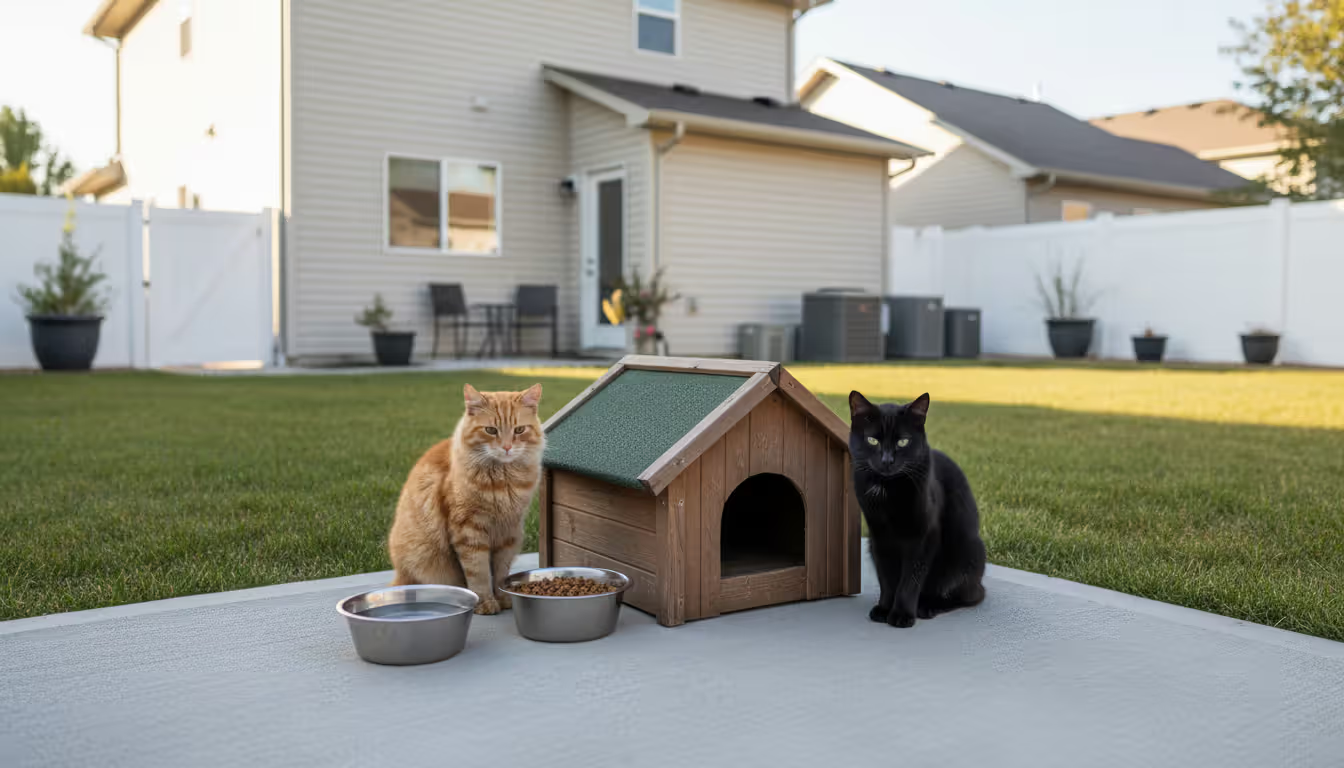
Feeding schedules. Consistent times, usually twice daily. Remove uneaten food within 30 minutes—crucial for avoiding wildlife attraction and neighbor complaints.
Shelter maintenance. Weatherproof structures that don't damage property or create visual blight. Think discreet, not elaborate.
Health monitoring. Identifying sick or injured cats needing veterinary care. Spotting new arrivals requiring trapping.
Population tracking. Documenting colony size, sterilization status, natural attrition. Data proves effectiveness.
Neighbor relations. Addressing concerns promptly, professionally. One hostile neighbor can tank an entire colony.
Legal protections vary dramatically by jurisdiction. Cities with TNR ordinances typically provide registered caretakers:
Author: Daniel Whitmor;
Source: jamboloudobermans.com
Anti-feeding law exemptions permitting food provision despite ordinances prohibiting wildlife feeding. Registration usually required.
Limited liability shields protecting against claims that feeding establishes ownership. If a colony cat bites someone, the caretaker isn't automatically responsible like they would be for a pet.
Due process rights requiring notice before colony removal, opportunities to address complaints, appeals processes.
Without explicit protections? Legal gray areas. Courts have ruled inconsistently on whether feeding establishes ownership and liability. Conservative approaches:
Don't claim ownership. Never call them "my cats" or imply control beyond feeding.
Document sterilization. Keep records proving population control efforts.
Respond to complaints before they escalate to legal action.
Best practice exceeds legal minimums. Successful caretakers build community support through tidy sites, proactive neighbor communication, demonstrable population decline. One caretaker's method: quarterly photos showing the same cats (identified by ear tips and markings) with zero new kittens.
Common TNR Program Challenges and Solutions
Two decades of data show TNR programs reduce community cat populations when implemented consistently, while traditional removal programs have never achieved sustained reductions in any documented case. The question isn't whether TNR works—it's whether communities commit the resources to reach effective coverage levels
— Dr. Julie Levy
Legal obstacles top the list. Anti-feeding ordinances or mandatory impoundment laws create immediate conflicts.
Solutions: Seek formal ordinance amendments through city council. Request written policy guidance from animal control directors. Operate pilot programs under temporary permits. Build coalitions strong enough to pressure legal changes.
Community opposition from property owners frustrated by garden damage or wildlife advocates concerned about birds.
Responses: Relocate feeding stations away from complainants' properties. Install cat-proof fencing in sensitive areas. Provide data on population reduction timelines—most colonies shrink 30-40% within 3-5 years. Remove specific problem animals while maintaining colony sterilization.
Funding gaps threaten sustainability. Programs relying on single funding sources collapse when grants end or municipal budgets tighten.
Volunteer coordination grows complex at scale. Managing 50+ volunteers across multiple colonies requires systems.
Solutions: Online platforms for scheduling trap appointments and reporting outcomes. Clear protocols defining who handles different situations (injuries, aggressive cats, kittens). Regular training covering trapping techniques and safety. Recognition programs reducing burnout.
Incomplete coverage undermines effectiveness. Programs sterilizing 40% of area cats see continued reproduction.
Targeted efforts: Intensive campaigns achieving 75%+ coverage in defined zones before expanding. Immediate response to new arrivals. Addressing "source" properties where friendly cats reproduce before abandonment.
Florida program example: Facing legal opposition, organizers documented shelter costs ($180,000 annually for cat intake), proposed a pilot in three neighborhoods, secured private funding for year one, achieved 45% reduction in shelter intake from those areas. City council then allocated $60,000 ongoing funding and passed authorization ordinance.
TNR vs. Traditional Euthanasia Programs
Factor
TNR Programs
Traditional Euthanasia
Per-cat cost
$35-65 sterilization
$100-150 for intake, holding, euthanasia, disposal
Population impact (5 years)
30-40% reduction with consistent implementation
No sustained reduction—vacuum effect brings replacements
Public support
80%+ approval in surveys
Declining acceptance, viewed as inhumane
Repeat interventions
Minimal after sterilization
Continuous trapping in same locations
Legal challenges
Occasional property owner or wildlife group opposition
Increasing challenges from animal welfare advocates
Public health
Stable vaccinated populations, zero rabies in major programs
Unstable populations, unvaccinated cats cycling through
Behavior complaints
60-70% reduction in fighting, spraying, yowling
No change—new cats exhibit same behaviors
Shelter burden
40-60% reduction in intake
Continuous high intake, 70-80% euthanasia rates
FAQ About TNR Cat Programs
What does a clipped ear on a cat mean?
That cat's been fixed. The clipped or "tipped" left ear (occasionally right, but left is standard) means a TNR program sterilized and vaccinated the animal. Vets remove about one centimeter of the ear tip while the cat's anesthetized during surgery. Creates a permanent, visible-from-a-distance marker. When trappers see that flat ear tip, they release the cat immediately instead of hauling it to another unnecessary surgery. The procedure itself? Cat feels nothing—happens under anesthesia and heals with the surgical site.
Are TNR programs legal in my city?
Depends where you live. Over 500 US cities have ordinances explicitly authorizing TNR. Others let programs operate without formal prohibition—legal gray zones. Check your city or county website for animal control ordinances, or call local animal services directly. California, Florida, Illinois, Rhode Island, Delaware, and Virginia enacted statewide provisions supporting TNR. No explicit authorization in your area? You can petition city council to adopt TNR ordinances using model language from national organizations like Alley Cat Allies or Best Friends Animal Society.
How effective is trap-neuter-return compared to euthanasia?
Studies tracking programs 5-10 years show TNR reduces community cat populations 30-40% when achieving 70%+ sterilization coverage in target areas. Traditional euthanasia? Never achieved sustained population reduction in documented cases. Removing cats creates territorial vacuums that new cats immediately fill. TNR effectiveness depends entirely on consistent implementation and adequate coverage. Programs sterilizing only 40-50% of area cats see continued reproduction, though at lower rates than zero intervention. You need high coverage for real impact—which is why successful programs focus resources on defined zones rather than scattering efforts.
How much does it cost to start a TNR program?
Neighborhood programs serving 50-100 cats need $3,000-6,000 for sterilization surgeries, traps, basic supplies. City-wide programs serving thousands? $50,000-150,000 annually combining municipal funding, grants, private donations. High-volume spay-neuter clinics charge $25-50 per cat (versus $100-200 at standard veterinary practices). Most programs start small—pilot projects in limited areas, demonstrate effectiveness, then seek larger funding. PetSmart Charities, Maddie's Fund, ASPCA, and local community foundations offer grants. Municipal animal control budgets can reallocate existing spending from impoundment costs to sterilization.
What legal protections do TNR caretakers have?
Protections depend on local ordinances. Jurisdictions with TNR laws typically provide registered caretakers exemptions from anti-feeding ordinances, limited liability shields (feeding doesn't establish ownership or responsibility for cats' actions), and due process rights before colony removal. Without explicit protections, caretakers operate in legal gray areas where courts have ruled inconsistently on liability. Best practices regardless: maintain sterilization documentation, avoid ownership claims, keep feeding areas clean, address neighbor complaints promptly. Some caretakers operate for years without issues; others face legal challenges. Explicit ordinances provide security.
Can I get municipal funding for a TNR program?
Many cities allocate animal control budget funds after seeing cost-effectiveness data. Successful approaches: propose pilot programs with measurable outcomes, demonstrate how TNR reduces shelter intake costs (often 40-60% reduction), build coalitions including veterinarians and animal welfare groups. Even without dedicated line items, animal control departments can redirect existing budget portions from impoundment to sterilization. Supplement municipal funds with grants from PetSmart Charities, Maddie's Fund, ASPCA, local foundations. Blended funding (30-60% municipal, remainder private) creates sustainability. Present data showing current per-cat costs versus TNR costs—councils respond to fiscal arguments.
TNR programs succeed when communities commit to consistent implementation rather than expecting overnight miracles. A neighborhood with 60 community cats won't see zero cats within months. But sterilizing 75% means no new kittens, declining populations over 3-5 years, immediate reductions in fighting and spraying.
Legal framework matters less than practical execution. Cities with perfect ordinances but inadequate funding accomplish little. Communities with informal programs and strong volunteer networks achieve substantial results. Ideal situation? Both. Legal authorization providing clarity and protection, plus dedicated resources ensuring consistent coverage.
Start small if necessary. One block. One apartment complex. One industrial area. Document baseline populations, sterilize every cat possible, monitor outcomes, expand based on demonstrated success. Neighbors initially opposed to "feeding strays" often become supporters when they see declining numbers and calmer behavior.
The alternative—continuing impoundment and euthanasia—has failed for fifty years. Shelters nationwide euthanized millions of healthy cats without reducing outdoor populations. TNR offers a proven alternative supported by research, embraced by communities, increasingly recognized in law. Implementation requires patience, resources, community cooperation. But the outcome—stable, healthy, non-reproducing populations—justifies the effort.
The commercial dog breeding industry produces millions of puppies annually in conditions most pet owners never see. Understanding the welfare problems, health consequences, and ethical issues behind puppy production helps consumers make informed decisions that reduce animal suffering and save lives
The dog meat trade involves breeding, transporting, and slaughtering millions of dogs annually for human consumption, primarily in Asia. Despite growing bans worldwide, enforcement challenges persist. Learn about US laws, international legal status, cruelty concerns, and advocacy efforts
Dog abuse encompasses deliberate physical harm, severe neglect, and psychological torment under federal and state laws. Learn to recognize physical and behavioral signs, document evidence properly, and report through correct legal channels. Penalties range from misdemeanors to felonies with up to 10 years imprisonment
Some dog breeds suffer from genetic conditions so severe that experts question whether continuing their bloodlines constitutes cruelty. Understanding unethical breeding practices means examining breathing problems, shortened lifespans, and the legal frameworks designed to protect animals from profit-driven operations
The content on this website is provided for general informational and educational purposes only. It is intended to explain concepts related to animal law, pet ownership rights, service animals, dog bite liability, and animal welfare legislation in the United States.
All information on this website, including articles, guides, and examples, is presented for general educational purposes. Legal outcomes may vary depending on jurisdiction, state laws, and individual circumstances.
This website does not provide legal advice, and the information presented should not be used as a substitute for consultation with qualified attorneys or animal law professionals.
The website and its authors are not responsible for any errors or omissions, or for any outcomes resulting from decisions made based on the information provided on this website.