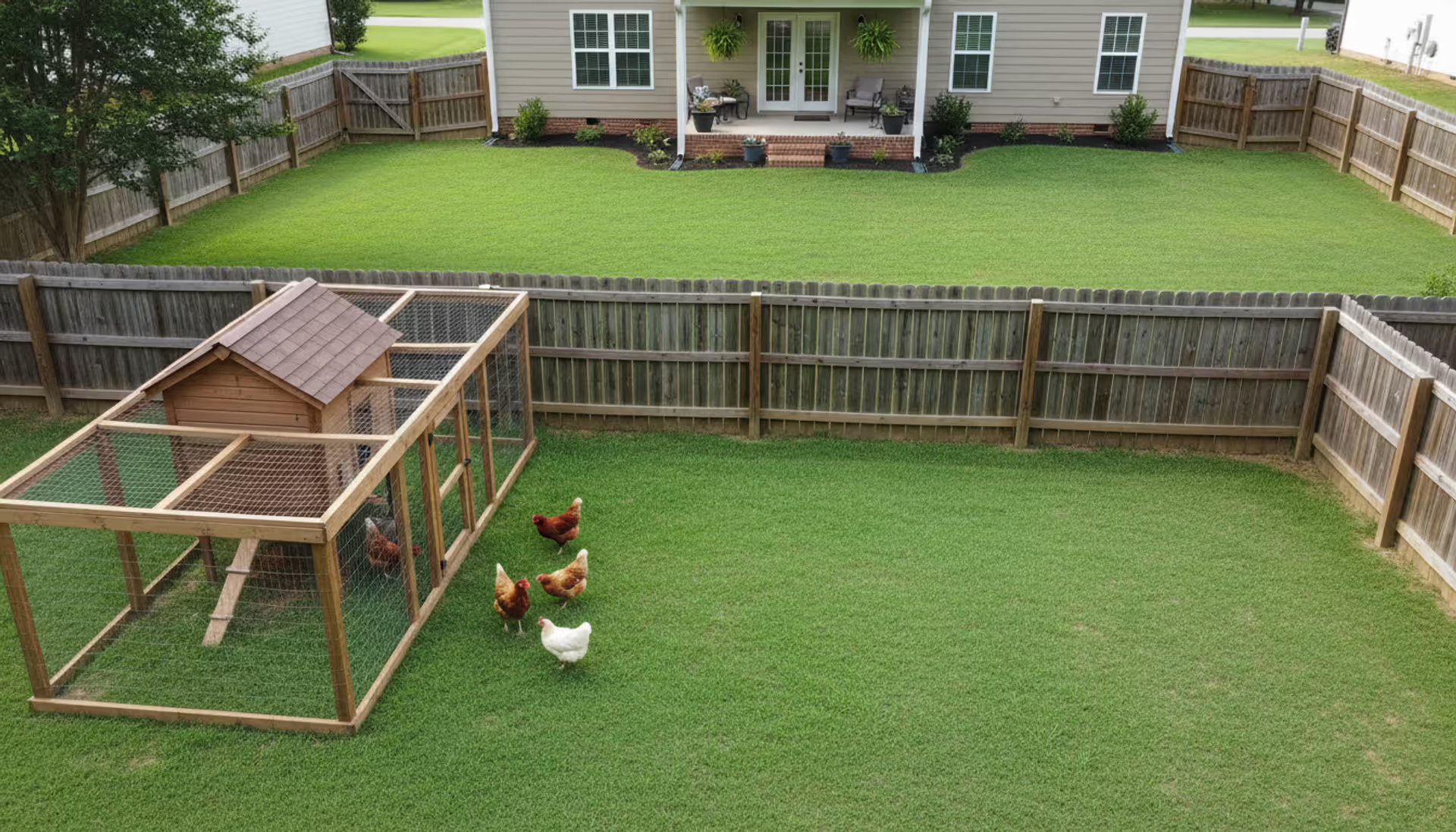
Backyard chicken ownership has surged across North Carolina, driven by interest in sustainable living and fresh eggs. But homeowners in communities governed by homeowners associations often face unexpected pushback when they introduce a flock. The collision between individual property rights and collective community rules creates confusion, fines, and sometimes lengthy legal battles.
If you've received a violation notice for keeping chickens—or you're considering adding hens to your yard—understanding how HOA authority works in North Carolina is essential. The answer to whether you can legally keep chickens isn't always straightforward, as it depends on your specific HOA documents, local zoning laws, and how aggressively your association enforces its covenants.
Understanding HOA Authority Over Backyard Chickens
North Carolina law grants homeowners associations broad enforcement powers over property use within their communities. When you purchased your home, you signed a contract agreeing to abide by the community's Declaration of Covenants, Conditions, and Restrictions (CC&Rs). These governing documents typically include restrictions on animals, structures, and activities that might affect property values or neighbor enjoyment.
Most HOA covenants address animals in one of several ways. Some documents explicitly list prohibited animals. Others use broader language prohibiting "livestock," "farm animals," or "animals kept for commercial purposes." A few older documents contain vague restrictions against "nuisance animals" without defining what that means.
The classification matters tremendously. If your HOA covenant specifically bans "livestock" but doesn't define the term, you face a definitional battle. In agricultural law, chickens are traditionally livestock. In suburban zoning contexts, some municipalities classify backyard hens as pets when kept in small numbers for personal egg production rather than commercial sale.
North Carolina courts generally enforce HOA covenants as written, provided they're reasonable and applied consistently. The state follows the "business judgment rule" for HOA boards, meaning courts defer to board decisions unless they're arbitrary, discriminatory, or made in bad faith. This gives HOAs significant leverage in hoa covenant enforcement animals disputes.
One common misconception: HOA authority isn't unlimited. Associations can only enforce restrictions actually written in their recorded documents. If your CC&Rs don't mention chickens, livestock, or farm animals, the HOA cannot simply decide one day to ban them without formally amending the covenants—a process requiring homeowner votes under most governing documents.
The chicken as livestock vs pet zoning law question becomes critical when interpreting ambiguous covenant language. If your documents ban "livestock" without definition, you might argue that three hens kept for eggs are pets under modern suburban standards, not livestock. Success depends on how courts and arbitrators in your jurisdiction have interpreted similar language.
Author: Samantha Loring;
Source: jamboloudobermans.com
How City Ordinances and Zoning Laws Affect HOA Rules
Many North Carolina municipalities have updated their city ordinances backyard chickens regulations to permit small flocks in residential zones. Raleigh, Durham, Charlotte, Asheville, and Greensboro all allow backyard chickens under specific conditions—typically limiting flock size, requiring setbacks from property lines, and prohibiting roosters.
Here's the frustrating reality: municipal permission doesn't override HOA restrictions. Even if your city explicitly allows chickens, your HOA can impose stricter rules. North Carolina law treats HOA covenants as private contracts between property owners. As long as these contracts don't violate public policy or constitutional rights, they stand even when more restrictive than government regulations.
Think of it as layered regulation. You must comply with the most restrictive rule at each level:
State law sets the outer boundaries (North Carolina has no statewide chicken ban). Municipal zoning may impose local requirements (setbacks, coop standards, flock limits). HOA covenants can be even more restrictive (or could theoretically be more permissive, though this is rare).
This creates suburban chicken ownership legal issues when homeowners assume city permission equals blanket approval. A Durham resident might read that the city allows up to six hens and assume they're compliant, only to receive an HOA violation notice citing the community's livestock prohibition.
Some HOA boards take a practical approach when city ordinances clearly permit chickens. They may propose covenant amendments to align with municipal standards, recognizing that blanket bans seem increasingly outdated. Progressive associations adopt detailed chicken-keeping rules rather than outright prohibitions—specifying coop design standards, maintenance requirements, and noise/odor controls.
The zoning consideration works differently in unincorporated areas. County regulations may be more permissive than city codes, but again, your HOA covenant is the controlling document for your specific property.
One exception: if a city ordinance requires property owners to allow chickens (extremely rare), it might preempt HOA restrictions. North Carolina hasn't enacted such mandates, but this could theoretically arise in agricultural preservation contexts.
Common HOA Restrictions on Chicken Ownership
When HOAs do allow chickens—or when you're trying to propose rules to replace an outright ban—the restrictions typically follow similar patterns across North Carolina communities.
Flock size limits are nearly universal, usually capping ownership at 4-6 hens. Roosters face near-total prohibition due to noise concerns. Some associations distinguish between hens and roosters in their rules, while others ban all chickens regardless of sex.
Coop placement requirements mirror fence and shed regulations. Expect mandatory setbacks from property lines (often 10-25 feet), rear-yard-only placement, and screening requirements. Associations concerned with aesthetics may require coops to match home exterior colors or architectural styles.
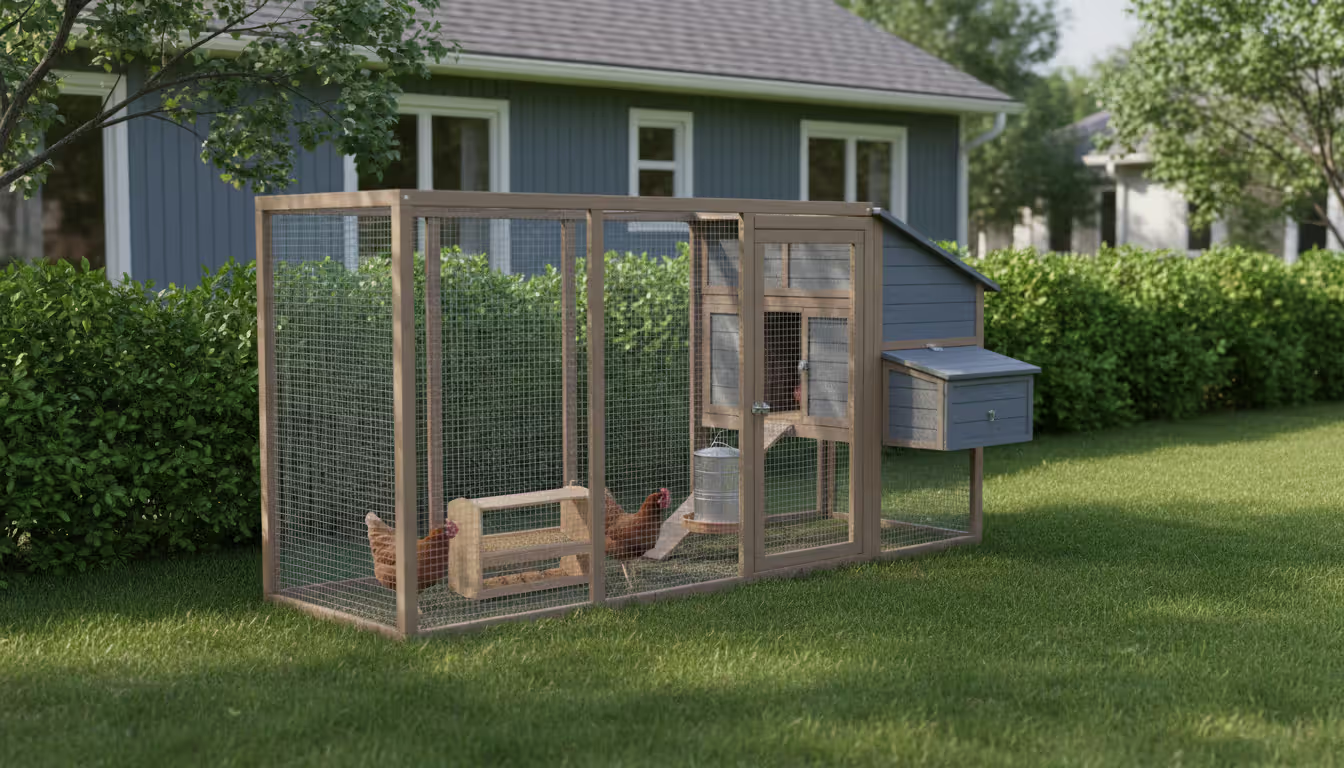
The keeping chickens in hoa community legal framework often includes maintenance standards. Coops must be kept clean, secure, and in good repair. Waste management requirements prevent odor and pest problems. Some associations mandate weekly coop cleaning or quarterly inspections.
Registration requirements appear in well-drafted chicken policies. Owners must notify the HOA before acquiring chickens, sometimes paying a small registration fee. This gives the association a record of who keeps chickens and enables targeted compliance monitoring.
Livestock vs. Pet Classification in HOA Documents
The definitional battle over classification shapes many disputes. Traditional HOA documents written in the 1980s and 1990s often prohibit "livestock" without contemplating the modern backyard chicken movement.
Livestock typically means animals raised for commercial agricultural purposes—meat, eggs, milk, fiber, or labor. By this definition, a small flock kept for personal egg consumption occupies a gray area. You're not operating a commercial farm, but you're keeping animals traditionally associated with agriculture.
Some homeowners successfully argue that modern municipal codes reclassifying backyard hens as pets should inform HOA covenant interpretation. When Durham explicitly permits chickens in its pet ordinance rather than its agricultural code, that suggests a legal shift in how these animals are categorized in suburban contexts.
The counterargument: HOA covenants should be interpreted according to their plain meaning when written. If the document was recorded in 1992, "livestock" meant what it meant in 1992—and chickens were unquestionably livestock then.
North Carolina courts haven't definitively resolved this statewide. Outcomes depend on specific covenant language, evidence of drafters' intent, and whether the HOA has previously allowed chickens (creating a precedent of non-enforcement).
Nuisance and Noise Provisions
Even without explicit chicken bans, HOAs can leverage nuisance provisions against poorly managed flocks. Standard covenants prohibit activities creating unreasonable noise, odors, or attracting pests.
A rooster crowing at dawn clearly violates noise restrictions in most communities. But even hens can trigger nuisance complaints if the coop isn't properly maintained. Accumulated waste creates odors and attracts flies and rodents. Poorly secured coops invite predators, creating disturbances when raccoons or foxes visit.
The hoa backyard chicken ban enforcement often begins with nuisance complaints rather than blanket prohibition enforcement. A neighbor complains about smell or noise, prompting the board to investigate. If the chickens are well-managed and quiet, the board may struggle to justify enforcement action based solely on nuisance provisions.
Smart chicken keepers avoid triggering these provisions by exceeding basic care standards. Daily waste removal, proper coop ventilation, and predator-proof construction prevent most nuisance issues. Maintaining positive neighbor relations—offering fresh eggs, ensuring chickens don't damage adjacent landscaping—reduces complaint likelihood.
Author: Samantha Loring;
Source: jamboloudobermans.com
Challenging an HOA Chicken Ban or Fine
Receiving a violation notice doesn't mean automatic compliance. North Carolina HOA law provides homeowners several avenues to challenge enforcement actions.
Start by carefully reviewing your governing documents. Obtain complete copies of the Declaration, Bylaws, and any amendments. Check whether chickens are explicitly prohibited or whether the HOA is interpreting broader livestock language. Look for definitions sections that might clarify ambiguous terms.
Examine the enforcement history. Has the HOA previously allowed chickens? Are other homeowners currently keeping chickens without enforcement action? Selective or inconsistent enforcement weakens the association's position and may constitute grounds for challenge.
Review your city's zoning ordinances. While municipal permission doesn't override HOA restrictions, it provides context for arguing that chicken-keeping has become a reasonable residential use. If your city explicitly permits chickens, you can argue that the HOA's interpretation of vague covenant language should align with evolving community standards.
Document everything about your chicken operation. Photograph your coop showing professional construction and maintenance. Record the distance from property lines. Gather neighbor statements supporting your chickens (or at least confirming no nuisance). Create a maintenance log showing daily care.
The HOA Fine Appeal Process
Most North Carolina HOA governing documents require internal appeals before pursuing external remedies. The typical hoa fine for chickens appeal process works like this:
Notice of violation: The HOA sends written notice describing the violation and providing a cure period (often 10-30 days). Read this carefully—it may include appeal instructions.
Written response: Submit a written response within the specified timeframe (typically 10-15 days). Explain why you believe the enforcement action is improper. Cite specific covenant language, request a hearing, and include supporting documentation.
Hearing before the board: Most associations must provide an opportunity to be heard. Attend the board meeting, present your case professionally, and bring evidence. Some homeowners bring legal counsel to hearings, though this isn't always necessary at the initial stage.
Board decision: The board issues a written decision, usually within 30 days. If they uphold the violation, they'll specify ongoing fines and the deadline for compliance.
Escalation options: If the board denies your appeal, you can pursue mediation, arbitration, or litigation depending on your governing documents and North Carolina law.
Throughout this process, continue communicating professionally. Hostile or emotional responses rarely help. Stick to legal arguments about covenant interpretation, selective enforcement, or procedural defects in the HOA's action.
Requesting a Variance or Rule Exception
Some HOAs grant variances for reasonable requests that don't harm community interests. This process differs from appealing a violation—you're asking for permission rather than challenging enforcement.
A variance request should include:
Detailed proposal: Explain exactly what you're requesting (number of hens, coop location, management practices). Include site plans and coop specifications.
Neighbor support: Letters from adjacent property owners stating they have no objection strengthen your request significantly. If your immediate neighbors don't care, the HOA has less justification for denial based on community impact.
Mitigation measures: Describe how you'll prevent nuisance issues—coop maintenance schedule, predator-proof construction, waste management plan, noise control (hens only, no roosters).
Precedent and context: Note if other communities in your area allow chickens, cite municipal ordinances, and explain how modern backyard chicken-keeping differs from traditional livestock farming.
The board may approve your variance with conditions—perhaps limiting flock size, requiring annual inspections, or mandating immediate removal if neighbors complain. Consider whether you can live with these conditions before accepting.
Author: Samantha Loring;
Source: jamboloudobermans.com
Legal Options for HOA Animal Ownership Disputes
When internal processes fail, challenging hoa pet restriction legally may require external dispute resolution or litigation.
Mediation: North Carolina law encourages mediation for HOA disputes. A neutral third party helps you and the board reach a voluntary agreement. Mediation is faster and cheaper than litigation, and many governing documents require it before lawsuit filing. Even if not required, proposing mediation demonstrates good faith.
Arbitration: Some HOA documents mandate binding arbitration for certain disputes. Check your governing documents for arbitration clauses. Arbitration resembles a streamlined trial—both sides present evidence to an arbitrator who issues a binding decision. It's faster than court but still requires preparation and often legal representation.
Litigation: Lawsuit filing is the last resort due to cost and time. North Carolina courts can interpret covenant language, invalidate unreasonable restrictions, or order HOAs to stop selective enforcement. However, remember that courts generally defer to HOA board decisions unless they're arbitrary or discriminatory.
Potential legal theories include:
Covenant interpretation: Arguing that "livestock" doesn't include backyard hens under modern standards or that vague language should be construed against the drafter (the HOA).
Selective enforcement: If the HOA allows some residents to keep chickens while prohibiting others, this discriminatory enforcement may be legally challengeable.
Unreasonable restriction: North Carolina courts can invalidate HOA rules that are arbitrary, violate public policy, or bear no reasonable relationship to protecting property values or resident welfare.
The tension between HOA covenant enforcement and evolving residential uses like backyard chickens requires careful balancing. While associations have legitimate authority to maintain community standards, blanket prohibitions on well-managed small flocks may not withstand scrutiny when municipal ordinances explicitly permit the practice and no actual nuisance exists. Homeowners should focus on demonstrating responsible animal husbandry rather than simply asserting a right to keep chickens
— Margaret Chen
Consulting an attorney experienced in hoa dispute resolution animal ownership matters makes sense when:
The HOA has imposed substantial fines (typically $1,000+)
You face lawsuit threats or lien placement
Your governing documents are ambiguous and require professional interpretation
The HOA's enforcement appears selective or discriminatory
You're considering proposing covenant amendments and need guidance on proper procedures
Initial consultations often cost $200-400 and provide clarity on your options and likelihood of success.
Steps to Take Before Getting Chickens in an HOA Community
Prevention beats cure. If you haven't yet acquired chickens, taking proactive steps dramatically improves your chances of keeping them legally.
Step 1: Research your governing documents thoroughly. Request complete copies from your HOA management company. Read every page of the Declaration, Bylaws, and amendments. Search for terms like "animal," "livestock," "pet," "farm," "poultry," and "chicken." Note exact language—ambiguity works in your favor.
Step 2: Review municipal ordinances. Visit your city or county planning department website. Download the zoning ordinance sections addressing animals and residential uses. Confirm whether chickens are permitted, and if so, under what conditions. Print these ordinances for reference.
Step 3: Survey your neighborhood discreetly. Walk around and observe whether anyone currently keeps chickens. If you spot coops, those homeowners are either violating HOA rules (and the association isn't enforcing them) or the HOA permits chickens despite what the documents say. Either scenario strengthens your position.
Step 4: Approach the board proactively. Submit a written request to keep chickens before acquiring them. Include your research showing municipal permission, your proposed management plan, and neighbor support letters. Asking permission demonstrates good faith and may prompt the board to clarify or update vague rules.
Step 5: Build community support. Talk with neighbors, especially those adjacent to your property. Explain your plans, address concerns, and offer to share eggs. If neighbors support your request—or at least don't object—document this support in writing.
Step 6: Propose rule amendments if necessary. If your covenants contain an outdated blanket ban, work with other interested homeowners to propose amendments. This requires understanding your amendment process (typically requiring a supermajority vote of all homeowners). Present a professionally drafted chicken-keeping policy rather than simply requesting deletion of the prohibition.
Step 7: Obtain proper permits. If your city requires permits for chicken coops or backyard flocks, obtain them before approaching your HOA. Demonstrating full compliance with municipal law strengthens your credibility.
Step 8: Design an exemplary setup. Invest in a well-constructed, attractive coop that exceeds minimum standards. Place it in the least visible location that still meets setback requirements. Plan for daily maintenance and waste management. Your goal is making chicken-keeping invisible to neighbors who don't specifically look for it.
This proactive approach doesn't guarantee success, but it dramatically improves outcomes compared to acquiring chickens first and dealing with violations later.
Author: Samantha Loring;
Source: jamboloudobermans.com
Frequently Asked Questions About HOA Chicken Disputes
Can my HOA ban chickens if my city allows them?
Yes. HOA covenants are private contracts that can impose stricter restrictions than municipal zoning laws. Even if your city explicitly permits backyard chickens, your HOA can prohibit them through its governing documents. The HOA restriction only fails if it violates public policy or state law—and chicken bans don't meet that threshold. You must comply with whichever regulation is most restrictive: state law, city ordinance, or HOA covenant.
What's the difference between livestock and pets in HOA rules?
The distinction matters because many HOA covenants prohibit "livestock" while allowing "pets." Livestock traditionally means animals raised for commercial agricultural purposes—meat, eggs, dairy, or fiber production. Pets are animals kept for companionship. Backyard chickens occupy a gray area: they're traditionally livestock, but some modern ordinances classify small flocks kept for personal egg consumption as pets. If your HOA covenant bans "livestock" without defining it, you might argue that your hens are pets under current suburban standards, though success depends on specific document language and local legal precedent.
How much are typical HOA fines for unauthorized chickens?
Initial fines typically range from $50 to $200 for a first violation. However, many HOAs impose continuing daily fines if you don't remove the chickens after the initial notice—commonly $25 to $100 per day. These can accumulate quickly into thousands of dollars. Some associations assess fines per chicken rather than per violation. North Carolina law requires fines to be "reasonable," but associations have significant discretion. More concerning than fines: the HOA can place a lien on your property for unpaid fines and potentially foreclose, though this is rare for chicken violations alone.
Can I request a variance to keep chickens in my HOA?
Many HOAs will consider variance requests, though they're not required to grant them. Submit a detailed written proposal explaining your chicken-keeping plan, including coop specifications, flock size, maintenance schedule, and neighbor support letters. Boards are more likely to approve variances when immediate neighbors don't object and you demonstrate that your chickens won't create nuisance issues. Some associations grant conditional variances—allowing chickens subject to annual review, immediate neighbor approval, or enhanced maintenance requirements. Even if your governing documents don't mention variances, the board may have discretion to waive or modify rules on a case-by-case basis.
What happens if I refuse to remove my chickens after an HOA violation?
The HOA will likely escalate enforcement through increasing fines, legal demand letters, and potentially a lawsuit. They can place a lien on your property for unpaid fines and legal fees, which must be satisfied when you sell or refinance. In extreme cases, HOAs can foreclose on liens, though this is rare for chicken violations. More commonly, the association obtains a court injunction ordering you to remove the chickens. Violating a court order can result in contempt findings and additional penalties. Refusing compliance also damages your credibility if you later try to challenge the restriction through proper legal channels. If you believe the HOA's action is wrong, challenge it through appeals, mediation, or litigation rather than simply ignoring it.
Do emotional support chickens have special protections in HOAs?
Possibly, but the analysis is complex. The Fair Housing Act requires HOAs to make reasonable accommodations for emotional support animals when a resident has a documented disability and the animal provides disability-related assistance. However, chickens face higher scrutiny than traditional support animals like dogs or cats. You'd need documentation from a healthcare provider explaining your disability and why chickens specifically (rather than conventional pets) are necessary for your mental health treatment. The HOA can deny the request if chickens would fundamentally alter the community's nature or create undue financial burden. Courts have been skeptical of emotional support farm animals, and few cases specifically address chickens. This isn't a reliable workaround for chicken bans, and fraudulent disability claims can result in legal penalties.
Navigating HOA restrictions on backyard chickens requires understanding the legal hierarchy governing your property, carefully reading your specific governing documents, and approaching the situation strategically rather than confrontationally.
The fundamental reality: HOA covenants usually take precedence over your desire to keep chickens, even when municipal ordinances permit them. Courts enforce these private agreements as written, and North Carolina law gives HOA boards substantial deference in interpreting and enforcing their rules.
However, this doesn't mean you're without options. Ambiguous covenant language, selective enforcement, and the growing acceptance of backyard chickens in suburban areas create opportunities for successful challenges. Proactive communication with your board, demonstrated commitment to responsible animal husbandry, and neighbor support significantly improve your chances.
If you're facing a violation notice, respond promptly through proper appeal channels. Document your chicken operation thoroughly, research comparable community policies, and consider whether variance requests or covenant amendments might provide paths forward. When internal processes fail and the stakes justify the cost, legal consultation can clarify your options.
For those planning to get chickens, invest time in research before acquiring your flock. Understanding your governing documents, building community support, and designing an exemplary setup prevents most disputes. The homeowners who successfully keep chickens in HOA communities are typically those who asked permission first, addressed concerns proactively, and maintained operations that neighbors barely notice.
The backyard chicken movement continues growing across North Carolina, and HOA policies are gradually evolving to reflect this reality. Whether through formal covenant amendments, flexible variance processes, or boards simply choosing not to enforce outdated blanket bans, more communities are finding ways to accommodate well-managed small flocks. Your approach—whether advocating for policy change or working within existing restrictions—shapes whether your community joins this trend.
Surrendering an aggressive dog involves complex legal obligations and limited placement options. Between specialized rescues, sanctuary programs, and rehabilitation facilities, responsible pathways exist for owners committed to transparency and proper screening
Surrendering a dog is never easy. Financial hardship, housing changes, or behavioral challenges can force impossible choices. Learn where to surrender your dog for free, understand the complete process from intake to adoption, and discover your legal obligations and what really happens after relinquishment
Horse soring involves deliberately inflicting pain on horses' legs to create an exaggerated gait for show competitions. This federal crime, primarily affecting Tennessee Walking Horses in big lick classes, uses chemical burns, pressure shoeing, and painful chains to force unnatural movement
A rehoming fee protects your dog from exploitation while finding a responsible new home. Discover typical fee ranges, legal considerations, required documentation, and why charging nothing puts your pet at serious risk. Includes contract templates and expert guidance
The content on this website is provided for general informational and educational purposes only. It is intended to explain concepts related to animal law, pet ownership rights, service animals, dog bite liability, and animal welfare legislation in the United States.
All information on this website, including articles, guides, and examples, is presented for general educational purposes. Legal outcomes may vary depending on jurisdiction, state laws, and individual circumstances.
This website does not provide legal advice, and the information presented should not be used as a substitute for consultation with qualified attorneys or animal law professionals.
The website and its authors are not responsible for any errors or omissions, or for any outcomes resulting from decisions made based on the information provided on this website.