Finding out your landlord demands you get rid of your dog ranks among the most stressful situations renters face. Maybe you've shared your apartment with Buddy for three years. Perhaps you just adopted Luna last month. Either way, you're probably wondering: do I have any say in this, or must I choose between my home and my best friend?
Here's the reality—sometimes landlords have the law on their side, sometimes you do, and often the situation falls somewhere in between. Your lease agreement, state regulations, the type of dog you have, and exactly when any pet restrictions came into play all factor into what happens next.
Property owners maintain considerable control over their buildings. That's true. But renters aren't powerless. Federal housing protections, state-specific statutes, and the exact wording in your rental contract shape whether you're packing up or fighting back.
When Landlords Can Legally Enforce a No-Pet Policy
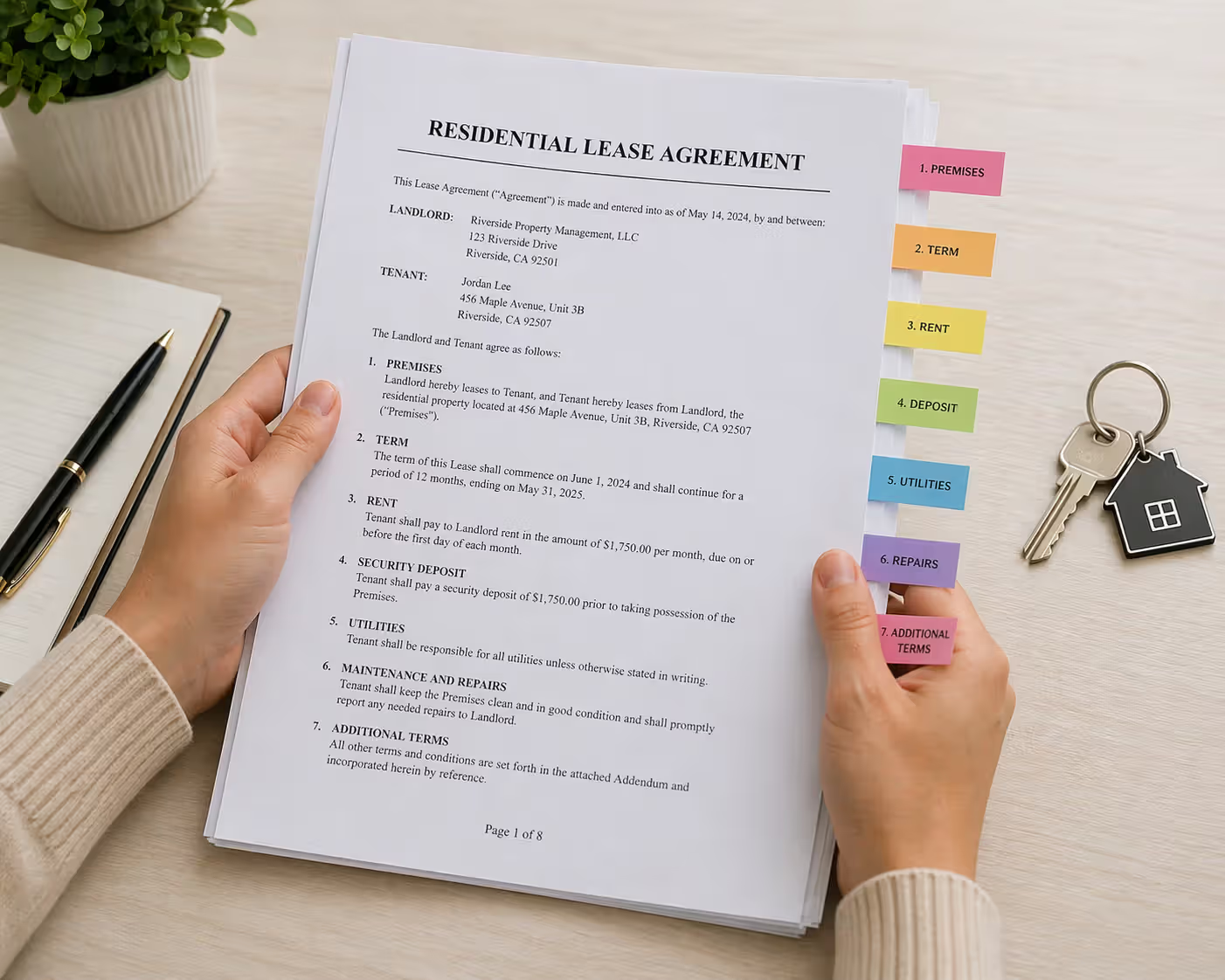
The starting point for any dispute about no pet policy landlord enforcement law is always your lease. Signed a contract that explicitly says "no pets allowed"? Then smuggled in a Labrador anyway? Your landlord's got a straightforward case for removal. Courts routinely uphold crystal-clear pet bans because you voluntarily agreed when you signed on the dotted line.
But state laws add layers of complexity. Take California—landlords can prohibit pets outright in most cases. However, San Francisco has rent-controlled units where tenants who had pets before specific dates can't be forced out. New York throws in another wrinkle through its "Pet Law": keep an animal openly in your apartment for three consecutive months without landlord objection, and they might've accidentally given up their right to enforce the ban. Over in Massachusetts, property owners can reject pets across the board, except when federal fair housing accommodations kick in.
When the policy went into effect matters enormously. Let's say your original lease from 2023 said nothing about pets, or even explicitly allowed them. Your landlord can't suddenly decide in 2025 to retroactively ban your German Shepherd. Those original terms stick until your lease expires or you renew. However—and this trips people up—if you sign a renewal with updated pet restrictions buried in the fine print, you've just accepted those new rules.
Month-to-month arrangements work differently. Your landlord can change policies as long as they give you adequate warning—30 days in some states, 60 in others. Receive written notice declaring the building pet-free starting next month? You'll need to comply, move out, or somehow negotiate an exception.
Verbal promises rarely survive legal scrutiny when it comes to landlord pet ban legal rights tenant disputes. Your property manager said "sure, bring your dog" over the phone? Great. But if your signed lease reads "absolutely no animals," a judge will almost certainly favor the written contract over your memory of a casual conversation.
Author: Daniel Whitmor;
Source: jamboloudobermans.com
Your Legal Rights as a Tenant with a Pet
Understanding renters with pets legal rights means becoming a detective with your own lease. Pull it out right now. Read every page. Hunt for pet clauses, addendums, or any handwritten notes. What if your lease says absolutely nothing about animals—doesn't ban them, doesn't allow them, just... silence?
Some jurisdictions interpret that silence in your favor. Others don't. California generally assumes landlords meant to prohibit pets unless they specifically permitted them. Oregon leans more tenant-friendly on ambiguous leases. Your local laws determine which way the wind blows.
Keep every scrap of evidence. Email from your landlord saying "your puppy sounds adorable"? Save it. Receipt from a pet deposit you paid? File it. Photos of your dog on the balcony with visible dates? Keep them. Text messages, payment records, move-in inspection sheets mentioning your pet—gather everything. If this escalates, documentation becomes your ammunition.
One major pitfall: just because the assistant property manager said yes doesn't mean the actual owner agreed. Large apartment complexes have onsite managers with limited authority. That friendly manager who loved your Corgi might not have had the power to override the lease. Always confirm that whoever's granting pet permission actually has the authority to modify your rental agreement.
The greatness of a nation and its moral progress can be judged by the way its animals are treated
— Mahatma Gandhi
What to Do If You Had Your Dog Before the Policy Changed
Picture this: you moved in during 2022 with your Beagle, Max. Your lease explicitly allowed one dog under 40 pounds. Now it's 2026, and new management has declared the entire property pet-free. Can they force you out?
Not until your current lease expires, assuming your lease permitted Max from the start. You're protected by your existing contract. Once renewal time arrives, though, the landlord can offer new terms—including a pet ban. Then you've got three choices: agree to the new terms and rehome Max, negotiate to keep him, or find a new apartment.
Smart tenants negotiate "grandfather clauses" at renewal. Your dog stays, but you agree not to get another pet after he passes away or if you move. Landlords sometimes accept this compromise because it limits their exposure while acknowledging your existing situation.
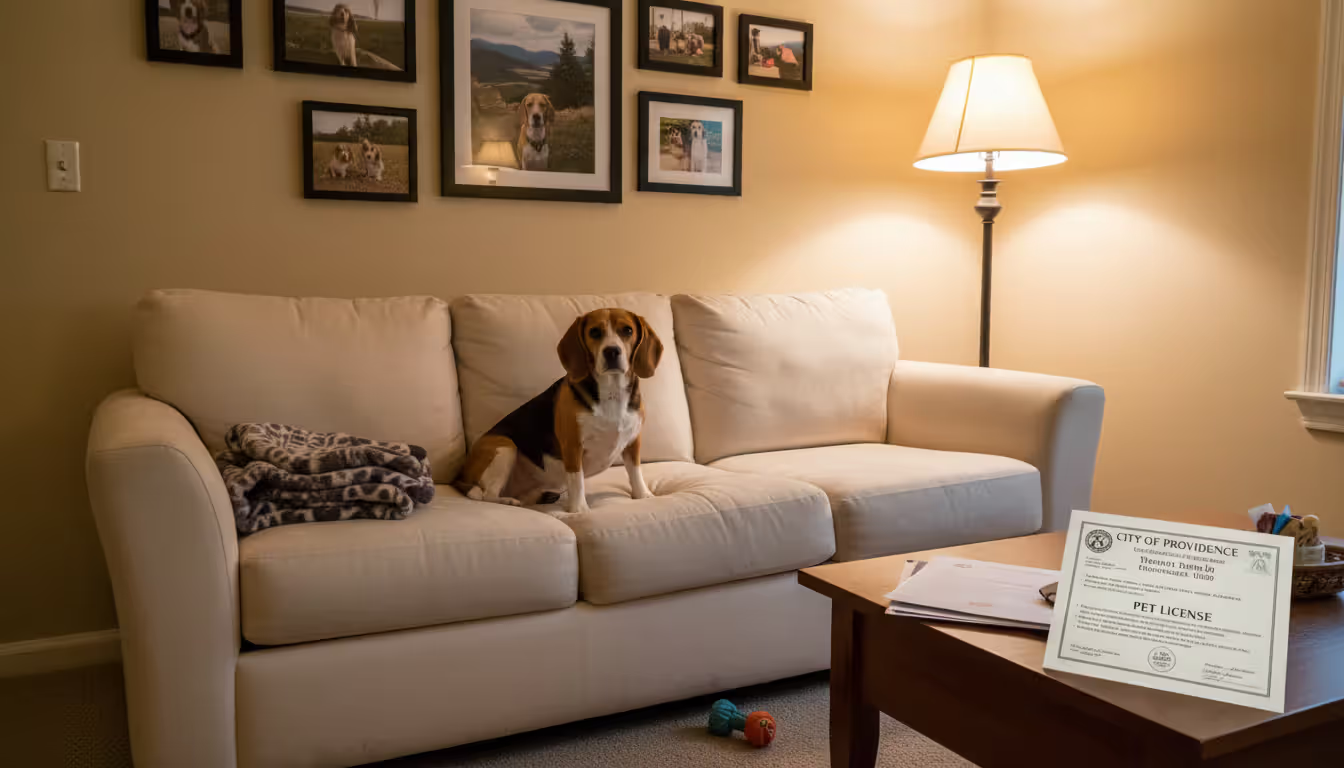
Proving Max lived there before the new policy requires evidence. Veterinary records listing your apartment address. City pet license with your unit number. Photos with metadata showing dates. Neighbor statements confirming "yeah, I've seen that Beagle since 2022." Without documentation, the landlord can claim you snuck Max in last week.
Remember New York's three-month rule? If you've kept a pet openly and obviously for 90 days without landlord complaint, they may have waived enforcement rights. Most states lack this specific protection, which makes your lease language the controlling factor.
Author: Daniel Whitmor;
Source: jamboloudobermans.com
Service Animals and Emotional Support Animals Under Fair Housing Laws
The Fair Housing Act creates crucial exemptions that override local no-pet rules. Landlords must provide reasonable accommodations for disabled tenants who need assistance animals—yes, even in buildings with ironclad pet bans. This federal law trumps lease agreements when it comes to tenant rights service dog no pet clause situations.
Service animals get the broadest protections under fair housing act pet restrictions. We're talking about dogs (occasionally miniature horses) trained to perform specific disability-related tasks. A dog that guides someone who's blind. One that alerts a deaf person to important sounds. Another that retrieves dropped items for a wheelchair user. These animals can go virtually anywhere their handlers go, and landlords must permit them regardless of property policies.
Emotional support animals occupy a different category. ESAs haven't undergone specialized task training. Instead, they improve mental health conditions through their presence and companionship. They help people manage depression, anxiety, PTSD, and other psychological disabilities. The Fair Housing Act protects ESAs in housing (though recent changes removed airline protections), but documentation requirements differ from service animals.
What can landlords actually ask about?
For service animals: only two questions. Is this animal required because of a disability? What specific work or task has it been trained to perform? That's it. They can't demand medical records or disability details.
For ESAs: landlords can require a letter from a licensed healthcare provider. This provider must have an established therapeutic relationship with you—not some website that sells $50 certificates to anyone. The letter should confirm you have a disability (without detailing it) and explain how the animal helps with disability-related symptoms.
Here's how the protections break down:
Factor
Service Animal
Emotional Support Animal
Training Needed
Must be task-trained for disability
No specific training required
What Species
Dogs; miniature horses occasionally
Any typical household pet
FHA Coverage
Covered completely
Covered with proper documentation
What Landlords Can Request
Confirmation it's needed for disability and what task it does
Healthcare provider letter verifying disability-related need
Can They Charge Fees
No deposits or fees allowed
No deposits or fees allowed
Breed Limits Apply
Typically no
Typically no
Who's Liable for Issues
You're responsible for damages and behavior
You're responsible for damages and behavior
Landlords can't ask to see your medical charts or demand you explain your disability in detail. Those healthcare provider letters need to come from actual doctors, therapists, or psychiatrists who've treated you—not online certification mills.
Those sketchy ESA websites have created real problems. You know the ones: pay $99, answer five questions, get an instant letter claiming your cat is medically necessary. Landlords increasingly challenge these obviously fraudulent documents. Courts often side with property owners when documentation looks suspicious. Legitimate letters come from providers who've actually worked with you over time, not strangers on the internet.
When Landlords Can Deny an Assistance Animal Request
Landlord refusing service animal legal situations aren't common, but they exist in specific scenarios. Properties with four or fewer units where the owner lives in one? Those qualify for Fair Housing Act exemptions. Some religious organizations operating housing exclusively for their members can also claim exemptions.
Even when the FHA fully applies, landlords can still refuse assistance animals if:
This particular animal has demonstrated dangerous behavior toward people
Keeping the animal would cause significant property destruction
The accommodation creates genuine financial hardship for the landlord
Your documentation looks fake or comes from non-credible sources
Breed-based denials get tricky. Can a landlord reject your pit bull service dog just because it's a pit bull? Generally no—they need evidence that your specific dog poses a threat based on its individual behavior, not breed stereotypes. However, insurance policies complicate this. When a landlord's insurance policy explicitly excludes certain breeds, courts sometimes find this constitutes undue financial hardship.
Unusual animal requests raise legitimate questions. Dogs and cats sail through approval. But what about pot-bellied pigs? Snakes? Chickens? Landlords can question whether the specific animal type is genuinely necessary for your disability and whether accommodating it is reasonable given the property characteristics.
Eviction Process for Unauthorized Pets
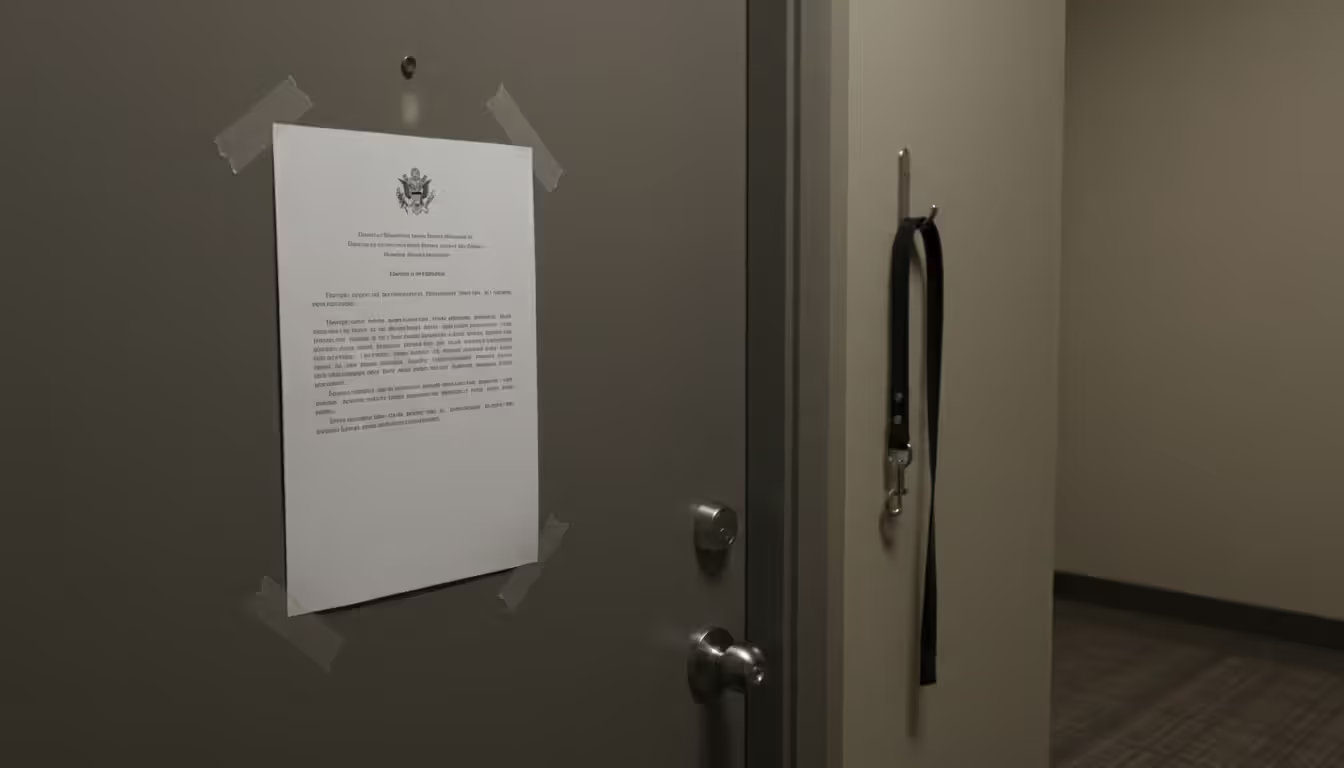
Landlord eviction for having a dog follows mandatory legal steps. Your landlord can't just change your locks because they spotted your unauthorized Husky. Proper eviction requires written notice first, then—if you don't comply—formal court proceedings.
Most states mandate a "cure or quit" notice. This gives you anywhere from three days to a month (depending on where you live) to fix the lease violation by removing the pet, or move out entirely. California typically allows just three days for lease violations. Texas runs similarly short. New Jersey requires 30 days' notice for month-to-month tenants.
Remove the dog within that cure period and prove it? The eviction usually stops right there. Proof might include adoption papers showing your sister in another state now owns Fluffy. A letter from a rescue organization confirming they took your dog. Something concrete—not just "I promise he's gone."
Author: Daniel Whitmor;
Source: jamboloudobermans.com
Ignore that notice and things escalate. Your landlord files an eviction lawsuit with the local court. You'll receive a summons. Then you get your day in court to present defenses:
My lease actually doesn't ban pets (produces lease with no pet clause)
The landlord gave me written permission (emails, texts, signed addendum)
They knew about my dog for eight months and never complained—they waived their right to object now
This is a service animal (documentation provided)
The landlord screwed up the notice procedure (wrong timeline, improper delivery)
Eviction judgments haunt your rental history for years. Many landlords run background checks that reveal past evictions, making your next apartment search brutal. That's why countless tenants facing unauthorized pet evictions negotiate exit agreements instead. You agree to leave by a certain date, the landlord agrees not to file formal eviction paperwork. No court record. Cleaner break.
Some people temporarily hide their dog to satisfy the cure notice, then sneak it back later. Terrible idea. This creates a new lease violation and demonstrates bad faith. Courts lose all sympathy when they discover you deliberately tried to deceive your landlord.
Pet Deposits, Fees, and Damage Liability
Pet deposit law landlord tenant regulations change dramatically from state to state. Some cap total security deposits—including pet portions—at one or two months' rent. Others separate pet deposits from security deposits. Still others distinguish between refundable deposits and non-refundable fees.
Refundable deposits work like standard security deposits. Your dog causes no excessive damage? You get the money back when you move out. Non-refundable pet fees stay with the landlord regardless, supposedly compensating for increased cleaning and wear even from well-behaved animals. Several states ban non-refundable fees entirely, requiring all charges to be refundable.
Let's compare some states:
California: Combined security and pet deposits can't exceed one month's rent for unfurnished places, two months for furnished ones. Non-refundable fees? Generally illegal here.
Texas: No limits whatsoever. Your landlord could theoretically demand $5,000 as a pet deposit if you agreed to it.
Florida: No statutory caps on pet deposits specifically, though overall security deposits must be "reasonable" under case law.
New York: Security deposits max out at one month's rent, but pet deposits often sit outside this limit and can be charged additionally.
Washington: Pet deposits count toward the overall cap of one month's rent plus certain specific costs.
Landlords must return refundable portions within your state's specified timeframe—typically between two weeks and two months after you move. Deductions? Those require itemized lists showing what damage your pet specifically caused, usually with receipts for the repair work.
Normal wear and tear arguments cause constant disputes. Are those scratches in the hardwood from your 90-pound Golden Retriever normal? Probably not. Is a faint pet smell in the carpet after you lived there three years with a regularly bathed Shih Tzu excessive? Debatable. Courts generally require landlords to prove damage exceeds what responsible pet ownership would reasonably cause.
Landlord liability for dog bite tenant situations depends heavily on your state's laws and lease terms. Usually, you as the dog owner bear primary responsibility for injuries your dog inflicts. However, property owners can share liability if they knew your dog had aggressive tendencies and failed to act, or if property defects contributed to the incident (broken gate that let your dog escape, inadequate lighting in common areas where the bite occurred).
Many landlords now require renters insurance with liability coverage for any tenant with a dog. Policies commonly cover $100,000 to $500,000 in liability for dog-related injuries. This protects both you and the landlord when lawsuits happen.
Insurance companies frequently exclude certain breeds or charge substantially higher premiums for them. Own a pit bull, Rottweiler, German Shepherd, or Doberman? Expect insurance headaches that ripple into rental difficulties.
How to Negotiate with Your Landlord About Keeping Your Dog
When your landlord demands you remove your dog, negotiation beats confrontation nine times out of ten. Property owners worry about damage, noise complaints, lawsuit exposure, and other tenants' reactions. Address those concerns head-on rather than arguing about fairness.
A pet addendum rental agreement legal document puts your arrangement in writing. Draft a proposed addendum covering:
Complete pet details (breed, age, weight, color, name, spayed/neutered status)
How much additional deposit you'll provide
Your acceptance of total financial responsibility for all pet damage
Your commitment to fix or fund repairs exceeding normal wear
Proof you carry renters insurance with specified liability amounts
Current vaccination records and city licensing
Immediate waste removal from all property areas
Propose a bigger deposit than required. Even if your state caps deposits, offering to increase yours (where legally possible) or suggesting monthly "pet rent" ($25-75 is common) demonstrates financial responsibility.
Author: Daniel Whitmor;
Source: jamboloudobermans.com
Pet references make a surprising difference. Letter from your previous landlord confirming your dog never caused problems? Statement from former neighbors vouching for your pet's behavior? Veterinary records proving you maintain regular care and vaccinations? Stack this evidence to prove you're a responsible owner.
Create a pet résumé. Sounds ridiculous, works consistently. Include your dog's photo, age, breed, training achievements (Canine Good Citizen certification, obedience class completion), spay/neuter documentation, and temperament description. Videos showing your calm, well-trained dog can seal the deal.
Suggest a meet-and-greet. Landlords who actually meet your friendly, well-behaved Cocker Spaniel often reconsider blanket policies. This strategy works better with smaller dogs than large breeds that trigger insurance restrictions.
Accept reasonable restrictions if needed. Agree to crate your dog when you're gone. Use only specific entrances to avoid other tenants. Keep your dog out of common areas during busy times. Limit which parts of your unit the dog accesses. Show flexibility.
If your landlord won't budge, ask for extended time to relocate. Most prefer cooperative move-outs over eviction battles. Requesting 60 or 90 days instead of the standard 30 gives you breathing room to search for pet-friendly housing without desperation clouding your judgment.
FAQ
Can my landlord make me get rid of my dog if it's not in the lease?
Leases that say absolutely nothing about pets—neither allowing nor banning them—create a gray area. Your rights depend on how your state's courts interpret lease ambiguities. Some jurisdictions treat silence as permission. Others assume landlords intended to prohibit pets unless they explicitly allowed them. Month-to-month leases add another complication: landlords can typically institute new pet policies with 30-60 days' notice regardless of prior silence. Fixed-term leases usually can't be changed mid-term, so restrictions would only apply at renewal. Document that your dog has lived there openly—some states like New York protect tenants whose unchallenged pets have been visible for specific periods (three months under New York's Pet Law).
What's the difference between a service dog and an emotional support animal for rental purposes?
Service dogs receive intensive training to perform specific tasks helping people with disabilities—guiding people who can't see, alerting to oncoming seizures, retrieving objects for those with limited mobility, or providing stability for people with balance disorders. ESAs don't undergo specialized training. Instead, they alleviate symptoms of mental health conditions like depression, anxiety, or PTSD simply through their companionship. Both get Fair Housing Act protection, meaning landlords must accommodate them despite pet bans. Documentation differs though. Landlords can only ask service dog owners two questions: whether the animal is disability-related and what task it performs. ESA requests require a letter from a licensed healthcare provider (therapist, psychiatrist, doctor) who has an actual therapeutic relationship with you—not a random website—confirming your disability and explaining how the animal helps.
How much can a landlord charge for a pet deposit?
This varies wildly depending on your state. California limits combined security and pet deposits to one month's rent for unfurnished units. Texas? No limits at all—your landlord could demand $3,000 if you agreed. New York permits pet deposits beyond the one-month security deposit cap in most situations. Washington rolls pet deposits into the overall security deposit limit of one month's rent. Some states differentiate between refundable pet deposits (returned if no damage occurs) and non-refundable pet fees (kept regardless). California prohibits non-refundable fees in most cases. Other states allow them freely. Check your specific state's landlord-tenant statutes for applicable restrictions.
Can I be evicted immediately for having a dog?
No immediate evictions exist for unauthorized pets. Eviction requires a legal process in every state. Your landlord must start by giving you written notice—usually called a "cure or quit" notice. This provides 3-30 days (state-dependent) to either remove the dog or move out. Remove the dog within that window and provide proof? The eviction typically ends there. Ignore the notice or fail to comply? Then your landlord files a formal eviction lawsuit. You'll receive a court summons and get to present defenses before a judge. Only after a judge issues an eviction order can you legally be removed, and even then, law enforcement handles the physical removal—landlords can't change locks or touch your belongings themselves. Start to finish, evictions usually take weeks or months depending on court backlogs.
Is my landlord responsible if my dog bites someone on the property?
You bear primary responsibility as the dog owner in virtually every state. Most states impose strict liability on dog owners for bites regardless of the dog's history. Your landlord might share liability in limited circumstances: they knew your dog had shown aggression and didn't require removal or additional insurance; the bite occurred in common areas they controlled; property defects contributed (broken fence allowing escape, poor lighting in areas where the incident happened). This explains why landlords frequently require renters insurance with substantial liability coverage for dog-owning tenants. Your policy handles legal defense and damages up to your coverage limits—typically $100,000 to $500,000—protecting both you and potentially the landlord from lawsuits.
What should I include in a pet addendum to my lease?
Comprehensive pet addendums cover: full pet description (species, breed, age, weight, color, name), additional deposit or fee amounts with clarification on whether they're refundable, your acknowledgment of complete responsibility for pet damage beyond reasonable wear, agreement to maintain renters insurance with specific liability coverage minimums, current vaccination proof and local license documentation, noise control and immediate waste cleanup commitments, property location restrictions (which areas your pet can access), agreement not to disturb other tenants, commitment to follow local animal ordinances, and consequences for violations (additional fees, removal requirements, lease termination). Both you and your landlord must sign and date the addendum. Reference your original lease by date and parties to clearly connect the documents legally.
Whether your landlord can force you to rehome your dog boils down to several factors: what your lease actually says, your state's specific laws, whether your dog qualifies as an assistance animal, and the timeline of your tenancy relative to any policy changes. Landlords with unambiguous no-pet clauses in signed leases usually have enforcement power. But tenants aren't helpless—protections exist, especially for service animals and ESAs, grandfathered situations, and cases where landlords knew about pets for extended periods without objecting.
Receive a removal demand? Don't panic or ignore it. Pull out your lease and read every word. Gather documentation showing any pet permissions you received. Research your state's tenant protection laws. If your dog serves as a service animal or ESA, request a reasonable accommodation backed by proper documentation. Violated a clear no-pet clause? Consider negotiating—additional deposits, insurance proof, pet references, and formal addendums sometimes convince landlords to make exceptions.
When negotiation fails and you're choosing between your apartment and your dog, understand your state's eviction timeline and use that period to find alternatives. The Humane Society maintains pet-friendly rental databases. Some landlords advertising "no pets" will negotiate for responsible owners with solid references.
Property owner rights versus tenant protections continues evolving. Cities like Seattle have enacted "pet-friendly housing" programs encouraging landlords to accept animals. Others maintain strongly landlord-favorable frameworks. Understanding your specific legal position, documenting everything in writing, and approaching your landlord professionally gives you the strongest chance of keeping both your home and your companion.
Losing a dog is heartbreaking. Once the initial grief subsides, you face an urgent practical question: what are you legally allowed to do with your dog's body? This guide covers every legal option available to pet owners in the United States, from backyard burial to municipal pickup
Dog theft carries serious criminal penalties ranging from misdemeanors to felonies depending on the dog's value and state laws. Understand the charges, sentencing, and legal steps to report theft, use microchip evidence, file civil lawsuits, and recover your stolen dog through law enforcement and community efforts
Microchipping your cat isn't just about finding them if they wander—it's increasingly a legal requirement in parts of the US. Understand state laws, registration requirements, and how microchips function as ownership proof in disputes. Learn the legal process, common mistakes, and differences between cat and dog requirements
When your dog breaks a leg and money is tight, multiple solutions exist. From nonprofit grants and veterinary teaching hospitals to payment plans and crowdfunding, this guide covers actionable options to get your dog treatment without thousands upfront, including what to do if you can't pay the vet bill
The content on this website is provided for general informational and educational purposes only. It is intended to explain concepts related to animal law, pet ownership rights, service animals, dog bite liability, and animal welfare legislation in the United States.
All information on this website, including articles, guides, and examples, is presented for general educational purposes. Legal outcomes may vary depending on jurisdiction, state laws, and individual circumstances.
This website does not provide legal advice, and the information presented should not be used as a substitute for consultation with qualified attorneys or animal law professionals.
The website and its authors are not responsible for any errors or omissions, or for any outcomes resulting from decisions made based on the information provided on this website.