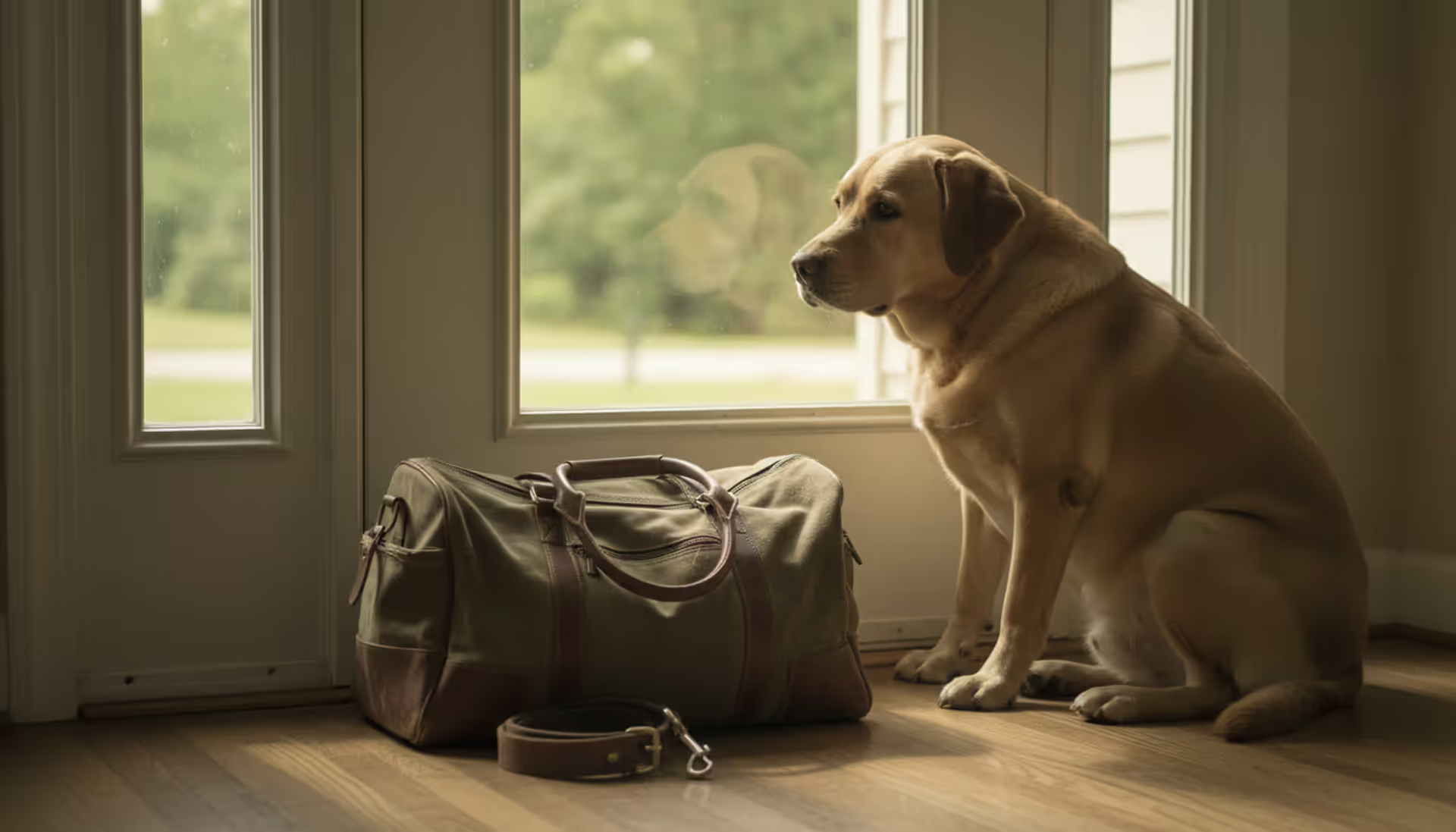
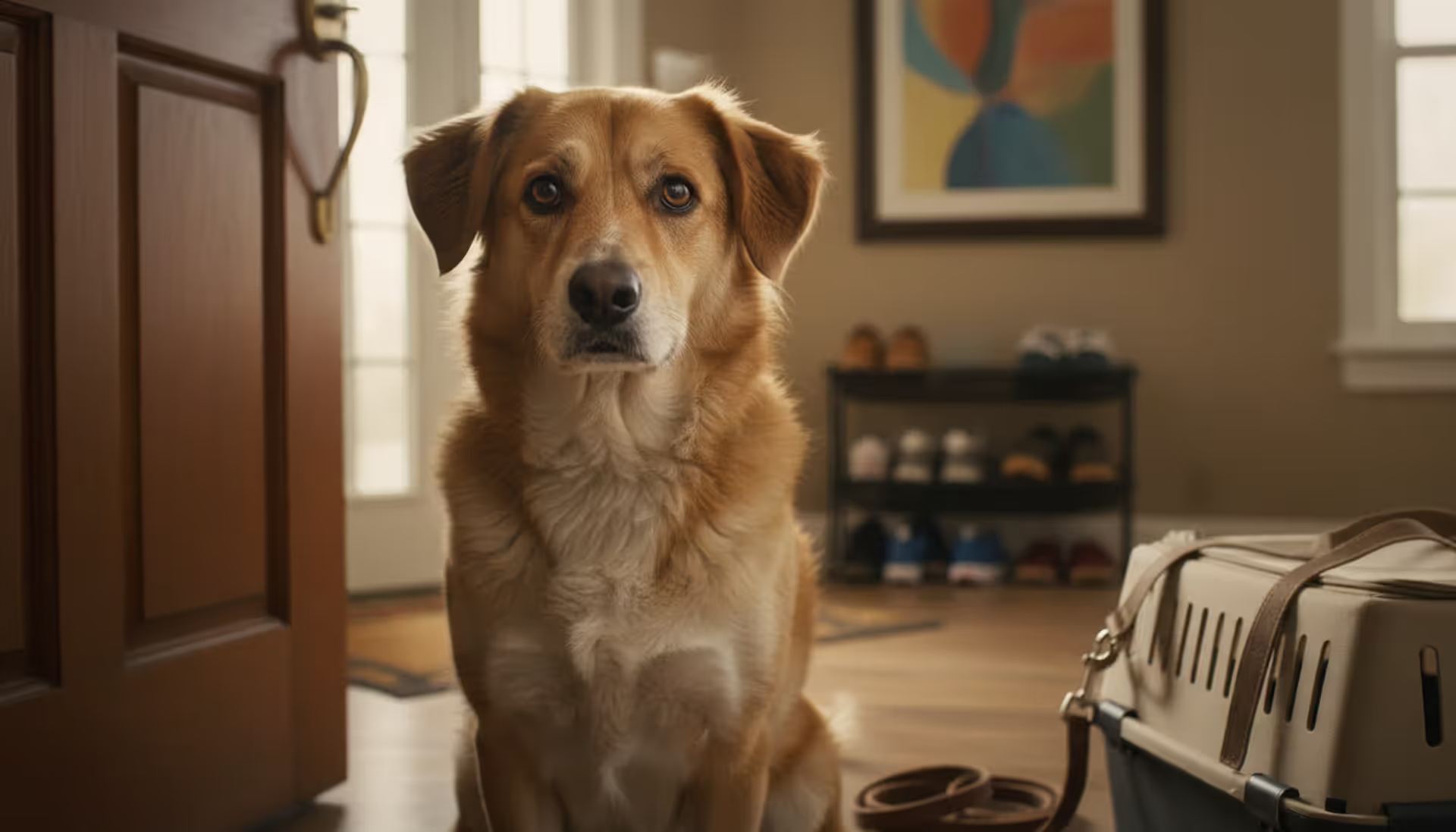
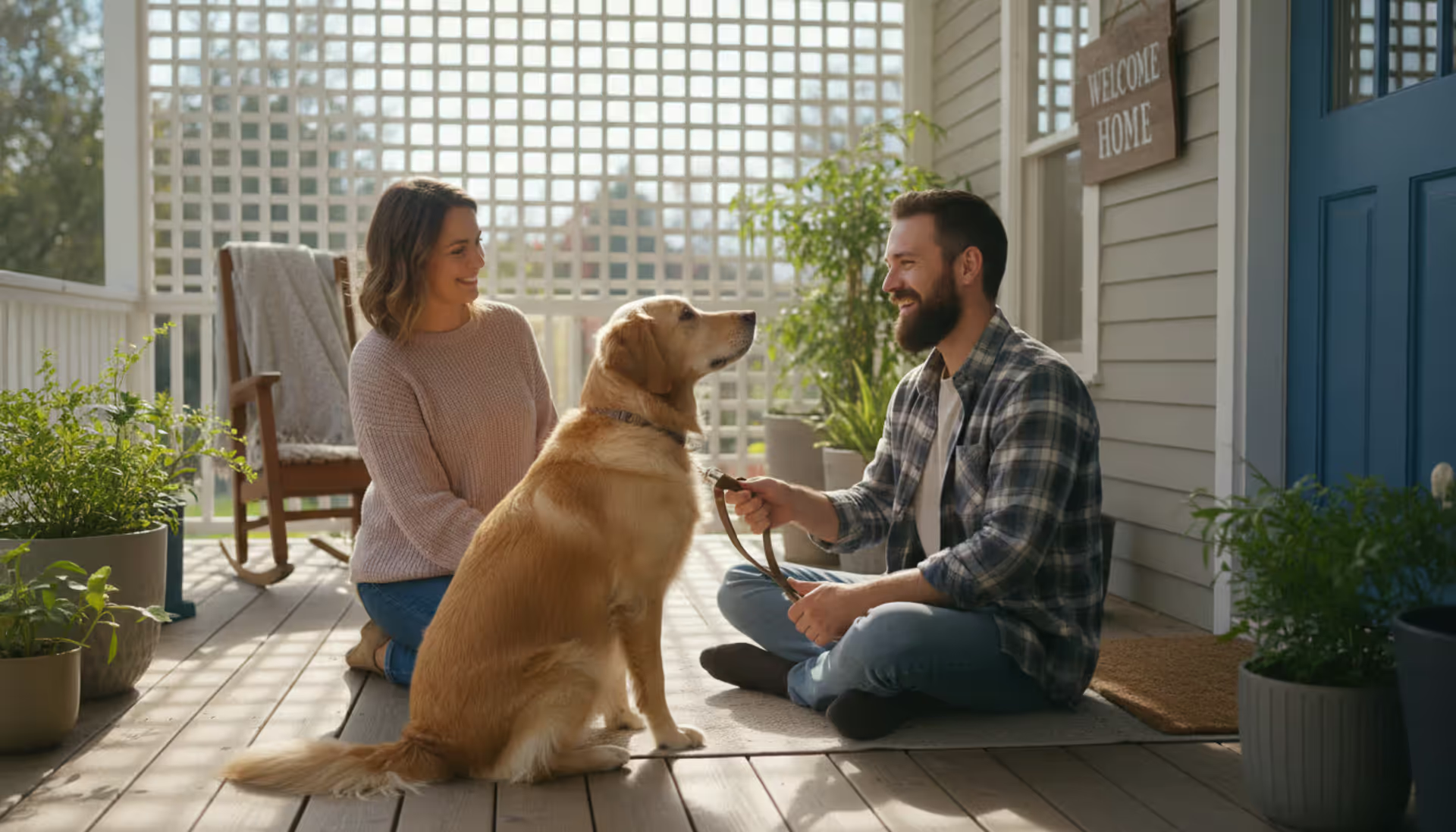
Here's what keeps dog owners awake at night: wondering if they're terrible people for even considering rehoming. You've probably scrolled through judgmental Facebook comments calling people "heartless" for giving up their dogs. But here's the truth nobody talks about—sometimes keeping your dog causes more suffering than finding them a better home.
The real question? It's not whether you're cruel. It's whether your current situation genuinely works for your dog or if you're holding on because you can't handle the guilt.
When Rehoming a Dog Is the Right Decision
Let's talk about Sarah, a single mom whose daughter developed such severe allergies that she spent three nights in the hospital. Their golden retriever slept in her daughter's room for two years. Now? The allergist said it's the dog or constant breathing treatments and potential anaphylaxis. That's not irresponsibility—that's choosing between two lives you love.
Some situations genuinely require rehoming. Your golden retriever growled at your toddler once, you hired a trainer, things seemed better. Then he bit her face. Twice. You've spent $3,000 on behaviorists. They're recommending a child-free home. This isn't a training problem you can love away—it's a safety crisis.
Or take Mark, who got laid off from his tech job. His diabetic shepherd needs $400 in insulin monthly, plus specialized food, plus the glucose monitoring supplies. Mark's unemployment covers rent and food. Barely. He's skipping his own medications. The dog hasn't seen a vet in six months because he can't afford the checkup. Love doesn't pay for veterinary care.
Terminal cancer diagnosis? Your dog needs daily walks you can't physically manage anymore. Military deployment to a country with year-long quarantines? Fleeing domestic violence to a shelter that doesn't accept pets? These aren't convenient excuses—they're impossible situations.
Housing gets complicated. Yes, breed restrictions are often garbage policy based on insurance company paranoia rather than actual data. But when your choice becomes "sleep in your car with your pit bull" or "find him a home while you're still housed enough to vet adopters properly," the calculation changes fast.
Here's the line: acceptable reasons to rehome a dog legally center on welfare. The dog's welfare, specifically. Moving because your new apartment doesn't allow pets when you could've found one that does? That's on you. Developing a medical condition where you're literally choosing between human survival and dog ownership? That's different.
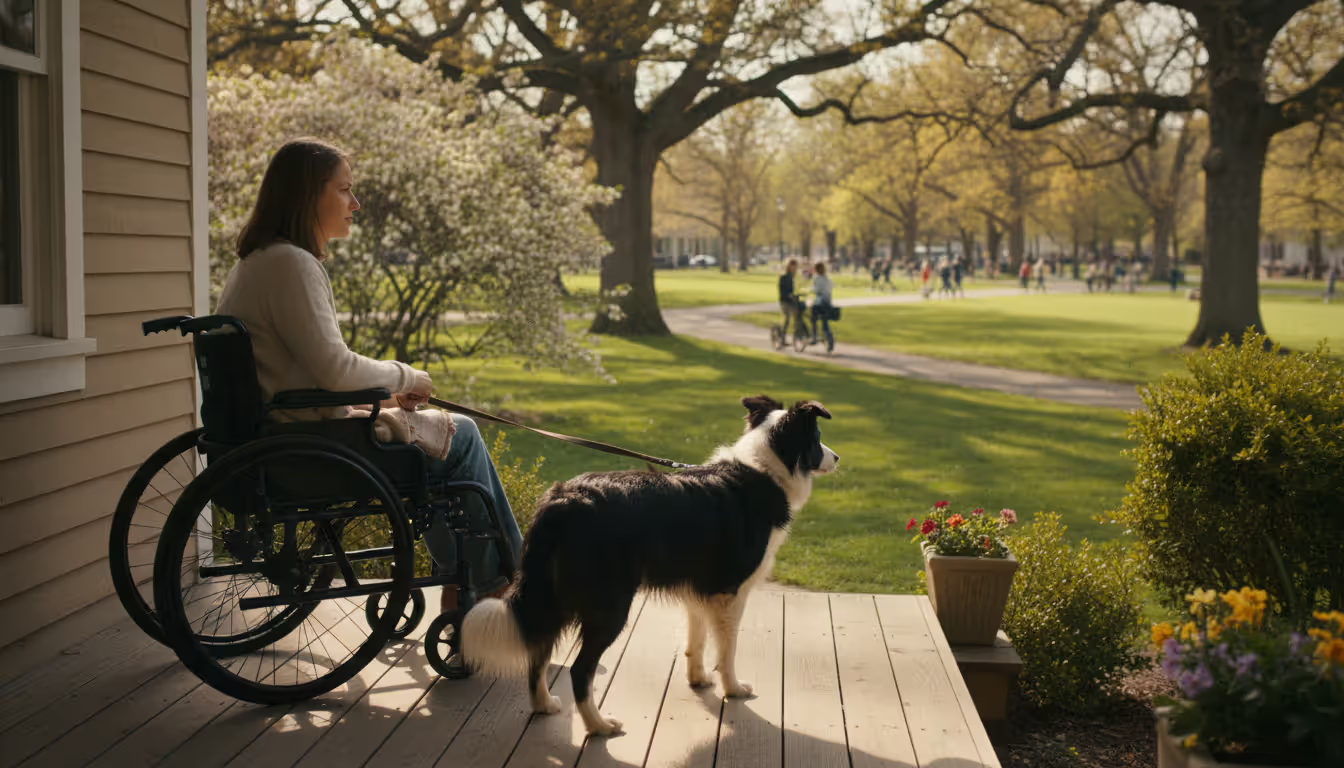
Shedding isn't a reason. "Too much work" isn't a reason—you should've known dogs require work. But "my dog needs three hours of exercise daily and I'm in a wheelchair after my accident" or "my dog has separation anxiety so severe he's broken teeth trying to escape and I work 12-hour shifts"? Those are real welfare problems.
Author: Daniel Whitmor;
Source: jamboloudobermans.com
How Rehoming Affects Your Dog's Mental and Physical Health
Your dog will miss you. Let's not pretend otherwise. But "missing you" doesn't mean "destroyed forever."
Attachment and Separation Stress in Dogs
Dogs bond with their people—research confirms it. Cortisol spikes when separated from bonded owners. They might pace, whine, refuse food for a day or two. Some dogs get diarrhea from stress. It's real and it matters.
But here's what the dog attachment welfare rehoming research actually shows: dogs are survival-oriented social animals. They bond to whoever consistently meets their needs. Your dog loves you, sure. But they'll also love the next person who feeds them, walks them, and scratches that spot behind their ear.
Dogs aren't humans. They don't lie awake wondering why you betrayed them. They experience stress during transitions, then they adapt. Usually fast.
Puppies under six months? They'll barely remember you existed within two weeks. Sounds harsh, but it's neurology. Their brains haven't fully developed long-term attachment patterns yet. Young dogs are attachment Velcro—they stick to whoever's there.
Adult dogs take longer—maybe a month, maybe three. But "longer" doesn't mean "never." It means they need time to learn the new routine, figure out the new rules, and redirect their attachment. Most dogs eating normally and playing with toys within a month? They're adjusting fine.
How Long It Takes Dogs to Adjust to New Homes
Your ten-year-old dog will take longer than a puppy. That's normal. Senior dogs have spent a decade learning one routine. New routines take more processing time. But vets consistently report that rehoming older dog welfare concerns are often overstated—plenty of senior dogs thrive after rehoming, especially when leaving chaotic situations for calm ones.
Dog Age/Type
Typical Adjustment Period
What Healthy Adjustment Looks Like
Warning Signs That Need a Vet Behaviorist
Puppies under 6 months
1-2 weeks
Eating meals, playing, sleeping through the night, approaching people
Won't eat for 48+ hours, constant diarrhea, hiding continuously
Adult dogs 1-7 years
3-8 weeks
Responding when called, taking treats, exploring the house, regular bathroom habits
Aggression that increases over time, self-injury, severe separation panic
Senior dogs 8+ years
6-12 weeks
Settling into routine, accepting petting, reduced pacing or vigilance
Depression beyond initial adjustment, disorientation plus aggression, refusing all food
Dogs with previous trauma
3-6 months
Gradual trust-building, fewer startle responses, willingness to try new things
Getting worse instead of better, fear escalating into aggression
The dog rehoming emotional impact welfare equation includes what they're leaving behind. A dog moving from a home where they're locked in a crate 20 hours daily to one where they're actually walked? That's not traumatic rehoming—that's rescue. Context matters enormously.
Legal and Ethical Responsibilities When Rehoming
You can't just drop your dog at a park and drive away. That's abandonment, it's illegal in every state, and yes, people actually get arrested for it. California charges up to $5,000 in fines plus potential jail time. Texas classifies animal abandonment as a criminal misdemeanor.
So what separates legal rehoming from the kind that gets you charged? Documentation and verification.
You need written proof that ownership transferred. Doesn't need to be notarized (though it helps). But you need something showing: who you gave the dog to, when, what condition the dog was in, what you disclosed about behavior and health. This protects you if the dog bites someone three months later and the new owner claims you never told them about the previous bite incident.
Your rehoming dog legal ethical obligations include actually checking that the new owner can care for your dog. Courts have ruled that transferring a dog to someone who obviously can't care for them—no fence when the dog needs one, history of animal neglect, "free to good home" Craigslist ad responder you never met—can still constitute abandonment.
Is rehoming a dog animal abandonment? Not if you do it right. But "right" has specific requirements:
Author: Daniel Whitmor;
Source: jamboloudobermans.com
You need to verify their living situation. Visit their home. Check the fence. Meet other pets. Confirm their landlord actually allows dogs if they rent. Someone messaging "I'll take your dog!" on Facebook at midnight doesn't qualify as a vetted adopter.
You must disclose everything you know. Your dog bit the mail carrier last year? You tell the new owner. Your dog has hip dysplasia requiring $200 monthly medication? You tell them. Your dog can escape a 4-foot fence? You tell them. Failing to disclose and someone gets hurt? You're liable for damages. Courts consistently rule that nondisclosure equals fraud when rehoming animals.
Medical records transfer. Vaccination history, spay/neuter documentation, medications, chronic conditions. Animal welfare standards for rehoming include ensuring the dog's healthy or that known health issues are disclosed and manageable by the new owner. Passing off a sick dog without mentioning the illness potentially violates animal cruelty statutes.
Some states add specific requirements. California mandates written disclosure of behavior and health. Nevada requires rabies vaccination documentation. Check your local animal control agency website—they'll have state-specific transfer requirements.
How to Rehome a Dog Responsibly and Minimize Harm
The method matters as much as the decision.
Vetting adopters properly means more than gut feeling. You want:
Home visit before the dog moves. See where your dog will sleep. Check if the yard's secure. Watch how they interact with their current pets. Red flag? Their three other dogs are underweight and the house smells like urine. Green flag? Clean house, secure fence, current pets are healthy and well-behaved.
References from their vet if they've had pets before. Call the vet office. Ask if they provided regular care, kept vaccinations current, followed treatment recommendations. A vet saying "I can't discuss that due to privacy" is different from "we haven't seen them in four years and their last dog died from a preventable condition."
Actual conversations about daily schedules and plans. Someone working 14-hour days shouldn't adopt your high-energy border collie. Someone wanting a running partner shouldn't take your 12-year-old arthritic Lab. Matching lifestyle to dog needs isn't optional.
Trial visits before finalizing. Let your dog spend an afternoon there. Overnight if possible. Some incompatibilities—like your dog terrorizing their cat—only show up in real conditions.
Rescue groups versus private rehoming both have tradeoffs. Established rescues bring experience evaluating adopters, post-adoption support systems, and foster networks where dogs decompress in homes rather than kennels. They've seen the red flags you might miss.
But rescues often have restrictions. No pit bulls. No dogs over 50 pounds. No seniors. Waiting lists stretching months. Surrender fees ranging from $50 to $300. If your dog doesn't fit their parameters, you're stuck.
Private rehoming gives you control and lets you maintain contact if you want updates. The risk? You're completely responsible for vetting. No backup if problems surface later. No support system when the adopter calls confused about the dog's behavior.
One critical rule for private rehoming: never advertise "free to good home." You're advertising "free bait dog" to dogfighters. "Free test subject" to research facilities buying from Class B dealers. Charge something—$75, $150, whatever screens out people wanting free dogs for terrible purposes while remaining accessible to genuine adopters.
Author: Daniel Whitmor;
Source: jamboloudobermans.com
Transition strategies that reduce stress:
Pack your dog's favorite blanket, the toy they've had since puppyhood, their food bowls. Familiar smells help. Dogs navigate their world through scent first. Sending their stuff sends olfactory comfort.
Write everything down. Feeding schedule, favorite treats, what frightens them, where they like being petted, how they signal needing to go out, what "sit" and "come" sound like in your voice. New owners can't read your dog's mind. Give them the manual.
Multiple visits before moving day when possible. Let your dog build familiarity with the new place and people before the permanent switch.
Short goodbye on transfer day. Prolonged emotional farewells spike your dog's anxiety. They read your stress. Quick handoff, then leave. It feels wrong but it's kinder.
Most dogs in appropriate placements show significant behavioral improvement within 30 days. We consistently see dogs moving from unstable to stable environments become calmer, more confident, and healthier—the transition stress is temporary, but the welfare improvement is lasting
— Dr. Emily Weiss
Rehoming vs. Keeping Your Dog When Struggling
How do you know if you're being realistic or just giving up too easily?
Keep your dog when the problems are fixable. Temporary financial crisis? Pet food banks exist. Organizations like RedRover Relief and the Pet Fund give emergency veterinary grants. Your dog needs training? Many humane societies offer low-cost group classes. Facing short-term housing displacement? Some rescues provide temporary foster care until you're stable.
Keep your dog if their basic needs—food, medical care, safe shelter, daily exercise, social interaction—are still being met despite your difficulties. Struggling doesn't automatically equal inadequate care.
Keep your dog if the bond provides mutual emotional support that helps you cope and they're still getting what they need. Many people with depression or PTSD genuinely need their dogs. If you're both benefiting and the dog's welfare isn't compromised, that's valid.
But rehome when your capacity has permanently changed. You developed severe mobility issues and your dog needs three hours of exercise daily you can't provide? Your mental health has deteriorated to the point where the dog stays in a crate 18 hours daily because you can't manage them? Your housing situation has become permanently incompatible and no pet-friendly options exist in your price range?
Rehome when your dog's behavior creates safety risks you cannot manage. Professional training failed. Medication failed. Management strategies failed. People are getting hurt. That's not something love fixes.
Resources to Help You Keep Your Dog
Before deciding rehoming's inevitable, try these:
Financial assistance: The Pet Fund covers non-basic emergency care. Brown Dog Foundation helps senior dog medical costs. RedRover Relief provides grants for domestic violence survivors, homeless people, and others in crisis. Many vet clinics offer CareCredit (medical credit cards with delayed interest) or in-house payment plans.
Behavioral help: Your local humane society often runs basic obedience classes for $50-100 versus $200+ for private training. Virtual consultations with certified trainers have dropped in price—many charge $75-150 for a one-hour video session versus $200+ for in-person.
Temporary fostering: Google "temporary foster programs for pet owners" plus your state. Some rescues specifically help people in crisis keep their dogs long-term by providing temporary care during hospitalization, domestic violence situations, or housing transitions.
Pet-friendly housing databases: SAFEwalk maintains lists of domestic violence shelters accepting pets. The Humane Society's website has affordable housing resources organized by state.
The real question: does love alone provide what your dog needs? Because a dog kept in a home without adequate food, vet care, exercise, or safety suffers regardless of how much you love them. Sometimes the most loving choice is admitting someone else can provide a better life.
Author: Daniel Whitmor;
Source: jamboloudobermans.com
Common Misconceptions About Dog Rehoming
Let's kill some myths that create unnecessary guilt and terrible decisions.
"Dogs never recover from rehoming." Wrong. Studies following rehomed dogs show most adjust well and form new attachments. Their stress during transition is real but temporary. This isn't causing permanent psychological damage—it's causing a rough month followed by normal, happy dog life.
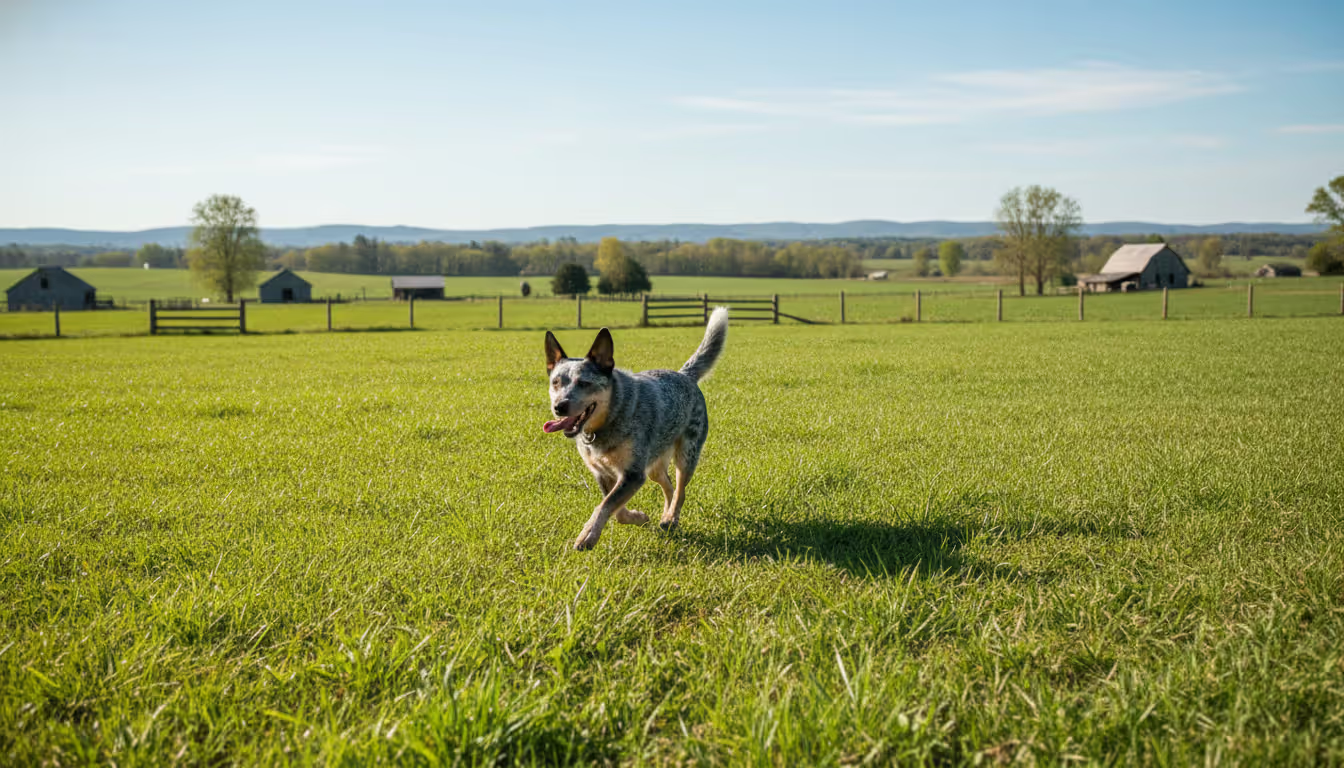
"Rehomed dogs are damaged goods." Many rehomed dogs had nothing wrong with them except bad matching. The high-energy Australian cattle dog rehomed from an apartment to a farm with acreage? That dog doesn't have issues—they had the wrong environment. Behavioral problems often improve dramatically in appropriate placements.
"Keeping your dog no matter what proves you're a good owner." Actually, good ownership means prioritizing your dog's welfare over your ego. Keeping a dog you can't properly care for to avoid feeling guilty serves your emotional needs, not theirs. That's the opposite of good ownership.
"Rehoming is always traumatic." For dogs leaving neglectful, chaotic, or dangerous situations, rehoming to stable, caring environments isn't trauma—it's salvation. A dog moving from a home where they're beaten for housetraining accidents to one where they're properly trained? That dog's life just improved dramatically. The dog rehoming emotional impact welfare depends enormously on what they're leaving versus where they're going.
"Just take them to the shelter and they'll find a home." Shelter capacity varies wildly. Rural Southern shelters often have euthanasia rates exceeding 50% because of intake volume versus adoption demand. Urban no-kill shelters have months-long waiting lists. Taking your dog to the nearest shelter without researching their outcomes might mean handing them a death sentence.
Whether it's cruel to rehome a dog depends entirely on why and how you're doing it. Cruelty is abandonment, neglect, or dumping your dog somewhere convenient. Responsible rehoming—carefully planned, thoroughly vetted, executed with your dog's welfare as the priority—is sometimes the kindest option you have.
FAQ About Rehoming Dogs
Is rehoming a dog considered abandonment?
No—not if you do it legally. Rehoming means finding an appropriate new home, vetting the adopter properly, transferring ownership with documentation, and ensuring ongoing care. Abandonment means leaving your dog somewhere without ensuring their care—dumping them at a park, leaving them at a foreclosed house, giving them to a stranger without checking anything. Abandonment's illegal in all 50 states and prosecutable as criminal misdemeanor or felony depending on circumstances. Rehoming with proper documentation and verification? Completely legal.
How long does it take for a dog to forget its previous owner?
Dogs don't "forget" previous owners the way humans forget phone numbers, but their emotional attachment to previous caregivers fades as new bonds form. Most dogs show reduced signs of missing their previous owner within 2-8 weeks when placed in stable, caring new homes. Dogs might still recognize previous owners if they meet months or years later, but without the distress. The better the new environment, the faster dogs redirect their attachment. Think of it like this: they'll remember you exist, but they won't pine for you forever.
Can I be sued after rehoming my dog?
Yes, under specific circumstances. New owners can sue if you lied about your dog's health or behavior, hid bite history, or violated written rehoming agreement terms. If your rehomed dog injures someone and you didn't disclose known aggression, you face potential liability. Courts treat nondisclosure as fraud in rehoming situations. Protect yourself with honest disclosure of all known issues, written transfer agreements specifying what you disclosed, and documentation that you provided medical records and relevant behavioral information. Being upfront about problems is both ethical and legally protective.
Will my dog be traumatized if I rehome them?
Most dogs experience short-term stress during rehoming transitions—changes in appetite, sleep disruption, increased vigilance—but not lasting psychological trauma. These stress responses typically resolve within weeks in appropriate placements. Actual trauma is more likely when dogs are repeatedly rehomed, placed in abusive situations, or moved from excellent care to neglect. The trauma risk from responsible one-time rehoming is generally lower than the ongoing stress of remaining in homes where their needs can't be met. Dogs are remarkably resilient when their new environment provides consistency and proper care.
What are my legal obligations when rehoming a dog?
You must maintain duty of care until ownership legally transfers. This includes providing accurate health and behavioral information, ensuring current vaccinations and medical care, and following your state's ownership transfer requirements. You cannot abandon the dog or knowingly place them in harmful situations. Some states require written transfer documentation, spay/neuter certification, or specific disclosures about behavior and health. California mandates written behavioral disclosure. Other states have rabies documentation requirements. Check your local animal control agency website for jurisdiction-specific rules. Generally, documentation and disclosure protect both you and the dog.
Is it better to rehome or surrender to a shelter?
Depends on your local shelter's resources and your ability to properly vet private adopters. Private rehoming lets you screen adopters, stay in contact for updates, and control placement—but requires time, effort, and good judgment you might not have. Shelter surrender provides professional evaluation and placement but might mean limited space, potential euthanasia in high-intake facilities, or long stressful kennel stays. Research your local shelter's statistics first. No-kill shelters and breed-specific rescues typically have better outcomes than municipal animal control facilities with space constraints and high euthanasia rates. If you can responsibly vet adopters and invest time in the process, private rehoming usually means faster, less stressful placement for your dog.
Rehoming isn't inherently cruel—it's a decision requiring honest assessment of your actual circumstances versus your dog's actual needs, not your idealized version of either.
The ethics depend on your reasons, the care you take finding appropriate placement, and whether rehoming genuinely serves your dog's welfare better than available alternatives. Responsible rehoming involves thorough adopter vetting, transparent disclosure, proper legal ownership transfer, and transition strategies minimizing stress.
Resources exist helping you keep your dog through temporary difficulties. But when circumstances permanently prevent you from meeting a dog's needs, finding them a better-suited home is responsible ownership, not betrayal.
The dogs at highest risk aren't those carefully rehomed to appropriate families—they're the ones kept in situations where physical, behavioral, or emotional needs go unmet because their owners can't or won't provide adequate care. Your duty is to your dog's wellbeing, not your ego or what strangers on the internet think. Make decisions based on what actually serves your dog. Seek available help when possible. And when rehoming becomes necessary, do it thoroughly and honestly.
Your dog doesn't need you to be perfect. They need you to be honest about what you can provide and brave enough to act in their best interests when those don't align.
Surrendering an aggressive dog involves complex legal obligations and limited placement options. Between specialized rescues, sanctuary programs, and rehabilitation facilities, responsible pathways exist for owners committed to transparency and proper screening
Surrendering a dog is never easy. Financial hardship, housing changes, or behavioral challenges can force impossible choices. Learn where to surrender your dog for free, understand the complete process from intake to adoption, and discover your legal obligations and what really happens after relinquishment
Horse soring involves deliberately inflicting pain on horses' legs to create an exaggerated gait for show competitions. This federal crime, primarily affecting Tennessee Walking Horses in big lick classes, uses chemical burns, pressure shoeing, and painful chains to force unnatural movement
A rehoming fee protects your dog from exploitation while finding a responsible new home. Discover typical fee ranges, legal considerations, required documentation, and why charging nothing puts your pet at serious risk. Includes contract templates and expert guidance
The content on this website is provided for general informational and educational purposes only. It is intended to explain concepts related to animal law, pet ownership rights, service animals, dog bite liability, and animal welfare legislation in the United States.
All information on this website, including articles, guides, and examples, is presented for general educational purposes. Legal outcomes may vary depending on jurisdiction, state laws, and individual circumstances.
This website does not provide legal advice, and the information presented should not be used as a substitute for consultation with qualified attorneys or animal law professionals.
The website and its authors are not responsible for any errors or omissions, or for any outcomes resulting from decisions made based on the information provided on this website.