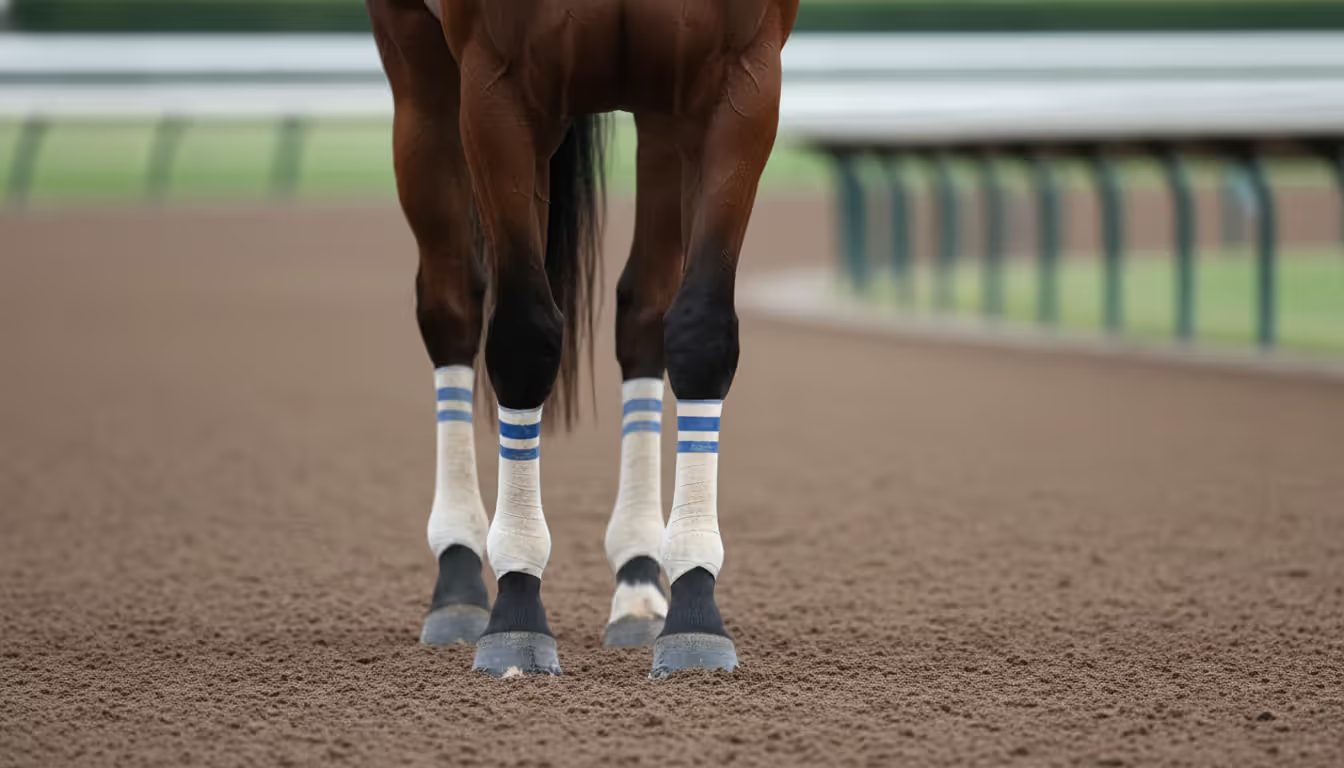
Horse racing generates billions in annual revenue across the United States, but the question of whether the sport constitutes cruelty remains hotly contested. Every year, hundreds of horses die on American racetracks, thousands suffer catastrophic injuries, and countless others disappear into uncertain futures once their competitive careers end. The industry operates under a patchwork of state regulations that historically allowed significant variation in safety standards, drug policies, and enforcement mechanisms. Recent federal intervention has begun standardizing some practices, yet gaps in protection persist—particularly regarding what happens to horses after they leave the track.
Understanding whether horse racing is cruel requires examining the physical toll on animals, the substances used to keep them competing, the legal framework meant to protect them, and the reality of their post-racing lives. The answer isn't simple, as it depends on which aspects of the industry you examine and which regulatory standards apply at any given track.
How Horse Racing Causes Injuries and Deaths
Thoroughbred racehorses begin training as early as 18 months old, before their skeletal systems fully mature. A horse's bones don't finish developing until approximately age six, yet most competitive racing occurs between ages two and four. This timing creates inherent vulnerability. High-speed racing on immature bones increases fracture risk, particularly in the cannon bones, ankles, and knees.
Catastrophic breakdowns—sudden fractures during races that typically result in euthanasia—represent the most visible form of racing injury. Between 2021 and 2025, American racetracks reported an average of 1.25 fatalities per 1,000 starts, though rates varied significantly by track and racing surface. Dirt tracks historically showed higher fatality rates than synthetic surfaces, with some facilities recording more than 2.0 deaths per 1,000 starts before implementing surface changes.
Non-fatal injuries occur far more frequently. Stress fractures accumulate over time as horses train and race repeatedly. Soft tissue damage—including tendon and ligament tears—can end careers even when horses survive. Many injuries occur during training rather than actual races, but these incidents receive less public attention and often go unreported in official statistics.
Author: Lauren Beckett;
Source: jamboloudobermans.com
Track conditions play a substantial role. Surfaces that are too hard increase concussive force on legs; surfaces that are too soft can cause horses to sink and torque their joints. Weather affects track consistency, and horses sometimes race on surfaces deemed unsafe by veterinary standards because financial pressures encourage race organizers to proceed despite marginal conditions.
The regulatory response to racing deaths has intensified following high-profile incidents. When Santa Anita Park experienced 42 horse deaths during the 2018-2019 season, California implemented emergency safety measures including enhanced veterinary examinations, restrictions on certain medications, and temporary racing suspensions during unsafe weather. These interventions demonstrated that regulatory action could reduce fatalities—Santa Anita's death rate dropped by more than 50% in subsequent years—but also highlighted how preventable many deaths had been under previous standards.
Drug Use and Banned Substances in Horse Racing
Racehorses compete under the influence of various substances, some legal and some prohibited. The line between therapeutic medication and performance enhancement has historically been blurry, creating enforcement challenges and welfare concerns.
Furosemide (Lasix) remains one of the most controversial legal medications. This diuretic treats exercise-induced pulmonary hemorrhage, a condition where horses bleed from their lungs during exertion. Critics argue that Lasix masks other health problems and allows horses to race when they should rest. As of 2026, race-day Lasix is banned in all stakes races for two-year-olds under federal rules, with discussions ongoing about broader prohibitions.
Truly banned substances include anabolic steroids, blood doping agents, and certain pain medications that could allow injured horses to race without showing lameness. Corticosteroids—powerful anti-inflammatory drugs—face restrictions on how close to race day they can be administered. The concern is straightforward: a horse that can't feel pain from an existing injury will continue racing and risk catastrophic breakdown.
Testing protocols have improved significantly under federal oversight. Laboratories now screen for hundreds of substances, including designer drugs created specifically to evade detection. Split-sample testing allows trainers to request verification of positive results. Penalties for violations range from fines and suspensions to lifetime bans for repeat offenders.
Despite better testing, violations continue. In 2025, regulatory bodies reported approximately 1,800 medication violations across all racing jurisdictions, down from over 2,500 in 2022. Some violations involve legitimate therapeutic mistakes—administering allowed medications too close to race time—while others represent clear attempts to gain competitive advantages or hide injuries.
The law now treats certain violations as federal offenses. Trainers who administer banned substances face potential criminal prosecution, not merely industry sanctions. This shift represents a fundamental change from the era when drug violations were handled internally with minimal consequences.
Author: Lauren Beckett;
Source: jamboloudobermans.com
Current Animal Welfare Laws Regulating Horse Racing
Horse racing animal welfare laws operate on two levels: federal standards established by the Horseracing Integrity and Safety Act (HISA) and state regulations that address areas outside federal jurisdiction.
Federal Oversight Under the Horseracing Integrity and Safety Act
HISA, which took effect in 2022, created the first national authority over thoroughbred racing safety and integrity. The law established uniform standards across all states with pari-mutuel wagering, ending decades of inconsistent state-by-state regulation.
Under HISA, the Horseracing Integrity and Safety Authority develops and enforces rules covering racetrack safety, horse health protocols, and anti-doping standards. The Authority operates independently but under Federal Trade Commission oversight, giving it genuine enforcement power.
Key provisions include mandatory veterinary examinations before horses can race, standardized protocols for reporting injuries and deaths, restrictions on race-day medications, and uniform penalties for violations. Tracks must meet specific surface maintenance standards, and veterinarians can scratch horses from races without trainer override.
The anti-doping program, managed by the Horseracing Integrity and Welfare Unit, maintains a prohibited substances list, coordinates testing across jurisdictions, and investigates violations. Trainers bear strict liability for substances found in their horses, eliminating the "I didn't know" defense that previously allowed violators to escape consequences.
State-Level Racing Regulations and Variations
States retain authority over certain aspects of racing, including licensing requirements, purse distribution, and aspects of track operations. This creates continued variation in areas HISA doesn't address.
Horse racing whip rules legal limits differ by state, though HISA has proposed federal standards. Some jurisdictions limit the number of strikes allowed during a race, while others focus on how whips are used rather than counting strikes. California limits jockeys to six strikes during a race, with restrictions on force and where on the horse strikes can land. Kentucky historically had fewer restrictions, though recent reforms have tightened rules.
State racing commissions handle day-to-day licensing and can impose additional safety requirements beyond federal minimums. New York requires specific insurance coverage for jockeys and mandates certain retirement planning for horses. New Jersey has implemented enhanced track surface testing protocols that exceed federal requirements.
The variation creates complexity for trainers and owners who race in multiple states, though HISA's framework has reduced the regulatory patchwork that previously existed.
Legal Definitions of Abusive Practices in Racing
Horse racing abusive practices legal definition has evolved as understanding of animal welfare has improved and public tolerance for mistreatment has decreased. What constitutes legally actionable abuse now includes practices that were routine decades ago.
Whipping violations represent the most visible category of abuse findings. Excessive force, striking horses on the head or flanks (rather than the hindquarters), or continuing to whip a horse that has no realistic chance of improving position can all trigger sanctions. Stewards review race footage and can suspend jockeys for violations, with repeat offenders facing longer suspensions and fines.
Racing an injured horse constitutes abuse when trainers or veterinarians knowingly allow a horse with a condition that creates unreasonable injury risk to compete. Pre-race examinations aim to catch these situations, but enforcement depends on veterinary diligence and willingness to scratch horses despite financial pressures.
Unsafe track conditions become legally problematic when tracks proceed with racing despite knowing that surface conditions create elevated risk. Following weather events, veterinarians must certify that tracks are safe before racing can continue. Proceeding without proper certification can expose track operators to liability.
Training methods that cause unnecessary suffering also fall under abuse definitions, though enforcement is challenging because most training occurs away from regulatory oversight. Practices like "nerving" (severing leg nerves to reduce pain sensation) are prohibited, as is using electric shock devices during training.
Enforcement mechanisms include fines, license suspensions, and lifetime bans from the industry. In egregious cases, criminal animal cruelty charges can apply, particularly when abuse involves deliberate infliction of suffering rather than negligence. However, prosecution remains rare because proving criminal intent is difficult and because industry participants often view aggressive training methods as necessary rather than abusive.
What Happens to Racehorses After Their Racing Career
Racehorse welfare after racing career law represents one of the most significant gaps in animal protection. While regulations govern how horses are treated during their competitive years, far fewer protections exist once they leave the track.
Approximately 20,000 thoroughbreds leave racing each year in the United States. Their destinations vary widely. Some transition to second careers as show horses, pleasure riding horses, or breeding stock. Others enter rescue and adoption programs operated by nonprofits dedicated to retired racehorse placement. Many simply disappear from tracking, their fates unknown.
Author: Lauren Beckett;
Source: jamboloudobermans.com
The slaughter pipeline remains a disturbing reality. While horse slaughter for human consumption is not currently conducted in the United States, horses can be legally transported to Canada or Mexico for slaughter. Investigations have repeatedly documented thoroughbreds—including stakes winners—ending up at slaughter auctions after their racing value diminished.
Retired racehorse protection law has improved but remains inadequate. Some states require owners to post bonds that fund aftercare programs, but enforcement is inconsistent and bond amounts are often too small to ensure proper retirement care. The Thoroughbred Aftercare Alliance, a nonprofit accreditation organization, sets standards for retirement facilities, but participation is voluntary.
Several high-profile cases have exposed aftercare failures. Ferdinand, a 1986 Kentucky Derby winner, was slaughtered in Japan in 2002, sparking industry reforms. More recently, investigations revealed that horses from prominent racing operations ended up in slaughter pipelines despite industry assurances about aftercare.
Legal protections for retired horses vary by state. California requires owners to maintain responsibility for horses' welfare throughout their lives or formally transfer ownership to qualified adopters. Most states have no such requirements, allowing owners to sell horses at auction without ensuring their future care.
Industry-funded aftercare programs have expanded, with a portion of purse money in many states now directed to retirement programs. These initiatives help, but they're voluntary and underfunded relative to the number of horses needing placement.
Recent Reform Legislation and Regulatory Responses
The question isn't whether racing can be made completely safe—any athletic endeavor carries inherent risks. The question is whether we're willing to accept preventable deaths and suffering for entertainment and profit. HISA has improved baseline standards, but until we address the economic pressures that incentivize racing young horses too hard and discarding them when they're no longer profitable, we haven't solved the fundamental welfare problem
— Dr. Sheila Lyons
Horse racing reform legislation has accelerated in response to public pressure and documented welfare failures. HISA represents the most significant reform, but additional changes continue at both federal and state levels.
Following clusters of racing deaths, regulatory responses have become more aggressive. When Churchill Downs experienced a series of fatalities in spring 2023, the track temporarily suspended racing and implemented enhanced safety protocols including additional veterinary examinations and restrictions on horses shipping in shortly before races. These measures demonstrated that operational changes could improve safety, pressuring other tracks to adopt similar standards.
Proposed federal legislation would close the slaughter pipeline by prohibiting horse transport for slaughter purposes. The Save America's Forgotten Equines (SAFE) Act has been introduced in multiple congressional sessions but has not yet passed. Industry groups have given mixed responses, with some supporting the measure and others opposing it as government overreach.
State legislatures have introduced bills addressing various welfare concerns. New York has considered legislation requiring lifetime tracking of all thoroughbreds, ensuring that horses can be traced from birth through retirement or death. California continues to strengthen its already-robust racing regulations, including enhanced surface testing and stricter medication rules.
Industry pushback against reforms typically focuses on costs and competitive disadvantages. Trainers argue that medication restrictions disadvantage American horses competing internationally, where different drug rules apply. Track operators cite the expense of surface improvements and enhanced veterinary staffing. Some resistance reflects genuine concerns about unintended consequences; other opposition simply protects financial interests.
Author: Lauren Beckett;
Source: jamboloudobermans.com
Advocacy organizations have become more sophisticated and effective. Groups like the Horseracing Wrongs campaign document every racing death and maintain public pressure for reform. Animal Wellness Action and other organizations lobby for legislative changes and investigate industry practices.
The future outlook suggests continued tightening of regulations. Public tolerance for animal suffering in entertainment has decreased, and younger demographics show less interest in horse racing, partly due to welfare concerns. The industry faces a choice: implement meaningful reforms that genuinely prioritize horse welfare, or face declining relevance and potentially prohibitive legislation.
State-by-State Racing Regulations Comparison
State
Whip Strike Limit
Race-Day Lasix (2-Year-Olds)
Mandatory Vet Exam Timing
Aftercare Funding Requirement
California
6 strikes per race
Prohibited
Within 24 hours of race
Yes, 0.5% of purse
Kentucky
8 strikes per race
Prohibited (stakes races)
Within 24 hours of race
Voluntary contributions
New York
6 strikes per race
Prohibited
Within 24 hours of race
Yes, 0.5% of purse
Florida
No specific limit (under review)
Prohibited (stakes races)
Within 24 hours of race
Voluntary contributions
Maryland
7 strikes per race
Prohibited (stakes races)
Within 24 hours of race
Yes, 0.25% of purse
Arkansas
No specific limit
Prohibited (stakes races)
Within 48 hours of race
No requirement
Note: All states now operate under HISA federal standards for medication and safety protocols; table reflects state-specific variations where states have implemented standards exceeding federal minimums.
FAQ: Horse Racing Cruelty and Legal Protections
Is horse racing illegal in any US states?
Horse racing is legal in 38 states that permit pari-mutuel wagering. North Carolina previously banned horse racing but legalized it in 2021. No state has banned racing specifically due to animal cruelty concerns, though some states without racing industries have not established regulatory frameworks to permit it. All states with active thoroughbred racing now operate under federal HISA standards in addition to state regulations.
How many horses die each year in US racing?
Approximately 1,000 horses die annually on American racetracks, based on recent reporting under HISA's mandatory injury and fatality tracking. This figure includes only deaths directly connected to racing or training at licensed facilities. The number doesn't capture horses that die shortly after leaving tracks or those euthanized due to injuries sustained during racing but not immediately reported. The fatality rate has declined from historical levels but remains a significant welfare concern.
Are whips banned in horse racing?
Whips are not banned in American horse racing, but their use is increasingly regulated. HISA has proposed federal standards limiting strikes and requiring padded whips. Several states have implemented their own restrictions on the number of strikes allowed, the force used, and where on the horse strikes can land. Some international jurisdictions, including parts of Europe, have moved toward hands-and-heels racing (no whip use), but American racing has not adopted this approach. Jockeys face suspensions and fines for whipping violations.
What drugs are illegal in horse racing?
Anabolic steroids, erythropoietin (EPO), blood doping agents, snake venom, and most pain medications that could mask injuries are prohibited in racing. Corticosteroids face restrictions on timing—they cannot be administered within certain periods before racing. Bronchodilators other than approved medications are banned. The prohibited substances list includes hundreds of compounds, including many human medications and designer drugs. Race-day Lasix is now prohibited for two-year-olds in stakes races and may face broader restrictions. Trainers bear strict liability for any prohibited substance found in their horses.
What happens to horses that can't race anymore?
Outcomes vary widely. Some horses transition to breeding careers if they have desirable pedigrees. Others are retrained for second careers in show jumping, dressage, pleasure riding, or therapeutic riding programs. Nonprofit adoption organizations place thousands of horses annually. However, many horses enter the slaughter pipeline, transported to Canada or Mexico for slaughter. No comprehensive tracking system ensures all retired racehorses receive appropriate care, though some states require owners to maintain responsibility or formally transfer ownership to qualified adopters. Industry-funded aftercare programs have expanded but can't accommodate all horses leaving racing.
Does the federal government regulate horse racing?
Yes, since 2022 when HISA took effect. The Horseracing Integrity and Safety Authority, operating under Federal Trade Commission oversight, establishes and enforces uniform national standards for racetrack safety, horse health protocols, and anti-doping regulations. This federal oversight ended the previous system where each state set its own standards, creating significant variation in safety practices and medication rules. States retain authority over licensing, purse distribution, and certain operational aspects, but all thoroughbred racing with pari-mutuel wagering must comply with federal HISA standards.
Whether horse racing constitutes cruelty depends partly on which aspects of the industry you examine and which standards you believe animals deserve. The sport undeniably causes injuries and deaths that would not occur if horses weren't raced. Hundreds of horses die annually, thousands suffer career-ending injuries, and many retired horses face uncertain futures or end up in slaughter pipelines.
Recent reforms have improved baseline protections. Federal oversight through HISA has standardized safety practices, enhanced drug testing, and created accountability mechanisms that didn't previously exist. Fatality rates have declined at tracks that implemented comprehensive safety protocols, proving that regulatory intervention can reduce harm.
Yet significant welfare concerns remain. Horses still begin racing before their bodies fully mature. Economic pressures continue to incentivize racing injured horses and discarding those no longer profitable. Aftercare protections remain inadequate, with no comprehensive system ensuring retired horses receive appropriate care throughout their lives.
The path forward requires continued regulatory strengthening, particularly regarding retirement protections and lifetime tracking. It demands enforcement of existing rules and meaningful penalties for violations. Most fundamentally, it requires the industry to prioritize horse welfare over profit when the two conflict—a cultural shift that regulation alone cannot fully achieve.
For those concerned about animal welfare, the evidence suggests that while horse racing has become less cruel than in previous eras, the sport still imposes substantial suffering on animals for human entertainment and economic gain. Whether that trade-off is acceptable remains a question each person must answer for themselves.
Surrendering an aggressive dog involves complex legal obligations and limited placement options. Between specialized rescues, sanctuary programs, and rehabilitation facilities, responsible pathways exist for owners committed to transparency and proper screening
Surrendering a dog is never easy. Financial hardship, housing changes, or behavioral challenges can force impossible choices. Learn where to surrender your dog for free, understand the complete process from intake to adoption, and discover your legal obligations and what really happens after relinquishment
Horse soring involves deliberately inflicting pain on horses' legs to create an exaggerated gait for show competitions. This federal crime, primarily affecting Tennessee Walking Horses in big lick classes, uses chemical burns, pressure shoeing, and painful chains to force unnatural movement
A rehoming fee protects your dog from exploitation while finding a responsible new home. Discover typical fee ranges, legal considerations, required documentation, and why charging nothing puts your pet at serious risk. Includes contract templates and expert guidance
The content on this website is provided for general informational and educational purposes only. It is intended to explain concepts related to animal law, pet ownership rights, service animals, dog bite liability, and animal welfare legislation in the United States.
All information on this website, including articles, guides, and examples, is presented for general educational purposes. Legal outcomes may vary depending on jurisdiction, state laws, and individual circumstances.
This website does not provide legal advice, and the information presented should not be used as a substitute for consultation with qualified attorneys or animal law professionals.
The website and its authors are not responsible for any errors or omissions, or for any outcomes resulting from decisions made based on the information provided on this website.