Here's what you need to know: in 48 states, a veterinarian can still legally remove your cat's claws. But that's changing fast. Two states have outlawed the practice entirely, and dozens of cities won't allow it anymore. The shift started in 2019 when New York drew a line in the sand, and momentum hasn't stopped since.
If you're wondering whether you can declaw your cat—or if you should—the answer depends on where you live and which veterinarian you ask. Let's break down the current legal maze, examine why lawmakers are restricting this procedure, and explore what you can do instead.
Current Legal Status of Cat Declawing in the US
There's no nationwide rule about cat declawing. Washington hasn't touched this issue, leaving it entirely to states and cities. What does that mean for you? The rules change completely depending on your zip code.
Right now, you can walk into a veterinary clinic in Texas, California, or Florida and request an onychectomy—that's the technical term veterinarians use for declawing. Legally, nothing stops them from scheduling the surgery. But here's the catch: actually finding a vet who'll do it? That's gotten much harder.
New York made history in July 2019 as the first state to say "no more." Their law shut down elective declawing statewide, allowing the procedure only when a cat has a genuine medical problem like infected nail beds or bone tumors. Maryland followed three years later in October 2022 with nearly identical restrictions.
The American Veterinary Medical Association doesn't mince words about what declawing actually involves. They call it "an amputation" and recommend against performing it unless the cat's health requires it. That professional stance carries weight even in states where the law stays silent.
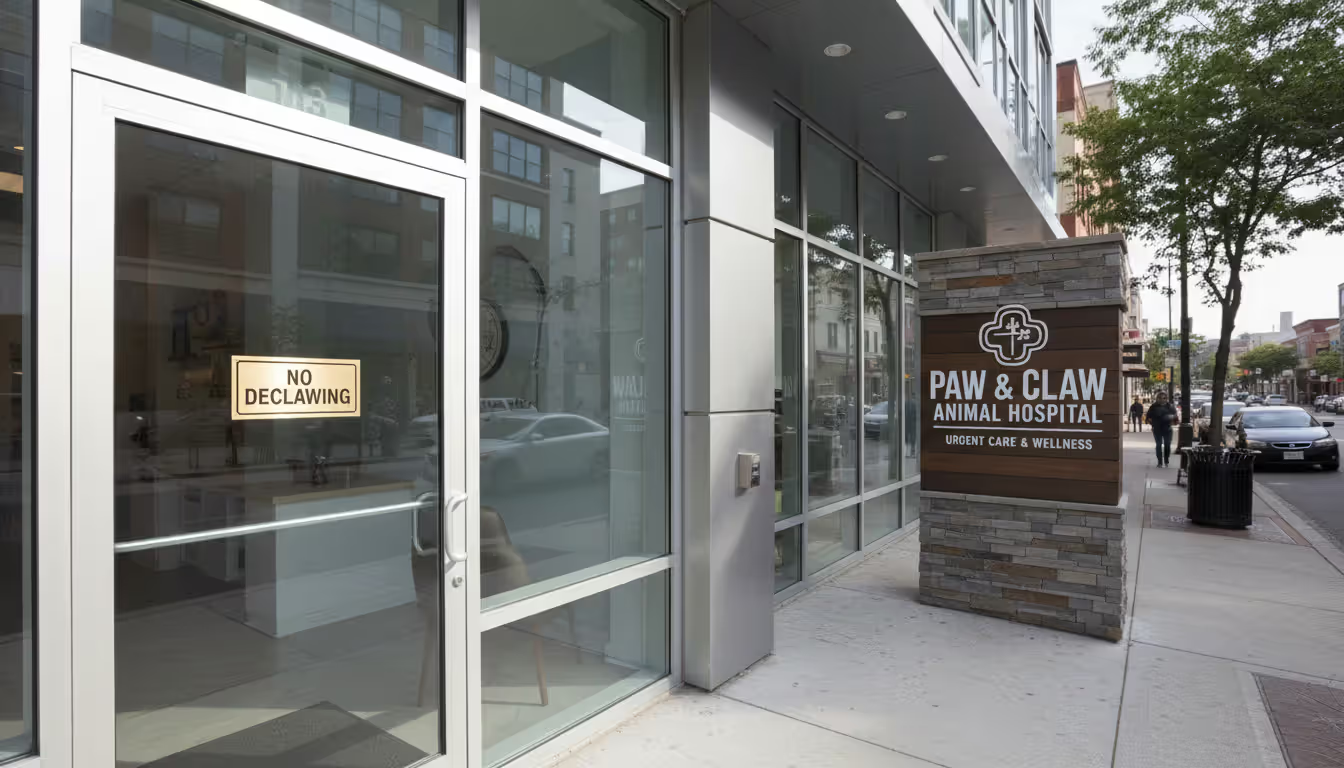
So what's the practical reality in, say, Georgia or Ohio? Technically legal, increasingly hard to find. Many veterinary practices have quietly stopped offering the service. Some clinics post signs explaining why they refuse. Others require multiple consultations about alternatives before they'll even consider it. The professional culture has shifted faster than the statutes.
Author: Marcus Redfield;
Source: jamboloudobermans.com
States and Cities Where Cat Declawing Is Banned
Statewide Bans
Two states have drawn hard boundaries:
New York went first. Governor Andrew Cuomo signed the prohibition into law in July 2019, and it took effect immediately—no grace period. Veterinarians who declaw cats in New York now face fines up to $1,000 per violation unless they can document a medical reason that benefits the cat, not the owner's furniture.
Maryland joined the club in October 2022 after years of debate in Annapolis. Their ban works the same way: therapeutic need only, with penalties for vets who cross the line. Cat owners face no criminal charges, but good luck finding a Maryland veterinarian willing to risk their license.
City and County Bans
California cities led the charge before any state took action. In 2009 alone, eight municipalities passed local ordinances:
Los Angeles kicked things off
San Francisco followed immediately
Santa Monica joined in
Berkeley added their voice
Beverly Hills signed on
Culver City made it unanimous
West Hollywood came aboard in 2011
Burbank rounded out the list in 2012
Then other states started watching. Denver banned declawing in 2017, becoming the first non-California city to act. St. Louis passed restrictions in 2020.
Each local ban operates within city limits only. Drive across the border? Different rules entirely. But the pattern matters—these early adopters proved bans could work, giving state legislators a roadmap.
Where
When It Passed
What It Covers
Can Vets Make Medical Exceptions?
New York (entire state)
2019
All cats statewide
Yes—only for therapeutic purposes
Maryland (entire state)
2022
All cats statewide
Yes—documented medical need required
Los Angeles, CA
2009
Within city boundaries
Yes—legitimate health conditions
San Francisco, CA
2009
Within city boundaries
Yes—legitimate health conditions
Denver, CO
2017
Within city boundaries
Yes—therapeutic purposes only
St. Louis, MO
2020
Within city boundaries
Yes—medical necessity required
Berkeley, CA
2009
Within city boundaries
Yes—legitimate health conditions
West Hollywood, CA
2011
Within city boundaries
Yes—legitimate health conditions
Why Cat Declawing Faces Legal Restrictions
Let's talk about what actually happens during a declaw surgery. Vets don't just remove the nail. They amputate the last bone of each toe—all ten front toes in a typical procedure. Imagine cutting off your fingers at the last knuckle. That's the anatomical equivalent.
Why does this matter legally? Because the consequences stack up fast.
In the first few weeks after surgery, cats often develop infections. Some experience tissue death around the surgical sites. Many limp for weeks. Pain medication only does so much when you've lost ten bones.
Then come the long-term problems. Research shows declawed cats bite more often—makes sense when you've stripped away their primary defense tool. They stop using litter boxes at higher rates, possibly because digging in litter hurts their hypersensitive paws. Some cats completely change personality, becoming withdrawn or hostile.
Scratching isn't just destructive behavior. It's how cats stretch their back muscles, mark their territory through scent glands in their paws, and maintain claw health. Remove that ability and you're not solving a problem—you're creating new ones.
The ethical argument boils down to this: we're performing irreversible surgery on healthy animals for human convenience. That furniture your cat scratched? It can be replaced. Your cat's toe bones? Gone forever.
Declawing is not a minor procedure. It causes permanent disability and chronic pain in many cats. The legal bans reflect growing recognition that we cannot ethically amputate healthy bone to protect furniture
— Dr. Jennifer Conrad
Lawmakers pay attention when veterinary research documents nerve damage, bone fragments left behind during surgery, and abnormal walking patterns that stress joints years later. What seemed like a personal choice starts looking like a public welfare issue worth regulating.
There's also the shelter argument, which hasn't held up well. For years, vets defended declawing by claiming it prevented cats from being surrendered over scratching damage. Turns out declawed cats actually get surrendered more often due to behavioral problems the surgery created.
Countries That Have Banned Cat Declawing
America's behind the curve here. Way behind.
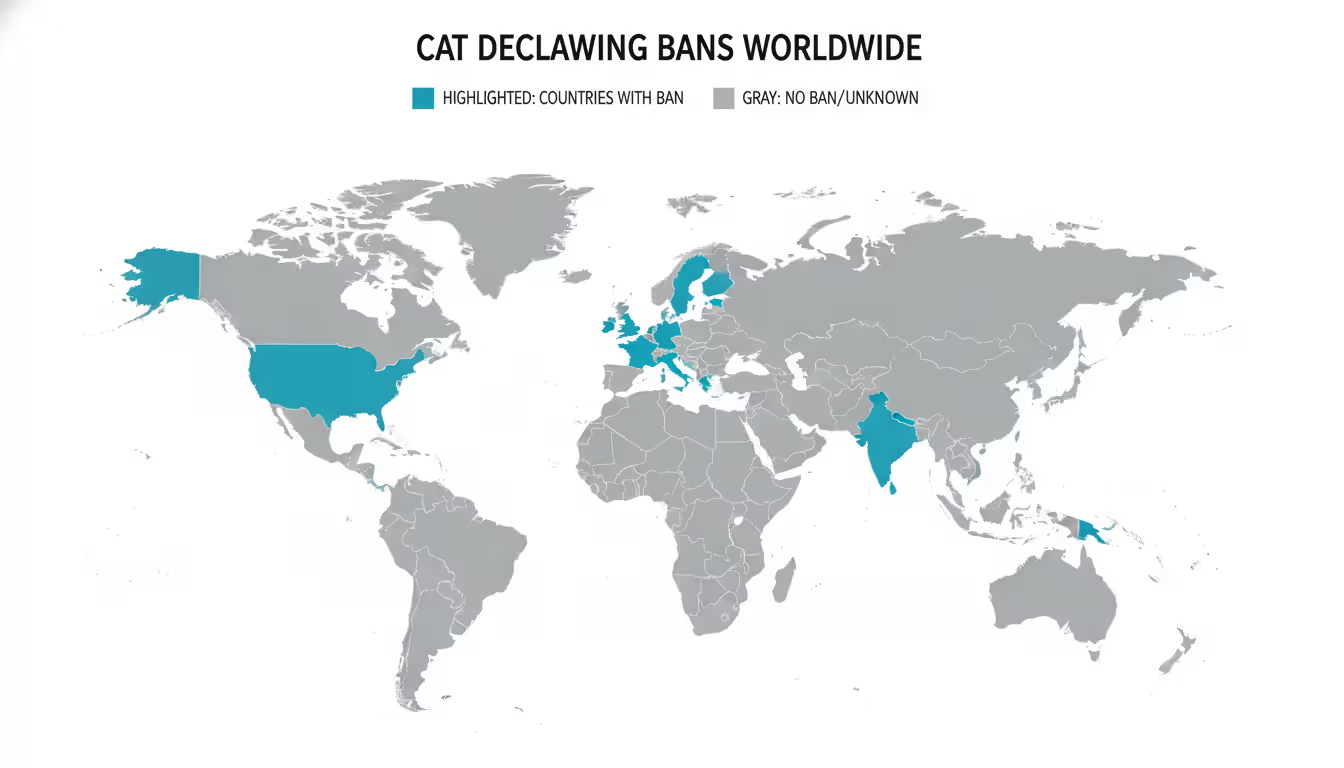
More than 40 countries treat cat declawing as animal cruelty, either through specific bans or under general welfare laws. Most of these prohibitions have been on the books for decades.
Nearly all of Europe bans the practice: - United Kingdom (since the 1980s) - Germany - France - Italy - Spain - Portugal - Netherlands - Belgium - Austria - Switzerland - Sweden - Norway - Finland - Denmark
Author: Marcus Redfield;
Source: jamboloudobermans.com
Other nations where declawing is illegal: - Australia - New Zealand - Brazil - Israel - Turkey
Britain led the way, treating declawing as mutilation under their animal welfare statutes back in the Reagan era. European Union directives on animal welfare pushed member countries toward similar positions. For most European veterinarians, the question isn't whether declawing is allowed—it's why anyone would consider it in the first place.
This international consensus strengthens American advocacy efforts. When ban supporters argue their case, they point to successful enforcement in dozens of countries. If the UK has managed fine without declawing since the 1980s, why can't Ohio?
Canada mirrors our patchwork approach. British Columbia, Nova Scotia, and Prince Edward Island prohibit declawing at the provincial level. Other provinces allow it. Sound familiar?
Veterinarian Perspectives and Professional Ethics
The American Association of Feline Practitioners doesn't pull punches. They've labeled declawing "ethically problematic" and tell members to avoid it unless medically required. The AVMA echoes this stance, though they've stopped short of demanding outright prohibition.
These professional positions create real tension for practicing veterinarians. Some refuse to declaw under any circumstances, even when clients offer to pay premium fees. Others continue offering the service but require extensive counseling sessions first, hoping to talk owners into alternatives. A few still perform the procedure routinely, though they're becoming rarer.
Veterinary schools have quietly removed declawing from standard surgical training. New graduates leave school without ever learning the technique. Give it another decade, and you'll struggle to find any vet under 40 who knows how to perform the surgery.
That creates an interesting dynamic in states without legal bans. A vet who refuses to declaw might lose clients to competitors—but which competitors? If most practices in town have stopped offering the service, there's nowhere else to go.
In states with bans, enforcement runs through veterinary licensing boards. Perform an illegal declaw, and you're looking at fines between $1,000 and $5,000 per case. Repeat offenders risk losing their license entirely. That's enough to make even the most cavalier practitioner think twice.
There's a generational split worth noting. Younger vets overwhelmingly oppose elective declawing. Older practitioners, especially those who've performed hundreds of these surgeries over their careers, sometimes defend the practice. As the profession's demographics shift, opposition will only intensify.
Legal Alternatives to Declawing
Here's the good news: scratching problems have multiple solutions that don't require surgery.
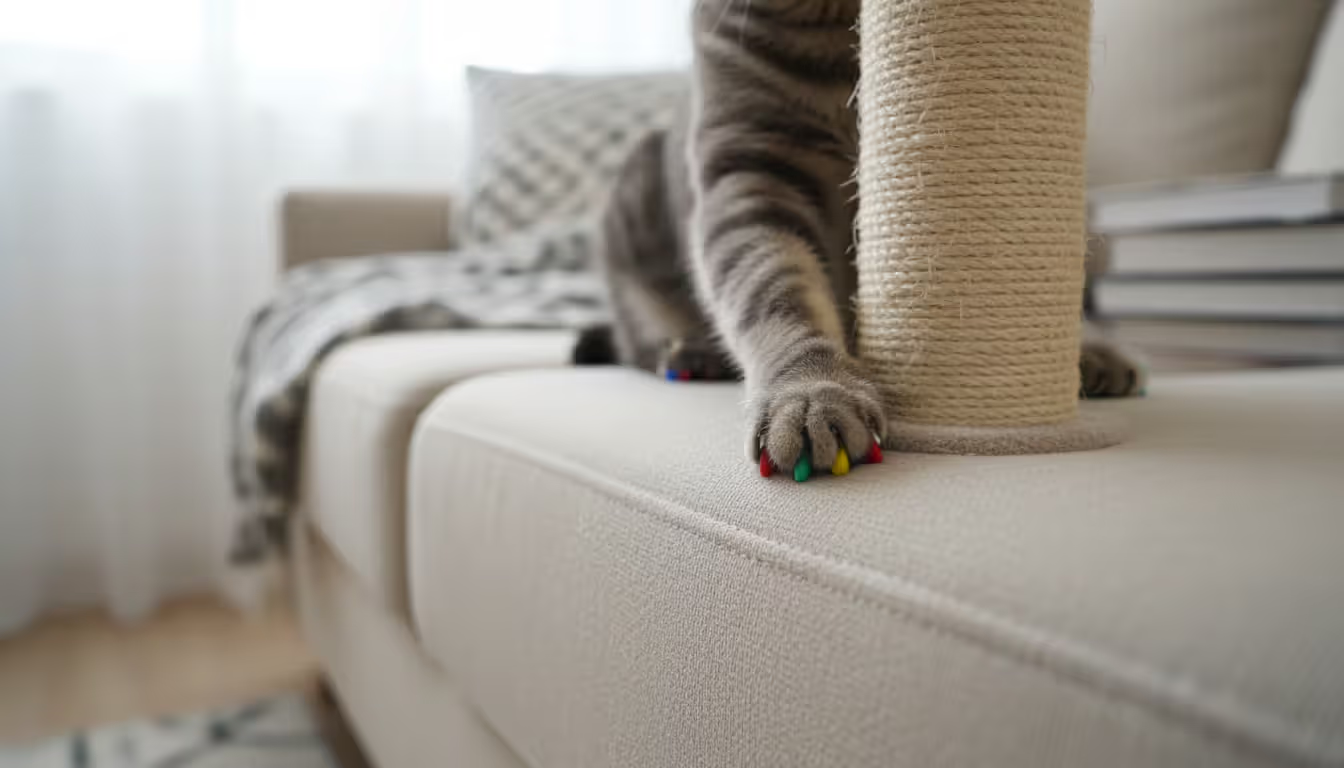
Nail caps work surprisingly well. Soft Paws and similar brands slip over trimmed claws like tiny rubber booties. They last four to six weeks, cost about $15 per set, and take five minutes to apply with the included adhesive. Your cat can scratch to their heart's content without damaging anything. Most cats ignore them completely after a day or two of adjustment.
Author: Marcus Redfield;
Source: jamboloudobermans.com
Regular trimming keeps claws dull enough to minimize damage. Every two weeks, clip the sharp tips—just like trimming your own nails. Start slowly if your cat's not used to it. One paw per session. Lots of treats. Work up to full-paw sessions over a few weeks. Many cats tolerate this fine once it becomes routine.
Strategic scratching posts redirect the behavior entirely. Here's what works: tall posts (cats need to stretch fully), stable bases (wobbly posts get ignored), and varied textures (some cats prefer sisal, others like cardboard or carpet). Place posts near wherever your cat currently scratches. Sprinkle catnip on them. Reward your cat when they use them. You're not stopping the scratching—you're moving it to acceptable locations.
Environmental modifications protect your stuff while the training takes hold. Throw blankets over couch arms. Apply double-sided tape to favorite scratching spots (cats hate the sticky feeling). Use citrus-scented deterrent sprays on furniture. Make the "wrong" places unappealing while making the "right" places irresistible.
Behavioral training through positive reinforcement shapes habits over time. Catch your cat using the scratching post? Treat immediately. See them approaching the couch arm? Redirect to the post and reward. Consistency matters more than intensity. Two weeks of gentle reinforcement beats one dramatic confrontation.
These alternatives drive legal momentum. Advocacy groups argue that readily available humane options eliminate any justification for surgical declawing. Some jurisdictions now require veterinarians to discuss alternatives before booking a declaw surgery, even where the procedure remains legal. That mandatory counseling requirement alone has reduced declawing rates significantly.
Frequently Asked Questions About Cat Declawing Laws
Can I still get my cat declawed in most US states?
Yes—48 states haven't banned it. But here's what's changed: finding a veterinarian who'll actually schedule the surgery has gotten much tougher. Many clinics refuse based on internal policies, regardless of what state law allows. If you're in New York or Maryland, it's completely off the table unless your cat has a medical condition requiring it. Cities like Los Angeles, Denver, and St. Louis also prohibit it even though their states permit it. Check your specific city ordinances, not just state law.
What are the penalties for declawing a cat where it's illegal?
Veterinarians face the consequences, not cat owners. In ban states, vets who perform illegal declawing procedures get hit with fines ranging from $1,000 to $5,000 per violation. State licensing boards handle enforcement and can suspend or revoke licenses for repeat offenders. Cities with local bans impose similar penalties within their boundaries. Nobody's going to arrest you as a cat owner for seeking the service, but you won't find a licensed vet willing to risk their career.
Will my landlord accept alternatives to declawing?
Most do when you present them properly. Show documentation that you're using nail caps. Offer references from previous landlords. Some renters voluntarily increase their security deposit to cover potential damage. Increasingly, tenant advocates argue that landlords can't require surgical alteration of your pet as a lease condition—though this varies by location and hasn't been tested extensively in courts. Demonstrating responsible pet ownership through scratching posts, regular nail maintenance, and furniture protection usually satisfies reasonable landlords.
How does declawing affect a cat's long-term health?
The surgery permanently changes skeletal structure and frequently causes chronic pain. Studies document higher arthritis rates in declawed cats because altered gait patterns put abnormal stress on leg and spine joints. Nerve damage from surgery can create lasting paw sensitivity. Behaviorally, expect increased biting (they've lost their other defense mechanism) and potential litter box avoidance if digging hurts. Some cats show obvious personality changes—becoming aggressive or withdrawn. Others suffer silently. Not every declawed cat develops problems, but the risk is substantial enough to drive welfare concerns behind legal restrictions.
Are there any medical reasons declawing is still legal?
Absolutely. Severe nail bed infections that won't respond to antibiotics, cancerous tumors in toe bones, or traumatic injuries that can't heal properly sometimes require partial or complete declawing to save the cat's life or prevent ongoing suffering. Every current ban includes exceptions for these legitimate medical situations. The legal line separates therapeutic necessity from owner convenience. Your veterinarian must document the specific medical condition and demonstrate that surgery addresses the cat's health needs, not your furniture concerns.
Which state was first to ban cat declawing?
New York claimed that distinction in 2019 when Governor Andrew Cuomo signed statewide prohibition into law that July. The ban took effect immediately, beating Maryland's 2022 legislation by three years. Before New York acted at the state level, though, several California cities pioneered local bans starting in 2009—making them technically the earliest US jurisdictions to restrict the practice. New York's action mattered because it showed states could pass comprehensive bans, not just cities, giving momentum to prohibition efforts nationwide.
Cat declawing exists in legal limbo across America. Most states allow it, but professional opposition has made it practically unavailable in many areas regardless of what statutes say. New York and Maryland have banned it outright, and numerous cities operate under local prohibitions. That gap between US law and international standards—where 40+ countries treat declawing as cruelty—continues narrowing.
If you're considering declawing, check your specific jurisdiction's rules first. Ban states and cities leave you no legal options. Elsewhere, expect difficulty finding a willing veterinarian as professional ethics have evolved faster than legislation.
The real question isn't "Can I declaw my cat?" but "Should I?" When nail caps cost $15, scratching posts run $30, and regular trimming costs nothing, surgical amputation of ten toe bones seems disproportionate to the problem. These alternatives work—advocacy groups wouldn't have convinced lawmakers to ban declawing if effective options didn't exist.
Future developments point toward expanded restrictions. Multiple state legislatures currently debate declawing bans. Veterinary opposition grows stronger annually. International precedent and documented health effects create momentum that's hard to reverse. Even if your state allows declawing today, that may change soon.
Focus on proven alternatives. They protect your furniture without permanently altering your cat's anatomy. They comply with current laws and any future restrictions. And they avoid the behavioral complications that make many declawed cats harder to live with than they were before surgery.
Surrendering an aggressive dog involves complex legal obligations and limited placement options. Between specialized rescues, sanctuary programs, and rehabilitation facilities, responsible pathways exist for owners committed to transparency and proper screening
Surrendering a dog is never easy. Financial hardship, housing changes, or behavioral challenges can force impossible choices. Learn where to surrender your dog for free, understand the complete process from intake to adoption, and discover your legal obligations and what really happens after relinquishment
Horse soring involves deliberately inflicting pain on horses' legs to create an exaggerated gait for show competitions. This federal crime, primarily affecting Tennessee Walking Horses in big lick classes, uses chemical burns, pressure shoeing, and painful chains to force unnatural movement
A rehoming fee protects your dog from exploitation while finding a responsible new home. Discover typical fee ranges, legal considerations, required documentation, and why charging nothing puts your pet at serious risk. Includes contract templates and expert guidance
The content on this website is provided for general informational and educational purposes only. It is intended to explain concepts related to animal law, pet ownership rights, service animals, dog bite liability, and animal welfare legislation in the United States.
All information on this website, including articles, guides, and examples, is presented for general educational purposes. Legal outcomes may vary depending on jurisdiction, state laws, and individual circumstances.
This website does not provide legal advice, and the information presented should not be used as a substitute for consultation with qualified attorneys or animal law professionals.
The website and its authors are not responsible for any errors or omissions, or for any outcomes resulting from decisions made based on the information provided on this website.