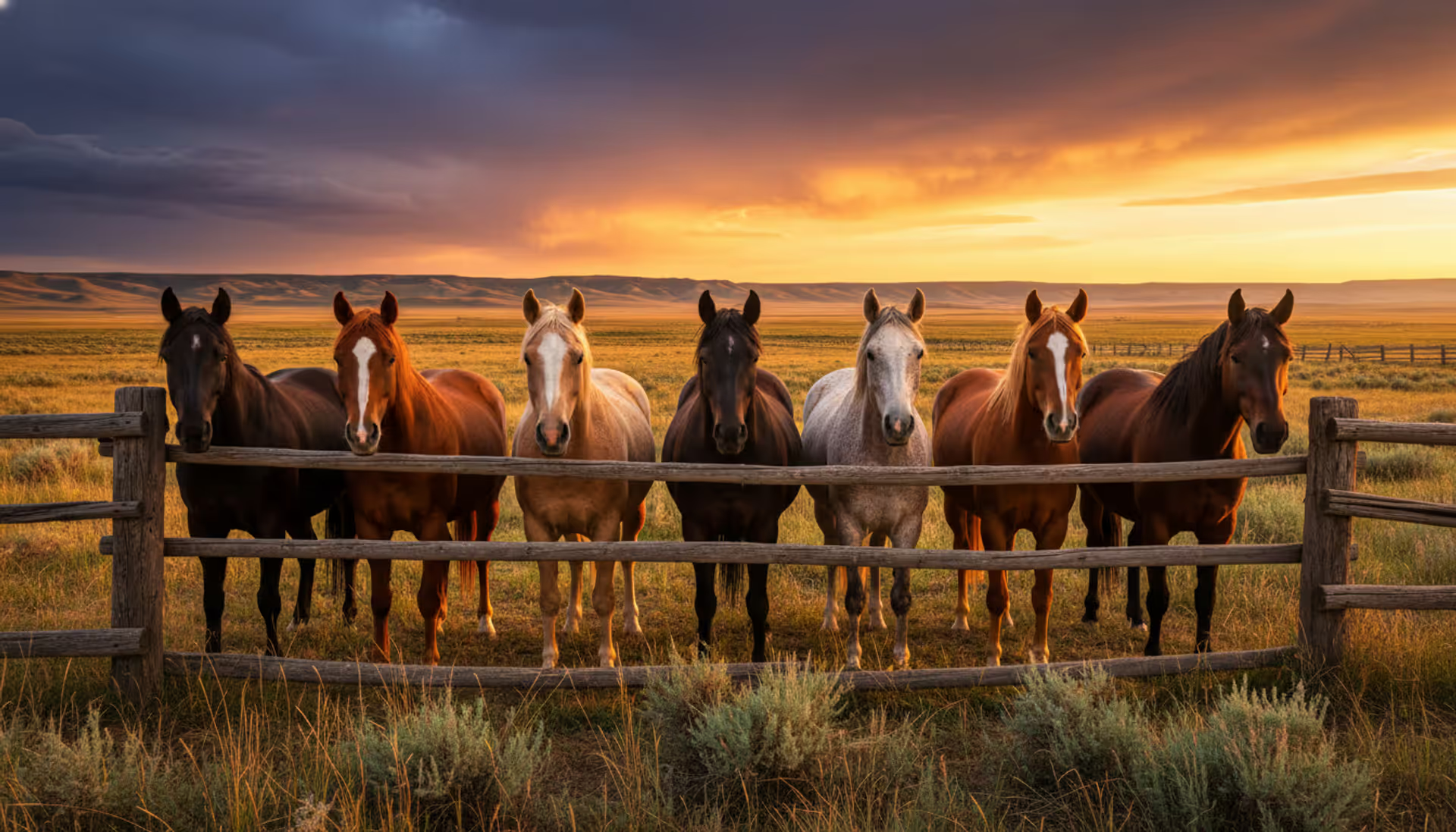
The relationship between Americans and horses has always been complicated. These animals built the nation—hauling goods, plowing fields, carrying soldiers into battle. Yet thousands are shipped across borders each year to be killed for meat. Understanding the legal framework surrounding this practice requires navigating a maze of federal defunding measures, state statutes, and international trade agreements that have evolved dramatically over the past two decades.
What Is Horse Slaughter and Why Is It Controversial
Horse slaughter refers to the commercial killing of horses for human consumption, primarily for export to countries where horsemeat is considered a delicacy. Unlike cattle or pigs raised specifically for food, most horses entering slaughter facilities in North America are former racehorses, ranch animals, or companion horses sold at auction.
The process itself raises immediate welfare concerns. Horses possess a flight instinct far stronger than cattle, making them difficult to handle in traditional slaughterhouse settings. Their long necks and tendency to move their heads unpredictably mean captive-bolt stunning—the standard method for cattle—frequently fails on the first attempt. Multiple stun attempts cause prolonged suffering.
Cultural opposition runs deeper than welfare science. Americans view horses as companion animals, not livestock. A 2025 poll by the American Veterinary Medical Association found that 83% of respondents opposed horse slaughter for human consumption, placing horses in the same category as dogs and cats. This cultural divide creates tension: while horse slaughter remains technically legal at the federal level, public sentiment has effectively shut down domestic facilities through funding restrictions and local ordinances.
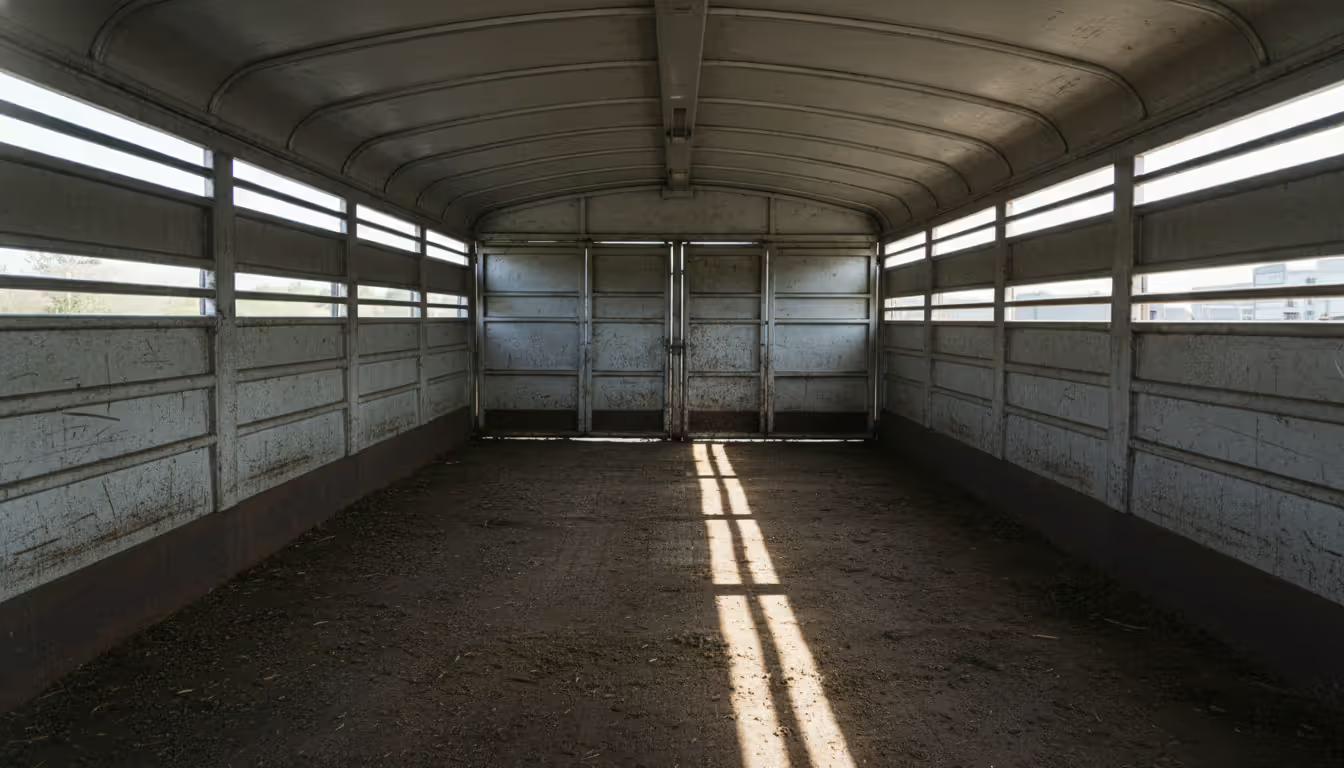
The humane debate extends beyond slaughter methods. Horses bound for slaughter often endure transport exceeding 24 hours without food, water, or rest. Double-decker cattle trailers—unsuitable for horses due to low ceiling clearance—have caused injuries and deaths during transport. These conditions violate basic animal welfare principles that most Americans expect their government to enforce.
Author: Samantha Loring;
Source: jamboloudobermans.com
Federal Horse Slaughter Legislation History
Key Laws and Defunding Measures Since 2006
The federal government has never explicitly banned horse slaughter. Instead, Congress has repeatedly defunded USDA inspection programs necessary for slaughterhouses to operate legally. This indirect approach began in 2006 when appropriations riders prohibited the USDA from spending funds to inspect horse slaughter facilities.
Without federal inspectors, domestic horse slaughter plants cannot sell meat for human consumption under the Federal Meat Inspection Act. The last three facilities—two in Texas and one in Illinois—closed in 2007. The Texas plants shut down after state courts upheld a 1949 Texas law banning horse slaughter for human consumption. The Illinois facility ceased operations when the state passed similar legislation.
The defunding measure has appeared in nearly every agricultural appropriations bill since 2006, though not without gaps. In 2011, Congress temporarily allowed the ban to lapse, leading to attempts to reopen facilities in New Mexico, Iowa, and Missouri. Local opposition, zoning challenges, and state-level legislation blocked these efforts. By 2014, Congress had reinstated the inspection funding prohibition, where it has remained through the 2026 fiscal year.
This annual appropriations battle creates uncertainty. The ban requires renewal each budget cycle, leaving the door open for reversal if political winds shift. Opponents of horse slaughter must lobby Congress every year to maintain the status quo.
The Horse Slaughter Prevention Act and Legislative Attempts
The SAFE Act (Save America's Forgotten Equines), formerly known as the Horse Slaughter Prevention Act, represents the most comprehensive legislative attempt to permanently ban horse slaughter and export for slaughter. First introduced in 2013, the bill has been reintroduced in every congressional session since.
The legislation would make it illegal to knowingly sell, transport, or possess horses or horsemeat intended for human consumption. Crucially, it would close the export loophole that allows tens of thousands of American horses to be shipped to Canada and Mexico for slaughter each year.
Despite bipartisan support and backing from over 200 animal welfare, veterinary, and equine organizations, the SAFE Act has never reached a floor vote in either chamber. Agricultural committees—where the bill must pass before advancing—include members from states with significant livestock industries who view the legislation as government overreach into animal agriculture.
A parallel effort, the Horseracing Integrity and Safety Act of 2020, addressed doping and safety in racing but included no provisions regarding slaughter. This highlighted a gap: even as Congress reformed racing regulations, the fate of horses exiting the industry remained unaddressed in federal law.
Author: Samantha Loring;
Source: jamboloudobermans.com
Current Legal Status of Horse Slaughter in the US
Horse slaughter occupies legal limbo. No federal statute explicitly prohibits killing horses for meat. The practice remains lawful under federal law, but the USDA inspection defunding makes operating a commercial facility impossible. This creates a technically-legal-but-practically-banned situation.
State laws add another layer of complexity. California, Illinois, and Texas have explicit statutes prohibiting horse slaughter for human consumption. New Jersey, Oklahoma, and several other states have passed similar measures. These laws prevent facilities from opening even if federal inspection funding were restored.
However, 44 states have no specific horse slaughter prohibitions. In these jurisdictions, if Congress eliminated the inspection ban, entrepreneurs could theoretically open facilities subject only to local zoning and environmental regulations. Several rural communities have considered allowing horse slaughterhouses as economic development projects, though public backlash typically derails such plans.
The current enforcement landscape focuses on transport and export. The Commercial Transportation of Equines to Slaughter Act, passed in 2011, established minimum standards for trailers and transport duration. Enforcement remains spotty. The USDA's Animal and Plant Health Inspection Service conducts occasional inspections at border crossings, but limited resources mean many violations go undetected.
Federal law also prohibits selling horsemeat for human consumption without USDA inspection, but this rarely affects individual horse owners. The regulation targets commercial operations, not private sales. This legal framework allows the export pipeline to function while preventing domestic slaughter facilities from operating.
Horse Slaughter in Canada and Mexico
American horses cross borders by the thousands. In 2025, approximately 18,000 horses were exported to Canada and 32,000 to Mexico for slaughter, according to USDA export data. These numbers have remained relatively stable since domestic facilities closed, suggesting that demand for horsemeat in European and Asian markets continues unabated.
Canada maintains federally inspected horse slaughter facilities, primarily in Alberta and Quebec. Canadian Food Inspection Agency standards govern these operations, which must meet requirements for exporting meat to the European Union. EU regulations technically prohibit slaughtering horses treated with certain common veterinary drugs, including phenylbutazone (bute), a non-steroidal anti-inflammatory used extensively in American horses.
The drug residue problem creates a regulatory fiction. Most American horses have received medications that would disqualify their meat under EU standards, yet exports continue. The passport system required by EU law to track veterinary treatments doesn't exist for American horses. Canadian processors rely on brief holding periods and owner declarations—easily falsified—to claim compliance.
Mexico's horse slaughter industry operates under less stringent oversight. Facilities cluster near the U.S. border in states like Chihuahua and Jalisco. Inspection standards vary, and enforcement of humane handling requirements remains inconsistent. Investigations by animal welfare organizations have documented conditions at Mexican plants that would violate U.S. humane slaughter laws if they applied.
The journey itself poses welfare risks. Horses may travel 1,500 miles or more from auction houses in the Midwest or South to Mexican facilities. Feedlots on both sides of the border hold horses for days or weeks before slaughter, often in overcrowded conditions with inadequate shelter.
Country
Legal Status
Active Facilities
Inspection Standards
Primary Market for Meat
United States
Legal but no USDA inspection funding
0 (closed since 2007)
Would require USDA inspection if operating
N/A (no domestic production)
Canada
Legal and regulated
3 federally inspected facilities
Canadian Food Inspection Agency, EU export standards
European Union, Japan
Mexico
Legal and regulated
6+ facilities (number fluctuates)
Mexican government inspection (enforcement varies)
European Union, Russia, Kazakhstan
Arguments For and Against Horse Slaughter
Welfare and Humane Treatment Concerns
Welfare advocates point to documented failures in stunning, injuries during transport, and the stress of unfamiliar handling environments. Horses are intelligent enough to recognize danger, and the smell of blood and sounds of other animals being killed causes extreme distress in holding areas.
The drug contamination issue compounds welfare concerns. If horsemeat containing veterinary drug residues reaches consumers, it poses food safety risks. Yet the alternative—withholding pain medication from injured or arthritic horses to preserve meat quality—creates a different welfare problem.
Rescue organizations argue that slaughter provides an excuse for irresponsible breeding and ownership. If unwanted horses have commercial value as meat, breeders face less pressure to reduce production or ensure lifetime homes. The availability of slaughter as a disposal option may actually increase the population of at-risk horses.
The slaughter of horses for human consumption is fundamentally incompatible with their physiology and temperament. Unlike food animals bred for docility, horses are flight animals whose fear response makes humane slaughter nearly impossible under commercial conditions
— Dr. Nicholas Dodman
Economic and Overpopulation Arguments
Supporters of horse slaughter, including some livestock industry groups and rural veterinarians, frame the issue as practical population management. They argue that the U.S. horse population exceeds the capacity of rescue organizations and private owners to provide homes. Without slaughter as an option, unwanted horses face abandonment, starvation, or prolonged neglect.
The economics are straightforward: horses cost $2,000 to $3,500 annually to maintain. When owners can no longer afford care, selling to a kill buyer provides some financial return and, supporters argue, a quicker death than slow starvation in a back pasture. Euthanasia by a veterinarian costs $300 to $500, plus body disposal fees—expenses some owners cannot or will not pay.
Some livestock industry representatives view horse slaughter bans as precedent-setting restrictions that could expand to cattle, pigs, or chickens. They oppose any legislation that distinguishes between animal species based on cultural sentiment rather than biological criteria.
The overpopulation argument has weaknesses. Data from the USDA shows the American horse population declined from 9.2 million in 2006 to approximately 7.4 million in 2025. Breeding has decreased, particularly in the Quarter Horse and Thoroughbred industries. This suggests market forces, not slaughter availability, drive population trends.
Additionally, neglect and abandonment cases have not increased proportionally since domestic slaughter ended. Most states report stable or declining numbers of cruelty investigations involving horses, contradicting predictions that closing slaughterhouses would create a welfare crisis.
Author: Samantha Loring;
Source: jamboloudobermans.com
Horse Meat Consumption and US Market Laws
Horsemeat consumption remains rare in the United States, where cultural taboos classify horses as companion animals rather than food. No federal law prohibits Americans from eating horsemeat, but the lack of USDA-inspected domestic production makes it effectively unavailable through commercial channels.
The FDA has not approved horsemeat for human consumption, but this reflects the absence of applications rather than an active prohibition. If a producer sought approval and met inspection requirements, horsemeat could theoretically enter the U.S. food supply. Consumer acceptance would likely remain the bigger barrier than regulatory approval.
State laws add restrictions. California explicitly bans selling horsemeat for human consumption, as do Illinois and Texas. These statutes make it illegal to offer horsemeat in restaurants or retail stores within those states, regardless of where the meat was processed.
The international market drives the trade. Horsemeat commands premium prices in Belgium, France, Italy, Japan, and Kazakhstan, where it's considered a delicacy. European consumers particularly value meat from younger horses, which they perceive as more tender. This demand creates financial incentives for the export pipeline to continue.
Ironically, American horses often receive better care than animals raised specifically for meat in other countries. The high-quality feed, veterinary care, and exercise that racehorses and performance horses receive produces lean, well-muscled meat that fetches top prices abroad. This creates a perverse incentive: the better Americans care for horses during their useful lives, the more valuable they become as slaughter candidates.
Rescue Organizations and Legal Advocacy Efforts
Dozens of organizations work to end horse slaughter through legislative advocacy, legal challenges, and direct rescue efforts. The Humane Society of the United States, Animal Wellness Action, and Return to Freedom have led federal lobbying efforts for the SAFE Act. These groups coordinate with equine-specific organizations like the American Wild Horse Campaign and Equine Welfare Alliance.
Legal strategies have focused on challenging USDA decisions to grant inspection waivers and enforcing existing transport regulations. In 2023, a coalition of animal welfare groups sued the USDA over alleged failures to enforce the Commercial Transportation of Equines to Slaughter Act. The case remains in litigation as of early 2026, with potential implications for how rigorously the government monitors border crossings.
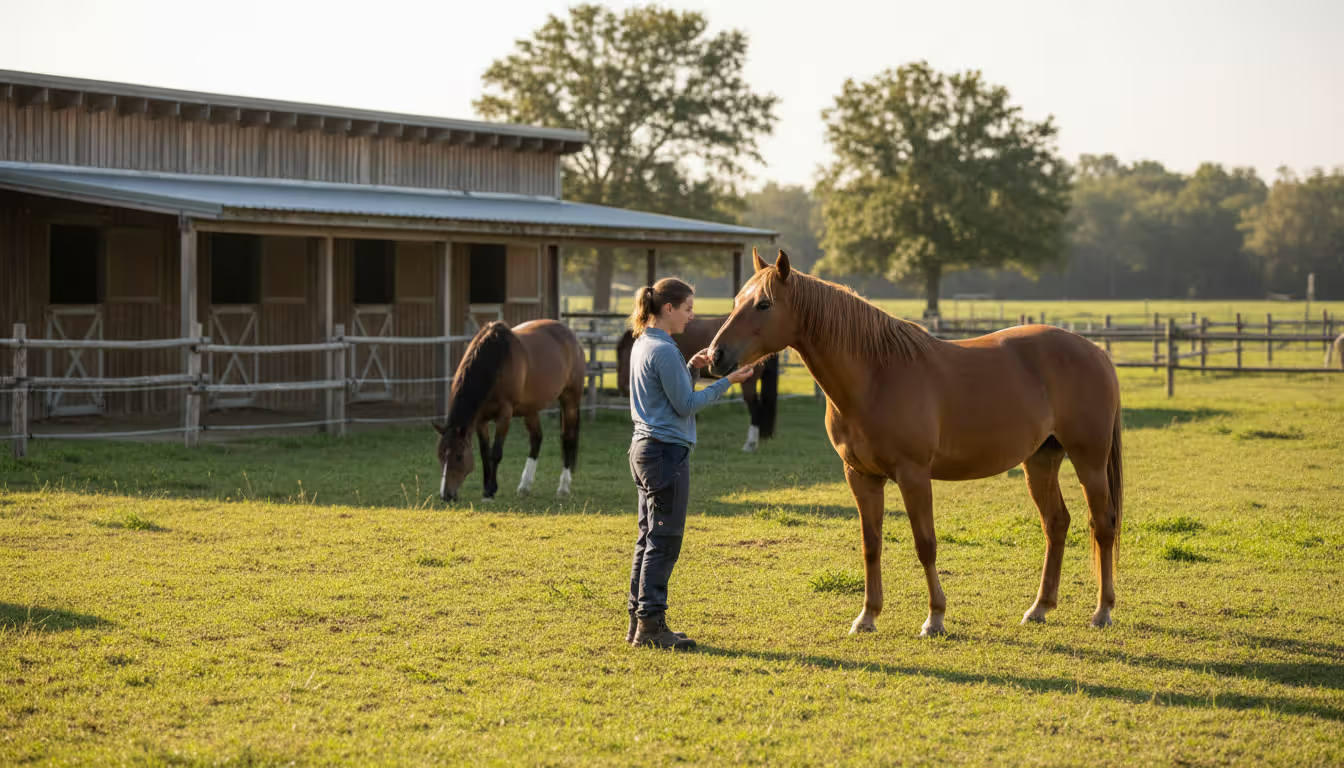
Sanctuary networks provide alternatives to slaughter. Organizations like Habitat for Horses, Days End Farm Horse Rescue, and hundreds of smaller facilities rehabilitate and rehome horses pulled from kill pens. These groups operate on limited budgets, relying on donations and volunteers. They've collectively saved thousands of horses but cannot match the scale of the slaughter pipeline.
Individual action matters. Citizens can support legislative efforts by contacting representatives to co-sponsor the SAFE Act. Adopting horses from rescues rather than buying from breeders reduces demand for new foals. Supporting organizations that provide low-cost gelding services addresses overpopulation at its source.
Author: Samantha Loring;
Source: jamboloudobermans.com
Some advocates focus on industry-specific solutions. Thoroughbred racing has faced pressure to fund aftercare programs for retired racehorses. The Thoroughbred Aftercare Alliance, formed in 2012, accredits retirement facilities and provides grants, though the program reaches only a fraction of horses exiting racing each year.
Frequently Asked Questions
Is horse slaughter currently legal in the United States?
Horse slaughter is legal under federal law, but no facilities operate because Congress has defunded USDA inspection programs since 2006 (with brief lapses). Without inspections, selling horsemeat for human consumption violates the Federal Meat Inspection Act. Three states—California, Illinois, and Texas—have additional laws explicitly banning horse slaughter.
Why did the US stop slaughtering horses domestically?
The last domestic horse slaughter facilities closed in 2007 due to a combination of federal defunding of USDA inspections and state-level bans. Texas and Illinois passed laws prohibiting horse slaughter for human consumption, while Congress eliminated funding for inspectors needed at such facilities. Public opposition and local zoning challenges have prevented new facilities from opening.
What happens to American horses sent to Canada or Mexico?
Approximately 50,000 American horses are exported annually to slaughter facilities in Canada and Mexico. After transport that may exceed 24 hours, horses are held in feedlots before slaughter. The meat is processed primarily for export to European and Asian markets where horsemeat is consumed. Welfare conditions during transport and at foreign facilities often fall below U.S. standards.
Can you legally buy horse meat in the United States?
Technically yes under federal law, but practically no. Without domestic USDA-inspected production, horsemeat is unavailable through commercial channels. California, Illinois, and Texas explicitly prohibit selling horsemeat for human consumption. Importing horsemeat from other countries would require FDA approval and face significant cultural resistance from consumers and retailers.
What is the Horse Slaughter Prevention Act?
Now called the SAFE Act (Save America's Forgotten Equines), this proposed federal legislation would ban the slaughter of horses for human consumption and prohibit exporting horses for slaughter abroad. The bill has been introduced in every Congress since 2013 with bipartisan support but has never received a floor vote. It would close the legal loophole allowing exports to Canada and Mexico.
How can I help prevent horse slaughter through legal channels?
Contact your U.S. Representative and Senators to co-sponsor the SAFE Act. Support organizations lobbying for federal legislation, such as Animal Wellness Action or the Humane Society. Adopt horses from rescue organizations rather than buying from breeders. Report suspected violations of transport regulations to the USDA. Support state-level legislation in your jurisdiction to ban horse slaughter explicitly.
The legal status of horse slaughter in the United States reflects deeper tensions between cultural values, economic realities, and animal welfare principles. While no domestic facilities have operated since 2007, the export pipeline continues to funnel tens of thousands of American horses to slaughter in Canada and Mexico each year. Federal law remains stuck in an annual appropriations battle, with inspection defunding requiring renewal every budget cycle rather than permanent prohibition.
The path forward requires closing the export loophole through legislation like the SAFE Act while addressing the legitimate concerns about unwanted horses through expanded rescue networks, affordable euthanasia programs, and reduced breeding. The current system satisfies no one: welfare advocates watch horses suffer in cross-border transport, while industry supporters complain about regulatory inconsistency.
Understanding the legal framework matters because it reveals where pressure points exist for change. Congressional appropriations, state legislation, international trade agreements, and enforcement of existing transport regulations all offer opportunities for advocates to make incremental progress. The question isn't whether Americans oppose horse slaughter—polling shows overwhelming public consensus—but whether that opposition can translate into permanent legal protections that extend beyond U.S. borders to prevent the export of horses to foreign slaughter facilities.
Surrendering an aggressive dog involves complex legal obligations and limited placement options. Between specialized rescues, sanctuary programs, and rehabilitation facilities, responsible pathways exist for owners committed to transparency and proper screening
Surrendering a dog is never easy. Financial hardship, housing changes, or behavioral challenges can force impossible choices. Learn where to surrender your dog for free, understand the complete process from intake to adoption, and discover your legal obligations and what really happens after relinquishment
Horse soring involves deliberately inflicting pain on horses' legs to create an exaggerated gait for show competitions. This federal crime, primarily affecting Tennessee Walking Horses in big lick classes, uses chemical burns, pressure shoeing, and painful chains to force unnatural movement
A rehoming fee protects your dog from exploitation while finding a responsible new home. Discover typical fee ranges, legal considerations, required documentation, and why charging nothing puts your pet at serious risk. Includes contract templates and expert guidance
The content on this website is provided for general informational and educational purposes only. It is intended to explain concepts related to animal law, pet ownership rights, service animals, dog bite liability, and animal welfare legislation in the United States.
All information on this website, including articles, guides, and examples, is presented for general educational purposes. Legal outcomes may vary depending on jurisdiction, state laws, and individual circumstances.
This website does not provide legal advice, and the information presented should not be used as a substitute for consultation with qualified attorneys or animal law professionals.
The website and its authors are not responsible for any errors or omissions, or for any outcomes resulting from decisions made based on the information provided on this website.