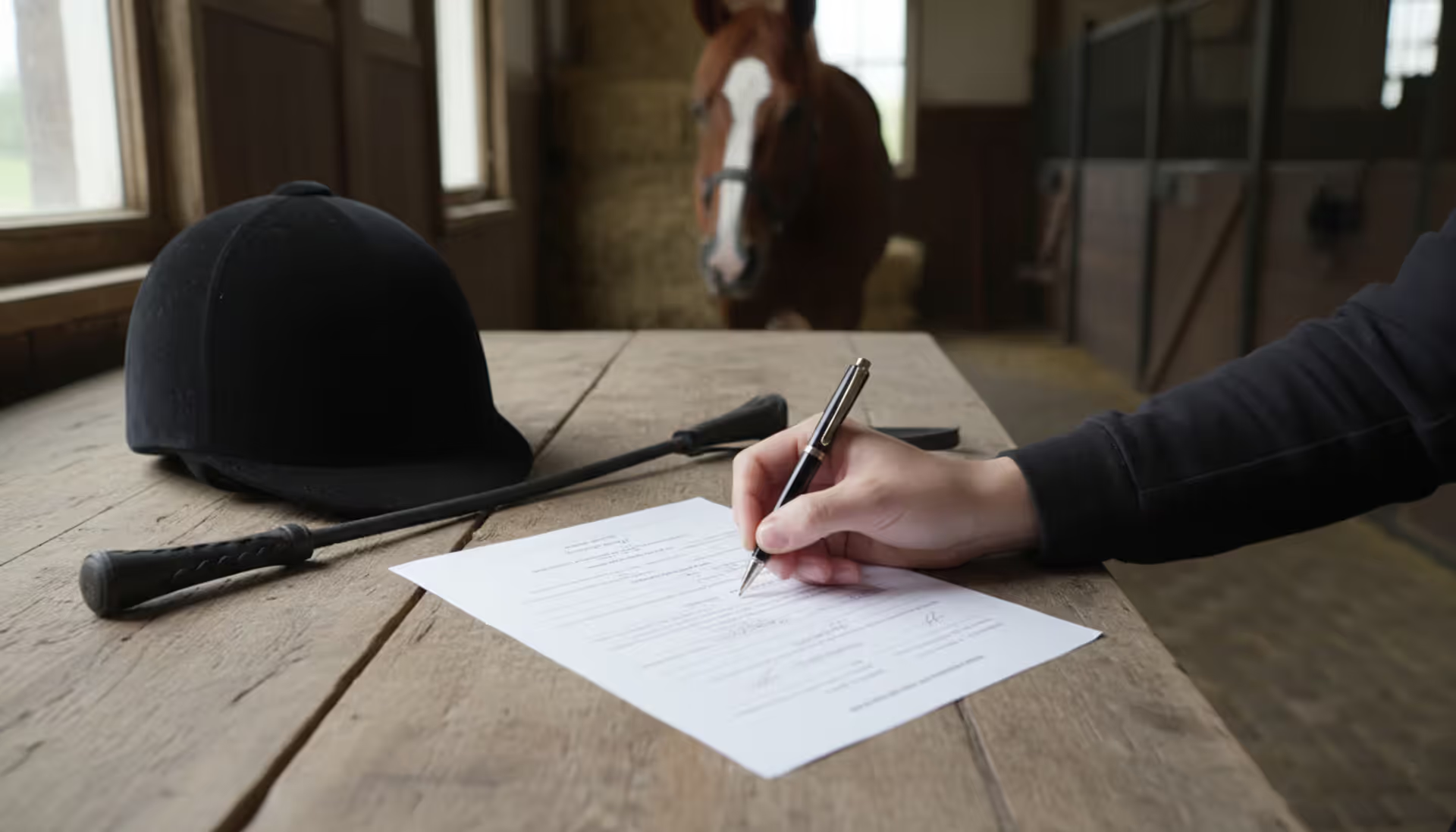
A person signing a legal document at a wooden table with an equestrian helmet and riding crop nearby, a horse looking out from a stable stall in the blurred background
A horse liability waiver is a legal document signed by participants before engaging in equine activities. The signer acknowledges the inherent risks of working with horses and agrees not to hold the stable, instructor, or property owner liable for injuries that occur during normal horseback riding or horse-related activities.
These waivers serve as a first line of defense for equine professionals. When someone climbs onto a horse, handles livestock, or participates in lessons, they're entering an environment where unpredictable animals can cause serious harm. A properly executed waiver establishes that the participant understands these dangers and voluntarily assumes the risk.
However, waivers don't create blanket immunity. They typically protect against ordinary negligence—such as a horse spooking unexpectedly or a rider falling during a normal lesson. They don't shield operators from gross negligence, intentional misconduct, or violations of equine activity liability law. For example, if a barn owner knowingly puts a novice rider on a dangerously aggressive horse without warning, a waiver likely won't prevent a successful lawsuit.
The document works in tandem with state-level protections. Most equine businesses use waivers alongside statutory protections to create layered defense against litigation. The waiver addresses contractual liability, while state equine liability acts provide additional statutory immunity for inherent risks.
Are Horse Riding Liability Waivers Enforceable in Court?
Horse riding liability waiver enforceability depends on multiple factors, and courts scrutinize these documents carefully. A waiver that holds up in one jurisdiction might fail in another based on state public policy, specific language used, and circumstances surrounding the injury.
Courts generally enforce waivers when they meet specific criteria: clear, unambiguous language that explicitly describes the risks; conspicuous placement of liability release clauses; proper execution with knowing, voluntary signatures; and scope limited to ordinary negligence rather than gross misconduct.
Language matters tremendously. Vague phrases like "the stable isn't responsible for anything that happens" won't survive judicial review. Effective waivers specify risks: "Horses may kick, bite, buck, or bolt without warning. Riders may fall and sustain serious injuries including paralysis or death." Courts want evidence that signers understood exactly what they were waiving.
Recent cases demonstrate this principle. In a 2025 Virginia case, a rider paralyzed after falling from a horse during a trail ride sued despite signing a waiver. The court enforced the waiver because it contained specific language about trail riding dangers, used bold, capitalized text for the release clause, and the rider had initialed multiple pages. Conversely, a 2024 Kentucky case invalidated a waiver printed in 8-point font on the back of a receipt, ruling the participant couldn't reasonably be expected to notice or understand the release.
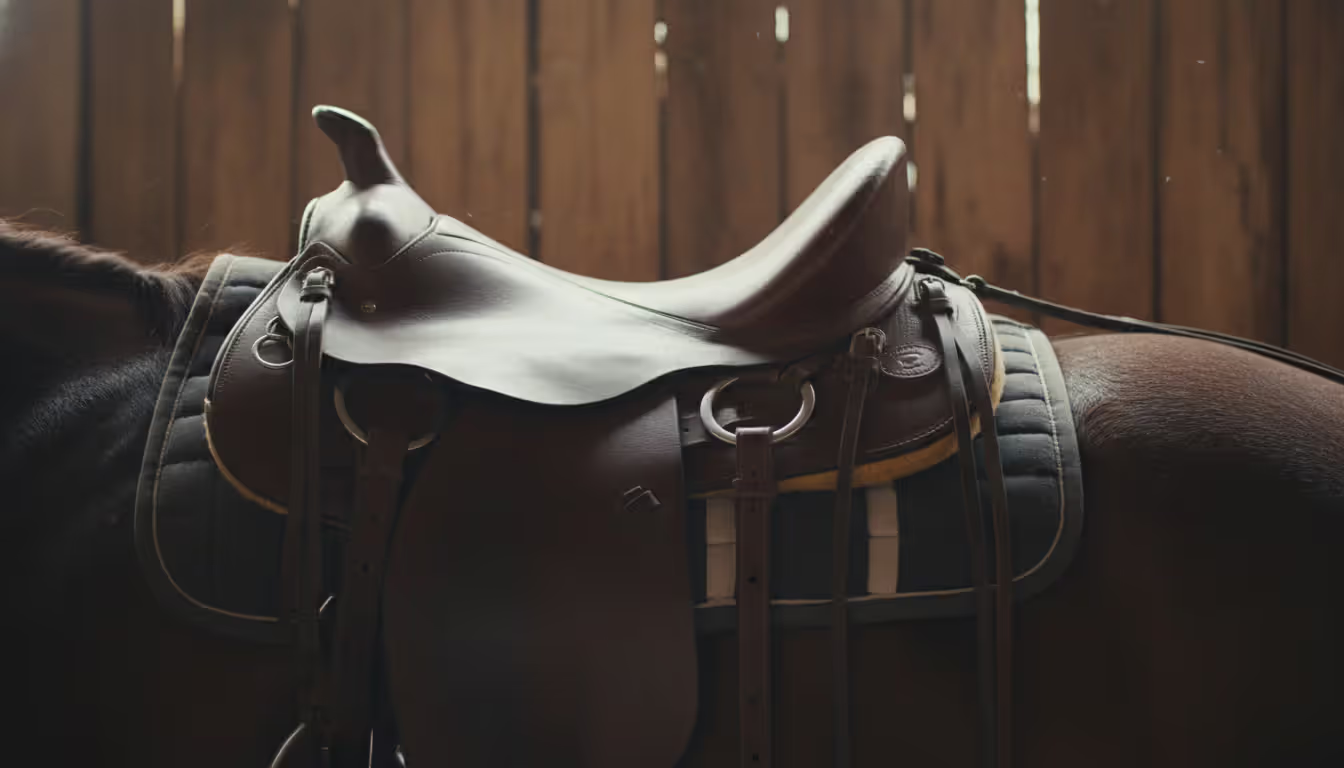
Gross negligence remains the critical exception. If a stable owner ignores a broken saddle girth that snaps during a ride, or fails to maintain fencing allowing horses to escape onto a highway, courts typically find such conduct exceeds ordinary negligence. A waiver won't protect against reckless disregard for participant safety.
According to Julie Fershtman, an equine attorney with over three decades of experience representing horse industry clients, "A well-drafted waiver is your first line of defense, but it's not a magic shield. Courts will enforce them when they're fair, clear, and the injury resulted from inherent equine risks rather than your own carelessness or dangerous choices."
Author: Samantha Loring;
Source: jamboloudobermans.com
Equine Liability Acts by State and How They Affect Waivers
Equine liability acts by state provide statutory protection separate from contractual waivers. As of 2026, 46 states have enacted equine activity liability laws that limit when participants can sue for horse-related injuries. These statutes recognize that horses are inherently unpredictable and create a legal framework protecting equine professionals from lawsuits arising from those inherent characteristics.
These laws typically define "inherent risks" to include behaviors like bucking, shying, stumbling, biting, or kicking. They specify that equine activity sponsors aren't liable for injuries resulting from these inherent risks, even without a signed waiver. However, they carve out exceptions for scenarios involving negligence in equipment maintenance, failure to match horses to rider skill levels, or knowingly using dangerous animals without adequate warnings.
State statutes interact with waivers rather than replace them. The statutory protection applies to all participants regardless of whether they signed anything, while waivers provide additional contractual defenses. Smart operators use both tools together.
State
Equine Liability Act
Key Protections
Waiver Interaction
Texas
Yes (Civil Practice & Remedies Code §87)
Immunity for inherent risks; warning sign requirement
Immunity with equipment and supervision exceptions
Waiver critical for addressing exceptions
Illinois
Yes (745 ILCS 47)
Limited protection; narrow scope
Strong waiver essential due to weak statute
The handful of states without equine liability statutes—including Maryland, Nevada, and New York City's jurisdiction—rely entirely on common law and contractual waivers. In these locations, waivers carry even greater importance because no statutory backstop exists.
Warning signs represent another statutory requirement. Most equine liability acts mandate posted notices containing specific language about inherent risks. Failure to post required signage can void statutory protections even if a participant signed a waiver. A barn in North Carolina lost statutory immunity in 2025 because they posted the warning sign inside the office rather than at the arena entrance where the statute required.
What Makes a Horse Liability Waiver Legally Valid?
Equine liability waiver requirements vary by jurisdiction, but certain elements appear consistently in enforceable documents. Courts examine whether the waiver was conspicuous, whether the language clearly communicated the risks and release of liability, and whether the signer had a genuine opportunity to read and understand the terms.
Conspicuousness means the release clause can't be buried in fine print. Effective waivers use bold or capitalized text for critical provisions, place the liability release on the first page, and use readable font sizes (at least 10-12 points). Some attorneys recommend requiring initials next to key paragraphs to demonstrate the signer read specific provisions.
Specific risk descriptions strengthen enforceability. Rather than generic warnings, list actual dangers: "Horses may react unpredictably to sounds, movements, or objects. You may be thrown, stepped on, or struck. Injuries can include broken bones, concussions, internal injuries, or death." The more detailed the risk description, the harder it becomes for a plaintiff to claim they didn't understand what they were agreeing to.
Assumption of risk clauses should explicitly state the participant is voluntarily choosing to engage in the activity despite knowing the dangers. Language like "I freely choose to participate in horseback riding with full knowledge of the inherent dangers" establishes voluntary assumption.
The waiver must be signed before the activity begins. A stable that asks riders to sign after a lesson or trail ride has created a timing problem—there was no agreement in place when the injury occurred. Some operations use digital waivers that must be completed before scheduling, creating a clear timeline.
Requirements for Minors and Parental Consent
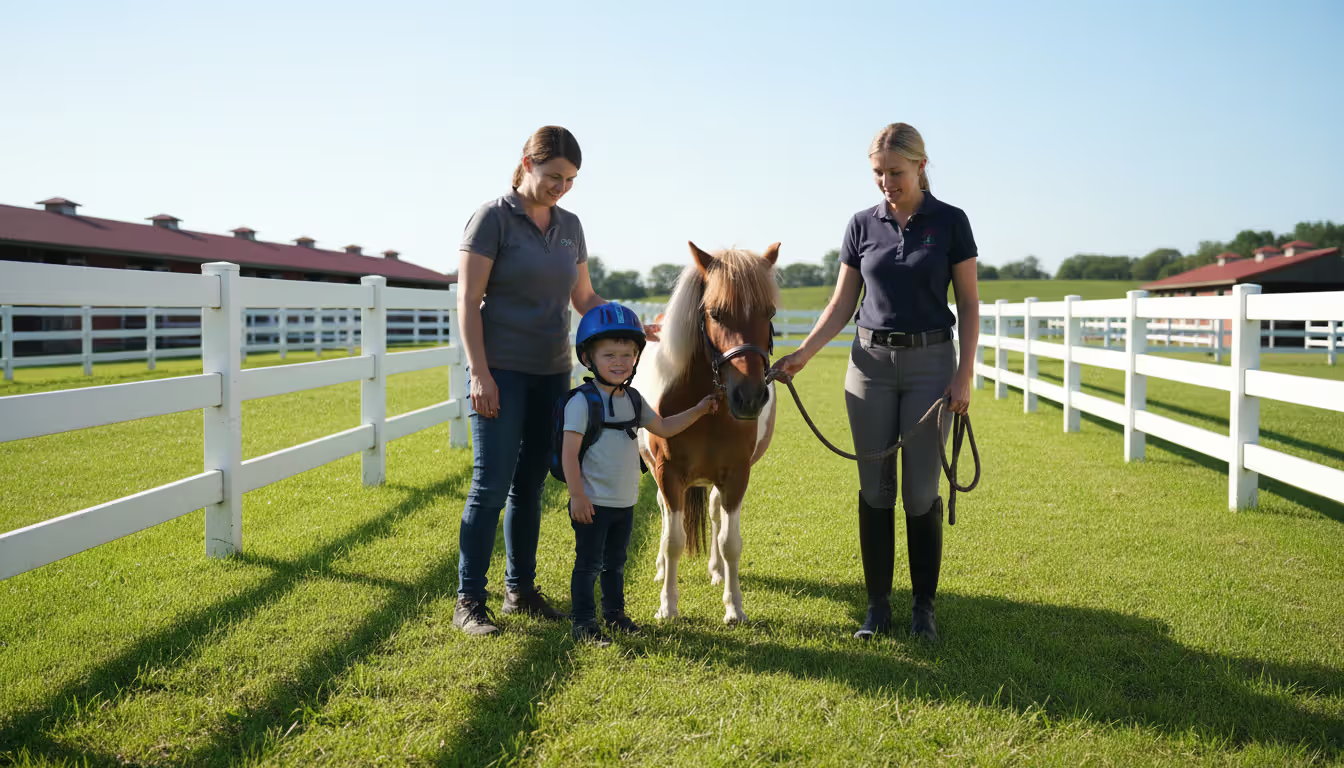
Minors present special challenges because they generally can't enter binding contracts. In most states, a minor's signature on a waiver holds no legal weight. Instead, parents or legal guardians must sign on the minor's behalf.
But even parental signatures face scrutiny. Some states don't allow parents to waive a child's right to sue for personal injury, reasoning that parents shouldn't be able to bargain away their children's legal rights. In these jurisdictions, waivers signed by parents for minor children may be unenforceable regardless of how well-drafted they are.
States take different approaches. California generally doesn't enforce parental waivers for minors in recreational activities. Colorado allows them under certain circumstances. Ohio enforces parental waivers if they meet specific requirements. Equine businesses operating youth programs must research their specific state's position on this issue.
A practical middle ground: even where parental waivers may not be fully enforceable, they still serve purposes. They educate parents about risks, demonstrate the business took safety seriously, and may discourage frivolous lawsuits. Combined with strong insurance coverage and state equine liability statutes, they remain worth obtaining.
Author: Samantha Loring;
Source: jamboloudobermans.com
Common Waiver Drafting Mistakes That Void Protection
Several recurring errors undermine waiver effectiveness. Using generic templates downloaded from the internet often creates problems because equine law varies significantly by state. A waiver drafted for Texas may fail in California due to different public policy considerations.
Overly broad language backfires. Attempting to waive liability for "any and all injuries, including those caused by our negligence, gross negligence, or intentional acts" signals overreach. Courts won't enforce releases that attempt to waive gross negligence or intentional harm, and including such language may taint the entire document.
Failing to update waivers creates staleness problems. A document drafted in 2020 may not reflect current state law or recent court decisions. Annual legal review ensures the waiver remains current and enforceable.
Inconsistent enforcement weakens the defense. If a stable requires waivers from some participants but not others, or allows people to ride without signing "just this once," it suggests the business doesn't take its own safety protocols seriously. Courts notice these patterns.
Not maintaining signed copies is surprisingly common. When a lawsuit arrives three years after an incident, the stable must produce the signed waiver. If records are disorganized or documents have been discarded, the protection evaporates.
Liability Protection for Riding Stables, Horse Shows, and Lease Agreements
Different equine activities require tailored liability approaches. Riding stable liability insurance law intersects with waivers to create comprehensive protection for ongoing barn operations. Commercial stables need robust general liability insurance regardless of how strong their waivers are, because insurance covers defense costs and settlements when waivers fail or exceptions apply.
Lesson programs carry particular exposure. Instructors must match horses to rider abilities, maintain equipment properly, and provide appropriate supervision. A waiver should specifically address instructional activities: "I understand riding lessons involve learning new skills and I may be asked to attempt maneuvers beyond my current ability level."
Author: Samantha Loring;
Source: jamboloudobermans.com
Trail riding operations face unique risks because riders leave controlled environments. Waivers should address terrain hazards, wildlife encounters, and the extended duration away from immediate help. Some trail operators include language about weather conditions and the participant's responsibility to notify staff if they feel uncomfortable continuing.
Horse show liability legal rules add complexity because multiple parties may be involved—the show organizer, facility owner, and individual trainers. Well-organized events require participants to sign waivers that clearly identify which entities are being released from liability. Ambiguity about who is protected can create gaps in coverage.
Prize money and entry fees don't change the liability analysis, but they do affect participant expectations. Someone paying $500 to enter a competition may have different assumptions about safety measures than someone taking a $50 trail ride. Clear communication about what the facility will and won't provide helps manage these expectations.
Horse lease liability agreements need specific provisions beyond standard riding waivers. Lease arrangements involve extended possession of an animal, creating ongoing responsibilities. The agreement should specify who maintains insurance on the horse, who bears responsibility for veterinary care, and what happens if the lessee is injured while riding or handling the horse.
Full leases where the lessee takes the horse off-property create the most exposure for owners. The lease should require the lessee to maintain liability insurance naming the owner as an additional insured. It should also include an indemnification clause requiring the lessee to reimburse the owner for legal costs if the horse injures someone while in the lessee's possession.
Partial leases where the horse remains at the owner's facility need clear scheduling provisions and rules about supervision. If the lessee can ride without the owner present, the lease should include waiver language similar to what would be used for a boarder.
Insurance considerations span multiple policies. General liability insurance covers third-party injuries on the property. Professional liability covers errors in instruction or training. Care, custody, and control coverage addresses horses owned by others. Umbrella policies provide additional limits above the underlying coverage. A comprehensive risk management strategy combines all these elements with strong waivers.
When Horse Injury Lawsuits Succeed Despite a Waiver
Understanding horse injury lawsuit liability requires examining when waivers fail to protect defendants. Gross negligence represents the most common exception. This legal standard involves reckless disregard for safety—conduct so careless that it goes beyond ordinary mistakes.
A 2025 case from Tennessee illustrates the distinction. A riding stable put a beginner on a horse known to bolt when startled. The instructor then fired a starter pistol during the lesson as part of a desensitization exercise without warning the rider. When the horse bolted and the rider was thrown, breaking her back, the court ruled this constituted gross negligence. The waiver didn't protect the stable because the conduct was recklessly dangerous.
Equipment failure cases often succeed when the operator knew about the defect and failed to repair it. A broken stirrup leather that snaps during a ride might be an unfortunate accident if the operator didn't know about the damage. But if multiple riders had reported the leather was cracking and the operator continued using the saddle, that knowledge transforms the incident into negligence that may exceed the waiver's scope.
Author: Samantha Loring;
Source: jamboloudobermans.com
Intentional harm obviously falls outside waiver protection. If an instructor strikes a student or deliberately causes a horse to throw a rider, no waiver will shield that conduct from liability. These cases are rare but demonstrate the outer boundaries of what can be released.
Undisclosed dangerous conditions create another category of successful claims. Equine liability statutes typically require operators to disclose known dangerous propensities of horses. A horse with a history of aggressive behavior must be disclosed to riders. Failing to warn about a horse that has previously bitten or kicked people can void both statutory protection and waiver defenses.
Facility defects unrelated to inherent horse behavior also generate successful lawsuits. A rotted board in an arena fence that collapses when a horse leans against it, or a poorly maintained mounting block that breaks when a rider steps on it, involve premises liability rather than equine activity liability. While a waiver may address these scenarios if properly drafted, courts scrutinize whether the signer truly agreed to assume risks from facility maintenance failures.
Horseback riding injury legal liability extends to situations where operators violate their own safety rules. If a stable's written policies require helmets for all riders but an instructor allows someone to ride without one, that policy violation may constitute negligence that undermines the waiver defense. Consistency between stated safety protocols and actual practices matters.
I've seen waivers fail most often when the injury resulted from something the horse business could have easily prevented. Courts are sympathetic to injured plaintiffs when the defendant's carelessness caused the harm, and they'll find ways around waivers in those situations
— Julie Fershtman
Frequently Asked Questions About Horse Liability Waivers
Can a horse liability waiver protect me if someone gets seriously injured?
A waiver can protect you if the injury resulted from inherent risks of equine activities and you weren't grossly negligent. Serious injuries don't automatically void waivers—courts enforce them even for catastrophic harm if the incident arose from normal horse behavior and you took reasonable safety precautions. However, severity of injury often increases plaintiff motivation to find exceptions to the waiver, so expect more aggressive legal challenges in serious cases.
Do I need a lawyer to create an enforceable horse liability waiver?
Yes, working with an attorney experienced in equine law is worth the investment. Generic templates miss state-specific requirements and recent case law developments. An attorney can tailor the waiver to your specific activities, ensure compliance with your state's equine liability statute, and draft language courts in your jurisdiction have previously enforced. The cost of proper drafting is minimal compared to defending a lawsuit with an invalid waiver.
Are horse liability waivers enforceable for minors?
This varies dramatically by state. Many jurisdictions don't allow parents to waive a minor's right to sue for personal injury, making parental signatures on behalf of children unenforceable. Some states permit parental waivers under specific circumstances. Even where enforceability is questionable, obtaining parental signatures provides educational value and demonstrates your safety focus. Consult an attorney in your state to understand the specific rules governing minors.
Does my state's equine liability law replace the need for a waiver?
No, the two work together rather than replacing each other. State equine liability statutes provide baseline protection for inherent risks but include exceptions for equipment negligence, failure to warn about dangerous horses, and other scenarios. A waiver fills these gaps by contractually addressing areas the statute doesn't cover. You should use both tools to maximize protection.
Can I be sued even with a signed waiver and state equine liability protection?
Yes, anyone can file a lawsuit regardless of defenses you may have. Waivers and statutes don't prevent lawsuits—they provide defenses that can lead to dismissal or victory at trial. You'll still incur legal costs defending yourself even if you ultimately win. This is why comprehensive liability insurance remains essential even with strong waivers and statutory protection. The combination of all three elements creates the most robust risk management approach.
What insurance do I need in addition to liability waivers?
At minimum, carry commercial general liability insurance with limits appropriate to your operation size—typically $1-2 million per occurrence for small to medium stables. Consider professional liability coverage if you provide instruction or training. If you board horses owned by others, ensure your policy covers care, custody, and control. An umbrella policy adds extra protection above your underlying coverage. Review your policy annually with an insurance agent who understands equine operations, as standard business policies may exclude horse-related activities.
Protecting yourself in the equine industry requires multiple layers of defense. Well-drafted waivers provide contractual protection, state equine liability statutes offer statutory immunity for inherent risks, and comprehensive insurance covers scenarios where both fail. No single element provides complete protection, but together they create a strong foundation for managing the inevitable risks of working with horses.
The key is avoiding complacency. Review and update your waivers annually, maintain meticulous records of signed documents, ensure your insurance coverage matches your current activities, and most importantly, operate with genuine care for participant safety. Courts can tell the difference between businesses that take safety seriously and those that view waivers as magic shields. The former win lawsuits; the latter lose them.
Consult with an equine attorney in your state to ensure your specific operation has appropriate protections in place. State laws vary significantly, and what works in one jurisdiction may fail in another. The investment in proper legal guidance pays dividends when you face your first serious injury claim.
Losing a dog is heartbreaking. Once the initial grief subsides, you face an urgent practical question: what are you legally allowed to do with your dog's body? This guide covers every legal option available to pet owners in the United States, from backyard burial to municipal pickup
Dog theft carries serious criminal penalties ranging from misdemeanors to felonies depending on the dog's value and state laws. Understand the charges, sentencing, and legal steps to report theft, use microchip evidence, file civil lawsuits, and recover your stolen dog through law enforcement and community efforts
Microchipping your cat isn't just about finding them if they wander—it's increasingly a legal requirement in parts of the US. Understand state laws, registration requirements, and how microchips function as ownership proof in disputes. Learn the legal process, common mistakes, and differences between cat and dog requirements
When your dog breaks a leg and money is tight, multiple solutions exist. From nonprofit grants and veterinary teaching hospitals to payment plans and crowdfunding, this guide covers actionable options to get your dog treatment without thousands upfront, including what to do if you can't pay the vet bill
The content on this website is provided for general informational and educational purposes only. It is intended to explain concepts related to animal law, pet ownership rights, service animals, dog bite liability, and animal welfare legislation in the United States.
All information on this website, including articles, guides, and examples, is presented for general educational purposes. Legal outcomes may vary depending on jurisdiction, state laws, and individual circumstances.
This website does not provide legal advice, and the information presented should not be used as a substitute for consultation with qualified attorneys or animal law professionals.
The website and its authors are not responsible for any errors or omissions, or for any outcomes resulting from decisions made based on the information provided on this website.