If you've ever seen a Doberman with perfectly pointed ears or a Boxer with that signature alert look, you're looking at ear cropping—a surgical procedure that cuts away part of a puppy's ears. Here's something most people don't realize: what's perfectly legal in Texas could land you in serious trouble in Maryland. The rules change completely depending on where you live, and they're getting stricter every year.
Let's break down what's actually legal, where you can't do it anymore, and why this hundred-year-old practice has veterinarians, kennel clubs, and lawmakers arguing over what's best for dogs.
What Is Dog Ear Cropping and Why Is It Done
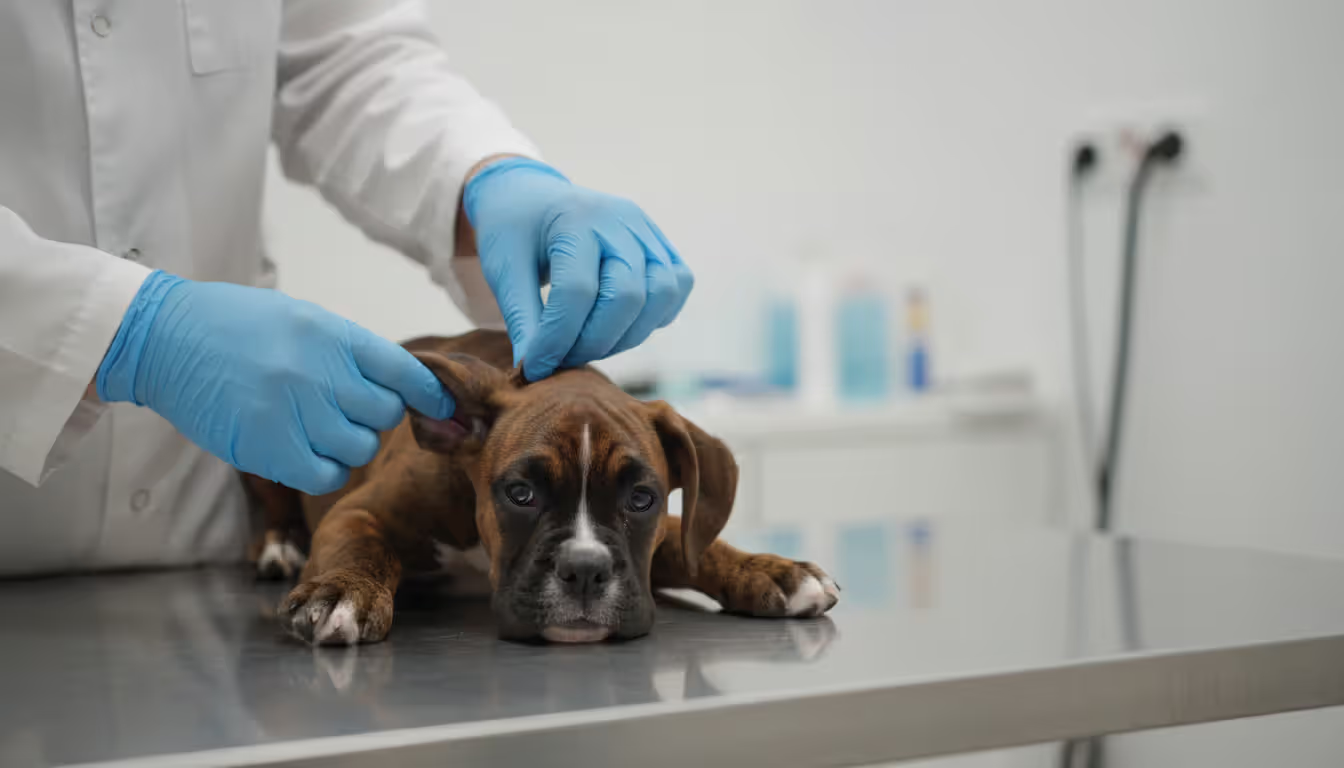
Picture this: a veterinarian makes precise cuts through a puppy's ear cartilage, removing about two-thirds of each ear flap. Under general anesthesia, the remaining portions get shaped and stitched. Then comes weeks—sometimes months—of taping, splinting, and posting to force the ears into an upright position.
Back in the 1800s, this actually made sense for certain dogs. Farm dogs guarding livestock needed shorter ears so wolves couldn't grab them during fights. Bull-baiting dogs faced similar risks. Hunters claimed their dogs got fewer ear tears from brush and brambles when cropped. These weren't show dogs—they were working animals in genuinely dangerous situations.
Fast forward to 2026. How many Dobermans are actually fighting off intruders? How many Schnauzers hunt vermin anymore? Nearly zero. But walk into any dog show, and you'll still see cropped ears everywhere. Why? Because that's how these breeds have "always looked" in competition rings.
The American Kennel Club's breed standards—essentially blueprints for what judges consider ideal—still list cropped ears as preferred or required for roughly twenty breeds. Doberman Pinschers, Boxers, Great Danes, Miniature Schnauzers, Boston Terriers, and various terrier breeds all have standards mentioning cropped ears. Breeders crop entire litters because buyers expect that traditional appearance.
Actual medical cropping? That's a different story. Veterinarians occasionally perform ear surgery to remove cancerous tumors, repair severe frostbite damage, or address traumatic injuries. These therapeutic procedures target specific health problems—they're not about aesthetics.
Author: Daniel Whitmor;
Source: jamboloudobermans.com
Is Dog Ear Cropping Illegal in the United States
Here's where it gets messy: Congress hasn't touched this issue. Zero federal legislation exists. Instead, you've got fifty states making fifty different decisions.
Right now, most states haven't passed any ear cropping laws at all. Your vet can perform the procedure, you can request it, and nobody's breaking any rules. But—and this is important—that doesn't mean it's a free-for-all. Veterinary licensing boards still enforce standards of care. Botch an ear crop, or do it without proper anesthesia? You're looking at animal cruelty charges under existing statutes.
Three states have gone further. Maryland essentially banned cosmetic cropping in 2022. Connecticut followed suit. New Hampshire requires written consent and limits the procedure to medical necessity. Several other states are debating similar bills right now.
Enforcement? That's another headache entirely. Say Maryland bans cosmetic cropping. What stops residents from driving to Pennsylvania (no restrictions) to have it done? Nothing, legally. Authorities can't prove where the procedure happened just by looking at a dog. One Maryland veterinarian told me off the record: "The law has good intentions, but people just go across state lines. We've created a situation where nobody's really accountable."
This patchwork system frustrates everyone. Animal welfare groups want nationwide protections. Breed enthusiasts argue states shouldn't interfere with established traditions. Dog owners just want clear answers about what they can and can't do.
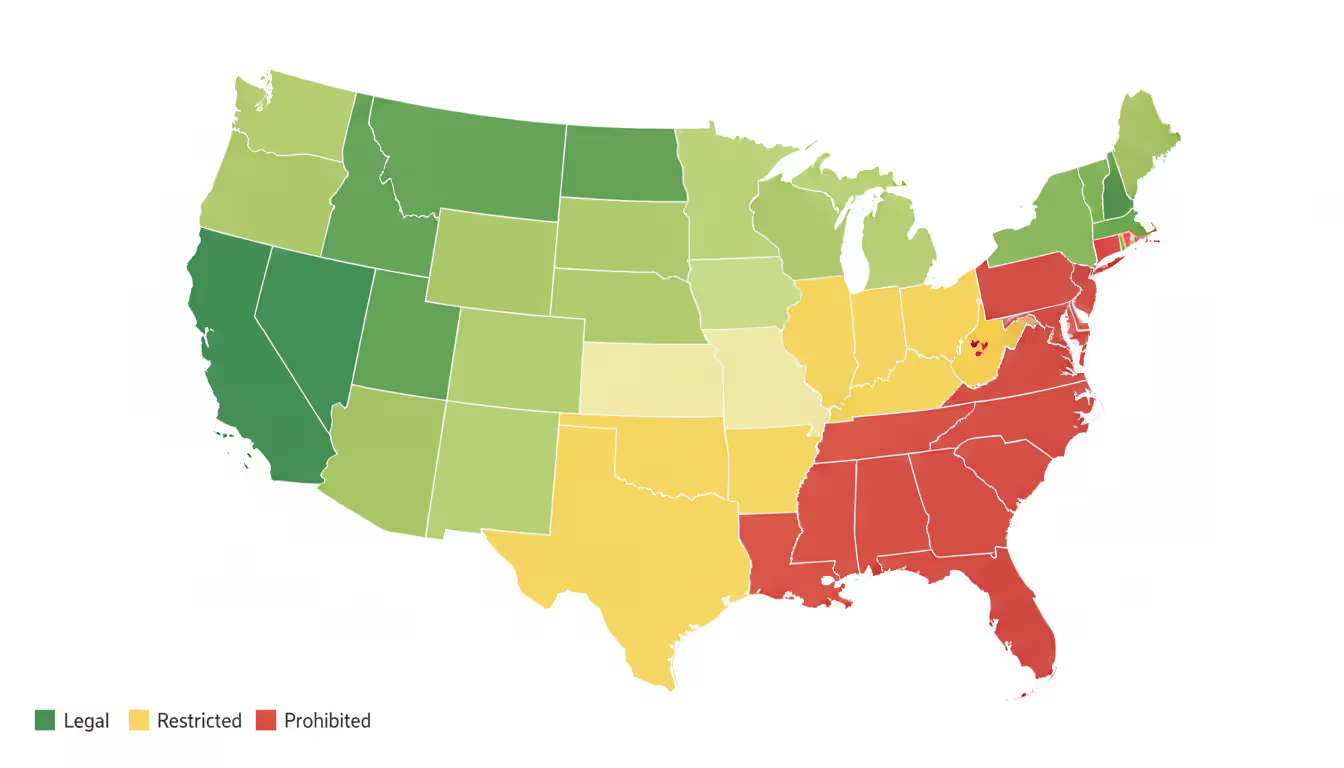
Ear Cropping Legal Status by State
The regulatory map keeps changing. Bills get introduced, some pass, others die in committee. As of early 2026, here's how states break down:
States That Restrict or Regulate Ear Cropping
Maryland leads the pack with the toughest stance. Their law allows ear cropping only when a licensed veterinarian determines it's medically necessary—meaning cosmetic requests are effectively illegal. Get caught violating it? You're facing misdemeanor animal cruelty charges.
Connecticut's statute mirrors Maryland's approach. Veterinarians there can only crop ears to address actual health problems, not aesthetic preferences.
New Hampshire takes a slightly different angle. Vets must obtain detailed written consent documenting that owners understand the procedure's risks and lack of medical benefit. The law doesn't ban cosmetic cropping outright but creates enough hurdles that many veterinarians simply refuse.
Vermont proposed legislation in 2025 requiring mandatory pain management protocols extending two weeks post-surgery. The bill hasn't passed yet, but it signals changing attitudes even in states without outright bans.
New York introduced similar measures. Their proposed regulations would prohibit cropping before twelve weeks and mandate specific pain medications during recovery. Again, not a complete ban, but significant restrictions.
Pennsylvania and Illinois focus on who performs cropping rather than whether it happens. Their laws specify that only licensed veterinarians in clinical settings can conduct the surgery. This targets backyard breeders and unlicensed "croppers" who use scissors and razors without anesthesia—a horrifying practice that still happens more often than you'd think.
Author: Daniel Whitmor;
Source: jamboloudobermans.com
States With No Specific Legislation
Texas, Florida, California, Ohio, Georgia, North Carolina, Arizona, Washington, Oregon, Michigan, Wisconsin—the list goes on. These states haven't enacted ear cropping laws. Licensed vets can perform the procedure at owner request without legal consequences.
But here's an interesting wrinkle: California allows ear cropping statewide, yet several cities have passed local ordinances restricting it. West Hollywood banned cosmetic cropping in 2012. Berkeley followed. So even within California, rules vary by municipality.
This creates confusion for mobile veterinarians, traveling breeders, and dog owners who relocate. What's legal in your county might be prohibited twenty miles away.
Countries Where Ear Cropping Is Banned
Travel to virtually any European country with a cropped dog, and you'll get some surprised looks. Most of Europe banned the practice decades ago. They consider it unnecessary mutilation, full stop.
Country/Region
Year Banned
Exceptions Allowed
Enforcement Level
United Kingdom
2006
Veterinary medical treatment only
High—Royal College of Veterinary Surgeons monitors compliance
Germany
1987
Documented therapeutic purposes
High—violations prosecuted under animal protection laws
Australia
2004-2013 (varies by state)
Medical intervention exclusively
Medium—state veterinary boards handle enforcement
Norway
1987
Health emergencies with documentation
High—incorporated into comprehensive animal welfare framework
Sweden
1989
Veterinarian-certified medical need
High—strict penalties under animal protection statutes
The Council of Europe's Convention for the Protection of Pet Animals explicitly prohibits cosmetic surgery on companion animals unless performed for veterinary medical reasons. Forty-seven member countries signed on. That's most of the continent operating under a unified framework.
Canada hasn't enacted a federal ban, but provincial veterinary associations strongly discourage cosmetic cropping. Several provinces, including Newfoundland and Labrador, Saskatchewan, and Prince Edward Island, have restricted or banned the practice through provincial regulations.
Australia's approach varies by state, similar to the US. Most Australian states banned cosmetic cropping between 2004 and 2013, though enforcement intensity differs.
The contrast is stark. Europe decided thirty-plus years ago that dogs don't need surgically altered ears to be healthy or valuable. America's still debating it.
The Animal Welfare and Ethics Debate
Every major veterinary organization in the United States has taken a position against cosmetic ear cropping. The American Veterinary Medical Association published a policy statement explaining that the procedure lacks medical justification, doesn't benefit patients, and exposes puppies to unnecessary pain, infection risk, and anesthesia complications.
Veterinary medicine exists to heal animals and prevent suffering. Cropping ears for appearance contradicts that fundamental purpose. We understand breed standards have tradition behind them, but tradition alone doesn't justify causing pain. We're encouraging both kennel clubs and individual veterinarians to prioritize patient welfare over cosmetic preference
— Dr. Jennifer Matthews
Let's talk about what puppies actually experience. The surgery happens somewhere between seven and twelve weeks old—prime socialization age when they should be exploring the world, not recovering from surgery. Even with proper anesthesia during the procedure, the healing process involves significant discomfort. Surgical sites need daily cleaning. Ears require posting—taping them to splints or forms—for weeks or months to train the cartilage upright. Many puppies absolutely hate this, repeatedly shaking their heads and scratching at the posts.
Complications aren't rare. Infections develop. Surgical sites bleed excessively. Ears heal improperly, creating asymmetrical results. Sometimes ears refuse to stand despite months of posting, leaving dogs with partially cropped ears that satisfy neither breed standards nor natural appearance. Scar tissue can develop abnormally, causing ongoing irritation.
Now compare health outcomes between cropped and natural ears. Proponents used to claim cropped ears prevented infections. That theory doesn't hold up. Dogs with floppy ears get ear infections at basically the same rate as dogs with cropped ears—and regular cleaning prevents most infections regardless of ear shape. Natural ears provide better protection from debris, insects, and weather. They also communicate more effectively, since dogs use ear position in social signaling.
Veterinarians face a genuine ethical dilemma here. Refuse to crop, and owners might seek out unlicensed "croppers" who operate out of garages using crude tools and zero anesthesia. Those situations cause exponentially more suffering. Some vets reluctantly perform cropping with proper protocols, reasoning that controlled surgical conditions minimize harm compared to backyard alternatives.
This debate extends into veterinary education. Most veterinary schools stopped teaching ear cropping fifteen to twenty years ago. Recent graduates literally don't know how to perform the procedure. One 2024 survey found that only 18% of veterinarians under age thirty-five would consider cropping ears, compared to 63% of veterinarians over fifty-five. The practice is aging out of the profession.
Author: Daniel Whitmor;
Source: jamboloudobermans.com
Breed Standards and Legal Conflicts
Here's where things get politically complicated. The American Kennel Club maintains breed standards specifying cropped ears for multiple breeds. These aren't just guidelines—they directly influence judging at dog shows. Judges compare dogs against written standards, and ears that don't match the standard description can cost points.
This creates real financial pressure. Professional breeders invest thousands of dollars developing bloodlines suitable for competition. Show wins increase breeding dogs' value and attract buyers willing to pay premium prices. When breed standards require cropped ears, breeders feel economically compelled to crop entire litters.
But now you've got Maryland saying cosmetic cropping is illegal. So what happens to Maryland breeders competing in AKC shows? They're stuck. Either they violate state law to meet breed standards, or they show dogs with natural ears knowing judges might penalize them.
Some breed clubs have started revising standards. The American Boxer Club, while keeping cropped ears in the written standard, explicitly states judges shouldn't penalize natural ears. This compromise acknowledges welfare concerns while preserving exhibitor choice. Other breed clubs are moving more slowly, reluctant to abandon traditions that define breed identity for many enthusiasts.
European kennel clubs adapted when cropping bans took effect. German Dobermans, British Schnauzers, Danish Great Danes—they all compete successfully with natural ears now. Judges in Europe evaluate dogs based on structure, movement, and temperament rather than cosmetic alterations. Breed identity survived just fine.
The interstate commerce angle complicates enforcement. Maryland breeders can't crop puppies for cosmetic purposes. But Maryland buyers can purchase already-cropped puppies from Virginia, Pennsylvania, or Delaware breeders operating legally in their states. This undermines state restrictions while creating competitive disadvantages for breeders who comply with local laws.
Age Requirements and Procedural Regulations
States with ear cropping regulations typically specify minimum age requirements. Most laws prohibit cropping before eight weeks, recognizing that younger puppies face higher anesthesia risks and lack sufficient cartilage development for proper surgical technique.
Traditional timing falls between seven and twelve weeks. Veterinarians who still perform cropping argue this window allows easier healing and more successful posting results. Waiting until adulthood makes everything harder—thicker cartilage requires more aggressive cutting, healing takes longer, and mature ears resist training into upright positions.
Proper ear cropping absolutely requires general anesthesia administered by a licensed veterinarian. That's non-negotiable for ethical practice. State laws targeting unlicensed cropping specifically prohibit anyone without veterinary credentials from performing the surgery or doing it without appropriate anesthesia.
Unlicensed cropping represents one of the ugliest aspects of this issue. I've seen photos from cruelty investigations showing puppies with ears hacked off using kitchen scissors, no pain relief, no sterile equipment. These puppies suffer tremendously. Infections rage out of control. Some die. Others survive with permanently disfigured ears that require corrective surgery—assuming owners can afford it.
This still happens. Classified ads and online marketplaces occasionally advertise "affordable ear cropping" for $50 or $100—a fraction of veterinary clinic prices, which typically range from $300 to $800. Buyers trying to save money unknowingly support practices that cause extreme suffering.
Some states now require veterinarians to provide detailed informed consent documentation before cropping. Owners must acknowledge in writing that the procedure serves cosmetic rather than medical purposes, that complications can occur, and that natural ears function normally. These consent requirements create legal protection for veterinarians while ensuring owners understand what they're requesting.
Author: Daniel Whitmor;
Source: jamboloudobermans.com
Professional regulations across all states specify that only licensed veterinarians may perform surgical procedures on animals. However, prosecuting unlicensed cropping under general veterinary practice acts proves difficult without specific ear cropping statutes that clearly define the violation.
Frequently Asked Questions
Can I get my dog's ears cropped in any state?
Most states still allow it, but Maryland, Connecticut, and New Hampshire have restricted cosmetic cropping significantly. Before scheduling anything, check your specific state's current regulations—laws change frequently as new bills pass. Even where it's legal, finding a willing veterinarian has gotten much harder. Many clinics now refuse cosmetic cropping based on ethical objections, so you might need to contact multiple practices.
What happens if I crop my dog's ears in a state where it's illegal?
You're risking misdemeanor animal cruelty charges in states with specific prohibitions. Maryland's law, for instance, treats illegal ear cropping as animal abuse. Penalties can include fines ranging from $500 to $5,000, potential jail time up to ninety days, and possible animal confiscation. Enforcement varies—authorities don't actively search for violations, but if someone reports you or veterinary records surface, prosecution becomes possible.
Will my vet perform ear cropping?
Probably not. Recent surveys show roughly 75% of veterinary practices now refuse cosmetic ear cropping requests. The American Veterinary Medical Association opposes it, veterinary schools stopped teaching the technique, and younger vets generally won't perform procedures they consider ethically questionable. You'll likely need to call numerous clinics, possibly traveling significant distances, to find someone willing to crop ears.
Do cropped ears provide any medical benefits?
No. That's the consensus among veterinary researchers. The old claim about preventing ear infections has been thoroughly debunked—infection rates don't differ based on ear shape when dogs receive proper care. Natural ears actually protect ear canals better from debris, insects, and moisture. The only legitimate ear surgery addresses specific medical problems like tumors, severe trauma, or frostbite damage. Cosmetic cropping provides zero health advantages.
Can I show my dog with natural ears in breed competitions?
It depends on the breed and specific breed club standards. AKC standards for breeds like Dobermans and Boxers still mention cropped ears as preferred, and some judges penalize natural ears depending on their interpretation and personal preferences. However, several breed clubs have clarified that natural ears shouldn't affect scoring. European shows actually require natural ears due to cropping bans. Consider whether potential show ring success justifies putting your puppy through elective surgery.
At what age is ear cropping typically performed?
Veterinarians who perform cropping usually do it between seven and twelve weeks old. Younger than seven weeks poses excessive anesthesia risks, while older dogs have thicker cartilage making surgery more invasive. Some state regulations prohibit cropping before eight weeks specifically. Adult dogs can technically be cropped, but results become much less predictable, healing takes longer, and the procedure becomes significantly more difficult for both surgeon and patient.
Dog ear cropping occupies an increasingly uncomfortable legal and ethical space in the United States. A handful of states have recognized animal welfare concerns and enacted restrictions. The vast majority haven't addressed it legislatively at all. Meanwhile, virtually every professional veterinary organization opposes cosmetic cropping, and the global trend moves decisively toward prohibition.
For dog owners weighing this decision, legal status represents just one consideration. The procedure offers no medical advantages whatsoever. It causes pain, carries complication risks, and conflicts with veterinary ethical standards that prioritize patient welfare. Breed standards requiring cropped ears face mounting pressure as outdated traditions that value appearance over animal wellbeing.
State laws will likely continue evolving. More veterinarians will refuse to perform cosmetic procedures. Kennel clubs face increasing pressure to revise standards that perpetuate practices the veterinary profession rejects. Cultural attitudes shift toward viewing animals as sentient beings deserving protection from unnecessary suffering rather than accessories to be modified for aesthetic preferences.
Before you crop your dog's ears, verify your state's current regulations—they change regularly. Understand that finding a willing veterinarian grows harder every year. Recognize the risks, the extended recovery period, and potential complications. Most importantly, honestly assess whether cosmetic appearance justifies putting your puppy through an unnecessary surgery.
Natural ears don't reduce your dog's health, quality of life, or value as a family member. They simply reflect a choice that prioritizes your dog's welfare over century-old traditions created when dogs performed jobs that no longer exist. That's not a sacrifice—it's just common sense.
Surrendering an aggressive dog involves complex legal obligations and limited placement options. Between specialized rescues, sanctuary programs, and rehabilitation facilities, responsible pathways exist for owners committed to transparency and proper screening
Surrendering a dog is never easy. Financial hardship, housing changes, or behavioral challenges can force impossible choices. Learn where to surrender your dog for free, understand the complete process from intake to adoption, and discover your legal obligations and what really happens after relinquishment
Horse soring involves deliberately inflicting pain on horses' legs to create an exaggerated gait for show competitions. This federal crime, primarily affecting Tennessee Walking Horses in big lick classes, uses chemical burns, pressure shoeing, and painful chains to force unnatural movement
A rehoming fee protects your dog from exploitation while finding a responsible new home. Discover typical fee ranges, legal considerations, required documentation, and why charging nothing puts your pet at serious risk. Includes contract templates and expert guidance
The content on this website is provided for general informational and educational purposes only. It is intended to explain concepts related to animal law, pet ownership rights, service animals, dog bite liability, and animal welfare legislation in the United States.
All information on this website, including articles, guides, and examples, is presented for general educational purposes. Legal outcomes may vary depending on jurisdiction, state laws, and individual circumstances.
This website does not provide legal advice, and the information presented should not be used as a substitute for consultation with qualified attorneys or animal law professionals.
The website and its authors are not responsible for any errors or omissions, or for any outcomes resulting from decisions made based on the information provided on this website.