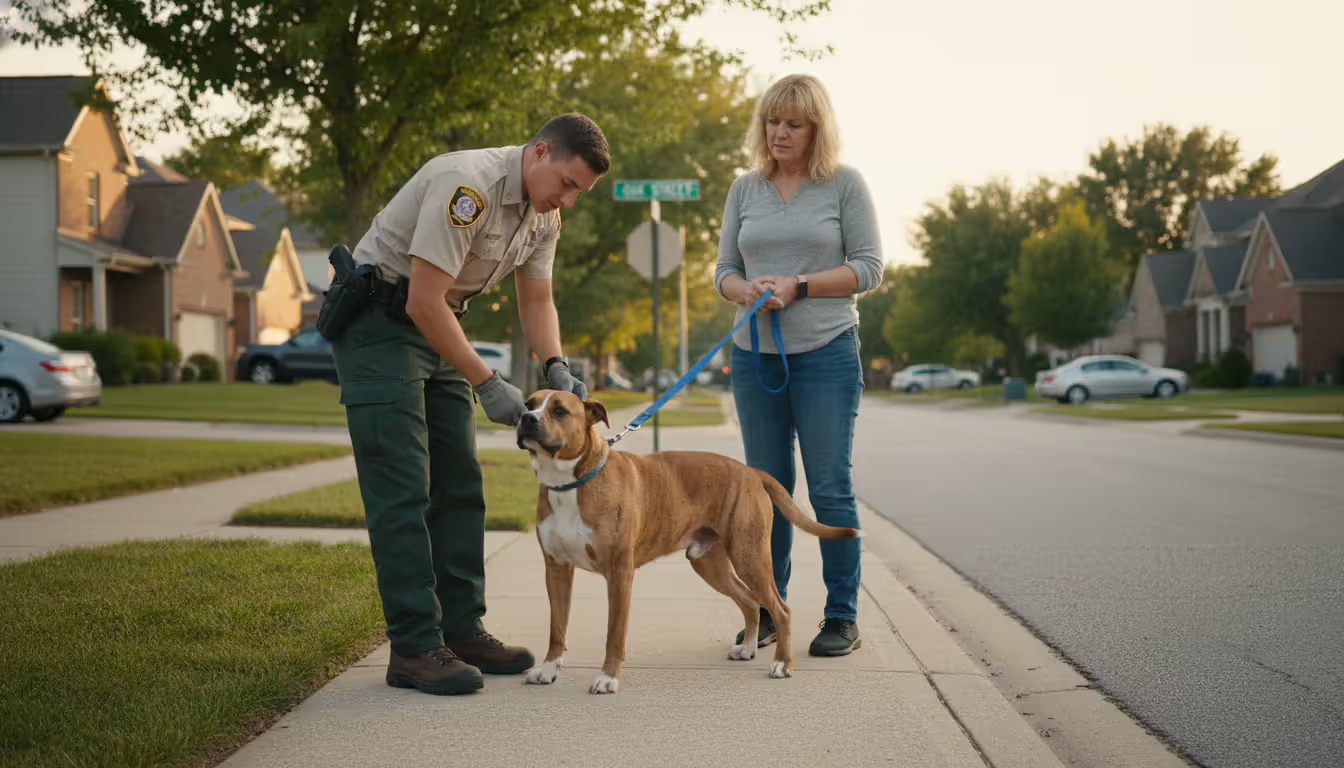
If you own a Rottweiler, pit bull, or German Shepherd, you've probably hit walls trying to find housing, secure insurance, or move to certain cities. Roughly 3.6 million dog owners in America face breed restrictions that determine where they can live and whether they'll keep their pets.
From city ordinances banning specific breeds outright to insurance companies refusing coverage, these policies create real headaches. Worse, they're inconsistently applied and often ignore scientific evidence about dog behavior.
Here's what you need to know to protect your rights and navigate these restrictions without losing your four-legged family member.
What Are Dog Breed Restrictions and Why Do They Exist?
Breed restrictions limit or completely prohibit ownership of certain dog breeds. You'll encounter them in three main places: city laws, housing communities, and insurance policies.
When governments pass laws targeting specific breeds, that's called breed-specific legislation (BSL). A breed specific legislation overview shows these laws exploded during the late 1980s after several brutal dog attacks made national headlines. Politicians wanted quick solutions, so they zeroed in on breeds they considered inherently dangerous—primarily pit bull-type dogs, Rottweilers, German Shepherds, and Dobermans.
But here's where it gets messy: the dangerous breed definition in law changes drastically depending on where you live. Some cities list exact breed names like "American Pit Bull Terrier" or "Staffordshire Bull Terrier." Others describe physical features—head width, jaw strength, muscle mass. That second approach creates nightmares for enforcement because animal control officers end up guessing based on appearance.
Supporters claim breed bans make neighborhoods safer and reduce bite incidents. Critics point to research from the American Veterinary Medical Association and CDC showing breed matters far less than training, socialization, and owner behavior. A well-trained pit bull with a responsible owner? Statistically safer than a neglected golden retriever.
Author: Lauren Beckett;
Source: jamboloudobermans.com
So why do restrictions stick around despite evidence they don't work? Liability fears. Insurance companies, landlords, and city attorneys worry about lawsuits. Even if breed isn't a reliable danger predictor, the perception of risk drives policy decisions.
Types of Breed-Specific Legislation Across the United States
Hundreds of cities still enforce breed bans, though we're seeing a major reversal trend in recent years.
City and Municipal Pit Bull Bans
Pit bull ban laws by city represent the most widespread BSL type. Denver banned pit bulls for 32 years until voters finally killed the ordinance in 2021, replacing it with a conditional licensing system. Miami-Dade County still maintains its 1989 pit bull ban with almost no exceptions beyond service animals.
You'll find active breed restrictions in:
Council Bluffs, Iowa—pit bull ban with grandfather protections for existing owners
Sioux City, Iowa—requires special permits for pit bull ownership
Moreauville, Louisiana—bans pit bulls and Rottweilers
City bans typically stack multiple requirements: ownership prohibitions, mandatory sterilization, special licenses costing $100-500, muzzles required in public, and reinforced fencing. Enforcement varies wildly. Some cities actively hunt for banned breeds; others only act on complaints.
Statewide Breed Legislation and States That Have Repealed Bans
Twenty-five states now block cities from passing breed-specific laws. This preemption movement represents the biggest victory for breed specific legislation states repealed advocates.
State
BSL Status
Year of Action
Notes
California
Preemption
2025
Cities cannot pass breed-specific rules
Colorado
Preemption
2024
Local bans phased out by 2026
Delaware
Preemption
2025
Municipalities lost breed regulation authority
Florida
Preemption
1990
Miami-Dade keeps exemption through special state provision
Illinois
Preemption
2023
Wiped out all local breed bans
Massachusetts
Preemption
2022
Banned breed discrimination in housing statewide
Michigan
Preemption
2023
State law overrides local ordinances
Nevada
Preemption
2021
Only behavior-based dangerous dog laws allowed
New York
Preemption
2025
Eliminated BSL across the state
Ohio
Repealed
2022
Removed automatic "vicious" label for pit bulls
Pennsylvania
Preemption
2024
Cities cannot regulate by breed anymore
Rhode Island
Preemption
2013
Early adopter of statewide ban on BSL
Texas
Preemption
2025
Cities must focus on behavior, not breed
Utah
Preemption
2022
Behavior-based regulations mandatory
Virginia
Preemption
2020
Stripped local BSL authority
States without preemption may still contain cities with active bans. Missouri, Kansas, Iowa, and Arkansas have patchwork enforcement where some cities ban breeds while neighboring towns don't.
The numbers tell the story: between 2022 and 2026 alone, eight more states joined the preemption movement. Legislators increasingly recognize that behavior-based dangerous dog laws—focusing on what individual dogs do rather than their breed label—actually work better.
How HOAs and Landlords Enforce Breed Restrictions
Private property operates under different rules than government property, giving homeowners associations and landlords significantly more power to restrict breeds.
Homeowners Association Breed Policies
HOA breed restriction enforcement comes through the community's Covenants, Conditions, and Restrictions (CC&Rs). These legal documents bind every property owner and can contain sweeping pet limitations.
Typical HOA banned breed lists include pit bull-type dogs, Rottweilers, Dobermans, German Shepherds, Akitas, Chow Chows, Huskies, Malamutes, and wolf hybrids. Some associations skip breed names entirely and ban any dog exceeding 25-50 pounds—effectively blocking larger breeds without saying so directly.
HOAs enforce through:
Required approval processes before you bring home a dog
Annual pet registration demanding breed proof
Fines from $100-500 per violation
Forced removal demands for prohibited breeds
Property liens for unpaid penalties
Banning your dog from community areas
When you bought property in an HOA community, you contractually agreed to follow these rules. Courts consistently side with HOAs on breed restrictions, viewing them as valid contract terms. Your limited options? Request a reasonable accommodation if your dog assists with a disability, challenge inconsistent enforcement, or sell and move.
Author: Lauren Beckett;
Source: jamboloudobermans.com
Rental Property Breed Restrictions and Landlord Rights
The breed restriction landlord legality question confuses many renters. Private landlords can generally set whatever pet policies they want, with specific exceptions.
Why do landlords restrict breeds? Insurance requirements top the list. If a tenant's dog bites someone on the property, the landlord faces potential premises liability lawsuits. Many insurance companies demand breed restrictions as a coverage condition, forcing landlords to choose between adopting these policies or losing their insurance entirely.
Rental agreement breed restrictions are legal across most of the country, provided landlords:
Enforce policies consistently across all tenants
Include clear restriction language in lease agreements
Don't violate fair housing protections
Avoid using restrictions as cover for other discrimination
Landlords verify breed through vet records, DNA test results, or visual assessment. Some require veterinarians to sign breed confirmation affidavits. Mixed breeds create gray areas—landlords might restrict a dog appearing to have pit bull traits even without genetic confirmation.
Renters have few tools to fight landlord breed restrictions. The Fair Housing Act requires reasonable accommodations for assistance animals (service dogs and emotional support animals) when tenants have disabilities, potentially overriding breed bans. However, landlords can still deny if that specific dog poses a direct safety threat or creates undue financial hardship, requiring case-by-case evaluation instead of automatic rejection.
Only a handful of states offer protection. Massachusetts prohibits rental housing breed restrictions statewide. Rhode Island limits what landlords can ban. But these protections remain outliers, not the norm.
Insurance Company Breed Restriction Policies
Homeowners and renters insurance breed restriction policies create massive obstacles for owners of certain breeds. Insurers maintain "blacklists" to manage liability exposure, denying coverage or hiking premiums for households with specific dogs.
Author: Lauren Beckett;
Source: jamboloudobermans.com
Insurance companies justify these practices with claims data showing certain breeds appear more frequently in bite liability cases. The industry pays approximately $1.2 billion yearly for dog bite claims, with individual claims averaging $64,000+ after medical bills and legal fees.
Extended lists from some insurers cover 20-30 breeds. Others use weight cutoffs (dogs over 50-75 pounds) achieving similar results without naming breeds.
When insurers discover you own a restricted breed, they might cancel your existing policy, refuse renewal, exclude dog bite coverage while maintaining other protections, or offer coverage at 30-50% higher premiums. This puts homeowners in impossible situations, especially when mortgage lenders require insurance as a loan condition.
Not every insurer maintains breed lists, though. State Farm and USAA evaluate dogs individually based on bite history and behavior rather than breed. Specialty insurers serve restricted breed owners specifically, though you'll pay premium increases of 30-50% over standard rates.
Shopping around works better than anything else. Disclose your dog's breed honestly during applications—hiding a restricted breed guarantees claim denial and policy cancellation for material misrepresentation.
Legal Challenges to Breed Bans and Restrictions
Breed ban legal challenges produce inconsistent results. Courts generally uphold government BSL while recognizing certain constitutional boundaries.
Constitutional Questions Around Breed-Specific Legislation
The breed specific legislation constitutionality debate revolves around several constitutional principles:
Due Process: Laws too vague to give clear notice of prohibited conduct violate the Fourteenth Amendment. Courts have struck down ordinances using fuzzy language like "any dog substantially conforming to pit bull characteristics" without defining those characteristics. But ordinances listing specific breed names or detailed physical descriptions usually survive due process attacks.
Equal Protection: BSL treats owners of certain breeds differently. Courts use "rational basis" review—the easiest standard for government to meet—asking only whether the law rationally relates to a legitimate government interest. Public safety qualifies as legitimate, and courts defer to legislative judgments about breed risks even when scientific research contradicts those judgments.
Substantive Due Process: Some challenges argue dog ownership represents a fundamental property right government cannot seize without compelling justification. Courts uniformly reject this argument, finding no fundamental right to own particular dog breeds.
Takings Clause: Owners argue breed bans constitute uncompensated property seizure. Courts generally disagree because owners can relocate dogs or move to jurisdictions without bans.
Preemption: State preemption laws blocking local BSL have proven most effective at invalidating breed restrictions. These sidestep constitutional questions entirely, resolving conflicts between state and local authority in favor of statewide uniformity.
How to Challenge a Breed Ban Legally
Challenging breed ban legally demands strategic thinking and realistic expectations. Successful challenges typically follow these paths:
Legislative advocacy: Lobbying city councils or state legislatures to repeal BSL or pass preemption laws beats litigation for success rates. The American Kennel Club and Best Friends Animal Society offer resources for advocacy campaigns. Coalition-building with veterinarians, animal welfare organizations, and civil liberties groups strengthens these efforts.
Administrative appeals: Many ordinances include exemption processes for dogs passing temperament evaluations or meeting specific standards. Pursuing administrative remedies costs less than lawsuits and sometimes works, particularly for dogs with clean behavioral records.
Litigation strategies: Court challenges succeed when ordinances contain fatal flaws—unconstitutionally vague language, discriminatory enforcement patterns, or conflicts with state preemption laws. Plaintiffs need documented impact evidence, expert testimony on canine behavior and breed identification, and experienced animal law counsel.
The most successful breed ban challenges don't lean solely on constitutional arguments. They combine legal action with public education campaigns shifting community perception. When residents understand breed-neutral dangerous dog laws outperform breed bans, political pressure builds for repeal. We've watched this pattern play out in Colorado, Ohio, and numerous municipalities that reversed their BSL positions
— Jennifer Hobgood
Litigation costs typically run $50,000-200,000 for comprehensive challenges, making court battles impractical for individual owners. Class actions or organizational plaintiffs spread costs across multiple stakeholders. Even winning challenges may drag on for years while bans remain enforceable.
Realistically? Most individual owners facing breed bans have better options than litigation: relocating to jurisdictions without BSL, pursuing administrative exemptions, or partnering with advocacy organizations on legislative solutions.
What to Do If Your Dog Is Affected by Breed Restrictions
When dog breed restrictions suddenly impact you—through a new city law, HOA policy change, insurance requirement, or rental denial—take immediate practical steps.
Confirm your dog's actual breed: Visual breed identification fails spectacularly. Research shows shelter workers, veterinarians, and animal control officers misidentify breeds 75% of the time based on appearance. Get canine DNA testing through Embark or Wisdom Panel ($100-200) documenting your dog's genetic breed makeup. Mixed-breed dogs under 50% of a restricted breed may escape some policies.
Compile complete documentation: Gather veterinary records, training certificates, Canine Good Citizen credentials, therapy dog certifications, temperament evaluation results, and vaccination history. Demonstrating your dog's good behavior strengthens exemption applications and proves responsible ownership.
Investigate exemptions and grandfather provisions: Many breed bans exempt dogs registered before the law's effective date, dogs completing training programs, or dogs passing behavioral assessments. Miami-Dade's pit bull ban exempts dogs living there before 1989. Some HOAs grandfather existing pets when adopting new restrictions.
Pursue reasonable accommodation requests: If your dog provides disability-related assistance, request reasonable accommodation under the Fair Housing Act (housing situations) or Americans with Disabilities Act (municipal bans affecting housing). You'll need healthcare provider documentation explaining your disability and how the dog helps you. This doesn't guarantee approval but requires individualized assessment instead of automatic rejection.
Evaluate relocation options: Moving to jurisdictions without breed restrictions might be necessary. Check state preemption laws and municipal codes before relocating. Cities appearing dog-friendly might have county-level restrictions or HOA policies creating problems.
Join advocacy efforts: Connect with local and national organizations fighting breed-specific legislation. Your story shared at city council meetings, legislative hearings, and public education campaigns can influence policy. Even without immediate relief, advocacy prevents restriction expansion and builds momentum toward eventual repeal.
Consult specialized professionals: Animal law attorneys can assess your specific situation and identify options you'd miss otherwise. Initial consultations typically cost $200-400 and may reveal worthwhile strategies.
The worst move? Hiding your dog or lying about breed. Discovery leads to eviction, insurance cancellation, fines, and potentially forced dog surrender.
Author: Lauren Beckett;
Source: jamboloudobermans.com
Frequently Asked Questions About Dog Breed Restrictions
Can landlords legally restrict dog breeds?
Yes, private landlords hold broad authority restricting breeds in most states. Rental agreements function as contracts, and landlords set pet policies as lease terms. Exceptions exist for assistance animals when tenants have disabilities and request reasonable accommodations under fair housing laws. Massachusetts and Rhode Island limit landlord breed restrictions through state law, but such protections remain rare. Always honestly disclose your dog's breed during rental applications.
What dog breeds are most commonly banned?
Pit bull-type breeds—American Pit Bull Terriers, American Staffordshire Terriers, and Staffordshire Bull Terriers—top restriction lists, with Rottweilers, German Shepherds, Dobermans, Akitas, Chow Chows, and wolf hybrids close behind. Insurance companies and HOAs frequently restrict Mastiffs, Presa Canarios, Huskies, and Malamutes too. Weight-based limits (typically 25-75 pounds depending on context) effectively ban larger breeds without naming them.
Are emotional support animals exempt from breed restrictions?
Emotional support animals (ESAs) may receive exemptions from housing breed restrictions under the Fair Housing Act when owners have disabilities and animals provide disability-related assistance. However, landlords and HOAs can deny accommodation requests if that specific animal poses direct health or safety threats based on individualized assessment—not breed alone. ESAs lack public access rights and aren't exempt from municipal breed bans or insurance restrictions. Service animals (specifically trained for disability-related tasks) receive broader protections, though municipalities can still enforce restrictions if individual dogs demonstrate dangerous behavior.
How can I prove my dog isn't a restricted breed?
Canine DNA testing provides the most reliable breed verification. Embark and Wisdom Panel analyze genetic markers identifying breed composition, producing reports many landlords, HOAs, and insurers accept. Testing costs $100-200. Veterinary breed identification letters help but carry less weight since visual breed identification proves unreliable. For mixed-breed dogs, DNA tests showing under 50% restricted breed genetics may satisfy some policies, though others restrict any dog with detectable restricted breed genetics. Keep documentation organized and accessible.
What happens if I move to a city with a breed ban?
Moving to cities with active breed-specific legislation means you legally cannot bring restricted breeds into that jurisdiction. Violations result in fines (typically $500-1,000), mandatory dog removal within specified timeframes (usually 30-90 days), and potential criminal charges for non-compliance. Some ordinances permit temporary stays while you relocate the dog elsewhere. Research municipal codes before accepting job offers or buying property in new cities. State preemption laws in 25 states prohibit local breed bans, creating safe options for restricted breeds.
Have any breed bans been successfully overturned?
Absolutely. Dozens of municipalities repealed breed-specific legislation over the past decade. Denver ended its 32-year pit bull ban in 2021. Springfield, Massachusetts repealed its ban in 2023. Reynoldsburg, Ohio eliminated restrictions in 2022. Most successful repeals came from sustained advocacy campaigns rather than court victories. At the state level, Colorado, Illinois, Pennsylvania, New York, Delaware, and California passed preemption laws between 2022-2025 invalidating local breed bans. The trend clearly favors repeal, though hundreds of municipal bans remain active as of 2026.
Breed restrictions continue sparking debate between public safety advocates and evidence-based policy supporters. The legal landscape keeps shifting, with momentum favoring breed-neutral approaches evaluating individual dog behavior instead of breed stereotypes.
For dog owners, staying informed about local regulations, maintaining thorough documentation, and practicing responsible ownership offer the best protection. When facing restrictions, explore every available option—DNA testing, exemption applications, relocation, advocacy—before making heartbreaking decisions about your companion.
The growing number of states passing preemption laws suggests breed-specific policies may eventually become historical curiosities. Until then, navigating these restrictions demands diligence, patience, and strategic planning.
Losing a dog is heartbreaking. Once the initial grief subsides, you face an urgent practical question: what are you legally allowed to do with your dog's body? This guide covers every legal option available to pet owners in the United States, from backyard burial to municipal pickup
Dog theft carries serious criminal penalties ranging from misdemeanors to felonies depending on the dog's value and state laws. Understand the charges, sentencing, and legal steps to report theft, use microchip evidence, file civil lawsuits, and recover your stolen dog through law enforcement and community efforts
Microchipping your cat isn't just about finding them if they wander—it's increasingly a legal requirement in parts of the US. Understand state laws, registration requirements, and how microchips function as ownership proof in disputes. Learn the legal process, common mistakes, and differences between cat and dog requirements
When your dog breaks a leg and money is tight, multiple solutions exist. From nonprofit grants and veterinary teaching hospitals to payment plans and crowdfunding, this guide covers actionable options to get your dog treatment without thousands upfront, including what to do if you can't pay the vet bill
The content on this website is provided for general informational and educational purposes only. It is intended to explain concepts related to animal law, pet ownership rights, service animals, dog bite liability, and animal welfare legislation in the United States.
All information on this website, including articles, guides, and examples, is presented for general educational purposes. Legal outcomes may vary depending on jurisdiction, state laws, and individual circumstances.
This website does not provide legal advice, and the information presented should not be used as a substitute for consultation with qualified attorneys or animal law professionals.
The website and its authors are not responsible for any errors or omissions, or for any outcomes resulting from decisions made based on the information provided on this website.