Your dog just nipped the neighbor's kid. Or maybe you're the one who got bitten while jogging past someone's yard. Either way, you're wondering: do I legally have to tell someone about this?
Here's what most people don't realize—whether you must report a dog bite depends entirely on where you live and who you are. A doctor in California faces different rules than a dog owner in Texas. What triggers mandatory reporting in one county might be completely optional 50 miles away.
The confusion makes sense. We don't have a single federal rule governing dog bite reports. Instead, you're dealing with a jumble of state statutes, county ordinances, and city regulations that don't always line up. Some places require reports for every scratch that breaks skin. Others only care about severe attacks or suspected rabies cases.
Why does any of this matter legally? Because failing to report when required can cost you—sometimes in fines, sometimes in lawsuits, and occasionally in professional licenses. More importantly, unreported bites create public health blind spots that prevent communities from tracking rabies and stopping dangerous dogs before they attack again.
Legal Requirements for Reporting Dog Bites
Let's clear something up right away: you won't find a federal statute requiring dog bite reports. Congress hasn't touched this issue. What you will find is a complicated web of state and local mandatory dog bite reporting laws that sometimes contradict each other.
Here's how it typically works. States create baseline reporting requirements, usually focused on rabies prevention. Then counties and cities layer on additional rules. You might live in a state with relaxed reporting standards but a city that demands reports for every incident regardless of severity.
The most common trigger? Broken skin. When a dog's teeth puncture someone's flesh, that's when reporting obligations kick in for most jurisdictions. The reasoning centers on rabies transmission risk—the virus spreads through saliva entering a wound. A bite that leaves a bruise but doesn't break the surface typically falls outside mandatory reporting, though you should always verify your local rules.
Severity matters too. Some places distinguish between level 1 bites (teeth touching skin without breaking it) and level 4 bites (deep punctures with tissue damage). Minor incidents might only require self-reporting by owners, while serious attacks trigger automatic reports from hospitals and police.
Rabies concerns drive much of this framework. Since rabies kills virtually 100% of people who develop symptoms, health departments need to know about every potential exposure. That's why even states with minimal reporting requirements make exceptions for bites involving sick animals or dogs with unknown vaccination histories.
Timing varies just as much as everything else. You might have 12 hours in Colorado, 24 hours in California, or 5 days in Arizona. These deadlines usually start ticking from either the moment teeth met skin or when medical treatment occurred—whichever the statute specifies for the particular reporter involved.
Local ordinances complicate matters further. Houston might require reporting for all bites within city limits while surrounding Harris County follows different Texas state law. Always check both levels of regulation.
Author: Lauren Beckett;
Source: jamboloudobermans.com
Who Is Legally Obligated to Report a Dog Bite
Not everyone who knows about a bite has to report it. States assign reporting duties to specific categories of people, creating a hierarchy of legal obligations.
Medical Professionals and Dog Bite Reporting
Doctors bear the heaviest reporting burden across most states. Walk into an emergency room with a dog bite, and the physician treating you probably must notify local health authorities by law—whether you want them to or not.
The doctor reporting dog bites requirement varies in scope but exists in 40+ states. California makes it crystal clear: any physician who provides medical care for a dog bite must file a report within one day. They can't skip this step even if you beg them not to tell anyone.
New York takes a slightly gentler approach, giving physicians until the next business day. That means a Friday night bite gets reported by Monday. Texas narrows the requirement—physicians only must report when they suspect rabies or when the victim is under 18.
What about nurse practitioners and physician assistants? The answer depends on your state's exact wording. Some statutes specify "physicians" only, while others say "healthcare providers" or "persons providing medical treatment." This ambiguity creates confusion at urgent care centers where PAs and NPs often provide front-line care.
Hospital emergency departments handle this smoothly because they've built reporting into intake protocols. Triage nurses collect information about the dog and owner as standard practice. The data flows to health departments through established channels, often electronically.
Private practice physicians prove less consistent. A family doctor who treats a minor bite during an office visit might not even realize their state requires reporting. Enforcement rarely happens against individual practitioners unless a dog later causes serious harm and investigators discover the earlier unreported incident.
Professional consequences exist but enforcement is spotty. State medical boards can investigate complaints about failure to report. Penalties range from written warnings to fines to license suspension in extreme cases. Practically speaking, you're unlikely to lose your medical license over a single missed report—but repeated violations or a case resulting in rabies death could trigger serious discipline.
Veterinarian Reporting Obligations
Here's an uncomfortable situation: you bring your dog to the vet because she bit someone. You need the vet to check her over, but you're afraid reporting will follow. Should you mention the bite?
Many states impose vet reporting dog bite legal obligation that requires veterinarians to notify authorities when they learn a patient has bitten a person. The vet doesn't need to witness the bite—just learning about it during examination or from the owner's description triggers the duty.
This puts veterinarians in a tough spot professionally. They want pet owners to seek care and be honest. But state law often removes any discretion about reporting what clients disclose. Some vets report proactively. Others only report when asked directly about vaccination status by animal control investigating a separate complaint.
The specific requirements differ significantly. Florida requires vets to report any animal bite they learn about during professional practice. Michigan limits the requirement to bites where rabies exposure seems possible based on the animal's condition or behavior. A handful of states impose no veterinary reporting requirement at all.
Smart pet owners understand that vaccination status matters more than hiding the bite. If your dog is current on rabies shots, the quarantine process becomes much simpler—often allowing home quarantine instead of facility confinement. Veterinarians can provide documentation that smooths the entire process.
One wrinkle: veterinarians examining the bite victim (yes, people sometimes go to vets for initial wound cleaning, though they shouldn't) face different rules than vets examining the dog. Some states require reporting regardless of which party the vet treated.
Dog Owner Responsibilities
You own the dog. Someone got bitten. Do you have to turn yourself in?
In many cities, absolutely. Municipal ordinances frequently require dog owners to report bites their animals inflict, usually within 24-48 hours. These local rules exist even in states without owner reporting requirements in state statutes.
The practical reasoning is obvious—owners know exactly what happened and can provide the dog's complete medical history. They know vaccination dates, prior behavioral issues, and circumstances surrounding the bite. This information helps animal control assess risk immediately.
Penalties for non-reporting owners often appear in municipal codes rather than state criminal statutes. You might face a citation similar to a parking ticket in some cities, or a misdemeanor charge carrying actual jail time (though rarely imposed) in others.
Here's what many owners don't consider: failing to report often makes everything worse later. The bite victim seeks medical treatment. The doctor reports as required. Animal control investigates and discovers you never contacted them despite a city ordinance requiring it. Now you face penalties for non-reporting on top of whatever consequences flow from the bite itself.
Some owners incorrectly think they can avoid problems by paying the victim's medical bills privately and asking everyone to stay quiet. This rarely works and sometimes constitutes witness tampering or obstruction depending on how aggressively you pursue silence.
Victims themselves occasionally have reporting duties, though this is less common. Some jurisdictions encourage (but don't require) victims to report to create an official record. Smart victims report regardless of legal obligation because the documentation strengthens future insurance claims and lawsuits.
Author: Lauren Beckett;
Source: jamboloudobermans.com
How to Report a Dog Bite to Authorities
You've decided to report (or you must report by law). Now what? The process isn't particularly complicated, but knowing which agency handles what saves time and ensures proper documentation.
Reporting to Animal Control
Most dog bite reports start with animal control—the local agency that handles loose dogs, rabies quarantines, and dangerous animal investigations. The reporting dog bite to animal control process typically serves as your primary documentation pathway.
Finding the right agency takes a quick internet search for "animal control" plus your city or county name. Many areas now offer online reporting forms for non-emergency bites, though calling remains faster for serious incidents or when you need immediate guidance.
What information should you gather before calling? You'll want:
Precisely when and where it happened (street address or specific location)
Detailed dog description—breed or mix, approximate weight, coloring, distinctive features like scars or collar type
Owner's name, address, and phone number if you have it
Your account of what led to the bite
Description of injuries with photos if possible
Whether the dog seemed ill, disoriented, or foaming at the mouth
Witness names and contact information
The animal control officer who takes your report will assign a case number. Keep this number—you'll need it for follow-up calls, obtaining copies of the investigation report, and providing to insurance companies or attorneys.
What happens next varies by jurisdiction, but typically an officer visits the dog's location within one or two days. They'll verify vaccination records, examine the dog for rabies symptoms, and issue a quarantine order. This order usually requires the dog to remain confined (often at home if vaccinated, sometimes at a facility if not) for 10 days while staff monitor for rabies development.
Expect to hear from animal control several times during the investigation. They may need additional information, ask you to identify the dog in person, or notify you of quarantine results. Stay responsive—cases sometimes fall through cracks when victims don't respond to follow-up requests.
If the dog has bitten people before, your report might trigger dangerous dog proceedings. These administrative hearings can result in restrictions (muzzling in public, secured fencing requirements) or even euthanasia orders for genuinely dangerous animals. Your case file becomes evidence in these proceedings.
Filing a Police Report
The dog bite police report process steps run parallel to animal control reporting but serve different purposes. Police reports create official criminal/civil documentation rather than focusing on quarantine and rabies prevention.
When should you involve police instead of or in addition to animal control?
Contact police immediately when the attack caused significant injury—anything requiring emergency room treatment or resulting in substantial bleeding, broken bones, or visible disfigurement. Severe attacks sometimes warrant criminal charges against owners under dangerous dog statutes or reckless endangerment laws.
Call police when the dog attacked without any provocation—you were simply walking past a yard when the dog broke through a fence and mauled you. Unprovoked attacks carry different legal weight than bites occurring during altercations.
Definitely involve police if the owner left the scene or refuses to provide contact information and vaccination records. This can constitute a hit-and-run scenario requiring police intervention to locate the owner.
Finally, contact police when you suspect criminal activity connected to the bite. Attack dogs used in assaults, dog fighting operations, or intentionally siccing a dog on someone all involve crimes beyond simple dog bite incidents.
The responding officer will document everything: photograph your injuries, measure them, note their location on your body, interview witnesses, and attempt to locate the dog and owner if they fled. This documentation becomes crucial evidence for insurance claims and personal injury lawsuits.
Police reports enter the public record differently than animal control reports. You can usually obtain a copy within days by visiting the police department with your case number and paying a small fee (typically $5-15). Some departments now offer online access to reports within 48 hours.
One important note: police often notify animal control about bites reported to them, but don't assume this happens automatically. File separate reports with both agencies to ensure proper rabies quarantine procedures occur.
Notifying the Health Department
Your county or city health department tracks disease outbreaks, including rabies. The dog bite report to health department pathway matters most when vaccination status is questionable or the dog showed concerning symptoms.
Many health departments receive automatic notifications from hospitals and animal control, creating a centralized database of bite incidents. You typically don't need to contact them directly unless specific concerns arise.
Reach out to your health department directly when:
Nobody knows who owns the dog or where it lives
The dog appeared sick—stumbling, drooling excessively, acting confused or aggressive without obvious cause
You can't locate the dog for quarantine and observation
You're developing symptoms suggesting infection or potential rabies exposure
Health departments employ epidemiologists and disease control specialists who assess rabies risk. They'll ask detailed questions about the dog's behavior and your exposure. Based on this assessment, they determine whether you need post-exposure prophylaxis (PEP)—the series of rabies shots given after potential exposure.
PEP involves multiple injections over 14 days and costs thousands of dollars, but it's 100% effective when administered before symptoms develop. Once rabies symptoms appear, the disease is essentially always fatal. Health departments don't take chances—when they can't verify a dog's vaccination status or observe it during quarantine, they usually recommend PEP.
The health department may also coordinate with animal control to intensify the search for the dog. Finding and testing the animal avoids unnecessary PEP treatment, saving money and avoiding vaccine side effects.
Keep documentation of all health department communications. If insurance companies later dispute coverage for PEP treatment or related medical care, these records prove the treatment was medically necessary rather than precautionary.
Author: Lauren Beckett;
Source: jamboloudobermans.com
State-by-State Dog Bite Reporting Laws
Which states require doctors to report dog bites? Most of them, actually—but the details vary enough that a simple list doesn't capture the full picture. Each state sets its own reporting triggers, deadlines, and enforcement mechanisms.
The table below compares requirements across 15 states representing different regional approaches. This isn't comprehensive—it's a snapshot showing how widely standards vary:
State
Mandatory Reporters
Time Allowed
Where to Report
Consequences if You Don't
California
Physicians, vets
One day
County health department
Misdemeanor, potentially $1,000 fine
Texas
Physicians (only for rabies suspicion or child victims)
Right away
Local health authority
Class C misdemeanor
New York
Physicians, hospitals
Following business day
County health department
Fine between $200-$500
Florida
Physicians, vets, owners
One day
County health department
Second-degree misdemeanor
Illinois
Physicians, vets
One day
Animal control or health department
Petty offense, fine up to $500
Pennsylvania
Physicians, vets, hospitals
One day
County health department
Summary offense
Ohio
Physicians, vets, healthcare workers
One day
County health board
Minor misdemeanor
Georgia
Physicians, vets
Five days
County health board
Misdemeanor
North Carolina
Physicians, hospitals
One day
Local health director
Class 3 misdemeanor
Michigan
Physicians, vets
Immediately
County health department
Misdemeanor, fine up to $200
Arizona
Physicians, vets
Five days
County enforcement agent
Class 2 misdemeanor
Washington
Physicians, vets
One day
Local health officer
Misdemeanor
Virginia
Physicians, vets
One day
Local health director
Class 4 misdemeanor
Massachusetts
Physicians, hospitals
One day
Local health board
Fine of $50-$100
Colorado
Physicians, vets
12 hours
County or district health department
Petty offense
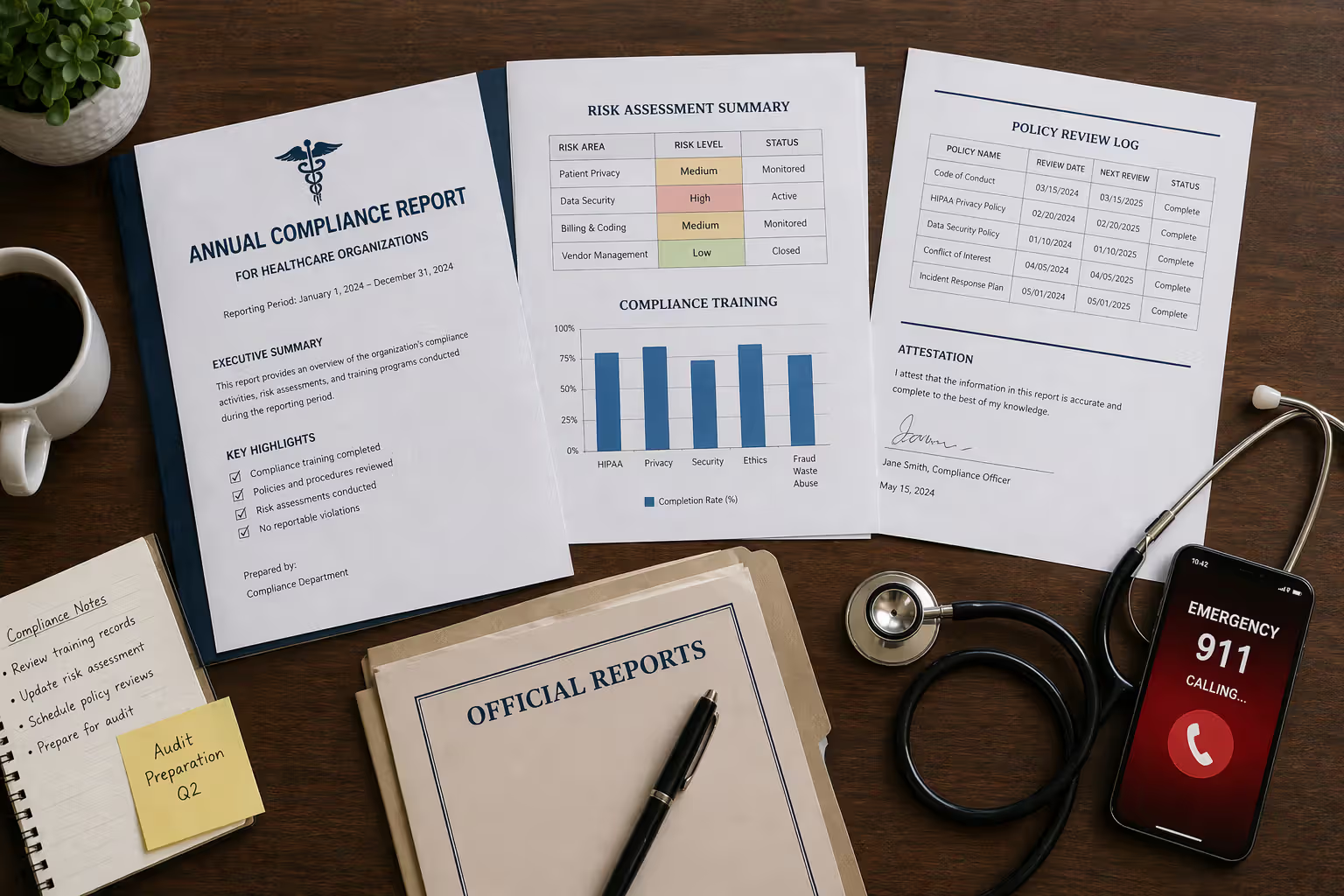
Several patterns emerge from this data. First, physicians almost universally must report—only a few states exempt them entirely. Second, most deadlines cluster around 24 hours, though outliers exist on both ends. Third, penalties rarely exceed misdemeanor level, and actual prosecution is uncommon.
What about the states not listed here? Some have no statewide requirement, leaving everything to local ordinances. Others have requirements buried in administrative codes rather than criminal statutes, making them harder to find. A few western states with sparse populations and lower rabies risk take more relaxed approaches overall.
Always verify both your state statute and local city/county ordinances. The local rules frequently impose stricter requirements than state law, and those are the ones most likely to be enforced since local animal control handles investigations.
Consequences of Failing to Report a Dog Bite
What actually happens if you don't report when the law says you should? The dog bite reporting failure to report consequences range from minor administrative headaches to serious legal problems, depending on circumstances.
For doctors and veterinarians, professional licensing boards pose the biggest threat. Medical boards investigate complaints about failure to report, especially when someone suffers harm as a result. A physician who treats a rabies-risk bite but doesn't report it, allowing the victim to skip PEP, could face license suspension if the patient later develops rabies symptoms.
Practically speaking, enforcement against individual practitioners is rare. Boards have limited resources and typically focus on more serious violations. But here's the risk: if your patient dies from rabies, or if the dog bites someone else and investigators discover you treated an earlier unreported bite, you've put your entire career in jeopardy over a simple phone call you should have made.
Dog owners face different but equally real consequences. That city ordinance requiring you to report your dog's bite might carry only a $100 citation. But failing to report creates evidence of negligence that strengthens lawsuits against you. When the victim's attorney asks, "Did you report this incident as required by city code?" and you answer "no," you've just made their case significantly easier.
Insurance complications multiply the problem. Homeowner's policies typically require prompt notification of incidents that might result in claims. Not reporting to animal control is one issue; not telling your insurance company is another violation that can void coverage entirely. Then you're defending a lawsuit with your own money instead of your insurer's.
The victim's next encounter with your dog becomes much worse for you legally. Courts and juries view unreported prior bites as evidence you knew your dog was dangerous but concealed the risk. This can transform a simple negligence case into one involving punitive damages designed to punish your deception.
Public health risks matter too, even if they don't directly harm you legally. Unreported bites create gaps in rabies surveillance systems. Health departments can't track disease patterns or identify geographic clusters when incidents don't get documented. If your unreported bite involved a rabid dog, other people in your area remain unaware of elevated risk.
Here's what often happens with unreported bites: they don't stay unreported. The victim seeks medical care at some point—if not immediately, then when the wound gets infected. Their doctor reports as required. Or the victim files an insurance claim or lawsuit, creating public records. Or your dog bites someone else and investigators discover the earlier incident during background checks.
Trying to hide a bite rarely succeeds long-term and usually multiplies your problems. The initial report might have resulted in simple quarantine and observation. The later-discovered unreported bite triggers investigations into what else you've hidden, skepticism about your current statements, and penalties for the non-reporting itself.
Author: Lauren Beckett;
Source: jamboloudobermans.com
Accessing Dog Bite Reports as Public Records
Can anyone look up dog bite reports? Usually yes, though the extent of dog bite report public record access depends on which agency created the record and your state's open records laws.
Animal control reports generally qualify as public records available to anyone who requests them. These reports document government agency activities—investigating bites, issuing quarantine orders, conducting dangerous dog evaluations—that transparency laws typically cover.
To obtain an animal control report, contact the agency that investigated and ask for records related to a specific incident. You'll need to provide identifying information: the date, location, parties involved, or ideally the case number. Most agencies charge copying fees of $0.10-0.50 per page or $5-20 for electronic reports.
The agency will usually redact certain personal information before releasing reports to third parties. Victim names and addresses often get blacked out to protect privacy. But information about the dog, its owner, and the circumstances typically remains accessible—that's the public safety information communities have a right to know.
Police reports follow similar rules but vary more by jurisdiction. Some police departments provide reports to anyone who pays the fee. Others release them only to involved parties (victim, dog owner, their attorneys and insurance companies). Check your specific department's policies.
Health department records face stricter confidentiality protections because they contain medical information. You generally can't obtain someone else's health department bite report unless you're directly involved or have legal authority. However, data about the biting animal—vaccination status, quarantine results, rabies test results—may be accessible separately from victim medical information.
Why would someone request dog bite reports they weren't involved in? Common reasons include:
Researching a dog's bite history before filing a lawsuit
Checking whether dangerous dogs live in a neighborhood you're considering moving to
Journalists investigating animal control enforcement patterns
Advocacy groups documenting breed-specific incident rates
Property managers verifying tenant claims about their dog's behavior
When you request records, be specific and patient. Agencies handle numerous requests and prioritize their regular duties. A vague request for "all dog bite reports in 2024" will get delayed or denied as overly broad. A focused request for "the animal control report for an incident on March 15, 2024 at 123 Main Street involving a German Shepherd" gets processed quickly.
If an agency denies your request, they must cite a specific legal exemption. Common exemptions include ongoing investigations, protected victim medical information, or juvenile records. Ask for the denial in writing with the statutory citation. Sometimes denials stem from misunderstandings that clarification can resolve.
For bite victims specifically, obtaining the animal control report should be a priority. This report contains the dog owner's contact and insurance information, witness statements collected by investigators, and the officer's assessment of the incident. All of this strengthens your insurance claim or lawsuit. Get a copy as soon as the investigation closes—don't wait until you've hired a lawyer weeks later.
People often don't understand that reporting a dog bite protects everyone, not just the victim. Every documented bite helps us identify patterns and problem animals before they cause serious harm. We've prevented countless severe attacks by tracking bite histories and intervening early. When medical professionals, vets, and owners all report as required, the system works. But gaps in reporting create blind spots where dangerous dogs operate undetected until someone gets seriously hurt
— Dr. Rebecca Martinez
Frequently Asked Questions About Dog Bite Reporting
Do I need to report a dog bite that didn't actually break through the skin?
Probably not under most state laws. The vast majority of mandatory reporting requirements only kick in when the bite creates an open wound—that's when rabies transmission becomes possible and infection risk exists. Check your specific city ordinances though, because some municipalities set a lower bar. Even when reporting isn't legally required, documenting minor incidents can prove valuable if the same dog bites someone more seriously later. You're building a record of concerning behavior. If you're a physician treating a bite without skin penetration, verify your state's exact statutory language since a few use broader definitions.
What's the process after I file a report with animal control?
Expect an investigation to start within a day or two. An animal control officer will track down the dog using the information you provided. They'll confirm the dog's rabies vaccination status with the owner or vet, examine the animal for symptoms, and issue a formal quarantine order. This typically means the dog stays confined—either at home if vaccinated or at a facility if not—for 10 days while staff watch for rabies development. You'll likely get several follow-up contacts: they might need you to identify the dog in person, answer additional questions, or receive notification of the quarantine outcome. If this dog has bitten before, your report could trigger a dangerous dog hearing where officials decide whether to impose restrictions or order euthanasia. Keep all documentation they provide.
Could I face a lawsuit for not reporting a dog bite?
Failing to report doesn't typically create an independent basis for someone to sue you. The violation is usually criminal (misdemeanor) or administrative (license discipline for professionals) rather than civil. However, your failure to report can dramatically strengthen lawsuits already filed against you. Let's say you're a dog owner and your unreported bite victim later sues after your dog attacks them again. Their attorney will absolutely use your prior non-reporting as evidence you knew the dog was dangerous but actively concealed this risk. That transforms a straightforward negligence claim into something potentially involving punitive damages meant to punish your misconduct. Medical professionals who fail to report could theoretically face malpractice claims if a patient develops rabies from an exposure the doctor never flagged for health authorities.
What's my deadline for reporting a bite to authorities?
That depends entirely on your location and who you are. Most state statutes give you somewhere between 12 and 48 hours. California requires reporting within one day. Colorado gives you just 12 hours. Georgia allows five full days. The clock usually starts ticking when the bite occurred if you're the owner, or when you provided treatment if you're a medical professional. When you're uncertain about your specific deadline, report immediately—sooner is always safer than later. Even if you miss the deadline, reporting late beats never reporting at all, though you might still face penalties for the delay.
Are dog bite reports kept confidential or can anyone access them?
It's complicated. Information about the dog, its owner, and what happened during the incident is usually public record that anyone can request through standard open records processes. Animal control reports, police reports, and similar government documents fall under transparency laws in most states. However, medical information about the bite victim typically gets protected under health privacy regulations. When agencies release reports to third parties, they'll often redact victim names, addresses, and medical details. The dog's vaccination history, the owner's identity, and the circumstances of the bite generally remain accessible because that information serves public safety interests that outweigh privacy concerns.
Do doctors actually report every dog bite they treat?
No, compliance isn't perfect despite legal requirements in most states. Reporting rates vary based on the healthcare setting, bite severity, and individual physician awareness of reporting laws. Large hospital emergency departments usually have strong compliance because they've built reporting into standardized protocols—the system prompts staff to notify health departments automatically. Smaller urgent care centers and private practice physicians often show spottier compliance. Some doctors report only severe bites or cases where rabies risk seems elevated, incorrectly believing minor bites fall outside reporting requirements. If you want to ensure your bite gets reported, directly ask your healthcare provider whether they're filing a report. If they seem uncertain or say no when your state requires it, you can always contact animal control yourself.
Dog bite reporting requirements exist throughout the United States, but the specific rules governing your situation depend on your location, your role (victim, dog owner, medical professional, veterinarian), and the severity of the incident. No single federal law applies everywhere—instead, you're navigating state statutes and local ordinances that often don't align.
The safest approach? When you're unsure whether reporting is required, just do it anyway. The downside of reporting when you didn't technically have to is minimal—maybe a brief investigation that concludes without consequences. The downside of skipping a required report can include criminal penalties, professional discipline, insurance complications, and dramatically increased liability if the dog bites again.
Start by checking both your state law and your city or county ordinances. Many municipalities impose reporting requirements that exceed state mandates. If a bite occurs, document everything immediately: photograph injuries from multiple angles, write down exactly what happened while it's fresh, collect witness contact information, and note everything you can remember about the dog and its owner.
Report to the appropriate authorities within whatever deadline applies. Animal control handles most bite investigations. Police get involved for severe attacks or when owners flee. Health departments track rabies risk and coordinate testing and treatment. Get case numbers and keep copies of everything.
Remember that reporting serves important public health and safety purposes beyond mere legal compliance. The United States has nearly eliminated human rabies deaths through surveillance systems that depend on bite reporting. Dangerous dogs get identified and restricted before they escalate to fatal attacks. Victims obtain documentation they need to pursue fair compensation through insurance claims and lawsuits.
The system works when everyone participates—doctors reporting every bite they treat, veterinarians reporting what clients disclose, dog owners honestly documenting incidents their animals cause, and victims creating official records of attacks. Gaps in reporting create blind spots where rabies exposures go untreated and dangerous animals escape detection until they cause serious harm.
If you're involved in a dog bite incident in any capacity, take reporting seriously. It's not excessive bureaucracy—it's a proven public health measure that protects your community while establishing the documentation you might need later.
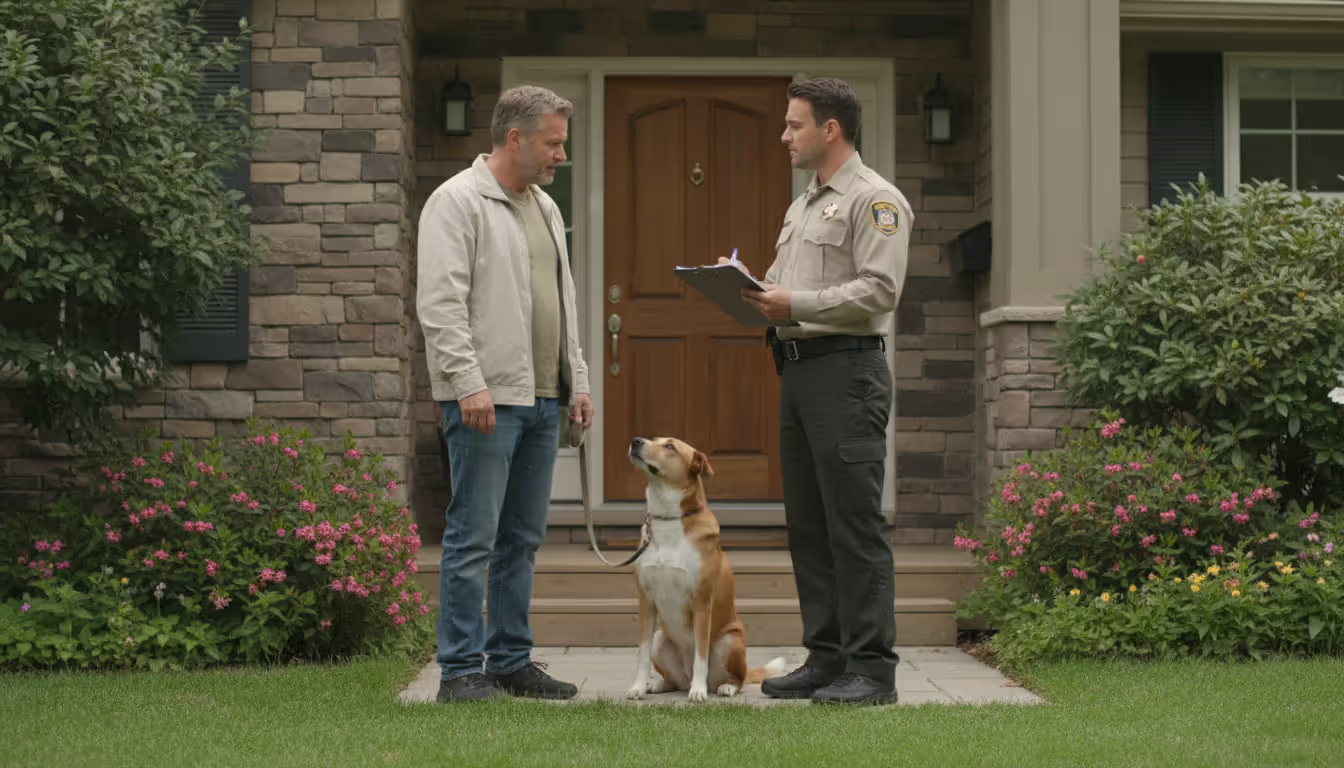
When your dog bites someone inside your home or on your property, you face potential legal liability, insurance complications, and serious consequences. Understanding homeowner liability laws, insurance coverage, and your responsibilities can mean the difference between a manageable situation and financial devastation
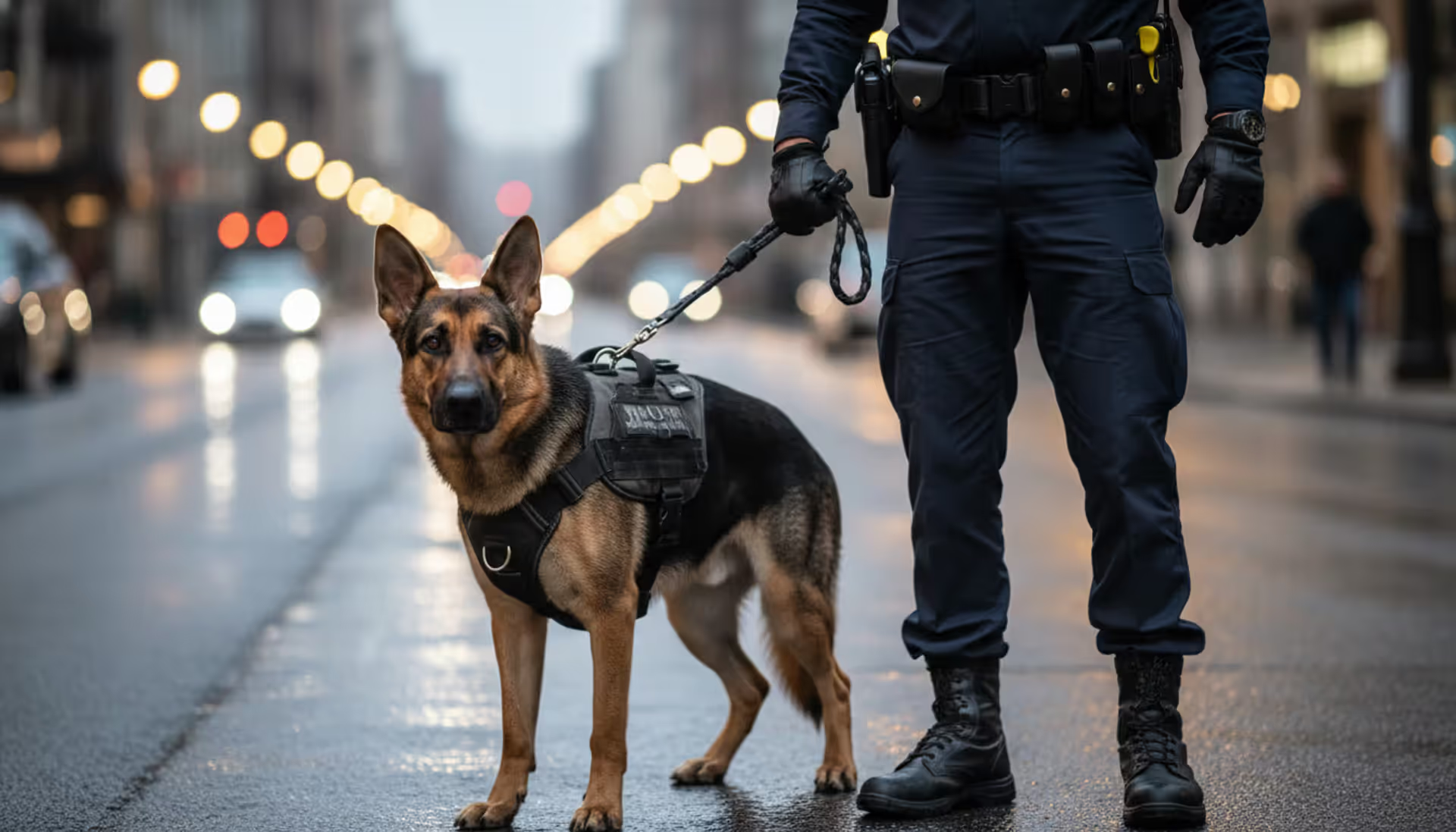
Police K9 attacks can cause severe injuries and lasting trauma. Understand when you can sue for excessive force, how government liability works, what compensation you may recover, and the critical steps to protect your rights after a police dog bite incident
When your dog attacks another dog, euthanasia is not automatic. The outcome depends on injury severity, bite history, state laws, and circumstances. Understanding the dangerous dog declaration process, your rights during hearings, and legal consequences helps you navigate this crisis effectively
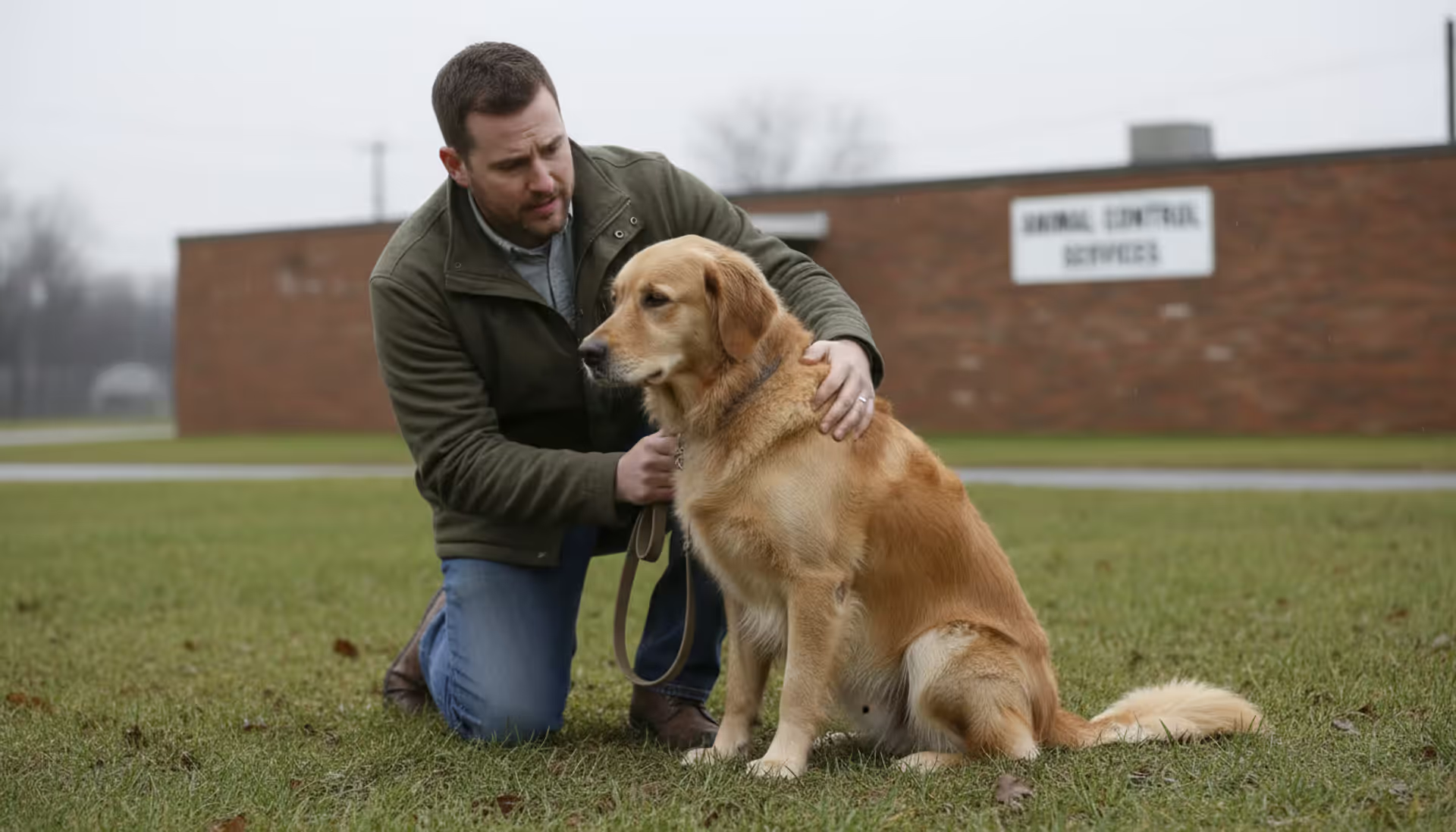
A severe dog attack requires immediate medical attention and legal action. Learn critical steps to take after being mauled by a dog, including emergency care priorities, reporting procedures, documentation methods, victim legal rights, and available compensation for injuries and trauma
The content on this website is provided for general informational and educational purposes only. It is intended to explain concepts related to animal law, pet ownership rights, service animals, dog bite liability, and animal welfare legislation in the United States.
All information on this website, including articles, guides, and examples, is presented for general educational purposes. Legal outcomes may vary depending on jurisdiction, state laws, and individual circumstances.
This website does not provide legal advice, and the information presented should not be used as a substitute for consultation with qualified attorneys or animal law professionals.
The website and its authors are not responsible for any errors or omissions, or for any outcomes resulting from decisions made based on the information provided on this website.