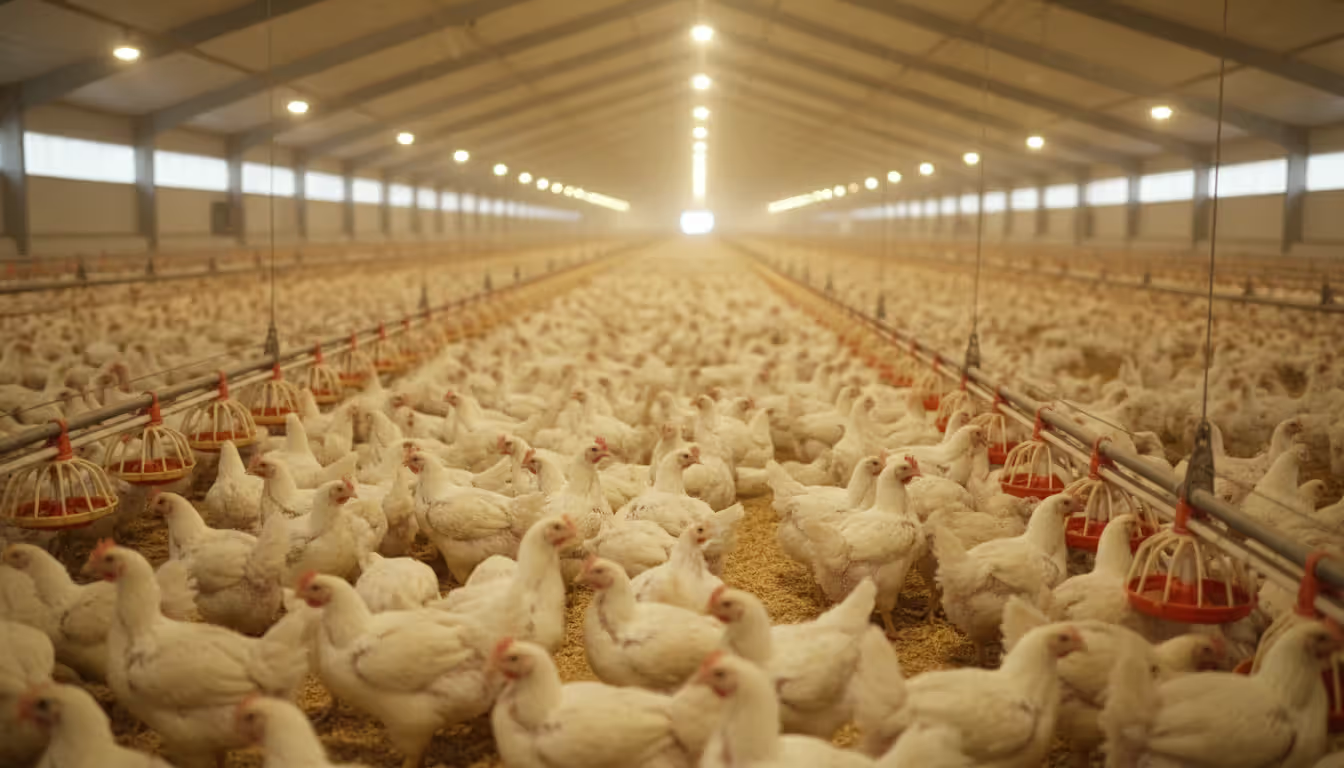
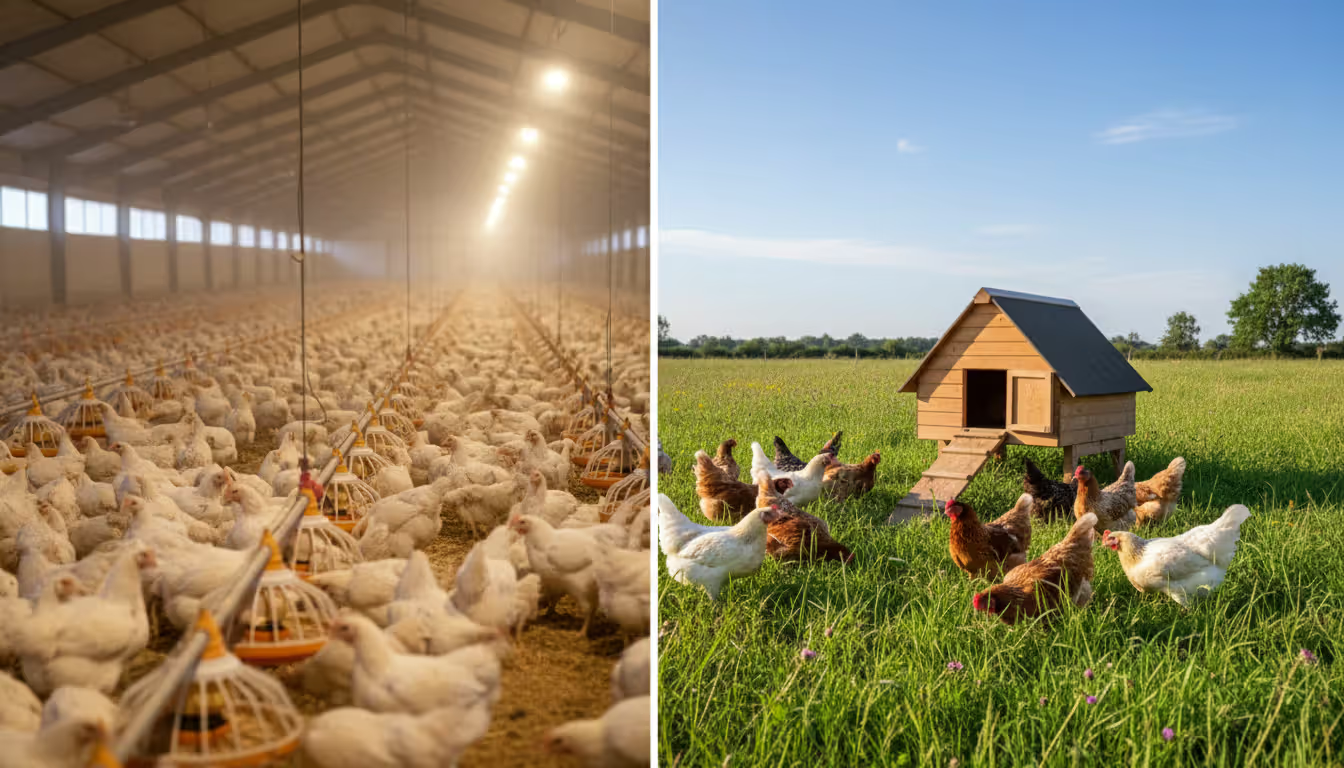
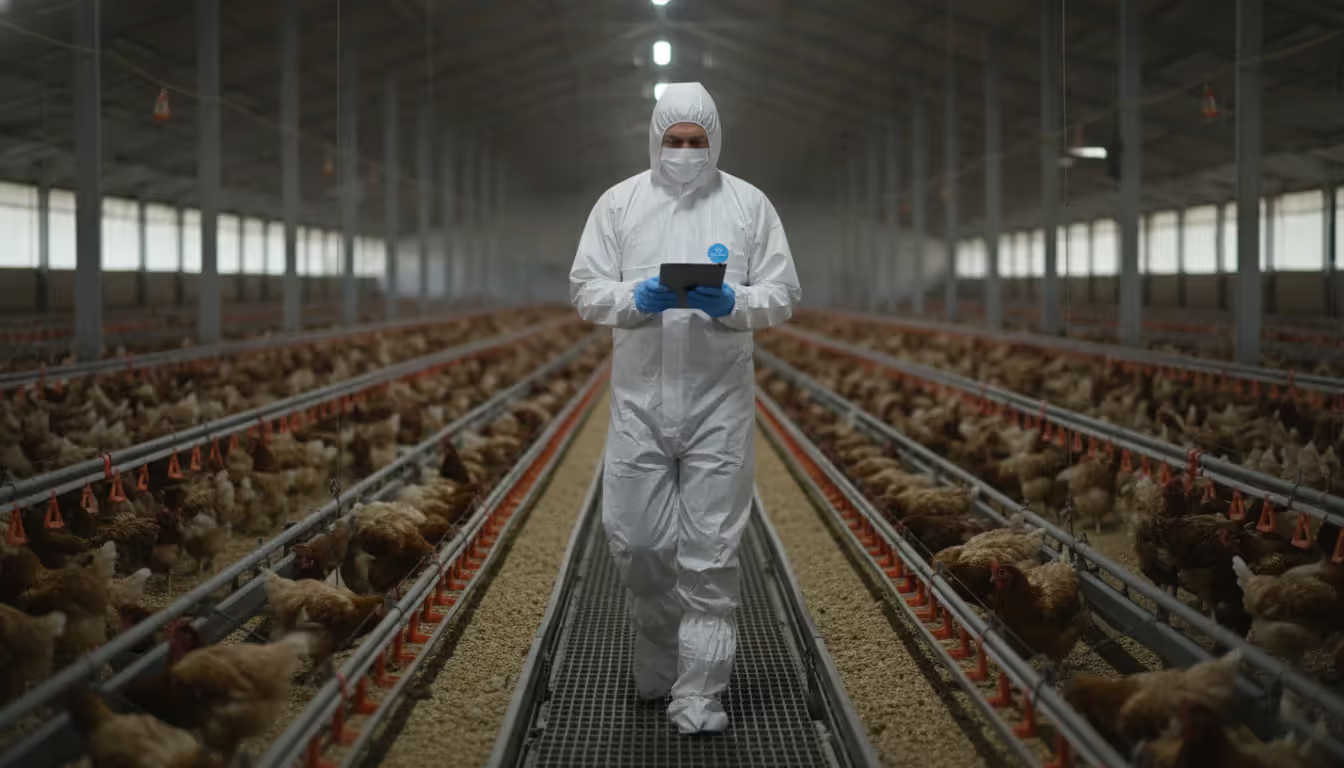
More than nine billion chickens pass through America's industrial poultry system each year, most confined in facilities housing tens of thousands beneath a single roof. The legal protections afforded these animals remain surprisingly sparse and inconsistent, reflecting successful agricultural lobbying that has maintained exemptions from standard animal welfare statutes for decades.
Understanding chicken factory farming legal regulations requires navigating a complex web of federal guidelines, state-specific mandates, voluntary industry standards, and enforcement mechanisms that vary dramatically depending on geography and local political dynamics. Whether you're evaluating product labeling claims, advocating for legislative change, exploring alternative production methods, or crafting policy proposals, distinguishing between what current law requires versus what it merely allows becomes essential.
How Chicken Factory Farming Is Regulated Federally
A remarkable absence defines federal chicken factory farming legal regulations: broiler chickens receive absolutely no protection under the Animal Welfare Act. America's principal federal animal protection law explicitly excludes poultry raised for meat from its coverage. The AWA applies only to laboratory research animals, exhibition specimens, and commercially bred dogs and cats.
The United States Department of Agriculture oversees poultry production through several specialized divisions, each with distinct responsibilities. The Food Safety and Inspection Service focuses on processing facility contamination and pathogen control rather than animal treatment protocols. The Animal and Plant Health Inspection Service concentrates on disease monitoring and biosecurity measures. Neither division maintains authority to create or enforce welfare standards during the birds' time on production facilities.
The Humane Methods of Slaughter Act, originally passed in 1958 and strengthened in 1978, requires that livestock be rendered unconscious before killing—but poultry received deliberate exclusion from these provisions. This regulatory framework allows chickens to be shackled upside-down while fully conscious, passed through electrified water baths for stunning, and processed at rates exceeding 140 birds each minute without violating any federal statute.
USDA engagement with chicken welfare consists mainly of voluntary guidance documents and organic certification standards. The National Chicken Council, representing major producers, publishes welfare guidelines that most large operations follow—but adherence remains completely optional with no penalties unless violations also compromise food safety.
Animal welfare factory farming enforcement simply doesn't exist at the federal level for chickens. No federal inspector possesses authority to cite facilities for welfare violations occurring while birds are alive. Undercover footage has documented birds with untreated injuries, severe burns from accumulated ammonia in litter, and crowding so extreme that wing extension becomes impossible—all perfectly legal under current federal law.
Author: Lauren Beckett;
Source: jamboloudobermans.com
State Laws Governing Chicken Welfare Standards
Factory farm animal welfare laws demonstrate striking differences across state boundaries, creating a fractured landscape where identical operations might violate statutes in one jurisdiction while meeting all legal requirements in another. By 2026, twelve states had enacted some form of chicken welfare legislation, though both comprehensiveness and stringency vary considerably.
Progressive states including California, Massachusetts, Oregon, and Washington have passed comprehensive measures addressing egg-laying hens and meat birds alike. Meanwhile, states with concentrated poultry industries—particularly throughout the Southeast and Midwest—have enacted "right to farm" protections that shield standard agricultural operations from legal challenges, effectively preventing cruelty prosecutions targeting factory farms.
Enforcement capacity fluctuates even more dramatically than statutory language. States maintaining specialized agricultural animal welfare units within agriculture departments tend to conduct regular facility inspections and respond to complaints systematically. States relying on county sheriffs or animal control officers—who typically lack agricultural expertise and face pressure from local farming interests—rarely investigate industrial operations.
Battery Cage Bans and Restrictions by State
Battery cage chicken laws by state have evolved rapidly following California's landmark 2008 Proposition 2. Battery cages—wire enclosures smaller than a laptop that confine multiple hens simultaneously—now face prohibitions in thirteen jurisdictions: California, Colorado, Massachusetts, Michigan, Nevada, Oregon, Rhode Island, Utah, Washington, Arizona, Maine, Ohio (phase-out completed 2026), and New Jersey.
These prohibitions typically require that hens maintain adequate space to turn around freely, lie down, stand upright, and fully extend their wings. California's standards, among the nation's strictest, mandate no less than one square foot per bird in cage-free arrangements and 144 square inches for "enriched colony" systems equipped with perches and nesting areas.
Implementation timelines have been staggered across jurisdictions. Michigan's prohibition took effect in 2025, while Nevada's compliance deadline extends through 2027. This creates market imbalances for egg producers, with some relocating operations to unrestricted jurisdictions or transitioning to cage-free systems early to capture premium market segments.
Enforcement mechanisms range from civil penalties (typically $500-$1,000 daily per violation) to misdemeanor criminal charges. Massachusetts has documented three citations since its law became operative in 2024, all resolved through compliance agreements without monetary penalties. Actual effectiveness depends heavily on inspection frequency and political will.
Broiler Chicken Space and Welfare Requirements
Broiler chicken welfare legislation remains substantially less common than protections for egg-laying hens. Only California and Oregon have established explicit space mandates for meat chickens, both through 2026 ballot measures creating maximum stocking density limits.
California's standards, operative from January 2026, establish a ceiling of 6.0 pounds of chicken per square foot of usable floor space—roughly equivalent to 0.8 square feet per bird at typical processing weight. Oregon's slightly less restrictive standard permits 6.5 pounds per square foot. By contrast, conventional factory operations commonly stock at 8-9 pounds per square foot, with birds occupying virtually every inch of floor area by harvest.
These laws also mandate environmental enrichment (perches, pecking structures, or outdoor access) and prohibit routine beak trimming without anesthesia. Compliance verification occurs through mandatory annual third-party audits, with documentation submitted to state agriculture authorities.
No jurisdiction currently regulates lighting programs, ammonia concentrations, or genetic selection practices for broilers, despite animal welfare scientists identifying these as major welfare determinants. The industry-standard Cornish Cross breed grows so explosively that many birds develop leg disorders and cardiac problems before reaching processing age at six to seven weeks.
Author: Lauren Beckett;
Source: jamboloudobermans.com
Legal Definitions of Factory Farming Cruelty
The factory farming cruelty legal definition varies by jurisdiction, but most state anti-cruelty statutes contain "customary farming practices" exemptions that essentially legalize standard industry procedures regardless of welfare impacts.
Most statutes define animal cruelty as intentionally causing unjustifiable pain, suffering, or death—then carve out exceptions for "accepted agricultural practices." Since factory farming methods including extreme confinement, accelerated genetic selection, and minimal veterinary care qualify as accepted industry-wide, they fall outside cruelty statutes even when producing substantial suffering.
Iowa's agricultural exemption exemplifies particularly expansive language, declaring that established farming practices cannot form the basis for animal cruelty charges. This prevents prosecutors from charging factory farm operators for conditions that would constitute felony abuse if imposed on dogs or cats.
Legal barriers extend beyond statutory exemptions. Many jurisdictions require proving "malicious intent" for cruelty convictions, making prosecution of systemic neglect or welfare failures resulting from profit-driven cost minimization nearly impossible rather than deliberate sadism.
Successful cruelty prosecutions targeting chicken operations occur extremely rarely. A 2023 North Carolina case produced misdemeanor convictions after thousands of birds died from heat stress when ventilation systems failed, but only because the facility manager ignored alarms for three consecutive days—establishing willful neglect beyond accepted practice.
Recent Factory Farming Reform Laws and Proposals
Factory farming reform laws passed since 2022 represent the most significant welfare progress in decades, driven predominantly by ballot initiatives rather than legislative action.
California's Proposition 12, fully operational by 2024, established minimum space requirements and prohibited extreme confinement for breeding pigs, calves, and egg-laying hens sold within the state, regardless of production location. The Supreme Court upheld the law in 2023 against dormant Commerce Clause challenges, creating pathways for additional states to regulate out-of-state production.
Massachusetts Question 3 (2023) adopted California's framework, while Colorado's Proposition 11 (2024) expanded coverage to include broiler chickens and mandate annual welfare audits. Oregon voters approved Measure 113 in 2025, banning battery cages and establishing space requirements for both layers and broilers.
Chicken welfare act provisions in these measures typically incorporate phase-in periods (18-36 months), third-party certification requirements, retailer liability for non-compliant products, and civil penalties ranging from $500 to $10,000 per violation.
At the federal level, the Farm System Reform Act has been reintroduced each Congressional session since 2020 but has never advanced from committee. The legislation would establish a moratorium on new large concentrated animal feeding operations and phase out existing facilities progressively, but faces intense resistance from agricultural industry organizations.
Corporate policy changes have arguably outpaced legislation. Following California's lead, major retailers including Walmart, Kroger, and Costco committed to sourcing exclusively cage-free eggs by 2026, effectively creating a market-driven standard exceeding legal requirements in most jurisdictions. Several restaurant chains have made comparable commitments for broiler chickens meeting Global Animal Partnership standards.
Free Range and Cage-Free Labeling Requirements
Free range chicken legal requirements stem primarily from USDA labeling definitions, supplemented by state consumer protection laws prohibiting misleading advertising.
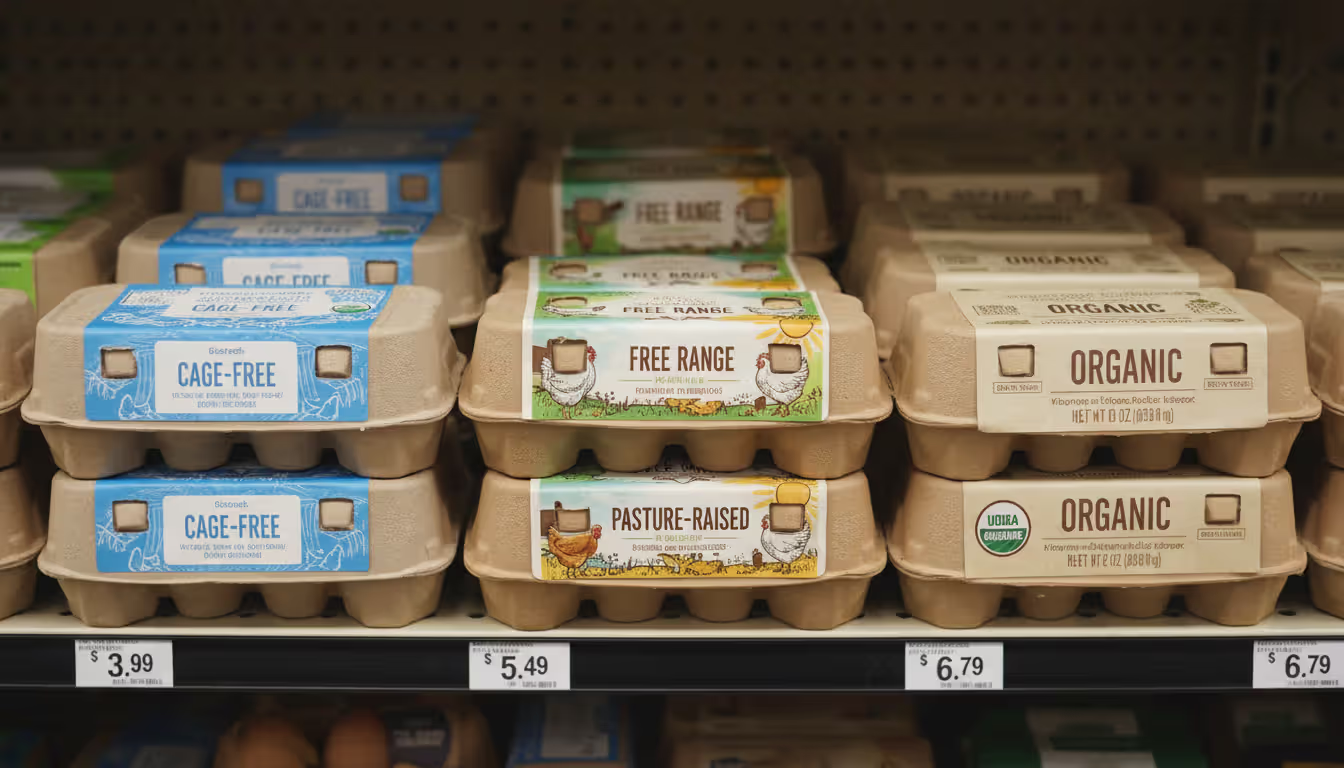
The USDA's Food Safety and Inspection Service defines "free range" for poultry as providing "access to the outdoors." This vague standard has been interpreted such that a small door in a barn housing thousands of birds satisfies the requirement, even if most birds never use it. No minimum outdoor space per bird exists, nor any requirement for pasture, vegetation, or time spent outside.
"Cage-free" indicates only that hens aren't kept in battery cages—they may still be densely packed into enclosed buildings without outdoor access. "Pasture-raised" lacks any USDA definition, rendering it essentially meaningless without third-party certification.
State-specific requirements add complexity. California requires that "free range" eggs come from hens with at least two square feet of outdoor space per bird. Oregon mandates that "pasture-raised" claims be substantiated with stocking density records. These stricter standards apply exclusively to products sold within those states.
Enforcement of labeling requirements occurs through FSIS inspections at processing facilities and state attorney general consumer protection investigations. In 2025, California's AG settled cases with three egg producers for $1.2 million regarding misleading "humane" and "pasture-raised" claims, requiring photographic documentation of outdoor access and specific square footage disclosures.
Third-party certifications including Certified Humane, Animal Welfare Approved, and Global Animal Partnership establish more demanding standards than USDA labels, with independent audits and explicit space, environmental enrichment, and outdoor access requirements. However, these remain voluntary and command premium pricing that limits market penetration.
Author: Lauren Beckett;
Source: jamboloudobermans.com
Humane Slaughter Methods and Legal Compliance
Federal law addressing chicken slaughter humane methods remains virtually nonexistent, given that poultry received explicit exclusion from the Humane Methods of Slaughter Act. Several states have implemented their own requirements, and USDA organic standards impose certain limitations.
Standard slaughter procedures involve shackling conscious birds upside down by their feet, passing them through electrified water intended to render them unconscious, mechanically cutting their throats, and submerging them in scalding tanks to remove feathers. Birds may remain conscious during throat cutting if electrical stunning proves inadequate, and some miss the blade entirely, entering the scalding tank while alive.
Stunning method requirements vary by state. California mandates that chickens be rendered insensible to pain before slaughter, effectively requiring controlled-atmosphere stunning (CAS) systems using inert gases to induce unconsciousness before shackling. New York and Oregon have comparable requirements taking effect in 2027.
CAS systems carry higher installation costs but eliminate welfare problems associated with live shackling and electrical stunning, including broken bones, failed stuns, and pre-slaughter stress. Industry adoption has remained slow, with fewer than 5% of U.S. facilities employing CAS as of 2026.
Processing speed requirements exist solely for USDA inspection purposes, not animal welfare. Line speeds of 140 birds per minute represent industry standard, with some facilities granted waivers allowing up to 175 birds per minute. At these rates, inspectors have less than half a second per bird to check for contamination, making welfare observation impossible.
Inspection procedures emphasize food safety rather than welfare compliance. FSIS inspectors examine for fecal contamination, tumors, and disease—not whether birds received proper stunning or humane handling. Violations trigger product condemnation or facility closure for food safety reasons, not animal welfare penalties.
Consequences for violating humane slaughter requirements remain minimal where state laws exist. California has issued warning letters but no fines since its stunning requirement became effective in 2025. Enforcement depends on undercover investigations by advocacy organizations rather than systematic government monitoring.
Challenges in Enforcing Chicken Welfare Laws
Poultry's exclusion from federal humane slaughter and animal welfare statutes wasn't accidental—it resulted from deliberate lobbying by agricultural interests. We've constructed a legal framework where a chicken receives fewer protections than a laboratory mouse, despite comparable suffering capacities. State reforms show promise but generate a fragmented system where a bird's welfare depends entirely on its production location. Until Congress eliminates the poultry exemption from the Animal Welfare Act and Humane Methods of Slaughter Act, we'll maintain one regulatory standard for 95% of land animals raised for food and essentially zero standards for the remaining 5%—which happens to represent nine billion chickens
— Dr. Rebecca Morrison
Even where chicken welfare statutes exist, animal welfare factory farming enforcement confronts systemic obstacles that constrain practical effectiveness.
Inadequate funding of state agriculture departments means inspections occur infrequently and respond to complaints rather than following systematic schedules. Oregon's Department of Agriculture employs three inspectors responsible for monitoring compliance across thousands of facilities. Routine inspections happen once every 3-5 years, if at all.
Ag-gag laws in six states (Iowa, Kansas, North Carolina, North Dakota, Arkansas, and Montana) criminalize undercover investigations at agricultural operations, making it illegal to capture photos or videos without owner permission or to gain employment without disclosing advocacy organization affiliations. These statutes face constitutional challenges as free speech restrictions, with federal courts producing mixed outcomes.
Industry influence over regulatory agencies creates structural conflicts. State agriculture departments often bear dual mandates to both promote agricultural industries and regulate them—competing responsibilities that typically favor industry priorities. Advisory committees drafting welfare standards include predominantly industry representatives rather than independent welfare scientists.
Whistleblower protections for farm workers who report violations remain weak or absent across most states. Employees who document welfare abuses risk job loss, blacklisting from agricultural employment, and in ag-gag states, criminal prosecution. Federal whistleblower protections under OSHA address workplace safety but exclude animal welfare reporting.
The absence of federal poultry welfare standards represents the fundamental enforcement obstacle. Without baseline federal requirements, states must individually develop, enact, and enforce their own statutes—a slow, resource-intensive process vulnerable to industry lobbying and preemption efforts.
Author: Lauren Beckett;
Source: jamboloudobermans.com
State-by-State Comparison of Chicken Welfare Laws
Jurisdiction
Cage Confinement Status
Meat Bird Density Limits
Responsible Agency
Implementation Year
California
Banned beginning 2022
Cap at 6.0 lbs/sq ft
Dept. of Food & Agriculture
2018 ballot measure (Prop 12)
Massachusetts
Banned beginning 2024
None currently
Dept. of Agricultural Resources
2016 ballot measure (Question 3)
Oregon
Banned beginning 2024
Cap at 6.5 lbs/sq ft
State Agriculture Department
2021 ballot measure (Measure 113)
Colorado
Banned beginning 2025
Regulations in development
State Agriculture Department
2020 ballot measure (Prop 11)
Washington
Banned beginning 2024
None currently
State Agriculture Department
2019 legislative action
Michigan
Banned beginning 2025
None currently
State Agriculture Department
2019 legislative action
Rhode Island
Banned beginning 2026
None currently
Environmental Management Dept.
2022 legislative action
Nevada
Phased elimination by 2027
None currently
State Agriculture Department
2021 legislative action
Ohio
Banned beginning 2026
None currently
State Agriculture Department
2010 stakeholder agreement
Arizona
Banned beginning 2025
None currently
State Agriculture Department
2006 ballot measure
Maine
Banned beginning 2024
None currently
State Agriculture Department
2021 legislative action
Utah
Banned beginning 2025
None currently
State Agriculture Department
2021 legislative action
New Jersey
Banned beginning 2024
None currently
State Agriculture Department
2022 legislative action
Frequently Asked Questions
Are chickens protected under federal animal welfare laws?
No. Chickens and other poultry received explicit exclusion from the Animal Welfare Act, which covers only mammals used in research, exhibition, transport, and commercial breeding. They're also excluded from the Humane Methods of Slaughter Act, meaning no federal statute governs their treatment during rearing or processing. USDA organic criteria provide some welfare requirements for organically-raised chickens, but these represent voluntary certifications rather than mandatory baseline legal protections.
Which states have banned battery cages for chickens?
Thirteen jurisdictions have outlawed or are phasing out battery cages: California, Colorado, Massachusetts, Michigan, Nevada, Oregon, Rhode Island, Utah, Washington, Arizona, Maine, Ohio, and New Jersey. Implementation dates span from 2022 (California) through 2027 (Nevada). These laws typically mandate cage-free housing with minimum space allocations, though specific requirements vary. Several additional states were considering similar legislation as of 2026.
What does "cage-free" legally mean for chicken farms?
Under USDA definitions, "cage-free" indicates hens aren't confined in battery cages but can move freely within an enclosed building. It doesn't mandate outdoor access, minimum space per bird (beyond ability to move), or specific environmental enrichments. State laws may establish stricter criteria—California mandates at least one square foot per bird in cage-free systems. The designation addresses only cage confinement, not stocking density, lighting, air quality, or other welfare variables, making it a minimal baseline rather than comprehensive welfare assurance.
Can factory farms be prosecuted for animal cruelty?
Rarely. Most state anti-cruelty statutes contain "customary agricultural practices" exemptions that shield standard farming methods from prosecution, even when causing significant suffering. Successful prosecutions typically involve extreme neglect exceeding industry norms (mass mortality from equipment failure, prolonged deprivation of food or water) rather than routine confinement or handling practices. In states with specific chicken welfare laws, violations usually constitute civil matters resulting in fines rather than criminal charges.
How are humane slaughter laws enforced for chickens?
Federally, they aren't—chickens received exemption from humane slaughter protections. Several states (California, New York, Oregon) have implemented their own stunning mandates, enforced through state agriculture departments via complaint investigations and periodic inspections. Enforcement generally remains weak due to constrained resources and infrequent facility visits. Most compliance monitoring derives from third-party auditors for voluntary certification programs rather than government oversight.
What recent laws have improved chicken welfare in factory farms?
California's Proposition 12 (passed 2018, implemented 2022-2024) created minimum space requirements and prohibited extreme confinement for egg-laying hens. Similar ballot initiatives passed in Massachusetts (2016), Oregon (2021), and Colorado (2020). California and Oregon also enacted the nation's first broiler chicken space mandates, operative from 2026. These measures represent the most significant welfare improvements in decades, though they apply only within those states and face ongoing implementation challenges.
The regulatory architecture governing chicken factory farms in 2026 reflects decades of successful industry lobbying to maintain exemptions from animal welfare protections. Federal laws provide essentially no welfare requirements for the nine billion chickens raised and slaughtered annually, leaving regulation to individual states with dramatically different approaches and enforcement capabilities.
Progressive jurisdictions have achieved meaningful advances through ballot initiatives that prohibit battery cages, establish minimum space requirements, and require humane stunning methods. These reforms demonstrate that voters, when granted direct decision-making authority, consistently support higher welfare standards than legislatures typically produce.
The enforcement deficit remains substantial even where statutes exist. Inadequately funded agencies, ag-gag restrictions on investigations, industry influence over regulators, and weak whistleblower protections mean many violations escape detection and punishment. The patchwork state-by-state framework creates competitive disparities and compliance complexities that comprehensive federal standards could address.
For consumers seeking higher-welfare chicken products, third-party certifications currently offer more dependable standards than USDA labels or state regulations. For advocates, the ballot initiative approach has demonstrated greater effectiveness than legislative lobbying in most jurisdictions. For policymakers, the Supreme Court's validation of California's authority to regulate out-of-state production marketed in-state creates pathways for larger states to drive industry-wide improvements.
The fundamental question persists whether chickens—sentient animals with demonstrated capacities for pain, fear, and suffering—will eventually receive the same baseline protections provided to other farmed animals, or whether economic and political forces will continue to maintain their exceptional exclusion from humane treatment statutes.
The commercial dog breeding industry produces millions of puppies annually in conditions most pet owners never see. Understanding the welfare problems, health consequences, and ethical issues behind puppy production helps consumers make informed decisions that reduce animal suffering and save lives
The dog meat trade involves breeding, transporting, and slaughtering millions of dogs annually for human consumption, primarily in Asia. Despite growing bans worldwide, enforcement challenges persist. Learn about US laws, international legal status, cruelty concerns, and advocacy efforts
Dog abuse encompasses deliberate physical harm, severe neglect, and psychological torment under federal and state laws. Learn to recognize physical and behavioral signs, document evidence properly, and report through correct legal channels. Penalties range from misdemeanors to felonies with up to 10 years imprisonment
Some dog breeds suffer from genetic conditions so severe that experts question whether continuing their bloodlines constitutes cruelty. Understanding unethical breeding practices means examining breathing problems, shortened lifespans, and the legal frameworks designed to protect animals from profit-driven operations
The content on this website is provided for general informational and educational purposes only. It is intended to explain concepts related to animal law, pet ownership rights, service animals, dog bite liability, and animal welfare legislation in the United States.
All information on this website, including articles, guides, and examples, is presented for general educational purposes. Legal outcomes may vary depending on jurisdiction, state laws, and individual circumstances.
This website does not provide legal advice, and the information presented should not be used as a substitute for consultation with qualified attorneys or animal law professionals.
The website and its authors are not responsible for any errors or omissions, or for any outcomes resulting from decisions made based on the information provided on this website.