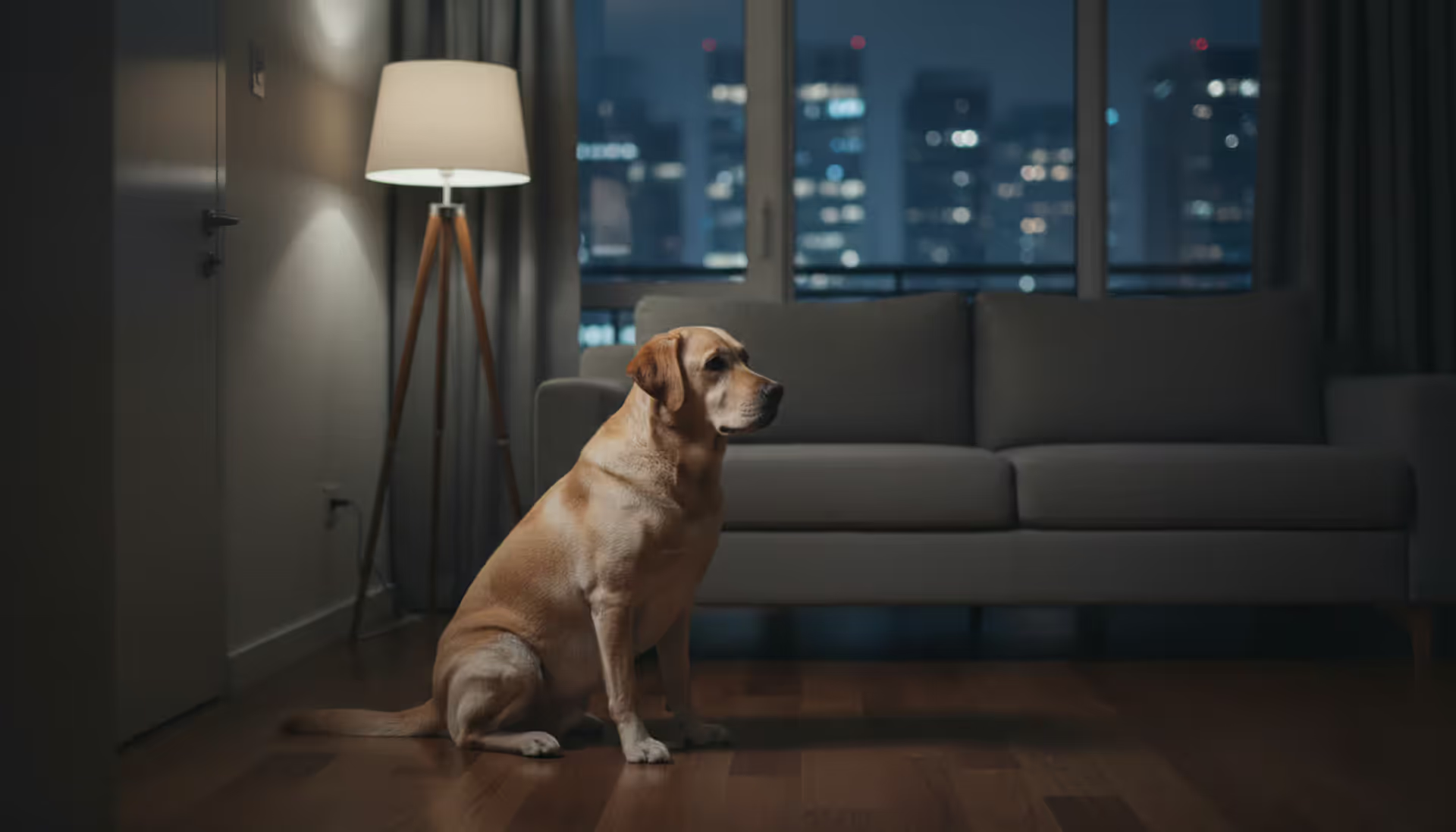
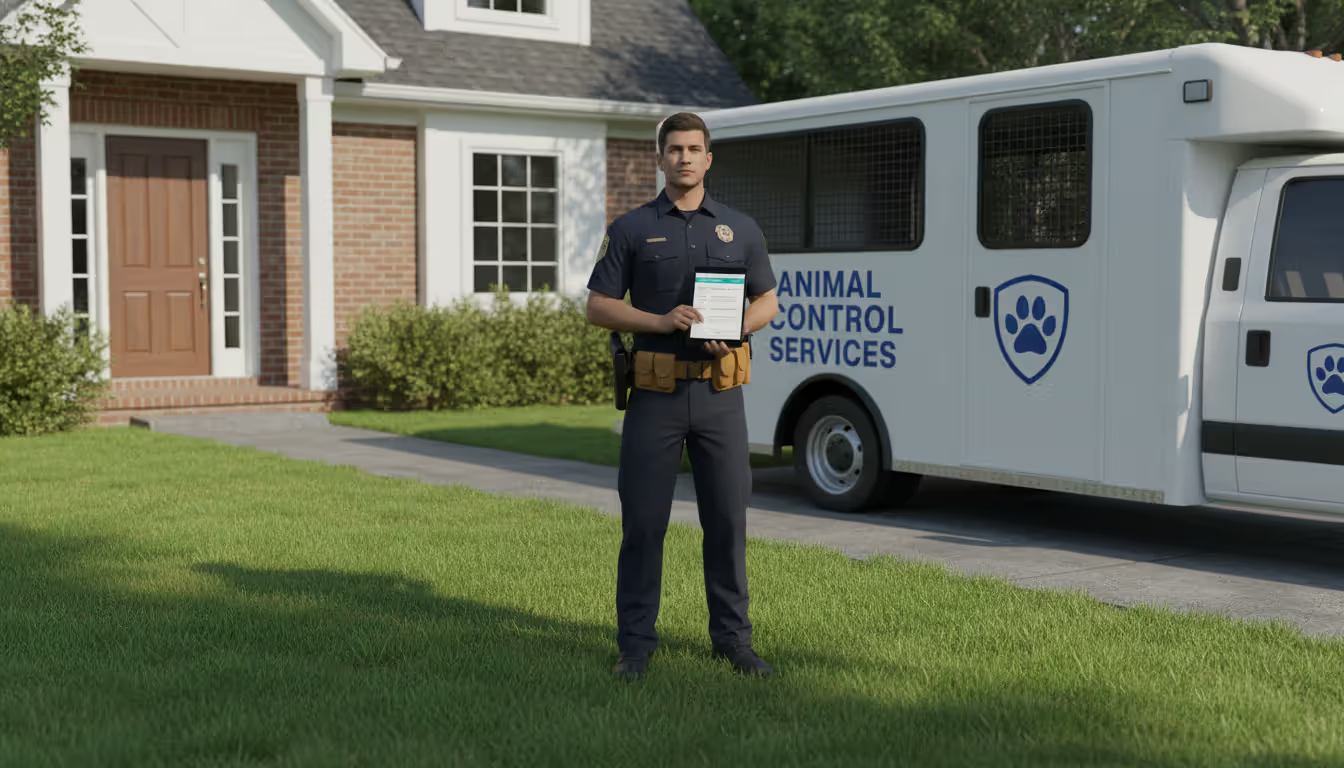
You've been asked to cover an overnight shift. Or maybe there's a family emergency two hours away. The question hits immediately: what happens to the dog? Beyond the practical worry—will he be okay?—there's a legal dimension most owners don't consider until animal control knocks on the door. The gap between "my dog seemed fine" and "you're being charged with neglect" can be surprisingly narrow.
Is It Legal to Leave a Dog Alone Overnight in the US?
There's no federal statute that says "thou shalt not leave Fido home alone for ten hours." The Animal Welfare Act focuses on commercial operations—breeders with fifty dogs, research labs, puppy mills. Your living room doesn't fall under USDA jurisdiction. That leaves a patchwork of state laws, county codes, and city ordinances to navigate.
State legislatures rarely write laws that specify "8 hours maximum" or "overnight prohibited." Instead, they use broad language about animal cruelty and neglect. Take California Penal Code § 597: it criminalizes depriving an animal of "necessary sustenance, drink, or shelter." Notice what's missing? Any mention of time limits. The law cares whether your dog had water at hour nine, not whether you've been gone nine hours.
Cities occasionally get more specific. Some Pennsylvania townships restrict continuous confinement, though enforcement typically targets dogs chained outside in January, not pets sleeping indoors. A few Illinois municipalities have ordinances about tethering duration. But you won't find many jurisdictions with a clear rule like "12 hours alone equals illegal."
Prosecutors and animal welfare officers make judgment calls. They look at breed, age, health, evidence of distress, whether basic needs were met. An adult Golden Retriever with two full water bowls, climate control, and a neighbor who peeked in mid-evening? That's probably fine legally. A four-month-old puppy trapped in a too-small crate, sitting in waste? That's a citation waiting to happen, possibly criminal charges.
The legal standard isn't really about the clock. It's about harm. Did the animal suffer? Was it deprived of something essential? Your intentions matter less than most people think—"I didn't know" rarely holds up when your dog ends up dehydrated or injured.
Author: Marcus Redfield;
Source: jamboloudobermans.com
What Do Animal Welfare Laws Say About Leaving Dogs Alone?
Every state requires "adequate care," though definitions vary. You'll see phrases like "sufficient food and water," "appropriate shelter," "necessary veterinary care." When you walk out the door for the night, those obligations don't pause. The challenge is meeting them without being physically present.
Here's what welfare evaluators actually measure when they investigate:
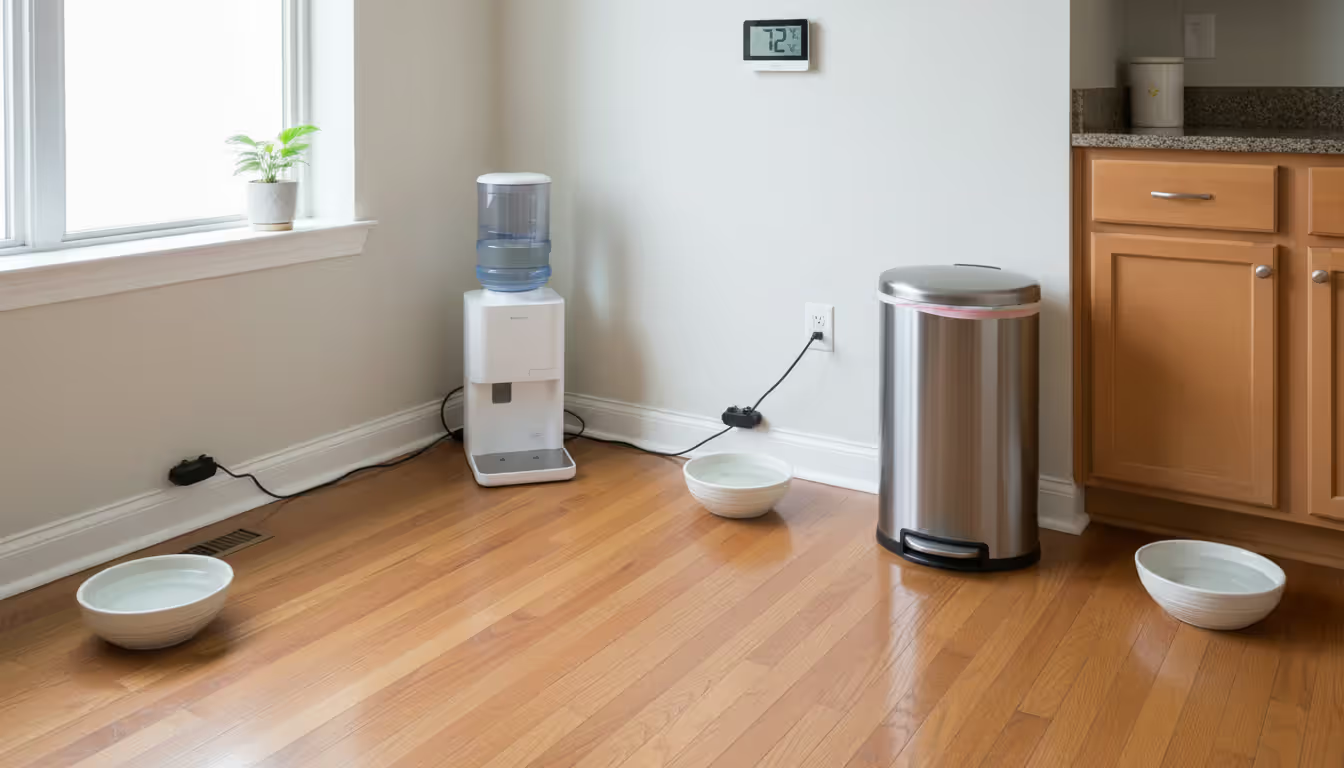
Water access: One bowl won't cut it if your dog tips it at hour two. Enforcement officers have told me they look for backup sources—a second bowl in another room, automatic waterers, anything that ensures the dog won't go dry if something spills.
Temperature safety: Your thermostat becomes a legal issue. A St. Louis case last summer involved a dog left in an un-air-conditioned apartment during a 98-degree day. The owner got twelve hours in jail and lost custody. Winter poses the same risk—a drafty house in Minnesota without heat can trigger charges just as easily.
Hazard-free environment: Exposed electrical cords, accessible trash with cooked chicken bones, unsecured cabinets holding cleaning products. If your absence allows the dog access to something dangerous, and injury results, you're liable.
Elimination needs: This intersects with bladder control biology. Forcing an animal to urinate or defecate in its living space for hours crosses into cruelty in most legal frameworks.
The Animal Legal Defense Fund—which maintains a database of state animal protection laws—points out that most prosecutions stem from patterns rather than isolated incidents. A single overnight trip rarely lands you in court unless something goes visibly, obviously wrong. But repeated neighbor complaints about constant barking, visible distress through windows, or welfare check requests will put you on animal control's radar.
One thing courts consistently reject: the "reasonable person" standard when it contradicts biological reality. Would a reasonable person expect an eight-week-old puppy to hold its bladder for ten hours? No court I've seen has accepted that argument. Your convenience doesn't override the animal's physical limitations.
Author: Marcus Redfield;
Source: jamboloudobermans.com
How Long Can You Legally Leave a Dog in a Crate?
Veterinary organizations publish guidelines; state legislatures mostly don't. The AKC suggests three to four hours max for young puppies, six to eight for healthy adults. The ASPCA's recommendations run similar. But recommendations aren't laws—they're just evidence of humane standards that prosecutors can cite when filing charges.
Minnesota stands out with actual codified limits: you can't confine a dog in a crate for more than nine hours within any twenty-four-hour period if the crate prevents the dog from standing fully, turning around, or lying stretched out. Pennsylvania's Dog Law mandates similar space requirements but doesn't set hourly caps for pet owners in private homes.
The gap between "legal" and "humane" gets blurry here. Technically, most states won't charge you for an eight-hour overnight crating if the dog has adequate space. But if the dog shows signs of distress or injury, prosecutors can use general cruelty statutes to file charges anyway.
Red flags that signal you've crossed the line:
Broken teeth from chewing crate bars trying to escape
Torn nails, sometimes ripped completely off, from digging at crate floors
Chemical burns from lying in urine for hours
Feces matted into fur, indicating the dog had no choice but to soil itself
Pressure sores from immobility on too-small surfaces
Severe panting, drooling, self-mutilation from panic
Michigan v. Brennan (2023) offers a cautionary example. Investigators found a Boxer in a crate twenty-plus hours daily over several weeks. The crate measured too small for the dog to stand. The animal had open sores from lying in one position. The owner's defense? "I work two jobs." The judge wasn't sympathetic—employment doesn't exempt you from keeping an animal humanely. Conviction on three counts, eighteen months probation, permanent ownership ban.
Author: Marcus Redfield;
Source: jamboloudobermans.com
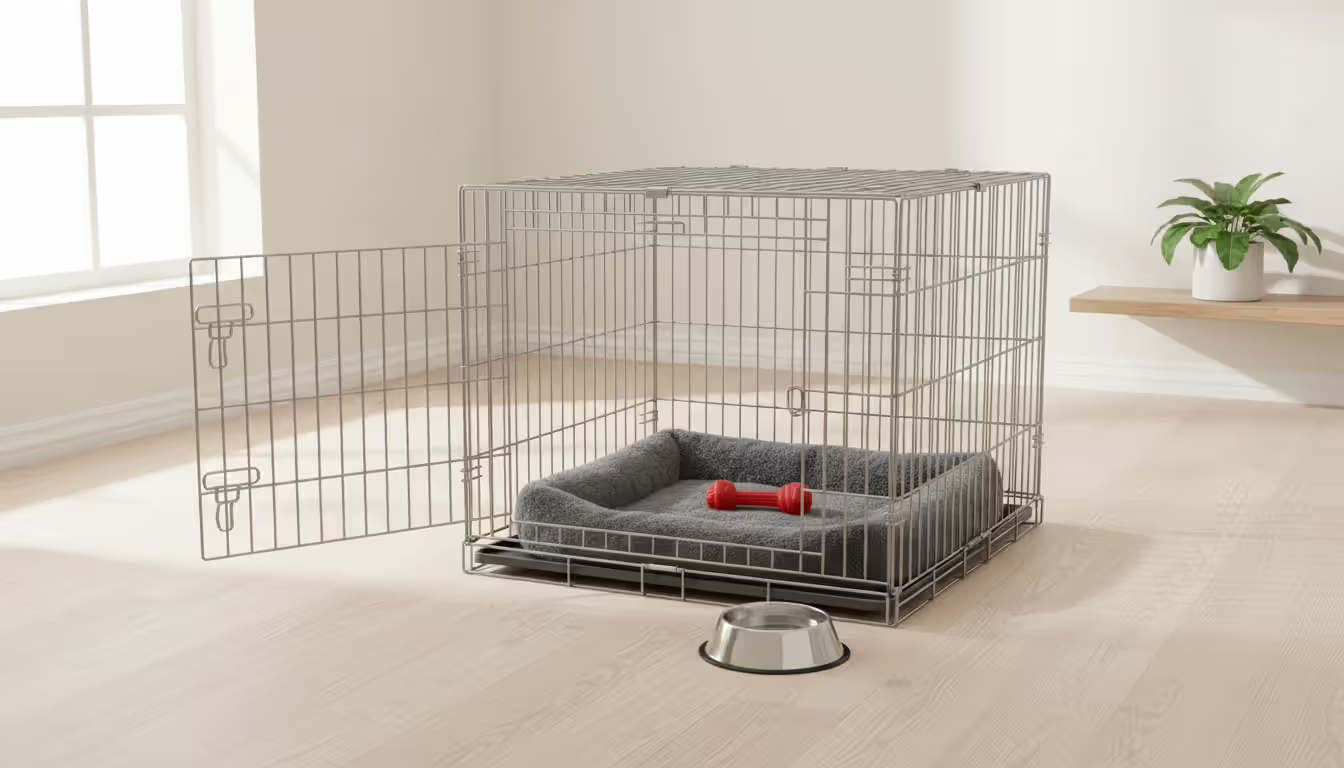
If your overnight plan involves a crate, measure it. Your dog should stand without ducking, turn in a full circle, and lie down fully extended. Anything less, and you're setting yourself up for both welfare harm and legal risk.
Maximum Time Limits for Leaving Dogs Alone at Home
Biology sets the floor, not legislation. Young puppies develop bladder control gradually—vets describe it as roughly sixty minutes of control per month of age during waking hours, maxing out around eight to ten hours for healthy adults. A twelve-week-old puppy? You're looking at three to four hours before an accident becomes inevitable, not cruel—just inevitable.
Dog Age/Type
Max Crate Duration
Max Alone Duration
Key Considerations
Puppy (2–4 months)
2–3 hours
3–4 hours
Bladder still developing; separation anxiety peaks; needs frequent socialization
Puppy (4–6 months)
3–4 hours
4–6 hours
Control improving but not reliable; teething increases destructive risk
Healthy adult (1–7 years)
6–8 hours
8–10 hours
Can manage typical workday; breed energy levels create wide variance
Senior (7+ years)
4–6 hours
6–8 hours
Arthritis, incontinence, medications often require shorter intervals
Whether leaving a dog alone overnight constitutes cruelty under law hinges on specifics. Ten hours for a healthy three-year-old Labrador with water, food, and a safe space? Courts haven't found that cruel. Sixteen hours with no water? That's crossed into criminal territory in every jurisdiction I've researched.
Breed temperament matters more than some owners realize. Border Collies and Australian Shepherds—bred for constant work—often develop destructive behaviors when isolated for extended periods. That destruction can lead to injury, which then becomes a welfare issue. Meanwhile, a Basset Hound might sleep through your entire absence without distress.
Separation anxiety turns an otherwise manageable absence into a crisis. German Shepherds and Vizslas are notorious for it. A dog that injures itself trying to escape confinement, refuses food, or self-mutilates from panic is suffering—and that suffering can be grounds for neglect charges if you knowingly left an anxious dog in a situation that predictably caused harm.
Real scenario from Seattle animal control files: owner leaves two adult Corgis from 10 PM to 8 AM. They have a dog door to a fenced yard, cameras for monitoring, fresh water in three locations. Zero legal concerns. Contrast that with a Portland case: six-month-old Husky crated overnight, found at 9 AM soaked in urine, screaming. Owner received a citation, mandatory compliance checks for six months, and a warning that repeat incidents would trigger criminal charges.
Author: Marcus Redfield;
Source: jamboloudobermans.com
Can You Leave Other Pets Alone for Extended Periods?
Cats survive solitude better than dogs—litter boxes buy you flexibility that bladder control doesn't. But "better" doesn't mean "indefinitely." Vets I've consulted typically cap solo time for adult cats at forty-eight to seventy-two hours, assuming you've set up properly:
Water fountains in multiple rooms (standing water grows bacteria faster)
Automatic feeders with portion control
At least two litter boxes, freshly scooped before you leave
Climate control
Zero access to toxic plants, open windows, or other hazards
A Massachusetts case from last year resulted in cruelty charges when a cat was left eleven days with one bowl of food and water. The cat survived—barely—but needed emergency vet care for severe dehydration. The owner's sentence included fines, probation, and a ban on pet ownership.
Small mammals have even tighter windows. Rabbit water bottles clog without warning. Guinea pig food spoils in heat. Temperature swings kill hamsters faster than dehydration. Exotic vets generally recommend twenty-four hours maximum for rodents and lagomorphs, and that assumes everything goes perfectly—no spills, no equipment failures.
Birds, especially parrots, face psychological damage from isolation. African Greys and Cockatoos bond intensely with their humans; extended absences trigger feather-plucking, screaming, self-injury. While laws rarely address avian welfare specifically, the Avian Welfare Coalition has documented cases where severe plucking led to infections, which then became grounds for neglect charges.
What Happens If You Violate Pet Neglect Laws?
Penalties scale with severity and your history. First-time minor violations—say, a neighbor reports your dog barking all night and officers find insufficient water—often result in warnings. You'll get mandatory follow-up visits, possibly a requirement to hire a pet sitter or install monitoring cameras.
Documented neglect kicks consequences up a level. Misdemeanor charges carry fines that typically range from $500 to $2,500 depending on state. You're looking at probation, community service, court-ordered classes on animal care. Some jurisdictions require you to cover the cost of sheltering and veterinary care if the animal was seized.
Severe cases or repeat offenses trigger felony prosecution in states with enhanced cruelty statutes. California allows up to three years in county jail and $10,000 fines. Texas, Florida, and New York have similar maximums. Felony convictions mean permanent ownership bans—you won't legally be allowed to have pets again.
Beyond criminal court, there's civil liability. If your unsupervised dog escapes and bites someone, or causes a car accident, you're facing lawsuits. Homeowner's insurance often excludes coverage for incidents stemming from neglect. That means paying damages out of pocket.
Investigations usually start with neighbors. Someone hears constant barking for twelve hours straight. They see a dog through the window in obvious distress. They notice you haven't been home in days. One call to animal control launches a case file.
Officers assess conditions, photograph evidence, interview witnesses. If they believe the animal faces immediate danger, they can seize on the spot without a warrant under exigent circumstances. A 2024 Florida case involved three dogs left alone for four days. Neighbors reported non-stop barking and visible distress. Officers removed the animals, documented inadequate food and water, and filed three neglect counts. Two charges stuck; the owner got probation and lost the dogs permanently.
Some states have "Good Samaritan" laws allowing bystanders to break into vehicles to rescue overheating animals. That logic has been extended—controversially—to homes in a few jurisdictions when animals are visibly dying. Arizona and Ohio have the broadest protections for rescuers, but the law remains unsettled. Breaking a window to save a dog you see collapsing from heat might keep you out of jail, or it might get you charged with breaking and entering. Depends on the prosecutor and the evidence.
Author: Marcus Redfield;
Source: jamboloudobermans.com
Best Practices for Leaving Your Dog Alone Overnight
Preparation separates a safe overnight absence from a disaster. Start here:
Water backup systems: Put out two or three large bowls in different rooms. If one spills, the others remain. Some owners swear by gravity-fed waterers; I've seen too many malfunction to trust them as the sole source.
Thermostat settings: Keep your home between 68 and 78 degrees. Extreme heat kills faster than thirst. Cold stress causes hypothermia in small breeds and seniors.
Environment sweep: Walk through every accessible room. Trash cans with food waste? Secure them. Electrical cords? Cover or block access. Houseplants? Many are toxic—lilies kill cats, sago palms kill dogs.
Bathroom options: For dogs not in crates, confine them to a tile or vinyl area with pee pads. For crate-trained dogs, schedule your departure right after a long walk and bathroom break. The closer to departure, the better.
Camera monitoring: Two-way audio cameras let you check in and talk to your dog. Some models dispense treats. I've watched owners defuse anxiety mid-absence just by speaking to their dog remotely.
Backup human: Give a trusted neighbor or friend your key. Ask them to stop by at hour five or six—refill water, let the dog out briefly, check for problems. That single visit eliminates most legal risk.
Situations where overnight alone isn't appropriate:
Any puppy under six months old
Dogs with documented separation anxiety or destructive panic responses
Seniors on medication schedules or with incontinence
Recently adopted dogs still adjusting (wait at least a month)
Dogs that have previously shown severe distress during shorter test absences
Alternatives cost money but avoid risk:
Professional pet sitters usually charge $50–$100 per overnight stay, depending on location
Doggy daycare with overnight boarding runs $40–$80 in most markets
Friends or family willing to dog-sit (offer to reciprocate)
Pet-owner swaps—you watch their dog next time they travel
A Phoenix owner told me she ran a six-hour trial before her planned overnight trip. Cameras recorded her dog pacing for three solid hours, refusing water, whining continuously. She hired a sitter for the actual trip. That test run probably prevented both a welfare crisis and legal trouble.
The real question isn't whether your dog can physically survive the night alone. It's whether they can do it without suffering. A dog might not die from sitting in its own urine for eight hours, but it's experiencing distress that welfare laws exist to prevent. Good ownership means you plan around the dog's needs, not force the dog to adapt to your schedule
— Dr. Sarah Chen
Frequently Asked Questions
Can I be charged with neglect for leaving my dog alone overnight?
You can if your dog ends up deprived of water, food, safe shelter, or the ability to relieve itself. A single overnight trip with proper setup rarely triggers charges. But if animal control finds your dog dehydrated, injured, or sitting in waste, you're facing misdemeanor or felony charges depending on severity and your state's statutes. The law evaluates outcome, not intent.
Is there a legal time limit for crating a dog?
Most states skip the specifics. Minnesota caps crating at nine hours per day when the enclosure prevents standing or turning around. Beyond that, you're relying on veterinary standards—six to eight hours for adults, three to four for puppies. Exceed those guidelines and cause distress or injury, and you can be prosecuted under general cruelty laws even without a specific hourly statute.
What states have specific laws about leaving pets alone?
None have blanket "maximum hours alone" statutes. States like California, Texas, Florida, and New York enforce animal welfare through broad cruelty and neglect provisions that require adequate care. A handful of cities—particularly in Pennsylvania, Illinois, and Arizona—have ordinances on confinement duration, but those usually target outdoor tethering. Enforcement centers on harm and deprivation, not clock-watching.
Can I leave my puppy alone overnight?
No. Puppies younger than six months lack the bladder control for an overnight stretch—their biology maxes out around one hour of control per month of age. They're also prone to separation anxiety and don't have the maturity to handle long isolation safely. Even a ten-hour absence exceeds what most puppies can manage without distress. Arrange a sitter, boarding, or have someone stay overnight.
What should I do if I see a neighbor's dog left alone for days?
Call your local animal control or humane society and provide details: how long the dog's been alone, signs of distress like constant barking, lack of visible water, exposure to extreme weather. Include your contact info for follow-up. If the dog looks like it's dying or in immediate danger, call 911—some jurisdictions treat active animal emergencies like other life-threatening situations. A few states let citizens intervene directly in emergencies, but check local laws first to avoid legal trouble yourself.
Are there exceptions for working pet owners?
Work doesn't exempt you from welfare laws. Courts consistently rule that employment obligations don't justify neglect. If your schedule requires absences longer than your dog can safely tolerate, you're legally required to arrange alternatives—midday walkers, daycare, sitters, or rehoming if no other option works. A 2025 Texas case upheld neglect charges against a shift worker who routinely crated a puppy for twelve-hour stretches. The "I have to work" defense failed completely.
Whether leaving your dog alone overnight is legal depends less on any single statute than on whether your dog's basic needs stay met in your absence. The law doesn't count hours in a vacuum—it measures harm. Did your dog have water? Was the environment safe? Could the animal eliminate waste without suffering? Answer those questions honestly, and you'll know where you stand legally.
Healthy adult dogs generally handle eight to ten hours overnight when you've taken precautions: multiple water sources, stable temperature, safe space, and ideally a backup check-in from someone you trust. Puppies, seniors, and dogs with medical or behavioral issues need more frequent care. Pushing their limits invites both welfare harm and legal consequences that range from fines to criminal records.
Treat alone time as something your dog earns through age, health, and temperament—not something you're entitled to as an owner. When you're unsure, arrange for someone to check in. That single mid-absence visit eliminates nearly all legal risk and guarantees your dog's needs get met. Your dog's welfare and your legal standing both depend on planning around their limitations, not hoping they'll stretch to accommodate your schedule.
Losing a dog is heartbreaking. Once the initial grief subsides, you face an urgent practical question: what are you legally allowed to do with your dog's body? This guide covers every legal option available to pet owners in the United States, from backyard burial to municipal pickup
Dog theft carries serious criminal penalties ranging from misdemeanors to felonies depending on the dog's value and state laws. Understand the charges, sentencing, and legal steps to report theft, use microchip evidence, file civil lawsuits, and recover your stolen dog through law enforcement and community efforts
Microchipping your cat isn't just about finding them if they wander—it's increasingly a legal requirement in parts of the US. Understand state laws, registration requirements, and how microchips function as ownership proof in disputes. Learn the legal process, common mistakes, and differences between cat and dog requirements
When your dog breaks a leg and money is tight, multiple solutions exist. From nonprofit grants and veterinary teaching hospitals to payment plans and crowdfunding, this guide covers actionable options to get your dog treatment without thousands upfront, including what to do if you can't pay the vet bill
The content on this website is provided for general informational and educational purposes only. It is intended to explain concepts related to animal law, pet ownership rights, service animals, dog bite liability, and animal welfare legislation in the United States.
All information on this website, including articles, guides, and examples, is presented for general educational purposes. Legal outcomes may vary depending on jurisdiction, state laws, and individual circumstances.
This website does not provide legal advice, and the information presented should not be used as a substitute for consultation with qualified attorneys or animal law professionals.
The website and its authors are not responsible for any errors or omissions, or for any outcomes resulting from decisions made based on the information provided on this website.