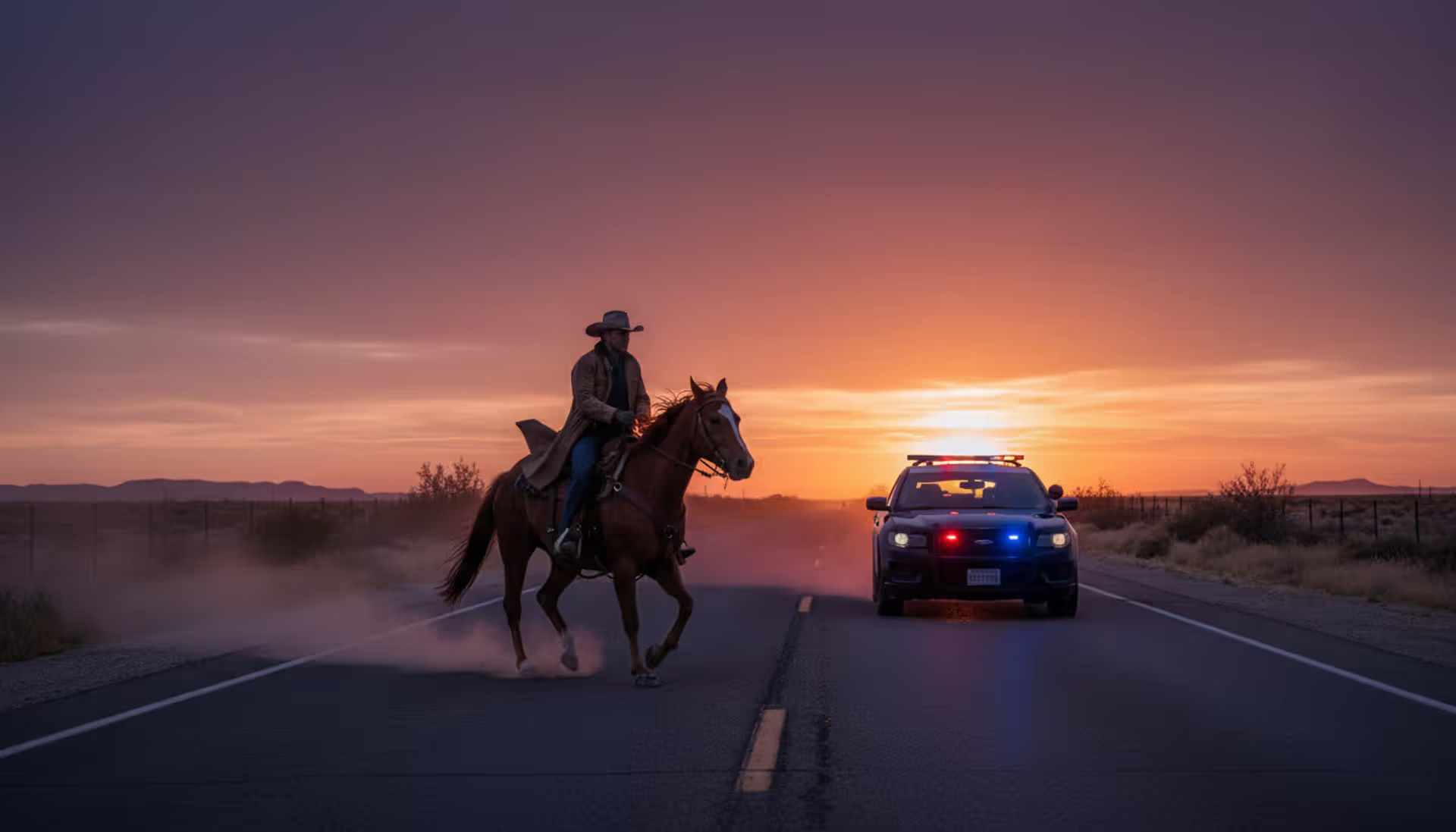
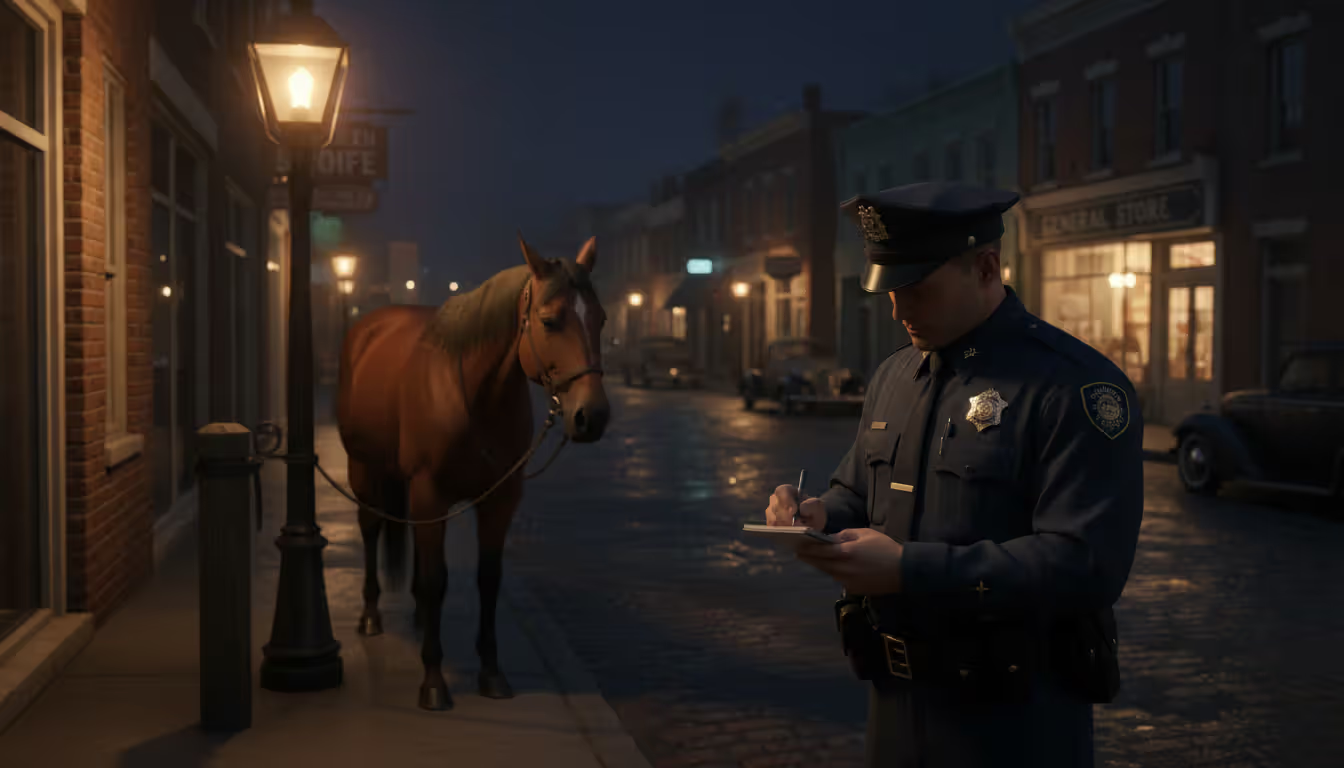
Here's something most people never think about until it's too late: you're at a friend's ranch, you've had a few drinks, and someone suggests riding home on horseback instead of driving. Seems safer than getting behind the wheel, right? Not so fast. Depending on which state you're in, you might be setting yourself up for a DUI arrest—or at minimum, a different criminal charge that still lands you in handcuffs.
The legal answer isn't straightforward. Some states have actually prosecuted and convicted people for riding horses drunk. Others won't touch a horseback DUI case because their laws specifically mention motors and engines. And plenty of states fall somewhere in the muddy middle, where prosecutors might try charging you depending on the circumstances.
Police have definitely arrested people on horses for alcohol-related offenses. Judges have had to wrestle with applying 21st-century drunk driving statutes to an animal humans have ridden for thousands of years. Your location, the exact wording of your state's laws, and sometimes just the mood of the local prosecutor all play a role in what happens next.
How DUI Laws Apply to Horseback Riding
When legislators wrote DUI statutes decades ago, they had cars, trucks, and motorcycles in mind. The basic structure prohibits operating a vehicle while your blood alcohol level exceeds the legal limit or while you're otherwise impaired. Simple enough when we're talking about a Ford F-150. But what about a quarter horse named Duke?
Everything hinges on one word: "vehicle."
State laws define this term differently. Texas, for example, says a vehicle must be "a device in, on, or by which a person or property is or may be transported or drawn on a highway." But then they add the critical qualifier—it has to be a motor vehicle. That means Texas law explicitly requires an engine or motor. A horse doesn't qualify.
California takes the opposite approach. Their vehicle code defines a vehicle as "a device by which any person or property may be propelled, moved, or drawn upon a highway." Notice what's missing? Any mention of motors or engines. California courts have looked at this language and decided horses fit the definition.
Author: Samantha Loring;
Source: jamboloudobermans.com
Defense lawyers argue that lawmakers clearly intended these statutes for cars and similar motorized transport. Stretching a 1980s drunk driving law to cover horseback riding goes way beyond what the legislature had in mind. Prosecutors counter that the law says what it says—if legislators wanted to exclude horses, they should have written "motor vehicle" instead of just "vehicle."
Judges consider multiple elements:
Does the statute specifically say "motor," "motorized," or "self-propelled"?
What did lawmakers probably intend when they passed the law?
Was the person riding on a public street or highway?
Have other courts in this state ruled on similar cases?
The motorized requirement becomes the make-or-break factor in most jurisdictions. If your state's DUI law demands a motor, you're in the clear (though you might face other charges). If the language stays vague or uses broad terms like "conveyance" or "device," prosecutors have an opening to argue you've committed a DUI.
So can you catch a DUI charge while sitting in a saddle? In roughly a dozen states with expansive vehicle definitions and supportive case law, absolutely. In states that specify motor vehicles, probably not—but that doesn't mean you're walking away without consequences.
State-by-State Differences in Horseback DUI Laws
No federal statute addresses this issue, which means all 50 states handle it independently. The result? A confusing patchwork where you'd face DUI charges in California but only public intoxication in Colorado for the exact same behavior.
States Where Horses Are Considered Vehicles
A handful of states treat horses like any other vehicle under their DUI statutes. These places either have broad statutory language or established court rulings that support prosecution.
California stands out with actual convictions on the books. Their courts have repeatedly upheld DUI charges against horseback riders, citing the vehicle code's expansive definition. One 2018 case involved a woman riding along Highway 1 after drinking at a coastal bar—she was arrested, prosecuted, and convicted.
Florida has similar precedent. Multiple arrests over the past decade resulted in DUI convictions. Their statute defines vehicles broadly, and Florida prosecutors have shown willingness to pursue these cases aggressively.
Pennsylvania sits in an interesting position. Their law defines "vehicle" as any device for transporting people or property. Some prosecutors have used this to charge horseback riders with DUI, though results vary by county. You might get charged in one Pennsylvania county but not the neighboring one.
Louisiana courts have allowed these prosecutions too, though the issue hasn't been definitively settled by their supreme court.
States Where You Cannot Get a DUI on a Horse
Many states wrote their DUI laws with explicit motor vehicle requirements, creating clear protection for anyone on horseback (from DUI charges, anyway).
Texas law couldn't be clearer—it requires a motor vehicle. Several people have been arrested initially for horseback DUI in Texas, only to have prosecutors drop those charges and substitute public intoxication instead.
Montana, Colorado, Nevada, Wyoming, and Idaho all use similar motor vehicle language. You won't face DUI charges for riding a horse drunk in these states.
Michigan and Ohio specifically limit DUI prosecution to motorized vehicles. Washington and Oregon use comparable terminology that excludes horses.
But here's the catch: just because these states won't charge you with DUI doesn't mean you're legally protected. Public intoxication, disorderly conduct, and animal endangerment charges remain on the table.
This table reflects general patterns current through 2026. Individual outcomes depend on specific facts, the prosecutor handling your case, and evolving legal interpretations. Get advice from an attorney in your area before assuming anything.
Alternative Charges for Riding a Horse While Intoxicated
Let's say you're in a state like Texas where DUI charges won't stick because horses aren't motor vehicles. Think you're off the hook? Not even close. Prosecutors have an arsenal of other charges they can file.
Public intoxication tops the list. Most states make it illegal to be visibly drunk in any public space. "Public" includes streets, sidewalks, parks—and yes, the middle of Main Street while sitting on a horse. Officers can arrest you for public intoxication even if you're just standing on a corner, so riding an animal through town while drunk definitely qualifies. This misdemeanor usually brings fines between $200 and $500, possible jail time up to 30 days, and a permanent record.
Author: Samantha Loring;
Source: jamboloudobermans.com
Disorderly conduct charges apply when your intoxicated behavior disturbs others or creates public disturbances. Picture riding your horse through a quiet neighborhood at 2 AM while shouting and carrying on. That's textbook disorderly conduct, which often carries similar penalties to public intoxication.
Animal cruelty or endangerment statutes become relevant when your impairment affects the horse's welfare. Can't control the animal properly? Riding it into dangerous situations? Causing it to panic or injure itself? Prosecutors in states with strong animal protection laws may file charges ranging from misdemeanors to felonies. Some states classify serious animal endangerment as a felony punishable by years in prison.
Reckless endangerment charges come into play when your drunk riding creates hazards for other people. Riding through traffic, weaving between pedestrians, or galloping down a crowded street while intoxicated gives prosecutors grounds to file endangerment charges. These often carry stiffer penalties than public intoxication.
Agricultural states sometimes maintain specific laws about handling livestock while impaired. Kentucky, for instance, has regulations addressing intoxicated persons controlling animals on public ways.
The bottom line: avoiding DUI charges doesn't mean avoiding criminal prosecution altogether.
Notable Horseback DUI Cases and Legal Precedents
Real cases show how courts handle these situations when they actually reach the courtroom.
In 2018, a California woman was riding her horse along Pacific Coast Highway near Malibu when a sheriff's deputy spotted her weaving erratically. The officer conducted field sobriety tests (she failed) and arrested her for DUI. Her attorney argued that a horse doesn't qualify as a vehicle under California law. The trial court disagreed, citing the broad vehicle code definition. She was convicted, fined $1,800, and placed on probation. The appellate court upheld the conviction.
A 2016 Florida case involved a man riding through a residential neighborhood in Ocala around midnight on his horse. Neighbors called police about someone shouting and causing a disturbance. When officers arrived, they found him clearly intoxicated, struggling to stay in the saddle. He was arrested for DUI, tried, and convicted. Florida's appellate courts affirmed, holding that the state's DUI statute doesn't require motorization.
Pennsylvania has seen mixed results. A 2017 arrest in Lancaster County led to DUI charges against an Amish man riding his horse home from a social gathering. However, charges were dismissed because he was riding on private farm roads, not public highways. A different case in 2019 resulted in conviction when the rider was on a state route.
Texas provided important clarification in a 2019 case. A man was arrested in rural East Texas for DUI while riding his horse along a county road. His defense attorney challenged the charges, arguing Texas law requires motor vehicles for DUI prosecution. The judge agreed and dismissed the DUI charge, though the defendant still faced public intoxication charges.
I've defended cases involving everything from horses to electric scooters to motorized coolers. Prosecutors will try to fit almost anything under the vehicle umbrella. Success defending these cases comes down to understanding your exact state statute—word for word—and finding case law that supports your interpretation. A defense that works perfectly in Montana will get you nowhere in California
— Sarah Mitchell
These cases show that enforcement varies wildly. Some prosecutors view horseback DUI as a legitimate public safety issue worth pursuing. Others consider it a waste of limited resources better spent on actual drunk drivers.
Safety and Criminal Liability Risks
Legal technicalities aside, riding a horse while you're drunk is genuinely dangerous. Horses weigh 1,000 to 1,500 pounds and stand five to six feet tall at the shoulder. They're powerful animals requiring coordination, quick reflexes, and solid judgment to control safely. Alcohol impairs all three.
Your balance deteriorates when you drink. Maintaining position in a saddle requires core strength and constant small adjustments. Drunk riders fall off horses with alarming regularity, suffering head injuries, broken bones, and spinal damage. Horse-related falls send thousands of people to emergency rooms annually even under sober conditions—add alcohol and those risks skyrocket.
Author: Samantha Loring;
Source: jamboloudobermans.com
The horse faces dangers too. When you can't make sound decisions, you might ride the animal into traffic, across unstable ground, or through hazardous conditions it would normally avoid with proper guidance. Horses can panic, bolt, or injure themselves trying to compensate for their rider's poor control.
Beyond criminal charges, you're exposed to civil liability. If your horse kicks someone while you're drunk in the saddle, you can be sued. If it runs into traffic and causes a multi-vehicle accident, you're liable for damages. Homeowners insurance policies often exclude coverage for incidents involving intentional intoxication.
One 2017 incident in Kentucky illustrates the risks. A drunk rider on a horse startled a driver on a rural highway, causing the driver to swerve into a ditch. The driver suffered significant injuries and sued the rider for $400,000 in damages. The lawsuit succeeded because the rider's intoxication was proven and directly contributed to the accident.
Public roads amplify every danger. Horses don't mix well with cars even under ideal circumstances. An impaired rider multiplies the risk exponentially, creating scenarios where cars swerve to avoid the horse, pedestrians are endangered, or the horse itself panics and causes chaos.
If your drunk riding results in someone's death, prosecutors may file vehicular manslaughter or negligent homicide charges. These carry prison sentences measured in years, not months. Even if you avoid the DUI label, killing someone through intoxicated recklessness won't be treated lightly by courts.
What to Do If You're Charged
Getting arrested for any alcohol-related offense while on a horse requires immediate action to protect yourself legally.
Stop talking. Seriously—say nothing beyond providing your identification. Don't explain how much you drank, where you've been, or why you thought riding was safer than driving. Intoxicated people consistently say things that destroy their defense later. Exercise your right to remain silent.
Ask for a lawyer immediately and unambiguously. Say clearly: "I want an attorney." Then actually stop talking. Police may continue asking questions—ignore them politely but completely until your attorney arrives.
Document what you remember as soon as you're able. Write down where exactly you were riding, whether you were on public roads or private property, what the officer said during the stop, and any witnesses who saw what happened. These details become critical for your defense.
Author: Samantha Loring;
Source: jamboloudobermans.com
Potential defenses depend heavily on your jurisdiction and the specific facts. In states requiring motor vehicles, your attorney will argue the statute simply doesn't apply to horses—case closed. If you were exclusively on private land, that defeats most public intoxication or DUI charges. If the officer didn't have valid probable cause to stop you, evidence gathered during the stop might be suppressible.
Some defendants have successfully argued they weren't "operating" or "driving" the horse—that the well-trained animal was simply carrying them home while they sat passively. This argument has worked in a few cases but fails more often than it succeeds.
Consequences for conviction vary enormously. DUI convictions can mean license suspension (yes, even though you weren't driving a car), fines from $500 to $5,000 depending on the state, jail sentences from 48 hours to six months for first offenses, mandatory alcohol education programs, and probation. Public intoxication typically brings lighter penalties—$200 to $500 in fines, up to 30 days in jail—but still creates a criminal record.
Criminal records create long-term problems. Employment background checks reveal convictions, potentially costing you job opportunities. Professional licenses may be affected. Landlords often reject applicants with criminal histories. Even misdemeanor convictions can haunt you for years.
Prosecutors sometimes offer plea deals—plead guilty to a reduced charge in exchange for lighter penalties. Your attorney should carefully evaluate any offer. Sometimes accepting disorderly conduct instead of fighting a DUI charge makes sense. Other times, the case is weak enough that going to trial offers better odds.
Frequently Asked Questions About DUI on Horseback
Can you actually get arrested for riding a horse drunk?
Absolutely—arrests happen regularly across the country. The specific charge depends on your state's laws and how prosecutors interpret them. California, Florida, and Pennsylvania have all seen actual arrests and prosecutions for horseback DUI. States limiting DUI to motor vehicles typically arrest riders for public intoxication instead. Either way, you're getting handcuffed and spending time dealing with the criminal justice system. The question isn't whether you can be arrested, but what specific offense will be charged.
What states have prosecuted DUI cases involving horses?
California has the most documented cases, with multiple convictions upheld on appeal. Florida prosecutors have pursued horseback DUI aggressively, resulting in several convictions over the past decade. Pennsylvania sees occasional prosecutions, though enforcement varies significantly by county. Louisiana has allowed these cases to proceed, though comprehensive case law remains limited. Several other states with broad vehicle definitions could theoretically prosecute horseback DUI, but documented cases are harder to find. Local prosecutor discretion plays a huge role—some district attorneys think these cases are important, others consider them silly.
Is a horse legally considered a vehicle?
It depends entirely on which state you're asking about. California and Florida courts have ruled that horses qualify as vehicles under their DUI statutes. Their vehicle codes use broad language like "device for transportation" without requiring motors. Texas, Colorado, Montana, and at least a dozen other states define vehicles as motorized or self-propelled, which clearly excludes horses. The middle ground includes states with ambiguous statutes that could go either way depending on prosecutorial interpretation and judicial rulings. There's no universal answer—check your specific state statute and existing case law.
Can I be charged with public intoxication instead of DUI?
Yes, and this happens frequently in states where horses don't qualify as vehicles. Public intoxication laws prohibit being visibly drunk in public spaces, which definitely includes riding a horse down a street or through a park. This misdemeanor carries penalties like fines ($200-$500 typically), possible jail time (usually under 30 days), and a criminal record. While lighter than DUI consequences, public intoxication is still a criminal conviction with lasting implications. Some states also allow disorderly conduct charges if your behavior disturbs others.
What are the penalties for horseback DUI where it's illegal?
In states that prosecute these cases as DUI, expect penalties matching standard drunk driving charges. First-time offenses typically bring fines between $500 and $2,000, jail sentences from 48 hours to six months (often suspended for first-timers without aggravating factors), mandatory alcohol education programs costing $300-$800, probation lasting 6-12 months, and community service requirements. Some states suspend your driver's license even though you weren't driving a car—the DUI conviction itself triggers the suspension. Second or third offenses dramatically increase penalties, potentially including months or years in prison.
Does it matter if I'm on a public road versus private property?
This distinction matters enormously. Most DUI statutes apply only to public roads, highways, or areas accessible to the public. Public intoxication laws similarly require you to be in a public place. If you're riding exclusively on your own private land—like a large ranch or farm—prosecution becomes much harder for prosecutors. However, exceptions exist: if your property borders public roads and you're visible from those roads creating a disturbance, charges might stick. If your private property is accessible to the public (like a barn that's open for business), some courts have ruled that it qualifies as public space for charging purposes. And if you cross even briefly onto a public road, you've given prosecutors the jurisdiction they need.
So can you get slapped with a DUI for riding a horse while drunk? The frustrating answer: it depends on your zip code. California, Florida, and a few other states with expansive vehicle definitions will prosecute you for DUI. Texas, Colorado, Montana, and states requiring motorization won't file DUI charges but may hit you with public intoxication or other offenses instead.
The smarter question: should you ride a horse drunk regardless of whether it's technically legal? Absolutely not. The safety risks don't change based on state statutes. You're endangering yourself, the animal, and everyone around you. Falls from horses cause traumatic brain injuries, broken necks, and deaths. Add alcohol to that equation and you're playing Russian roulette.
Even if you somehow avoid criminal charges, civil liability remains. Injury lawsuits, property damage claims, and medical bills can financially devastate you. Your insurance likely won't cover incidents involving intentional intoxication.
Facing charges? Get a local attorney immediately. These cases involve nuanced statutory interpretation and jurisdiction-specific precedents that require professional legal help. Whether prosecutors charge you with DUI, public intoxication, disorderly conduct, or animal endangerment, the consequences can follow you for years.
The legal landscape keeps evolving as courts address new situations. What's certain in 2026: law enforcement takes intoxicated riding seriously, regardless of whether your transportation has four wheels or four hooves. The penalties might vary, but the handcuffs feel the same.
Losing a dog is heartbreaking. Once the initial grief subsides, you face an urgent practical question: what are you legally allowed to do with your dog's body? This guide covers every legal option available to pet owners in the United States, from backyard burial to municipal pickup
Dog theft carries serious criminal penalties ranging from misdemeanors to felonies depending on the dog's value and state laws. Understand the charges, sentencing, and legal steps to report theft, use microchip evidence, file civil lawsuits, and recover your stolen dog through law enforcement and community efforts
Microchipping your cat isn't just about finding them if they wander—it's increasingly a legal requirement in parts of the US. Understand state laws, registration requirements, and how microchips function as ownership proof in disputes. Learn the legal process, common mistakes, and differences between cat and dog requirements
When your dog breaks a leg and money is tight, multiple solutions exist. From nonprofit grants and veterinary teaching hospitals to payment plans and crowdfunding, this guide covers actionable options to get your dog treatment without thousands upfront, including what to do if you can't pay the vet bill
The content on this website is provided for general informational and educational purposes only. It is intended to explain concepts related to animal law, pet ownership rights, service animals, dog bite liability, and animal welfare legislation in the United States.
All information on this website, including articles, guides, and examples, is presented for general educational purposes. Legal outcomes may vary depending on jurisdiction, state laws, and individual circumstances.
This website does not provide legal advice, and the information presented should not be used as a substitute for consultation with qualified attorneys or animal law professionals.
The website and its authors are not responsible for any errors or omissions, or for any outcomes resulting from decisions made based on the information provided on this website.