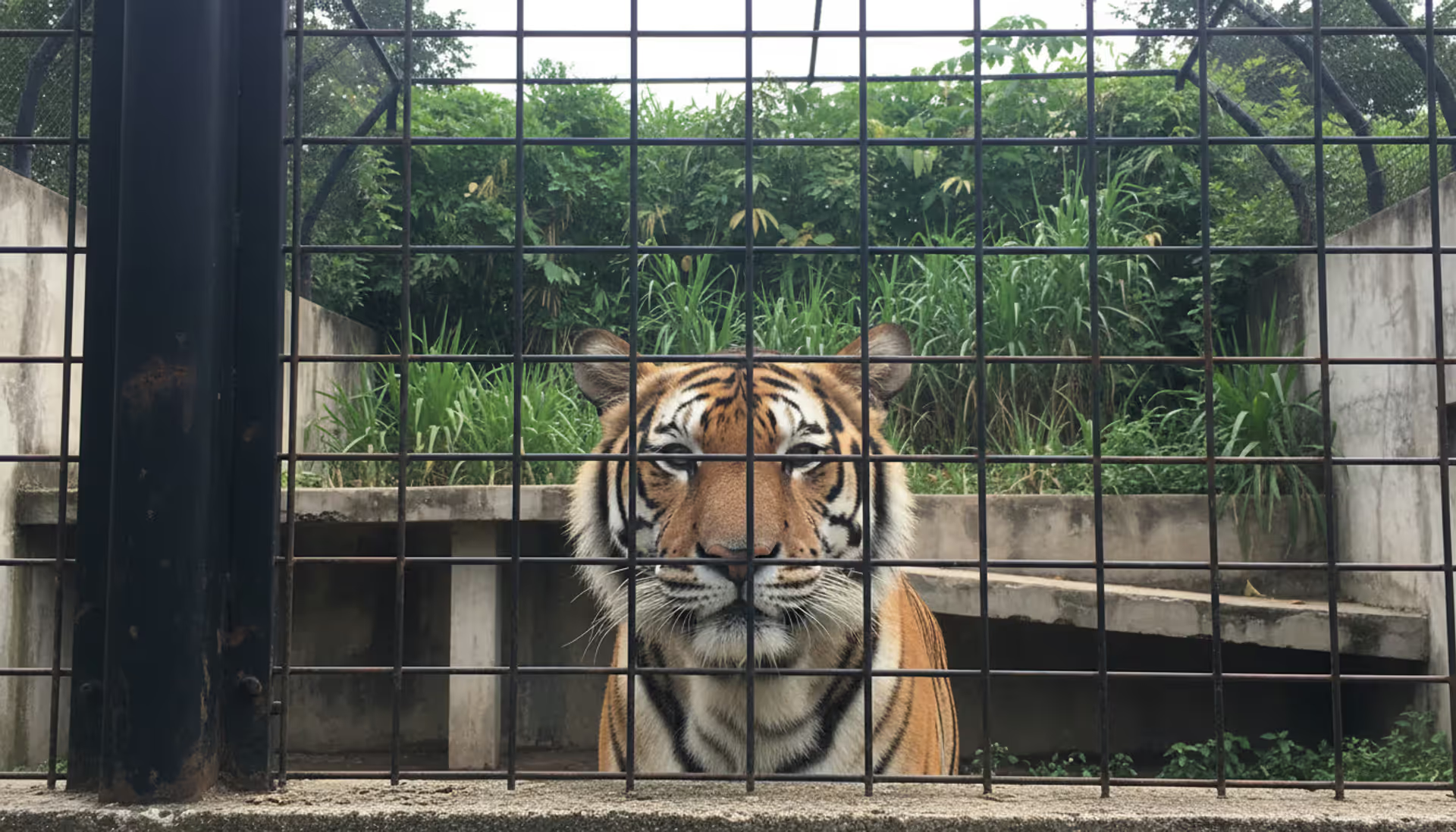
When Congress decided enough was enough with private tiger ownership, they didn't just tweak existing rules—they fundamentally changed who can keep lions, tigers, and leopards in America. Roadside zoo operators found their business models upended overnight. Hobbyist collectors who'd kept exotic cats for decades suddenly faced federal registration requirements or prosecution.
Own a tiger? Run a facility with big cats? The legal requirements aren't suggestions you can ignore when convenient. Your compliance status literally determines whether you keep your animals or lose them to seizure.
What Is the Big Cat Public Safety Act
December 2022 brought the signature. June 2023 marked full enforcement. The Big Cat Public Safety Act amended the Lacey Act in ways that make it the biggest federal crackdown on exotic cat ownership the country has ever seen.
Lions, tigers, leopards, cheetahs, jaguars, cougars, snow leopards—all covered. Their hybrids too. Ligers (those lion-tiger crosses) fall under the restrictions. So do savannah cats with recent wild ancestry if they carry genetic material from prohibited species. But smaller wild cats got a pass. Bobcats, ocelots, caracals—the law leaves them alone.
Animal welfare groups had pushed for these changes for years. So had wildlife experts who'd documented the problems: escaped tigers terrorizing suburbs, cubs yanked from mothers at birth for tourist photos, facilities where cats lived in dog kennels. The incidents weren't isolated. They were patterns. One 2011 case in Ohio involved 56 big cats released by their owner before he killed himself. Police had to shoot 48 of them as they wandered toward populated areas.
Existing wildlife regulations had gaps you could drive a semi through. Anyone with $500 and an internet connection could buy a tiger cub. No background check. No facility inspection. Just money changing hands.
We're now in 2026. The law's been fully enforced for nearly three years. Both regulators and owners have had time to adjust, though "adjust" doesn't quite capture the scramble many facilities went through.
Key Provisions and Restrictions Under the Act
Three prohibitions form the law's backbone, each one disrupting practices that had been standard for decades.
No more private acquisitions. Zero. After the law passed, private individuals lost the ability to buy, receive as gifts, or breed big cats for personal ownership. Doesn't matter if you've handled exotics for twenty years or built a $100,000 enclosure on your property—private ownership of new big cats stopped cold.
The cub petting industry died on the spot. Every tourist trap that let visitors hold tiger cubs, bottle-feed lion babies, or pose for photos with young leopards had to shut down those operations immediately. These encounters generated serious revenue. Some facilities pulled in $50,000+ monthly just from cub photos at $100 per session. That income stream vanished when the ban took effect.
Author: Lauren Beckett;
Source: jamboloudobermans.com
Direct contact prohibition extends beyond cubs. No walking adult tigers on leashes at festivals. No swimming with adolescent lions. No feeding experiences where you hand meat to a cheetah through a fence. All forbidden.
Breeding faced a hard stop too, with narrow exceptions. Even people who legally kept their existing cats under the grandfather clause cannot breed them. The idea is population reduction through attrition—big cats living out their natural lives without replacement.
But the law carved out spaces for legitimate operations. Association of Zoos and Aquariums (AZA) facilities can continue Species Survival Plans. Universities conducting actual research keep their breeding authorization. State colleges with veterinary programs can maintain big cats for training future wildlife vets—Colorado State's program, for example, educates hundreds of vet students annually using their captive cats.
Real sanctuaries get exemptions too, though "real" carries specific meaning here. No breeding. No acquiring animals to display them. No public contact. Just lifetime care for rescued cats. The distinction between legitimate sanctuary and glorified private collection claiming sanctuary status has become an enforcement battleground.
Who Can Still Own Tigers and Other Big Cats Legally
The grandfather clause opened the only pathway for continued private ownership, but it came with strings attached—lots of them.
Already owned big cats when the law passed? You could keep them. But only after registering with U.S. Fish and Wildlife Service. The registration demanded documentation proving ownership before the cutoff date, detailed information about every animal (species, age, how you got it, identifying marks), and records showing where the animal lives and how you maintain it.
That registration window closed in 2024. Miss it? You faced problems. Some regional USFWS offices accepted late registrations if you provided bulletproof proof of prior ownership. Others enforced the deadline strictly, leaving owners stuck between surrendering their animals or risking federal prosecution.
Author: Lauren Beckett;
Source: jamboloudobermans.com
Registration brought permanent restrictions. Can't breed your cats. Can't sell them to other private individuals. Can't transport them across state lines without federal permission. When your registered tiger dies, that's it—no replacement. Register three tigers in 2023, lose two by 2026, and you're down to one forever.
USDA-licensed exhibitors still have ownership rights if they meet Animal Welfare Act standards. Your facility needs current exhibitor licenses, must pass regular inspections, and has to demonstrate that exhibition for educational or conservation purposes is your primary function. A circus with proper licensing can still tour with big cats, though the cub contact ban stays in force.
State versus federal law creates headaches. States can go stricter than federal rules but can't override federal prohibitions. Ohio tightened its exotic animal laws after that 2011 mass release incident—now owners there face both state requirements (liability insurance, microchipping, facility standards) and federal restrictions stacked on top. Live in a state with minimal exotic regulations? Federal law still applies in full.
Compliance Requirements for Private Zoos and Exhibitors
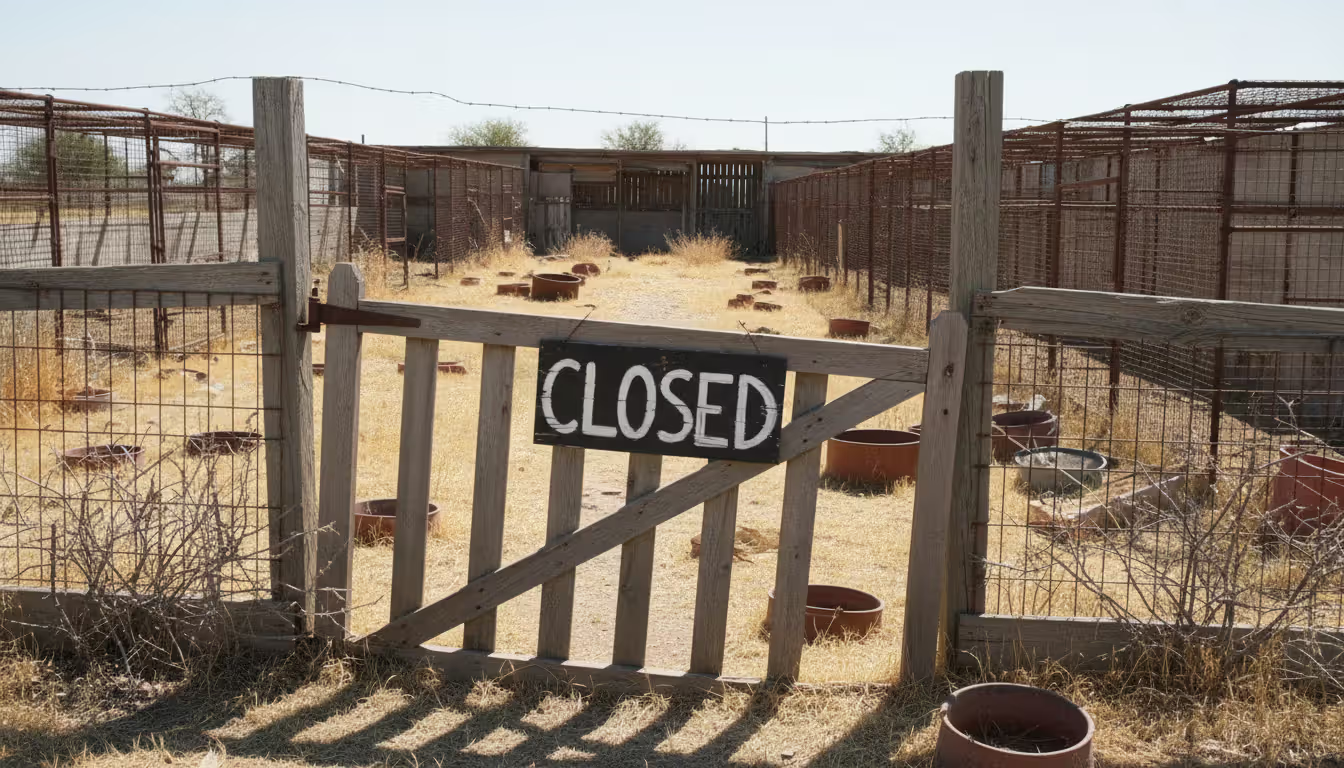
Small operators found the compliance demands overwhelming. Some just gave up and closed.
USDA exhibitor license holders had until June 2024 to register every covered big cat. That registration packet required facility name and location, USDA license number, complete inventory listing each cat individually, and proof the facility qualified for exemptions. Claiming educational or conservation exemptions? Better have evidence. Documented school visits, conservation funding contributions, Species Survival Plan participation—something concrete showing your stated purpose.
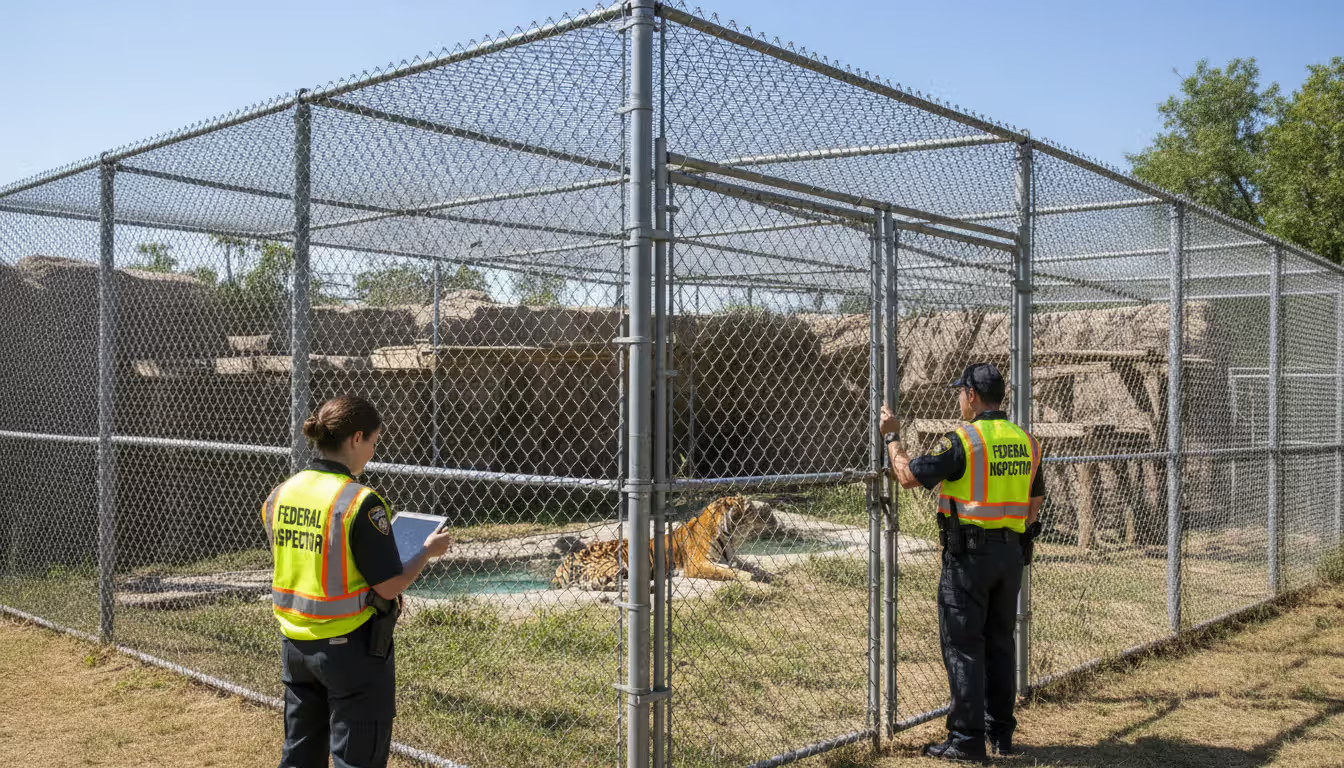
USDA inspectors don't call ahead. They show up unannounced and examine everything. Enclosure size and security features. Veterinary care protocols. Feeding practices and sanitation standards. Whether you're violating the public contact ban. They look for specific problems: barriers between animals and visitors that don't meet spacing requirements, lack of double-gate systems preventing escapes during feeding, evidence someone's breeding cats at a non-exempt facility.
Documentation extends far beyond initial registration. Current veterinary records for each animal—every exam, every vaccination, every treatment. Acquisition and disposition records establishing legal chain of custody. Incident reports covering escapes, injuries, public safety events. Inspector arrives at your gate? You should produce complete files for every big cat within minutes, not hours.
Penalties escalate fast. Warnings and corrective action orders come first. Then civil penalties reaching $20,000 per violation. Each animal can count separately—ten unreported tigers means potential $200,000 in fines. Criminal prosecution kicks in for egregious or repeated violations, carrying jail time. USDA can revoke exhibitor licenses entirely, forcing you to rehome all your animals within whatever timeframe they specify. For operations housing big cats for decades, that's essentially a death sentence for the business.
Enforcement and Oversight of the Big Cat Act
Two federal agencies split enforcement duties, each handling different aspects.
U.S. Fish and Wildlife Service (USFWS) runs the grandfathered owner registration system and investigates illegal acquisition, transport, or sales. Their special agents carry law enforcement authority—they execute search warrants, seize illegally held animals, make arrests. Someone tries selling a tiger cub on Facebook Marketplace? USFWS investigates and prosecutes.
USDA's Animal and Plant Health Inspection Service (APHIS) oversees licensed exhibitors and facilities. They conduct routine inspections and respond to complaints about animal welfare or facility conditions. APHIS inspectors often address both Animal Welfare Act compliance and Big Cat Public Safety Act provisions during single visits, hitting facilities with violations under multiple statutes simultaneously.
Author: Lauren Beckett;
Source: jamboloudobermans.com
The public feeds the enforcement system through violation reports. See a facility still offering cub petting? Notice someone advertising big cats for sale online? Know about unreported big cat ownership? File reports with either agency through online portals or hotlines. Useful reports include specifics: exact location, dates and times, photographic or video evidence if you have it, your contact information for follow-up questions.
State wildlife agencies coordinate with federal authorities, especially in states running their own exotic animal programs. File a complaint with your state wildlife department about suspected illegal big cat ownership, and it typically gets referred to federal authorities for Big Cat Public Safety Act investigation while state officials pursue separate state law violations.
Multiple agencies create enforcement redundancy that strengthens oversight but confuses people about who handles what. Simple rule: ownership and acquisition issues go to USFWS; facility conditions and animal welfare concerns go to APHIS.
Impact on Big Cat Rescues and Sanctuaries
Legitimate sanctuaries experienced both benefits and burdens from the law, though the balance has shifted over time.
Placement demand exploded as grandfathered owners aged, hit financial walls, or simply realized they couldn't continue care. That 70-year-old who registered two tigers in 2023? By 2026, the physical demands and veterinary costs—$800 monthly just for meat, $5,000 for a single emergency vet visit—might prove unmanageable. Sanctuaries field weekly calls from people wanting to surrender big cats they can no longer keep.
Sanctuary capacity hasn't grown to match demand. Building one proper big cat enclosure costs $50,000 to $200,000 depending on size and specifications. Annual care costs for a single tiger exceed $10,000 easily—food, veterinary care, facility maintenance, staffing all add up. Most sanctuaries run on donation-funded tight budgets and maintain waiting lists for intake.
But cub petting elimination cut off the pipeline that previously flooded rescues with unwanted cats. Facilities breeding tigers specifically for cub encounters would dump cats once they outgrew the cute stage—selling them to other exhibitors or private owners who eventually surrendered them to rescues. That breeding cycle stopped. Sanctuaries anticipate long-term intake decreases, though the short-term surge from grandfathered owner surrenders continues.
The Big Cat Public Safety Act validates what we've been saying for 30 years—these animals don't belong in private hands or in roadside zoos where they're exploited for profit. Now we can focus our resources on caring for the cats we've already rescued rather than constantly taking in new victims of the pet trade
— Carole Baskin
Clear legal standards help legitimate sanctuaries distinguish themselves from pseudo-sanctuaries that claimed rescue status while breeding animals or charging for encounters. The public can now identify truly reputable facilities more easily.
Big Cat Ownership: What's Legal vs. Illegal Under the Act
Activity
Private Individual (New)
Grandfathered Owner
Accredited Zoo/AZA Facility
True Sanctuary
Ownership
Prohibited
Allowed (if registered by deadline)
Allowed
Allowed
Breeding
Prohibited
Prohibited
Allowed (conservation purposes)
Prohibited
Public Contact/Cub Petting
Prohibited
Prohibited
Prohibited
Prohibited
Exhibition to Public
Prohibited
Prohibited
Allowed
Limited (educational only)
Interstate Transport
Prohibited
Restricted (permit needed)
Allowed (with documentation)
Restricted (permit needed)
Sale/Transfer
Prohibited
Prohibited (except to exempt facility)
Allowed (to other exempt facilities)
Prohibited
Frequently Asked Questions About Big Cat Ownership Laws
Can I still own a tiger if I bought it before the law passed?
You can, but only if you completed U.S. Fish and Wildlife Service registration by the June 2024 deadline. Grandfathered owners must maintain registration, can't breed their animals, and can't acquire more big cats. Your registered tiger dies? You can't replace it. You also can't sell or give your tiger to another private individual—only to exempt facilities like accredited zoos or sanctuaries.
Is cub petting illegal everywhere now under federal law?
Yes—the federal ban on public contact with big cat cubs applies nationwide, regardless of what state law says. No facility can legally offer cub petting, photo ops, or any other direct contact with big cat cubs or adults. This covers traveling exhibitions, county fairs, and private events. Facilities running cub petting businesses had to shut down these operations when the law took effect in 2023.
What happens if I don't register my grandfathered big cat?
You're committing illegal possession under federal law. Penalties include civil fines up to $20,000 per violation, potential criminal prosecution, and animal seizure. Fish and Wildlife Service can confiscate unregistered big cats and place them with accredited sanctuaries—charging you for the placement costs. Some owners who missed the registration deadline completed late registration by providing strong documentation of prior ownership, but this isn't guaranteed and varies by which regional office handles your case.
Do state exotic animal laws override the Big Cat Public Safety Act?
No—federal law sets the floor that applies everywhere in the United States. States can impose tougher requirements (banning all exotic cat ownership, requiring higher insurance coverage, mandating specific facility standards), but they can't permit what federal law prohibits. Live in a state with minimal exotic animal regulations? You still must comply with all federal restrictions on ownership, breeding, and public contact.
Can accredited zoos still breed big cats?
Yes—Association of Zoos and Aquariums accredited facilities can continue breeding big cats through Species Survival Plans and other conservation programs. These breeding efforts must serve legitimate conservation, educational, or scientific purposes rather than commercial exploitation. Zoos maintain detailed genetic records preventing inbreeding and coordinate breeding across institutions to maintain healthy captive populations of endangered species.
What are the penalties for violating the Big Cat Public Safety Act?
Civil penalties reach $20,000 per violation, with each illegally possessed animal potentially counting separately. Criminal prosecution applies for knowing violations, carrying fines and potential imprisonment. Beyond financial penalties, violators face animal seizure, revocation of USDA exhibitor licenses if applicable, and permanent bans on future exotic animal ownership. The government can also pursue injunctions preventing ongoing violations and recover costs associated with seizing and rehoming animals.
The United States fundamentally changed its approach to exotic animal ownership, prioritizing public safety and animal welfare over private possession rights. Current owners face a straightforward reality: strict compliance with registration requirements, acceptance that breeding and acquisition are permanently off the table, and planning for eventual disposition of animals to qualified facilities.
Facilities housing big cats operate under heightened scrutiny. They must demonstrate operations serving legitimate educational, conservation, or scientific purposes rather than commercial exploitation. Roadside zoos breeding cubs for photo ops are done under federal law, though enforcement continues identifying and prosecuting holdouts.
Long-term success depends on consistent enforcement, adequate funding for both regulatory agencies and sanctuaries receiving surrendered animals, and public awareness preventing illegal acquisition. Considering exotic animal ownership? Big cats are effectively off-limits to private individuals now. Currently own registered big cats? Maintain meticulous records, stay current with all regulatory requirements, and develop plans for your animals' future care when you can no longer provide it.
The exotic animal ownership landscape keeps evolving as grandfathered animals age out of private collections and enforcement agencies refine their approaches. Staying informed about regulatory updates and maintaining open communication with oversight agencies helps you navigate this complex legal environment successfully.
Surrendering an aggressive dog involves complex legal obligations and limited placement options. Between specialized rescues, sanctuary programs, and rehabilitation facilities, responsible pathways exist for owners committed to transparency and proper screening
Surrendering a dog is never easy. Financial hardship, housing changes, or behavioral challenges can force impossible choices. Learn where to surrender your dog for free, understand the complete process from intake to adoption, and discover your legal obligations and what really happens after relinquishment
Horse soring involves deliberately inflicting pain on horses' legs to create an exaggerated gait for show competitions. This federal crime, primarily affecting Tennessee Walking Horses in big lick classes, uses chemical burns, pressure shoeing, and painful chains to force unnatural movement
A rehoming fee protects your dog from exploitation while finding a responsible new home. Discover typical fee ranges, legal considerations, required documentation, and why charging nothing puts your pet at serious risk. Includes contract templates and expert guidance
The content on this website is provided for general informational and educational purposes only. It is intended to explain concepts related to animal law, pet ownership rights, service animals, dog bite liability, and animal welfare legislation in the United States.
All information on this website, including articles, guides, and examples, is presented for general educational purposes. Legal outcomes may vary depending on jurisdiction, state laws, and individual circumstances.
This website does not provide legal advice, and the information presented should not be used as a substitute for consultation with qualified attorneys or animal law professionals.
The website and its authors are not responsible for any errors or omissions, or for any outcomes resulting from decisions made based on the information provided on this website.