Those puppy photos on Instagram look perfect. Fluffy golden fur. Button noses pressed against kennel wire. Eyes that melt your heart.
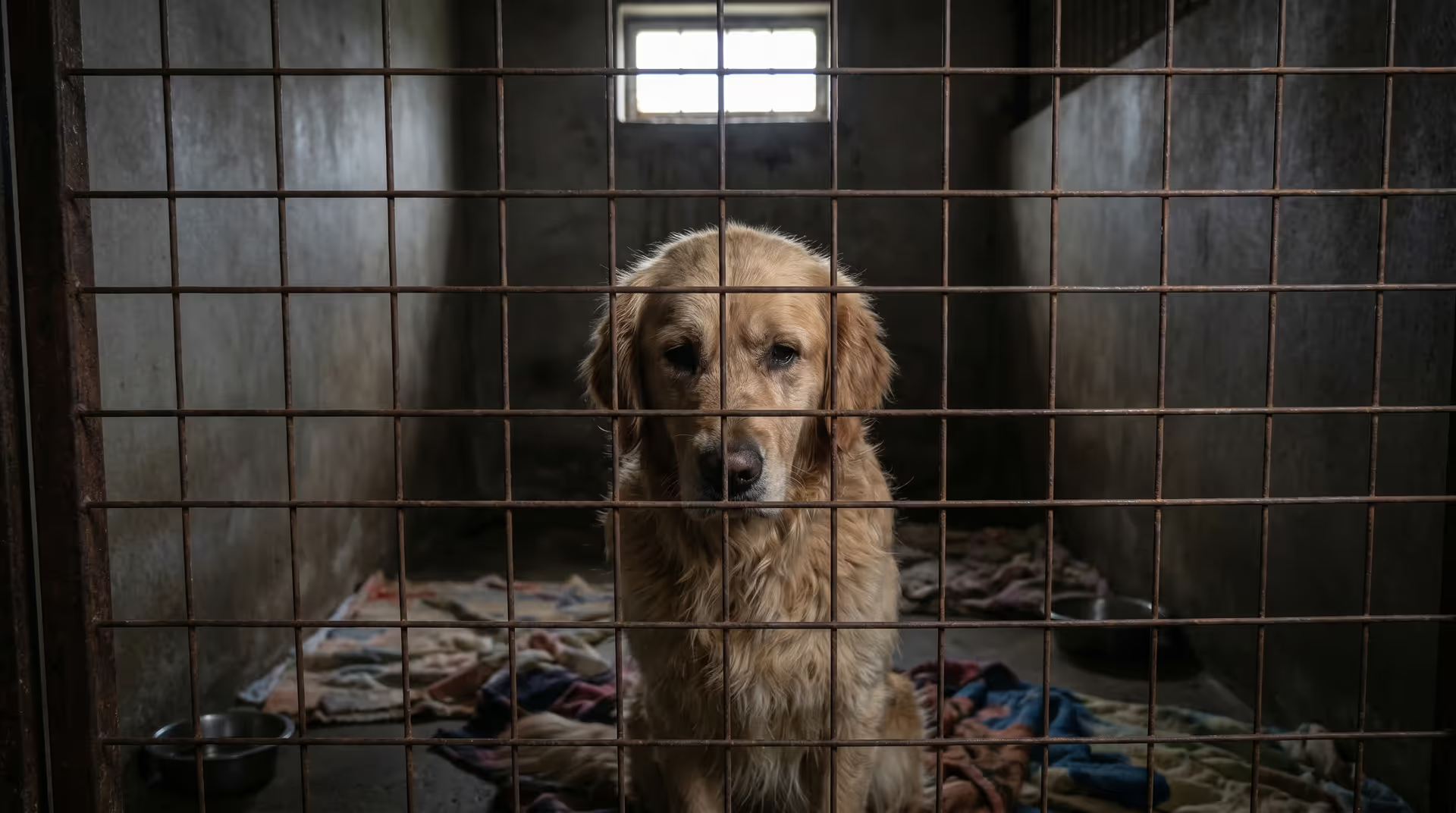
What you can't see through those filtered images: the breeding dog who's never left a 3x4 wire cage. The untreated ear infections. The fact that she's had six litters in three years and her body is breaking down at age five.
Over 10,000 puppy mills currently operate across the United States—some licensed, most flying under regulatory radar. Americans bought roughly 2.6 million puppies from these facilities in 2023. Thousands of those families ended up at emergency vets within 72 hours of bringing their new dog home, facing $3,000+ bills for parvovirus treatment or pneumonia.
Nobody maintains a comprehensive public registry of problematic breeders. Even if someone created one today, half those operations would rebrand by next month. A mill shut down in Kansas reopens three counties over under the owner's cousin's name. A breeder loses their USDA license in Missouri, moves to Arkansas, and starts selling "directly to families" to dodge federal oversight.
You need something better than a list. You need to recognize red flags yourself and understand the (surprisingly weak) legal framework that's supposed to protect dogs and buyers alike.
Dog breeding exists on a spectrum. On one end, you've got someone raising a single litter in their kitchen. On the other, warehouse operations cycling through 300+ breeding dogs annually. Between those extremes? Plenty of gray area.
How to Identify a Puppy Mill or Unethical Breeder
Mill operators maximize profit per square foot. Every improvement to living conditions—better food, vet care, space, enrichment—cuts into margins. Their entire business model depends on minimizing dog welfare expenses.
Identifying these operations before you've handed over cash and fallen in love with a sick puppy? That requires knowing exactly what to watch for.
Physical and Environmental Red Flags
Never buy a puppy without visiting the breeding facility. Zero exceptions to this rule.
A seller who refuses in-person visits is hiding conditions they know you'd find unacceptable.
Your nose picks up problems before your eyes do. Walk onto the property and breathe. Slight dog smell? Normal. Ammonia stench so strong your eyes water and your throat burns? Those dogs are living in cages that haven't been properly cleaned in weeks. Constant exposure to urine fumes causes respiratory damage and infection.
Author: Lauren Beckett;
Source: jamboloudobermans.com
Housing arrangements tell you everything about priorities. Mill setups stack wire cages—sometimes four levels high—with feces from upper cages falling onto dogs below. You might count 30, 80, even 150 dogs packed into one building. Wire floors let waste fall through, but they also destroy paw pads and make every moment standing painful. Contrast that with responsible breeders who keep dogs in home environments or spacious kennels featuring solid floors, comfortable bedding, climate control, and enough room to actually move around.
Dogs' reactions to humans reveal their history. Mills provide almost zero human interaction beyond the minimal feeding and watering. When you approach, these dogs either cower in cage corners, bark hysterically, or show complete disinterest in people. They've learned humans aren't sources of comfort or fun. Meanwhile, properly raised puppies should approach you with curiosity and confidence. Examine the breeding dogs closely—do they look underweight? Is their coat matted and filthy? Are nails overgrown into painful curls? Can you spot wounds that haven't received treatment?
The breed variety reveals the operation's purpose. Someone advertising Labradoodles, Yorkshire Terriers, German Shepherds, Pomeranians, and Cavalier King Charles Spaniels simultaneously is running a commercial production facility. Mastering one breed's genetics, health concerns, temperament, and standards takes five to ten years of dedicated study. Nobody becomes a legitimate expert across five unrelated breeds.
Meeting the mother dog isn't optional. Mills routinely claim momma's "resting in another building," "recovering at the veterinarian's office," or "too anxious around strangers." Translation: she looks terrible. Constant breeding leaves females emaciated, with poor coat quality and fearful behavior. Ethical breeders enthusiastically introduce both parents, proud of their health and temperament.
Litter frequency indicates whether dogs are commodities or family members. Ask how often puppies are available. Someone who has litters ready every month is breeding multiple females on every single heat cycle (which occurs approximately every six months). That pace physically wrecks a dog within 2-3 years. Responsible breeders might produce one litter annually per female, maybe two in exceptional circumstances.
Documentation and Transparency Warning Signs
Paper trails reveal as much as facility conditions—sometimes more.
Generic health certificates mean nothing. You need specific veterinary records from a licensed DVM, including individual exam notes, vaccination dates with lot numbers, deworming protocols, and the vet's direct phone number. Call that veterinary clinic yourself. Ask about their relationship with the breeder. If the receptionist has never heard of them, or the number goes to a disconnected line, you're looking at fake documentation.
Genetic testing separates serious breeders from everyone else. Before breeding any dog, responsible people test for conditions prevalent in that breed. Labrador Retrievers need hip, elbow, and eye clearances. Dobermans require cardiac evaluations. Corgis need genetic testing for degenerative myelopathy. These tests run $150-$2,000 per dog and get recorded in public databases like the Orthopedic Foundation for Animals. Ask for parents' OFA registration numbers and verify them yourself online. No test results on file? Don't buy that puppy.
Author: Lauren Beckett;
Source: jamboloudobermans.com
Contracts protect both parties when they're detailed. Mill contracts either don't exist or say "all sales final—no refunds." What you actually want: a multi-page agreement specifying minimum two-year genetic health guarantees, clauses requiring the dog's return if you can't keep them (rather than dumping at a shelter), spay/neuter requirements unless you're purchasing breeding rights, and detailed health protocols. Vague language or "as-is" terminology means the seller won't stand behind their dogs.
Pushy sales tactics appear in puppy mills and used car lots for the same reasons. Legitimate breeders screen buyers carefully. They reject people whose lifestyles don't match the breed, who lack appropriate housing, or who seem unprepared for dog ownership. Mills want your money right now. Expect "limited time discounts" for cash payment, pressure to decide immediately, offers to meet in grocery store parking lots instead of their facility, or multiple price drops during a single conversation.
Legal Requirements for USDA Licensed Dog Breeders
Federal regulation of dog breeding is weaker than you'd expect. Way weaker. Understanding what the law actually requires—versus what you'd hope it requires—explains how so many problematic operations function legally.
Most breeders fall below licensing thresholds entirely. The USDA only requires licenses for operations maintaining more than four breeding females AND selling puppies to pet stores, brokers, or shipping sight-unseen to buyers. Here's the loophole big enough to drive a truck through: sell directly to families who visit your property, and you dodge federal oversight regardless of scale. Someone could breed 40 dogs annually, producing 150+ puppies, and operate with zero federal regulation.
Licensed facilities meet standards that would horrify most dog owners. Current regulations require just 12 square feet of space for dogs under 25 pounds. Picture a cage roughly 3 feet by 4 feet for a Cocker Spaniel. Wire flooring remains legal. "Exercise" means access to larger areas—not that dogs actually get regular activity. Veterinary care is mandatory for obvious illness and injury, but preventive care isn't spelled out. Beyond food, water, and basic weather protection, requirements are minimal. Would you accept these conditions for your own dog? Neither would I.
Inspections happen infrequently at best. The USDA employs approximately 120 inspectors responsible for 2,500+ licensed facilities across all 50 states. Basic math reveals the problem: many breeders go 2-4 years between inspections. When visits do occur, facilities often receive advance notice, providing time to temporarily clean cages, remove sick dogs from view, and stage better conditions. Once the inspector's car leaves the driveway, everything reverts.
Financial penalties don't deter profitable operations. First-time violators typically receive written warnings. Repeat offenders face fines averaging $500-$2,000. Meanwhile, one litter of French Bulldogs generates $10,000-$20,000 in sales. A Bernedoodle litter brings $8,000-$15,000. These fines represent minor business expenses. License revocation requires documented patterns of severe, ongoing violations—it happens occasionally but remains rare.
What actually indicates quality? Breeders who voluntarily exceed legal minimums. Look for AKC Breeder of Merit designation, compliance with their breed club's Code of Ethics, or dogs certified through the Canine Health Information Center. These voluntary programs demand far more than law requires, signaling genuine commitment to welfare over profit.
Backyard Breeders vs Reputable Breeders
The breeding landscape includes a murky middle category that's neither full-scale puppy mill nor ethical operation. Backyard breeders occupy this gray zone.
They're breeding pets, not carefully selected breeding stock. The typical backyard breeder owns a purebred dog they love and thinks "Fluffy should have puppies!" or "My kids should experience birth!" They haven't studied pedigrees, don't understand genetic inheritance patterns, and haven't tested for hereditary diseases. Good intentions don't prevent harmful outcomes.
Ask why someone breeds dogs—their answer reveals everything. Reputable breeders spend 30 minutes explaining their goals: improving hip scores in their bloodline, preserving working ability in herding breeds, or reducing cardiac disease incidence. They've invested years titling dogs in shows, trials, or working venues to prove quality before breeding. Backyard breeders want extra income, think breeding sounds enjoyable, or got talked into it by friends who want a puppy from their dog.
Legal status overlaps significantly with ethical status. Most backyard operations comply with law completely—they're under USDA thresholds, follow local pet limits, and purchase city licenses when required. But legal operation doesn't equal ethical breeding. Forty-eight states allow dog breeding without permits, training, inspections, or oversight as long as you stay small-scale and avoid triggering animal cruelty statutes.
Mid-range pricing creates false value perception. Backyard breeders charge less than reputable sources ($700-$1,200 versus $2,000-$4,000) while exceeding shelter fees ($50-$300). They haven't invested in health testing ($800-$2,000 per dog), proving quality through competition ($3,000-$10,000 annually), proper prenatal care, or early puppy socialization programs. Lower prices reflect lower investment—you're not getting a bargain.
Lifetime support disappears after money changes hands. Responsible breeders mentor new owners through housetraining struggles, adolescent behavior challenges, and senior care decisions. They answer 11pm panicked phone calls about potential emergencies. Contracts require returning dogs to them if you can't keep your pet, preventing shelter surrender. Backyard breeders complete transactions like selling furniture on Facebook Marketplace—once you've driven away, they're done with you.
Criteria
Reputable Breeder
Puppy Mill
Backyard Breeder
USDA Licensing
Complies when required; typically exceeds standards
Minimum compliance or unlicensed operation
Generally exempt due to small scale
Health Testing
Complete genetic panels; OFA/PennHIP for both parents
Zero testing or falsified papers
Rarely performed; maybe basic vet check
Living Conditions
Home-raised or premium kennel with enrichment
Wire cages; overcrowded; minimal sanitation
Varies widely; often inadequate space
Contract/Guarantee
Comprehensive 2+ year health guarantee; lifetime return clause
Nonexistent or "as-is" sales only
Basic bill of sale if anything provided
Post-Sale Support
Lifetime mentorship and troubleshooting
Zero contact after transaction
Rarely available after purchase
Price Transparency
Clear itemized pricing; non-negotiable terms
Cash "discounts"; high-pressure tactics
Often negotiable to facilitate quick sale
Parent Access
Insists you meet both parents
Mother unavailable or hidden away
Sometimes one parent accessible
Breeding Frequency
1-2 litters yearly per female maximum
Continuous breeding every heat cycle
Sporadic whenever convenient
Puppy Mill Laws and Regulations by State
State-level regulation creates a confusing patchwork across the country. Operations running legally in one state violate statutes 200 miles away across a border. Some jurisdictions crack down hard; others barely regulate at all.
California shut down the retail puppy mill pipeline. Starting January 2019, California pet stores can only sell dogs sourced from rescue organizations and shelters—commercial breeder sales became illegal. This law eliminated the primary retail outlet for mill puppies in America's largest state. California also requires commercial breeding permits, caps breeding frequency, mandates maximum breeding age limits, and sets care standards exceeding federal requirements.
New York imposed disclosure requirements on retail sales. Pet stores must now provide complete sourcing information: breeder name, location, and USDA license number if applicable. Stores provide veterinary health certificates and allow five-day examination periods with licensed vets before sales become final. Enforcement quality varies dramatically by county—some strictly monitor compliance while others ignore violations.
Missouri continues earning its "Puppy Mill Capital of America" title. The state houses approximately 1,000 USDA-licensed breeding facilities—more than any other state. In 2010, voters passed Proposition B establishing stricter cage size requirements, breeding frequency limits, and veterinary care standards. The state legislature promptly gutted those protections through revision bills. Current law mandates "adequate" care but defines that term loosely. Budget constraints mean fewer inspectors covering more facilities annually.
Pennsylvania significantly strengthened kennel regulations after widespread problems. Anyone keeping or selling 26+ dogs per year needs state kennel licensing. Regulations specify precise cage dimensions, mandatory daily exercise periods, and detailed veterinary care schedules. Pennsylvania employs dedicated dog law enforcement officers conducting surprise inspections. When budgets allow proper staffing, enforcement actually happens—violators face real consequences including permanent facility closures.
Author: Lauren Beckett;
Source: jamboloudobermans.com
Arkansas and Iowa rely almost entirely on federal standards. These states provide minimal additional oversight beyond USDA baseline requirements. If you're not federally licensed, you operate essentially unregulated except for basic animal cruelty laws. Rural areas receive virtually no proactive oversight unless neighbors file complaints.
The retail ban movement continues expanding. Beyond California, Maryland, Maine, Washington, Oregon, and Illinois passed statewide restrictions preventing pet stores from selling commercially-bred puppies. Over 400 municipalities—including Chicago, Boston, Phoenix, Philadelphia, and Austin—enacted local ordinances even where state governments haven't acted. This trend significantly cuts puppy mill profit margins.
Enforcement creates unexpected rescue challenges. When authorities raid large facilities and seize 200+ dogs, rescue organizations shoulder crushing financial burdens. Veterinary treatment, behavioral rehabilitation, and temporary housing for that many animals costs $300,000-$800,000. Legal battles over animal ownership drag on for months or years while dogs occupy shelter space. Some newer state laws require convicted breeders to reimburse seizure and care costs, but actually collecting those judgments rarely succeeds.
How to Report a Bad Dog Breeder
Reporting problematic breeders demands persistence, detailed documentation, and understanding which agencies handle what. Your complaint could prevent other families from getting scammed and improve conditions for breeding dogs.
Gather evidence before contacting authorities. Document everything first. Photograph or video facility conditions if you can do so safely and legally. Save all text messages, emails, and written communications with the breeder. Collect veterinary records for sick puppies. Write detailed notes about what you observed, including specific dates, times, and conditions while memories remain fresh. Concrete evidence gets taken seriously; vague complaints get dismissed.
USDA oversees federally licensed operations specifically. Visit the APHIS website and submit complaints through their online portal, or call 301-851-3751 directly. You'll need the breeder's legal business name, physical address, and USDA license number (searchable through their public database if you don't have it). Describe specific Animal Welfare Act violations—"inadequate veterinary care as evidenced by visible untreated wounds on 8+ dogs" carries more weight than "the place seemed bad." USDA investigates and may schedule inspections, though expect 6-12 week response times minimum.
State agriculture departments regulate unlicensed breeders. Every state handles animal welfare differently, but most assign responsibility to their Department of Agriculture. Search "[your state] Department of Agriculture animal care" to locate contact information. Provide the same detailed documentation you'd submit to USDA. State agencies sometimes respond faster than federal authorities, particularly when local media coverage develops.
Local animal control handles immediate emergencies. If dogs face acute danger—no water available during 95-degree heat, visible serious injuries, deceased animals decomposing on property—contact your local animal control office or county sheriff immediately. They can conduct welfare checks within hours and remove animals when conditions violate municipal cruelty ordinances. This route works best for clear-cut emergency situations requiring immediate intervention.
Humane organizations provide guidance and investigative support. The Humane Society of the United States operates dedicated puppy mill tip lines. They can't shut down facilities directly, but they investigate complaints, document multi-state patterns, and collaborate with authorities on larger enforcement actions. They'll also direct you to the most appropriate agency for your specific situation and jurisdiction.
Author: Lauren Beckett;
Source: jamboloudobermans.com
Persistence matters more than initial response. Agencies drown in complaints and operate with limited staff. Your initial report might generate an automated acknowledgment email and nothing more for weeks. Call every 2-3 weeks requesting status updates. If one agency proves unresponsive, try another—many violations fall under overlapping jurisdictions between federal, state, and local authorities. Repeated follow-up separates complaints that get buried from those triggering actual investigation.
Protect yourself legally when filing reports. Stick exclusively to facts you personally observed firsthand. "I witnessed 15 dogs in stacked wire cages during my visit on August 14, 2024" works perfectly. "This person tortures dogs" could expose you to defamation lawsuits. If you're reporting based on online research rather than direct experience, state that clearly in your complaint. As someone who purchased from or visited the breeder, you have solid legal standing to report firsthand observations.
Online Puppy Scams and Fraud Protection
Scammers have perfected systems for stealing thousands of dollars from people who just want to add a puppy to their family. They've refined their tactics through hundreds of successful cons. Learning to spot these schemes protects your money and prevents heartbreak.
Every adorable puppy photo could be stolen from legitimate sources. Scammers scrape images from real breeders' websites, Instagram accounts, and Facebook pages, then repost them on fake sites advertising puppies for sale. Those puppies look genuine because they are genuine—they're just not the scammer's dogs. Right-click any puppy image and select "Search Google for this image" (or use TinEye reverse image search). When that exact photo appears across multiple websites or dates back several years, you've found stolen images. Legitimate breeders post their own recent, original photos.
Payment methods immediately separate scammers from real businesses. Actual breeders accept personal checks, credit cards through secure payment processors, or verified platforms that provide buyer protection. They're operating businesses requiring proper payment records for tax purposes and accounting. Scammers demand exclusively untraceable payment methods: wire transfers, cryptocurrency, CashApp, Venmo Friends & Family, Zelle, or prepaid gift cards. Why? Because these transactions can't be reversed, charged back, or traced to recipients. The second someone refuses credit card payment or checks, end all communication.
Shipping narratives become increasingly elaborate and expensive. Legitimate breeders either require in-person puppy pickup or use established, licensed pet transportation services with verifiable track records. Scammers spin complicated shipping stories requiring multiple escalating payments. First you pay the puppy deposit. Then they demand money for a "special climate-controlled shipping crate" (supposedly costing $700-$900 for reasons never quite explained). Next comes "mandatory veterinary travel certification" or "pet insurance required by the airline." Each payment triggers a new "emergency"—the puppy got held at customs, needs special import permits, encountered severe weather delays, or requires additional vaccinations. One Virginia family reported paying $5,800 across eleven separate transactions before realizing no puppy existed.
Pricing creates urgency through implausible deals. Purebred puppies from health-tested parents rarely cost under $1,500 from legitimate sources. French Bulldogs typically run $3,000-$8,000. Scammers advertise Frenchies for $550 or Golden Retrievers for $400. They add urgency: "We're relocating overseas next week and must rehome immediately," "This is the last puppy available from the litter," or "Special discount expires tonight." These high-pressure tactics push you toward sending money before thinking clearly or conducting research.
Communication remains vague and actively avoids verification opportunities. Ask specific questions about parents' OFA registration numbers, where they compete in shows or trials, or details about their breeding program philosophy. Scammers provide generic, copy-pasted responses that could apply to any breed. Request a live video call to see the puppy and facility—suddenly their camera's broken, internet connection is unstable, or they're "not comfortable with video calls." Real breeders gladly spend 45-60 minutes on video chat showing you around, introducing dogs, demonstrating temperaments, and answering detailed questions.
Simple verification prevents most scams. Before sending any payment, invest 15 minutes checking multiple sources. Search the breeder on AKC Marketplace, breed club referral lists, and Better Business Bureau. Google their phone number and physical address separately—scammers frequently use virtual phone services tracing to foreign countries. Call and speak with an actual human being, not just texting. Ask your veterinarian whether they know the breeder or can recommend someone trustworthy. Search "[breed name] club of America" to find national breed clubs maintaining vetted breeder referral directories.
One red flag might be coincidence. Five red flags mean run. Perhaps a legitimate breeder's laptop camera stopped working this week. Possible. But broken camera PLUS vague answers PLUS pressure to pay via Zelle PLUS too-good-to-be-true pricing PLUS refusing facility visits? That's absolutely a scam. Trust your instincts—when something feels wrong, it usually is.
Puppy mills shut down when they stop generating profit. Each time families educate themselves and refuse to purchase from these operations, profit margins shrink. The cycle of cruelty ends when the economics fail. That's precisely why consumer education creates more impact than any single raid or enforcement action—it fundamentally changes market dynamics
— Dr. Jennifer Hartwell
Frequently Asked Questions About Bad Dog Breeders
What is considered a puppy mill under federal law?
Federal law doesn't actually define "puppy mill" anywhere in the Animal Welfare Act or USDA regulations. The law regulates "dealers" breeding dogs commercially—specifically operations with more than four breeding females that sell to pet stores, brokers, or ship directly to buyers without in-person meetings. Most people use "puppy mill" to describe any high-volume breeding operation prioritizing profit margins over animal welfare, but no official federal definition exists. Different states define the term differently in their legislation—some specifically address puppy mills while others use phrases like "commercial breeding facility" or "large-scale breeding operation." This definitional ambiguity lets problematic breeders argue they don't technically meet puppy mill criteria while still running inhumane facilities.
How many dogs can a breeder have without a USDA license?
Federal law exempts anyone keeping four or fewer breeding females from licensing requirements, regardless of puppy sales volume. Additionally, if you sell puppies exclusively through direct in-person transactions—buyers coming to your property to pick up dogs—you're exempt from USDA licensing no matter how many breeding females you maintain. This regulatory gap is enormous. A breeder could keep 25 breeding females producing 120+ puppies annually and avoid all federal oversight simply by requiring buyers to pick up puppies in person rather than shipping them. State and municipal laws might impose separate requirements, but federally that operation remains completely unregulated.
Is it illegal to buy from a puppy mill?
No jurisdiction in the United States criminalizes purchasing dogs from puppy mills. All breeding regulations target breeders, dealers, and retail pet stores—never individual buyers. Some cities and states restrict where pet stores can source puppies, which indirectly limits your purchasing options as a consumer. The real issue isn't legality but consequences—mill puppies frequently develop expensive health problems, display behavioral issues from inadequate socialization, and you'll receive zero support from the seller after transaction completion. Plus your purchase directly funds an industry built on systematic animal suffering. Something being legal doesn't make it advisable.
What happens when you report a breeder to the USDA?
The USDA logs your complaint into their system and evaluates whether it warrants immediate investigation. For licensed facilities, they may schedule an inspection beyond their regular rotation cycle. Inspectors document violations they observe and can issue official warnings, fines ranging from several hundred to several thousand dollars, or in severe cases suspend or permanently revoke breeding licenses. The complete process typically takes 3-8 months from initial complaint to resolution. Privacy regulations prevent the USDA from updating you on specific outcomes or actions taken. Not every complaint triggers visible enforcement action—if inspectors visit and find conditions temporarily improved (which happens when breeders receive advance warning), they might document no current violations despite your legitimate complaint.
Can backyard breeders be shut down?
Only when they're violating specific laws or ordinances. If a backyard breeder exceeds local pet ownership limits, violates residential zoning ordinances, or commits animal cruelty rising to criminal levels, authorities can intervene with citations, fines, or forced closure. But simply breeding dogs without health testing, genetic knowledge, or expertise isn't illegal in most jurisdictions. Some homeowner associations prohibit breeding in their covenants, providing civil enforcement options. Nuisance complaints from neighbors about excessive noise, odors, or property value impacts sometimes succeed where criminal enforcement fails. Most backyard breeders quit because breeding is harder, more expensive, and less profitable than they imagined—not because they're legally forced to close.
How do I verify a breeder's USDA license?
Visit the APHIS website and locate their "Animal Care Public Search Tool" in the inspector general section. You can search by business name, city and state location, or customer number (the USDA license number itself). The database displays current license status, recent inspection reports with dates, and any violations cited during inspections. It updates regularly with new inspection information, usually within 30 days of inspections. Remember that many breeders legally operate without USDA licenses due to the exemptions explained earlier—not finding someone in the database doesn't automatically signal problems. But finding them there with multiple serious violations or repeat citations definitely indicates trouble you should avoid.
You won't ever find a comprehensive master list of bad breeders to avoid because this industry constantly shifts and evolves. Operations close, rebrand under new business names, relocate across state lines, or deliberately fall below licensing thresholds to escape regulatory oversight.
Your protection doesn't come from a database—it comes from knowledge and vigilance.
The warning signs I've outlined here apply whether someone breeds 5 dogs or 500. Refusing facility visits, lacking health testing documentation, employing high-pressure sales tactics, and maintaining poor living conditions appear across operations of every size. Pay attention to your gut feelings. When something seems off during your interactions with a breeder, that instinct is usually correct.
Ethical breeders genuinely exist—they've devoted years to understanding complex genetics, proving their dogs' quality through competition or working venues, and building lasting relationships with families who purchase their puppies. These breeders welcome your toughest questions, insist you visit multiple times before committing, and make you feel like you're interviewing for a position (because you are—they're carefully screening whether you deserve one of their dogs).
Working with reputable breeders means accepting waitlists of 6-18 months for the right litter, traveling several hours to meet them in person, and paying premium prices reflecting their investment. A well-bred puppy from health-tested parents costs $2,000-$4,500 or more depending on breed. But that upfront investment pays returns over 10-15 years through a healthier, behaviorally sound dog and breeder support available whenever you need guidance.
When you encounter operations mistreating dogs, file reports with appropriate authorities. Document what you personally observed and submit complaints to USDA, state agriculture departments, and local animal control. Not every report triggers immediate enforcement action, but complaint patterns build cases over time that eventually force intervention.
Your purchasing decision carries consequences beyond your household. Buying from mills or backyard breeders directly funds their next breeding cycle. Walking away, even after falling in love with a specific puppy, starves these operations of revenue. When enough consumers demand higher standards, market forces shift toward better practices.
Ask uncomfortable questions without apologizing. Walk away from situations failing to meet ethical standards. The dog you bring home will share your life for a decade or more—make certain that choice supports the breeding practices you want to see become industry standard.
Losing a dog is heartbreaking. Once the initial grief subsides, you face an urgent practical question: what are you legally allowed to do with your dog's body? This guide covers every legal option available to pet owners in the United States, from backyard burial to municipal pickup
Dog theft carries serious criminal penalties ranging from misdemeanors to felonies depending on the dog's value and state laws. Understand the charges, sentencing, and legal steps to report theft, use microchip evidence, file civil lawsuits, and recover your stolen dog through law enforcement and community efforts
Microchipping your cat isn't just about finding them if they wander—it's increasingly a legal requirement in parts of the US. Understand state laws, registration requirements, and how microchips function as ownership proof in disputes. Learn the legal process, common mistakes, and differences between cat and dog requirements
When your dog breaks a leg and money is tight, multiple solutions exist. From nonprofit grants and veterinary teaching hospitals to payment plans and crowdfunding, this guide covers actionable options to get your dog treatment without thousands upfront, including what to do if you can't pay the vet bill
The content on this website is provided for general informational and educational purposes only. It is intended to explain concepts related to animal law, pet ownership rights, service animals, dog bite liability, and animal welfare legislation in the United States.
All information on this website, including articles, guides, and examples, is presented for general educational purposes. Legal outcomes may vary depending on jurisdiction, state laws, and individual circumstances.
This website does not provide legal advice, and the information presented should not be used as a substitute for consultation with qualified attorneys or animal law professionals.
The website and its authors are not responsible for any errors or omissions, or for any outcomes resulting from decisions made based on the information provided on this website.