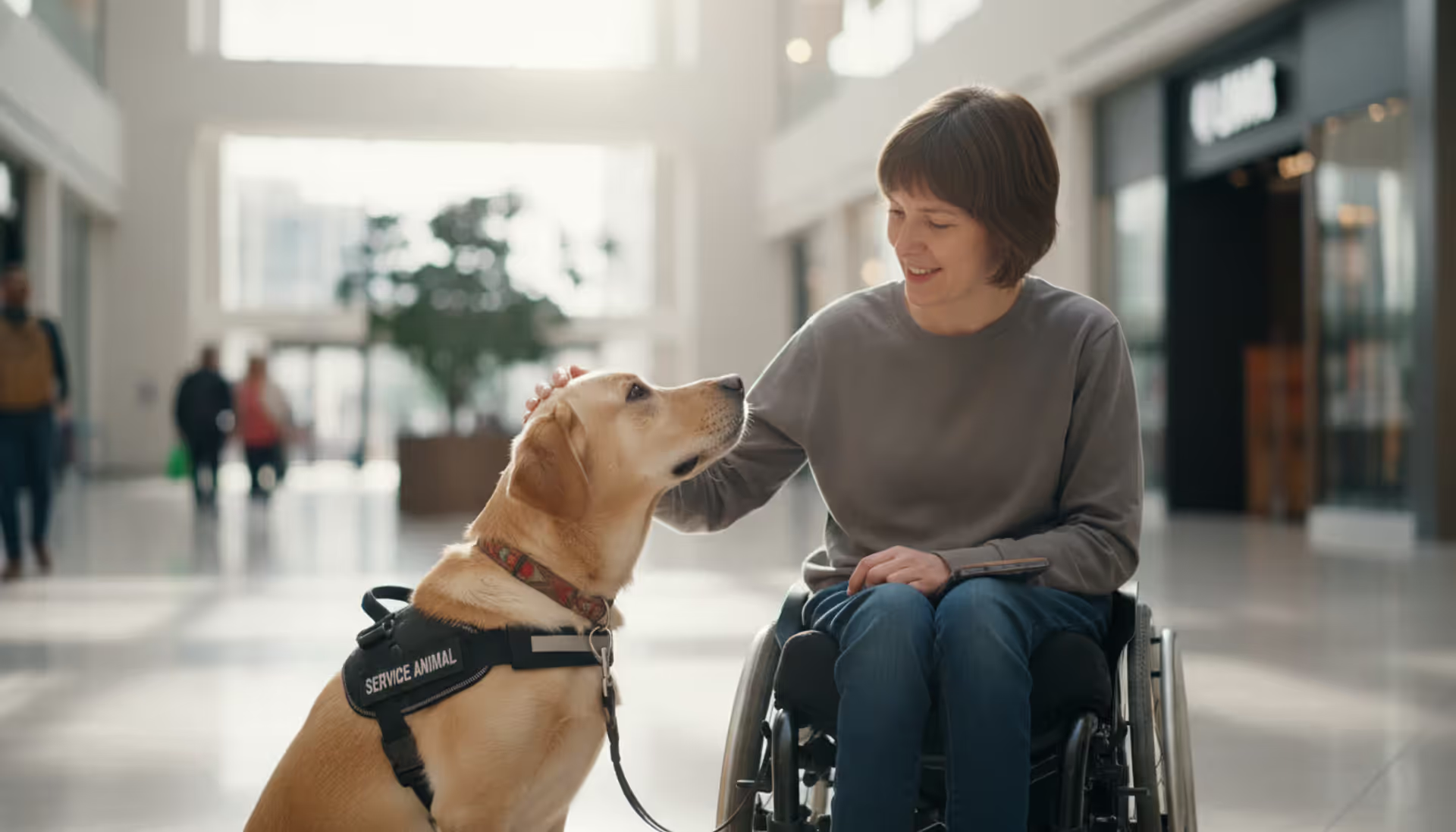
Your cat probably knows when you're struggling before you realize it yourself. Many people dealing with anxiety, depression, or similar mental health conditions discover their feline companions provide more than warm company—they deliver actual symptom relief. When that comfort ties to a diagnosed mental health disability, you may be eligible to have your cat formally recognized as an emotional support animal.
The confusion starts with "register." That word implies some official government system, perhaps a federal database or certification agency. None of that exists. Your cat won't appear in any national registry because no such registry operates under federal law. What you actually need is a letter from a mental health professional currently licensed to practice where you live. Not a flashy certificate from some website featuring stock images of people cuddling puppies.
Can Cats Be Emotional Support Animals?
Yes, without question. Federal housing law makes no distinction between species when it comes to emotional support animals. Cats receive the same legal recognition as dogs, birds, rabbits, ferrets, or any other companion animal that helps someone manage their disability.
The legal structure defines ESAs as animals that reduce symptoms associated with mental health disabilities through their presence. Here's the critical distinction from service animals: the Americans with Disabilities Act restricts service animal status to dogs and miniature horses trained to complete specific disability-related tasks. A service dog might retrieve dropped items, interrupt self-harming behaviors, or detect seizures before they happen. ESAs require no training whatsoever because they don't perform discrete tasks—their therapeutic value comes from companionship and emotional support.
Federal law touches ESAs in two places. The Fair Housing Act governs housing accommodations. The Air Carrier Access Act previously covered airline travel until major 2021 revisions—we'll tackle that frustration in detail later.
Cats make excellent ESAs for practical reasons: they adjust well to apartment settings where dogs might struggle, their purring generates soothing physical vibrations, and their care requirements stay manageable for people whose mental health conditions sometimes make daily tasks feel insurmountable. Scientific evidence supports these observations. A 2023 study published in the Journal of Environmental Psychology followed people with diagnosed anxiety disorders and documented a 31% reduction in acute symptoms when their cats remained in the room compared to when the cats were absent.
Here's the catch—your cat's affectionate personality doesn't automatically grant ESA status under the law. You need a diagnosable mental health disability plus appropriate documentation from a qualified professional. Without both components, you simply have a beloved pet.
Author: Lauren Beckett;
Source: jamboloudobermans.com
The Emotional Support Cat Registration Process Explained
Let me save you considerable money immediately: disregard any website insisting you must register your emotional support cat. The legitimate process involves zero registrations, zero national databases, and zero official certifications.
Here's the actual sequence of events:
You begin with a mental health condition that qualifies as a disability. We're discussing clinical diagnoses found in the DSM-5—conditions like major depressive disorder, generalized anxiety disorder, post-traumatic stress disorder, bipolar disorder, obsessive-compulsive disorder, and comparable diagnoses. You can't self-diagnose anxiety and call it sufficient. A qualified professional must evaluate you and reach that diagnostic conclusion.
Second, you schedule an evaluation with someone legally authorized to diagnose and treat mental health conditions where you live. Options include psychiatrists, psychologists, licensed clinical social workers, licensed marriage and family therapists, or licensed professional counselors. The licensing jurisdiction matters significantly—we'll explain why shortly.
During your appointment, this professional determines whether an emotional support animal makes clinical sense for your specific treatment plan. They'll explore your diagnosis, how your cat currently assists you (if you already have one), and whether formalizing your cat's ESA status would benefit your therapeutic outcomes. When everything aligns appropriately, they compose a letter for you.
That letter constitutes your documentation. Finished. No additional steps.
Why Online ESA Registries Are Not Legally Required
Countless websites charge $50 to $200 to "register" your cat and mail you professional-looking certificates, possibly an ID card, maybe even a vest. These commercial operations function completely outside any legal framework. They're selling a product with zero legal recognition.
The Department of Housing and Urban Development has explicitly stated that landlords cannot require registration or certification from any registry. The Fair Housing Act acknowledges no ESA registry as possessing legal authority. No federal agency operates an ESA database. These are purely commercial enterprises selling what basically amounts to novelty items.
The certificates look impressively official, I'll acknowledge that. Occasionally an uninformed landlord accepts one because it appears legitimate. But anyone familiar with housing law knows to request what actually matters legally: a letter from your treating mental health provider.
Some websites bundle a telehealth consultation with their registration package. That consultation could potentially produce a legitimate letter, assuming the provider holds active licensure in your state and conducts a genuine clinical evaluation. But you're compensating for the professional's expertise and time—the "registration" component adds nothing of value.
What You Actually Need: The ESA Letter
One letter. That single document forms your complete legal foundation.
This typically one-page document on professional letterhead confirms you have a mental health disability and that your cat mitigates symptoms connected to that disability. Without this letter, you're simply someone with a pet attempting to circumvent a no-pet policy. With it, you possess legal standing under the Fair Housing Act.
Maintain accessible copies—both printed and digital versions. You'll provide it when requesting housing accommodations. While ESA letters lack technical expiration dates, most landlords question anything dated beyond twelve months. Recommended practice: update it annually. Many providers charge reduced fees for renewals compared to initial consultations.
ESA Cat Letter Requirements and How to Get One
A valid letter must contain particular information. HUD's published guidance outlines what landlords may reasonably request and what constitutes overreach.
Required elements in your letter:
Provider's complete name, professional license category, license number, and state of licensure
Professional contact information on official letterhead
Letter composition date
Verification that you receive ongoing care from this provider
Declaration that you meet the disability definition under the Fair Housing Act
Explanation that your emotional support cat delivers necessary assistance connected to your disability
Provider's original signature (physical signature, not a rubber stamp)
Elements that should NOT appear:
Your precise diagnosis (protected under HIPAA privacy regulations)
Treatment specifics or therapy session notes
Your cat's name, breed, or physical characteristics
Expiration date (though annual updates remain advisable)
Finding an appropriate professional to compose your letter depends on your circumstances. Already working with a therapist or psychiatrist? Start there. When they understand ESA letter requirements and you've developed a therapeutic relationship, this becomes straightforward.
Not currently receiving mental health treatment? Several options exist. You can search for local psychologists or psychiatrists offering consultations specifically for ESA evaluations. Alternatively—and this became substantially more common following 2020's telehealth expansion—you can use legitimate online platforms connecting you with appropriately licensed professionals.
Quality telehealth ESA services verify providers maintain current licenses in your state, conduct actual video consultations (not merely questionnaires you complete), and charge transparent fees generally ranging from $150-$250.
Red flags indicating questionable services:
Instant approval without meaningful consultation
No verification of your state of residence
Pricing below $100 (qualified professionals don't work for that rate)
Guarantees you'll definitely receive approval (ethical providers evaluate, not rubber-stamp)
Letters arriving pre-signed or lacking actual license information
Something important to understand: a legitimate professional might evaluate you and conclude you don't qualify for an ESA letter. That's not them being unreasonable—that's them practicing ethically rather than operating a letter mill. When your condition doesn't actually warrant an ESA, a competent provider will communicate that honestly.
Emotional Support Cat Housing Rights Under Fair Housing Act
The Fair Housing Act provides substantial protection when you possess proper ESA documentation. Landlords must grant "reasonable accommodations" for assistance animals, which means: they cannot reject your rental application or terminate your tenancy because you have an emotional support cat, regardless of whether the property normally bans pets.
These protections apply to the vast majority of housing. Apartments, condominiums, single-family rentals, college dormitories, cooperatives, even certain senior communities all fall under FHA jurisdiction. The primary exemptions are small-scale landlords who own fewer than four rental units and don't employ property managers or real estate agents. Everything else? Covered.
When requesting an accommodation, submit your ESA letter in writing. Email serves perfectly well. Keep your language straightforward: "I'm requesting a reasonable accommodation for a disability-related need under the Fair Housing Act. The attached letter from my licensed mental health provider documents my need for an emotional support animal."
Author: Lauren Beckett;
Source: jamboloudobermans.com
Your landlord may request documentation—that means your ESA letter. They may verify your provider maintains a legitimate license. They cannot demand specifics about your disability, insist you complete their proprietary forms, or require additional certifications from nonexistent organizations.
Financial considerations: landlords cannot impose pet deposits, pet fees, or monthly pet rent for ESAs. The law categorizes your cat as medical accommodation, not a pet. However, you remain financially responsible for damages. When your cat destroys carpeting or scratches door frames, those repair expenses can legitimately be deducted from your security deposit, identical to if you'd caused the damage yourself.
Breed and weight limitations that apply to pets generally don't extend to ESAs. Building policy prohibits cats over 15 pounds? Your 20-pound Maine Coon still qualifies for accommodation. The only valid grounds for denial involve your specific animal posing a direct threat to other residents' safety or creating undue financial burden for the housing provider. For a typical house cat, neither scenario realistically applies.
Landlords should address accommodation requests promptly. HUD doesn't mandate precise timeframes, but their guidance indicates 10 days represents reasonable response time. If denied, the landlord must provide written explanation.
One complicating factor: your rights don't automatically supersede other tenants' rights. When someone in your building has severe, medically documented cat allergies, the landlord must attempt accommodating both parties—perhaps by placing you in non-adjacent units with independent ventilation systems.
Emotional Support Cat Flying and Airline Rules
Disappointing news if you planned to fly with your ESA cat: airlines may now treat them like standard pets, and most exercise exactly that option.
The Department of Transportation completely overhauled the Air Carrier Access Act in December 2020, with changes becoming effective in 2021. Emotional support animals lost their previous entitlement to fly in-cabin without charge. Airlines may now restrict disability accommodations to trained psychiatric service dogs. Your ESA cat holds no special status on commercial flights.
What prompted the change? The system suffered rampant abuse. Airlines documented passengers attempting to board with peacocks, ducks, pigs, turkeys—virtually any animal imaginable. People were transparently exploiting the system to bypass pet fees. The sheer volume of questionable ESA claims, combined with incidents involving untrained animals in airplane cabins, led the DOT to dramatically tighten regulations.
Currently in 2026, psychiatric service dogs—trained to execute specific tasks for mental health disabilities—maintain cabin access. Everything else, including emotional support cats? No special accommodations.
Your current options for flying with your ESA cat:
Pay standard pet fees. Most airlines permit small cats in-cabin for $95-$175 each direction (sometimes higher on international routes). Your cat must fit inside a carrier that slides beneath the seat ahead of you. This works for occasional travel but becomes expensive with frequent flights.
Drive instead. For destinations within reasonable driving distance, ground transportation might prove simpler and more economical than navigating airline pet policies and fees.
Reevaluate your needs. If you must fly regularly and your cat provides critical support, discuss with your mental health provider whether a psychiatric service dog might be clinically appropriate. This represents a major decision—service dogs require extensive, expensive training to perform discrete tasks, which fundamentally differs from an ESA's role of providing comfort through presence.
Some disability rights advocates contend the 2021 rule change went excessively far and harms people with legitimate needs. Others maintain it was essential to halt widespread fraud. Regardless, the current reality remains clear: ESA letters won't secure your cat free flights.
A handful of smaller airlines maintain more generous policies than federal law requires, so researching specific carriers' current regulations may prove worthwhile. Just don't anticipate your ESA documentation carrying weight with major airlines.
ESA Cat vs Therapy Cat vs Service Cat: Key Differences
People frequently confuse these three categories. They're not interchangeable, and grasping the distinctions prevents embarrassing situations (like attempting to bring your ESA cat into Target).
Type
Legal Standing
Training Expectations
Housing Protections
Public Access Allowed
Travel Accommodations
Emotional Support Cat
Companion reducing mental health disability symptoms for individual owner
None—presence alone provides benefit
Yes, under Fair Housing Act
None—identical to regular pets
None following 2021 regulatory changes
Therapy Cat
Animal visiting facilities to provide comfort to various people
Temperament evaluation plus owner training
None—same as ordinary pets
Only during scheduled visits at authorized locations
None—same as ordinary pets
Service Cat
Not recognized—ADA acknowledges only dogs and miniature horses
N/A—cats cannot qualify irrespective of training
N/A
N/A
N/A
Emotional support cats serve one individual—their owner—in managing mental health symptoms. They reside with that individual permanently. Their legal protections extend exclusively to housing. Your ESA cat cannot legally accompany you to restaurants, supermarkets, retail stores, or other public spaces that exclude pets.
Therapy cats function inversely—they comfort numerous different individuals during organized visits to hospitals, nursing facilities, schools, or disaster locations. Their owner volunteers them for this service. Therapy cats undergo temperament assessments and often receive certification through organizations like Pet Partners. They possess zero special housing rights and no public access except during approved therapy activities.
Service animals under ADA must be dogs or miniature horses trained to complete specific disability-related tasks. Cats cannot qualify, period. The statute explicitly excludes all other species. Service dogs may accompany their handlers virtually everywhere public—restaurants, retail stores, hospitals, offices—and enjoy comprehensive housing and travel protections.
The most common error people make: presuming their ESA cat can access anywhere because "it's not a pet, it's a support animal." Store managers can legally require you to remove your ESA cat. Falsely claiming it's a service animal can constitute fraud under state law and undermines protections for people who depend on actual service dogs.
The fundamental difference between ESA cats and therapy cats: ESA cats assist their owner; therapy cats assist strangers during structured visits organized by their owner.
Common Mistakes When Certifying Your Cat as an Emotional Support Animal
Author: Lauren Beckett;
Source: jamboloudobermans.com
Mistake #1: Wasting money on registration websites. This error tops the list because it's extraordinarily common and completely unnecessary. Save that $50-$200. Apply it toward a legitimate consultation, or purchase your cat an impressive climbing tree. Legally, those registries accomplish absolutely nothing.
Mistake #2: Obtaining questionable ESA letters. Some websites provide letters after you complete a brief questionnaire. No video consultation, no actual conversation, potentially not even a provider licensed where you live. Landlords increasingly verify credentials. A fraudulent letter can result in denied accommodation requests and potentially expose you to fraud allegations.
Mistake #3: Assuming public access accompanies ESA status. Your emotional support cat possesses no entitlement to enter businesses that prohibit pets. None whatsoever. Attempting to bring your ESA cat into restaurants or retail stores creates difficulties for everyone and makes property owners less sympathetic toward legitimate service animal teams.
Mistake #4: Obtaining documentation after creating the situation. Some people move into a no-pet apartment, acquire a cat, then rush to obtain an ESA letter. Landlords recognize this sequence and may question whether you genuinely need the animal. Superior approach: secure your letter before signing a lease, or if your mental health needs evolve after moving in, address the situation transparently.
Mistake #5: Presuming ESA status excuses problematic behavior. Even with a valid letter, your cat must demonstrate reasonably appropriate behavior. When your cat aggressively attacks other residents, generates persistent noise complaints, or destroys property beyond normal wear, landlords can mandate removal. The accommodation must remain reasonable, and "reasonable" encompasses the animal not creating excessive problems.
Mistake #6: Overlooking state-specific regulations. Federal law establishes the baseline, but states may impose additional requirements. California, for example, has designated criminal penalties for fraudulent ESA claims. Florida mandates ESA letters originate from providers you've worked with for a minimum of 30 days. Research what applies in your jurisdiction.
Mistake #7: Using an out-of-state provider. Your mental health professional must maintain an active license in your state of residence. A California psychologist cannot compose a valid ESA letter for your New York apartment. Some telehealth platforms automatically match you with in-state providers; others don't, so verify before paying.
Valid documentation for an emotional support animal consists solely of a letter from a licensed mental health professional who has conducted a proper evaluation and determined the animal provides therapeutic benefit for a diagnosed disability. Online registries, certificates, and ID cards possess no legal weight under federal housing law. Housing providers should request ESA letters, and residents should be prepared to provide them—that's the complete requirement under the Fair Housing Act
— Dr. Patricia Moreno
Frequently Asked Questions About Emotional Support Cats
Do I need to register my cat in an ESA database?
No official ESA registry exists anywhere—not at federal, state, or local levels. Websites selling registration services are commercial businesses without any legal authority. HUD has explicitly stated that landlords cannot require animals to be registered or certified through any database. Your only legally meaningful documentation is an ESA letter from a licensed mental health professional in your state. Those $99 certificates and ID cards? Completely worthless. Conserve your money.
How much does an ESA letter for a cat cost?
Budget $150-$250 for an initial ESA letter through reputable telehealth platforms or from a new provider. When you already maintain an established relationship with a therapist or psychiatrist, they may provide a letter during a standard appointment covered by your insurance copay. Prices below $100 typically signal questionable services that may not deliver legitimate documentation. Some services charge $300-$400, which exceeds necessary costs unless multiple follow-ups are included. Annual letter renewals generally range from $75-$150.
Can my landlord deny my emotional support cat?
Landlords may deny ESA requests under particular circumstances. Legitimate reasons include: you lack appropriate documentation from a licensed provider; your specific cat poses a documented direct threat to health or safety (not theoretical concerns about cats generally); or accommodating your animal would impose undue financial or administrative burden on the housing provider. That final reason almost never applies to house cats. Landlords cannot deny based on breed restrictions, size limitations, or blanket no-pet policies. When denied, request the specific rationale in writing. When it appears discriminatory, you may file a complaint with HUD or your state's fair housing enforcement agency.
Does my emotional support cat need special training?
No. ESAs face no requirements to complete any training, pass behavioral evaluations, or demonstrate particular skills. The therapeutic benefit derives from companionship and presence, not from trained tasks. That said, your cat should exhibit reasonable behavior. Landlords may require removal of animals that are aggressive, destructive, or create ongoing disturbances, even with valid ESA letters. Basic house manners help, but formal training programs aren't expected or necessary.
Can I take my ESA cat into restaurants and stores?
Absolutely not. Emotional support animals possess zero public access rights. Only service dogs (and occasionally miniature horses) may legally accompany handlers into businesses that normally exclude animals. Your ESA cat's legal protections apply exclusively to housing under the Fair Housing Act. Bringing an ESA cat into grocery stores, restaurants, or shopping centers violates those businesses' policies and potentially health codes. Many states have statutes specifically criminalizing misrepresentation of pets as service animals. Don't attempt it.
How long is an ESA letter valid?
No federal statute specifies expiration dates for ESA letters. Nevertheless, most landlords expect letters dated within the preceding 12 months. Mental health professionals generally recommend annual renewals because your clinical need should undergo periodic reassessment—your condition and treatment may change. When renewing a lease, maintaining a current letter prevents disputes. Some particularly cautious landlords question letters older than six months. Plan on updating your letter yearly. Most providers charge less for renewals than initial evaluations.
Having your cat recognized as an emotional support animal reduces to one essential element: documentation from a licensed mental health professional who has evaluated your condition and determined your cat provides necessary therapeutic benefit. No registries, no databases, no certificates from websites.
That documentation—the ESA letter—delivers genuine housing protections under the Fair Housing Act. You can reside with your cat in no-pet housing without paying pet fees or deposits. But comprehend the limitations: emotional support cats possess no public access rights and no airline privileges following the 2021 regulatory changes.
Avoid the scam websites selling registration services. Direct your energy toward obtaining proper documentation from a legitimately licensed provider in your state. When your cat genuinely assists in managing symptoms of a diagnosed mental health condition, an ESA letter ensures housing policies don't separate you from essential support.
This isn't about discovering loopholes to keep a pet in a no-pet building. ESA designations exist to help people with genuine mental health disabilities maintain therapeutic support they clinically require. Used appropriately, ESA letters protect access to animals that provide documented therapeutic benefit—the kind that makes a measurable difference in someone's ability to manage their disability and live independently.
A service dog letter for landlord review documents your legal right to housing accommodation under the Fair Housing Act. This comprehensive guide explains documentation requirements, legal protections, and how to navigate the accommodation request process for service dogs and emotional support animals
No federal law requires service dog registration, yet commercial registries market credentials as legal necessities. Understanding ADA requirements versus voluntary registration services protects handlers from scams while clarifying actual legal obligations for public access, housing, and air travel
Making your dog a service dog doesn't require registration or certification. The ADA demands only that your dog be trained to perform specific tasks related to your disability. Learn what qualifies a dog as a service dog, task training requirements, your public access rights, and common mistakes to avoid
The fake service dog problem threatens legitimate handlers and businesses nationwide. Learn behavioral red flags, legal questions you can ask, state penalties for fraud, and how businesses can identify and remove fraudulent service animals while protecting disability rights
The content on this website is provided for general informational and educational purposes only. It is intended to explain concepts related to animal law, pet ownership rights, service animals, dog bite liability, and animal welfare legislation in the United States.
All information on this website, including articles, guides, and examples, is presented for general educational purposes. Legal outcomes may vary depending on jurisdiction, state laws, and individual circumstances.
This website does not provide legal advice, and the information presented should not be used as a substitute for consultation with qualified attorneys or animal law professionals.
The website and its authors are not responsible for any errors or omissions, or for any outcomes resulting from decisions made based on the information provided on this website.