A calm Labrador Retriever wearing a service dog vest sitting obediently next to its handler inside a modern grocery store with blurred shoppers in the background
Walk into any grocery store or shopping mall these days, and you'll likely spot several dogs wearing official-looking vests. But here's the uncomfortable truth: many of them aren't legitimate service animals at all. They're pets whose owners bought equipment online to skirt the rules.
This surge in fraudulent service animals creates real problems. Business managers struggle to separate trained assistance dogs from untrained pets. Meanwhile, people who genuinely rely on service dogs face mounting skepticism and illegal challenges. Knowing how to spot the fakes—and what you can legally do about them—matters for everyone involved.
What Makes a Service Dog Legitimate Under ADA Law
Federal law gets specific about what counts as a service animal. Under the Americans with Disabilities Act, you're looking at dogs trained to complete particular jobs for someone with a disability. Not just any jobs, either—tasks that directly address that person's specific limitations.
Think about what "task-trained" actually means. A guide dog doesn't just walk nicely on a leash. It stops at curbs, navigates around obstacles, and finds doors and elevator buttons. A diabetic alert dog detects blood sugar changes through scent and alerts its handler before dangerous episodes occur. Seizure response dogs learn to activate medical alert systems, position their bodies to prevent injuries during convulsions, or retrieve medication.
Companionship alone doesn't cut it, legally speaking. Your dog might make you feel less anxious—that's wonderful, but it doesn't qualify as a service animal unless the dog performs trained responses during panic attacks or other disability-related episodes.
Here's where people get confused: only dogs count as service animals under federal public access law. The ADA makes a tiny exception for miniature horses in specific situations, but that's it. You can train your cat to fetch your pills all day long, and it still won't have the right to enter restaurants with you.
The emotional support animal versus service dog distinction trips up countless people. Emotional support animals have legitimate therapeutic value. Therapists recommend them. They help people cope with mental health conditions. But they haven't learned specific trained tasks, which means they get zero public access rights under the ADA. Housing and air travel involve different rules entirely—we're talking specifically about bringing animals into stores, restaurants, and other public businesses.
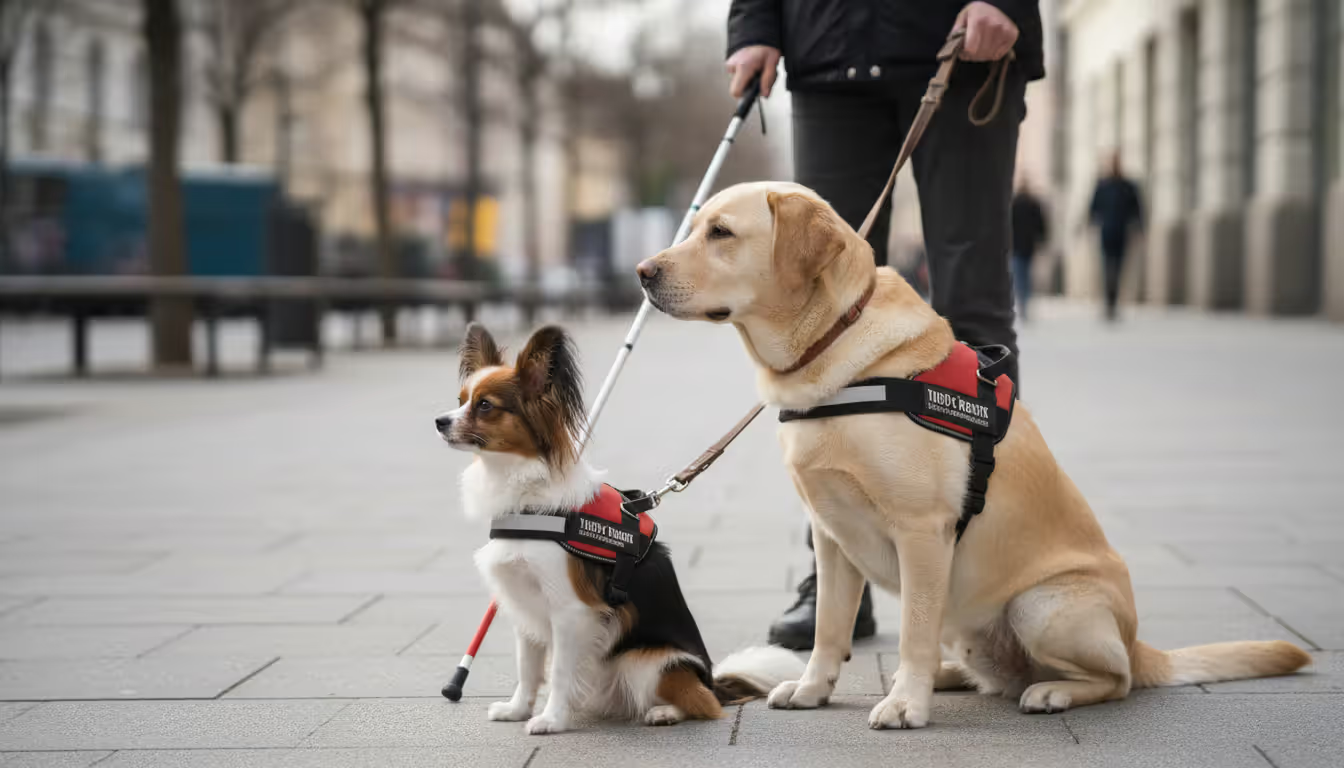
Don't expect service dogs to look a certain way. A six-pound Papillon trained to alert to cardiac episodes has identical rights to a 90-pound Labrador Retriever guiding someone with vision loss. Breed stereotypes mean nothing here. The training determines legitimacy, not the dog's appearance or size.
Real service dog behavior standards in public set a high bar. These animals work in controlled focus regardless of chaos surrounding them. Professional programs spend months—sometimes over a year—building this reliability. It's immediately obvious when you compare that level of training to a pet someone brought to Target last week.
Author: Samantha Loring;
Source: jamboloudobermans.com
Behavioral Red Flags That Reveal Fake Service Dogs
Spotting fraudulent service animals in public comes down to watching what the dog actually does. Legitimate service dogs maintain their composure whether they're in quiet libraries or crowded farmer's markets. They heel close to handlers, keep eyes forward, and ignore the million distractions surrounding them.
Aggression tops the list of red flags. A service dog lunging, snarling, or snapping at people fails the most basic requirement. Training programs wash out dogs that show these tendencies. If you see a "service dog" growling at strangers or baring teeth at other animals, you're witnessing a fraud in action.
Constant barking signals problems immediately. Sure, some service dogs are trained to bark for specific alerts—fire alarms for deaf handlers, for instance. But a dog yapping at every person who walks by? That's a pet, not a working animal.
Watch how the handler manages the dog. Real service dogs respond to minimal cues—sometimes just a glance or hand gesture. When a handler wrestles with the leash while their dog drags them around the store, that team lacks proper training. Service dog handlers maintain control effortlessly because their dogs learned impulse control through hundreds of hours of practice.
Indoor toileting accidents almost never happen with trained service dogs. These animals learn to "go" on command in appropriate outdoor locations. An adult dog urinating in a grocery aisle or defecating in a department store demonstrates either a medical emergency or complete absence of public access training.
Excessive environmental interest reveals untrained animals quickly. Service dogs might briefly glance at stimuli—they're dogs, after all, not robots—but they immediately refocus on their handlers. A dog straining toward every person, attempting to sniff merchandise, or fixating on food displays is behaving like a pet exploring interesting smells, not a working animal on duty.
The jumping problem occurs frequently with fakes. Service dogs don't jump on people. Period. Whether greeting strangers, encountering other animals, or getting excited about something, they keep four paws on the floor. A dog bouncing up to put paws on customers lacks the impulse control that months of training creates.
Questions You Can Legally Ask About Service Dogs
What questions can you ask about service dogs? Federal law permits exactly two, and only when someone's disability isn't visually apparent:
First question: "Do you use this dog for disability-related assistance?" (You're confirming the animal serves medical necessity, not just preference.)
Second question: "Which trained tasks does your dog perform to help with your disability?" (This verifies actual task training versus emotional support.)
That's it. Two questions. Handlers must respond verbally, though they're not required to describe their medical conditions in detail.
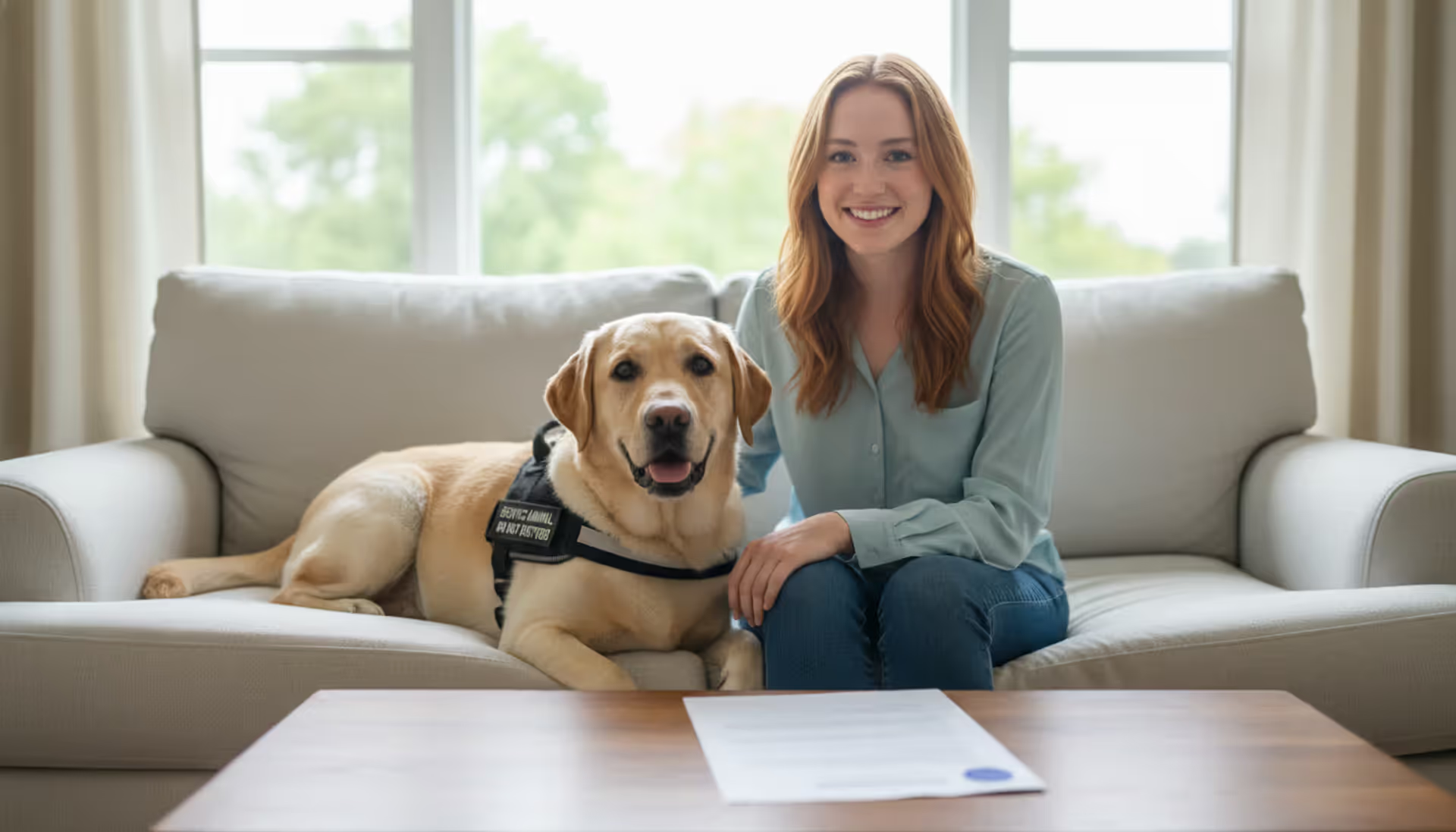
You absolutely cannot demand paperwork. No certificates, registration cards, medical documentation, or identification badges. Federal law imposes zero documentation requirements for service dogs. Many handlers carry nothing except a leash—perfectly legal.
Don't ask for demonstrations, either. Someone whose dog detects oncoming seizures shouldn't need to fake a medical episode for your verification. A handler with PTSD whose dog provides grounding during flashbacks doesn't owe you a recreation of their trauma.
Questions about the person's specific disability cross legal lines. "What's your medical condition?" or "Why are you disabled?" violate privacy protections. The task question gives you relevant information without forcing medical disclosure.
Here's the critical part: you can enforce behavior standards without asking anything. When a dog acts disruptively—regardless of what the handler claims—you have removal rights. Observation matters more than interrogation.
Author: Samantha Loring;
Source: jamboloudobermans.com
How Businesses Can Identify and Remove Fraudulent Service Animals
How businesses identify fake service dogs starts with training staff to observe rather than interrogate. Teach employees to watch all animals for behavioral compliance. Look for the red flags we discussed: aggression, poor control, toileting, excessive barking, jumping on customers.
Federal law explicitly allows businesses to remove any dog—including legitimate service animals—that poses direct threats or remains out of control. If a dog snaps at customers, the handler's inability to stop the behavior triggers removal rights. If the animal knocks over displays or terrorizes other shoppers, out it goes.
Document everything carefully. Write down dates, times, specific behaviors witnessed, and any resulting damage or safety concerns. "Dog growled and lunged at customer near checkout at 3:47 PM on March 15, 2026. Customer backed away quickly, appeared frightened. Manager Susan witnessed incident." These details protect your business if handlers dispute the removal later.
Train employees to evaluate behavior rather than appearances. That tiny Chihuahua in someone's purse might legitimately alert to cardiac episodes. Meanwhile, the impressive German Shepherd in a professional vest might be someone's untrained pet. Gear proves nothing—behavior reveals everything.
Your business faces no penalties for accidentally allowing a fake service dog inside. But wrongfully excluding a legitimate service animal? That creates serious legal liability. When uncertain, permit entry but monitor behavior closely. Remove the animal only if specific disruptions occur.
Establish clear protocols before problems arise. Designate which staff members handle service animal issues. Create response scripts for the two permitted questions. Define exactly which behaviors justify removal. Consistency prevents both discrimination and exploitation.
Management should make removal decisions when possible. Frontline employees can report issues, but supervisors should handle the actual confrontation with handlers. This protects individual staff members from bearing sole responsibility for potentially contentious situations.
State Penalties for Fake Service Dog Misrepresentation
Fake service dog laws by state create a patchwork of consequences that vary dramatically depending on where the fraud occurs. Roughly 35 states now maintain specific criminal statutes targeting service dog impersonation—up from just 15 states a decade ago.
The service dog impersonation penalty typically involves misdemeanor charges and fines between $500 and $1,000 for first-time violations. But some states hit harder. Florida's 2025 legislation bumped fines to $1,500 and allows jail sentences up to 60 days. Michigan ranges from $500 to $2,500 depending on circumstances and prior offenses.
Criminal records create consequences beyond immediate fines. That misdemeanor conviction doesn't disappear. It shows up on background checks for employment, professional licenses, housing applications, and volunteer positions. People have lost job opportunities over service dog fraud convictions.
Civil liability compounds criminal penalties. When a fake service dog attacks or interferes with a legitimate service dog, handlers can sue for damages. Those lawsuits recover veterinary bills, retraining costs (often $15,000-$50,000), and compensation for denied access when businesses grow suspicious of all service dogs. One California case awarded $37,000 after a fake service dog attacked a guide dog, causing injuries that ended the animal's working career.
Fake service dog vest consequences extend to the misrepresentation itself, not just the vest purchase. Buying equipment online isn't illegal. Using that equipment to deceive businesses and gain access with an untrained pet—that's fraud in states with specific statutes.
States with the Strictest Fake Service Dog Laws
California prosecutes service dog fraud aggressively, with fines reaching $1,000 and jail sentences up to six months. District attorneys in Los Angeles and San Francisco have secured multiple convictions since the state strengthened enforcement in 2023.
Colorado takes an educational approach for first offenses, issuing warnings and information packets about legitimate service dog standards. Fines range from $50 to $500, escalating for repeat violations.
Florida's comprehensive 2025 legislation includes mandatory community service hours educating the public about service dog laws. Penalties hit $1,500 plus up to 60 days imprisonment—among the nation's stiffest.
Texas combines criminal penalties with civil remedies uniquely. Legitimate handlers can recover damages up to $1,000 plus attorney fees when fake service dogs create interference or harm. The state actively encourages these civil actions as deterrents.
New York, Michigan, and Washington maintain strict enforcement structures with robust fines ($500-$2,500) and dedicated law enforcement training. Officers in these states learn to recognize violations and respond to complaints from businesses and legitimate handlers.
Author: Samantha Loring;
Source: jamboloudobermans.com
Why Fake Service Dog Registration Websites Are Scams
Google "service dog registration" and watch the scam sites flood your results. These operations charge anywhere from $50 to $300 to "certify" or "officially register" your pet as a service dog. They're lying to you for profit.
No legitimate service dog registry exists in the United States. None. Federal law requires zero certification, registration, or documentation. The Department of Justice—which enforces ADA regulations—maintains no registry and endorses no private registration system.
These websites prey on confusion. They create official-looking certificates, embossed ID cards, and registry databases that mean absolutely nothing legally. The vest packages they sell carry no more authority than something you'd buy at a pet store.
Some scam operations claim government affiliation or medical organization endorsement. Complete fiction. Others use names designed to sound official: "National Service Animal Registry" or "US Service Dog Certification Board." These are private companies making money from deception, not legitimate authorities.
Legitimate service dog training programs do issue graduation certificates when dogs complete their curricula. But these serve as internal records and proof of training investment—handlers don't need to carry them for public access. They're fundamentally different from the worthless documents scam websites sell.
Purchasing these packages actively harms legitimate handlers. People believe the vests and cards legitimize their pets, flooding public spaces with more untrained animals. Businesses encounter these badly-behaved "registered service dogs" and grow skeptical of all service dog teams. The cycle of suspicion intensifies.
Real vs Fake Service Dog Comparison
Understanding real vs fake service dog differences requires examining multiple factors that surface-level observation might miss.
Category
Real Service Dogs
Fake Service Dogs
Training Requirements
Professional programs require 1-2 years and cost $15,000-$50,000; owner-trainers invest 500+ hours over 18-24 months; specific task training plus public access skills; rigorous temperament evaluations
Minimal to zero formal training; perhaps basic "sit" and "stay" commands; no task-specific skills; no systematic public access preparation
Legal Documentation
Zero federal requirements; some programs issue internal graduation certificates; handlers need not carry or present any paperwork
Frequently carry purchased "official certificates" or "registration cards" from scam websites with no legal validity whatsoever
Public Behavior Standards
Calm and focused regardless of environment; ignores distractions; responds to subtle handler cues; never aggressive; no indoor toileting; minimal to no barking
Easily distracted; pulls on leash; frequent barking; jumping on people; sniffing everything; toileting accidents; sometimes aggressive
Handler Rights
Complete public access under ADA; removable only for specific disruptive behaviors; protected from disability discrimination
Zero legal protection; subject to removal at any time; handler commits criminal fraud in 35+ states
Consequences of Misrepresentation
Not applicable—these teams operate legitimately
Criminal fines $500-$2,500; potential jail time up to 90 days; permanent criminal record; civil liability for damages; possible restitution payments
Training differences separate legitimate from fraudulent teams most clearly. Professional service dog programs require substantial financial investment—$15,000 to $50,000 isn't unusual—and extensive time commitments of 18-24 months. Dogs master disability-specific tasks, learn to work reliably in public environments, and pass behavioral evaluations that wash out candidates showing any problematic tendencies.
Owner-trainers (people who train their own service dogs rather than obtaining program-trained animals) follow similar standards. They invest hundreds of hours across extended periods, often working with professional trainers for guidance. The end result matches program-trained standards: a dog performing specific tasks reliably in public settings.
Fake service dogs receive entirely different preparation. Owners might teach basic obedience commands—sit, down, stay—but skip the extensive socialization, distraction-proofing, and task-specific training that create truly reliable working animals. The behavioral gap becomes immediately obvious to anyone who knows what to observe.
Certification reality contradicts what most people assume. No national certification system exists. Individual training programs certify their own graduates as internal quality control, but the ADA imposes zero certification requirements. Legitimate handlers need not prove their dogs completed formal programs—task performance and behavior demonstrate legitimacy, not paperwork.
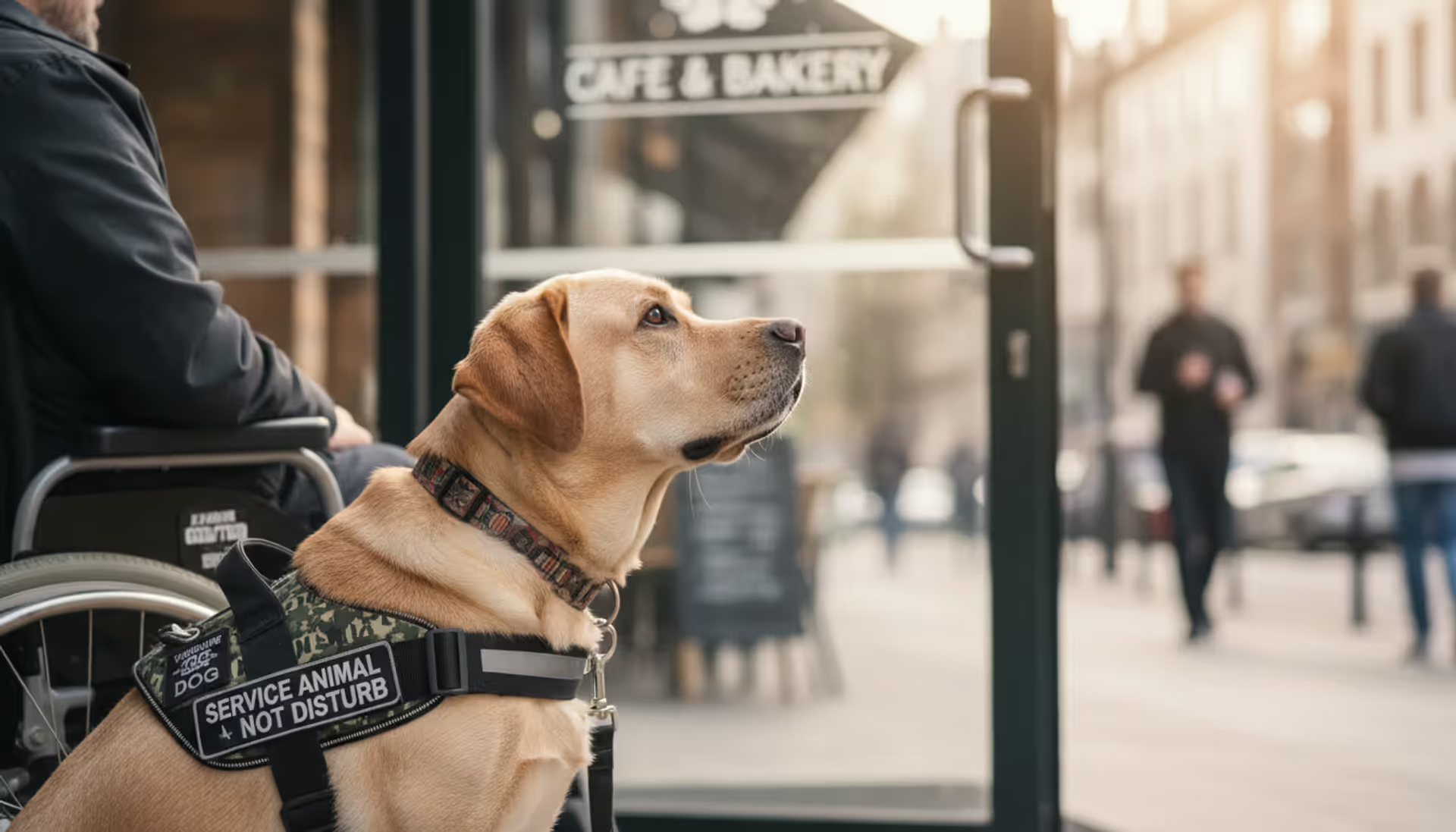
Vest and identification requirements represent persistent myths. Many handlers use vests, patches, or harnesses for practical reasons. These tools reduce public interruptions ("Can I pet your dog?") and signal the dog's working status. But federal law mandates none of this equipment. Conversely, fake service dog handlers often purchase elaborate gear specifically to appear legitimate—the equipment becomes the disguise.
Public access rights belong exclusively to legitimate teams. Handlers with qualifying disabilities and properly trained dogs can enter any public accommodation—restaurants, stores, hospitals, government buildings. Fake service dog handlers possess zero legal right to bring pets into animal-restricted areas, regardless of what equipment they bought online.
Handler disabilities provide context but never proof. Someone without visible disabilities might legitimately use a service dog for diabetes, epilepsy, cardiac conditions, or psychiatric disorders. Conversely, a person with obvious disabilities might bring an untrained pet. Judge the dog's training and task performance, not the handler's appearance.
Author: Samantha Loring;
Source: jamboloudobermans.com
What to Do When You Encounter a Suspected Fake Service Dog
Your response to suspected fake service dogs depends entirely on your role in the situation. Business employees follow different protocols than customers.
If you work for a business, start by observing the dog's actual behavior. Don't act on suspicion—act on evidence. Document specific incidents with details: "Dog jumped on customer at 2:17 PM near produce section. Customer appeared startled and stepped backward quickly. Witnessed by cashier Michael and customer service manager Dana."
Approach handlers calmly and professionally when behavior problems occur. Focus on the observed disruption, not your doubts about legitimacy. "Your dog has been barking continuously for the past several minutes and is disturbing other customers" works infinitely better than "I don't believe that's a real service dog."
Invoke removal rights when specific behaviors justify action. Explain that the dog must leave due to the documented disruption, but offer to continue serving the handler without the animal present. This demonstrates good faith compliance with disability rights while maintaining your business standards.
Involve management before removing any claimed service dog when possible. Frontline employees should report problems to supervisors who can make removal decisions and manage potential conflicts. This protects individual staff members from bearing full responsibility for contentious confrontations.
Contact authorities only when genuine safety threats emerge. A dog actively attacking people or other animals requires immediate intervention. Police can enforce trespassing laws when handlers refuse to remove animals creating documented disturbances or dangers.
As a customer, report concerns to business management rather than confronting handlers directly. Describe the problematic behavior you witnessed—"That dog has been growling at customers and lunged at a child near the toys"—and let staff address the situation through proper channels. Avoid accusations or arguments that escalate tensions unnecessarily.
Legitimate service dog handlers suffer significant harm from this fraud epidemic. Business owners grow suspicious and sometimes illegally challenge real teams. Untrained dogs attack working service dogs, causing physical injuries and psychological damage that can permanently end an assistance animal's career. The financial burden of retraining or replacing a service dog—$15,000 to $50,000—devastates handlers who depend on these animals for basic independence.
Disability rights advocacy organizations track fake service dog incidents and push for stronger legal protections. Groups like the International Association of Assistance Dog Partners welcome reports documenting these problems. Sharing your experiences helps build cases for improved enforcement and public education.
Documentation helps everyone when incidents occur. If a fake service dog attacks a legitimate service dog, photograph injuries immediately, collect witness contact information, obtain copies of any store security footage, and file police reports. This evidence supports both criminal charges and civil lawsuits.
Fake service dogs create a genuine crisis for people with disabilities who rely on trained assistance animals. When businesses encounter untrained dogs behaving badly, they develop suspicion toward all service dog teams. I've watched handlers with legitimate, beautifully trained dogs get questioned aggressively or denied entry outright because some fake service dog caused problems the previous week. Beyond these access issues, fake service dogs attack working dogs with disturbing regularity. A service dog that's been attacked often develops fear or defensive aggression that ends its working career permanently. Replacing that dog requires two years minimum and costs $50,000—assuming the person can even access another one. The people using fake service dogs rarely see this harm they're causing, but it's absolutely devastating for legitimate handlers
— Rebecca Martinez
Frequently Asked Questions
Can I ask someone to prove their dog is a service dog?
You can ask two specific questions when someone's disability isn't visually obvious: whether they use the dog for disability-related assistance, and which trained tasks the dog performs to help with their disability. You cannot demand proof, paperwork, certificates, medical records, or task demonstrations. If the person's disability is readily apparent, you can't ask these questions at all—though you maintain the right to observe behavior and remove disruptive animals based on conduct alone.
Is it illegal to buy a service dog vest online for my pet?
Purchasing vests, patches, or harnesses isn't illegal by itself. Using that equipment to fraudulently represent your untrained pet as a service dog violates criminal laws in 35+ states. If you put service dog gear on a pet and bring it into businesses that otherwise prohibit animals, you're committing fraud. Penalties range from $500 to $2,500 in fines, potential jail sentences up to 90 days, and permanent criminal records that affect employment and housing.
What happens if a business removes a real service dog by mistake?
Businesses that wrongfully remove legitimate service dogs face potential ADA violation claims. Handlers can file complaints with the Department of Justice, pursue civil lawsuits for disability discrimination, and recover damages including compensation for access denial, emotional distress, and attorney fees. Some cases have resulted in settlements exceeding $50,000. Businesses should focus exclusively on observable disruptive behavior rather than questioning legitimacy to avoid wrongful removals.
Do service dogs need to be certified or registered?
No documentation, certification, or registration exists under federal law for service dogs. The ADA requires none of this. Training programs may issue graduation certificates for their own records, but handlers need not carry or present these documents anywhere. Websites selling "official service dog registration" or "certification" operate scams—their products carry zero legal weight. Service dogs gain legal status through their training and task performance, not through paperwork.
Can a service dog ever be asked to leave a business?
Yes, absolutely. Businesses can remove any dog—including legitimate, fully-trained service dogs—that behaves disruptively. If a service dog acts aggressively, poses direct safety threats, remains out of the handler's control despite efforts to manage it, or causes property damage, the business holds the right to require removal. The handler can return and receive services without the animal present. Proper training makes removal of real service dogs extremely rare, but the right exists when behavior problems occur.
How much is the fine for faking a service dog?
Fines vary significantly by state, ranging from $50 to $2,500 for first-time offenses. Most states impose penalties between $500 and $1,000. Repeat violations escalate fines substantially and may include jail time up to 90 days. Beyond criminal penalties, fake service dog handlers face civil liability when their animals harm legitimate service dogs or handlers. Civil damages can reach tens of thousands of dollars covering veterinary bills, retraining costs, and compensation for access denials.
Identifying fake service dogs protects everyone involved—legitimate handlers who depend on their dogs for independence, businesses managing safe public spaces, and customers expecting appropriate animal behavior. The behavioral indicators tell the story: aggression, lack of handler control, excessive environmental distraction, and toileting accidents reveal untrained animals regardless of expensive vests or official-looking credentials.
Business owners and employees hold clear legal authority to remove disruptive dogs while simultaneously respecting the rights of genuine service dog teams. Focus on what the dog does, not what equipment it wears or what papers the handler carries. Observable behavior provides all the evidence you need.
State laws increasingly attach meaningful consequences to service dog fraud. Criminal fines, potential jail time, permanent records, and civil liability create real deterrents—though enforcement remains inconsistent across jurisdictions. Meanwhile, scam registration websites continue feeding public confusion about what federal law actually requires (nothing) versus what they're selling (worthless documents).
The solution requires ongoing education, appropriate enforcement when violations occur, and consistent respect for both legitimate service dog teams and businesses managing their premises. Understanding the legal framework, recognizing behavioral red flags, and responding professionally when problems arise helps combat fraud while protecting the access rights that people with disabilities depend on every single day.
When everyone knows what to look for and how to respond appropriately, we create environments that work better for legitimate service dog teams while maintaining reasonable standards for public safety and comfort.
A service dog letter for landlord review documents your legal right to housing accommodation under the Fair Housing Act. This comprehensive guide explains documentation requirements, legal protections, and how to navigate the accommodation request process for service dogs and emotional support animals
No federal law requires service dog registration, yet commercial registries market credentials as legal necessities. Understanding ADA requirements versus voluntary registration services protects handlers from scams while clarifying actual legal obligations for public access, housing, and air travel
Discover the legitimate process for designating your cat as an emotional support animal. Learn what documentation you actually need, your housing rights under federal law, and why online ESA registries are unnecessary. This guide explains ESA letter requirements, common mistakes to avoid, and the key differences between ESAs, therapy animals, and service animals
Making your dog a service dog doesn't require registration or certification. The ADA demands only that your dog be trained to perform specific tasks related to your disability. Learn what qualifies a dog as a service dog, task training requirements, your public access rights, and common mistakes to avoid
The content on this website is provided for general informational and educational purposes only. It is intended to explain concepts related to animal law, pet ownership rights, service animals, dog bite liability, and animal welfare legislation in the United States.
All information on this website, including articles, guides, and examples, is presented for general educational purposes. Legal outcomes may vary depending on jurisdiction, state laws, and individual circumstances.
This website does not provide legal advice, and the information presented should not be used as a substitute for consultation with qualified attorneys or animal law professionals.
The website and its authors are not responsible for any errors or omissions, or for any outcomes resulting from decisions made based on the information provided on this website.