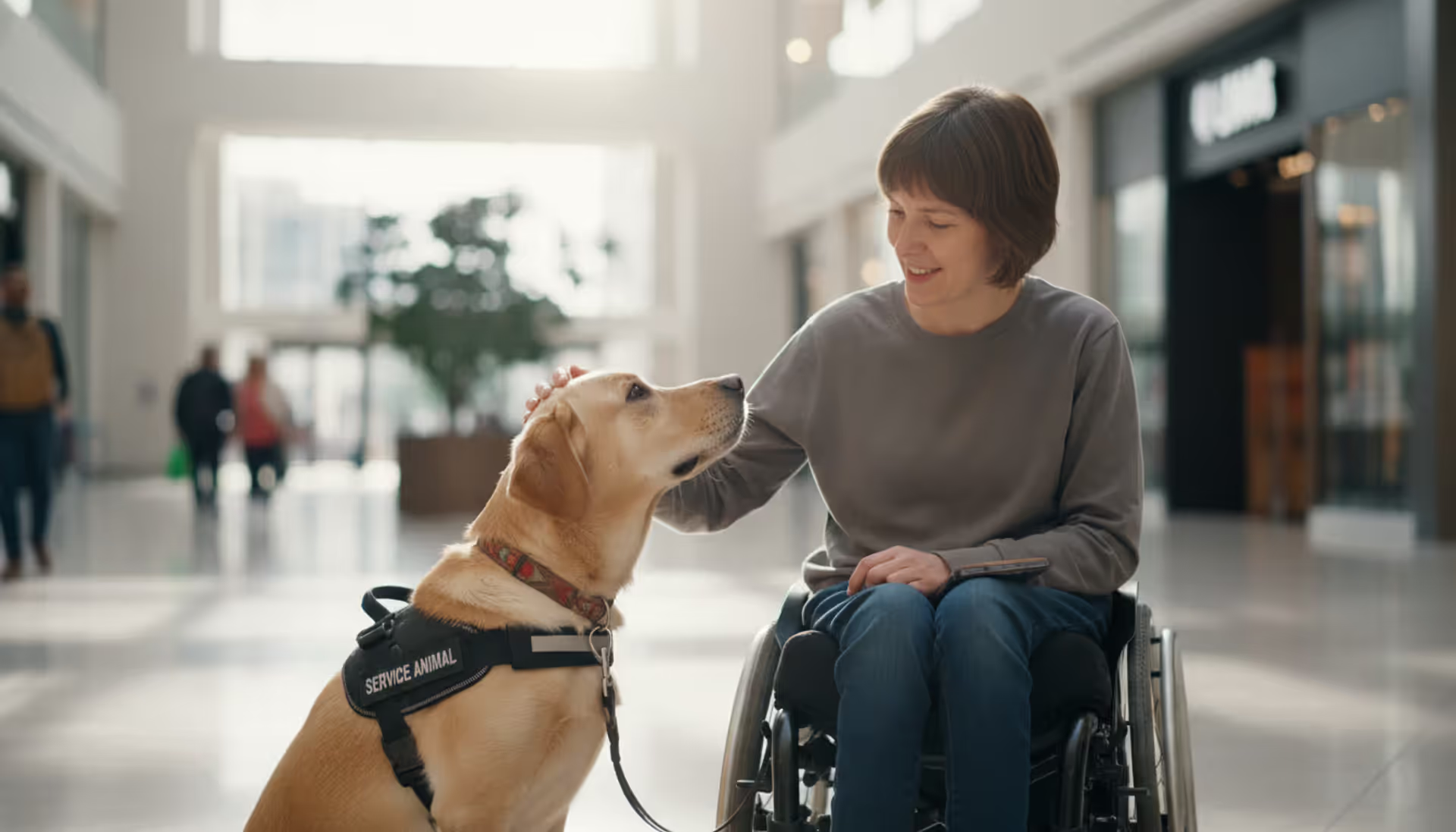
Your dog becomes a service animal when they can perform specific tasks that help with your disability—that's it. No online registration changes this. No certificate makes it official. The Americans with Disabilities Act doesn't mention federal registries, mandatory paperwork, or government approval processes because none of these things exist.
Here's what actuall matters: Can your dog do something useful that addresses a limitation your disability creates? That's the question the law cares about.
Thousands of people waste money each year buying worthless credentials from websites pretending to offer "official" service dog registration. Businesses can't legally ask for these documents anyway. Understanding what the law actually requires—and what it doesn't—saves you money and keeps your training focused on what counts.
What Legally Qualifies a Dog as a Service Dog
Three things need to happen for your dog to qualify legally. First, you need a disability that limits major parts of your daily life. Second, your dog needs training for particular tasks. Third, those tasks need to help with problems your disability causes.
The ADA calls a service dog "any dog individually trained to do work or perform tasks for an individual with a disability." That's straight from the regulations.
Your disability might be physical, sensory, psychiatric, intellectual, or mental. Examples include blindness, deafness, mobility problems, PTSD, diabetes, epilepsy, and severe anxiety. The ADA doesn't publish a list of approved conditions. Instead, it looks at how your condition affects you. If something substantially limits major life activities—walking, seeing, sleeping, concentrating, or other fundamental functions—you likely qualify.
The difference between service dog and ESA comes down to training. Emotional support animals help just by being there. They don't need specific training for particular actions. Service dogs must learn actual tasks tied directly to disability needs.
Picture someone with anxiety. An ESA provides general comfort through companionship. A service dog performs deep pressure therapy when panic attacks start, blocks crowds in overwhelming situations, or interrupts harmful repetitive behaviors. See the difference? One offers passive support. The other executes trained responses.
Author: Marcus Redfield;
Source: jamboloudobermans.com
Therapy dogs belong in a completely different category. These dogs visit hospitals, schools, and nursing homes to comfort many different people—not just one handler. The ADA gives therapy dogs zero special access privileges. Their handlers need permission before entering facilities, unlike service dog teams who have legal access rights.
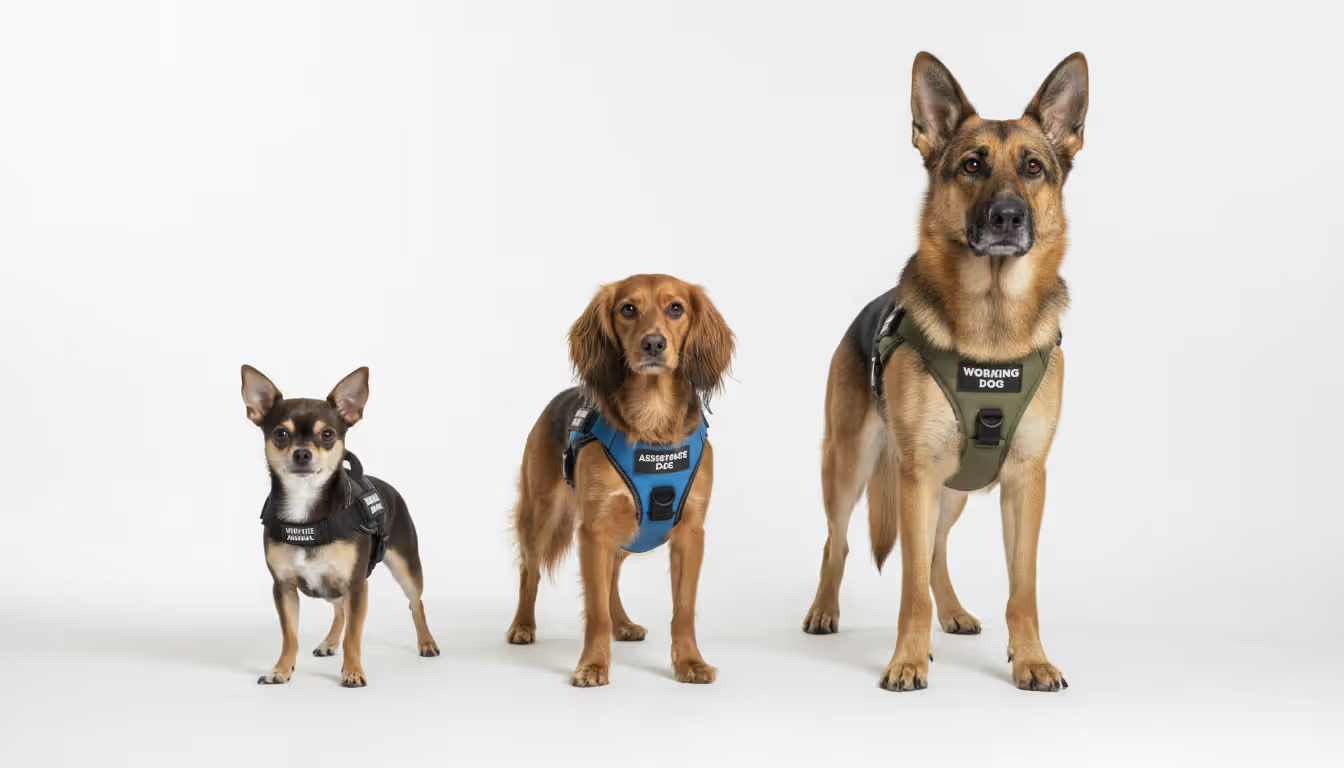
Breed doesn't matter under federal law. Size doesn't matter either. A five-pound Chihuahua alerting to blood sugar drops has the same legal status as a 90-pound German Shepherd helping with mobility. Cities can't ban specific breeds when they're working as legitimate service dogs, though housing providers sometimes create obstacles.
Type
Legal Definition
Training Needed
Public Access
Housing
Airlines
Registration
Service Dog
Dog trained for disability tasks
Specific task training for handler's disability
Full ADA access rights
Protected under FHA
ACAA protections apply (advance notice required)
No federal or state registry exists
ESA
Animal providing therapeutic comfort
No specific task training
No access rights to public places
Protected under FHA with provider letter
ACAA protections apply (advance notice required)
No registry; clinical letter needed
Therapy Dog
Dog visiting to comfort multiple people
Temperament and obedience training
No access rights; needs permission
No protections
No protections
Sometimes certified by organizations
Service Dog Task Training Requirements
Tasks aren't optional. Your dog must perform specific actions in response to particular situations. Good manners don't count. Walking nicely on a leash isn't a task. General emotional comfort doesn't qualify. The action needs to go beyond what any well-behaved pet might naturally do.
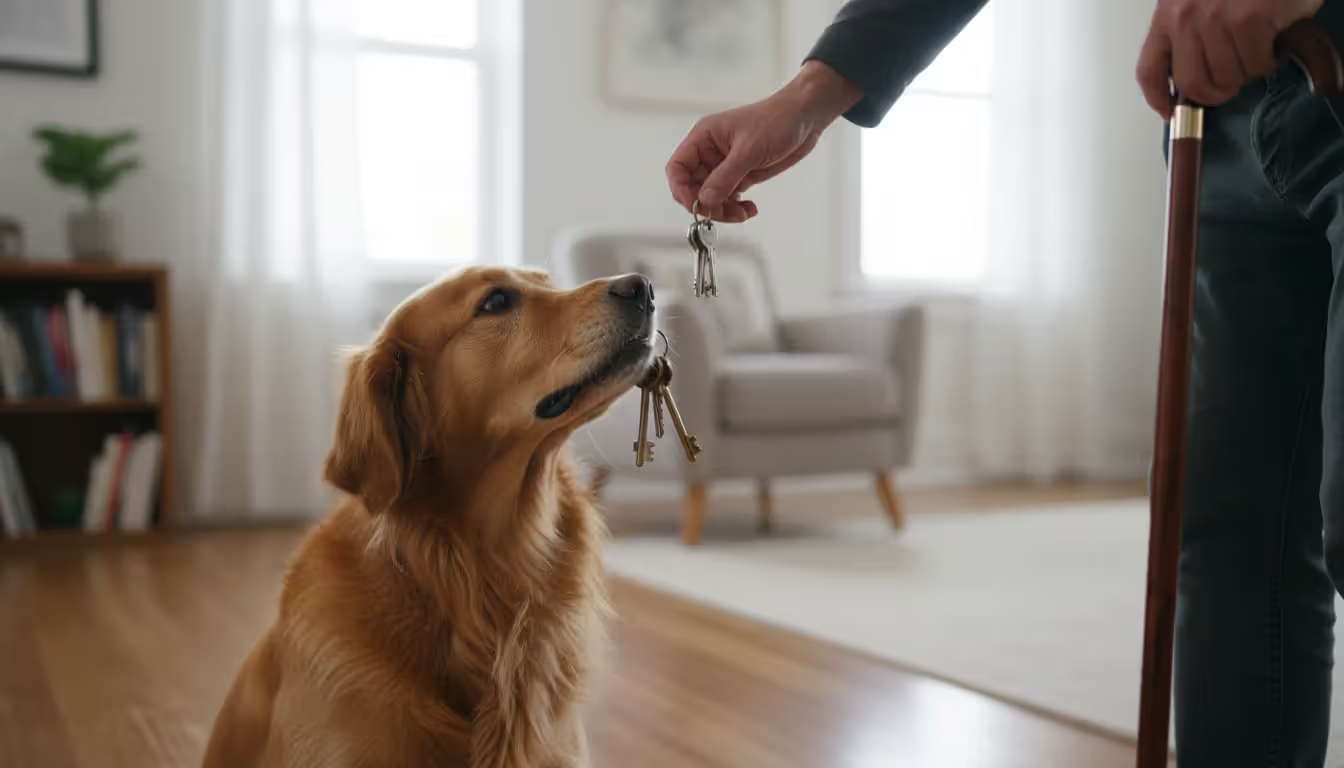
Mobility tasks include grabbing items you drop, pulling a wheelchair, helping you stand up from a chair, or pushing door buttons. Just walking politely beside you? Not a task. Teaching your dog to brace while you transfer from wheelchair to bed? That's a task.
Author: Marcus Redfield;
Source: jamboloudobermans.com
For psychiatric disabilities, tasks might look like interrupting skin picking, reminding you to take medication, applying pressure during panic attacks, or waking you from nightmares. Your dog needs to recognize specific triggers and respond with trained behaviors. A dog that randomly snuggles when you're sad is being sweet—not performing a task. A dog trained to detect panic attack symptoms and apply deep pressure to your chest is executing a trained response.
Medical alert dogs detect blood sugar changes, sense oncoming seizures, or identify allergens. The detection itself is the task. Some dogs notice these changes naturally, but consistent and helpful responses require training. A dog that barks randomly when your blood sugar fluctuates creates confusion. A dog trained to fetch your glucose meter and give a clear alert performs a valuable task.
Public behavior matters as much as task performance. Your service dog stays under your control at all times—usually on leash unless the leash interferes with their tasks. The dog can't create disruptions. Excessive barking, jumping on people, stealing food, or going to the bathroom indoors will get you kicked out even if the dog performs legitimate tasks. A service dog showing aggression toward customers or sniffing merchandise can be excluded from businesses.
Many owner-trainers confuse basic obedience with task training. Obedience teaches sit, stay, come, and loose-leash walking. These are foundation skills, not legal tasks. Task training develops specific responses to disability-related situations. You need both, but only tasks create legal service dog status.
Owner Training vs. Professional Programs
Federal law explicitly allows self-training. You have full legal authority to train your own dog. No law requires professional programs or certification. This surprises people who assume service dogs must graduate from established organizations.
Training your own dog has real advantages. You skip costs that range from $15,000 to $30,000 for program dogs. You avoid waiting lists that stretch two to five years. You can start immediately with a dog you already know and trust. You customize everything to your specific needs instead of accepting a program's standardized approach.
Author: Marcus Redfield;
Source: jamboloudobermans.com
The trade-offs are significant. Owner training takes serious time—typically 18 to 24 months of daily work. You either learn training techniques yourself or pay trainers for help. You're completely responsible for your dog's public behavior. Program graduates can point to organizational standards if problems arise. Owner-trainers stand alone. You might not recognize whether your dog has the right temperament for this work.
Professional programs provide structure, accountability, and expertise. They screen dogs early for suitable temperaments and remove poor candidates quickly. They handle the training workload and usually offer ongoing support after placement. Some programs place fully trained dogs with qualifying individuals at no charge, funded entirely by donations.
Most owner-trainers get better results working with professional trainers even without full program enrollment. A trainer experienced with service dogs can evaluate your dog's temperament, show you effective techniques, and help solve training problems. Budget for professional guidance unless you already have extensive training experience.
Timeline expectations vary by disability and individual dogs. Basic tasks like retrieving items might take six months. Complex tasks like seizure detection or psychiatric response often take 18 to 24 months. Public access training—appropriate behavior in stores, restaurants, and similar places—requires another six to twelve months of gradual exposure.
Some dogs never make it despite months of dedicated work. Temperament issues, health problems, or training difficulties end many attempts. Professional programs wash out 30 to 50 percent of candidate dogs. Owner-trainers should expect similar failure rates and plan accordingly.
ADA Service Dog Registration Requirements
Zero federal registration, certification, or documentation is required for service dogs under the ADA. This deserves repeating because countless websites claim otherwise. Federal law doesn't require handlers to carry papers, ID cards, or proof of training.
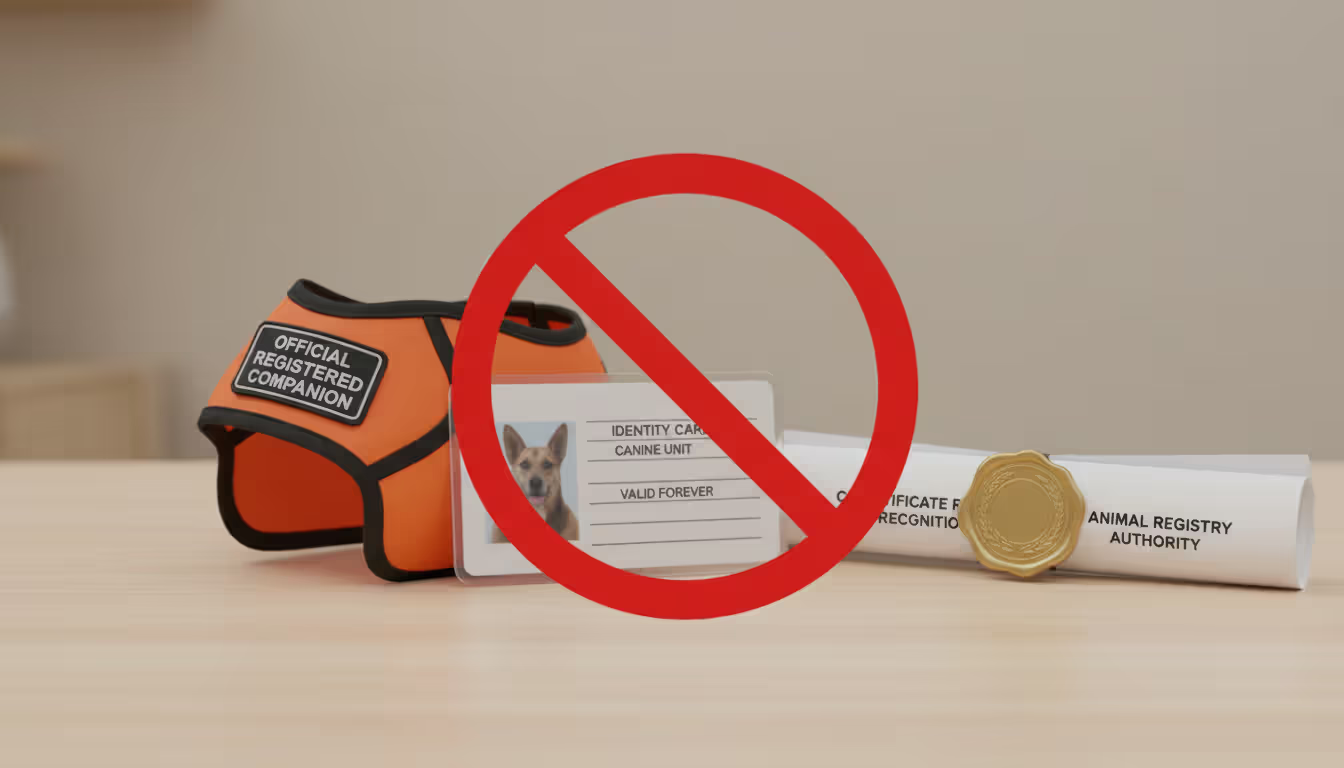
The Department of Justice—which enforces the ADA—explicitly prohibits businesses from demanding documentation as a condition of entry. Commercial websites charging $50 to $200 for "official" certificates, ID cards, or vest packages have no legal authority whatsoever. These operations exploit confusion to sell worthless products.
Some handlers voluntarily carry documentation even though it's not legally required. Healthcare provider letters, training logs, or vaccination records sometimes prevent confrontations with business staff who don't know the regulations. These documents aren't legally mandatory, but they're occasionally more convenient than explaining legal requirements to skeptical managers. Just understand you're making a choice, not meeting a requirement.
Registration confusion partly comes from legitimate requirements in other contexts. Housing providers can request disability documentation and verification that you need an assistance animal under the Fair Housing Act. Airlines previously required advance notification and standardized forms under the Air Carrier Access Act, though 2021 rule changes modified what airlines can request. These housing and travel requirements don't apply to ADA public access situations.
State and city governments can't create registration systems that conflict with federal ADA provisions. Some cities have tried creating local service dog registries or mandatory handler permits. These violate federal supremacy. The ADA overrides contradictory state and local regulations.
Legitimate service dog organizations often issue identification to their graduates, but this is internal documentation, not government registration. A program might provide ID cards confirming your dog completed their curriculum. This can be useful but has the same legal weight as cards you design yourself—which is to say, none.
Public Access Rights and Handler Documentation Rights
Businesses can ask only two questions when your dog's service purpose isn't obvious: (1) Is this a service animal required because of a disability? and (2) What work or task has the dog been trained to perform? They can't ask about your disability details, demand medical documentation, require special ID display, or ask you to demonstrate tasks.
You need to answer the first question yes or no. The second question needs only a brief task description: "Alerts to seizures," "Picks up dropped items," or "Interrupts panic attacks." You don't need to explain how tasks work, provide training documentation, or detail medical conditions.
Businesses can't exclude you just because they have no-pets policies. Service dogs aren't pets under the law. They can't charge extra fees or deposits because of your service dog, though you're financially liable for any damage your dog causes. They can't restrict you to certain areas because you have a service dog.
Businesses can request removal in two situations: when the dog is out of control and you don't regain control, or when the dog isn't housebroken. One bark or brief distraction doesn't meet "out of control" standards. Repeated disruptions, aggressive behavior toward others, or inability to follow basic commands do qualify.
When your dog is excluded for behavior problems, the business must still allow you entry without the dog. They can't ban you because your service dog misbehaved—they can only exclude the animal.
Service dog handler documentation rights include refusing to answer invasive questions. You don't need to disclose your diagnosis, explain disability details, or justify why you need particular tasks. "I have a disability and my dog performs trained tasks for it" provides enough information.
Housing and air travel operate under different frameworks. The Fair Housing Act lets landlords request disability documentation and verification of disability-related need for assistance animals. They can request healthcare provider letters. Airlines can require forms submitted in advance, though requirements were scaled back recently after widespread ESA policy abuse.
State laws sometimes offer additional protections or slightly different requirements. California maintains broader definitions in some contexts. New York requires businesses to post service animal policy notices. These variations rarely contradict the ADA but can supplement protections or provide clarity.
The biggest mistake I see is people buying online vests and thinking that makes their untrained dog a service dog.Vests have zero legal significance. What makes a service dog is whether the dog completed training for disability-specific tasks. I've seen people removed from stores because their 'service dog' jumped on customers or pooped inside. Beyond personal embarrassment, this creates problems for people with real service dogs who face more skepticism and hostility
— Jennifer Martinez
Common Mistakes When Registering or Certifying a Service Dog
Buying packages from registration websites is the most expensive mistake. These platforms sell official-looking certificates, ID cards, vest bundles, and registry listings. None have legal value. The ADA recognizes no registration system. You're paying for attractive paper and private database entries that provide zero legal standing.
Some registration platforms claim they verify training or temperament. They don't conduct meaningful verification. Most require nothing beyond payment and basic information. A few request uploaded photos showing your dog sitting calmly. That's performance theater designed to justify the purchase, not genuine assessment.
Misrepresenting untrained or poorly trained dogs as service dogs creates legal and ethical problems. Fraudulently claiming service dog status to gain unauthorized access violates laws in several states that have criminalized fake service animal representation. Beyond legal consequences, untrained dogs in public spaces create problems for legitimate handlers who face increased scrutiny and skepticism.
The temptation to put a vest on your pet and visit stores feels understandable, especially when you see others doing it. Don't. If your dog hasn't completed training for disability-specific tasks, it's not a service dog. Bringing untrained dogs into public places under false pretenses is ethically wrong and potentially criminal.
Confusing ESA letters with service dog status creates access problems. A clinical letter from your therapist or physician stating you benefit from an emotional support animal doesn't grant public access privileges. ESA letters apply to housing situations and previously applied to air travel, but they don't create service dog status under the ADA. Showing an ESA letter to restaurant staff when they question your dog will likely result in removal because ESAs lack public access rights.
Access violations happen when handlers misunderstand their rights' limits. Your service dog can't sit on restaurant seats, ride in shopping carts, or enter food preparation zones. You can't bring your service dog into sterile medical environments like operating rooms or ICUs where infection control overrides access rights. You can't demand access when your dog behaves aggressively or creates genuine safety hazards.
Some handlers become confrontational when questioned, demanding immediate entry and threatening lawsuits. This backfires. Businesses have rights to ask the two permitted questions. Answering calmly and briefly gets you inside faster than arguing about legal rights. Save legal battles for actual violations, not for staff members following proper procedures.
Author: Marcus Redfield;
Source: jamboloudobermans.com
Frequently Asked Questions
Do I need to register my service dog with the government?
No government registration exists or is required anywhere in the United States. There's no federal database or official registry that tracks service dogs. Websites offering service dog registration are private commercial businesses without legal authority. Their certificates and ID cards have zero legal weight, though some handlers find them useful for avoiding arguments with business staff who don't know the regulations.
Can any dog become a service dog?
Legally, breed and size don't matter—any dog can receive service dog training. Practically, not every dog has the right temperament for service work. Successful service dogs need stable temperaments, ability to focus, trainability, and stress tolerance. Dogs that are fearful, aggressive, highly distractible, or reactive to environments rarely succeed in service roles. Age matters too—most trainers recommend starting with dogs between eight months and three years old, though occasionally older dogs succeed when they have proper foundations.
What's the typical timeline for service dog training?
Training duration varies dramatically based on tasks needed, individual dog aptitude, and handler training skill. Straightforward tasks like retrieving dropped items might require six to eight months for reliable performance. Complex tasks like medical detection or psychiatric response often take 18 to 24 months. Public access training—appropriate behavior in stores, restaurants, and crowded environments—adds another six to twelve months. Most owner-trained service dogs need at least 18 months of consistent training before they're ready for complete public access.
What can a business legally ask about my service dog?
Businesses can ask two questions when your dog's service purpose isn't immediately obvious: (1) Is this a service animal required because of a disability? and (2) What work or task has the dog been trained to perform? They can't ask about your disability, demand medical documentation, require you to show certification or registration, or ask you to demonstrate tasks. You must answer both questions, but you can keep responses brief and general.
Can I be denied access if my dog isn't registered?
No registration exists under ADA requirements, so lack of registration can't justify denial. Businesses refusing access because you lack papers or certification are violating federal law. However, you can be denied when your dog is out of control and you don't regain control, or when your dog isn't housebroken. You can also be removed when your dog poses direct health or safety threats.
What's the difference between a service dog certificate and actual training?
Certificates are paper documents. Training is the months or years spent teaching your dog disability-specific tasks and public behavior skills. You can buy certificates online for $50 without doing any training. Those certificates have zero legal value and don't transform your dog into a service dog. Actual training involves sustained consistent work teaching your dog to perform disability-related tasks reliably and behave appropriately in public environments. The ADA looks at training, not certificates. A dog with extensive training but no certificate qualifies as a service dog. A dog with certificates but no training is a pet with fancy documentation.
Transforming your dog into a service dog requires understanding what federal law actually demands: a qualifying disability, a dog trained to perform specific tasks addressing that disability, and appropriate public behavior. It doesn't require registration, certification, or government approval. The training determines status, not the paperwork.
Owner training is legally permitted and can work, but it demands substantial time investment and honest evaluation of your dog's temperament and your training capabilities. Professional guidance helps, even without full program enrollment. Set realistic timeline expectations—most service dogs need 18 to 24 months of training before they're ready for consistent public access.
Skip registration scams that exploit legal confusion. Save that money and invest it in actual training resources instead. Focus on task training addressing your specific disability needs and public access training ensuring your dog behaves appropriately across all environments.
Your rights as a service dog handler receive ADA protection, but those rights come with responsibilities. Your dog must stay under control, be housebroken, and avoid creating disruptions. You must be prepared to answer the two questions businesses can legally ask. Understanding both your rights and responsibilities makes public access smoother and helps preserve access rights for all service dog handlers.
A service dog letter for landlord review documents your legal right to housing accommodation under the Fair Housing Act. This comprehensive guide explains documentation requirements, legal protections, and how to navigate the accommodation request process for service dogs and emotional support animals
No federal law requires service dog registration, yet commercial registries market credentials as legal necessities. Understanding ADA requirements versus voluntary registration services protects handlers from scams while clarifying actual legal obligations for public access, housing, and air travel
Discover the legitimate process for designating your cat as an emotional support animal. Learn what documentation you actually need, your housing rights under federal law, and why online ESA registries are unnecessary. This guide explains ESA letter requirements, common mistakes to avoid, and the key differences between ESAs, therapy animals, and service animals
The fake service dog problem threatens legitimate handlers and businesses nationwide. Learn behavioral red flags, legal questions you can ask, state penalties for fraud, and how businesses can identify and remove fraudulent service animals while protecting disability rights
The content on this website is provided for general informational and educational purposes only. It is intended to explain concepts related to animal law, pet ownership rights, service animals, dog bite liability, and animal welfare legislation in the United States.
All information on this website, including articles, guides, and examples, is presented for general educational purposes. Legal outcomes may vary depending on jurisdiction, state laws, and individual circumstances.
This website does not provide legal advice, and the information presented should not be used as a substitute for consultation with qualified attorneys or animal law professionals.
The website and its authors are not responsible for any errors or omissions, or for any outcomes resulting from decisions made based on the information provided on this website.