Opening a dog daycare sounds straightforward until you dive into the paperwork. Most people assume they'll need "a license"—singular—and discover they actually need five or six different permits before legally accepting their first client's pup. The maze of federal, state, and local requirements catches nearly every first-time owner off guard.
Here's the reality: you're looking at multiple licenses regardless of where you operate. A tiny home-based setup watching three dogs needs different paperwork than a 5,000-square-foot facility accommodating forty dogs, but both need legal authorization. The variety comes from how governments divide responsibility—your city wants its cut, your county has requirements, and your state maintains separate standards.
The good news? Once you understand the system, it's manageable. The bad news? Skipping even one required permit can shut you down overnight, and nobody at City Hall will warn you about what the County needs.
Understanding Dog Daycare Licensing Requirements
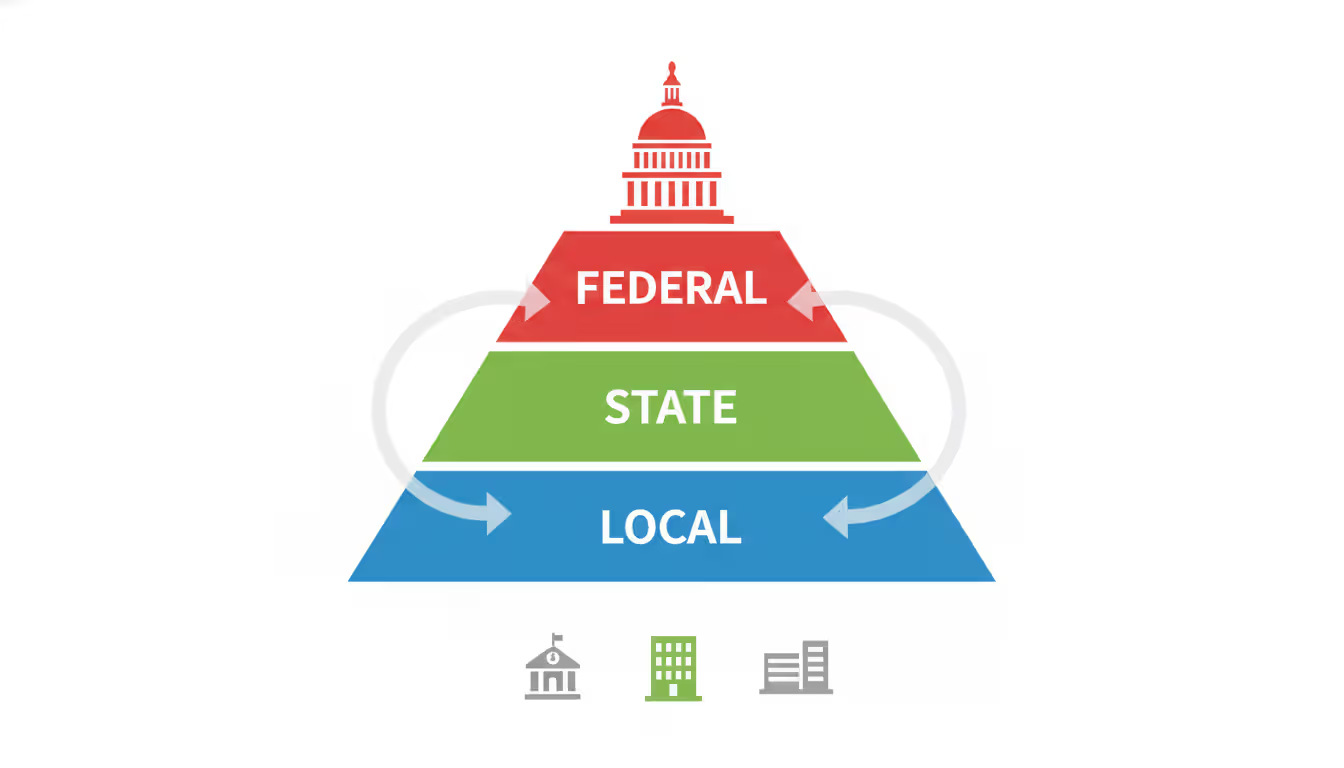
Three governmental tiers create your licensing obligations: federal, state, and local. They stack on top of each other rather than replacing previous layers. Getting state approval doesn't exempt you from city requirements, and local permits don't override state mandates.
The USDA handles federal oversight through the Animal Welfare Act. Most daycare owners breathe easier here because the federal government typically steps in only when you're boarding dogs overnight AND either keeping them for resale or maintaining breeding animals. The magic number? Four or more dogs boarded commercially overnight. Pure daycare operations—where dogs go home each evening—usually dodge federal registration entirely.
State-level rules create the biggest headaches because consistency doesn't exist. California routes everything through county animal control departments. Texas hands most authority to cities and towns. Pennsylvania created specific "dog daycare" classifications in their statutes, while Ohio lumps everything under "kennel" definitions written decades ago for breeding operations. You can't copy another state's playbook.
Local governments throw in requirements that often prove stricter than anything at the state level. Your city council might restrict animal businesses to industrial zones only, even though state law doesn't care about zoning. Counties frequently demand separate animal facility permits on top of standard business licenses. A township could require neighborhood approval before issuing permits, creating a months-long approval process.
Author: Marcus Redfield;
Source: jamboloudobermans.com
Why such variation? Partly because communities define "animal welfare" differently, but mostly because residents complain. Barking bothers neighbors. Traffic concerns emerge when twenty clients drop off dogs during morning rush hour. Property owners worry about home values. Rural areas welcome the tax revenue from new businesses. Urban neighborhoods lawyer up to block you. The political climate in your specific location matters as much as written regulations.
State and Local Permits Required for Dog Daycare Facilities
Start with your basic business license from city hall or the county clerk. Every commercial operation needs this foundation, whether you're selling cupcakes or supervising corgis. You'll submit paperwork showing your business structure (LLC filings, corporation documents, or DBA registration), your federal tax ID, and proof you're actually located where you claim. Annual fees swing wildly—$50 in small Indiana towns, $400+ in Denver, $800+ in parts of California. Revenue projections sometimes bump you into higher fee brackets.
Animal care business permits add another layer specifically for facilities housing animals. This separate authorization triggers inspections that your standard retail shop never faces. Inspectors measure square footage per dog, test ventilation systems, examine waste disposal plans, and verify emergency protocols exist on paper and in practice. First-time inspection fees typically land between $100-$300, then you're paying annually for re-inspection.
Zoning and Land Use Compliance
Zoning trips up more entrepreneurs than any other single requirement. You might find the perfect space, sign a five-year lease, and discover three months later that animal businesses are flatly prohibited in that zone. Commercial zoning doesn't automatically mean all commercial uses are welcome—most municipalities carve out specific restrictions for operations they consider potentially disruptive.
Get a zoning verification letter before spending a dime on property. Your planning department issues these confirmations showing whether dog daycare qualifies as permitted use, conditional use, or prohibited use at your specific address. Conditional use means you're heading to public hearings where neighbors can object. These hearings stretch timelines by three to six months and might saddle you with operating restrictions—no weekend hours, maximum fifteen dogs, no outdoor play areas, employees prohibited.
Some owners try creative labeling to sidestep zoning issues. They call themselves "pet sitters" or "dog walkers" instead of "daycare" on applications. Code enforcement sees right through this once neighbors complain about noise or traffic. Operating outside your approved zoning classification brings immediate closure orders plus fines starting around $500 and escalating to thousands for continued violations.
Health and Safety Inspections
Health departments inspect facilities to protect both animals and humans from disease transmission and injury. Their checklist mirrors daycare inspections for human children, adapted for four-legged clients. Expect scrutiny of waste disposal systems, cleaning schedules and products, water sources, air circulation, and your written plans for sick animals, disease outbreaks, and emergencies like fires or tornadoes.
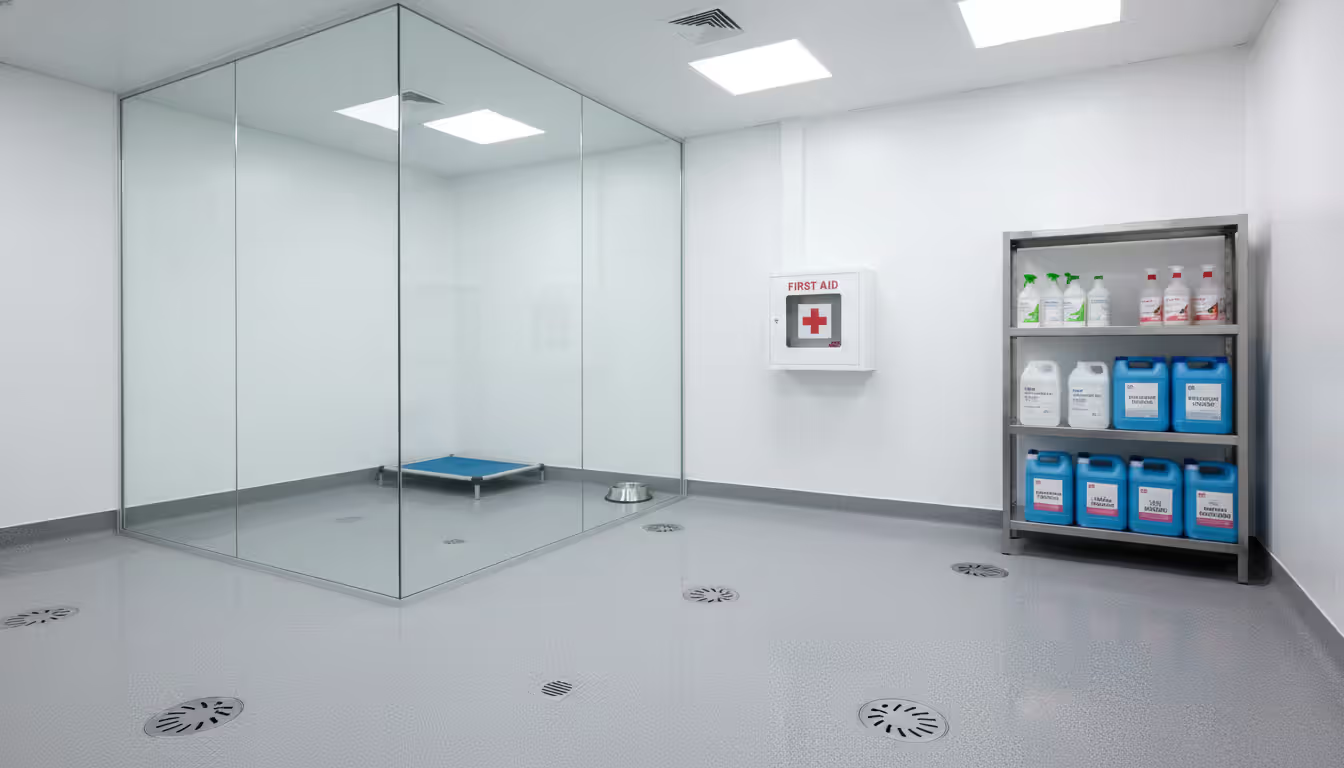
Flooring must be non-porous—no carpet, no unsealed concrete. Drains need proper slope for cleaning. Sick animals require physical separation from healthy ones, not just "we'll watch them closely." Food storage areas can't sit next to bathroom zones. Outdoor fencing typically needs six-foot minimum height for large breed areas. First-aid supplies must be stocked and accessible.
New applicants commonly fail initial inspections because indoor play areas lack floor drains or because they didn't create a true isolation area for sick dogs. Plan for at least one round of modifications rather than assuming your space passes as-is. Re-inspection fees add another $75-$200 to your costs.
Author: Marcus Redfield;
Source: jamboloudobermans.com
Dog Kennel and Commercial Boarding Certifications
Terminology matters because state laws often treat "daycare," "boarding," and "kennels" as distinct categories requiring different permits. Daycare means same-day service—dogs arrive morning, leave evening. Boarding involves overnight stays. Kennels might reference breeding operations, long-term housing, or commercial boarding depending on which statute you're reading.
Dog kennel licensing laws frequently apply to any facility housing dogs you don't own, regardless of your preferred business name. These authorizations demand more than basic business permits. You're typically facing requirements like:
Minimum 50-100 square feet per dog (combining indoor and outdoor space)
Documented relationship with a licensed veterinarian for emergencies
Staff trained in animal first aid and recognizing behavioral warning signs
Written vaccination policies, health screening procedures, and emergency response plans
Containment systems meeting specific security standards
Overnight boarding escalates requirements dramatically. Roughly half of states mandate 24-hour human supervision when dogs sleep over. Someone must physically stay on-site all night—not just "on call," but present in the building. This staffing requirement doubles or triples your labor costs compared to day-only operations. Many owners specifically avoid overnight services to escape this expense, even though boarding commands higher per-dog pricing.
Vaccination verification creates legal obligations. Most jurisdictions require current rabies certificates plus DHPP (distemper combination) and Bordetella (kennel cough) vaccines documented before a dog enters your facility. You're personally responsible for checking dates, keeping copies, and refusing unvaccinated animals. Admitting an unvaccinated dog that infects others opens you to both regulatory fines and civil lawsuits from affected owners.
USDA registration enters the picture when you cross specific thresholds. As of 2026, federal licensing applies if you board dogs overnight AND either maintain more than four breeding females or buy and resell dogs as a dealer. Standard daycares avoiding breeding and resale typically stay clear of USDA jurisdiction. Facilities mixing daycare with overnight boarding should carefully review Animal Welfare Act definitions. Federal registration costs about $250 annually, requires annual facility inspections, and demands detailed record-keeping that takes hours weekly.
Insurance and Liability Requirements for Dog Daycare Businesses
Some states legally require minimum insurance coverage for animal care facilities. Most don't—but operating without robust coverage is financial suicide regardless of legal mandates. Dogs injure each other. They bite handlers. They escape and cause accidents. They occasionally die from medical emergencies despite your best precautions. One lawsuit from a client whose dog died in your care can cost you everything.
Third-party liability coverage responds when someone gets hurt or property gets damaged. A dog bites your groomer? Covered. A client slips on your wet lobby floor? Covered. A dog escapes through a gate left ajar and runs into traffic, causing a multi-car pileup? Covered—if you bought enough insurance. Industry standards suggest $1 million per incident with $2 million aggregate annual coverage as your starting point. Many established facilities carry $2-3 million limits because settlement demands can exceed $1 million when injuries are severe. Annual premiums run $1,500-$5,000 depending on your capacity, claims history, and location.
Author: Marcus Redfield;
Source: jamboloudobermans.com
Animal bailee coverage fills a critical gap that standard policies miss. This specialized insurance pays veterinary bills or replaces an animal's value when dogs are injured, become ill, or die while you're responsible for them. Your standard third-party policy won't cover the client's dog—only injuries to other people or their property. Bailee insurance costs roughly $500-$2,000 yearly for small to mid-sized operations and saves you from personally paying $8,000 emergency surgery bills when dogs fight.
Certain states now mandate specific coverage levels for commercial animal facilities. California, New York, and Illinois enacted requirements in recent years. Even where laws don't exist, your landlord absolutely requires proof of insurance before signing a lease, and lenders demand it before approving business loans.
Building and equipment coverage protects your physical assets. Commercial property policies for dog facilities need specialized additions for animal-caused damage—dogs destroy drywall, scratch doors, damage flooring, and chew through fixtures. Standard property policies frequently exclude animal damage, so verify your specific policy covers the reality of housing thirty excited dogs daily.
Workers compensation becomes legally required the moment you hire your first employee in virtually every state. Dog daycare work generates higher premiums than office environments because staff face real injury risks—bites, scratches, back injuries from lifting large dogs, knee problems from constant crouching. Expect rates around $3-$5 per $100 of payroll, so a $30,000 annual employee salary costs you roughly $900-$1,500 in workers comp premiums.
Additional Licenses for Expanded Pet Services
Adding services means potentially adding permits. Dog grooming creates the first complication. License requirements for groomers vary dramatically—most states impose zero requirements, a handful demand training or testing. As of 2026, no federal grooming license exists, and only about three or four states regulate grooming as a distinct licensed profession.
Your facility still needs business licenses covering grooming activities even in states without groomer licensing. Adding this service typically doesn't require separate facility permits if your existing dog daycare authorization already covers the physical space, but assumptions here are dangerous. Call your licensing office and confirm.
Homemade dog treat sales drop you into surprisingly complex FDA and state agriculture department territory. Commercially selling animal food products—which includes treats—falls under food safety regulations. Many states classify treats as "animal feed," triggering registration requirements, labeling standards, and possibly facility inspections completely separate from your daycare permits.
Manufacturing treats on-site versus reselling commercial products creates different obligations. Making treats yourself means food safety compliance including guaranteed analysis labels (crude protein percentages, fat content, etc.), complete ingredient lists in descending order by weight, and your business name and address. Some states require "pet food manufacturing" licenses costing $100-$500 annually with inspections. Simply reselling treats made by licensed manufacturers usually just needs your sales tax permit.
Training services generally avoid separate licensing unless you market behavioral therapy or medical claims. You do need robust professional liability insurance once you're giving training advice—if your techniques fail and a dog subsequently bites someone, you're potentially liable. Some operators hire certified trainers holding CPDT-KA credentials or similar to boost credibility and reduce risk rather than navigating this themselves.
How to Apply for Dog Daycare Licenses Step-by-Step
Plan for six to twelve months between starting paperwork and accepting your first dog. Entrepreneurs routinely underestimate approval timelines, then scramble when their planned opening date arrives but half their permits remain pending.
Step 1: Identify every requirement. Contact your city clerk, county licensing department, state agriculture or animal control office, and local health department separately. Ask each specifically about dog daycare. One office won't necessarily know what the others require—I've watched city clerks confidently state "that's all you need" while being completely unaware of county animal facility permits. Create a master checklist with all permits identified.
Step 2: Confirm zoning before committing to location. This step comes before signing leases or purchase agreements, not after. Request written zoning verification for your specific address showing dog daycare as permitted use. Conditional use permits or variances require public hearings—start this process immediately because it's typically your longest wait. Prepare for neighbor objections and be ready to professionally address concerns about noise, smell, and traffic.
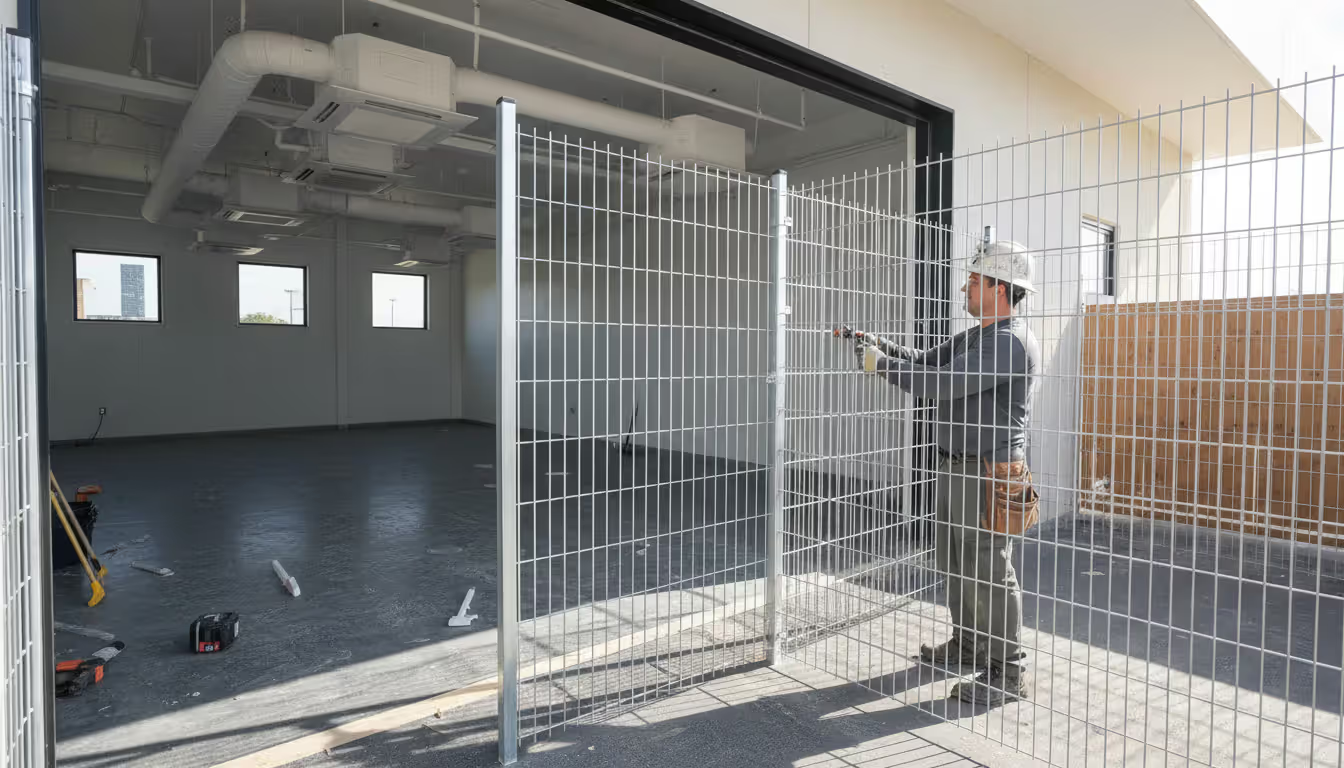
Step 3: Build out your facility to code. Modify your space to meet every regulatory requirement before scheduling inspections. Common needs include impermeable flooring, floor drains with proper slope, isolation areas for sick animals, secure fencing for outdoor spaces, commercial-grade ventilation, and clearly marked emergency exits. Hire contractors experienced with animal facilities if possible—they know the common pitfalls.
Author: Marcus Redfield;
Source: jamboloudobermans.com
Step 4: Submit complete applications with all fees. Incomplete applications get rejected outright, pushing your timeline back weeks while you gather missing information. Assemble supporting documentation: business formation records, lease or deed, site plans and facility drawings, proof of insurance policies, written vaccination requirements, emergency procedures, and staff training plans. Total application fees typically range from $500-$2,000 across all required permits.
Step 5: Pass inspections on first attempt. Schedule only when genuinely prepared. Failed inspections mean re-inspection fees ($50-$150 typically) and delayed openings. Document your protocols in writing. Train staff before inspectors arrive. Common failure points: inadequate sanitation stations, improper waste storage, insufficient ventilation or air circulation, missing safety equipment like fire extinguishers or first aid kits.
Step 6: Calendar renewals obsessively. Most permits need annual renewal with fees and often re-inspection. Treating this as "done" after initial approval is dangerous. Operating on an expired license carries identical penalties to operating without any license. Maintain meticulous records of dog vaccinations, incident reports, cleaning logs, and staff training. Inspectors can demand these records during routine inspections or complaint-driven visits.
Common Licensing Mistakes and How to Avoid Them
The biggest mistake I see new dog daycare owners make is treating licensing as a bureaucratic hurdle rather than a foundation for professional operation.Licensing requirements exist because dogs have died in substandard facilities. The inspections, insurance requirements, and operational protocols aren't arbitrary—they're lessons learned from tragedies. When entrepreneurs resist compliance, they're not just risking legal problems; they're risking the lives of animals entrusted to their care. Proper licensing demonstrates to customers that you take animal welfare seriously enough to meet professional standards
— Jennifer Martinez
Operating without permits ranks as the single most destructive mistake. Some owners adopt the "get customers first, paperwork later" strategy, hoping revenue will fund compliance costs. This backfires spectacularly when code enforcement shows up. They close you immediately. You're left with angry clients demanding refunds, dogs needing emergency placement, and zero income while facing fines starting at hundreds and climbing to thousands per day of violation. Some jurisdictions file criminal misdemeanor charges for unlicensed animal facility operation.
Lawsuits from customers injured at unlicensed facilities generate massive judgments because juries view unlicensed operation as gross negligence. Your insurance carrier might deny claims entirely if you lacked required licenses, leaving you personally liable for six-figure verdicts.
Zoning oversights create similar disasters. Entrepreneurs sometimes assume their business license approval means their location is fine. Wrong. Business licenses and zoning are completely separate processes. Your city will issue a business license for "pet services" without checking whether your specific address allows that use. When neighbors complain and code enforcement investigates, they examine zoning compliance. Operating outside permitted zones brings closure orders, fines, and potential lawsuits from your landlord for lease violations.
Inadequate insurance leaves you exposed even when you've obtained every required license. State-mandated minimum coverage often falls laughably short of real liability exposure. A dog injured through staff negligence can need $12,000 in emergency veterinary care. A dog bite causing permanent scarring to a child's face can settle for $150,000 or more. Carrying only $100,000 in liability coverage because it meets state minimums means you're personally paying everything above that limit out of your own assets.
Missing renewal deadlines happens more often than you'd expect. Busy owners overlook renewal notices or delay because cash is tight that month. Most jurisdictions charge late fees. Some require completely restarting your application process if you miss deadlines by more than 30-60 days. Operating even one day on an expired license triggers the same penalties as never having obtained one.
Service expansion without permit updates creates violations people don't see coming. You opened as daycare-only, now you want to add grooming. Your existing license doesn't automatically authorize new services. You must notify licensing authorities and potentially obtain additional permits. The fact that inspectors already approved your facility doesn't grant blanket authorization for every possible pet-related activity.
State-by-State Dog Daycare License Comparison
State
Required Licenses
USDA Registration Threshold
Typical Fees
Inspection Frequency
California
Business license, animal care facility permit from county, kennel license
Boarding 4+ dogs overnight for commercial purposes
$200-$800 annually
Every year
Texas
Business license, municipal animal facility permit
Boarding 4+ dogs overnight for commercial purposes
$150-$500 annually
Yearly or every two years
Florida
Business license, animal control facility license from county
Boarding 4+ dogs overnight for commercial purposes
$300-$600 annually
Every year
New York
Business license, kennel license, health department permit
Boarding 4+ dogs overnight for commercial purposes
$250-$700 annually
Every year
Illinois
Business license, animal care facility license from state
Boarding 4+ dogs overnight for commercial purposes
$200-$650 annually
Every year
Colorado
Business license, pet care facility license
Boarding 4+ dogs overnight for commercial purposes
$175-$450 annually
Every year
Washington
Business license, commercial animal facility license
Boarding 4+ dogs overnight for commercial purposes
$225-$550 annually
Every year
North Carolina
Business license, boarding kennel license from state
Boarding 4+ dogs overnight for commercial purposes
$150-$400 annually
Every year
Frequently Asked Questions
Do I need a USDA license to run a dog daycare?
Most daycare owners don't need federal licensing from the USDA. The Animal Welfare Act applies when you're boarding dogs overnight for commercial purposes AND you either maintain more than four breeding females or operate as a dealer buying and reselling dogs. A standard daycare where dogs show up in the morning and leave by dinnertime typically stays outside USDA jurisdiction. If you add overnight boarding to your services, you might cross into federal territory requiring registration, yearly inspections, and extensive record-keeping. Review USDA Animal Welfare Act criteria carefully if your business model includes any overnight services—the definitions matter more than your business name.
What's the difference between a kennel license and a daycare license?
The distinction depends entirely on your state's legal definitions. Some states use "kennel license" as a catch-all term for any facility housing dogs you don't personally own—covering daycares, boarding facilities, and breeding operations under one umbrella. Other states created separate categories: daycare licenses for same-day services, boarding licenses for overnight care, kennel licenses specifically for breeding. A few states recently created distinct "dog daycare" classifications with unique requirements. Your only safe move is reading your specific state's animal control statutes to see how they define these terms legally—don't assume based on common English usage. Operating under the wrong license type creates violations even if you're providing identical services to properly licensed competitors.
Can I run a dog daycare from my home?
Home-based operations face serious obstacles starting with zoning. Residential zones typically prohibit commercial animal facilities, though some jurisdictions created "home occupation" exemptions allowing small-scale operations under tight restrictions—maybe five to ten dogs maximum including your own pets, limited operating hours, no employees permitted, no exterior signage. Even if zoning allows it, homeowners insurance policies exclude coverage for commercial activities and animal-related liability, forcing you to buy commercial policies. HOA rules might prohibit business operations outright. Some states cap home-based dog care at specific numbers—five dogs total is common, with violations bringing fines and closure. If you go this route, verify zoning compliance first, secure proper commercial insurance immediately, and understand that growing beyond a tiny operation will require relocating to commercial space.
How much does it cost to get licensed for a dog daycare?
Budget somewhere between $2,000 and $10,000 for initial setup costs. This includes business formation expenses ($100-$800 depending on entity type and state), basic business licenses ($50-$500), animal facility permits ($100-$600), zoning approvals or conditional use permits ($200-$2,000), health department inspection fees ($100-$300), and first-year insurance premiums ($2,000-$7,000 depending on coverage levels and location). Facilities needing major modifications to meet building codes will spend substantially more—adding proper drainage, replacing flooring, upgrading ventilation, or installing required fencing easily adds thousands. Annual renewal costs typically fall between $1,000-$3,000 for licenses plus $2,500-$8,000 for insurance renewals, influenced by your coverage amounts and whether you've filed claims.
What happens if I operate without the proper licenses?
Code enforcement can shut you down the day they discover unlicensed operation. You're left scrambling to place dogs with no income while facing fines commonly ranging from $500 to $5,000 per violation. Some jurisdictions count each day of operation as a separate violation, meaning fines accumulate rapidly into five-figure territory. Certain states and cities pursue misdemeanor criminal charges for operating animal facilities without proper authorization. Insurance companies often deny claims if you lacked required licenses when incidents occurred, leaving you personally liable for injuries or property damage. Juries hearing cases against unlicensed facilities award larger verdicts because operating without permits gets viewed as reckless disregard for safety. Your future attempts to obtain licenses may be denied based on prior illegal operation.
Do I need special certifications or training to open a dog daycare?
Most states don't require owners or staff to hold specific certifications currently, though several mandate animal first aid training, disease prevention education, or behavior management coursework. Professional certifications like Certified Professional Dog Trainer (CPDT-KA), Pet Care Technician credentials from industry organizations, or canine first aid/CPR certification from Red Cross strengthen your credibility with customers and reduce liability risk even where laws don't require them. Some jurisdictions require at least one on-site staff member holding current animal first aid certification during operating hours. Insurance companies sometimes offer premium discounts when your staff holds recognized credentials. Practical experience matters as much as certificates—spending six months working at an established daycare before opening your own facility teaches you things no classroom can cover about managing group dog dynamics, spotting early warning signs of illness or aggression, and handling the dozens of unexpected situations that arise daily.
Opening a dog daycare means navigating a complex web of federal, state, and local licensing requirements. While specific permits vary by location, nearly every jurisdiction requires multiple licenses, inspections, and ongoing compliance monitoring. The investment in proper licensing protects both the animals in your care and your business from legal and financial catastrophe.
Begin your licensing research early—ideally six to twelve months before your target opening date. Contact every relevant government office to identify all required permits, and verify zoning compliance before committing to a location. Budget adequately for both initial licensing costs and ongoing annual renewals and insurance premiums.
Don't cut corners on licensing or insurance to save money short-term. The savings evaporate when you're facing closure orders, fines, or lawsuits. Proper licensing demonstrates professionalism to customers and establishes the foundation for sustainable operations. Your reputation depends on maintaining safe, compliant facilities where pet owners trust you with their beloved animals. That trust begins with meeting every legal requirement designed to protect animal welfare.
A service dog letter for landlord review documents your legal right to housing accommodation under the Fair Housing Act. This comprehensive guide explains documentation requirements, legal protections, and how to navigate the accommodation request process for service dogs and emotional support animals
No federal law requires service dog registration, yet commercial registries market credentials as legal necessities. Understanding ADA requirements versus voluntary registration services protects handlers from scams while clarifying actual legal obligations for public access, housing, and air travel
Discover the legitimate process for designating your cat as an emotional support animal. Learn what documentation you actually need, your housing rights under federal law, and why online ESA registries are unnecessary. This guide explains ESA letter requirements, common mistakes to avoid, and the key differences between ESAs, therapy animals, and service animals
Making your dog a service dog doesn't require registration or certification. The ADA demands only that your dog be trained to perform specific tasks related to your disability. Learn what qualifies a dog as a service dog, task training requirements, your public access rights, and common mistakes to avoid
The content on this website is provided for general informational and educational purposes only. It is intended to explain concepts related to animal law, pet ownership rights, service animals, dog bite liability, and animal welfare legislation in the United States.
All information on this website, including articles, guides, and examples, is presented for general educational purposes. Legal outcomes may vary depending on jurisdiction, state laws, and individual circumstances.
This website does not provide legal advice, and the information presented should not be used as a substitute for consultation with qualified attorneys or animal law professionals.
The website and its authors are not responsible for any errors or omissions, or for any outcomes resulting from decisions made based on the information provided on this website.