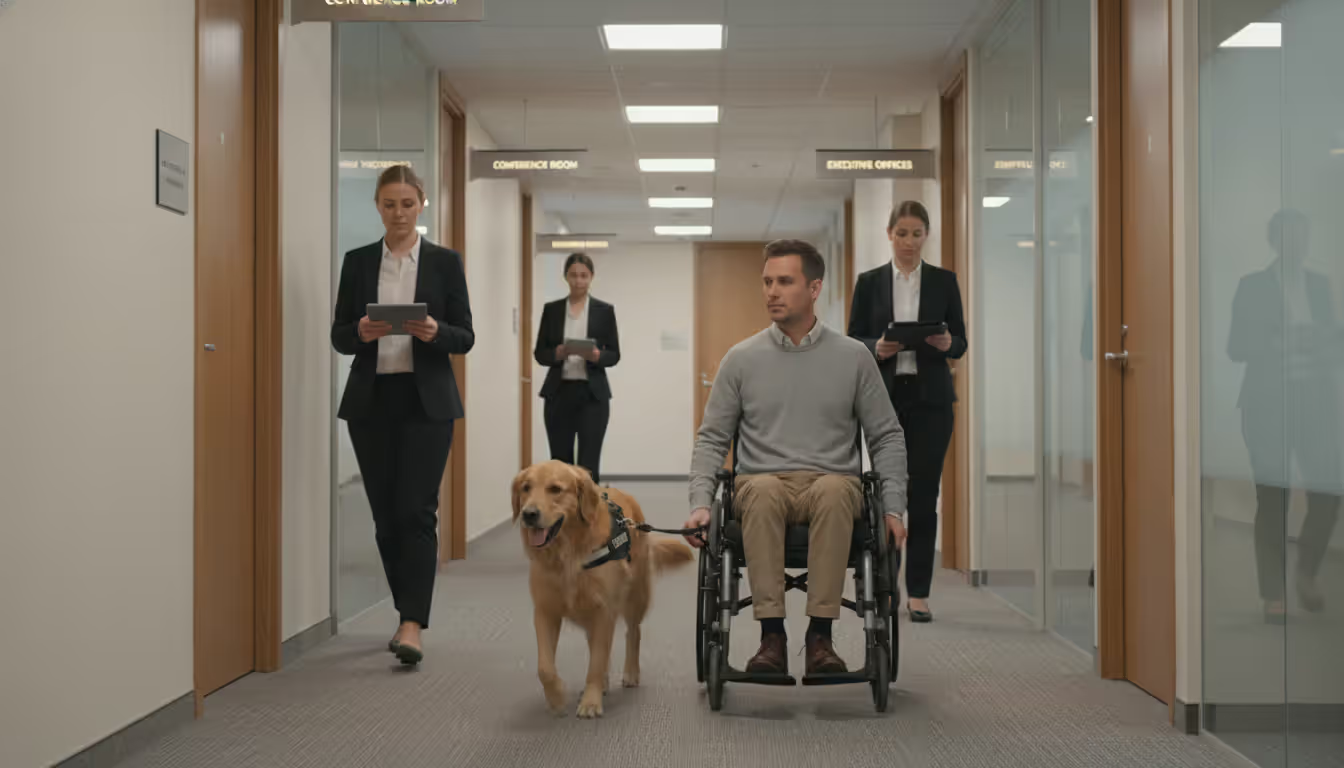
When employees need service dogs at work, employers must navigate complex legal territory that balances workplace functionality with disability rights. The Americans with Disabilities Act creates specific parameters around service animal accommodations, yet many employers and employees misunderstand where permission ends and legitimate refusal begins. This guide clarifies when bringing a service dog to work becomes a protected right and when employers can lawfully say no.
What the ADA Says About Service Dogs in the Workplace
Under federal disability law, a service dog specifically means a canine trained to accomplish particular tasks for someone experiencing disability. The training must connect directly to disability-related limitations—examples include navigating for blind individuals, notifying deaf people of sounds, mobility assistance through wheelchair pulling, seizure response protocols, or medication reminders for psychiatric conditions.
Employment situations fall under Title I provisions, which mandate that businesses employing fifteen or more workers must offer reasonable workplace modifications for qualified disabled employees, barring situations creating undue hardship. This employment framework differs substantially from Title III public access provisions governing restaurants and retail stores, where service dogs receive immediate entry without advance permission requirements.
Workplace service dog requests trigger the reasonable accommodation process rather than automatic approval. Employees must formally request the modification, prompting employers to begin an interactive dialogue determining whether approval is feasible. Employers retain the right to request verification confirming both the employee's disability status and the necessity of the service dog as a workplace modification.
Each request demands individual evaluation. Employers cannot maintain universal "no animals allowed" rules that automatically exclude service dogs, nor can they impose fees, deposits, or special charges when employees bring service dogs to work. The service dog handler work rights ada framework mandates that employers adjust policies, modify procedures, or change practices when accommodation becomes necessary.
Author: Samantha Loring;
Source: jamboloudobermans.com
Two specific inquiries employers may pose include: does your disability necessitate the dog's presence, and which specific tasks has the dog received training to execute? Questions about disability specifics, comprehensive medical file requests beyond accommodation verification, or demands for task demonstrations all exceed permissible inquiry boundaries.
When Can an Employer Legally Deny a Service Dog at Work
Undue hardship provisions allow employers to refuse service dog requests when approval would impose significant operational or financial burden considering company size, available resources, and business nature. A bootstrapped ten-person startup operating in tight quarters faces entirely different accommodation capacity than a multinational corporation with hundreds of employees across expansive facilities.
Direct threat analysis provides another legitimate denial basis. When a particular service dog exhibits aggressive tendencies, continuously interrupts business operations despite corrective measures, or creates documented health and safety hazards, employers can reject the accommodation. However, evaluations must focus on the individual animal's demonstrated conduct rather than breed-based assumptions or generalized animal fears.
Fundamental business alteration represents a third valid refusal ground. Commercial food preparation facilities might legitimately argue that canine presence violates health department regulations and fundamentally transforms food safety protocols. Similarly, sterile medical suites or contamination-sensitive laboratory environments might establish that service dog presence fundamentally compromises essential operational requirements.
Verification requests allow employers to seek reasonable confirmation. Unlike public settings where handlers face no certification requirements, employers may request healthcare provider documentation explaining the disability-related service dog necessity. This verification should outline which tasks the dog executes and how those functions connect to workplace needs, though it shouldn't disclose detailed diagnoses or comprehensive medical histories.
Psychiatric Service Dogs and ADA Accommodation Rules
Service dogs trained for psychiatric disability tasks receive identical legal protections as dogs assisting with mobility or sensory disabilities. Dogs trained to interrupt self-injury patterns, deliver tactile grounding during panic attacks, execute medication reminders, or conduct room security checks for PTSD sufferers all qualify as legitimate service animals.
Some employers incorrectly assume psychiatric service dog work ada accommodation requests warrant heightened scrutiny, but federal disability law makes no disability-type distinctions. The determining factor remains whether the dog received training for specific disability-related tasks. Dogs providing only comfort through their presence don't satisfy service dog criteria, regardless of mental health condition severity.
Service Dog vs. Emotional Support Animal Distinctions
Confusion between service dogs and emotional support animals frequently complicates workplace accommodation discussions. This comparison clarifies essential differences:
Criteria
Service Dog
Emotional Support Animal
ADA Coverage
Receives Title I employment protection
Falls outside ADA scope; limited to Fair Housing Act situations
Training Requirements
Must complete individualized task training directly addressing disability needs
No training mandates; comfort derives from companionship alone
Employer Obligation
Must accommodate through interactive process barring undue hardship/direct threat
No legal accommodation requirement exists
Documentation Needed
Employer may seek disability verification and accommodation necessity confirmation
Not applicable—no workplace protection exists
Public Access Rights
Title III grants public accommodation access
No public entry rights provided
Workplace Accommodation
Interactive process determines approval
Employers may refuse without legal consequence
Employees frequently obtain online certificates declaring pets as emotional support animals and anticipate workplace accommodation. These documents hold no authority under employment-focused ADA provisions. Only dogs (occasionally miniature horses) trained for specific tasks qualify for workplace accommodation as service animals.
How to Request a Service Dog Accommodation From Your Employer
Begin the accommodation process by informing your employer that disability-related circumstances require workplace modification. Submit this request verbally or through written communication, though written requests establish clearer evidence trails. Avoid legal jargon—simply stating you have a disability requiring your service dog at work initiates the formal process.
Following your request submission, your employer must commence interactive dialogue. This conversation explores your specific needs, your service dog's functional role, and implementation logistics within your particular workplace. Employers might inquire about your dog's trained tasks, where the animal would position during work hours, and how you'll manage care responsibilities throughout the workday.
Author: Samantha Loring;
Source: jamboloudobermans.com
Prepare to supply healthcare provider verification. This documentation should confirm your disability status under ADA definitions and explain why the service dog proves necessary for performing job functions or accessing equal employment opportunities. Documentation shouldn't include diagnostic details or extensive medical records—concentrate on functional limitations and how the service dog addresses them.
Response timelines reasonably span from several days to multiple weeks, depending on request complexity and organizational size. Employers cannot indefinitely postpone interactive dialogue, though they may require time for request assessment, legal consultation, and alternative exploration.
Maintain comprehensive communication records throughout the process. Document your initial request date, submitted information, employer questions, and received responses. This documentation becomes invaluable should disputes emerge later.
Address practical workplace logistics before requesting accommodation. Where will your dog rest during work hours? How will you handle elimination needs? What arrangements apply during meetings or when accessing areas unsuitable for your dog? Proactively addressing these concerns demonstrates good faith and smooths implementation.
Common Workplace Conflicts and How They're Resolved
Coworker allergies create among the most common service dog workplace conflicts. Federal disability law mandates employers address both the service dog handler's accommodation needs and allergic coworkers' disability-related requirements. Neither employee's needs automatically override the other's.
Author: Samantha Loring;
Source: jamboloudobermans.com
Employers must pursue solutions accommodating both individuals. Available options include enhanced ventilation installation, air purification systems, physical workspace separation, remote work arrangements for the allergic employee, or schedule modifications preventing simultaneous presence. EEOC guidance clarifies that employers cannot simply reject service dog requests because another employee has allergies—they must investigate all feasible accommodations for both parties.
Building-wide animal prohibitions sometimes create apparent conflicts when employees need service dogs. However, blanket pet bans don't supersede disability accommodation obligations. Employers must collaborate with property management to permit service dogs despite general pet restrictions. The service dog in office building rights framework acknowledges that service dogs differ fundamentally from pets and that disability accommodation requirements override standard property rules.
Shared workspace situations arise in open-plan offices, cubicle configurations, or collaborative settings. Coworkers might express concerns about distraction, dog-related fears, or general discomfort working alongside animals. Employers can address these concerns through service dog behavior education and ADA requirement training, but they cannot deny accommodation requests purely because coworkers would prefer avoiding dogs.
Court decisions generally favor service dog handlers when employers reject requests based on coworker preferences or abstract concerns. Multiple rulings found employers failed to conduct required interactive dialogue or denied requests using speculation rather than concrete evidence of undue hardship or direct threat.
Your Rights as a Service Dog Handler at Work
Your employer cannot pose intrusive disability questions. While they can request verification documentation confirming your accommodation need, they cannot demand complete medical files, inquire about prognosis details, or seek information unconnected to the accommodation request.
Anti-retaliation provisions protect you from negative employment consequences following accommodation requests. If your employer denies promotions, reduces work hours, assigns undesirable responsibilities, or terminates employment after you request bringing your service dog to work, these actions may constitute illegal retaliation. Federal disability law prohibits punishing employees for exercising their legal rights.
The EEOC administers employment-related disability discrimination law. When employers deny your service dog request or retaliate against you, you can submit a discrimination charge with the EEOC. Charges must be filed within one hundred eighty days of discriminatory conduct (three hundred days in jurisdictions with state-level anti-discrimination agencies). The EEOC investigates charges and may facilitate settlement negotiations or pursue enforcement actions.
State-level legislation sometimes extends protections beyond federal ADA minimums. Certain states define service animals more expansively, lower employer size thresholds, or implement stricter accommodation denial standards. California, New York, and multiple other jurisdictions maintain robust disability rights statutes potentially offering stronger protections than federal law alone.
Many employers reject service dog requests using baseless assumptions instead of individualized evaluation. Federal disability law demands situation-specific analysis in each case. Employers cannot simply claim 'we've never permitted dogs previously' or 'other staff might feel uncomfortable.' They must prove actual undue hardship or direct threat, not theoretical worries
— Sarah Martinez
You maintain the right to have your service dog accompany you throughout workplace areas where employees normally have access, including break facilities, meeting spaces, and outdoor areas. Exceptions apply only when your presence in particular locations would fundamentally alter operations or generate legitimate safety concerns—for instance, contamination-controlled cleanrooms or areas with exposed electrical dangers.
What to Do If Your Employer Denies Your Service Dog Request
Pursue internal appeal mechanisms if your employer maintains formal accommodation review procedures. Many larger organizations employ HR departments or accommodation specialists who can reconsider initial denials. Supply additional information addressing denial rationales, suggest alternative implementations, or clarify misunderstandings about your service dog's training and conduct.
EEOC complaint filing represents your primary legal remedy. Submit complaints online, through postal mail, or at physical EEOC locations. Your complaint should detail which accommodation you requested, request timing, employer response specifics, and why you believe the denial violated disability law. The EEOC notifies your employer and launches an investigation.
Author: Samantha Loring;
Source: jamboloudobermans.com
Compile thorough documentation before filing. Collect your original accommodation request, complete employer correspondence, healthcare provider verification, service dog training information, and job performance evidence. If your employer claimed undue hardship, gather information about company size, financial resources, and comparable accommodations they've previously granted.
Consult with disability rights employment attorneys. Numerous attorneys provide complimentary initial case evaluations and accept contingency fee arrangements, receiving payment only upon successful case resolution. Attorneys can evaluate claim strength, guide you through EEOC procedures, and provide representation during negotiations or litigation.
Continue documenting all subsequent developments. Maintain detailed logs of any employer treatment changes following your accommodation request. Record negative service dog comments, job duty modifications, performance evaluations appearing pretextual, or additional retaliation indicators.
Recognize that resolution processes require substantial time. EEOC investigations typically extend from multiple months to beyond one year. Throughout this period, maintain workplace professionalism, continue fulfilling job responsibilities, and avoid conduct providing employers legitimate non-discriminatory grounds for adverse decisions.
FAQ: Service Dogs in the Workplace
Can my employer ask what my service dog is trained to do?
Yes, employers may inquire whether you require the dog because of a disability and which specific work or tasks the dog received training to perform. They cannot ask about your disability's nature or extent, demand the dog demonstrate its abilities, or request documentation exceeding what's reasonably necessary for verifying your accommodation need.
Does my employer have to allow my service dog if a coworker has allergies?
Your employer must attempt accommodating both you and the allergic colleague. Neither person's disability automatically prevails. Potential solutions include workspace separation, ventilation improvements, air purification equipment installation, remote work options, or schedule adjustments. Employers cannot simply refuse your request because another employee has allergies—they must explore all reasonable possibilities.
Can I be fired for bringing a service dog to work?
Termination for requesting service dog accommodation or bringing your approved service dog to work is prohibited. However, if your service dog displays disruptive behavior, creates safety hazards, or if you violate agreed accommodation terms, your employer may have legitimate discipline grounds. Federal disability law protects your accommodation rights, not problematic conduct by you or your animal.
Do I need a doctor's note to bring my service dog to work?
Employers can request healthcare provider verification confirming your disability and explaining why you need a service dog as workplace accommodation. This contrasts with public accommodations requiring no documentation. The verification should address your functional limitations and how the service dog mitigates them, avoiding detailed diagnostic information.
What if my office building has a no-pets policy?
Property-wide pet prohibitions don't override disability accommodation mandates. Service dogs constitute working animals providing disability assistance, not pets. Your employer must collaborate with property management to permit your service dog despite building pet bans. Should the building refuse, your employer must identify alternative solutions, such as workspace relocation.
How long does my employer have to respond to my accommodation request?
Federal disability law doesn't specify exact response deadlines, but employers must respond within reasonable timeframes. Straightforward requests typically warrant responses within days to two weeks. Complex situations requiring assessment or consultation might extend several weeks. Delays exceeding what appears reasonable for your circumstances may indicate failure to engage in required interactive dialogue.
While employers cannot maintain blanket service dog prohibitions, they retain authority to refuse requests creating undue hardship, posing direct threats, or fundamentally altering business operations. Federal disability law mandates individualized evaluation through interactive dialogue, balancing employee accommodation requirements with legitimate operational concerns. Employees with disabilities depending on service dogs should understand both their protected rights and their obligations—including supplying appropriate verification and ensuring their service dogs maintain professional conduct. When conflicts emerge, whether from coworker allergies or building restrictions, accommodations frequently exist satisfying multiple parties. Should your employer deny your service dog request without legitimate justification, EEOC enforcement mechanisms provide legal recourse. Successful service dog workplace accommodation depends on transparent communication, mutual good faith efforts, and adherence to reasonable accommodation frameworks established by federal disability law.
A service dog letter for landlord review documents your legal right to housing accommodation under the Fair Housing Act. This comprehensive guide explains documentation requirements, legal protections, and how to navigate the accommodation request process for service dogs and emotional support animals
No federal law requires service dog registration, yet commercial registries market credentials as legal necessities. Understanding ADA requirements versus voluntary registration services protects handlers from scams while clarifying actual legal obligations for public access, housing, and air travel
Discover the legitimate process for designating your cat as an emotional support animal. Learn what documentation you actually need, your housing rights under federal law, and why online ESA registries are unnecessary. This guide explains ESA letter requirements, common mistakes to avoid, and the key differences between ESAs, therapy animals, and service animals
Making your dog a service dog doesn't require registration or certification. The ADA demands only that your dog be trained to perform specific tasks related to your disability. Learn what qualifies a dog as a service dog, task training requirements, your public access rights, and common mistakes to avoid
The content on this website is provided for general informational and educational purposes only. It is intended to explain concepts related to animal law, pet ownership rights, service animals, dog bite liability, and animal welfare legislation in the United States.
All information on this website, including articles, guides, and examples, is presented for general educational purposes. Legal outcomes may vary depending on jurisdiction, state laws, and individual circumstances.
This website does not provide legal advice, and the information presented should not be used as a substitute for consultation with qualified attorneys or animal law professionals.
The website and its authors are not responsible for any errors or omissions, or for any outcomes resulting from decisions made based on the information provided on this website.