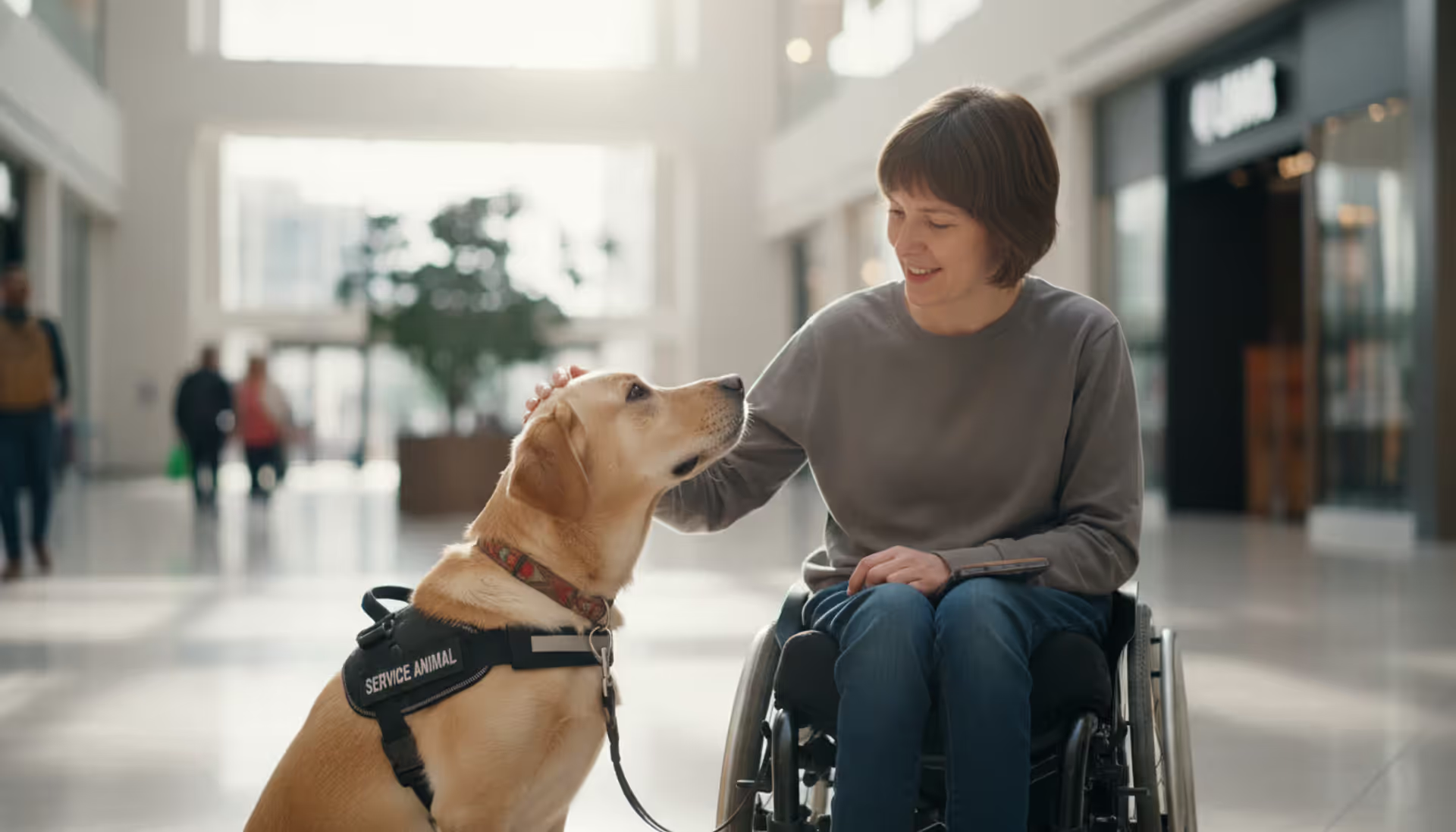
You'll find countless websites selling "official" service dog registrations, certificates, and ID cards—none of which federal law recognizes or requires. The Americans with Disabilities Act doesn't mandate registration, certification, or special paperwork for service dogs, yet handlers constantly face businesses demanding documentation that has no legal basis.
This disconnect creates real problems. Legitimate service dog handlers get denied access to restaurants and stores by staff who've been misinformed about requirements. Meanwhile, people spend hundreds of dollars on fraudulent "registration services" that provide zero additional legal protection. The truth? Federal law protects service dog access without requiring a single piece of paper.
Here's what actually matters: understanding the real ADA standards, knowing which questions businesses can legally ask, and recognizing how service animals differ from emotional support animals or pets under federal protection.
What the ADA Defines as a Service Animal
Federal disability law recognizes only dogs—plus one specific exception—as service animals. Under Titles II and III of the ADA, your animal qualifies only if it's a dog that's been trained to complete particular jobs or tasks that directly address your disability.
The distinction between "tasks" and "comfort" matters more than most people realize. Your dog must perform specific, trained actions related to your disability. Guiding someone with vision loss, alerting someone who's deaf to important sounds, retrieving dropped items for a wheelchair user, alerting before seizures occur, or performing deep pressure therapy during PTSD episodes—these count as legitimate tasks.
Contrast that with a dog whose presence simply makes you feel calmer or less lonely. If the dog hasn't been trained to respond to specific symptoms or perform particular actions, it doesn't meet the legal standard, regardless of how much it genuinely helps your mental health. A dog that naturally notices when you're upset differs legally from one trained to interrupt panic attacks by applying pressure or creating personal space on command.
Here's where it gets interesting: miniature horses also qualify under certain circumstances. Yes, actual miniature horses. When someone with a disability has trained a miniature horse to complete specific tasks, establishments must evaluate four assessment factors:
Can the building physically accommodate the animal's size, weight, and type?
Does the handler maintain adequate control over the horse?
Has the horse been housetrained?
Would allowing the horse compromise legitimate safety protocols?
Author: Lauren Beckett;
Source: jamboloudobermans.com
Why would anyone choose a horse over a dog? Miniature horses can work for 30-35 years—three times longer than most service dogs. Some people have severe dog allergies but need mobility support that a miniature horse can provide. Practically speaking, though, you'll rarely encounter service horses because housing, transportation, and public access work much more smoothly with dogs.
Don't assume other species qualify just because they're well-trained. Cats, parrots, rabbits, ferrets, or iguanas receive zero protection as service animals under federal ADA provisions, no matter how helpful they are or how much training they've received. (State or local laws occasionally provide broader definitions, but federal standards apply the narrow dog-only rule.)
Why ADA Service Dog Documentation Is Not Required
The Department of Justice states explicitly: covered entities can't require proof that an animal has been certified, trained, or licensed as a service animal. There's no federal registry. No official certification authority exists. Handlers don't need to carry identification, papers, or documentation of any kind.
This deliberately protects civil rights. The ADA prohibits disability discrimination—requiring paperwork creates barriers that interfere with equal access. Think about it: someone using crutches doesn't need certification proving their crutches are medically necessary. The same principle applies to service dogs as assistive devices.
Dozens of websites will happily sell you "service dog registration packages" complete with laminated certificates, vest patches, and online registry listings. These products carry zero legal weight. Businesses can't require them. You gain no additional rights by purchasing them. The Federal Trade Commission has actually sued companies making fraudulent claims about mandatory registration.
Some handlers voluntarily carry documentation—vaccination records, training logs, healthcare provider letters—because it sometimes defuses confrontations with skeptical business staff. That's a practical choice, not a legal requirement. No law says you must produce these documents, and establishments can't demand them as an entry condition.
Where does the confusion originate? Partly from mixing up different systems. Emotional support animals do require documentation for Fair Housing Act accommodations. Therapy animals working in hospitals or schools need certification from their sponsoring organizations. Service dog trainers sometimes provide identification for dogs they've trained. None of these apply to ADA service animal access rights.
Handlers still maintain responsibility for their animals. Service dogs must be housetrained, controlled through leash or voice command, and must not create direct threats to health or safety. Standard dog regulations—rabies vaccinations, local licensing—still apply. The ADA doesn't exempt service animals from general animal control laws.
Author: Lauren Beckett;
Source: jamboloudobermans.com
What Businesses Can Legally Ask About Service Dogs
When someone walks in with a dog and you can't immediately tell what service it provides, staff may ask exactly two questions:
Do you need this dog because of a disability?
What specific task has this dog been trained to do?
That's it. Staff can't ask what disability you have, demand medical records, request special ID cards or training certificates, or ask the dog to demonstrate its work. You can answer briefly without revealing private health details: "She alerts to low blood sugar" or "He steadies me when I'm dizzy" gives enough information.
If someone says yes to the first question but can't describe a specific trained task for the second, the animal probably doesn't qualify under ADA standards. "She comforts me when I'm sad" or "He keeps me company" describes emotional support, not trained tasks.
These questions become unnecessary when the dog's role is obvious. Someone who's blind entering with a harnessed dog clearly demonstrates the animal's purpose—asking questions at that point just wastes everyone's time.
This two-question framework balances competing interests: protecting handler privacy while giving businesses reasonable tools to distinguish service animals from pets. The limitations prevent intrusive questioning while still allowing establishments to verify legitimacy.
Staff can't request task demonstrations. Some tasks can't be demonstrated on command—you can't trigger a seizure so your alert dog can show what it does. Other demonstrations would require handlers to disclose sensitive medical information or potentially endanger themselves.
Businesses retain removal authority when a specific dog creates problems. If a dog is out of control and you don't take effective steps to manage it, or if the animal isn't housetrained, the business can exclude that particular dog. Staff must give you an opportunity to regain control first. Even if they exclude your service dog, they must still offer you services—just without the animal present.
ADA Reasonable Accommodation Rules for Service Dogs
Your service dog accompanies you everywhere the general public can go. Restaurants, retail stores, hotels, medical facilities, theaters, government buildings—all must permit service dog access. The dog stays with you; staff can't segregate it to a separate area.
Author: Lauren Beckett;
Source: jamboloudobermans.com
Restaurants generate frequent confusion. Health codes prohibit animals in kitchen areas where staff prepare food, but these restrictions don't cover dining rooms where customers eat. Your service dog can sit under your table, next to your chair, or anywhere that doesn't block pathways for other customers and staff. Restaurant managers can't force you to sit outside on the patio or maintain specific distances from other tables.
Some establishments incorrectly cite health department regulations when refusing service dogs. Health codes that ban "animals" from food establishments include explicit exceptions for service animals. When health inspectors or owners claim otherwise, they're misinterpreting the rules. The FDA Food Code—which most states adopt—specifically permits service animals in customer areas.
Can businesses ever exclude service dogs based on fundamental alteration arguments? Technically yes, but the bar sits extremely high. Mere inconvenience doesn't count. You'd need situations like a sterile surgical suite where the dog's presence would genuinely compromise infection control protocols—and even then, the facility would need to arrange alternative accommodations for you.
Other customers' allergies or fear of dogs don't justify denying you access. When someone else has dog allergies, the business should accommodate both people by separating you—maybe seating you in different sections. Neither person's needs automatically trump the other's.
Workplace rules operate under different ADA titles but follow similar logic. Employees with disabilities can bring service dogs to work as reasonable accommodation unless it creates undue hardship for the employer. Someone working in a food processing plant might face legitimate restrictions that wouldn't apply to an office employee.
Housing protections come from the Fair Housing Act rather than the ADA, but service dogs receive strong protection there too. Landlords must allow service dogs even in "no pets" buildings and can't charge pet deposits or monthly pet fees. They can charge for actual damage your dog causes, the same as they'd charge for damage you cause.
Air travel follows the Air Carrier Access Act, which underwent major revisions recently. Airlines must accommodate psychiatric service dogs the same as other service dogs starting in 2026, but emotional support animals lost their flight accommodations entirely. Airlines can require you to submit DOT forms attesting to your dog's training and behavior.
Service Dogs vs Emotional Support Animals Under ADA
The legal distinction between service dogs and emotional support animals trips up countless people—understandably, since both animals genuinely help people with disabilities. The protections differ dramatically, though.
Category
Service Dog
Emotional Support Animal
Regular Pet
Public Access (ADA)
Full access to public spaces
No federal access rights
No access rights
Required Training
Must perform specific disability-related tasks
No particular training standards
No training required
Allowed Species
Dogs and miniature horses only
Any animal species
Any species
Must Carry Papers
No documentation required
Yes, for housing and previous air travel
None needed
Housing Protection
Protected under FHA
Protected under FHA
Only if landlord permits pets
Can Enter Restaurants
Yes, must be permitted
No, can be refused
No, can be refused
Service dogs complete specific trained tasks that directly address their handler's disability. An ESA provides therapeutic benefit through companionship and presence but hasn't been trained to perform particular work in response to disability symptoms. Both serve real purposes; the law just treats them very differently.
ESAs have zero public access rights under the ADA. Restaurants, grocery stores, and hotels can lawfully refuse emotional support animals. The animal genuinely helps its owner—that's not in question—but that benefit doesn't create legal rights to bring the animal into pet-free businesses.
The Fair Housing Act does protect ESAs. Landlords must reasonably accommodate emotional support animals even in no-pet housing when tenants have disability-related needs for the animal. Tenants must provide documentation from healthcare providers establishing the disability and explaining why the ESA helps.
Airlines eliminated ESA accommodations in 2021 after widespread system abuse. Passengers can no longer bring emotional support animals into airplane cabins under federal transportation rules, though some airlines let you bring small pets in carriers for a fee.
Training differences matter enormously. Service dogs typically complete hundreds or thousands of hours of specialized training to perform tasks reliably while ignoring distractions in chaotic public environments. ESAs just need basic pet manners—no specific disability-related training required.
Psychiatric service dogs fall into a distinct category that creates confusion. These are dogs trained to perform specific tasks related to mental health conditions—interrupting self-harm behaviors, applying deep pressure during panic attacks, reminding handlers to take prescribed medications, or blocking other people from getting too close during anxiety episodes. Psychiatric service dogs qualify as full service animals under the ADA with complete public access rights, unlike ESAs.
The widespread confusion between service dogs and ESAs has made some businesses skeptical of all assistance animals. Legitimate service dog handlers sometimes face illegal challenges because staff have previously encountered people fraudulently claiming untrained pets as service animals.
How to Avoid Service Dog Certification Scams
Author: Lauren Beckett;
Source: jamboloudobermans.com
Search "service dog registration" and you'll find dozens of sites offering "official registration" for $50-$200. They sell certificates, ID cards, vest patches, and inclusion in online databases. Not one of these products creates legal obligations or protections.
Watch for these warning signs from scam websites:
Claims that federal law requires registration
Promises that their certificate grants public access rights
Statements that businesses must accept their specific documentation
Claims that emotional support animals get ADA protection
Offers to register any species as a service animal
Guarantees that registration lets pets into no-pet housing
Legitimate service dog training organizations do exist, and many provide identification for dogs they've trained. Even these legitimate IDs serve only as courtesy documentation. They don't create legal requirements and don't provide rights beyond what the ADA already guarantees every handler.
The ADA deliberately establishes no specific training standards or certification process for service dogs. You can train your own service dog or hire professional trainers. The dog must complete training to perform disability-related tasks, but no certification validates that training.
This flexibility helps handlers significantly. Professional service dog training costs $15,000-$40,000, with waiting lists stretching multiple years. Owner-training lets people obtain service dogs more affordably and quickly. The tradeoff? Owner-trainers bear complete responsibility for ensuring their dogs receive proper training and behave appropriately in public settings.
Many states have enacted laws against misrepresenting pets as service animals, with penalties including fines or even criminal charges. These laws target people who bring untrained pets into businesses while falsely claiming service animal status. Buying a vest and certificate online, then taking an untrained pet into restaurants, could violate these state laws.
The ADA does not require service animals to wear a vest, ID tag, or specific harness. Covered entities may not require documentation, such as proof that the animal has been certified, trained, or licensed as a service animal, as a condition for entry
— The U.S. Department of Justice states
Handlers wanting documentation for personal peace of mind might keep vaccination records showing current health status, training journals documenting what tasks their dog performs, or healthcare provider letters (though remember—businesses can't demand these). These documents occasionally prove helpful in edge cases but provide zero legal advantage.
The most reliable way to spot a legitimate service dog? Watch its behavior. Well-trained service dogs stay calm and focused on handlers, ignore food and other animals, don't bark or whine inappropriately, and remain close to handlers without pulling or wandering. When a dog drags its handler around stores, jumps on strangers, or eliminates indoors, it probably lacks adequate training.
Frequently Asked Questions About ADA Service Dog Rules
Does the ADA require service dogs to be professionally trained?
No, professional training isn't required. You can train your own service dog, work with professional trainers, or get help from friends and family. The dog needs training to perform specific tasks related to your disability, but there's no mandated training method or required certification. Self-trained service dogs receive identical legal protections as professionally trained ones, assuming they meet behavioral standards and perform genuine tasks.
Can a business ask for service dog registration papers?
Absolutely not. Businesses can't require documentation, registration papers, certification, or training proof. They're limited to asking two questions: whether you need the dog because of a disability, and what work or task the dog has been trained to do. If you voluntarily show documentation, businesses can look at it, but they can't demand papers as a condition for letting you in.
Are emotional support animals protected under the ADA?
No. The ADA only covers service animals—dogs and miniature horses—trained to complete specific tasks. Emotional support animals provide comfort through presence but aren't trained to perform particular work, so they don't qualify as service animals under federal disability law. ESAs have no public access rights to restaurants, retail stores, or other businesses. They do receive housing protections under the Fair Housing Act.
Can restaurants refuse service dogs?
Not unless specific circumstances apply. Restaurants must permit service dogs in all customer-accessible areas, including dining rooms. Valid exclusion reasons are extremely limited: the specific dog is out of control and you don't take effective corrective action, or the dog isn't housetrained. Health codes don't prohibit service dogs in dining areas—they prohibit animals in kitchen food prep areas, which is entirely different.
What breeds of dogs qualify as service animals?
Every breed can potentially be a service animal. The ADA doesn't restrict or prohibit specific breeds. Even when cities or states have breed-specific legislation banning certain breeds, service dogs typically receive exemptions from those restrictions. Businesses can't deny access based on breed, size, or appearance. The individual dog's behavior and training determine qualification, not its breed characteristics.
Do service dog handlers need to carry documentation?
No legal obligation exists to carry documentation, identification, or certification for your service dog. Some handlers choose to keep voluntary documentation like veterinary records or training logs to help smooth business interactions, but that's a personal decision. Businesses can't require you to produce documentation, and you can't be denied access for failing to carry papers.
The ADA protects service dog handlers' access to public spaces without imposing registration, certification, or documentation requirements. Handlers answer only two specific questions about their dog's purpose and trained tasks. Businesses must permit service dogs throughout all public areas, including restaurants, while retaining authority to exclude specific dogs that are uncontrolled or not housetrained.
Understanding these rules empowers handlers to advocate for their legal rights and helps businesses comply with federal law. Service dogs differ fundamentally from emotional support animals and pets in both training requirements and legal protections. No legitimate registration requirement exists—websites selling certificates or ID cards provide no legal benefit whatsoever.
Handlers experiencing discrimination should document incidents, calmly explain relevant ADA provisions, and when necessary, file complaints with the Department of Justice. Businesses uncertain about their obligations can consult the ADA National Network or review DOJ guidance materials. Clear knowledge of these rules benefits everyone—ensuring handlers receive the access they're entitled to while giving businesses confidence in their compliance efforts.
A service dog letter for landlord review documents your legal right to housing accommodation under the Fair Housing Act. This comprehensive guide explains documentation requirements, legal protections, and how to navigate the accommodation request process for service dogs and emotional support animals
No federal law requires service dog registration, yet commercial registries market credentials as legal necessities. Understanding ADA requirements versus voluntary registration services protects handlers from scams while clarifying actual legal obligations for public access, housing, and air travel
Discover the legitimate process for designating your cat as an emotional support animal. Learn what documentation you actually need, your housing rights under federal law, and why online ESA registries are unnecessary. This guide explains ESA letter requirements, common mistakes to avoid, and the key differences between ESAs, therapy animals, and service animals
Making your dog a service dog doesn't require registration or certification. The ADA demands only that your dog be trained to perform specific tasks related to your disability. Learn what qualifies a dog as a service dog, task training requirements, your public access rights, and common mistakes to avoid
The content on this website is provided for general informational and educational purposes only. It is intended to explain concepts related to animal law, pet ownership rights, service animals, dog bite liability, and animal welfare legislation in the United States.
All information on this website, including articles, guides, and examples, is presented for general educational purposes. Legal outcomes may vary depending on jurisdiction, state laws, and individual circumstances.
This website does not provide legal advice, and the information presented should not be used as a substitute for consultation with qualified attorneys or animal law professionals.
The website and its authors are not responsible for any errors or omissions, or for any outcomes resulting from decisions made based on the information provided on this website.